


Packaging Recyclability Assessment Software Market Outlook
The Packaging Recyclability Assessment Software market size was valued at USD 548.0 Million in 2025 and is anticipated to reach USD 2.08 Billion by 2034, growing at a CAGR of 16.0% during the forecast period according to Strategic Packaging Insights. This market is witnessing significant growth due to the increasing demand for sustainable packaging solutions across various industries. Companies like Recyda and SAP are at the forefront, providing innovative software solutions that help businesses assess and improve the recyclability of their packaging materials. The growing awareness about environmental sustainability and stringent regulations on packaging waste are driving the adoption of these software solutions, making them an essential tool for companies aiming to enhance their sustainability credentials.
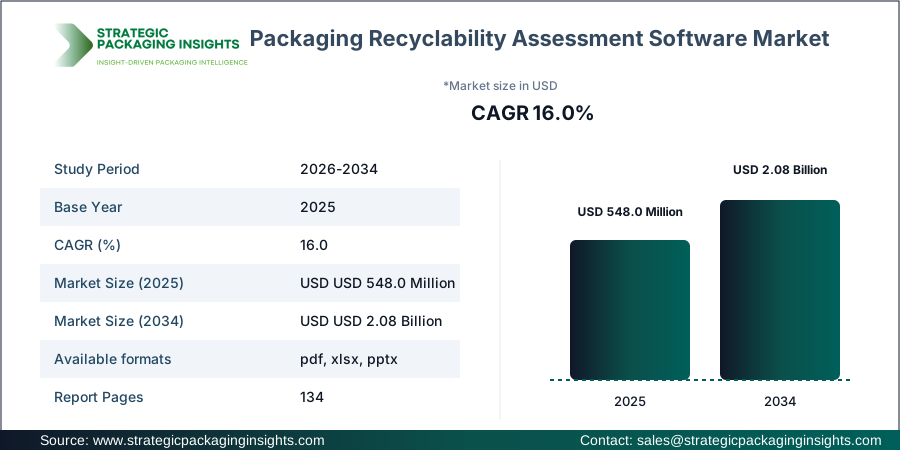
One of the most impactful drivers of this market is the global push towards a circular economy, which emphasizes reducing waste and promoting the reuse and recycling of materials. Governments worldwide are implementing policies and regulations to encourage sustainable packaging practices, which in turn is boosting the demand for recyclability assessment software. For instance, the European Union's Circular Economy Action Plan aims to make all packaging recyclable by 2030, creating a significant opportunity for software providers like Specright and Trace One to expand their market presence. This regulatory push, coupled with increasing consumer demand for eco-friendly products, is expected to drive substantial growth in the Packaging Recyclability Assessment Software market over the coming years.
Report Scope
| Attributes | Details |
| Report Title | Packaging Recyclability Assessment Software Market Size, Future Growth and Forecast 2034 |
| By Deployment | Cloud-Based, On-Premises, Hybrid |
| By Functionality | Recyclability Assessment, Design for Recycling (DfR) Analysis, Packaging Material Analysis, Compliance Management, Packaging Portfolio Analytics, Reporting & Documentation |
| By Packaging Material | Plastic, Paper & Paperboard, Glass, Metal, Multi-Material Packaging |
| By End User | Food & Beverage, Personal Care & Cosmetics, Healthcare & Pharmaceuticals, Consumer Goods, Industrial Packaging, Retail & E-commerce |
| Region | Asia Pacific, North America, Latin America, Europe, Middle East & Africa |
| Base Year | 2025 |
| Historic Period | 2018-2024 |
| Forecast Period | 2026-2034 |
| Number of Pages | 134 |
| Customization Available | Yes* |
Sustainability & Circular Economy Analysis
Sustainability initiatives and circular economy practices are profoundly influencing the packaging market, driving the need for advanced recyclability assessment software. As companies strive to meet consumer demands for eco-friendly products, they are increasingly turning to recyclable materials and reusable packaging solutions. This shift is not only reducing waste but also minimizing the carbon footprint associated with packaging production and disposal. Companies like osapiens and Sphera are leveraging these trends by offering software that helps businesses design packaging with sustainability in mind, ensuring compliance with environmental regulations and enhancing their brand image.
The integration of eco-friendly material innovation and waste reduction strategies is reshaping packaging design and manufacturing processes. Lightweight packaging and the use of biodegradable materials are becoming standard practices, driven by both regulatory requirements and consumer preferences. Extended Producer Responsibility (EPR) policies are further encouraging companies to take responsibility for the entire lifecycle of their packaging, from production to disposal. This has led to increased investment in recyclability assessment software, as businesses seek to optimize their packaging portfolios and reduce their environmental impact.
Moreover, the focus on ESG (Environmental, Social, and Governance) initiatives is influencing investment decisions and supply chain strategies within the packaging industry. Companies are prioritizing sustainability in their procurement processes, opting for suppliers and partners who align with their environmental goals. This trend is enhancing the competitiveness of businesses that adopt recyclability assessment software, as they can demonstrate their commitment to sustainability and regulatory compliance. As a result, the market for these software solutions is expected to grow, driven by the need for transparency and accountability in packaging practices.
Packaging Value Chain & Supply Chain Analysis
The packaging value chain is a complex ecosystem involving multiple stakeholders, from raw material suppliers to end consumers. Efficient raw material sourcing is crucial for packaging manufacturers, as it directly impacts production costs and supply chain resilience. Companies like Lorax EPI and Makersite are providing software solutions that enable businesses to assess the recyclability of their packaging materials, ensuring compliance with sustainability standards and optimizing their procurement strategies. This not only enhances supply chain efficiency but also reduces the environmental impact of packaging production.
Packaging converters and manufacturers play a pivotal role in the value chain, transforming raw materials into finished products. The availability of advanced packaging machinery and technologies is enabling these players to produce sustainable packaging solutions that meet regulatory requirements and consumer expectations. Strategic partnerships with logistics providers and distribution channels are essential for ensuring the timely delivery of packaging products to retailers and brand owners. This collaboration is further supported by software solutions that facilitate inventory management and supply chain optimization, enhancing overall market performance.
Recycling networks are an integral part of the packaging supply chain, as they enable the recovery and reuse of packaging materials. Companies like Circularise and Ecochain are leveraging technology to improve the traceability and transparency of recycling processes, ensuring that packaging waste is effectively managed and recycled. This not only supports the circular economy but also enhances the competitiveness of businesses that adopt sustainable packaging practices. By investing in recyclability assessment software, companies can demonstrate their commitment to sustainability, comply with regulatory requirements, and gain a competitive edge in the market.
Opportunities & Threats
The Packaging Recyclability Assessment Software market presents numerous opportunities for growth, driven by the increasing demand for sustainable packaging solutions. As consumers become more environmentally conscious, businesses are under pressure to adopt eco-friendly packaging practices. This has led to a surge in demand for software solutions that can assess and improve the recyclability of packaging materials. Companies like Recyda and SAP are well-positioned to capitalize on this trend, offering innovative solutions that help businesses meet regulatory requirements and enhance their sustainability credentials. Additionally, the growing emphasis on circular economy practices is creating opportunities for software providers to expand their market presence and drive innovation in the packaging industry.
Another significant opportunity lies in the integration of advanced technologies such as artificial intelligence and machine learning into recyclability assessment software. These technologies can enhance the accuracy and efficiency of packaging assessments, enabling businesses to optimize their packaging portfolios and reduce their environmental impact. Companies like Specright and Trace One are already exploring these possibilities, developing software solutions that leverage data analytics and predictive modeling to improve packaging design and sustainability. As the demand for these advanced solutions continues to grow, software providers have the opportunity to differentiate themselves in the market and capture a larger share of the growing packaging industry.
Despite the numerous opportunities, the Packaging Recyclability Assessment Software market also faces several threats. One of the primary challenges is the complexity of regulatory requirements, which can vary significantly across different regions and industries. This can create barriers to entry for software providers, as they must ensure their solutions comply with a wide range of regulations and standards. Additionally, the rapid pace of technological advancements can pose a threat to established software providers, as new entrants may introduce more innovative and cost-effective solutions. To mitigate these threats, companies must invest in research and development, continuously update their software offerings, and collaborate with industry stakeholders to stay ahead of regulatory changes and technological advancements.
Drivers & Challenges
The primary driver of the Packaging Recyclability Assessment Software market is the increasing demand for sustainable packaging solutions. As consumers become more environmentally conscious, businesses are under pressure to adopt eco-friendly packaging practices. This has led to a surge in demand for software solutions that can assess and improve the recyclability of packaging materials. Companies like Recyda and SAP are well-positioned to capitalize on this trend, offering innovative solutions that help businesses meet regulatory requirements and enhance their sustainability credentials. Additionally, the growing emphasis on circular economy practices is creating opportunities for software providers to expand their market presence and drive innovation in the packaging industry.
Another significant driver is the integration of advanced technologies such as artificial intelligence and machine learning into recyclability assessment software. These technologies can enhance the accuracy and efficiency of packaging assessments, enabling businesses to optimize their packaging portfolios and reduce their environmental impact. Companies like Specright and Trace One are already exploring these possibilities, developing software solutions that leverage data analytics and predictive modeling to improve packaging design and sustainability. As the demand for these advanced solutions continues to grow, software providers have the opportunity to differentiate themselves in the market and capture a larger share of the growing packaging industry.
Despite the numerous drivers, the Packaging Recyclability Assessment Software market also faces several challenges. One of the primary challenges is the complexity of regulatory requirements, which can vary significantly across different regions and industries. This can create barriers to entry for software providers, as they must ensure their solutions comply with a wide range of regulations and standards. Additionally, the rapid pace of technological advancements can pose a threat to established software providers, as new entrants may introduce more innovative and cost-effective solutions. To mitigate these challenges, companies must invest in research and development, continuously update their software offerings, and collaborate with industry stakeholders to stay ahead of regulatory changes and technological advancements.
Market Share Analysis
The Packaging Recyclability Assessment Software market is characterized by a competitive landscape with several key players vying for market share. Companies like Recyda, SAP, and Specright are leading the market, offering comprehensive software solutions that cater to the diverse needs of packaging manufacturers and brand owners. These companies have established themselves as industry leaders by continuously innovating and expanding their product offerings to meet the evolving demands of the market. Their strong market presence is further supported by strategic partnerships and collaborations with other industry stakeholders, enabling them to enhance their product capabilities and reach a wider customer base.
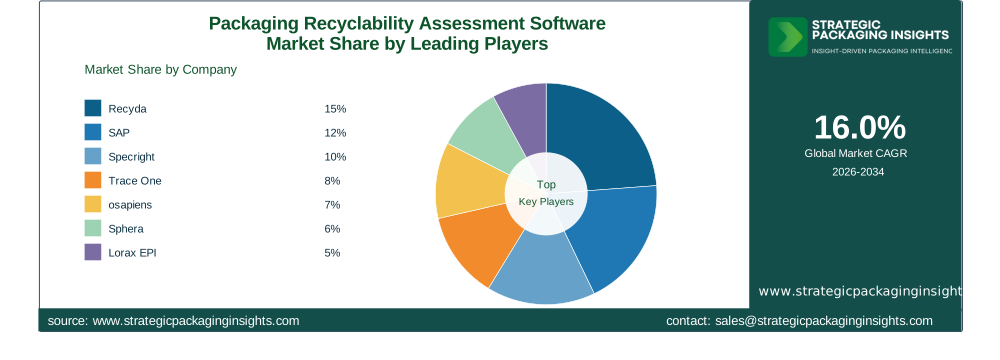
Recyda is a prominent player in the market, known for its advanced recyclability assessment software that helps businesses optimize their packaging portfolios and comply with regulatory requirements. The company's software solutions are widely used across various industries, including food and beverage, personal care, and healthcare, making it a key player in the market. Similarly, SAP has made significant strides in the market by offering integrated software solutions that enable businesses to assess and improve the recyclability of their packaging materials. The company's strong focus on sustainability and innovation has helped it maintain a competitive edge in the market.
Specright is another major player in the market, offering a comprehensive suite of software solutions that cater to the diverse needs of packaging manufacturers and brand owners. The company's software solutions are designed to enhance packaging design and sustainability, enabling businesses to meet regulatory requirements and reduce their environmental impact. Specright's strong market presence is further supported by its strategic partnerships with other industry stakeholders, enabling it to expand its product offerings and reach a wider customer base. Other notable players in the market include Trace One, osapiens, and Sphera, each of which has carved out a niche in the market by offering specialized software solutions that cater to the unique needs of their customers.
Overall, the competitive landscape of the Packaging Recyclability Assessment Software market is characterized by a mix of established players and new entrants, each vying for market share by offering innovative and cost-effective solutions. The market is expected to continue growing, driven by the increasing demand for sustainable packaging solutions and the integration of advanced technologies into software offerings. As the market evolves, companies will need to continuously innovate and adapt to changing market dynamics to maintain their competitive edge and capture a larger share of the growing packaging industry.
Key Highlights
- Market Size: Valued at USD 548.0 Million in 2025, projected to reach USD 2.08 Billion by 2034.
- Growth Rate: Expected to grow at a CAGR of 16.0% during the forecast period.
- Leading Companies: Recyda, SAP, Specright, and Trace One are key players driving market innovation.
- Technological Integration: AI and machine learning are enhancing software capabilities.
- Regulatory Influence: Stringent packaging regulations are boosting software demand.
- Consumer Demand: Increasing preference for sustainable packaging solutions.
- Regional Growth: Asia Pacific and North America are leading in market expansion.
Packaging Recyclability Assessment Software Market Segments Insights

By Deployment Analysis
The deployment segment of the Packaging Recyclability Assessment Software market is categorized into Cloud-Based, On-Premises, and Hybrid solutions. Cloud-Based solutions are gaining traction due to their scalability, flexibility, and cost-effectiveness. Companies like SAP and osapiens are leading the charge in this segment, offering cloud-based software that allows businesses to access their recyclability assessment tools from anywhere, facilitating real-time collaboration and data sharing. The On-Premises segment, while less popular, remains relevant for businesses that require greater control over their data and IT infrastructure. Hybrid solutions, which combine the benefits of both cloud and on-premises deployments, are also emerging as a viable option for companies seeking a balanced approach to software deployment.
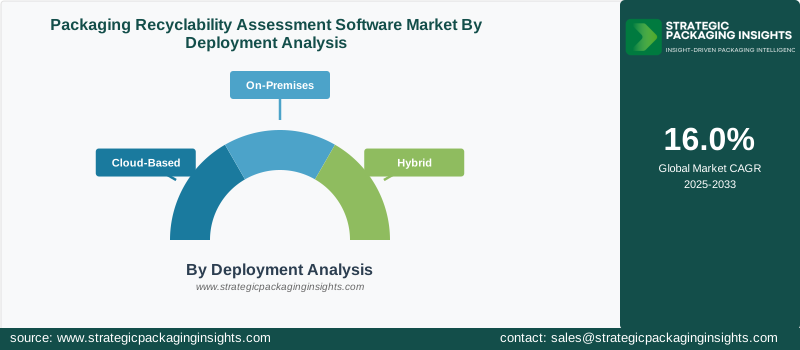
The growing demand for cloud-based solutions is driven by the need for businesses to streamline their operations and reduce IT costs. By leveraging cloud technology, companies can easily scale their software solutions to meet changing business needs, without the need for significant upfront investments in hardware and infrastructure. This is particularly beneficial for small and medium-sized enterprises (SMEs) that may lack the resources to invest in on-premises solutions. Additionally, cloud-based solutions offer enhanced security features and automatic updates, ensuring that businesses always have access to the latest software capabilities and security protocols.
By Functionality Analysis
The functionality segment of the Packaging Recyclability Assessment Software market includes Recyclability Assessment, Design for Recycling (DfR) Analysis, Packaging Material Analysis, Compliance Management, Packaging Portfolio Analytics, and Reporting & Documentation. Recyclability Assessment is a core functionality, enabling businesses to evaluate the recyclability of their packaging materials and identify areas for improvement. Companies like Recyda and Specright are leading the market in this segment, offering advanced tools that help businesses optimize their packaging designs and enhance their sustainability credentials.
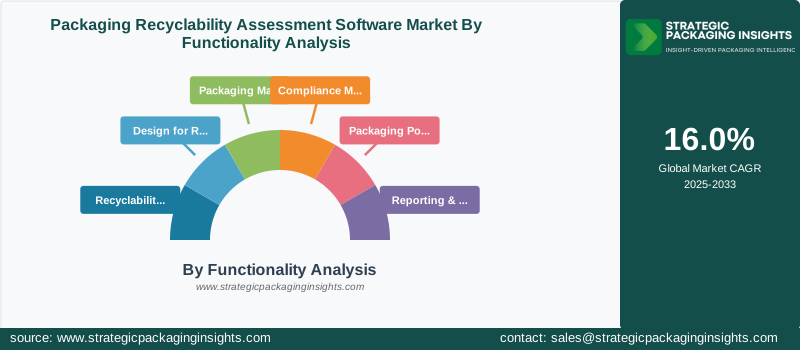
Design for Recycling (DfR) Analysis is another critical functionality, allowing businesses to design packaging that is easier to recycle and less harmful to the environment. This functionality is particularly important for companies looking to comply with stringent packaging regulations and meet consumer demands for sustainable products. Packaging Material Analysis and Compliance Management are also essential functionalities, providing businesses with the tools they need to assess the environmental impact of their packaging materials and ensure compliance with regulatory requirements. Packaging Portfolio Analytics and Reporting & Documentation further enhance the value of these software solutions, enabling businesses to track their sustainability performance and communicate their achievements to stakeholders.
By Packaging Material Analysis
The packaging material segment of the Packaging Recyclability Assessment Software market is divided into Plastic, Paper & Paperboard, Glass, Metal, and Multi-Material Packaging. Plastic remains the most widely used packaging material, but its environmental impact has led to increased scrutiny and demand for recyclability assessment solutions. Companies like SAP and Trace One are providing software that helps businesses assess the recyclability of plastic packaging and identify opportunities for improvement. Paper & Paperboard is another significant segment, with businesses seeking to enhance the recyclability of these materials to meet consumer and regulatory demands.
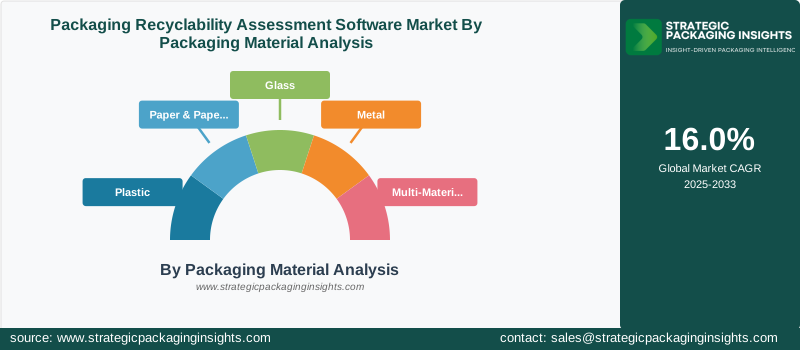
Glass and Metal packaging materials are also gaining attention, as businesses look to improve their sustainability credentials by adopting more recyclable materials. Multi-Material Packaging, which combines different materials to create innovative packaging solutions, presents unique challenges for recyclability assessment. Software providers are developing specialized tools to address these challenges, enabling businesses to optimize their packaging designs and reduce their environmental impact. As the demand for sustainable packaging solutions continues to grow, the packaging material segment is expected to play a crucial role in driving the adoption of recyclability assessment software.
By End User Analysis
The end-user segment of the Packaging Recyclability Assessment Software market includes Food & Beverage, Personal Care & Cosmetics, Healthcare & Pharmaceuticals, Consumer Goods, Industrial Packaging, and Retail & E-commerce. The Food & Beverage industry is a major driver of demand for recyclability assessment software, as companies seek to meet consumer demands for sustainable packaging solutions. Companies like Recyda and SAP are providing software that helps businesses in this industry assess the recyclability of their packaging materials and optimize their packaging designs.
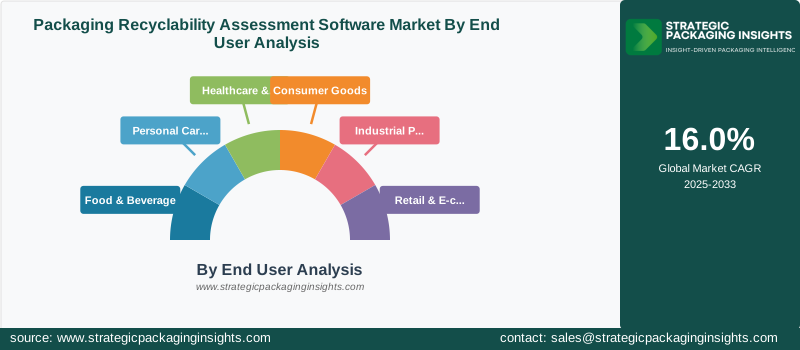
The Personal Care & Cosmetics and Healthcare & Pharmaceuticals industries are also significant end-users of recyclability assessment software, as they face increasing pressure to adopt sustainable packaging practices. Consumer Goods and Industrial Packaging companies are similarly focused on enhancing the recyclability of their packaging materials, driven by regulatory requirements and consumer preferences. The Retail & E-commerce industry is another key end-user, as businesses in this sector seek to reduce their environmental impact and enhance their sustainability credentials. As the demand for sustainable packaging solutions continues to grow, the end-user segment is expected to play a crucial role in driving the adoption of recyclability assessment software.
Packaging Recyclability Assessment Software Market Segments
The Packaging Recyclability Assessment Software market has been segmented on the basis ofBy Deployment
- Cloud-Based
- On-Premises
- Hybrid
By Functionality
- Recyclability Assessment
- Design for Recycling (DfR) Analysis
- Packaging Material Analysis
- Compliance Management
- Packaging Portfolio Analytics
- Reporting & Documentation
By Packaging Material
- Plastic
- Paper & Paperboard
- Glass
- Metal
- Multi-Material Packaging
By End User
- Food & Beverage
- Personal Care & Cosmetics
- Healthcare & Pharmaceuticals
- Consumer Goods
- Industrial Packaging
- Retail & E-commerce
Region
- Asia Pacific
- North America
- Latin America
- Europe
- Middle East & Africa




