


Packaging Jar Market Outlook
The Packaging Jar market was valued at $9.38 billion in 2025 and is projected to reach $15.18 billion by 2034, growing at a CAGR of 5.5% during the forecast period 2026-2034. This growth is driven by increasing demand for sustainable and versatile packaging solutions across various industries. The market is witnessing a shift towards eco-friendly materials, with consumers and manufacturers alike prioritizing sustainability. The rise in e-commerce and the need for efficient packaging solutions to ensure product safety during transit are also significant contributors to market expansion. Additionally, the growing trend of customization in packaging to enhance brand identity is further propelling the market forward.
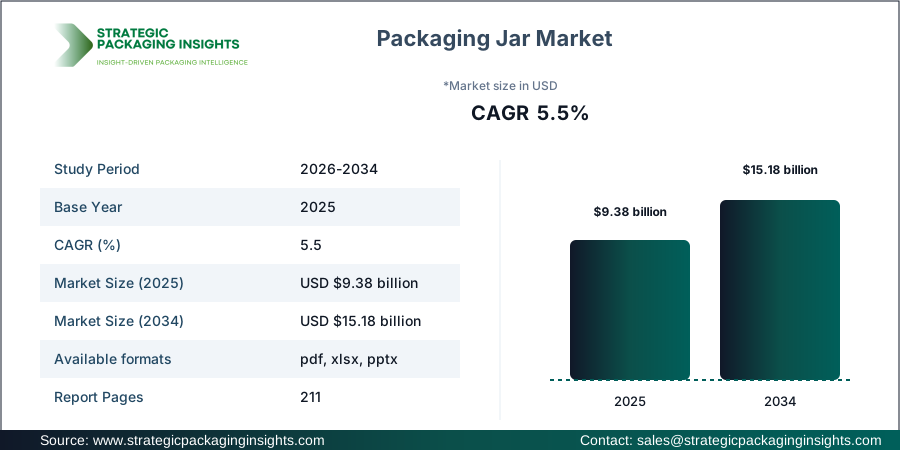
Despite the promising growth prospects, the Packaging Jar market faces challenges such as stringent regulatory requirements and fluctuating raw material prices. These factors can impact profit margins and pose a threat to market players. However, the potential for innovation in packaging design and materials offers significant growth opportunities. Companies are investing in research and development to create innovative packaging solutions that meet consumer demands for convenience and sustainability. The increasing focus on reducing carbon footprints and the adoption of circular economy practices are expected to drive further advancements in the market.
Report Scope
| Attributes | Details |
| Report Title | Packaging Jar Market Size, Future Growth and Forecast 2034 |
| Product Type | Plastic Jars, Glass Jars, Metal Jars |
| Material Type | PET, HDPE, PP, Glass |
| Application | Food, Cosmetics, Pharmaceuticals, Home Care |
| End Use | FMCG Brands, Healthcare, Retailers, Converters |
| Region | Asia Pacific, North America, Latin America, Europe, Middle East & Africa |
| Base Year | 2025 |
| Historic Period | 2018-2024 |
| Forecast Period | 2026-2034 |
| Number of Pages | 211 |
| Customization Available | Yes* |
Opportunities & Threats
The Packaging Jar market presents numerous opportunities for growth, particularly in the realm of sustainable packaging solutions. As environmental concerns continue to rise, there is a growing demand for packaging materials that are recyclable, biodegradable, and made from renewable resources. This shift towards eco-friendly packaging is creating opportunities for companies to innovate and develop new products that meet these demands. Additionally, the increasing popularity of online shopping is driving the need for durable and protective packaging solutions, further expanding the market for packaging jars.
Another significant opportunity lies in the customization of packaging jars. Brands are increasingly looking to differentiate themselves in a crowded market by offering unique and personalized packaging solutions. This trend is driving demand for packaging jars that can be customized in terms of shape, size, color, and labeling. Companies that can offer flexible and customizable packaging solutions are well-positioned to capitalize on this growing trend. Furthermore, the rise of the health and wellness industry is creating new opportunities for packaging jars in the food and beverage, cosmetics, and pharmaceutical sectors.
However, the market also faces several threats that could hinder its growth. One of the primary challenges is the volatility in raw material prices, which can impact production costs and profit margins. Additionally, stringent regulations regarding packaging materials and waste management pose a threat to market players. Companies must navigate complex regulatory environments and ensure compliance with various standards, which can be both time-consuming and costly. Furthermore, the increasing competition from alternative packaging solutions, such as flexible packaging and pouches, presents a threat to the traditional packaging jar market.
Drivers & Challenges
The Packaging Jar market is driven by several key factors, including the growing demand for sustainable packaging solutions. As consumers become more environmentally conscious, there is an increasing preference for packaging materials that are recyclable, biodegradable, and made from renewable resources. This trend is driving innovation in the market, with companies investing in research and development to create eco-friendly packaging solutions. Additionally, the rise of e-commerce is fueling demand for durable and protective packaging solutions that can withstand the rigors of shipping and handling.
Another significant driver of the Packaging Jar market is the increasing demand for convenience and customization in packaging. Consumers are looking for packaging solutions that are easy to use, store, and transport. This has led to the development of innovative packaging designs that offer convenience and functionality. Furthermore, brands are seeking to differentiate themselves in a competitive market by offering unique and personalized packaging solutions. This trend is driving demand for packaging jars that can be customized in terms of shape, size, color, and labeling.
Despite these drivers, the Packaging Jar market faces several challenges that could impact its growth. One of the primary challenges is the volatility in raw material prices, which can affect production costs and profit margins. Additionally, the market is subject to stringent regulations regarding packaging materials and waste management. Companies must navigate complex regulatory environments and ensure compliance with various standards, which can be both time-consuming and costly. Furthermore, the increasing competition from alternative packaging solutions, such as flexible packaging and pouches, presents a challenge to the traditional packaging jar market.
Market Share Analysis
The competitive landscape of the Packaging Jar market is characterized by the presence of several key players who are driving innovation and growth in the industry. Companies such as Berry Global, Amcor, ALPLA, Graham Packaging, and Silgan Plastics hold significant market shares and are continuously investing in research and development to create innovative packaging solutions. These companies are focusing on expanding their product portfolios and enhancing their production capabilities to meet the growing demand for sustainable and customizable packaging solutions.
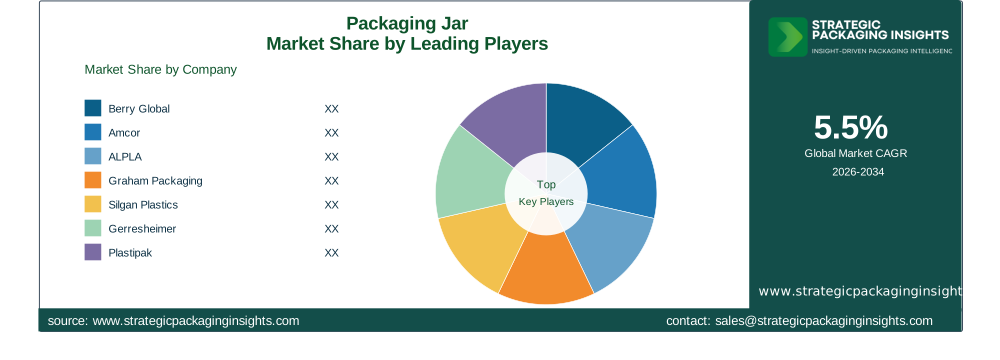
Berry Global is a leading player in the Packaging Jar market, known for its extensive range of packaging solutions and commitment to sustainability. The company is focused on developing eco-friendly packaging materials and has made significant investments in research and development to create innovative products. Amcor, another major player, is renowned for its advanced packaging technologies and sustainable packaging solutions. The company is committed to reducing its environmental impact and has set ambitious sustainability goals to drive innovation in the market.
ALPLA is a global leader in the packaging industry, offering a wide range of packaging solutions, including jars, bottles, and closures. The company is focused on sustainability and innovation, with a strong emphasis on developing packaging solutions that meet the needs of consumers and the environment. Graham Packaging is known for its expertise in designing and manufacturing sustainable packaging solutions, with a focus on reducing waste and improving recyclability. Silgan Plastics is a key player in the market, offering a diverse range of packaging solutions and focusing on innovation and sustainability.
Other notable companies in the Packaging Jar market include Gerresheimer, Plastipak, Alpha Packaging, TricorBraun, and Comar. These companies are actively investing in research and development to create innovative packaging solutions that meet the evolving needs of consumers and industries. They are also expanding their production capabilities and enhancing their product offerings to capture a larger share of the market. The competitive landscape of the Packaging Jar market is dynamic, with companies continuously striving to innovate and differentiate themselves in a crowded market.
Key Highlights
- The Packaging Jar market is projected to grow from $9.38 billion in 2025 to $15.18 billion by 2034, at a CAGR of 5.5%.
- Increasing demand for sustainable and eco-friendly packaging solutions is driving market growth.
- Customization and personalization of packaging jars are emerging trends in the market.
- Volatility in raw material prices poses a challenge to market players.
- Stringent regulations regarding packaging materials and waste management impact the market.
- Key players in the market include Berry Global, Amcor, ALPLA, Graham Packaging, and Silgan Plastics.
- The rise of e-commerce is fueling demand for durable and protective packaging solutions.
- Innovation in packaging design and materials offers significant growth opportunities.
- Competition from alternative packaging solutions presents a threat to the market.
Top Countries Insights
In the Packaging Jar market, the United States stands out as a key player, with a market size of approximately $3.5 billion and a CAGR of 4%. The country's robust e-commerce sector and increasing demand for sustainable packaging solutions are driving market growth. Government initiatives promoting recycling and waste reduction further support the market's expansion. However, challenges such as regulatory compliance and competition from alternative packaging solutions persist.
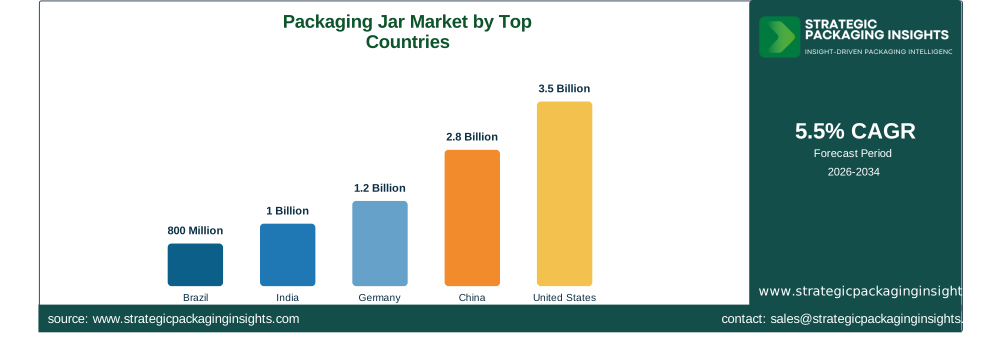
China is another significant market, with a market size of around $2.8 billion and a CAGR of 6%. The country's booming e-commerce industry and growing consumer awareness of environmental issues are key growth drivers. The Chinese government's focus on sustainability and circular economy practices is also contributing to market growth. However, the market faces challenges such as fluctuating raw material prices and stringent regulations.
Germany, with a market size of approximately $1.2 billion and a CAGR of 5%, is a leading market in Europe. The country's strong focus on sustainability and innovation in packaging solutions is driving market growth. Government policies promoting recycling and waste reduction are also supporting the market's expansion. However, the market faces challenges such as high production costs and competition from alternative packaging solutions.
India, with a market size of around $1 billion and a CAGR of 7%, is an emerging market with significant growth potential. The country's growing middle class and increasing demand for packaged goods are driving market growth. Government initiatives promoting sustainable packaging solutions and waste management are also contributing to market expansion. However, challenges such as regulatory compliance and competition from alternative packaging solutions persist.
Brazil, with a market size of approximately $800 million and a CAGR of 5%, is a key market in Latin America. The country's growing consumer base and increasing demand for packaged goods are driving market growth. Government initiatives promoting recycling and waste reduction are also supporting the market's expansion. However, the market faces challenges such as economic instability and competition from alternative packaging solutions.
Packaging Jar Market Segments Insights

Product Type Analysis
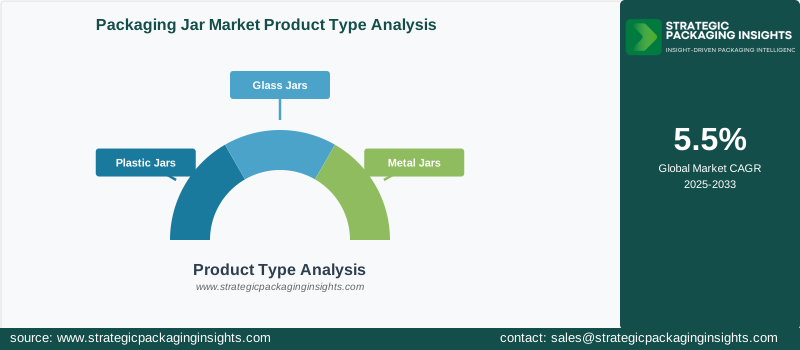
The Packaging Jar market is segmented by product type into plastic jars, glass jars, and metal jars. Plastic jars dominate the market due to their lightweight, durability, and cost-effectiveness. They are widely used in various applications, including food, cosmetics, and pharmaceuticals. The demand for plastic jars is driven by their versatility and the increasing preference for convenient and portable packaging solutions. However, the market is witnessing a shift towards glass jars, driven by the growing demand for sustainable and eco-friendly packaging solutions. Glass jars are favored for their recyclability and premium appearance, making them popular in the cosmetics and food industries. Metal jars, although less common, are used in niche applications where durability and protection are paramount.
Material Type Analysis
The market is also segmented by material type into PET, HDPE, PP, and glass. PET is the most widely used material due to its lightweight, clarity, and recyclability. It is commonly used in the food and beverage industry for packaging products such as sauces, condiments, and beverages. HDPE is favored for its strength and resistance to chemicals, making it suitable for packaging household and industrial products. PP is known for its versatility and is used in various applications, including food, cosmetics, and pharmaceuticals. Glass, although less common, is preferred for its premium appearance and recyclability, making it popular in the cosmetics and food industries.
Application Analysis
The Packaging Jar market is segmented by application into food, cosmetics, pharmaceuticals, and home care. The food segment holds the largest market share, driven by the increasing demand for packaged and processed foods. Packaging jars are widely used for packaging sauces, condiments, spreads, and other food products. The cosmetics segment is also experiencing significant growth, driven by the increasing demand for premium and eco-friendly packaging solutions. Packaging jars are used for packaging creams, lotions, and other cosmetic products. The pharmaceutical segment is driven by the increasing demand for safe and secure packaging solutions for medicines and healthcare products. The home care segment is also experiencing growth, driven by the increasing demand for convenient and portable packaging solutions for household products.
End Use Analysis
The market is segmented by end use into FMCG brands, healthcare, retailers, and converters. FMCG brands hold the largest market share, driven by the increasing demand for packaged goods and the need for innovative and customizable packaging solutions. Healthcare is also a significant segment, driven by the increasing demand for safe and secure packaging solutions for medicines and healthcare products. Retailers are increasingly looking for packaging solutions that enhance product visibility and appeal, driving demand for packaging jars. Converters, who provide packaging solutions to various industries, are also experiencing growth, driven by the increasing demand for innovative and customizable packaging solutions.
Packaging Jar Market Segments
The Packaging Jar market has been segmented on the basis ofProduct Type
- Plastic Jars
- Glass Jars
- Metal Jars
Material Type
- PET
- HDPE
- PP
- Glass
Application
- Food
- Cosmetics
- Pharmaceuticals
- Home Care
End Use
- FMCG Brands
- Healthcare
- Retailers
- Converters
Region
- Asia Pacific
- North America
- Latin America
- Europe
- Middle East & Africa




