


Packaging Design And Simulation Technology Market Outlook
The Packaging Design And Simulation Technology market was valued at $844.07 million in 2025 and is projected to reach $1.97 billion by 2034, growing at a CAGR of 9.9% during the forecast period 2026-2034. This market is witnessing significant growth due to the increasing demand for innovative and sustainable packaging solutions. The rise in e-commerce and the need for efficient packaging to reduce shipping costs and improve product safety are key drivers. Additionally, advancements in technology, such as AI and machine learning, are enhancing the capabilities of design and simulation tools, making them more accessible and efficient for end-users.
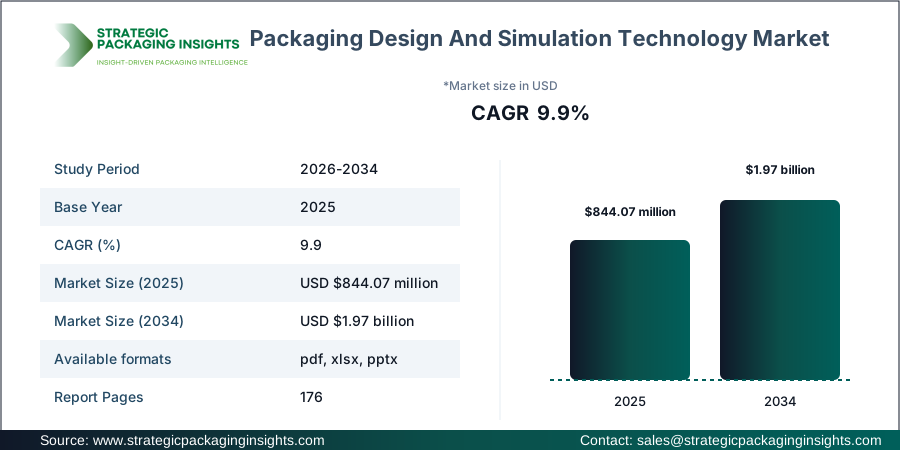
However, the market faces challenges such as high initial costs and the complexity of integrating new technologies into existing systems. Regulatory constraints and the need for skilled personnel to operate advanced software also pose barriers to growth. Despite these challenges, the market holds immense potential for expansion, driven by the growing emphasis on sustainability and the increasing adoption of cloud-based solutions, which offer flexibility and scalability to businesses of all sizes.
Report Scope
| Attributes | Details |
| Report Title | Packaging Design And Simulation Technology Market Size, Future Growth and Forecast 2034 |
| Component | Design Software, Simulation Software, Prototyping Tools, Cloud Platforms |
| Application | Structural Packaging Design, Sustainability Optimization, Load Simulation, Print Visualization |
| Deployment | Cloud, On-Premise, Hybrid |
| End Use | Packaging Converters, Brand Owners, Design Agencies, Manufacturers |
| Region | Asia Pacific, North America, Latin America, Europe, Middle East & Africa |
| Base Year | 2025 |
| Historic Period | 2018-2024 |
| Forecast Period | 2026-2034 |
| Number of Pages | 176 |
| Customization Available | Yes* |
Opportunities & Threats
The Packaging Design And Simulation Technology market presents numerous opportunities, particularly in the realm of sustainability. As environmental concerns continue to rise, companies are increasingly focusing on reducing their carbon footprint and minimizing waste. This has led to a surge in demand for sustainable packaging solutions, which in turn drives the need for advanced design and simulation technologies. These technologies enable companies to optimize their packaging designs for sustainability, reducing material usage and improving recyclability. Furthermore, the integration of AI and machine learning into design software offers opportunities for innovation, allowing companies to create more efficient and effective packaging solutions.
Another significant opportunity lies in the growing e-commerce sector. As online shopping continues to expand, the demand for efficient and cost-effective packaging solutions is increasing. Packaging design and simulation technologies can help companies optimize their packaging for e-commerce, ensuring that products are protected during transit while minimizing shipping costs. Additionally, the rise of personalized packaging, driven by consumer demand for unique and customized products, presents further opportunities for growth in this market.
Despite these opportunities, the market also faces threats, particularly from regulatory challenges. As governments around the world implement stricter regulations on packaging materials and waste, companies must navigate a complex regulatory landscape. This can increase costs and create barriers to entry for new players. Additionally, the rapid pace of technological change poses a threat, as companies must continually invest in new technologies to remain competitive. The need for skilled personnel to operate advanced design and simulation tools also presents a challenge, as there is a shortage of qualified professionals in this field.
Drivers & Challenges
One of the primary drivers of the Packaging Design And Simulation Technology market is the increasing demand for innovative and sustainable packaging solutions. As consumers become more environmentally conscious, companies are under pressure to reduce their environmental impact. This has led to a surge in demand for sustainable packaging, which in turn drives the need for advanced design and simulation technologies. These technologies enable companies to optimize their packaging designs for sustainability, reducing material usage and improving recyclability. Additionally, the rise of e-commerce and the need for efficient packaging to reduce shipping costs and improve product safety are key drivers of market growth.
Another significant driver is the advancement of technology, particularly in the areas of AI and machine learning. These technologies are enhancing the capabilities of design and simulation tools, making them more accessible and efficient for end-users. AI and machine learning can automate complex design processes, allowing companies to create more efficient and effective packaging solutions. Furthermore, the increasing adoption of cloud-based solutions offers flexibility and scalability to businesses of all sizes, further driving market growth.
However, the market also faces challenges, particularly in terms of cost and complexity. The high initial costs of implementing advanced design and simulation technologies can be a barrier to entry for smaller companies. Additionally, the complexity of integrating new technologies into existing systems can pose challenges, particularly for companies with limited technical expertise. Regulatory constraints and the need for skilled personnel to operate advanced software also present barriers to growth. Despite these challenges, the market holds immense potential for expansion, driven by the growing emphasis on sustainability and the increasing adoption of cloud-based solutions.
Market Share Analysis
The competitive landscape of the Packaging Design And Simulation Technology market is characterized by the presence of several key players, each vying for market share through innovation and strategic partnerships. Companies such as Esko, Dassault Systèmes, Autodesk, Siemens, and PTC are leading the market with their advanced design and simulation solutions. These companies are investing heavily in research and development to enhance their product offerings and maintain a competitive edge. Additionally, they are forming strategic alliances and partnerships to expand their market presence and reach new customer segments.
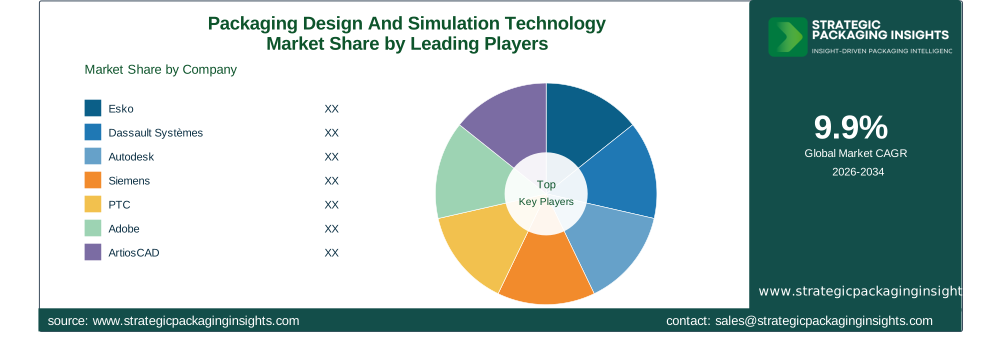
Esko, a leading player in the market, is known for its comprehensive suite of packaging design and simulation tools. The company has a strong focus on innovation, continuously enhancing its software capabilities to meet the evolving needs of its customers. Dassault Systèmes, another major player, offers a range of design and simulation solutions that leverage advanced technologies such as AI and machine learning. The company's solutions are widely used across various industries, including packaging, to optimize design processes and improve efficiency.
Autodesk is also a key player in the market, offering a range of design software solutions that are widely used in the packaging industry. The company's solutions are known for their ease of use and advanced capabilities, making them a popular choice among packaging designers. Siemens, with its extensive experience in industrial automation and digitalization, offers a range of simulation solutions that are widely used in the packaging industry. The company's solutions are designed to optimize packaging processes and improve efficiency, making them a valuable tool for packaging companies.
Other notable players in the market include PTC, Adobe, ArtiosCAD, TOPS Software, Cape Pack, and ESKO Cape Systems. These companies are known for their innovative solutions and strong market presence. They are continuously investing in research and development to enhance their product offerings and maintain a competitive edge. The market is highly competitive, with companies constantly striving to innovate and differentiate their offerings to capture a larger share of the market.
Key Highlights
- The Packaging Design And Simulation Technology market is projected to grow at a CAGR of 9.9% from 2026 to 2034.
- Key drivers include the increasing demand for sustainable packaging solutions and the rise of e-commerce.
- Technological advancements, particularly in AI and machine learning, are enhancing the capabilities of design and simulation tools.
- The market faces challenges such as high initial costs and regulatory constraints.
- Key players include Esko, Dassault Systèmes, Autodesk, Siemens, and PTC.
- The market is characterized by intense competition and rapid technological advancements.
- Cloud-based solutions offer flexibility and scalability, driving market growth.
- There is a growing emphasis on sustainability and reducing environmental impact.
- The shortage of skilled personnel to operate advanced tools presents a challenge.
- Strategic partnerships and alliances are key strategies for market players.
Top Countries Insights
In the Packaging Design And Simulation Technology market, the United States stands out as a leader, with a market size of approximately $500 million and a CAGR of 10%. The country's strong focus on innovation and sustainability, coupled with a robust e-commerce sector, drives demand for advanced packaging solutions. Government policies supporting sustainable practices further bolster market growth. However, regulatory challenges and the need for skilled personnel remain hurdles.
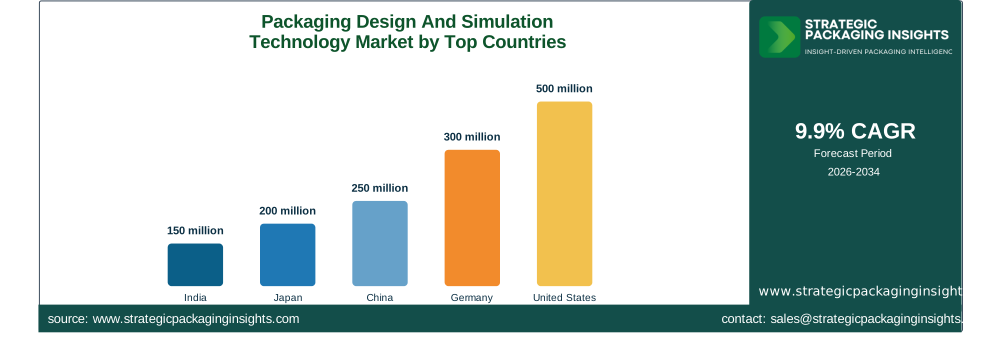
Germany, with a market size of around $300 million and a CAGR of 9%, is another key player in the market. The country's strong manufacturing sector and emphasis on sustainability drive demand for packaging design and simulation technologies. Innovation in materials and processes, supported by government initiatives, fuels market growth. However, high costs and regulatory constraints pose challenges.
China, with a market size of approximately $250 million and a CAGR of 12%, is experiencing rapid growth in the packaging design and simulation technology market. The country's booming e-commerce sector and increasing focus on sustainability drive demand for advanced packaging solutions. Government policies supporting innovation and technology adoption further boost market growth. However, regulatory challenges and the need for skilled personnel remain hurdles.
Japan, with a market size of around $200 million and a CAGR of 8%, is a key player in the market. The country's strong focus on innovation and technology, coupled with a robust manufacturing sector, drives demand for packaging design and simulation technologies. Government initiatives supporting sustainable practices further bolster market growth. However, high costs and regulatory constraints pose challenges.
India, with a market size of approximately $150 million and a CAGR of 11%, is experiencing significant growth in the packaging design and simulation technology market. The country's growing e-commerce sector and increasing focus on sustainability drive demand for advanced packaging solutions. Government policies supporting innovation and technology adoption further boost market growth. However, regulatory challenges and the need for skilled personnel remain hurdles.
Packaging Design And Simulation Technology Market Segments Insights

Component Analysis
The component segment of the Packaging Design And Simulation Technology market is crucial, encompassing design software, simulation software, prototyping tools, and cloud platforms. Design software is pivotal in creating innovative packaging solutions, allowing designers to visualize and modify designs efficiently. The demand for design software is driven by the need for customization and the increasing emphasis on sustainability. Simulation software plays a critical role in testing packaging designs under various conditions, ensuring durability and efficiency. The rise of AI and machine learning is enhancing the capabilities of simulation software, making it more accurate and reliable.
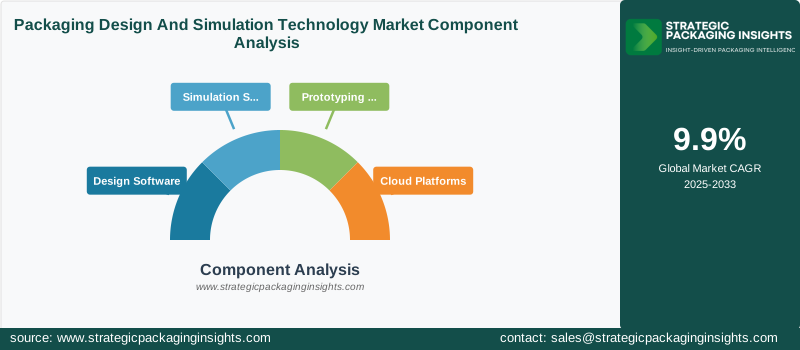
Prototyping tools are essential for creating physical models of packaging designs, allowing for real-world testing and validation. The demand for prototyping tools is driven by the need for rapid prototyping and the increasing emphasis on reducing time-to-market. Cloud platforms offer flexibility and scalability, enabling companies to access design and simulation tools from anywhere, at any time. The adoption of cloud platforms is driven by the need for cost-effective solutions and the increasing emphasis on collaboration and remote working. Overall, the component segment is characterized by rapid technological advancements and intense competition, with companies continuously striving to innovate and differentiate their offerings.
Application Analysis
The application segment of the Packaging Design And Simulation Technology market includes structural packaging design, sustainability optimization, load simulation, and print visualization. Structural packaging design is a critical application, focusing on creating packaging solutions that are both functional and aesthetically pleasing. The demand for structural packaging design is driven by the need for innovative and sustainable solutions, as well as the increasing emphasis on brand differentiation. Sustainability optimization is another key application, focusing on reducing the environmental impact of packaging through material reduction and improved recyclability.
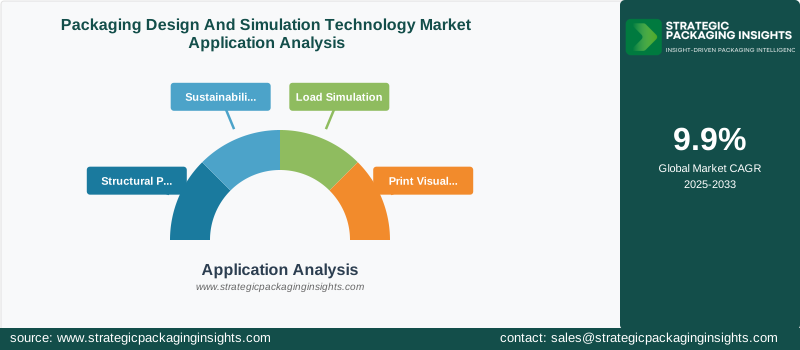
Load simulation is essential for testing packaging designs under various conditions, ensuring that they can withstand the rigors of transportation and handling. The demand for load simulation is driven by the need for efficient and cost-effective packaging solutions, particularly in the e-commerce sector. Print visualization is a crucial application, allowing designers to visualize and modify packaging designs before production. The demand for print visualization is driven by the need for customization and the increasing emphasis on brand differentiation. Overall, the application segment is characterized by rapid technological advancements and intense competition, with companies continuously striving to innovate and differentiate their offerings.
Deployment Analysis
The deployment segment of the Packaging Design And Simulation Technology market includes cloud, on-premise, and hybrid solutions. Cloud deployment is gaining traction due to its flexibility and scalability, allowing companies to access design and simulation tools from anywhere, at any time. The adoption of cloud solutions is driven by the need for cost-effective solutions and the increasing emphasis on collaboration and remote working. On-premise deployment remains popular among companies with specific security and compliance requirements, offering greater control over data and infrastructure.
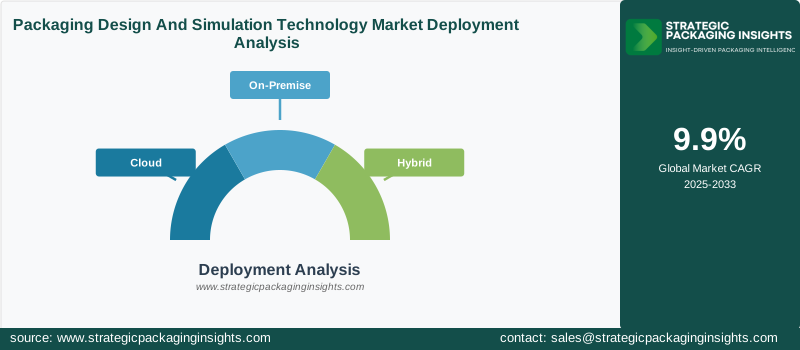
Hybrid deployment combines the benefits of both cloud and on-premise solutions, offering flexibility and control. The demand for hybrid solutions is driven by the need for customized solutions that meet specific business requirements. Overall, the deployment segment is characterized by rapid technological advancements and intense competition, with companies continuously striving to innovate and differentiate their offerings. The increasing adoption of cloud and hybrid solutions is expected to drive market growth, as companies seek to leverage the benefits of these technologies to improve efficiency and reduce costs.
End Use Analysis
The end-use segment of the Packaging Design And Simulation Technology market includes packaging converters, brand owners, design agencies, and manufacturers. Packaging converters are key users of design and simulation technologies, focusing on creating innovative and sustainable packaging solutions. The demand for packaging converters is driven by the need for customization and the increasing emphasis on sustainability. Brand owners are also significant users, focusing on creating packaging solutions that enhance brand differentiation and improve customer experience.
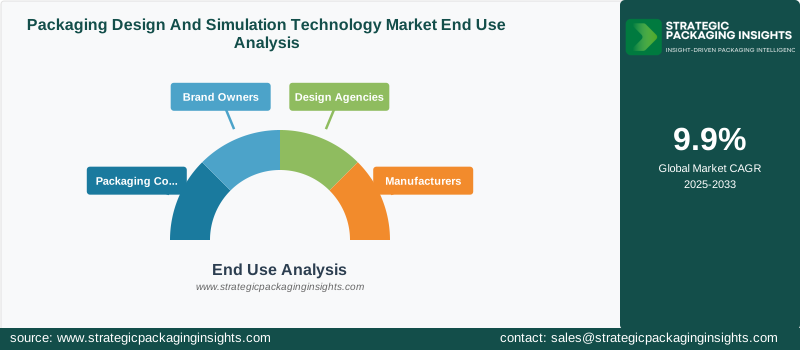
Design agencies play a crucial role in the market, offering specialized design and simulation services to companies across various industries. The demand for design agencies is driven by the need for innovative and customized solutions, as well as the increasing emphasis on brand differentiation. Manufacturers are also key users, focusing on optimizing packaging processes and improving efficiency. The demand for manufacturers is driven by the need for cost-effective solutions and the increasing emphasis on reducing time-to-market. Overall, the end-use segment is characterized by rapid technological advancements and intense competition, with companies continuously striving to innovate and differentiate their offerings.
Packaging Design And Simulation Technology Market Segments
The Packaging Design And Simulation Technology market has been segmented on the basis ofComponent
- Design Software
- Simulation Software
- Prototyping Tools
- Cloud Platforms
Application
- Structural Packaging Design
- Sustainability Optimization
- Load Simulation
- Print Visualization
Deployment
- Cloud
- On-Premise
- Hybrid
End Use
- Packaging Converters
- Brand Owners
- Design Agencies
- Manufacturers
Region
- Asia Pacific
- North America
- Latin America
- Europe
- Middle East & Africa




