


Packaging Bins Market Outlook
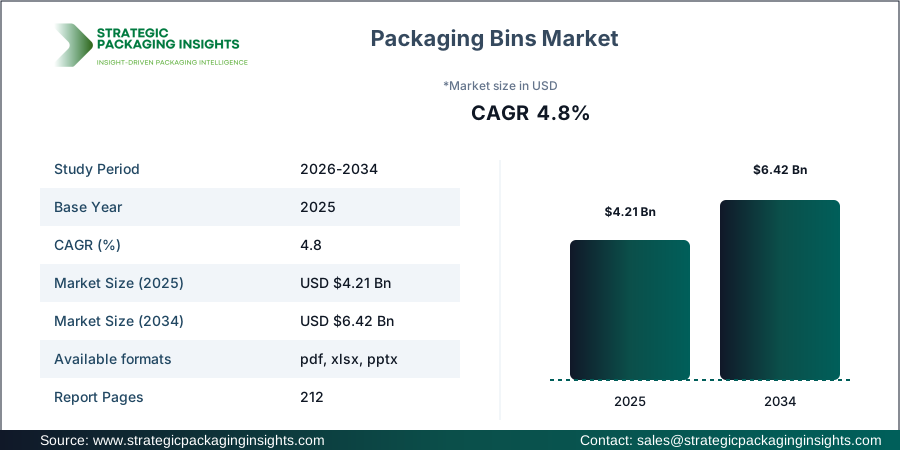
The Packaging Bins market size was valued at USD 4.21 billion in 2025 and is anticipated to reach USD 6.42 billion by 2034, growing at a CAGR of 4.8% during the forecast period according to Strategic Packaging Insights. The market is witnessing robust growth driven by the increasing demand for efficient storage solutions across various industries. Companies like ORBIS and SSI Schaefer are leading the charge in innovation, offering a wide range of products that cater to diverse storage needs. The rise in e-commerce and the need for effective logistics solutions are further propelling the demand for packaging bins, as businesses seek to optimize their supply chain operations.
One of the most impactful drivers of the Packaging Bins market is the growing emphasis on sustainability and eco-friendly packaging solutions. Governments worldwide are implementing stringent regulations to reduce plastic waste, which is encouraging manufacturers to develop recyclable and biodegradable packaging bins. This trend is supported by the increasing consumer awareness and preference for sustainable products, which is pushing companies like Schoeller Allibert and Rehrig Pacific to innovate and offer environmentally friendly options. The shift towards sustainable packaging is not only a regulatory requirement but also a strategic move for companies to enhance their brand image and meet the evolving consumer expectations.
Report Scope
| Attributes | Details |
| Report Title | Packaging Bins Market Size, Future Growth and Forecast 2034 |
| Product Type | Plastic Bins, Corrugated Bins, Metal Bins, Stackable Bins |
| Capacity | Small, Medium, Large, Bulk |
| Application | Warehouse Storage, Retail Display, Material Handling, Food Storage |
| End Use | Logistics, Retail, Manufacturing, Food & Beverage |
| Region | Asia Pacific, North America, Latin America, Europe, Middle East & Africa |
| Base Year | 2025 |
| Historic Period | 2018-2024 |
| Forecast Period | 2026-2034 |
| Number of Pages | 212 |
| Customization Available | Yes* |
Opportunities & Threats
The Packaging Bins market presents significant opportunities for growth, particularly in the realm of technological advancements. The integration of smart technologies such as IoT and RFID in packaging bins is revolutionizing inventory management and logistics operations. Companies are investing in R&D to develop smart bins that can provide real-time data on inventory levels, location tracking, and condition monitoring. This technological shift is opening new avenues for market players to offer value-added services and enhance operational efficiency for their clients. As businesses increasingly adopt digital solutions, the demand for smart packaging bins is expected to rise, creating lucrative opportunities for manufacturers.
Another promising opportunity lies in the expansion of the e-commerce sector. With the surge in online shopping, there is a growing need for efficient storage and transportation solutions to manage the increased volume of goods. Packaging bins are essential for organizing and transporting products in warehouses and distribution centers. Companies like IPL Plastics and Craemer are capitalizing on this trend by offering innovative storage solutions that cater to the specific needs of e-commerce businesses. The continuous growth of the e-commerce industry is expected to drive the demand for packaging bins, providing a significant boost to the market.
However, the market also faces certain threats, primarily related to the volatility in raw material prices. The cost of materials such as plastic and metal can fluctuate due to various factors, including geopolitical tensions and supply chain disruptions. These fluctuations can impact the production costs for manufacturers, affecting their profit margins. Additionally, the increasing competition in the market poses a challenge for companies to differentiate their products and maintain their market share. To mitigate these threats, companies need to focus on strategic sourcing and cost management, as well as continuous innovation to stay ahead in the competitive landscape.
Drivers & Challenges
The primary driver of the Packaging Bins market is the increasing demand for efficient storage and logistics solutions across various industries. As businesses strive to optimize their supply chain operations, the need for durable and versatile packaging bins is on the rise. Companies like Myers Industries and Nilkamal are at the forefront of this trend, offering a wide range of products that cater to different storage needs. The growth of the logistics and transportation sector is also contributing to the demand for packaging bins, as they are essential for organizing and transporting goods efficiently. The emphasis on operational efficiency and cost reduction is driving businesses to invest in high-quality packaging solutions.
Another significant driver is the growing focus on sustainability and eco-friendly packaging solutions. With increasing environmental concerns and regulatory pressures, companies are shifting towards recyclable and biodegradable packaging bins. This trend is supported by the rising consumer awareness and preference for sustainable products. Manufacturers are investing in R&D to develop innovative solutions that meet the evolving consumer expectations and regulatory requirements. The shift towards sustainable packaging is not only a regulatory necessity but also a strategic move for companies to enhance their brand image and gain a competitive edge in the market.
Despite the positive growth prospects, the Packaging Bins market faces several challenges. One of the major challenges is the high competition among market players. With numerous companies offering similar products, differentiation becomes crucial for gaining a competitive advantage. Companies need to focus on innovation and product development to stand out in the crowded market. Additionally, the volatility in raw material prices poses a challenge for manufacturers, as it can impact their production costs and profit margins. To overcome these challenges, companies need to adopt strategic sourcing and cost management practices, as well as invest in continuous innovation to stay ahead in the competitive landscape.
Market Growth Factors
- The EU's Packaging and Packaging Waste Regulation entered into force on February 11, 2025 and generally applies from August 12, 2026; because it sets manufacturing, composition, and reusable or recoverable requirements for all packaging placed on the EU market, it is increasing demand for compliant reusable bins and transport packaging formats. [European Commission ]
- New York City's containerization program is creating direct municipal demand for standardized bins: as of June 2026, properties with 1-9 residential units must use official NYC Bins for trash setout, while Empire Bins are being rolled out for larger buildings with citywide expansion planned by 2032.
- Warehouse automation is raising demand for precision-engineered bins. Rehrig Pacific said its August 2025 AutoStore partnership reflects accelerating automation and the need for high-performance bins and totes that integrate into dense automated storage and fulfillment systems.
- North American manufacturing investment is improving supply availability for reusable packaging bins. ORBIS's Greenville, Texas plant added 420,000 square feet of manufacturing space and 240,000 square feet of warehouse space for reusable packaging production, supporting faster regional supply and additional output.
- Standardization is lowering adoption barriers for reuse systems. PR3 published its container design and performance standard in February 2026 and is developing related standards for marking and labeling, collection points, digital systems, operations, and washing, giving reusable packaging programs clearer technical rules. [PR3 ]
- Commercial refill and reuse programs are scaling in grocery fulfillment. Amcor said the Ocado Retail refill project is expanding to more customer fulfillment centers and reaching 90% of Ocado's customer base, supporting recurring demand for durable refillable containers and return logistics infrastructure.
- Food processors and retailers are replacing disposable corrugated with reusable bin systems to improve hygiene, protection, and operating efficiency. Rehrig Pacific said its work with Smithfield Foods moved from corrugated materials to reusable bin solutions and led to a modular, customizable bin for food processing operations.
Recent Developments
- In February 2025, ORBIS opened a new manufacturing plant in Greenville, Texas, adding 420,000 square feet of manufacturing space and 240,000 square feet of warehouse space for reusable packaging such as totes and pallets, with phased installation of 16 presses during 2025. [ORBIS Corporation ]
- In August 2025, Rehrig Pacific was named AutoStore's official bin manufacturing partner in the United States, a strategic partnership that put initial production in place for customer installations and expanded Rehrig's role in robotic warehouse automation. [Rehrig Pacific Company ]
- In May 2026, Tosca and Rehrig Pacific launched the 6315 Specialty Egg Reusable Packaging Container, a reusable, automation-ready crate for premium and specialty eggs that is designed to integrate with existing pooled networks.
- In June 2026, ORBIS added Greenville, Texas as a second North American manufacturing site for AutoStore-approved bins, alongside Toronto, to strengthen supply for growing automation demand across the reusable packaging industry.
Market Share Analysis
The Packaging Bins market is characterized by a highly competitive landscape, with several key players vying for market share. Companies like ORBIS, SSI Schaefer, and Schoeller Allibert are leading the market with their innovative product offerings and strong distribution networks. These companies have established themselves as leaders in the industry by focusing on product development and strategic partnerships. The competitive landscape is further intensified by the presence of regional players who are expanding their market presence through mergers and acquisitions.
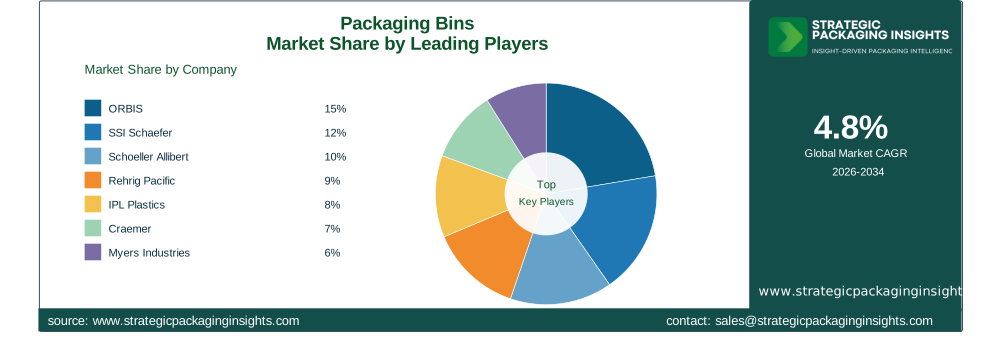
ORBIS Corporation, a subsidiary of Menasha Corporation, is a prominent player in the Packaging Bins market. The company offers a wide range of reusable plastic packaging solutions that cater to various industries, including automotive, food and beverage, and consumer goods. ORBIS is known for its innovative product designs and commitment to sustainability, which has helped it maintain a strong market position. The company's focus on customer-centric solutions and continuous product development has enabled it to expand its market presence globally.
SSI Schaefer is another leading player in the market, known for its comprehensive range of storage and logistics solutions. The company offers a variety of packaging bins, including plastic and metal options, that are designed to meet the diverse needs of its clients. SSI Schaefer's strong focus on innovation and technology integration has helped it maintain a competitive edge in the market. The company's global presence and extensive distribution network have further strengthened its market position.
Schoeller Allibert is a key player in the Packaging Bins market, offering a wide range of reusable plastic packaging solutions. The company is known for its commitment to sustainability and innovation, which has helped it establish a strong market presence. Schoeller Allibert's focus on product development and strategic partnerships has enabled it to expand its market reach and cater to the evolving needs of its clients. The company's emphasis on quality and customer satisfaction has further contributed to its success in the market.
Key Highlights
- The Packaging Bins market is projected to grow from USD 4.21 billion in 2025 to USD 6.42 billion by 2034, at a CAGR of 4.8%.
- Key players in the market include ORBIS, SSI Schaefer, Schoeller Allibert, and Rehrig Pacific.
- The market is driven by the increasing demand for efficient storage and logistics solutions across various industries.
- Sustainability and eco-friendly packaging solutions are major trends shaping the market.
- Technological advancements, such as IoT and RFID integration, are creating new opportunities for market players.
- The e-commerce sector is a significant driver of demand for packaging bins.
- Volatility in raw material prices poses a challenge for manufacturers.
- High competition among market players necessitates continuous innovation and product differentiation.
- Strategic partnerships and mergers and acquisitions are common strategies among market players to expand their market presence.
- Regulatory pressures and consumer preferences are driving the shift towards sustainable packaging solutions.
Packaging Bins Market Segments Insights

Product Type Analysis
The Packaging Bins market is segmented by product type into plastic bins, corrugated bins, metal bins, and stackable bins. Plastic bins dominate the market due to their durability, lightweight nature, and cost-effectiveness. Companies like ORBIS and IPL Plastics are leading the charge in this segment, offering a wide range of plastic bins that cater to various storage needs. The demand for plastic bins is driven by their versatility and ability to withstand harsh environmental conditions, making them ideal for use in logistics and manufacturing industries. However, the growing emphasis on sustainability is encouraging manufacturers to develop eco-friendly alternatives, such as biodegradable plastic bins, to meet the evolving consumer preferences and regulatory requirements.
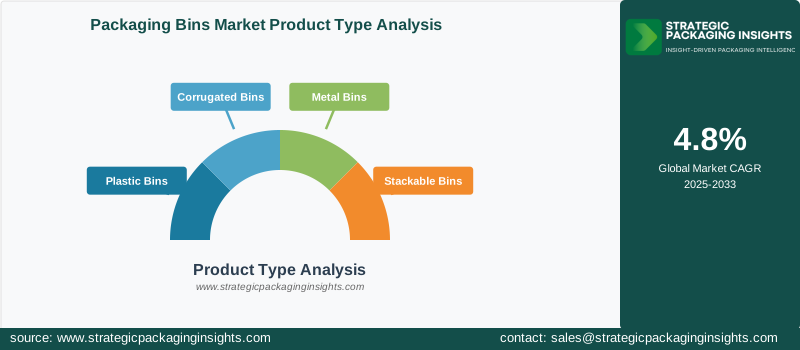
Corrugated bins are gaining traction in the market due to their recyclability and cost-effectiveness. These bins are widely used in retail and e-commerce sectors for packaging and transporting goods. Companies like Schoeller Allibert and Rehrig Pacific are focusing on developing innovative corrugated bins that offer enhanced durability and protection for products. The demand for corrugated bins is expected to rise as businesses increasingly adopt sustainable packaging solutions to reduce their environmental impact. Metal bins, on the other hand, are preferred for heavy-duty applications in industries such as manufacturing and logistics, where durability and strength are crucial. The stackable bins segment is also witnessing growth, driven by the need for efficient space utilization in warehouses and distribution centers.
Capacity Analysis
The Packaging Bins market is segmented by capacity into small, medium, large, and bulk bins. Small and medium bins are widely used in retail and e-commerce sectors for organizing and transporting products. Companies like Nilkamal and Craemer are offering a wide range of small and medium bins that cater to the specific needs of these industries. The demand for small and medium bins is driven by the increasing need for efficient storage solutions in warehouses and distribution centers. Large and bulk bins, on the other hand, are preferred for heavy-duty applications in industries such as manufacturing and logistics, where durability and strength are crucial.
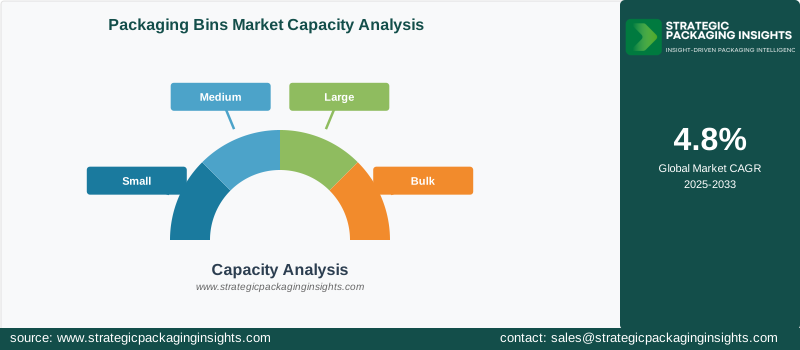
The bulk bins segment is witnessing significant growth, driven by the increasing demand for efficient storage solutions in the food and beverage industry. Companies like Georg Utz and TranPak are focusing on developing innovative bulk bins that offer enhanced durability and protection for products. The demand for bulk bins is expected to rise as businesses increasingly adopt sustainable packaging solutions to reduce their environmental impact. The growing emphasis on operational efficiency and cost reduction is driving businesses to invest in high-quality packaging solutions that offer maximum storage capacity and durability.
Application Analysis
The Packaging Bins market is segmented by application into warehouse storage, retail display, material handling, and food storage. Warehouse storage is the largest application segment, driven by the increasing demand for efficient storage solutions in logistics and transportation sectors. Companies like Myers Industries and SSI Schaefer are offering a wide range of packaging bins that cater to the specific needs of warehouse storage applications. The demand for warehouse storage bins is driven by the need for efficient space utilization and organization of products in warehouses and distribution centers.
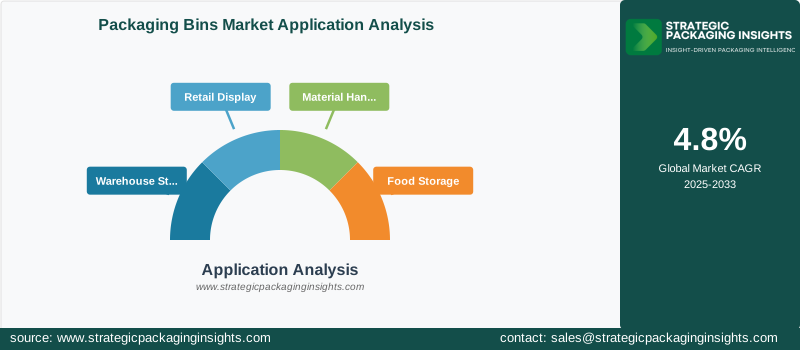
Retail display is another significant application segment, driven by the increasing demand for attractive and durable packaging solutions in retail and e-commerce sectors. Companies like ORBIS and Schoeller Allibert are focusing on developing innovative retail display bins that offer enhanced durability and protection for products. The demand for retail display bins is expected to rise as businesses increasingly adopt sustainable packaging solutions to enhance their brand image and meet the evolving consumer preferences. Material handling and food storage are also significant application segments, driven by the need for efficient and durable packaging solutions in manufacturing and food and beverage industries.
End Use Analysis
The Packaging Bins market is segmented by end use into logistics, retail, manufacturing, and food & beverage. Logistics is the largest end-use segment, driven by the increasing demand for efficient storage and transportation solutions in logistics and transportation sectors. Companies like Rehrig Pacific and IPL Plastics are offering a wide range of packaging bins that cater to the specific needs of logistics applications. The demand for logistics bins is driven by the need for efficient space utilization and organization of products in warehouses and distribution centers.
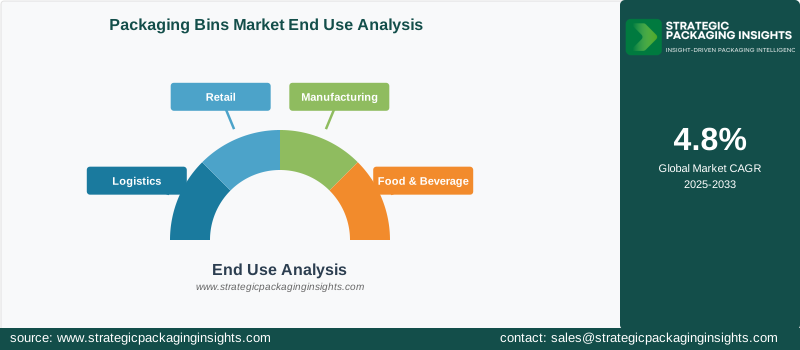
Retail is another significant end-use segment, driven by the increasing demand for attractive and durable packaging solutions in retail and e-commerce sectors. Companies like ORBIS and Schoeller Allibert are focusing on developing innovative retail bins that offer enhanced durability and protection for products. The demand for retail bins is expected to rise as businesses increasingly adopt sustainable packaging solutions to enhance their brand image and meet the evolving consumer preferences. Manufacturing and food & beverage are also significant end-use segments, driven by the need for efficient and durable packaging solutions in manufacturing and food and beverage industries.
Packaging Bins Market Segments
The Packaging Bins market has been segmented on the basis ofProduct Type
- Plastic Bins
- Corrugated Bins
- Metal Bins
- Stackable Bins
Capacity
- Small
- Medium
- Large
- Bulk
Application
- Warehouse Storage
- Retail Display
- Material Handling
- Food Storage
End Use
- Logistics
- Retail
- Manufacturing
- Food & Beverage
Region
- Asia Pacific
- North America
- Latin America
- Europe
- Middle East & Africa




