


Packaging and Protective Packaging Market Outlook
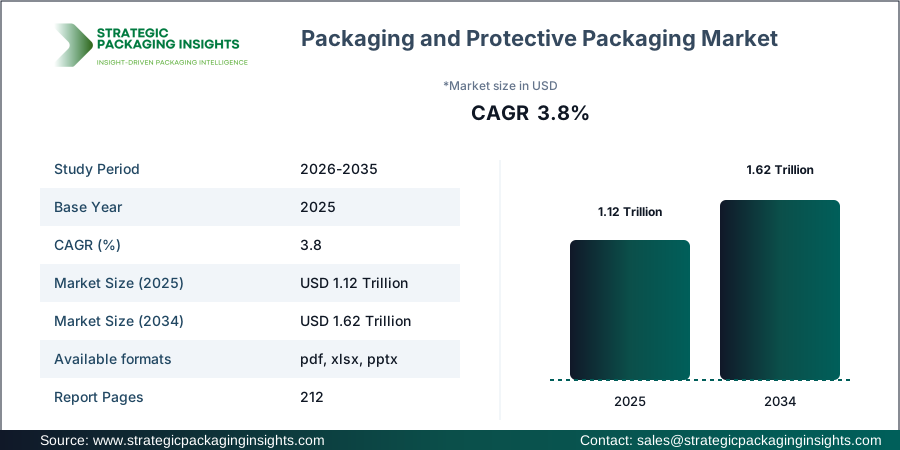
The Packaging and Protective Packaging market size was valued at USD $1.12 Trillion in 2025 and is anticipated to reach USD $1.62 Trillion by 2035, growing at a CAGR of 3.8% % during the forecast period according to Strategic Packaging Insights. The market's growth is primarily driven by the increasing demand for sustainable and efficient packaging solutions across various industries, including food and beverage, electronics, and e-commerce. The rise in online shopping and the need for protective packaging to ensure product safety during transit are significant contributors to market expansion.Report Scope
| Attributes | Details |
| Report Title | Packaging and Protective Packaging Market Projected to Scale to 1.62 Trillion by 2035, Assesses Strategic Packaging Insights |
| By Packaging Type | Flexible Packaging, Rigid Packaging, Protective Packaging, Corrugated Packaging, Paper and Paperboard Packaging, Plastic Packaging, Metal Packaging, Glass Packaging |
| By Protective Packaging Type | Foam Packaging, Air Cushions, Bubble Wrap, Protective Films, Edge Protectors, Corner Protectors, Molded Pulp Packaging, Protective Inserts, Void Fill Packaging, Shock-Absorbing Packaging |
| By Material | Plastic, Paper and Paperboard, Foam, Wood, Molded Pulp, Metal, Glass, Biodegradable Materials |
| By Application | Food and Beverage, Consumer Goods, Electronics, Pharmaceuticals, Healthcare, Automotive, Industrial Goods, E-Commerce, Retail, Household Products |
| By Function | Product Protection, Shock Protection, Vibration Protection, Moisture Protection, Temperature Protection, Tamper Protection, Impact Protection, Surface Protection |
| By End Use Industry | Food and Beverage, Electronics and Electrical, Pharmaceuticals and Healthcare, Automotive, Consumer Goods, Industrial Manufacturing, E-Commerce and Retail, Aerospace and Defense, Chemicals |
| By Distribution Channel | Direct Sales, Distributors, Specialty Packaging Suppliers, Online Sales |
| By Sustainability | Conventional Packaging, Recyclable Packaging, Reusable Packaging, Biodegradable Packaging, Compostable Packaging |
| By Region | North America, Europe, Asia-Pacific, Latin America, Middle East and Africa |
| Base Year | 2025 |
| Historic Period | 2018-2024 |
| Forecast Period | 2026-2035 |
| Number of Pages | 212 |
| Customization Available | Yes* |
Market Trends Analysis
The Packaging and Protective Packaging market is witnessing a shift towards sustainable materials, with a growing emphasis on recyclability and biodegradability. Companies are increasingly adopting eco-friendly packaging solutions to meet consumer demand and comply with stringent environmental regulations. This trend is driving innovation in material science, leading to the development of new biodegradable and compostable packaging materials. Additionally, the rise of e-commerce is fueling demand for protective packaging solutions that ensure product safety during transit, further boosting market growth.
Technological advancements in packaging machinery and automation are enhancing operational efficiency and reducing production costs. The integration of AI and IoT in packaging processes is enabling real-time monitoring and quality control, leading to improved product safety and reduced waste. Furthermore, the adoption of digital printing technologies is allowing for greater customization and personalization of packaging, catering to the evolving preferences of consumers. These trends are expected to drive competitive differentiation and open new avenues for growth in the packaging industry.
Industry Transformation Analysis
The packaging industry is undergoing significant transformation, driven by advancements in manufacturing technologies and a shift towards sustainable practices. The adoption of automation and robotics in packaging processes is enhancing operational efficiency and reducing labor costs. Additionally, the integration of digital technologies is enabling real-time monitoring and quality control, leading to improved product safety and reduced waste. These technological advancements are reshaping the competitive landscape, with companies investing in state-of-the-art machinery to gain a competitive edge.
Sustainability is at the forefront of industry transformation, with companies increasingly focusing on reducing their environmental footprint. The shift towards recyclable and biodegradable materials is driving innovation in material science, leading to the development of new eco-friendly packaging solutions. Furthermore, regulatory pressures and consumer demand for sustainable products are prompting companies to adopt circular economy practices, such as recycling and reusing materials. This transformation is expected to create new opportunities for growth and drive long-term sustainability in the packaging industry.
Trends & Disruptions Impacting Customers' Customers
Downstream customers, particularly in the e-commerce and food and beverage sectors, are increasingly prioritizing sustainability and efficiency in their packaging solutions. The rise of online shopping has heightened the need for protective packaging that ensures product safety during transit. Additionally, consumers are becoming more environmentally conscious, driving demand for recyclable and biodegradable packaging materials. These trends are influencing purchasing decisions and shaping the packaging strategies of companies across various industries.
The shift towards sustainable packaging is prompting companies to innovate and develop new materials that meet consumer expectations and regulatory requirements. This is leading to increased investment in research and development, as companies seek to differentiate themselves through eco-friendly packaging solutions. Furthermore, the demand for customized and personalized packaging is driving the adoption of digital printing technologies, enabling companies to cater to the evolving preferences of consumers. These changes are expected to create new market opportunities and drive growth in the packaging industry.
Packaging and Protective Packaging Market Ecosystem
The Packaging and Protective Packaging market ecosystem is characterized by a complex value chain involving multiple stages, from raw material procurement to recycling. The procurement of essential materials such as plastics, paper, and metals forms the foundation of the ecosystem, with resin or substrate production playing a crucial role in manufacturing base materials for packaging. Converting processes transform these raw materials into finished packaging products, which are then enhanced through printing and lamination for branding and protection.
Distribution and logistics are critical components of the ecosystem, ensuring the efficient delivery of packaging products to end-users. The recycling stage is gaining prominence as companies focus on sustainability and circular economy practices. This involves end-of-life processing and material recovery, contributing to the reduction of environmental impact. The interdependencies within the ecosystem highlight the importance of collaboration and innovation across the value chain to drive growth and sustainability in the packaging industry.
Analyst Perspective
Analyst Perspective: The Packaging and Protective Packaging market is poised for significant growth, driven by the increasing demand for sustainable and efficient packaging solutions across various industries.
The most important structural change in the market is the shift towards sustainable packaging materials, driven by consumer demand and regulatory pressures. This is leading to increased investment in research and development, as companies seek to innovate and develop new eco-friendly packaging solutions. The adoption of digital technologies and automation is also reshaping the competitive landscape, enhancing operational efficiency and reducing production costs.
Companies, investors, and other market participants should closely monitor advancements in sustainable materials and digital technologies, as these are expected to drive competitive differentiation and open new avenues for growth. The focus on sustainability and efficiency will continue to shape the future of the packaging industry, creating opportunities for innovation and long-term success.
Opportunities & Threats
The Packaging and Protective Packaging market presents significant opportunities for growth, driven by the increasing demand for sustainable and efficient packaging solutions. The shift towards eco-friendly materials is creating new avenues for innovation, with companies investing in research and development to develop biodegradable and recyclable packaging solutions. Additionally, the rise of e-commerce is fueling demand for protective packaging that ensures product safety during transit, further boosting market growth.
Technological advancements in packaging machinery and automation are enhancing operational efficiency and reducing production costs. The integration of digital technologies is enabling real-time monitoring and quality control, leading to improved product safety and reduced waste. These advancements are expected to drive competitive differentiation and open new opportunities for growth in the packaging industry.
However, the market also faces several threats, including raw material volatility and regulatory uncertainty. The fluctuating prices of essential materials such as plastics and metals can impact production costs and profitability. Additionally, stringent environmental regulations and sustainability requirements pose challenges for companies, requiring them to invest in eco-friendly materials and processes.
Competition in the packaging industry is intense, with companies vying for market share through innovation and differentiation. The need for continuous investment in research and development to meet evolving consumer preferences and regulatory requirements can strain resources and impact profitability. Furthermore, the reliance on global supply chains exposes companies to risks related to geopolitical tensions and trade disruptions.
Drivers & Challenges
The Packaging and Protective Packaging market is driven by several key factors, including the increasing demand for sustainable and efficient packaging solutions. The rise of e-commerce and online shopping has heightened the need for protective packaging that ensures product safety during transit. Additionally, consumer demand for eco-friendly packaging materials is driving innovation in material science, leading to the development of new biodegradable and recyclable solutions.
Technological advancements in packaging machinery and automation are enhancing operational efficiency and reducing production costs. The integration of digital technologies is enabling real-time monitoring and quality control, leading to improved product safety and reduced waste. These advancements are reshaping the competitive landscape, with companies investing in state-of-the-art machinery to gain a competitive edge.
However, the market also faces several challenges, including raw material volatility and regulatory uncertainty. The fluctuating prices of essential materials such as plastics and metals can impact production costs and profitability. Additionally, stringent environmental regulations and sustainability requirements pose challenges for companies, requiring them to invest in eco-friendly materials and processes. The reliance on global supply chains exposes companies to risks related to geopolitical tensions and trade disruptions.
Packaging Market Economics
The economics of the Packaging and Protective Packaging market are influenced by several factors, including raw material costs, conversion costs, and energy expenses. The prices of essential materials such as plastics, paper, and metals can significantly impact production costs and profitability. Additionally, the cost of energy and labor plays a crucial role in determining the overall economics of packaging production.
Conversion costs, including printing, lamination, and tooling, are critical components of the packaging value chain. The integration of digital technologies and automation is enhancing operational efficiency and reducing production costs, contributing to improved profitability. Furthermore, the focus on sustainability is driving investment in eco-friendly materials and processes, impacting the overall economics of the packaging industry.
Packaging Value Chain & Cost Analysis
The packaging value chain comprises several tiers, each playing a crucial role in the production and distribution of packaging products. Tier-3 involves resin synthesis, additives, and masterbatch production, forming the foundation of the value chain. Tier-2 includes film extrusion, paperboard mills, and substrate production, where raw materials are transformed into base materials for packaging.
Tier-1 involves converting, printing, lamination, and forming, where base materials are transformed into finished packaging products. Downstream activities include co-packing, CPG brand filling, distribution, collection, sorting, and recycling, ensuring the efficient delivery and end-of-life processing of packaging products. The value chain is characterized by interdependencies and collaboration across tiers, highlighting the importance of innovation and efficiency in driving growth and sustainability in the packaging industry.
Unit Economics & Substrate Cost Analysis
The unit economics of the Packaging and Protective Packaging market are influenced by several factors, including raw material costs, energy expenses, and conversion costs. The prices of essential materials such as plastics, paper, and metals can significantly impact the cost of production and profitability. Additionally, energy costs play a crucial role in determining the overall economics of packaging production.
Conversion costs, including extrusion, printing, lamination, and forming, are critical components of the unit economics. The integration of digital technologies and automation is enhancing operational efficiency and reducing production costs, contributing to improved profitability. Furthermore, the focus on sustainability is driving investment in eco-friendly materials and processes, impacting the overall unit economics of the packaging industry.
Packaging Regulatory & Sustainability Analysis
The Packaging and Protective Packaging market is subject to various regulatory and sustainability requirements, impacting the production and distribution of packaging products. Regulatory bodies such as the European Commission, U.S. EPA, and FDA play a crucial role in setting standards and guidelines for packaging materials and processes. These regulations are driving companies to adopt eco-friendly materials and practices, contributing to the overall sustainability of the packaging industry.
Sustainability is a key focus for the packaging industry, with companies increasingly adopting circular economy practices such as recycling and reusing materials. The shift towards recyclable and biodegradable materials is driving innovation in material science, leading to the development of new eco-friendly packaging solutions. Additionally, regulatory pressures and consumer demand for sustainable products are prompting companies to invest in research and development, driving long-term sustainability in the packaging industry.
Strategic Mergers, Acquisitions & Capacity Expansions
The Packaging and Protective Packaging market has witnessed several strategic mergers, acquisitions, and capacity expansions in recent years. Companies are investing in new technologies and expanding their production capacities to meet the growing demand for sustainable and efficient packaging solutions. These strategic developments are reshaping the competitive landscape, with companies seeking to gain a competitive edge through innovation and differentiation.
Recent mergers and acquisitions have focused on enhancing capabilities and expanding geographic presence. Companies are investing in state-of-the-art machinery and digital technologies to enhance operational efficiency and reduce production costs. Additionally, the focus on sustainability is driving investment in eco-friendly materials and processes, contributing to the overall growth and sustainability of the packaging industry.
Strategic Action Directives
Brand Packaging Engineers & Sustainability Directors should focus on material selection, mono-material qualification, and recyclability to meet consumer demand and regulatory requirements. The integration of PCR materials and barrier performance is crucial for enhancing sustainability and product protection.
Converter Operations & Extrusion Leads should prioritize line speed, tooling, and changeover efficiency to enhance operational efficiency and reduce production costs. The focus on PCR variability and capacity utilization is essential for maintaining competitiveness in the packaging industry.
Procurement & Material Sourcing Managers should focus on resin contracts, price indexing, and supplier diversification to mitigate risks related to raw material volatility and supply chain disruptions. The focus on EPR exposure and sustainability is crucial for meeting regulatory requirements and consumer demand.
Investors should focus on capacity, margin structure, and M&A opportunities to gain a competitive edge in the packaging industry. The focus on technology and market concentration is essential for driving growth and long-term success.
Market Share Analysis
The Packaging and Protective Packaging market is characterized by intense competition, with several key players vying for market share through innovation and differentiation. Companies such as Amcor, Sealed Air, and Berry Global are leading the market, leveraging their extensive product portfolios and global presence to gain a competitive edge. These companies are investing in research and development to develop new eco-friendly packaging solutions and enhance operational efficiency.
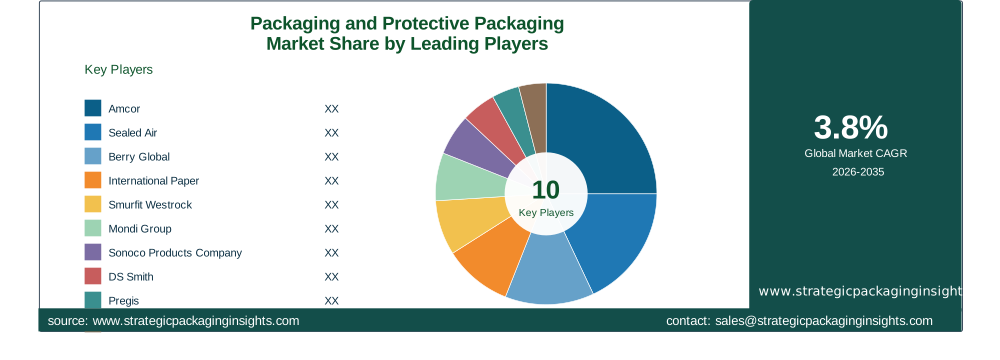
Amcor is a leading player in the packaging industry, offering a wide range of packaging solutions across various industries. The company is focused on sustainability, investing in eco-friendly materials and processes to meet consumer demand and regulatory requirements. Sealed Air is another key player, known for its innovative protective packaging solutions that ensure product safety during transit. The company is investing in digital technologies and automation to enhance operational efficiency and reduce production costs.
Berry Global is a major player in the packaging industry, offering a diverse range of packaging solutions across various industries. The company is focused on sustainability, investing in recyclable and biodegradable materials to meet consumer demand and regulatory requirements. International Paper is a leading player in the paper and paperboard packaging segment, leveraging its extensive product portfolio and global presence to gain a competitive edge.
Smurfit Westrock is a key player in the corrugated packaging segment, known for its innovative packaging solutions and commitment to sustainability. The company is investing in state-of-the-art machinery and digital technologies to enhance operational efficiency and reduce production costs. Mondi Group is another major player, offering a wide range of packaging solutions across various industries. The company is focused on sustainability, investing in eco-friendly materials and processes to meet consumer demand and regulatory requirements.
Key Highlights
- Largest Region: North America
- Fastest-Growing Region: Asia Pacific
- Largest Segment: Flexible Packaging
- Fastest-Growing Segment: Protective Packaging
- Base-year market size: USD 1.12 Trillion
- Forecast-year market size: USD 1.62 Trillion
- CAGR: 3.8%
- Important application: E-Commerce
- Major end-use industry: Food and Beverage
- Major market driver: Sustainability and Efficiency
Regional Insights
The Packaging and Protective Packaging market is witnessing significant growth across various regions, driven by increasing demand for sustainable and efficient packaging solutions. North America is the largest region, with a strong focus on innovation and sustainability. The region is characterized by a well-established packaging industry and a high level of consumer awareness regarding environmental issues.
North America
North America is the largest region in the Packaging and Protective Packaging market, driven by the increasing demand for sustainable and efficient packaging solutions. The region is characterized by a well-established packaging industry and a high level of consumer awareness regarding environmental issues. The focus on sustainability and innovation is driving growth in the region, with companies investing in eco-friendly materials and processes to meet consumer demand and regulatory requirements.
The rise of e-commerce is fueling demand for protective packaging solutions that ensure product safety during transit. Additionally, the focus on sustainability is driving investment in recyclable and biodegradable materials, contributing to the overall growth of the packaging industry in North America. The region is expected to continue its dominance in the market, driven by technological advancements and a strong focus on sustainability.
Europe
Europe is a key region in the Packaging and Protective Packaging market, characterized by a strong focus on sustainability and innovation. The region is home to several leading packaging companies, known for their commitment to eco-friendly materials and processes. The focus on sustainability is driving growth in the region, with companies investing in recyclable and biodegradable materials to meet consumer demand and regulatory requirements.
The rise of e-commerce is fueling demand for protective packaging solutions that ensure product safety during transit. Additionally, the focus on sustainability is driving investment in eco-friendly materials and processes, contributing to the overall growth of the packaging industry in Europe. The region is expected to continue its growth trajectory, driven by technological advancements and a strong focus on sustainability.
Asia Pacific
Asia Pacific is the fastest-growing region in the Packaging and Protective Packaging market, driven by the increasing demand for sustainable and efficient packaging solutions. The region is characterized by a rapidly growing e-commerce industry and a high level of consumer awareness regarding environmental issues. The focus on sustainability and innovation is driving growth in the region, with companies investing in eco-friendly materials and processes to meet consumer demand and regulatory requirements.
The rise of e-commerce is fueling demand for protective packaging solutions that ensure product safety during transit. Additionally, the focus on sustainability is driving investment in recyclable and biodegradable materials, contributing to the overall growth of the packaging industry in Asia Pacific. The region is expected to continue its growth trajectory, driven by technological advancements and a strong focus on sustainability.
Latin America
Latin America is a growing region in the Packaging and Protective Packaging market, driven by the increasing demand for sustainable and efficient packaging solutions. The region is characterized by a rapidly growing e-commerce industry and a high level of consumer awareness regarding environmental issues. The focus on sustainability and innovation is driving growth in the region, with companies investing in eco-friendly materials and processes to meet consumer demand and regulatory requirements.
The rise of e-commerce is fueling demand for protective packaging solutions that ensure product safety during transit. Additionally, the focus on sustainability is driving investment in recyclable and biodegradable materials, contributing to the overall growth of the packaging industry in Latin America. The region is expected to continue its growth trajectory, driven by technological advancements and a strong focus on sustainability.
Middle East & Africa
The Middle East & Africa region is witnessing significant growth in the Packaging and Protective Packaging market, driven by the increasing demand for sustainable and efficient packaging solutions. The region is characterized by a rapidly growing e-commerce industry and a high level of consumer awareness regarding environmental issues. The focus on sustainability and innovation is driving growth in the region, with companies investing in eco-friendly materials and processes to meet consumer demand and regulatory requirements.
The rise of e-commerce is fueling demand for protective packaging solutions that ensure product safety during transit. Additionally, the focus on sustainability is driving investment in recyclable and biodegradable materials, contributing to the overall growth of the packaging industry in the Middle East & Africa. The region is expected to continue its growth trajectory, driven by technological advancements and a strong focus on sustainability.
Packaging and Protective Packaging Market Segments Insights

By Packaging Type Analysis
The Packaging and Protective Packaging market is segmented by packaging type, including flexible packaging, rigid packaging, protective packaging, corrugated packaging, paper and paperboard packaging, plastic packaging, metal packaging, and glass packaging. Flexible packaging is the largest segment, driven by its versatility and cost-effectiveness. The demand for flexible packaging is increasing across various industries, including food and beverage, consumer goods, and pharmaceuticals, due to its lightweight and durable nature.
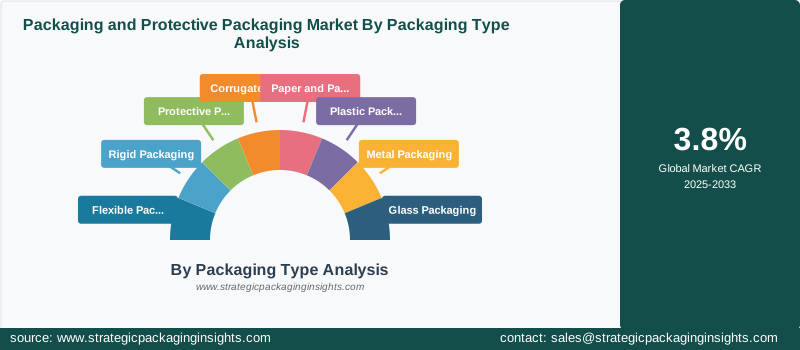
Rigid packaging is also a significant segment, known for its strength and durability. The demand for rigid packaging is driven by the need for product protection and tamper resistance, particularly in the food and beverage and healthcare industries. Protective packaging is the fastest-growing segment, driven by the rise of e-commerce and the need for packaging solutions that ensure product safety during transit. The focus on sustainability is driving innovation in packaging materials, with companies investing in recyclable and biodegradable solutions to meet consumer demand and regulatory requirements.
By Protective Packaging Type Analysis
The protective packaging segment is further divided into foam packaging, air cushions, bubble wrap, protective films, edge protectors, corner protectors, molded pulp packaging, protective inserts, void fill packaging, and shock-absorbing packaging. Foam packaging is a significant segment, known for its cushioning properties and ability to protect fragile items during transit. The demand for foam packaging is driven by the rise of e-commerce and the need for packaging solutions that ensure product safety.
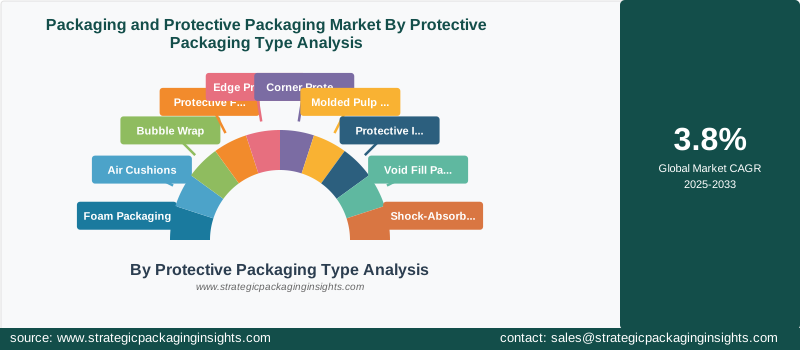
Air cushions and bubble wrap are also popular protective packaging solutions, known for their lightweight and cost-effective nature. The demand for these solutions is increasing across various industries, including electronics, consumer goods, and automotive, due to their ability to provide cushioning and protection during transit. The focus on sustainability is driving innovation in protective packaging materials, with companies investing in eco-friendly solutions to meet consumer demand and regulatory requirements.
By Material Analysis
The Packaging and Protective Packaging market is segmented by material, including plastic, paper and paperboard, foam, wood, molded pulp, metal, glass, and biodegradable materials. Plastic is the largest material segment, known for its versatility and cost-effectiveness. The demand for plastic packaging is increasing across various industries, including food and beverage, consumer goods, and pharmaceuticals, due to its lightweight and durable nature.
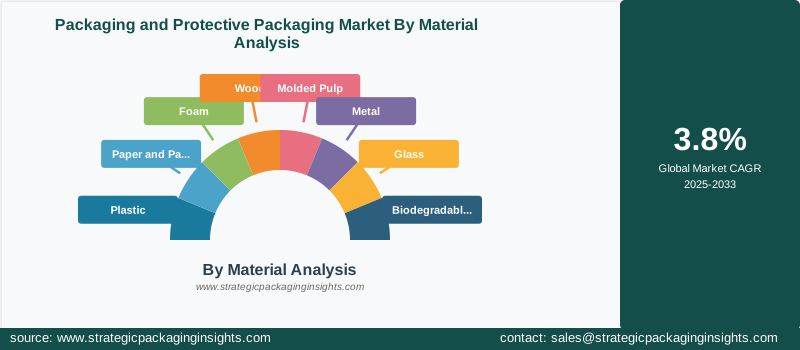
Paper and paperboard are also significant material segments, known for their recyclability and eco-friendly nature. The demand for paper and paperboard packaging is driven by the focus on sustainability and the need for packaging solutions that meet consumer demand and regulatory requirements. The focus on sustainability is driving innovation in packaging materials, with companies investing in biodegradable and compostable solutions to meet consumer demand and regulatory requirements.
By Application Analysis
The Packaging and Protective Packaging market is segmented by application, including food and beverage, consumer goods, electronics, pharmaceuticals, healthcare, automotive, industrial goods, e-commerce, retail, and household products. The food and beverage industry is the largest application segment, driven by the increasing demand for packaging solutions that ensure product safety and extend shelf life. The demand for packaging solutions in the food and beverage industry is driven by the need for convenience and sustainability, with companies investing in eco-friendly materials and processes to meet consumer demand and regulatory requirements.
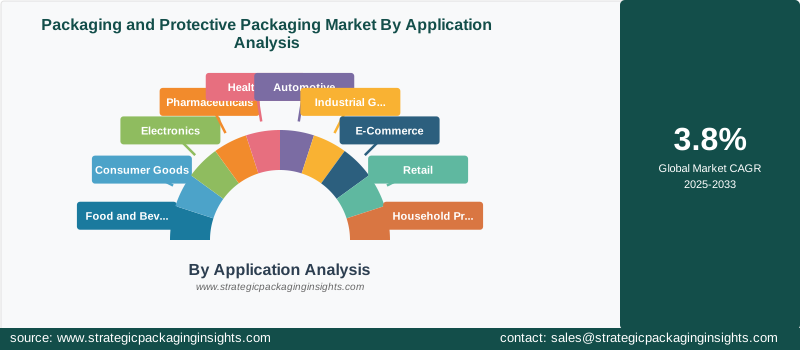
The electronics industry is also a significant application segment, known for its need for protective packaging solutions that ensure product safety during transit. The demand for protective packaging solutions in the electronics industry is driven by the rise of e-commerce and the need for packaging solutions that ensure product safety during transit. The focus on sustainability is driving innovation in packaging materials, with companies investing in eco-friendly solutions to meet consumer demand and regulatory requirements.
By Function Analysis
The Packaging and Protective Packaging market is segmented by function, including product protection, shock protection, vibration protection, moisture protection, temperature protection, tamper protection, impact protection, and surface protection. Product protection is the largest function segment, driven by the need for packaging solutions that ensure product safety and extend shelf life. The demand for product protection solutions is increasing across various industries, including food and beverage, consumer goods, and pharmaceuticals, due to the need for convenience and sustainability.
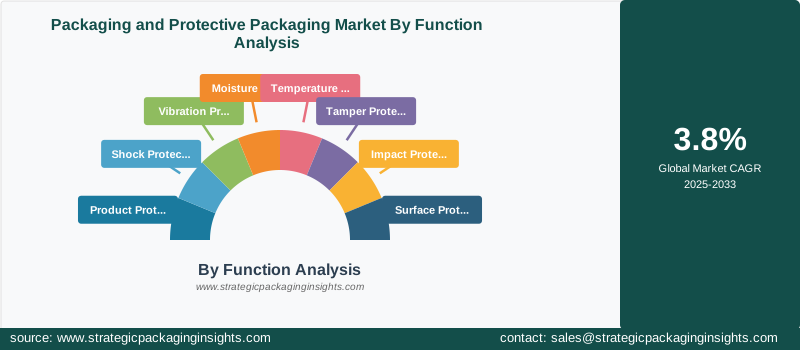
Shock protection and vibration protection are also significant function segments, known for their ability to protect fragile items during transit. The demand for shock protection and vibration protection solutions is driven by the rise of e-commerce and the need for packaging solutions that ensure product safety during transit. The focus on sustainability is driving innovation in packaging materials, with companies investing in eco-friendly solutions to meet consumer demand and regulatory requirements.
By End Use Industry Analysis
The Packaging and Protective Packaging market is segmented by end-use industry, including food and beverage, electronics and electrical, pharmaceuticals and healthcare, automotive, consumer goods, industrial manufacturing, e-commerce and retail, aerospace and defense, and chemicals. The food and beverage industry is the largest end-use industry segment, driven by the increasing demand for packaging solutions that ensure product safety and extend shelf life. The demand for packaging solutions in the food and beverage industry is driven by the need for convenience and sustainability, with companies investing in eco-friendly materials and processes to meet consumer demand and regulatory requirements.
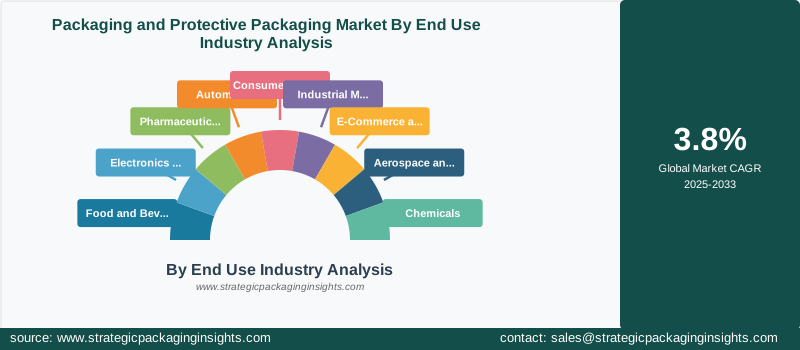
The electronics and electrical industry is also a significant end-use industry segment, known for its need for protective packaging solutions that ensure product safety during transit. The demand for protective packaging solutions in the electronics and electrical industry is driven by the rise of e-commerce and the need for packaging solutions that ensure product safety during transit. The focus on sustainability is driving innovation in packaging materials, with companies investing in eco-friendly solutions to meet consumer demand and regulatory requirements.
By Distribution Channel Analysis
The Packaging and Protective Packaging market is segmented by distribution channel, including direct sales, distributors, specialty packaging suppliers, and online sales. Direct sales is the largest distribution channel segment, driven by the need for customized and personalized packaging solutions. The demand for direct sales is increasing across various industries, including food and beverage, consumer goods, and pharmaceuticals, due to the need for convenience and sustainability.
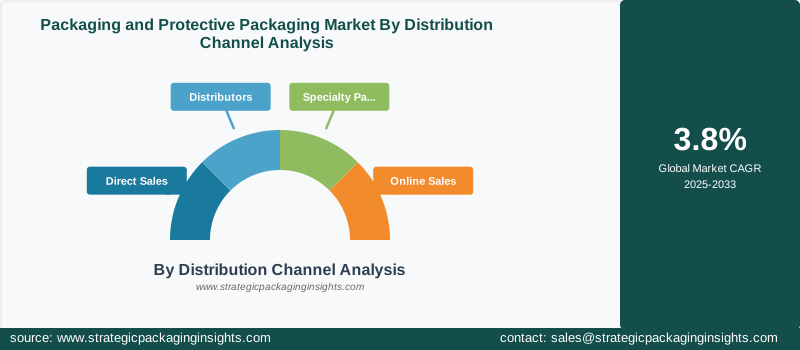
Distributors and specialty packaging suppliers are also significant distribution channel segments, known for their ability to provide a wide range of packaging solutions to meet consumer demand and regulatory requirements. The demand for distributors and specialty packaging suppliers is driven by the rise of e-commerce and the need for packaging solutions that ensure product safety during transit. The focus on sustainability is driving innovation in packaging materials, with companies investing in eco-friendly solutions to meet consumer demand and regulatory requirements.
By Sustainability Analysis
The Packaging and Protective Packaging market is segmented by sustainability, including conventional packaging, recyclable packaging, reusable packaging, biodegradable packaging, and compostable packaging. Recyclable packaging is the largest sustainability segment, driven by the focus on sustainability and the need for packaging solutions that meet consumer demand and regulatory requirements. The demand for recyclable packaging is increasing across various industries, including food and beverage, consumer goods, and pharmaceuticals, due to the need for convenience and sustainability.
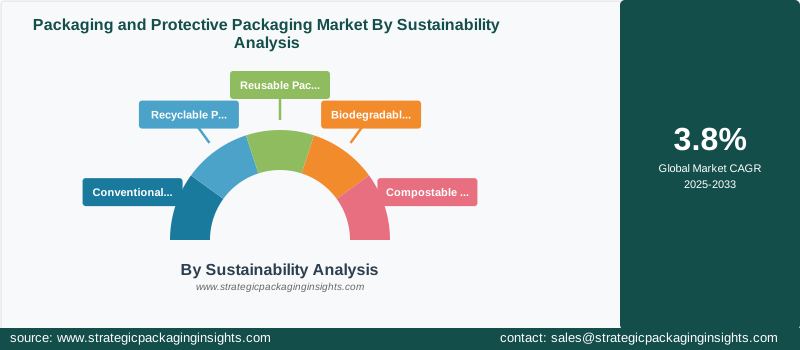
Biodegradable packaging is also a significant sustainability segment, known for its eco-friendly nature and ability to reduce environmental impact. The demand for biodegradable packaging is driven by the focus on sustainability and the need for packaging solutions that meet consumer demand and regulatory requirements. The focus on sustainability is driving innovation in packaging materials, with companies investing in biodegradable and compostable solutions to meet consumer demand and regulatory requirements.
Packaging and Protective Packaging Market Segments
The Packaging and Protective Packaging market has been segmented on the basis ofBy Packaging Type
- Flexible Packaging
- Rigid Packaging
- Protective Packaging
- Corrugated Packaging
- Paper and Paperboard Packaging
- Plastic Packaging
- Metal Packaging
- Glass Packaging
By Protective Packaging Type
- Foam Packaging
- Air Cushions
- Bubble Wrap
- Protective Films
- Edge Protectors
- Corner Protectors
- Molded Pulp Packaging
- Protective Inserts
- Void Fill Packaging
- Shock-Absorbing Packaging
By Material
- Plastic
- Paper and Paperboard
- Foam
- Wood
- Molded Pulp
- Metal
- Glass
- Biodegradable Materials
By Application
- Food and Beverage
- Consumer Goods
- Electronics
- Pharmaceuticals
- Healthcare
- Automotive
- Industrial Goods
- E-Commerce
- Retail
- Household Products
By Function
- Product Protection
- Shock Protection
- Vibration Protection
- Moisture Protection
- Temperature Protection
- Tamper Protection
- Impact Protection
- Surface Protection
By End Use Industry
- Food and Beverage
- Electronics and Electrical
- Pharmaceuticals and Healthcare
- Automotive
- Consumer Goods
- Industrial Manufacturing
- E-Commerce and Retail
- Aerospace and Defense
- Chemicals
By Distribution Channel
- Direct Sales
- Distributors
- Specialty Packaging Suppliers
- Online Sales
By Sustainability
- Conventional Packaging
- Recyclable Packaging
- Reusable Packaging
- Biodegradable Packaging
- Compostable Packaging
By Region
- North America
- Europe
- Asia-Pacific
- Latin America
- Middle East and Africa




