


Package Shell for Optical Communication Modules Market Outlook
The Package Shell for Optical Communication Modules market was valued at $1.99 billion in 2025 and is projected to reach $3.47 billion by 2034, growing at a CAGR of 6.3% during the forecast period 2026-2034. This market is witnessing significant growth due to the increasing demand for high-speed data transmission and the expansion of data centers globally. The rise in internet penetration and the proliferation of smart devices are driving the need for advanced optical communication modules, which in turn is boosting the demand for package shells. The market is also benefiting from technological advancements in optical communication, which are enhancing the performance and efficiency of these modules. Furthermore, the growing adoption of 5G technology is expected to create lucrative opportunities for market players, as it requires robust optical communication infrastructure.
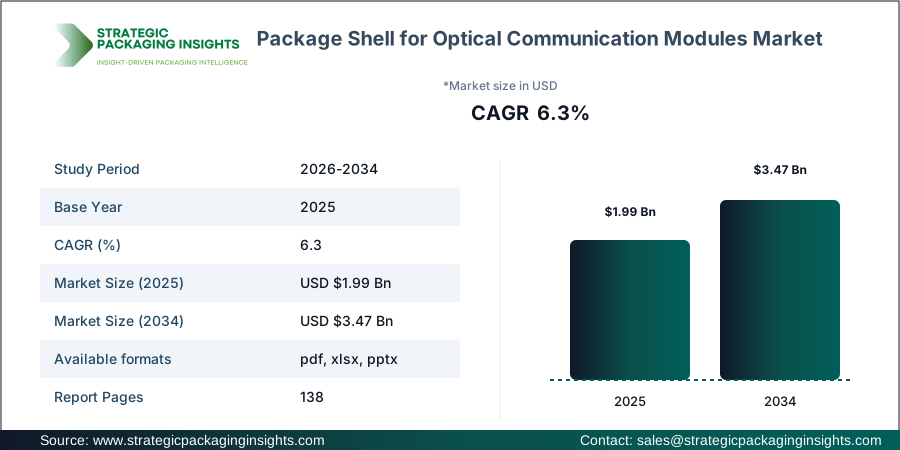
However, the market faces certain challenges that could hinder its growth. The high cost of advanced optical communication modules and the complexity involved in their manufacturing are significant restraints. Additionally, stringent regulatory standards related to optical communication technologies could pose challenges for market players. Despite these challenges, the market holds immense growth potential, driven by the increasing investments in telecommunications infrastructure and the rising demand for high-speed internet services. The ongoing research and development activities aimed at improving the efficiency and reducing the cost of optical communication modules are expected to further propel market growth.
Report Scope
| Attributes | Details |
| Report Title | Package Shell for Optical Communication Modules Market Size, Future Growth and Forecast 2034 |
| By Material Type | Metal Shells, Ceramic Shells, Polymer Shells |
| By Module Type | Transceivers, Optical Sensors, Photonic Modules |
| By Application | Data Centers, Telecom, Industrial Optics |
| By End Use | Telecom OEMs, Data Centers, Electronics Manufacturers |
| Region | Asia Pacific, North America, Latin America, Europe, Middle East & Africa |
| Base Year | 2025 |
| Historic Period | 2018-2024 |
| Forecast Period | 2026-2034 |
| Number of Pages | 138 |
| Customization Available | Yes* |
Opportunities & Threats
The Package Shell for Optical Communication Modules market presents numerous opportunities for growth, primarily driven by the rapid expansion of data centers and the increasing demand for high-speed internet connectivity. As businesses and consumers continue to rely heavily on digital platforms, the need for efficient data transmission has become paramount. This has led to a surge in demand for optical communication modules, which are essential for ensuring seamless data flow. Additionally, the advent of 5G technology is expected to further boost the market, as it requires advanced optical communication infrastructure to support its high-speed data transmission capabilities. Companies operating in this market can capitalize on these opportunities by investing in research and development to enhance the performance and efficiency of their products.
Another significant opportunity lies in the growing adoption of cloud computing and IoT technologies. As more organizations move their operations to the cloud and integrate IoT devices into their systems, the demand for reliable and efficient optical communication modules is expected to rise. This trend is particularly prominent in sectors such as healthcare, automotive, and industrial automation, where real-time data transmission is crucial. Market players can leverage these opportunities by developing innovative solutions that cater to the specific needs of these industries, thereby gaining a competitive edge in the market.
Despite the promising opportunities, the market also faces certain threats that could impact its growth. One of the major threats is the high cost associated with the development and deployment of advanced optical communication modules. This could limit the adoption of these technologies, particularly among small and medium-sized enterprises with limited budgets. Additionally, the market is subject to stringent regulatory standards, which could pose compliance challenges for companies. To mitigate these threats, market players need to focus on cost-effective manufacturing processes and ensure compliance with regulatory requirements.
Drivers & Challenges
The primary drivers of the Package Shell for Optical Communication Modules market include the increasing demand for high-speed data transmission and the expansion of data centers worldwide. As the volume of data generated continues to grow exponentially, there is a pressing need for efficient data transmission solutions. Optical communication modules, with their ability to transmit large amounts of data at high speeds, are becoming increasingly essential. This demand is further fueled by the proliferation of smart devices and the growing reliance on digital platforms for communication and entertainment. Additionally, the rollout of 5G technology is expected to drive the demand for optical communication modules, as it requires robust infrastructure to support its high-speed data transmission capabilities.
Another significant driver is the technological advancements in optical communication, which are enhancing the performance and efficiency of these modules. Innovations such as the development of advanced materials for package shells and the integration of photonic technologies are contributing to the growth of the market. These advancements are enabling the production of more compact and efficient modules, which are essential for meeting the increasing demand for high-speed data transmission. Furthermore, the growing investments in telecommunications infrastructure, particularly in emerging economies, are expected to create lucrative opportunities for market players.
Despite the positive drivers, the market faces several challenges that could hinder its growth. One of the major challenges is the high cost associated with the development and deployment of advanced optical communication modules. This could limit the adoption of these technologies, particularly among small and medium-sized enterprises with limited budgets. Additionally, the market is subject to stringent regulatory standards, which could pose compliance challenges for companies. The complexity involved in the manufacturing of optical communication modules is another challenge, as it requires specialized skills and expertise. To overcome these challenges, market players need to focus on cost-effective manufacturing processes and ensure compliance with regulatory requirements.
Market Share Analysis
The Package Shell for Optical Communication Modules market is characterized by a highly competitive landscape, with several key players vying for market share. Companies such as Coherent, II-VI, Lumentum, Broadcom, Sumitomo Electric, Fujikura, TE Connectivity, Amphenol, Molex, and Kyocera are some of the prominent players in this market. These companies are focusing on strategic initiatives such as mergers and acquisitions, partnerships, and collaborations to strengthen their market position. Additionally, they are investing heavily in research and development to enhance their product offerings and cater to the evolving needs of customers.
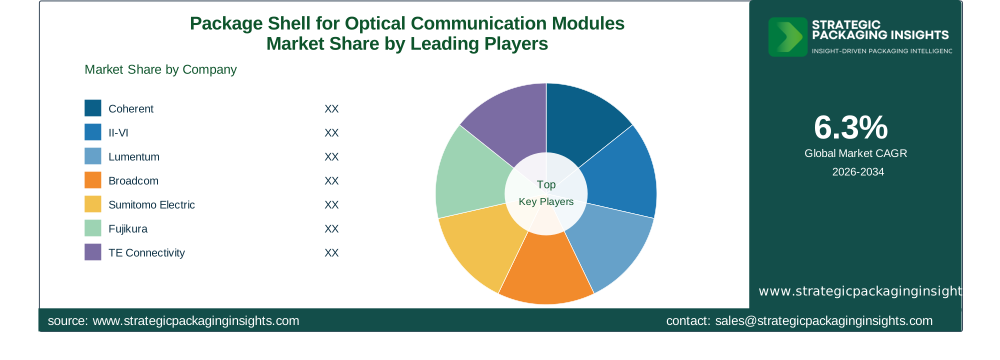
Coherent, a leading player in the market, is known for its innovative optical communication solutions. The company has a strong presence in the market and is continuously expanding its product portfolio to meet the growing demand for high-speed data transmission. II-VI is another major player, offering a wide range of optical communication modules and components. The company is focusing on expanding its global footprint through strategic acquisitions and partnerships. Lumentum, known for its advanced photonic solutions, is also a key player in the market. The company is investing in research and development to enhance its product offerings and cater to the increasing demand for optical communication modules.
Broadcom, a prominent player in the market, is known for its comprehensive range of optical communication solutions. The company is focusing on expanding its product portfolio and strengthening its market position through strategic partnerships and collaborations. Sumitomo Electric, a leading provider of optical communication modules, is focusing on expanding its global presence and enhancing its product offerings through continuous innovation. Fujikura, known for its advanced optical communication technologies, is also a key player in the market. The company is investing in research and development to enhance its product offerings and cater to the evolving needs of customers.
TE Connectivity, Amphenol, Molex, and Kyocera are other prominent players in the market, each with a strong presence and a comprehensive range of optical communication solutions. These companies are focusing on expanding their product portfolios and strengthening their market positions through strategic initiatives such as mergers and acquisitions, partnerships, and collaborations. They are also investing in research and development to enhance their product offerings and cater to the increasing demand for high-speed data transmission.
Key Highlights
- The Package Shell for Optical Communication Modules market is projected to grow at a CAGR of 6.3% from 2026 to 2034.
- Key drivers include the increasing demand for high-speed data transmission and the expansion of data centers globally.
- Technological advancements in optical communication are enhancing the performance and efficiency of these modules.
- The rollout of 5G technology is expected to drive the demand for optical communication modules.
- Challenges include the high cost of advanced optical communication modules and stringent regulatory standards.
- Key players in the market include Coherent, II-VI, Lumentum, Broadcom, Sumitomo Electric, Fujikura, TE Connectivity, Amphenol, Molex, and Kyocera.
- The market is characterized by a highly competitive landscape, with several key players vying for market share.
- Companies are focusing on strategic initiatives such as mergers and acquisitions, partnerships, and collaborations to strengthen their market position.
- Investments in research and development are crucial for enhancing product offerings and catering to the evolving needs of customers.
Top Countries Insights
In the Package Shell for Optical Communication Modules market, the United States stands out as a key player, with a market size of approximately $1.2 billion and a CAGR of 5%. The country's robust telecommunications infrastructure and the rapid adoption of 5G technology are significant growth drivers. Additionally, the presence of major market players and continuous investments in research and development contribute to the market's expansion. However, regulatory challenges and the high cost of advanced optical communication modules pose potential obstacles.
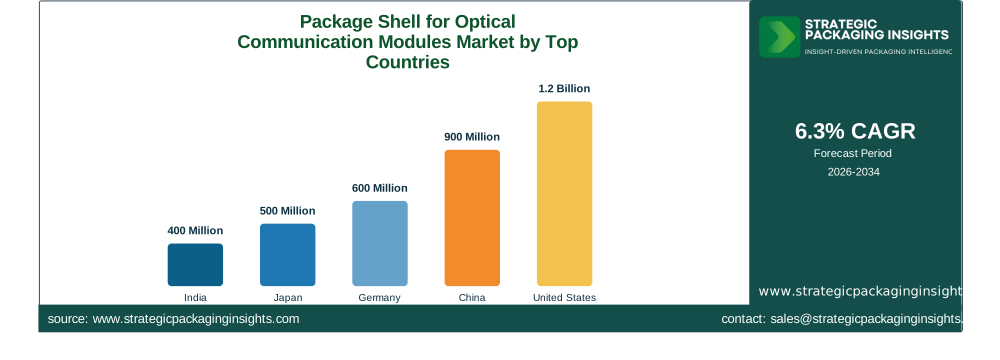
China is another major market, with a market size of around $900 million and a CAGR of 7%. The country's large population and increasing internet penetration are driving the demand for high-speed data transmission solutions. The Chinese government's focus on expanding telecommunications infrastructure and promoting 5G technology further supports market growth. However, the market faces challenges such as intense competition and regulatory hurdles.
Germany, with a market size of approximately $600 million and a CAGR of 4%, is a significant player in the European market. The country's strong industrial base and the increasing adoption of IoT technologies are key growth drivers. Additionally, government initiatives to promote digitalization and enhance telecommunications infrastructure contribute to market expansion. However, the market faces challenges such as high costs and stringent regulatory standards.
Japan, with a market size of around $500 million and a CAGR of 6%, is a prominent player in the Asia Pacific region. The country's advanced technological landscape and the rapid adoption of 5G technology are significant growth drivers. Additionally, the presence of major market players and continuous investments in research and development contribute to market expansion. However, the market faces challenges such as high costs and regulatory hurdles.
India, with a market size of approximately $400 million and a CAGR of 8%, is an emerging market with significant growth potential. The country's large population and increasing internet penetration are driving the demand for high-speed data transmission solutions. Government initiatives to promote digitalization and expand telecommunications infrastructure further support market growth. However, the market faces challenges such as intense competition and regulatory hurdles.
Package Shell for Optical Communication Modules Market Segments Insights

Material Type Analysis
The material type segment in the Package Shell for Optical Communication Modules market is categorized into metal shells, ceramic shells, and polymer shells. Metal shells are widely used due to their durability and ability to withstand harsh environmental conditions. They offer excellent protection for optical communication modules, making them a preferred choice for applications in data centers and telecom infrastructure. Ceramic shells, on the other hand, are known for their superior thermal management properties, which are crucial for maintaining the performance and reliability of optical modules. Polymer shells are gaining traction due to their lightweight and cost-effective nature, making them suitable for applications where weight and cost are critical considerations.
The demand for metal shells is driven by the increasing need for robust and reliable optical communication solutions in data centers and telecom infrastructure. The growing adoption of 5G technology is further boosting the demand for metal shells, as they provide the necessary protection and durability required for high-speed data transmission. Ceramic shells are witnessing increased demand in applications where thermal management is a critical factor, such as in industrial optics and high-performance computing. Polymer shells are gaining popularity in applications where cost and weight are significant considerations, such as in consumer electronics and portable communication devices.
Module Type Analysis
The module type segment in the Package Shell for Optical Communication Modules market includes transceivers, optical sensors, and photonic modules. Transceivers are the most widely used module type, as they play a crucial role in enabling high-speed data transmission in optical communication networks. The demand for transceivers is driven by the increasing need for efficient data transmission solutions in data centers and telecom infrastructure. Optical sensors are gaining traction due to their ability to provide real-time monitoring and diagnostics in optical communication networks. Photonic modules, which integrate multiple optical components into a single package, are witnessing increased demand due to their compact size and enhanced performance capabilities.
The demand for transceivers is primarily driven by the expansion of data centers and the increasing adoption of 5G technology. As data centers continue to grow in size and complexity, there is a pressing need for efficient data transmission solutions, which is boosting the demand for transceivers. Optical sensors are witnessing increased demand in applications where real-time monitoring and diagnostics are critical, such as in industrial optics and high-performance computing. Photonic modules are gaining popularity due to their ability to integrate multiple optical components into a single package, reducing the overall size and complexity of optical communication systems.
Application Analysis
The application segment in the Package Shell for Optical Communication Modules market includes data centers, telecom, and industrial optics. Data centers are the largest application segment, driven by the increasing demand for high-speed data transmission and the expansion of cloud computing services. The growing reliance on digital platforms for communication and entertainment is further boosting the demand for optical communication modules in data centers. Telecom is another significant application segment, driven by the rollout of 5G technology and the increasing need for efficient data transmission solutions in telecommunications networks.
The demand for optical communication modules in data centers is driven by the increasing volume of data generated and the need for efficient data transmission solutions. As businesses and consumers continue to rely heavily on digital platforms, the demand for high-speed data transmission is expected to grow, boosting the demand for optical communication modules in data centers. The telecom segment is witnessing increased demand due to the rollout of 5G technology, which requires robust optical communication infrastructure to support its high-speed data transmission capabilities. Industrial optics is another growing application segment, driven by the increasing adoption of IoT technologies and the need for real-time data transmission in industrial applications.
End Use Analysis
The end use segment in the Package Shell for Optical Communication Modules market includes telecom OEMs, data centers, and electronics manufacturers. Telecom OEMs are the largest end use segment, driven by the increasing demand for high-speed data transmission solutions in telecommunications networks. The rollout of 5G technology is further boosting the demand for optical communication modules among telecom OEMs, as they require robust infrastructure to support high-speed data transmission. Data centers are another significant end use segment, driven by the increasing volume of data generated and the need for efficient data transmission solutions.
The demand for optical communication modules among telecom OEMs is driven by the increasing need for high-speed data transmission solutions in telecommunications networks. The rollout of 5G technology is further boosting the demand for optical communication modules among telecom OEMs, as they require robust infrastructure to support high-speed data transmission. Data centers are witnessing increased demand for optical communication modules due to the increasing volume of data generated and the need for efficient data transmission solutions. Electronics manufacturers are also a growing end use segment, driven by the increasing adoption of IoT technologies and the need for real-time data transmission in electronic devices.
Package Shell for Optical Communication Modules Market Segments
The Package Shell for Optical Communication Modules market has been segmented on the basis ofBy Material Type
- Metal Shells
- Ceramic Shells
- Polymer Shells
By Module Type
- Transceivers
- Optical Sensors
- Photonic Modules
By Application
- Data Centers
- Telecom
- Industrial Optics
By End Use
- Telecom OEMs
- Data Centers
- Electronics Manufacturers
Region
- Asia Pacific
- North America
- Latin America
- Europe
- Middle East & Africa




