


Oxygen Barrier Flexible Packaging Market Outlook
The Oxygen Barrier Flexible Packaging market size was valued at USD $10.6 Billion in 2025 and is anticipated to reach USD $17.1 Billion by 2035, growing at a CAGR of 4.9% during the forecast period according to Strategic Packaging Insights.
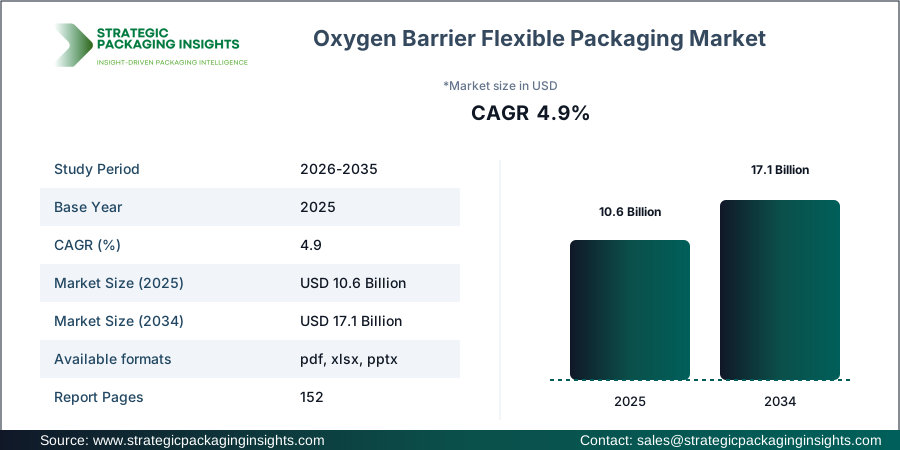
The increasing demand for extended shelf-life in food and beverage products is a significant driver for the market. With consumers seeking fresher and longer-lasting products, the adoption of oxygen barrier flexible packaging is rising. Regulatory bodies like the FDA and EFSA are emphasizing food safety and quality, further propelling the market growth.
Report Scope
| Attributes | Details |
| Report Title | Oxygen Barrier Flexible Packaging Market Projected to Scale to 17.1 Billion by 2035, Assesses Strategic Packaging Insights |
| By Material | Ethylene Vinyl Alcohol (EVOH), Polyvinylidene Chloride (PVDC), Polyamide (PA), Polyethylene Terephthalate (PET), Polypropylene (PP), Polyethylene (PE), Aluminum Foil, Metallized Films, Other Materials |
| By Packaging Structure | Single-Layer Films, Multi-Layer Films, Coextruded Films, Laminated Films, Metallized Films |
| By Packaging Format | Pouches, Bags, Sachets, Wraps, Lidding Films, Stick Packs, Flow Wraps, Other Formats |
| By Barrier Level | Standard Oxygen Barrier, High Oxygen Barrier, Ultra-High Oxygen Barrier |
| By Application | Food and Beverage, Meat and Poultry, Seafood, Dairy Products, Bakery and Confectionery, Coffee and Tea, Pharmaceuticals, Medical Products, Pet Food, Personal Care and Cosmetics |
| By End Use Industry | Food and Beverage, Pharmaceuticals and Healthcare, Pet Food, Personal Care and Cosmetics, Household Products, Industrial, Electronics |
| By Packaging Technology | Vacuum Packaging, Modified Atmosphere Packaging, Retort Packaging, Aseptic Packaging, Form-Fill-Seal Packaging |
| By Region | North America, Europe, Asia-Pacific, Latin America, Middle East and Africa |
| Base Year | 2025 |
| Historic Period | 2018-2024 |
| Forecast Period | 2026-2035 |
| Number of Pages | 152 |
| Customization Available | Yes* |
Market Trends Analysis
Oxygen barrier flexible packaging is witnessing a shift towards sustainable materials, with companies investing in recyclable and biodegradable options. This trend is driven by consumer demand for eco-friendly packaging and regulatory pressures to reduce plastic waste. The integration of advanced technologies such as Modified Atmosphere Packaging (MAP) is enhancing product shelf-life, appealing to both manufacturers and consumers.
Regionally, Asia Pacific is experiencing rapid growth due to increasing urbanization and rising disposable incomes, leading to higher consumption of packaged goods. The region's expanding food and beverage industry is a key contributor to the demand for oxygen barrier flexible packaging. Additionally, the trend towards convenience foods is boosting the market for flexible packaging formats like pouches and sachets.
Industry Transformation Analysis
The oxygen barrier flexible packaging industry is undergoing significant transformation with advancements in film extrusion and lamination technologies. These innovations are improving barrier properties and reducing material usage, aligning with sustainability goals. The industry is also seeing a shift towards localized production to reduce supply chain disruptions and meet regional demand efficiently.
Automation and digitalization are enhancing operational efficiencies, with companies adopting smart packaging solutions to improve traceability and consumer engagement. The integration of IoT and AI in packaging processes is streamlining production and enabling real-time monitoring, leading to cost savings and improved product quality.
Trends & Disruptions Impacting Customers' Customers
Downstream customers, particularly in the food and beverage sector, are increasingly prioritizing sustainability and convenience. This shift is driving demand for packaging solutions that offer both high barrier properties and recyclability. Consumers are also seeking transparency in packaging, leading to the adoption of smart labels and QR codes that provide product information and traceability.
These changes are influencing product demand and innovation in the oxygen barrier flexible packaging market. Suppliers are focusing on developing materials that balance barrier performance with environmental impact. The need for lightweight and durable packaging is prompting investments in new technologies and materials, creating opportunities for market growth and differentiation.
Oxygen Barrier Flexible Packaging Market Ecosystem
The ecosystem of oxygen barrier flexible packaging involves a complex interplay of raw material suppliers, film producers, converters, and distributors. Each stage adds value through material transformation and product customization, meeting specific customer requirements. The supply chain is heavily dependent on the availability of high-quality polymers and advanced extrusion technologies.
Capacity constraints in film production and converting can impact market dynamics, with companies investing in capacity expansions to meet growing demand. The shift towards sustainable packaging is influencing procurement strategies, with a focus on recyclable materials and closed-loop systems. Downstream demand for high-performance packaging is driving innovation and collaboration across the value chain.
Analyst Perspective
Analyst Perspective: The oxygen barrier flexible packaging market is poised for growth driven by sustainability and technological advancements.
The most important structural change is the shift towards sustainable materials, which is reshaping procurement and production strategies. Companies are investing in recyclable and biodegradable options to meet regulatory and consumer demands.
Market participants should monitor advancements in barrier technologies and sustainability initiatives, as these will influence competitive positioning and market opportunities. The focus on reducing plastic waste and enhancing product shelf-life will drive innovation and investment in the coming years.
Opportunities & Threats
The oxygen barrier flexible packaging market presents significant opportunities in the development of sustainable materials and advanced barrier technologies. Companies investing in recyclable and biodegradable options are likely to gain a competitive edge. The growing demand for convenience foods and beverages is driving innovation in packaging formats, creating new market opportunities.
Technological advancements in film extrusion and lamination are enhancing barrier properties and reducing material usage, aligning with sustainability goals. The integration of smart packaging solutions is opening new avenues for consumer engagement and product differentiation.
However, the market faces threats from raw material volatility and regulatory uncertainties. The high cost of advanced barrier materials can impact pricing strategies and profit margins. Companies must navigate complex regulatory landscapes to ensure compliance and avoid potential penalties.
Recycling constraints and infrastructure limitations pose challenges to achieving sustainability targets. The industry must address these issues through investments in recycling technologies and collaboration with stakeholders to develop efficient end-of-life solutions.
Drivers & Challenges
One of the primary drivers of the oxygen barrier flexible packaging market is the increasing demand for extended shelf-life in food and beverage products. Consumers are seeking fresher and longer-lasting products, prompting manufacturers to adopt high-performance packaging solutions. Regulatory bodies like the FDA and EFSA are emphasizing food safety and quality, further propelling market growth.
The trend towards convenience foods is also driving demand for flexible packaging formats such as pouches and sachets. These formats offer ease of use and portability, appealing to busy consumers. The rise of e-commerce and online grocery shopping is boosting demand for durable and protective packaging solutions.
Challenges in the market include raw material volatility and the high cost of advanced barrier materials. Companies must navigate complex regulatory landscapes and ensure compliance with food safety and environmental standards. Recycling constraints and infrastructure limitations pose additional challenges to achieving sustainability targets.
Packaging Market Economics
The economics of oxygen barrier flexible packaging are influenced by raw material costs, conversion expenses, and energy consumption. The price of polymers such as EVOH, PVDC, and PA plays a significant role in determining overall packaging costs. Conversion costs, including extrusion, printing, and lamination, are critical factors in pricing strategies.
Energy costs impact production efficiency and profitability, with companies seeking to optimize processes to reduce consumption. The shift towards sustainable materials and technologies may involve higher initial investments but can lead to long-term cost savings through improved resource efficiency and reduced waste.
Packaging Value Chain & Cost Analysis
The value chain for oxygen barrier flexible packaging involves multiple tiers, from resin synthesis and film extrusion to converting and distribution. Resin supply and pricing are critical factors influencing production costs and capacity utilization. The availability of high-quality polymers and additives is essential for achieving desired barrier properties.
Film extrusion and converting processes are key stages in the value chain, with companies investing in advanced technologies to enhance efficiency and product quality. Logistics and distribution play a vital role in ensuring timely delivery and meeting customer demands. End-of-life infrastructure, including recycling and material recovery, is becoming increasingly important as sustainability becomes a priority.
Unit Economics & Substrate Cost Analysis
Unit economics in the oxygen barrier flexible packaging market are driven by raw material costs, energy consumption, and conversion efficiency. The cost of polymers and additives, such as EVOH and PVDC, significantly impacts overall packaging expenses. Energy consumption during extrusion and lamination processes affects production costs and profitability.
Conversion efficiency, including waste reduction and process optimization, is crucial for maintaining competitive pricing. Companies are focusing on improving substrate performance and reducing material usage to enhance cost-effectiveness. Logistics and distribution costs also play a role in determining unit economics, with efficient supply chain management contributing to cost savings.
Packaging Regulatory & Sustainability Analysis
The regulatory landscape for oxygen barrier flexible packaging is shaped by food safety standards, environmental regulations, and sustainability initiatives. Regulatory bodies such as the FDA and EFSA set guidelines for food contact materials, ensuring consumer safety and product quality. Compliance with these standards is essential for market access and brand reputation.
Sustainability is a key focus, with regulations targeting plastic waste reduction and recyclability. Extended Producer Responsibility (EPR) schemes and packaging taxes are influencing material choices and design strategies. Companies are investing in recyclable and biodegradable materials to meet regulatory requirements and consumer expectations for sustainable packaging solutions.
Strategic Mergers, Acquisitions & Capacity Expansions
Recent strategic developments in the oxygen barrier flexible packaging market include mergers, acquisitions, and capacity expansions. Companies are seeking to enhance their product portfolios and geographic presence through strategic partnerships and acquisitions. For instance, Amcor plc's acquisition of Bemis Company expanded its capabilities in flexible packaging solutions.
Capacity expansions are being driven by increasing demand for high-performance packaging solutions. Companies like Berry Global and Sealed Air Corporation are investing in new production facilities and technologies to meet growing market needs. These strategic moves are aimed at strengthening competitive positioning and capturing market share in key regions.
Strategic Action Directives
Brand Packaging Engineers & Sustainability Directors: Focus on material selection and recyclability to meet sustainability goals. Invest in mono-material qualification and PCR integration for enhanced barrier performance.
Converter Operations & Extrusion Leads: Optimize line speed and tooling to improve efficiency. Address PCR variability and capacity utilization to reduce scrap and enhance production output.
Procurement & Material Sourcing Managers: Diversify resin contracts and price indexing to mitigate raw material volatility. Explore supplier diversification and EPR exposure to ensure supply chain resilience.
Investors: Monitor capacity expansions and technology investments to identify growth opportunities. Evaluate market concentration and margin structure for informed investment decisions.
Market Share Analysis
The oxygen barrier flexible packaging market is characterized by a competitive landscape with several key players. Companies like Amcor plc, Mondi Group, and Sealed Air Corporation hold significant market positions due to their extensive product portfolios and global presence. These companies are investing in advanced technologies and sustainable materials to maintain their competitive edge.
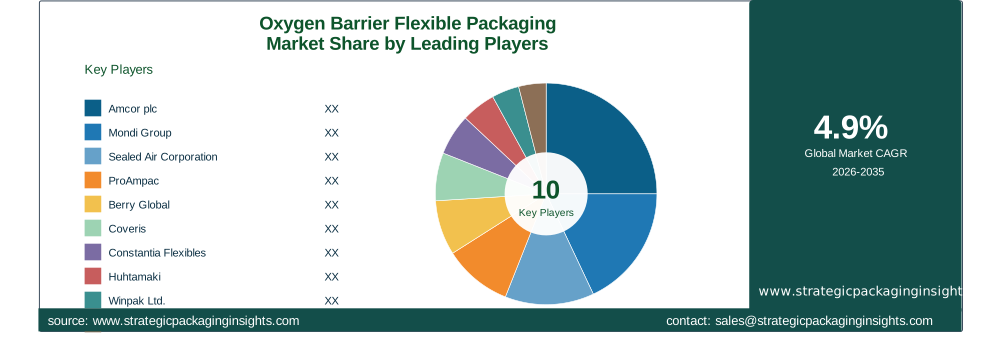
Amcor plc's acquisition of Bemis Company has strengthened its position in the flexible packaging market, expanding its capabilities and geographic reach. Mondi Group is focusing on sustainable packaging solutions, investing in recyclable materials and eco-friendly technologies. Sealed Air Corporation is leveraging its expertise in barrier technologies to offer high-performance packaging solutions.
Other notable players include ProAmpac, Berry Global, and Coveris, which are actively expanding their product offerings and production capacities. These companies are focusing on innovation and strategic partnerships to enhance their market presence and capture emerging opportunities.
The market is witnessing increased consolidation, with companies seeking to enhance their capabilities and market reach through mergers and acquisitions. This trend is expected to continue as companies aim to strengthen their competitive positioning and address evolving customer demands.
Key Highlights
- Largest Region: North America
- Fastest-Growing Region: Asia Pacific
- Largest Segment: Food and Beverage
- Fastest-Growing Segment: High Oxygen Barrier
- Base-year market size: USD 10.6 Billion
- Forecast-year market size: USD 17.1 Billion
- CAGR: 4.9%
- Important application: Meat and Poultry
- Major end-use industry: Pharmaceuticals and Healthcare
- Major market driver: Demand for extended shelf-life
Regional Insights
The global oxygen barrier flexible packaging market is segmented into major regions, including North America, Europe, Asia Pacific, Latin America, and the Middle East & Africa. North America is the largest market, driven by the demand for high-performance packaging solutions in the food and beverage industry. Asia Pacific is the fastest-growing region, with increasing urbanization and rising disposable incomes contributing to market expansion.
North America
North America holds a significant share of the oxygen barrier flexible packaging market, driven by the demand for high-quality packaging solutions in the food and beverage sector. The region's focus on sustainability and regulatory compliance is influencing material choices and packaging designs. The presence of major players like Amcor plc and Sealed Air Corporation further strengthens the market.
The U.S. is a key contributor to the regional market, with a strong emphasis on food safety and quality. The demand for convenience foods and ready-to-eat meals is boosting the adoption of flexible packaging formats. Technological advancements and investments in sustainable materials are expected to drive market growth in the coming years.
Europe
Europe is a mature market for oxygen barrier flexible packaging, with a strong focus on sustainability and environmental regulations. The European Union's stringent packaging waste directives are driving the adoption of recyclable and biodegradable materials. The region's emphasis on reducing plastic waste is influencing packaging designs and material choices.
Germany, France, and the UK are key markets within Europe, with a high demand for high-performance packaging solutions in the food and beverage industry. The region's focus on innovation and sustainability is driving investments in advanced technologies and materials, creating opportunities for market growth.
Asia Pacific
Asia Pacific is the fastest-growing region in the oxygen barrier flexible packaging market, driven by increasing urbanization and rising disposable incomes. The region's expanding food and beverage industry is a key contributor to market growth, with a high demand for convenience foods and beverages.
China and India are major markets within Asia Pacific, with a growing middle class and increasing consumer spending on packaged goods. The region's focus on sustainability and regulatory compliance is influencing material choices and packaging designs. Investments in advanced technologies and sustainable materials are expected to drive market growth in the coming years.
Latin America
Latin America is experiencing moderate growth in the oxygen barrier flexible packaging market, driven by the demand for high-quality packaging solutions in the food and beverage industry. The region's focus on sustainability and regulatory compliance is influencing material choices and packaging designs.
Brazil and Mexico are key markets within Latin America, with a high demand for convenience foods and beverages. The region's emphasis on reducing plastic waste and enhancing product shelf-life is driving investments in advanced technologies and materials, creating opportunities for market growth.
Middle East & Africa
The Middle East & Africa region is witnessing steady growth in the oxygen barrier flexible packaging market, driven by the demand for high-performance packaging solutions in the food and beverage industry. The region's focus on sustainability and regulatory compliance is influencing material choices and packaging designs.
South Africa and the UAE are key markets within the region, with a high demand for convenience foods and beverages. The region's emphasis on reducing plastic waste and enhancing product shelf-life is driving investments in advanced technologies and materials, creating opportunities for market growth.
Oxygen Barrier Flexible Packaging Market Segments Insights

By Material Analysis
The material segment of the oxygen barrier flexible packaging market is dominated by Ethylene Vinyl Alcohol (EVOH) and Polyvinylidene Chloride (PVDC) due to their superior barrier properties. These materials are widely used in food and beverage packaging to extend shelf-life and maintain product freshness. The demand for sustainable materials is driving innovation in biodegradable and recyclable options, with companies investing in research and development to meet regulatory and consumer demands.
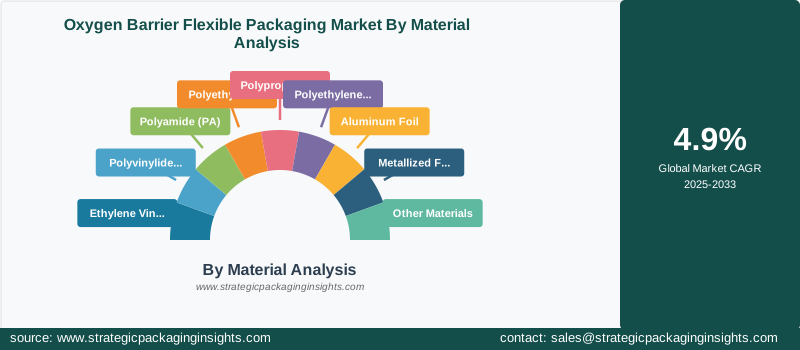
Polyamide (PA) and Polyethylene Terephthalate (PET) are also gaining traction due to their versatility and cost-effectiveness. The shift towards lightweight and durable packaging solutions is boosting the adoption of these materials. The market is witnessing increased competition among material suppliers, with a focus on enhancing barrier performance and reducing environmental impact.
By Packaging Structure Analysis
The packaging structure segment is characterized by the dominance of multi-layer films, which offer enhanced barrier properties and durability. These films are widely used in food and beverage packaging to protect products from oxygen and moisture. The demand for high-performance packaging solutions is driving innovation in coextruded and laminated films, which offer improved barrier performance and cost-effectiveness.
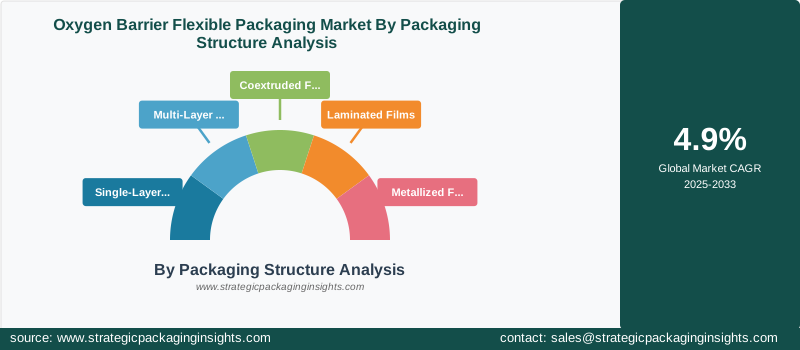
Single-layer films are gaining popularity due to their recyclability and ease of processing. The shift towards sustainable packaging solutions is influencing material choices and packaging designs, with companies investing in advanced technologies to enhance product performance and reduce environmental impact.
By Packaging Format Analysis
The packaging format segment is dominated by pouches and bags, which offer convenience and portability. These formats are widely used in the food and beverage industry to package a variety of products, including snacks, beverages, and ready-to-eat meals. The demand for lightweight and durable packaging solutions is driving innovation in flexible packaging formats, with companies investing in advanced technologies to enhance product performance and reduce environmental impact.
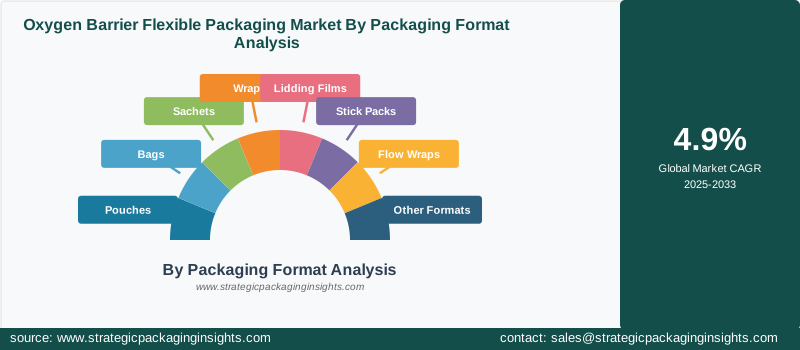
Sachets and wraps are also gaining traction due to their versatility and cost-effectiveness. The shift towards convenience foods and beverages is boosting the adoption of these formats, with a focus on enhancing product shelf-life and maintaining product freshness.
By Barrier Level Analysis
The barrier level segment is characterized by the dominance of high oxygen barrier films, which offer superior protection against oxygen and moisture. These films are widely used in food and beverage packaging to extend shelf-life and maintain product freshness. The demand for high-performance packaging solutions is driving innovation in ultra-high oxygen barrier films, which offer enhanced barrier performance and cost-effectiveness.
Standard oxygen barrier films are gaining popularity due to their cost-effectiveness and ease of processing. The shift towards sustainable packaging solutions is influencing material choices and packaging designs, with companies investing in advanced technologies to enhance product performance and reduce environmental impact.
By Application Analysis
The application segment is dominated by the food and beverage industry, which accounts for the largest share of the oxygen barrier flexible packaging market. The demand for extended shelf-life and product freshness is driving the adoption of high-performance packaging solutions in this industry. The meat and poultry, seafood, and dairy products segments are key contributors to market growth, with a focus on enhancing product shelf-life and maintaining product quality.
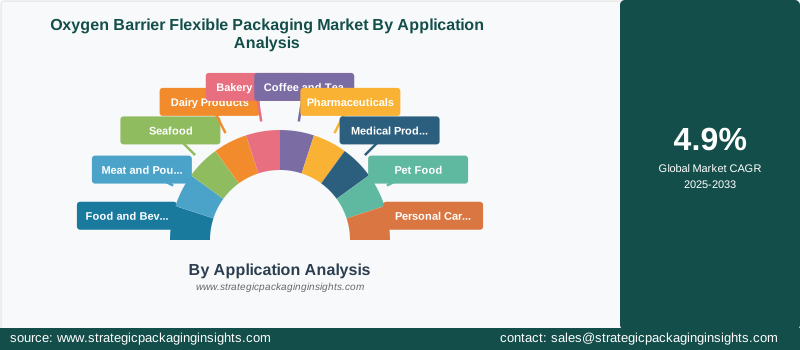
The pharmaceuticals and healthcare industry is also a significant contributor to market growth, with a high demand for protective packaging solutions. The shift towards convenience foods and beverages is boosting the adoption of flexible packaging formats, with a focus on enhancing product shelf-life and maintaining product freshness.
By End Use Industry Analysis
The end-use industry segment is dominated by the food and beverage industry, which accounts for the largest share of the oxygen barrier flexible packaging market. The demand for high-performance packaging solutions is driving innovation in this industry, with a focus on enhancing product shelf-life and maintaining product freshness. The pharmaceuticals and healthcare industry is also a significant contributor to market growth, with a high demand for protective packaging solutions.
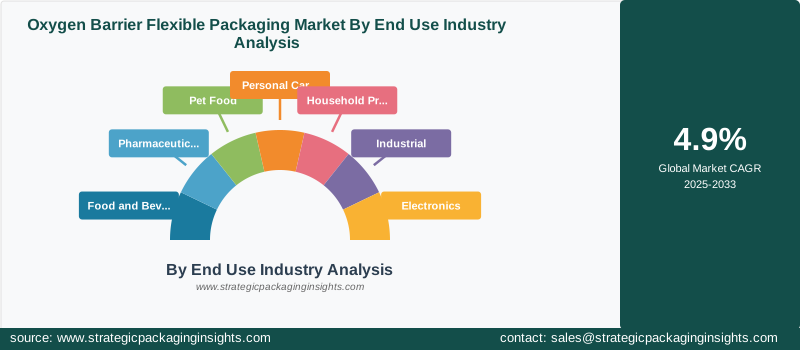
The pet food and personal care and cosmetics industries are also key contributors to market growth, with a focus on enhancing product shelf-life and maintaining product quality. The shift towards convenience foods and beverages is boosting the adoption of flexible packaging formats, with a focus on enhancing product shelf-life and maintaining product freshness.
By Packaging Technology Analysis
The packaging technology segment is characterized by the dominance of vacuum packaging and modified atmosphere packaging, which offer superior protection against oxygen and moisture. These technologies are widely used in food and beverage packaging to extend shelf-life and maintain product freshness. The demand for high-performance packaging solutions is driving innovation in retort and aseptic packaging, which offer enhanced barrier performance and cost-effectiveness.
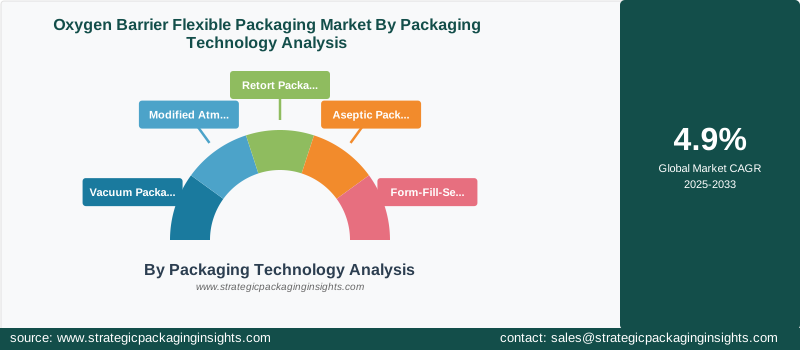
Form-fill-seal packaging is gaining popularity due to its versatility and cost-effectiveness. The shift towards sustainable packaging solutions is influencing material choices and packaging designs, with companies investing in advanced technologies to enhance product performance and reduce environmental impact.
Oxygen Barrier Flexible Packaging Market Segments
The Oxygen Barrier Flexible Packaging market has been segmented on the basis ofBy Material
- Ethylene Vinyl Alcohol (EVOH)
- Polyvinylidene Chloride (PVDC)
- Polyamide (PA)
- Polyethylene Terephthalate (PET)
- Polypropylene (PP)
- Polyethylene (PE)
- Aluminum Foil
- Metallized Films
- Other Materials
By Packaging Structure
- Single-Layer Films
- Multi-Layer Films
- Coextruded Films
- Laminated Films
- Metallized Films
By Packaging Format
- Pouches
- Bags
- Sachets
- Wraps
- Lidding Films
- Stick Packs
- Flow Wraps
- Other Formats
By Barrier Level
- Standard Oxygen Barrier
- High Oxygen Barrier
- Ultra-High Oxygen Barrier
By Application
- Food and Beverage
- Meat and Poultry
- Seafood
- Dairy Products
- Bakery and Confectionery
- Coffee and Tea
- Pharmaceuticals
- Medical Products
- Pet Food
- Personal Care and Cosmetics
By End Use Industry
- Food and Beverage
- Pharmaceuticals and Healthcare
- Pet Food
- Personal Care and Cosmetics
- Household Products
- Industrial
- Electronics
By Packaging Technology
- Vacuum Packaging
- Modified Atmosphere Packaging
- Retort Packaging
- Aseptic Packaging
- Form-Fill-Seal Packaging
By Region
- North America
- Europe
- Asia-Pacific
- Latin America
- Middle East and Africa




