


Ovenable Flexible Packaging Market Outlook
The Ovenable Flexible Packaging market size was valued at USD $2.8 Billion in 2025 and is anticipated to reach USD $4.4 Billion by 2035, growing at a CAGR of 4.7% during the forecast period according to Strategic Packaging Insights. The market is driven by the increasing demand for convenient and ready-to-eat meal solutions, particularly in urban areas where time constraints are prevalent. The growing trend of home cooking and baking, coupled with the rising popularity of frozen foods, further propels the demand for ovenable flexible packaging solutions.
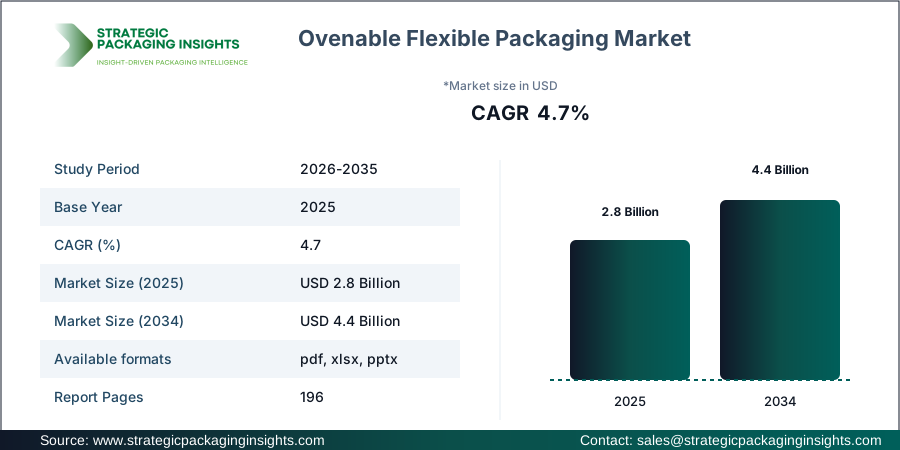
The most impactful market driver is the shift towards sustainable packaging solutions. With increasing environmental concerns, consumers and regulatory bodies are pushing for packaging that minimizes waste and is recyclable. Companies are investing in research and development to create eco-friendly materials that meet these demands. For instance, the European Commission's directives on reducing plastic waste have accelerated the adoption of recyclable and biodegradable materials in packaging.
Report Scope
| Attributes | Details |
| Report Title | Ovenable Flexible Packaging Market Projected to Scale to 4.4 Billion by 2035, Assesses Strategic Packaging Insights |
| By Material | Polyethylene (PE), Polypropylene (PP), Polyethylene Terephthalate (PET), Polyamide (PA), Ethylene Vinyl Alcohol (EVOH), Aluminum Foil, Paper-Based Materials, Other Materials |
| By Packaging Format | Ovenable Pouches, Ovenable Bags, Ovenable Trays with Flexible Lidding, Ovenable Sleeves, Ovenable Sachets, Ovenable Wraps |
| By Oven Type | Conventional Oven, Microwave Oven, Steam Oven, Combination Oven |
| By Temperature Range | Below 150°C, 150–200°C, 201–250°C, Above 250°C |
| By Application | Ready-to-Eat Meals, Frozen Foods, Meat and Poultry, Seafood, Vegetables, Bakery Products, Pizza and Pasta, Snacks, Other Food Products |
| By End Use Industry | Food and Beverage, Foodservice, Retail, Institutional Catering, Military and Defense, Other Industries |
| By Closure Type | Heat Seal, Zipper, Easy-Open Seal, Resealable Closure, Other Closures |
| By Barrier Type | Standard Barrier, Oxygen Barrier, Moisture Barrier, High Barrier |
| By Region | North America, Europe, Asia-Pacific, Latin America, Middle East and Africa |
| Base Year | 2025 |
| Historic Period | 2018-2024 |
| Forecast Period | 2026-2035 |
| Number of Pages | 196 |
| Customization Available | Yes* |
Market Trends Analysis
One major trend in the Ovenable Flexible Packaging market is the shift towards mono-material packaging solutions. This trend is driven by the need for improved recyclability and compliance with stringent environmental regulations. Mono-materials simplify the recycling process, reducing contamination and increasing the efficiency of recycling systems. As a result, companies are focusing on developing packaging solutions that use a single type of material, such as polyethylene or polypropylene, to enhance sustainability and meet consumer expectations.
Another significant trend is the increasing use of advanced barrier technologies to extend the shelf life of packaged foods. With the growing demand for convenience foods, there is a need for packaging that can preserve the quality and freshness of products for extended periods. High-barrier materials, such as EVOH and aluminum foil, are being integrated into flexible packaging to provide superior protection against oxygen, moisture, and light. This trend is particularly prominent in the food and beverage industry, where maintaining product integrity is crucial.
Industry Transformation Analysis
The Ovenable Flexible Packaging industry is undergoing significant transformation, driven by advancements in manufacturing technologies and the integration of automation. Companies are investing in state-of-the-art machinery to enhance production efficiency and reduce operational costs. Automation is playing a crucial role in streamlining processes, from film extrusion to converting and printing, enabling manufacturers to meet the growing demand for high-quality packaging solutions.
Sustainability is also reshaping the industry landscape, with companies focusing on reducing their carbon footprint and adopting eco-friendly practices. The shift towards localized production is gaining momentum, as manufacturers seek to minimize transportation costs and reduce environmental impact. This trend is particularly evident in regions with stringent environmental regulations, such as Europe and North America, where companies are establishing production facilities closer to key markets.
Trends & Disruptions Impacting Customers' Customers
Downstream customers, particularly in the food and beverage industry, are increasingly prioritizing sustainability and convenience in their purchasing decisions. Consumers are demanding packaging solutions that are not only environmentally friendly but also easy to use and dispose of. This shift in consumer behavior is driving companies to innovate and develop packaging that meets these expectations, such as resealable and easy-open closures that enhance convenience and reduce waste.
These changes in consumer preferences are influencing product demand and innovation in the Ovenable Flexible Packaging market. Companies are focusing on developing packaging solutions that offer superior barrier properties and are compatible with various cooking methods, such as microwave and conventional ovens. This trend is creating opportunities for manufacturers to differentiate their products and capture a larger market share by addressing the evolving needs of consumers.
Ovenable Flexible Packaging Market Ecosystem
The Ovenable Flexible Packaging market ecosystem involves a complex interplay of raw material suppliers, manufacturers, converters, and end users. The procurement of high-quality polymers and substrates is critical to ensuring the production of durable and effective packaging solutions. Manufacturers rely on advanced extrusion and converting technologies to produce films and sheets that meet the specific requirements of ovenable applications.
Printing and lamination processes add value by enhancing the barrier properties and visual appeal of packaging. Efficient distribution networks ensure that finished products reach end users in a timely manner, while recycling initiatives focus on minimizing environmental impact by promoting the reuse and recycling of packaging materials. The ecosystem's success depends on strong collaboration among stakeholders to address challenges such as material availability and regulatory compliance.
Analyst Perspective
Analyst Perspective: The Ovenable Flexible Packaging market is poised for significant growth, driven by the increasing demand for convenient and sustainable packaging solutions. The shift towards mono-materials and advanced barrier technologies is reshaping the competitive landscape.
Companies are investing in research and development to create innovative packaging solutions that meet consumer expectations for sustainability and convenience. The integration of automation and advanced manufacturing technologies is enhancing production efficiency and reducing costs, providing a competitive edge to market players.
Market participants should closely monitor regulatory developments and consumer trends to capitalize on emerging opportunities. The focus on sustainability and recyclability will continue to drive innovation and shape the future of the Ovenable Flexible Packaging market.
Opportunities & Threats
The Ovenable Flexible Packaging market presents significant opportunities for growth, driven by the increasing demand for convenient and sustainable packaging solutions. The shift towards mono-materials and advanced barrier technologies is creating new avenues for innovation and product differentiation. Companies that invest in research and development to create eco-friendly packaging solutions are likely to gain a competitive advantage in the market.
Emerging markets, particularly in Asia-Pacific, offer substantial growth potential due to the rising disposable incomes and changing consumer lifestyles. The increasing popularity of ready-to-eat meals and frozen foods in these regions is driving the demand for ovenable flexible packaging solutions. Companies that establish a strong presence in these markets can capitalize on the growing demand and expand their market share.
However, the market also faces several threats, including raw material volatility and regulatory uncertainty. Fluctuations in the prices of polymers and other raw materials can impact production costs and profit margins. Additionally, stringent environmental regulations and packaging waste directives pose challenges for manufacturers, requiring them to invest in sustainable practices and materials.
Competition from alternative packaging solutions, such as rigid containers and biodegradable materials, also poses a threat to the market. Companies must continuously innovate and adapt to changing consumer preferences and regulatory requirements to maintain their competitive position. The ability to offer cost-effective and sustainable packaging solutions will be crucial for success in the Ovenable Flexible Packaging market.
Drivers & Challenges
The primary driver of the Ovenable Flexible Packaging market is the increasing demand for convenient and ready-to-eat meal solutions. Urbanization and busy lifestyles are leading consumers to seek packaging that offers ease of use and quick preparation. The growing popularity of frozen foods and ready-to-eat meals is further fueling the demand for ovenable flexible packaging solutions that can withstand high temperatures and preserve food quality.
Sustainability is another key driver, with consumers and regulatory bodies pushing for packaging that minimizes waste and is recyclable. Companies are investing in research and development to create eco-friendly materials that meet these demands. The European Commission's directives on reducing plastic waste have accelerated the adoption of recyclable and biodegradable materials in packaging.
Challenges in the market include raw material volatility and regulatory compliance. Fluctuations in the prices of polymers and other raw materials can impact production costs and profit margins. Additionally, stringent environmental regulations and packaging waste directives pose challenges for manufacturers, requiring them to invest in sustainable practices and materials. Companies must navigate these challenges to maintain their competitive position in the market.
Packaging Market Economics
The economics of the Ovenable Flexible Packaging market are influenced by several factors, including raw material costs, conversion costs, and energy expenses. The prices of polymers, such as polyethylene and polypropylene, play a significant role in determining the overall cost structure. Fluctuations in raw material prices can impact profit margins and pricing strategies.
Conversion costs, including extrusion, printing, and lamination, are critical components of the cost structure. Advances in manufacturing technologies and automation are helping to reduce these costs by enhancing production efficiency and minimizing waste. Energy expenses, particularly in film extrusion and converting processes, also contribute to the overall cost structure.
Logistics and distribution costs are important considerations, as they impact the final pricing of packaging solutions. Efficient supply chain management and strategic partnerships with logistics providers can help companies optimize their distribution networks and reduce costs. The ability to offer cost-effective and sustainable packaging solutions will be crucial for success in the Ovenable Flexible Packaging market.
Packaging Value Chain & Cost Analysis
The value chain of the Ovenable Flexible Packaging market involves several tiers, each contributing to the overall cost structure and value creation. Tier-3 includes resin synthesis and the production of additives and masterbatch, which are essential for creating high-quality polymers and substrates. Tier-2 involves film extrusion and substrate production, where raw materials are processed into films and sheets for conversion.
Tier-1 encompasses converting, printing, and lamination processes, where films are transformed into finished packaging formats. Downstream activities include co-packing, filling, and distribution, where packaging is filled with products and delivered to end users. Efficient management of the value chain is crucial for optimizing costs and ensuring the timely delivery of packaging solutions.
Capacity utilization and lead times are important considerations in the value chain, as they impact production efficiency and responsiveness to market demand. Companies must balance production capacity with demand forecasts to avoid overproduction and inventory buildup. Strategic partnerships with suppliers and logistics providers can help companies optimize their value chain and enhance competitiveness.
Unit Economics & Substrate Cost Analysis
The unit economics of Ovenable Flexible Packaging are influenced by several factors, including raw material costs, energy expenses, and conversion costs. The prices of polymers, such as polyethylene and polypropylene, are critical determinants of the overall cost structure. Fluctuations in raw material prices can impact profit margins and pricing strategies.
Energy expenses, particularly in film extrusion and converting processes, contribute to the overall cost structure. Advances in manufacturing technologies and automation are helping to reduce these costs by enhancing production efficiency and minimizing waste. Conversion costs, including extrusion, printing, and lamination, are critical components of the cost structure.
Logistics and distribution costs are important considerations, as they impact the final pricing of packaging solutions. Efficient supply chain management and strategic partnerships with logistics providers can help companies optimize their distribution networks and reduce costs. The ability to offer cost-effective and sustainable packaging solutions will be crucial for success in the Ovenable Flexible Packaging market.
Packaging Regulatory & Sustainability Analysis
The regulatory landscape for Ovenable Flexible Packaging is shaped by several factors, including environmental regulations, recycling targets, and food-contact requirements. The European Commission's directives on reducing plastic waste have accelerated the adoption of recyclable and biodegradable materials in packaging. Companies must comply with these regulations to avoid penalties and maintain their market position.
Extended Producer Responsibility (EPR) schemes are gaining traction, requiring manufacturers to take responsibility for the end-of-life management of their packaging products. This includes ensuring that packaging is recyclable and meets specific recycling targets. Companies are investing in research and development to create eco-friendly materials that meet these demands.
Food-contact requirements are also critical considerations, as packaging must ensure the safety and quality of food products. Companies must comply with regulations set by bodies such as the U.S. FDA and the European Food Safety Authority (EFSA) to ensure that their packaging solutions are safe for use with food products. Compliance with these regulations is essential for maintaining consumer trust and market access.
Strategic Mergers, Acquisitions & Capacity Expansions
Recent strategic developments in the Ovenable Flexible Packaging market include mergers, acquisitions, and capacity expansions aimed at enhancing production capabilities and market reach. Companies are investing in new manufacturing facilities and expanding existing ones to meet the growing demand for ovenable flexible packaging solutions.
For instance, Amcor plc has announced plans to expand its production capacity in Asia-Pacific to capitalize on the region's growing demand for flexible packaging. Similarly, Mondi Group has invested in new production lines to enhance its capabilities in producing sustainable packaging solutions. These strategic moves are aimed at strengthening market position and capturing a larger share of the growing market.
Partnerships and collaborations are also playing a crucial role in driving innovation and expanding market reach. Companies are partnering with technology providers and research institutions to develop advanced packaging solutions that meet consumer expectations for sustainability and convenience. These strategic initiatives are expected to shape the future of the Ovenable Flexible Packaging market.
Strategic Action Directives
Brand Packaging Engineers & Sustainability Directors: Focus on material selection and mono-material qualification to enhance recyclability and meet sustainability targets. Integrate PCR materials to reduce environmental impact.
Converter Operations & Extrusion Leads: Optimize line speed and tooling to enhance production efficiency. Minimize scrap and manage PCR variability to reduce costs and improve sustainability.
Procurement & Material Sourcing Managers: Diversify supplier base and secure resin contracts to mitigate raw material volatility. Implement price indexing and manage EPR exposure to optimize procurement strategies.
Investors: Monitor capacity expansions and M&A activities to identify growth opportunities. Evaluate market concentration and technology advancements to make informed investment decisions.
Market Share Analysis
The Ovenable Flexible Packaging market is characterized by intense competition, with several key players vying for market share. Companies such as Amcor plc, Mondi Group, and Sealed Air Corporation are leading the market with their extensive product portfolios and strong global presence. These companies are investing in research and development to create innovative packaging solutions that meet consumer expectations for sustainability and convenience.
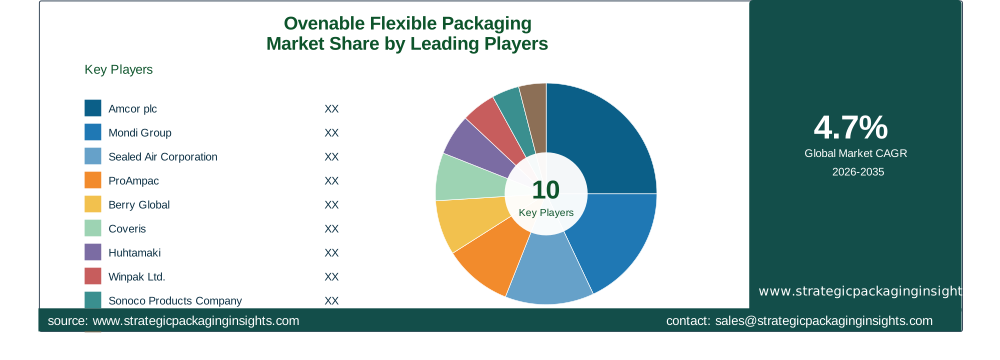
Amcor plc is a prominent player in the market, offering a wide range of ovenable flexible packaging solutions. The company's focus on sustainability and innovation has helped it maintain a competitive edge. Mondi Group is another key player, known for its commitment to producing eco-friendly packaging solutions. The company's investments in new production lines and capacity expansions are aimed at capturing a larger share of the growing market.
Sealed Air Corporation is leveraging its expertise in advanced barrier technologies to offer packaging solutions that extend the shelf life of food products. The company's focus on sustainability and innovation has helped it maintain a strong market position. Other notable players in the market include ProAmpac, Berry Global, and Coveris, each with their unique strengths and market strategies.
The competitive landscape is shaped by factors such as product innovation, sustainability initiatives, and strategic partnerships. Companies are focusing on developing packaging solutions that offer superior barrier properties and are compatible with various cooking methods. The ability to offer cost-effective and sustainable packaging solutions will be crucial for success in the Ovenable Flexible Packaging market.
Key Highlights
- Largest Region: North America
- Fastest-Growing Region: Asia-Pacific
- Largest Segment: Food and Beverage
- Fastest-Growing Segment: Ready-to-Eat Meals
- Base-year market size: USD $2.8 Billion
- Forecast-year market size: USD $4.4 Billion
- CAGR: 4.7%
- Important application: Ready-to-Eat Meals
- Major end-use industry: Food and Beverage
- Major market driver: Demand for sustainable packaging solutions
Regional Insights
The global Ovenable Flexible Packaging market is witnessing significant growth across major regions, with North America leading in terms of market size. The region's strong demand for convenient and sustainable packaging solutions is driving market growth. Asia-Pacific is expected to be the fastest-growing region, fueled by rising disposable incomes and changing consumer lifestyles.
North America
North America is the largest market for Ovenable Flexible Packaging, driven by the high demand for convenient and ready-to-eat meal solutions. The region's focus on sustainability and recyclability is also contributing to market growth. The presence of key players and advanced manufacturing capabilities further strengthens the region's market position.
The U.S. is a major contributor to the market, with a strong emphasis on innovation and sustainability. The country's regulatory environment, which promotes the use of eco-friendly materials, is driving the adoption of sustainable packaging solutions. Canada is also witnessing growth, supported by the increasing demand for frozen foods and ready-to-eat meals.
Europe
Europe is a significant market for Ovenable Flexible Packaging, characterized by stringent environmental regulations and a strong focus on sustainability. The European Commission's directives on reducing plastic waste are driving the adoption of recyclable and biodegradable materials in packaging.
Germany, France, and the U.K. are key markets in the region, with a strong emphasis on innovation and sustainability. The region's focus on reducing packaging waste and promoting recycling is creating opportunities for companies to develop eco-friendly packaging solutions. The demand for ready-to-eat meals and frozen foods is also contributing to market growth.
Asia Pacific
Asia-Pacific is the fastest-growing region in the Ovenable Flexible Packaging market, driven by rising disposable incomes and changing consumer lifestyles. The region's growing population and increasing urbanization are fueling the demand for convenient and ready-to-eat meal solutions.
China, India, and Japan are key markets in the region, with a strong emphasis on innovation and sustainability. The region's focus on reducing packaging waste and promoting recycling is creating opportunities for companies to develop eco-friendly packaging solutions. The demand for frozen foods and ready-to-eat meals is also contributing to market growth.
Latin America
Latin America is witnessing moderate growth in the Ovenable Flexible Packaging market, driven by the increasing demand for convenient and ready-to-eat meal solutions. The region's focus on sustainability and recyclability is also contributing to market growth.
Brazil and Mexico are key markets in the region, with a strong emphasis on innovation and sustainability. The region's focus on reducing packaging waste and promoting recycling is creating opportunities for companies to develop eco-friendly packaging solutions. The demand for frozen foods and ready-to-eat meals is also contributing to market growth.
Middle East & Africa
The Middle East & Africa region is witnessing moderate growth in the Ovenable Flexible Packaging market, driven by the increasing demand for convenient and ready-to-eat meal solutions. The region's focus on sustainability and recyclability is also contributing to market growth.
South Africa and the UAE are key markets in the region, with a strong emphasis on innovation and sustainability. The region's focus on reducing packaging waste and promoting recycling is creating opportunities for companies to develop eco-friendly packaging solutions. The demand for frozen foods and ready-to-eat meals is also contributing to market growth.
Ovenable Flexible Packaging Market Segments Insights

By Material Analysis
The Ovenable Flexible Packaging market is segmented by material, with polyethylene (PE) and polypropylene (PP) being the most widely used materials. These materials offer excellent heat resistance and barrier properties, making them ideal for ovenable applications. The demand for polyethylene terephthalate (PET) and polyamide (PA) is also growing, driven by their superior barrier properties and recyclability.
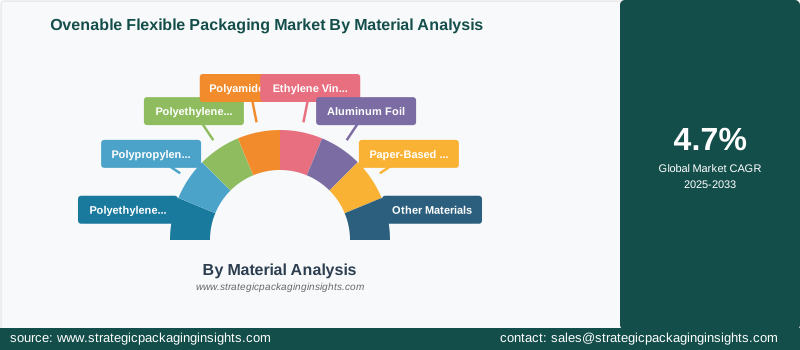
Aluminum foil and paper-based materials are gaining traction due to their eco-friendly nature and ability to withstand high temperatures. The shift towards sustainable packaging solutions is driving the adoption of recyclable and biodegradable materials, such as ethylene vinyl alcohol (EVOH) and paper-based materials. Companies are investing in research and development to create innovative materials that meet consumer expectations for sustainability and performance.
By Packaging Format Analysis
The Ovenable Flexible Packaging market is segmented by packaging format, with ovenable pouches and bags being the most popular formats. These formats offer convenience and ease of use, making them ideal for ready-to-eat meals and frozen foods. The demand for ovenable trays with flexible lidding is also growing, driven by their ability to preserve food quality and extend shelf life.
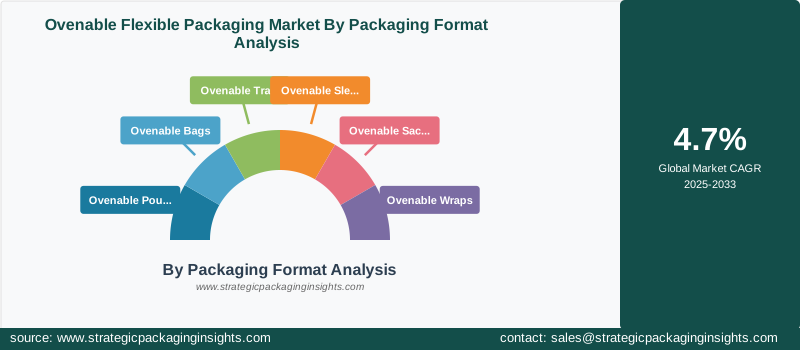
Ovenable sleeves, sachets, and wraps are gaining popularity due to their versatility and ability to accommodate a wide range of food products. The shift towards convenient and ready-to-eat meal solutions is driving the demand for innovative packaging formats that offer superior barrier properties and are compatible with various cooking methods. Companies are focusing on developing packaging solutions that meet consumer expectations for convenience and sustainability.
By Oven Type Analysis
The Ovenable Flexible Packaging market is segmented by oven type, with conventional ovens being the most widely used. These ovens offer versatility and are compatible with a wide range of packaging formats, making them ideal for ready-to-eat meals and frozen foods. The demand for microwave ovens is also growing, driven by their convenience and ability to quickly heat food products.
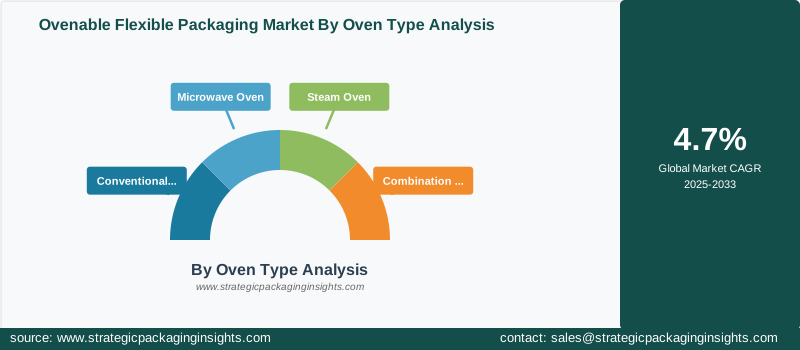
Steam ovens and combination ovens are gaining popularity due to their ability to preserve food quality and enhance flavor. The shift towards convenient and ready-to-eat meal solutions is driving the demand for packaging solutions that are compatible with various cooking methods. Companies are focusing on developing packaging solutions that meet consumer expectations for convenience and performance.
By Temperature Range Analysis
The Ovenable Flexible Packaging market is segmented by temperature range, with packaging solutions designed for temperatures below 150°C being the most widely used. These solutions offer versatility and are compatible with a wide range of food products, making them ideal for ready-to-eat meals and frozen foods.
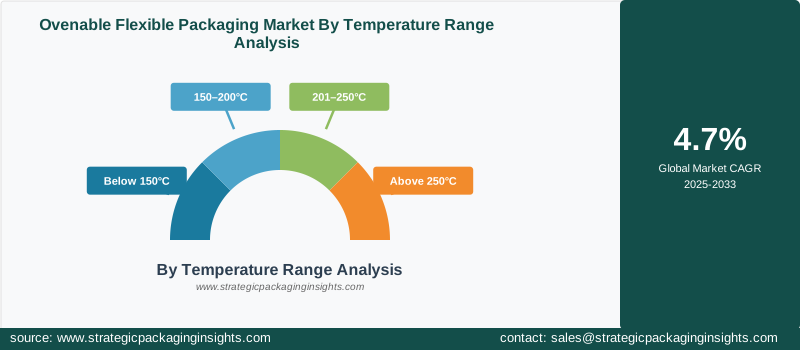
The demand for packaging solutions designed for temperatures between 150-200°C and 201-250°C is also growing, driven by their ability to preserve food quality and extend shelf life. Packaging solutions designed for temperatures above 250°C are gaining popularity due to their ability to withstand high temperatures and preserve food quality. Companies are focusing on developing packaging solutions that meet consumer expectations for performance and sustainability.
By Application Analysis
The Ovenable Flexible Packaging market is segmented by application, with ready-to-eat meals and frozen foods being the most popular applications. These applications offer convenience and ease of use, making them ideal for busy consumers seeking quick meal solutions. The demand for meat and poultry, seafood, and vegetables is also growing, driven by the increasing popularity of home cooking and baking.
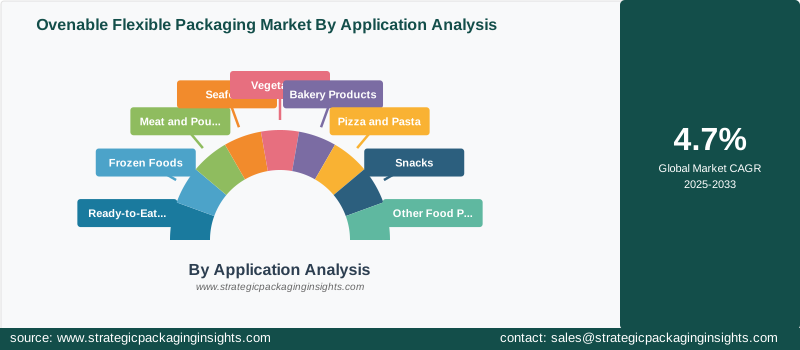
Bakery products, pizza and pasta, and snacks are gaining popularity due to their versatility and ability to accommodate a wide range of food products. The shift towards convenient and ready-to-eat meal solutions is driving the demand for innovative packaging solutions that offer superior barrier properties and are compatible with various cooking methods. Companies are focusing on developing packaging solutions that meet consumer expectations for convenience and sustainability.
By End Use Industry Analysis
The Ovenable Flexible Packaging market is segmented by end use industry, with the food and beverage industry being the largest end-use sector. This industry is driven by the increasing demand for convenient and ready-to-eat meal solutions, particularly in urban areas where time constraints are prevalent.
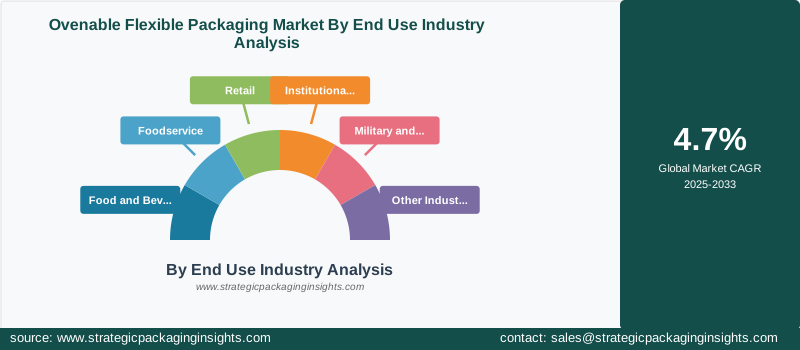
The foodservice and retail industries are also significant contributors to the market, driven by the growing popularity of frozen foods and ready-to-eat meals. Institutional catering and military and defense are gaining traction due to their need for durable and high-performance packaging solutions. Companies are focusing on developing packaging solutions that meet the specific requirements of these industries and offer superior barrier properties and performance.
By Closure Type Analysis
The Ovenable Flexible Packaging market is segmented by closure type, with heat seal and zipper closures being the most widely used. These closures offer convenience and ease of use, making them ideal for ready-to-eat meals and frozen foods. The demand for easy-open seals and resealable closures is also growing, driven by their ability to enhance convenience and reduce waste.
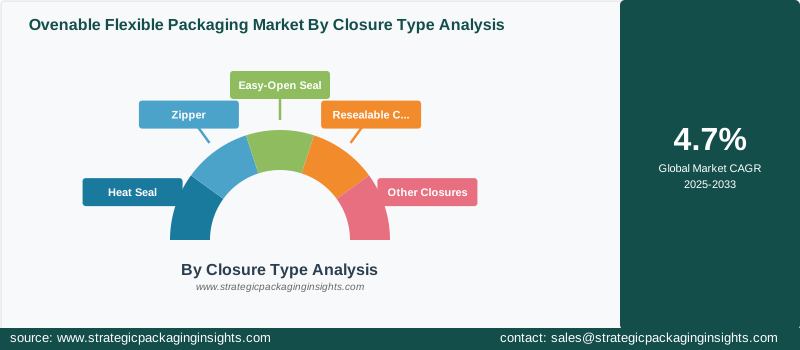
Other closures, such as snap-on lids and twist-off caps, are gaining popularity due to their versatility and ability to accommodate a wide range of packaging formats. The shift towards convenient and ready-to-eat meal solutions is driving the demand for innovative closure solutions that offer superior barrier properties and are compatible with various cooking methods. Companies are focusing on developing packaging solutions that meet consumer expectations for convenience and sustainability.
By Barrier Type Analysis
The Ovenable Flexible Packaging market is segmented by barrier type, with standard barrier and oxygen barrier solutions being the most widely used. These solutions offer excellent protection against oxygen and moisture, making them ideal for preserving food quality and extending shelf life.
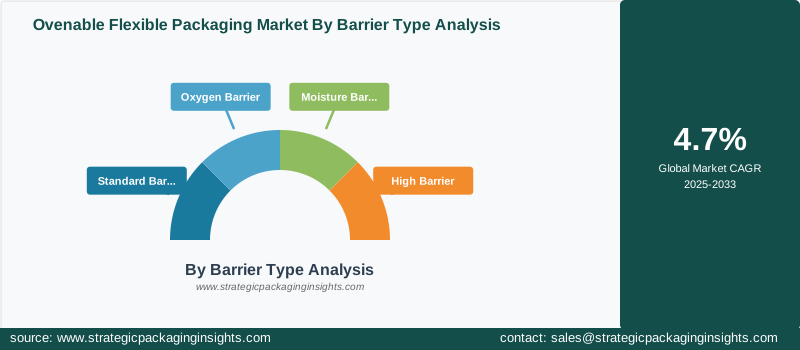
The demand for moisture barrier and high barrier solutions is also growing, driven by their ability to provide superior protection against environmental factors. The shift towards convenient and ready-to-eat meal solutions is driving the demand for innovative barrier solutions that offer superior performance and are compatible with various cooking methods. Companies are focusing on developing packaging solutions that meet consumer expectations for performance and sustainability.
Ovenable Flexible Packaging Market Segments
The Ovenable Flexible Packaging market has been segmented on the basis ofBy Material
- Polyethylene (PE)
- Polypropylene (PP)
- Polyethylene Terephthalate (PET)
- Polyamide (PA)
- Ethylene Vinyl Alcohol (EVOH)
- Aluminum Foil
- Paper-Based Materials
- Other Materials
By Packaging Format
- Ovenable Pouches
- Ovenable Bags
- Ovenable Trays with Flexible Lidding
- Ovenable Sleeves
- Ovenable Sachets
- Ovenable Wraps
By Oven Type
- Conventional Oven
- Microwave Oven
- Steam Oven
- Combination Oven
By Temperature Range
- Below 150°C
- 150–200°C
- 201–250°C
- Above 250°C
By Application
- Ready-to-Eat Meals
- Frozen Foods
- Meat and Poultry
- Seafood
- Vegetables
- Bakery Products
- Pizza and Pasta
- Snacks
- Other Food Products
By End Use Industry
- Food and Beverage
- Foodservice
- Retail
- Institutional Catering
- Military and Defense
- Other Industries
By Closure Type
- Heat Seal
- Zipper
- Easy-Open Seal
- Resealable Closure
- Other Closures
By Barrier Type
- Standard Barrier
- Oxygen Barrier
- Moisture Barrier
- High Barrier
By Region
- North America
- Europe
- Asia-Pacific
- Latin America
- Middle East and Africa




