


Oral Dosing Cup Market Outlook
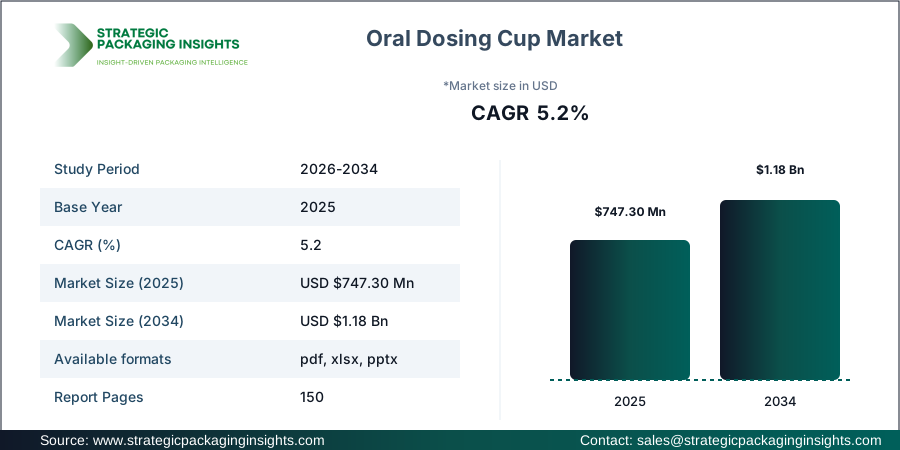
The Oral Dosing Cup market was valued at $747.30 million in 2025 and is projected to reach $1.18 billion by 2034, growing at a CAGR of 5.2% during the forecast period 2026-2034. This market is witnessing significant growth due to the increasing demand for precise medication dosing solutions in healthcare settings. The rise in chronic diseases and the aging population are driving the need for accurate dosing, which in turn is boosting the demand for oral dosing cups. Additionally, the growing awareness about medication adherence and the importance of accurate dosing in patient safety are further propelling the market growth. The market is also benefiting from technological advancements in material science, leading to the development of more durable and user-friendly dosing cups.
Report Scope
| Attributes | Details |
| Report Title | Oral Dosing Cup Market Size, Future Growth and Forecast 2034 |
| By Product Type | Graduated Oral Dosing Cups, Unit-Dose Medication Cups, Reusable Dosing Cups |
| By Material Type | Polypropylene, Polyethylene, PET, Biodegradable Plastics |
| By Capacity | Below 10 ml, 10–30 ml, Above 30 ml |
| By End Use | Hospitals, Pharmacies, Pharmaceutical Companies, Homecare Settings |
| Region | Asia Pacific, North America, Latin America, Europe, Middle East & Africa |
| Base Year | 2025 |
| Historic Period | 2018-2024 |
| Forecast Period | 2026-2034 |
| Number of Pages | 150 |
| Customization Available | Yes* |
Opportunities & Threats
The Oral Dosing Cup market presents numerous opportunities for growth, particularly in emerging economies where healthcare infrastructure is rapidly developing. The increasing investment in healthcare facilities and the rising awareness about the importance of accurate medication dosing are creating a favorable environment for market expansion. Moreover, the trend towards home healthcare and self-medication is driving the demand for user-friendly dosing solutions, providing significant growth opportunities for manufacturers. The development of biodegradable and eco-friendly dosing cups is another area of opportunity, as consumers and healthcare providers become more environmentally conscious.
Another opportunity lies in the customization of dosing cups to cater to specific patient needs, such as pediatric or geriatric patients. This customization can include features like easy-to-read measurements, ergonomic designs, and child-resistant features. Additionally, partnerships with pharmaceutical companies to provide dosing cups as part of medication packaging can enhance market penetration. The integration of smart technologies, such as digital measurement indicators, can also open new avenues for innovation and differentiation in the market.
However, the market faces certain threats that could hinder its growth. One of the primary challenges is the stringent regulatory environment governing medical devices and packaging materials. Compliance with these regulations can be costly and time-consuming, potentially limiting the entry of new players into the market. Additionally, the availability of alternative dosing methods, such as syringes and droppers, poses a threat to the market. These alternatives are often perceived as more precise, which could impact the demand for dosing cups. Furthermore, fluctuations in raw material prices, particularly plastics, can affect the profitability of manufacturers.
Drivers & Challenges
The primary drivers of the Oral Dosing Cup market include the increasing prevalence of chronic diseases and the growing emphasis on medication adherence. As the global population ages, the incidence of chronic conditions such as diabetes, hypertension, and cardiovascular diseases is rising, necessitating precise medication dosing. Oral dosing cups provide a simple and effective solution for ensuring accurate dosing, thereby supporting patient compliance and improving health outcomes. Additionally, the shift towards outpatient care and home healthcare is driving the demand for convenient and easy-to-use dosing solutions, further propelling market growth.
Technological advancements in material science and manufacturing processes are also driving the market. The development of new materials, such as biodegradable plastics, is addressing environmental concerns and enhancing the sustainability of dosing cups. Innovations in design, such as spill-proof and child-resistant features, are improving the functionality and safety of dosing cups, making them more appealing to consumers and healthcare providers. Furthermore, the increasing focus on patient-centric care is encouraging the adoption of dosing solutions that enhance the patient experience and improve medication adherence.
Despite these drivers, the market faces several challenges that could impede its growth. One of the main challenges is the competition from alternative dosing methods, such as syringes and droppers, which are often perceived as more precise. Additionally, the high cost of compliance with regulatory standards can be a barrier for new entrants and smaller manufacturers. The market is also affected by fluctuations in raw material prices, particularly plastics, which can impact the cost of production and profitability. Moreover, the lack of awareness about the benefits of dosing cups in certain regions can limit market penetration.
Market Share Analysis
The Oral Dosing Cup market is characterized by a competitive landscape with several key players vying for market share. Companies such as Berry Global, Comar, and Origin Pharma Packaging are leading the market with their extensive product portfolios and strong distribution networks. These companies are focusing on product innovation and strategic partnerships to strengthen their market position. For instance, Berry Global is leveraging its expertise in material science to develop eco-friendly dosing solutions, while Comar is expanding its product offerings through acquisitions and collaborations.
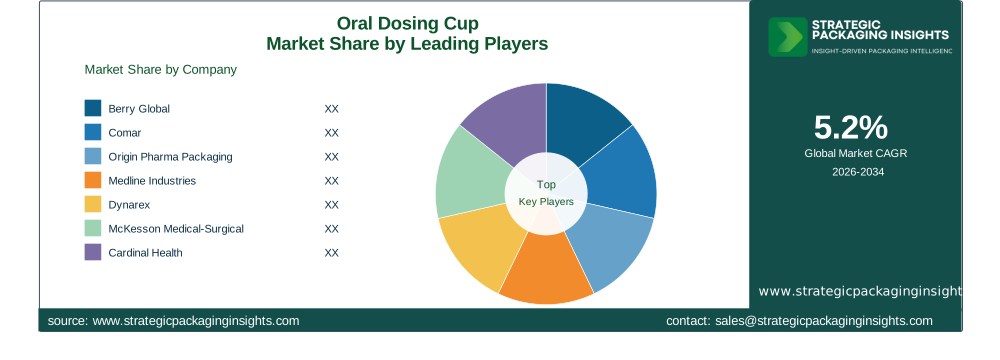
Medline Industries and Dynarex are also prominent players in the market, known for their high-quality dosing solutions and strong customer relationships. These companies are investing in research and development to enhance the functionality and safety of their products. McKesson Medical-Surgical and Cardinal Health are leveraging their extensive distribution networks to reach a wide customer base, including hospitals, pharmacies, and homecare settings. These companies are also focusing on providing customized solutions to meet the specific needs of their clients.
Graham Packaging and Gerresheimer are notable for their innovative packaging solutions and commitment to sustainability. These companies are developing biodegradable and recyclable dosing cups to address environmental concerns and meet the growing demand for eco-friendly products. Sanner Group is another key player, known for its expertise in pharmaceutical packaging and its focus on quality and safety. The competitive landscape is further intensified by the presence of regional players who are catering to local markets with cost-effective solutions.
Overall, the market is witnessing a trend towards consolidation, with larger players acquiring smaller companies to expand their product offerings and geographic reach. This consolidation is expected to enhance the competitive dynamics of the market, leading to increased innovation and improved product quality. The focus on sustainability and customization is also driving competition, as companies strive to differentiate their products and meet the evolving needs of consumers and healthcare providers.
Key Highlights
- The Oral Dosing Cup market is projected to grow from $747.30 million in 2025 to $1.18 billion by 2034, at a CAGR of 5.2%.
- Increasing prevalence of chronic diseases and aging population are key drivers of market growth.
- Technological advancements in material science are leading to the development of eco-friendly and user-friendly dosing cups.
- Customization of dosing cups for specific patient needs presents significant growth opportunities.
- Stringent regulatory environment and competition from alternative dosing methods are major challenges.
- Key players include Berry Global, Comar, Origin Pharma Packaging, and Medline Industries.
- The market is witnessing a trend towards consolidation, with larger players acquiring smaller companies.
- Focus on sustainability and customization is driving competition and innovation in the market.
- Emerging economies present significant growth opportunities due to increasing healthcare investments.
- Partnerships with pharmaceutical companies for integrated dosing solutions are enhancing market penetration.
Top Countries Insights
In the United States, the Oral Dosing Cup market is driven by the high prevalence of chronic diseases and the well-established healthcare infrastructure. The market size is significant, with a CAGR of 5%, supported by the increasing demand for accurate dosing solutions in hospitals and homecare settings. The focus on patient safety and medication adherence is further propelling market growth. Additionally, the presence of key market players and ongoing technological advancements are contributing to the market's expansion.
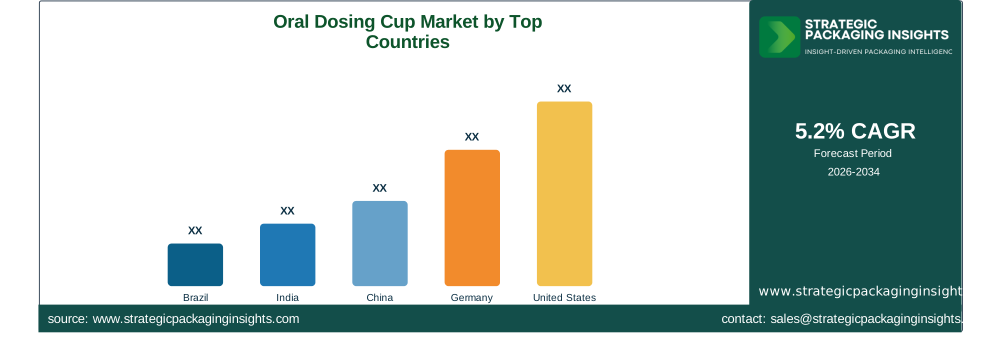
Germany is a leading market in Europe, with a CAGR of 4%. The country's strong healthcare system and emphasis on quality and safety in medical devices are driving the demand for oral dosing cups. The market is also benefiting from the growing trend towards home healthcare and self-medication. The development of eco-friendly dosing solutions is gaining traction, supported by stringent environmental regulations and consumer preferences for sustainable products.
In China, the market is experiencing rapid growth, with a CAGR of 7%. The expanding healthcare sector and increasing awareness about medication adherence are key growth drivers. The government's focus on improving healthcare access and quality is creating a favorable environment for market expansion. Additionally, the rising prevalence of chronic diseases and the aging population are boosting the demand for precise dosing solutions.
India is another promising market, with a CAGR of 6%. The country's large population and growing healthcare needs are driving the demand for oral dosing cups. The increasing investment in healthcare infrastructure and the rising awareness about the importance of accurate medication dosing are supporting market growth. The trend towards home healthcare and the availability of cost-effective dosing solutions are further enhancing market prospects.
In Brazil, the market is growing at a CAGR of 5%, driven by the increasing prevalence of chronic diseases and the expanding healthcare sector. The government's initiatives to improve healthcare access and quality are supporting market growth. The demand for user-friendly and cost-effective dosing solutions is rising, particularly in homecare settings. The focus on sustainability and the development of biodegradable dosing cups are also contributing to market expansion.
Oral Dosing Cup Market Segments Insights

Product Type Analysis
The Oral Dosing Cup market is segmented by product type into graduated oral dosing cups, unit-dose medication cups, and reusable dosing cups. Graduated oral dosing cups are the most widely used, owing to their versatility and ease of use. These cups are designed with measurement markings, allowing for precise dosing, which is crucial in both clinical and homecare settings. The demand for graduated cups is driven by the increasing emphasis on medication adherence and patient safety. Unit-dose medication cups are gaining popularity due to their convenience and ability to reduce medication errors. These cups are pre-filled with a single dose of medication, making them ideal for use in hospitals and long-term care facilities. Reusable dosing cups are also seeing growth, particularly in homecare settings, where cost-effectiveness and sustainability are key considerations.
The market for unit-dose medication cups is expected to grow significantly, driven by the increasing adoption of unit-dose packaging in hospitals and pharmacies. This trend is supported by the need to minimize medication errors and improve patient safety. Reusable dosing cups are gaining traction due to their environmental benefits and cost savings over single-use cups. The development of durable and easy-to-clean materials is enhancing the appeal of reusable cups, particularly in homecare settings. Overall, the product type segment is characterized by innovation and customization, with manufacturers focusing on developing dosing solutions that cater to specific patient needs and preferences.
Material Type Analysis
The Oral Dosing Cup market is segmented by material type into polypropylene, polyethylene, PET, and biodegradable plastics. Polypropylene is the most commonly used material, known for its durability, chemical resistance, and cost-effectiveness. The demand for polypropylene dosing cups is driven by their widespread use in hospitals and pharmacies, where durability and safety are paramount. Polyethylene and PET are also popular materials, offering similar benefits in terms of durability and chemical resistance. These materials are often used in the production of transparent dosing cups, which allow for easy measurement and verification of medication doses.
Biodegradable plastics are emerging as a key trend in the market, driven by the growing focus on sustainability and environmental responsibility. The development of biodegradable dosing cups is gaining traction, particularly in regions with stringent environmental regulations and consumer preferences for eco-friendly products. Manufacturers are investing in research and development to create biodegradable materials that offer the same level of durability and safety as traditional plastics. The material type segment is characterized by innovation and a focus on sustainability, with manufacturers striving to develop dosing solutions that meet the evolving needs of consumers and healthcare providers.
Capacity Analysis
The Oral Dosing Cup market is segmented by capacity into below 10 ml, 10-30 ml, and above 30 ml. The 10-30 ml segment is the most popular, as it caters to a wide range of medication dosing needs. These cups are commonly used in hospitals, pharmacies, and homecare settings, where versatility and ease of use are important considerations. The demand for 10-30 ml dosing cups is driven by their ability to accommodate a variety of liquid medications, making them suitable for both pediatric and adult patients.
The below 10 ml segment is gaining traction, particularly in pediatric and geriatric care, where precise dosing is crucial. These cups are designed for small doses of medication, making them ideal for use in hospitals and homecare settings. The above 30 ml segment is also seeing growth, driven by the increasing demand for larger doses of medication in certain therapeutic areas. Overall, the capacity segment is characterized by a focus on precision and versatility, with manufacturers developing dosing solutions that cater to the specific needs of different patient populations.
End Use Analysis
The Oral Dosing Cup market is segmented by end use into hospitals, pharmacies, pharmaceutical companies, and homecare settings. Hospitals are the largest end-user segment, driven by the need for accurate and reliable dosing solutions in clinical settings. The demand for oral dosing cups in hospitals is supported by the increasing emphasis on patient safety and medication adherence. Pharmacies are also a significant end-user segment, as they provide dosing cups as part of medication packaging to ensure accurate dosing and improve patient compliance.
Pharmaceutical companies are increasingly incorporating dosing cups into their packaging solutions, driven by the need to enhance medication adherence and patient safety. The homecare settings segment is experiencing rapid growth, supported by the trend towards home healthcare and self-medication. The demand for user-friendly and cost-effective dosing solutions is rising, as patients and caregivers seek convenient ways to manage medication dosing at home. Overall, the end-use segment is characterized by a focus on safety, convenience, and patient-centric care, with manufacturers developing dosing solutions that meet the specific needs of different healthcare settings.
Oral Dosing Cup Market Segments
The Oral Dosing Cup market has been segmented on the basis ofBy Product Type
- Graduated Oral Dosing Cups
- Unit-Dose Medication Cups
- Reusable Dosing Cups
By Material Type
- Polypropylene
- Polyethylene
- PET
- Biodegradable Plastics
By Capacity
- Below 10 ml
- 10–30 ml
- Above 30 ml
By End Use
- Hospitals
- Pharmacies
- Pharmaceutical Companies
- Homecare Settings
Region
- Asia Pacific
- North America
- Latin America
- Europe
- Middle East & Africa




