


Optical Films Market Outlook
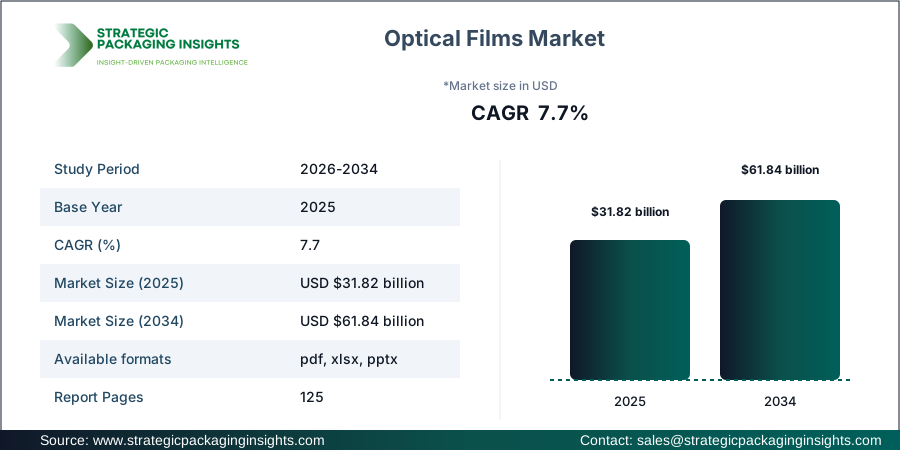
The Optical Films market was valued at $31.82 billion in 2025 and is projected to reach $61.84 billion by 2034, growing at a CAGR of 7.7% during the forecast period 2026-2034. This market is experiencing significant growth due to the increasing demand for advanced display technologies across various sectors, including consumer electronics, automotive, and industrial applications. The proliferation of high-definition displays in smartphones, televisions, and automotive dashboards is driving the need for high-quality optical films that enhance display performance. Additionally, the rise in consumer preference for OLED and LCD displays is further propelling market growth. The market is also benefiting from technological advancements in film materials, which are improving the durability and functionality of optical films.
Despite the promising growth trajectory, the Optical Films market faces certain challenges that could hinder its expansion. Regulatory constraints related to environmental sustainability and the disposal of optical films pose significant hurdles. The market also contends with the high cost of raw materials, which can impact profit margins for manufacturers. However, the increasing focus on eco-friendly and recyclable materials presents new opportunities for innovation and growth. Companies are investing in research and development to create sustainable optical films that meet regulatory standards while maintaining performance. The potential for growth in emerging markets, where demand for consumer electronics is rapidly increasing, offers additional avenues for market expansion.
Report Scope
| Attributes | Details |
| Report Title | Optical Films Market Size, Future Growth and Forecast 2034 |
| Product Type | Polarizer Films, Diffuser Films, Prism Films, Protective Films |
| Application | LCD Displays, OLED Displays, Smartphones, Automotive Displays |
| Material Type | TAC, PET, COP, Acrylic |
| End Use | Display Manufacturers, Electronics OEMs, Automotive Firms, Industrial Equipment Makers |
| Region | Asia Pacific, North America, Latin America, Europe, Middle East & Africa |
| Base Year | 2025 |
| Historic Period | 2018-2024 |
| Forecast Period | 2026-2034 |
| Number of Pages | 125 |
| Customization Available | Yes* |
Opportunities & Threats
The Optical Films market presents numerous opportunities, particularly in the realm of technological advancements and innovation. The ongoing development of next-generation display technologies, such as flexible and foldable displays, is creating a demand for specialized optical films that can accommodate these new formats. Companies that can innovate and produce films with enhanced flexibility and durability are likely to capture significant market share. Additionally, the growing trend towards miniaturization in electronic devices is driving the need for thinner and more efficient optical films, providing further opportunities for market players to differentiate their products.
Another significant opportunity lies in the expansion of the automotive industry, where the integration of advanced display systems in vehicles is becoming increasingly common. Optical films are essential components in automotive displays, providing clarity and reducing glare, which enhances the overall driving experience. As the automotive industry continues to evolve towards more connected and autonomous vehicles, the demand for high-performance optical films is expected to rise. Companies that can align their product offerings with the specific needs of automotive manufacturers will likely benefit from this growing market segment.
However, the market is not without its threats. One of the primary challenges is the intense competition among key players, which can lead to price wars and reduced profit margins. Additionally, the rapid pace of technological change means that companies must continuously innovate to stay relevant. Failure to keep up with the latest advancements can result in obsolescence and loss of market share. Furthermore, geopolitical tensions and trade barriers can disrupt supply chains, affecting the availability and cost of raw materials needed for optical film production.
Drivers & Challenges
The Optical Films market is driven by several key factors, including the increasing demand for high-quality display technologies in consumer electronics. The proliferation of smartphones, tablets, and televisions with advanced display capabilities is a major driver of market growth. Consumers are increasingly seeking devices with superior visual performance, which is fueling the demand for optical films that enhance brightness, contrast, and color accuracy. Additionally, the rise of smart home devices and the Internet of Things (IoT) is contributing to the demand for optical films, as these technologies often incorporate display components that require high-performance films.
Another significant driver is the growing automotive industry, where the integration of digital displays in vehicles is becoming standard. Optical films play a crucial role in automotive displays by providing clarity and reducing glare, which is essential for driver safety and comfort. As the automotive industry continues to innovate with features such as heads-up displays and digital dashboards, the demand for optical films is expected to increase. Furthermore, the trend towards electric and autonomous vehicles is likely to drive further demand for advanced display technologies, creating additional opportunities for optical film manufacturers.
Despite these drivers, the market faces several challenges that could impact its growth. One of the primary challenges is the high cost of raw materials, which can affect the profitability of optical film manufacturers. Additionally, the market is subject to stringent environmental regulations, which require companies to develop sustainable and recyclable products. Compliance with these regulations can increase production costs and pose a barrier to entry for new market players. Moreover, the rapid pace of technological change means that companies must continuously innovate to remain competitive, which can be resource-intensive and costly.
Market Share Analysis
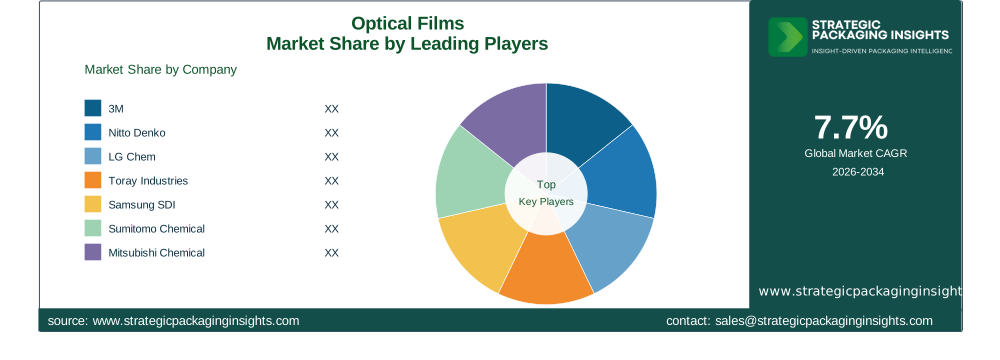
The Optical Films market is characterized by a competitive landscape with several key players vying for market share. Companies such as 3M, Nitto Denko, LG Chem, Toray Industries, Samsung SDI, Sumitomo Chemical, Mitsubishi Chemical, Toyobo, Teijin, and Kolon Industries are prominent in this space. These companies are investing heavily in research and development to innovate and improve their product offerings, which is essential for maintaining a competitive edge in the market. The competitive dynamics are influenced by factors such as product quality, pricing strategies, and technological advancements.
3M is a leading player in the Optical Films market, known for its innovative solutions and extensive product portfolio. The company has a strong focus on research and development, which has enabled it to introduce cutting-edge products that meet the evolving needs of the market. Nitto Denko is another major player, recognized for its high-quality optical films that are widely used in consumer electronics and automotive applications. The company's commitment to sustainability and environmental responsibility has also positioned it favorably in the market.
LG Chem and Samsung SDI are key players in the market, leveraging their expertise in chemical and electronic materials to produce high-performance optical films. These companies have a strong presence in the Asia Pacific region, which is a major hub for consumer electronics manufacturing. Toray Industries and Sumitomo Chemical are also significant contributors to the market, known for their advanced material technologies and innovative product offerings. Mitsubishi Chemical, Toyobo, Teijin, and Kolon Industries are other notable players, each with unique strengths and capabilities that contribute to the competitive landscape.
Key Highlights
- The Optical Films market is projected to grow from $31.82 billion in 2025 to $61.84 billion by 2034, at a CAGR of 7.7%.
- Key drivers include the increasing demand for advanced display technologies in consumer electronics and automotive industries.
- Technological advancements in film materials are enhancing the durability and functionality of optical films.
- Regulatory constraints related to environmental sustainability pose challenges for market growth.
- The market is characterized by intense competition among key players, leading to price wars and innovation.
- Opportunities exist in the development of flexible and foldable displays, as well as in the automotive sector.
- Companies are investing in research and development to create sustainable and recyclable optical films.
- The Asia Pacific region is a major hub for consumer electronics manufacturing, driving demand for optical films.
- Geopolitical tensions and trade barriers can disrupt supply chains, affecting raw material availability.
Top Countries Insights
In the Optical Films market, the United States stands out as a key player, with a market size of approximately $8 billion and a CAGR of 6%. The country's strong presence in the consumer electronics and automotive industries drives demand for high-quality optical films. Government policies supporting technological innovation and environmental sustainability further bolster market growth. However, challenges such as regulatory compliance and high production costs remain.
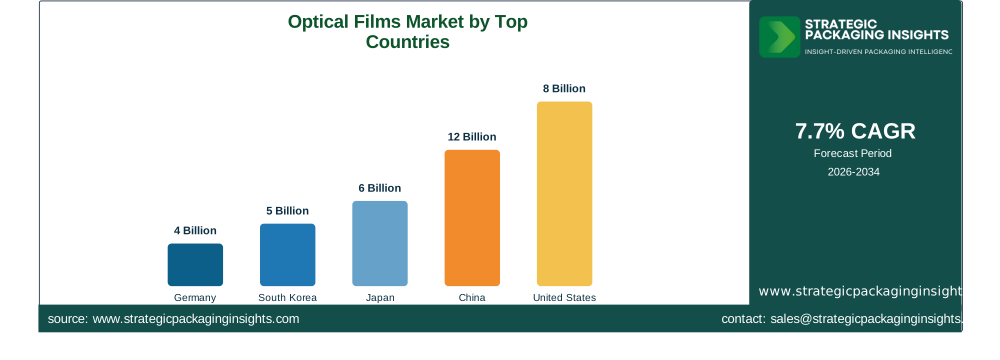
China is another major market, with a size of around $12 billion and a CAGR of 9%. The country's dominance in electronics manufacturing and its rapid adoption of advanced display technologies are significant growth drivers. Government initiatives to promote domestic production and reduce reliance on imports also support market expansion. However, the market faces challenges related to environmental regulations and the need for sustainable materials.
Japan, with a market size of $6 billion and a CAGR of 5%, is a leader in optical film innovation. The country's strong focus on research and development, coupled with its expertise in material science, drives market growth. Japan's stringent environmental regulations encourage the development of eco-friendly optical films, presenting both opportunities and challenges for manufacturers.
South Korea, with a market size of $5 billion and a CAGR of 7%, is a hub for display technology innovation. The country's leading electronics companies drive demand for high-performance optical films. Government support for technological advancement and export-oriented policies further enhance market growth. However, competition from neighboring countries poses a challenge.
Germany, with a market size of $4 billion and a CAGR of 4%, is a key player in the European market. The country's strong automotive industry and emphasis on quality and innovation drive demand for optical films. Government initiatives promoting sustainability and technological advancement support market growth, although regulatory compliance remains a challenge.
Optical Films Market Segments Insights

Product Type Analysis
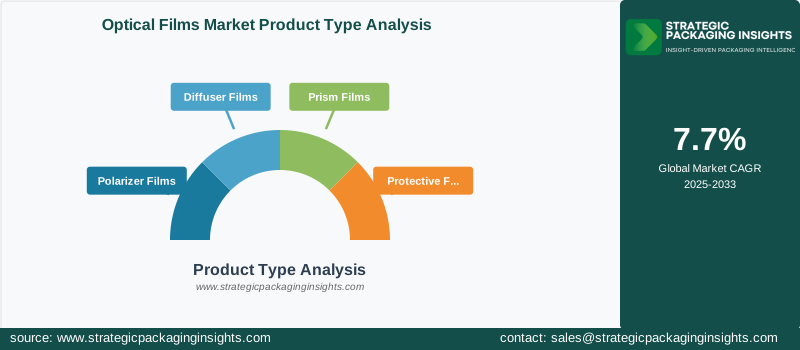
The Optical Films market is segmented by product type into polarizer films, diffuser films, prism films, and protective films. Polarizer films are essential components in display technologies, enhancing contrast and visibility. The demand for polarizer films is driven by the increasing adoption of high-definition displays in consumer electronics and automotive applications. Diffuser films, which improve light distribution and reduce glare, are gaining popularity in the automotive and industrial sectors. Prism films, known for their ability to enhance brightness and efficiency, are widely used in LCD and OLED displays. Protective films, which safeguard displays from scratches and damage, are in high demand across various applications, including smartphones and automotive displays.
Technological advancements in film materials are driving innovation in this segment, with companies focusing on developing films with enhanced durability and performance. The trend towards miniaturization in electronic devices is also influencing product development, as manufacturers seek to create thinner and more efficient films. The competitive landscape is characterized by intense rivalry among key players, who are investing in research and development to differentiate their products and capture market share. Customer demand for high-quality, durable, and sustainable films is shaping the direction of product innovation in this segment.
Application Analysis
The application segment of the Optical Films market includes LCD displays, OLED displays, smartphones, and automotive displays. LCD displays remain a dominant application, driven by their widespread use in televisions, monitors, and smartphones. The demand for optical films in LCD displays is fueled by the need for enhanced brightness, contrast, and color accuracy. OLED displays, known for their superior visual performance and flexibility, are gaining traction in high-end consumer electronics and automotive applications. The growing popularity of smartphones with advanced display technologies is also contributing to the demand for optical films.
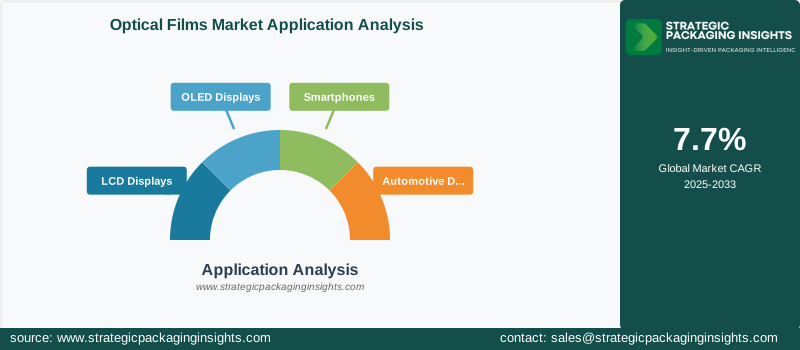
In the automotive sector, the integration of digital displays in vehicles is driving demand for optical films that provide clarity and reduce glare. As the automotive industry continues to innovate with features such as heads-up displays and digital dashboards, the demand for high-performance optical films is expected to increase. The competitive landscape in this segment is shaped by the need for continuous innovation and the ability to meet the specific requirements of different applications. Companies that can align their product offerings with the evolving needs of the market are likely to succeed in this dynamic segment.
Material Type Analysis
The Optical Films market is segmented by material type into TAC, PET, COP, and acrylic. TAC (triacetyl cellulose) films are widely used in polarizer applications due to their excellent optical properties and durability. PET (polyethylene terephthalate) films are popular for their versatility and cost-effectiveness, making them suitable for a wide range of applications. COP (cyclo olefin polymer) films are known for their high transparency and low birefringence, making them ideal for advanced display technologies. Acrylic films, with their excellent clarity and UV resistance, are used in protective applications.
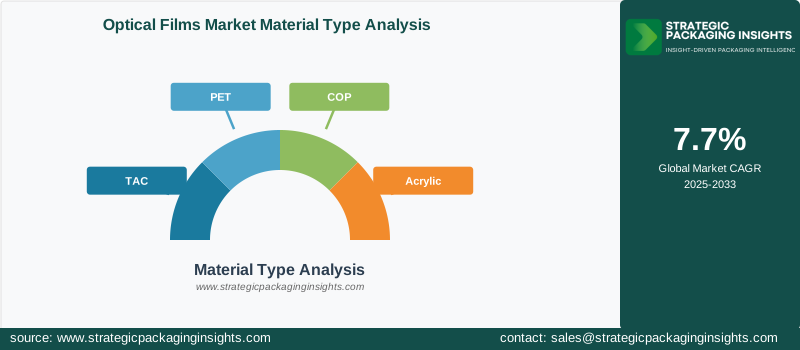
Material innovation is a key driver in this segment, with companies focusing on developing films with enhanced performance and sustainability. The trend towards eco-friendly and recyclable materials is influencing product development, as manufacturers seek to meet regulatory requirements and consumer demand for sustainable products. The competitive landscape is characterized by the presence of key players with expertise in material science and a strong focus on research and development. Companies that can leverage their material expertise to create innovative and sustainable products are likely to gain a competitive advantage in this segment.
End Use Analysis
The end-use segment of the Optical Films market includes display manufacturers, electronics OEMs, automotive firms, and industrial equipment makers. Display manufacturers are the primary consumers of optical films, driven by the demand for high-quality displays in consumer electronics and automotive applications. Electronics OEMs, which produce a wide range of electronic devices, also contribute significantly to market demand. The automotive industry, with its increasing integration of digital displays, is a growing end-use segment for optical films.
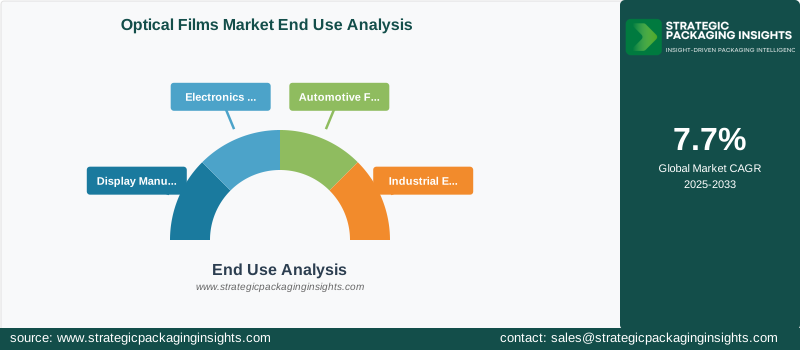
Industrial equipment makers, which incorporate display technologies in their products, are also key consumers of optical films. The demand for optical films in this segment is driven by the need for durable and high-performance films that can withstand harsh industrial environments. The competitive landscape is shaped by the ability of companies to meet the specific requirements of different end-use applications. Companies that can offer customized solutions and align their product offerings with the evolving needs of end-users are likely to succeed in this segment.
Optical Films Market Segments
The Optical Films market has been segmented on the basis ofProduct Type
- Polarizer Films
- Diffuser Films
- Prism Films
- Protective Films
Application
- LCD Displays
- OLED Displays
- Smartphones
- Automotive Displays
Material Type
- TAC
- PET
- COP
- Acrylic
End Use
- Display Manufacturers
- Electronics OEMs
- Automotive Firms
- Industrial Equipment Makers
Region
- Asia Pacific
- North America
- Latin America
- Europe
- Middle East & Africa




