


Oil & Gas Packaging Market Outlook
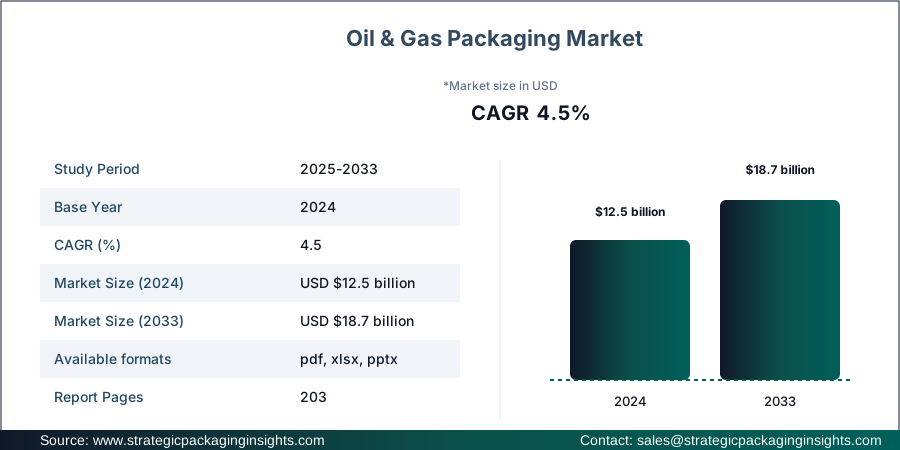
The Oil & Gas Packaging market was valued at $12.5 billion in 2024 and is projected to reach $18.7 billion by 2033, growing at a CAGR of 4.5% during the forecast period 2025-2033. This market is driven by the increasing demand for efficient and safe transportation of oil and gas products, which necessitates robust packaging solutions. The growth in the oil and gas industry, particularly in emerging economies, is further propelling the demand for specialized packaging solutions. Additionally, advancements in packaging materials and technologies are enhancing the durability and safety of packaging, thereby boosting market growth.
Report Scope
| Attributes | Details |
| Report Title | Oil & Gas Packaging Market Size, Future Growth and Forecast 2033 |
| Material | Plastic, Metal, Paper & Paperboard, Others |
| Application | Upstream, Midstream, Downstream |
| Packaging Type | Drums, IBCs, Pails, Others |
| Region | Asia Pacific, North America, Latin America, Europe, Middle East & Africa |
| Base Year | 2024 |
| Historic Period | 2017-2023 |
| Forecast Period | 2025-2033 |
| Number of Pages | 203 |
| Customization Available | Yes* |
Opportunities & Threats
The Oil & Gas Packaging market presents significant opportunities due to the rising demand for sustainable and eco-friendly packaging solutions. As environmental concerns grow, companies are increasingly focusing on reducing their carbon footprint, which is driving the adoption of biodegradable and recyclable packaging materials. This shift towards sustainability is opening new avenues for innovation and development in the packaging industry. Moreover, the increasing exploration and production activities in the oil and gas sector are creating a substantial demand for advanced packaging solutions that can withstand harsh environmental conditions and ensure the safe transportation of products.
Another opportunity lies in the technological advancements in packaging solutions. The integration of smart technologies, such as IoT and RFID, in packaging is enhancing the traceability and monitoring of oil and gas products during transportation. This not only improves the safety and security of the products but also optimizes the supply chain operations. Companies investing in such innovative packaging solutions are likely to gain a competitive edge in the market. Furthermore, the growing focus on cost-effective packaging solutions is encouraging manufacturers to develop lightweight and durable packaging materials, which can significantly reduce transportation costs.
However, the market faces certain threats, primarily due to the fluctuating prices of raw materials used in packaging. The volatility in crude oil prices directly impacts the cost of packaging materials, such as plastics and metals, which can affect the profitability of packaging manufacturers. Additionally, stringent regulations regarding the use of certain packaging materials, particularly plastics, are posing challenges for market players. Compliance with these regulations requires significant investment in research and development, which can be a barrier for small and medium-sized enterprises.
Drivers & Challenges
The primary driver of the Oil & Gas Packaging market is the increasing demand for energy worldwide, which is leading to a rise in oil and gas exploration and production activities. This surge in activities necessitates efficient packaging solutions to ensure the safe and secure transportation of oil and gas products. Furthermore, the growing focus on operational efficiency in the oil and gas industry is driving the demand for advanced packaging solutions that can enhance the safety and reliability of product transportation. The development of innovative packaging materials and technologies is also contributing to market growth by improving the durability and performance of packaging solutions.
Another significant driver is the increasing emphasis on sustainability in the packaging industry. As environmental concerns continue to rise, companies are focusing on developing eco-friendly packaging solutions that can reduce their environmental impact. This trend is driving the adoption of biodegradable and recyclable packaging materials in the oil and gas sector. Additionally, the integration of smart technologies in packaging is enhancing the traceability and monitoring of products, which is further boosting market growth. The growing demand for cost-effective packaging solutions is also encouraging manufacturers to develop lightweight and durable packaging materials.
Despite these drivers, the market faces several challenges, including the high cost of raw materials used in packaging. The volatility in crude oil prices directly affects the cost of packaging materials, such as plastics and metals, which can impact the profitability of packaging manufacturers. Additionally, stringent regulations regarding the use of certain packaging materials, particularly plastics, are posing challenges for market players. Compliance with these regulations requires significant investment in research and development, which can be a barrier for small and medium-sized enterprises. Furthermore, the lack of standardization in packaging solutions can lead to inefficiencies in the supply chain, which is another challenge for the market.
Market Share Analysis
The Oil & Gas Packaging market is characterized by a competitive landscape with several key players dominating the market. These companies are focusing on strategic initiatives, such as mergers and acquisitions, partnerships, and collaborations, to strengthen their market position. The market is also witnessing significant investments in research and development to develop innovative packaging solutions that can meet the evolving needs of the oil and gas industry. The competitive landscape is further intensified by the presence of several regional players who are offering cost-effective packaging solutions to cater to the local demand.
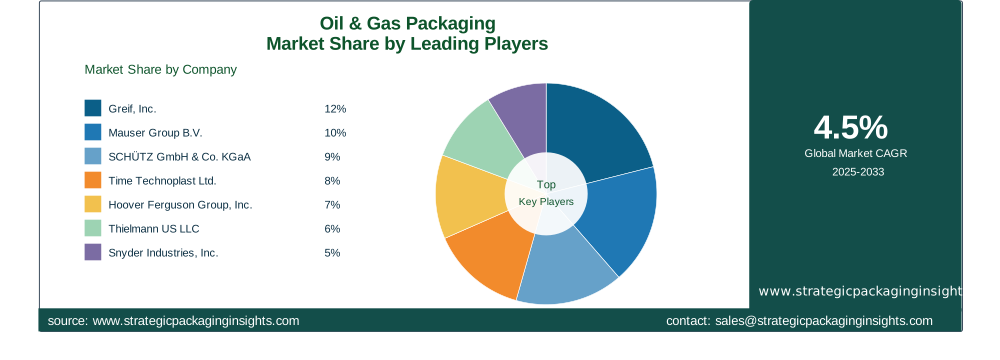
Some of the major companies operating in the Oil & Gas Packaging market include Greif, Inc., Mauser Group B.V., SCHÜTZ GmbH & Co. KGaA, Time Technoplast Ltd., Hoover Ferguson Group, Inc., Thielmann US LLC, Snyder Industries, Inc., Hoover Container Solutions, Inc., Custom Metalcraft, Inc., and Enviro-Pak, Inc. These companies are focusing on expanding their product portfolio and enhancing their production capabilities to cater to the growing demand for oil and gas packaging solutions. They are also investing in advanced technologies to improve the efficiency and safety of their packaging solutions.
Greif, Inc. is a leading player in the market, known for its extensive range of industrial packaging solutions. The company is focusing on expanding its global footprint through strategic acquisitions and partnerships. Mauser Group B.V. is another key player, offering a wide range of packaging solutions for the oil and gas industry. The company is investing in research and development to develop innovative and sustainable packaging solutions. SCHÜTZ GmbH & Co. KGaA is known for its high-quality packaging solutions and is focusing on expanding its production capabilities to meet the growing demand.
Time Technoplast Ltd. is a prominent player in the market, offering a diverse range of packaging solutions for the oil and gas industry. The company is focusing on enhancing its product portfolio through continuous innovation and development. Hoover Ferguson Group, Inc. is known for its advanced packaging solutions and is focusing on expanding its global presence through strategic partnerships and collaborations. Thielmann US LLC is another key player, offering a wide range of packaging solutions for the oil and gas industry. The company is investing in advanced technologies to improve the efficiency and safety of its packaging solutions.
Key Highlights
- The Oil & Gas Packaging market is projected to grow at a CAGR of 4.5% from 2025 to 2033.
- Increasing demand for sustainable and eco-friendly packaging solutions is driving market growth.
- Technological advancements in packaging solutions are enhancing traceability and monitoring of products.
- Fluctuating prices of raw materials pose a challenge for market players.
- Stringent regulations regarding the use of certain packaging materials are impacting market growth.
- Major companies are focusing on strategic initiatives to strengthen their market position.
- Investments in research and development are driving innovation in packaging solutions.
- The market is witnessing significant demand from emerging economies due to increasing oil and gas exploration activities.
- Integration of smart technologies in packaging is optimizing supply chain operations.
- Cost-effective packaging solutions are gaining traction in the market.
Top Countries Insights
In the Oil & Gas Packaging market, the United States holds a significant share due to its well-established oil and gas industry. The market in the U.S. is driven by the increasing demand for efficient packaging solutions to ensure the safe transportation of oil and gas products. The country is also witnessing a growing focus on sustainable packaging solutions, which is further boosting market growth. The U.S. market is projected to grow at a CAGR of 5% during the forecast period, driven by technological advancements and increasing exploration activities.
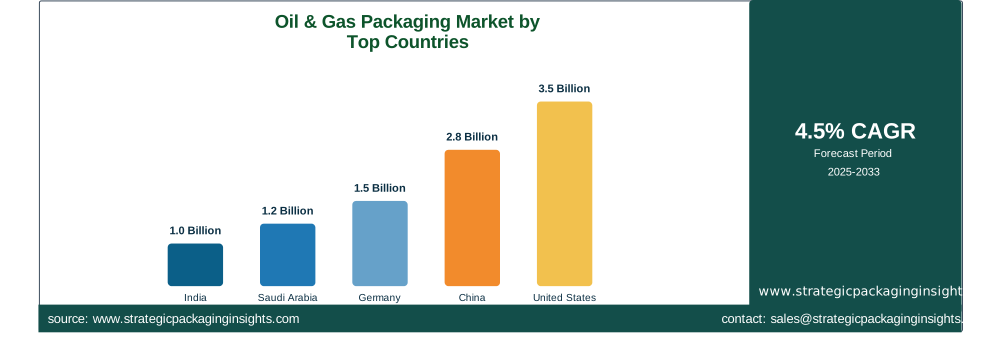
China is another major market for oil and gas packaging, driven by the rapid growth of its oil and gas industry. The country's focus on enhancing its energy security is leading to increased exploration and production activities, which is driving the demand for advanced packaging solutions. The market in China is expected to grow at a CAGR of 6%, supported by government initiatives to promote sustainable packaging solutions and the integration of smart technologies in packaging.
In Europe, Germany is a key market for oil and gas packaging, driven by the presence of major oil and gas companies and a strong focus on sustainability. The market in Germany is projected to grow at a CAGR of 4%, supported by technological advancements and increasing demand for eco-friendly packaging solutions. The country's stringent regulations regarding packaging materials are also driving innovation in the market.
The Middle East is a significant market for oil and gas packaging, with countries like Saudi Arabia leading the market. The region's abundant oil and gas reserves and increasing exploration activities are driving the demand for efficient packaging solutions. The market in Saudi Arabia is expected to grow at a CAGR of 5%, supported by government initiatives to enhance the efficiency and safety of oil and gas transportation.
India is emerging as a key market for oil and gas packaging, driven by the rapid growth of its oil and gas industry and increasing focus on sustainability. The market in India is projected to grow at a CAGR of 7%, supported by government initiatives to promote eco-friendly packaging solutions and the integration of smart technologies in packaging. The country's growing demand for energy is also driving the need for advanced packaging solutions.
Evolving Market Dynamics (2018-2024) and Strategic Foresight (2025-2033)
| Metrics | 2018-2024 | 2025-2033 |
|---|---|---|
| CAGR | 3.5% | 4.5% |
| Market Size Evolution | $10.2 billion to $12.5 billion | $12.5 billion to $18.7 billion |
| Segment Distribution Shifts | Increased demand for plastic packaging | Shift towards eco-friendly materials |
| Regional Contribution Changes | Dominance of North America | Rising share of Asia Pacific |
| Technological Impact Factors | Basic packaging solutions | Integration of smart technologies |
| Client Demand Transformations | Focus on cost-effectiveness | Emphasis on sustainability and innovation |
Oil & Gas Packaging Market Segments Insights

Material Analysis
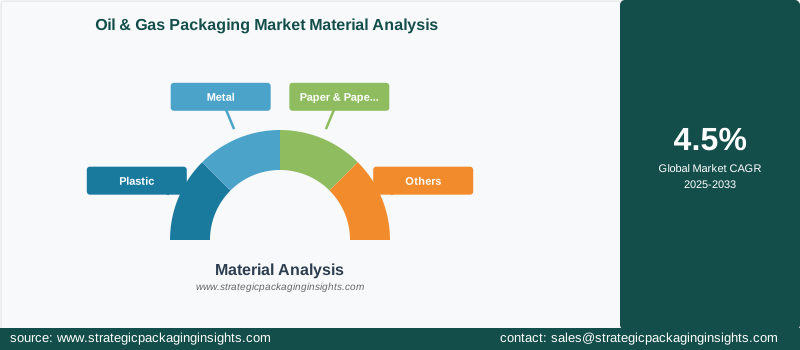
The material segment in the Oil & Gas Packaging market is primarily dominated by plastic, metal, and paper & paperboard. Plastic packaging holds a significant share due to its lightweight, durability, and cost-effectiveness. However, the increasing environmental concerns and regulatory pressures are driving the shift towards eco-friendly materials, such as biodegradable plastics and paper-based packaging. Metal packaging is preferred for its robustness and ability to withstand harsh environmental conditions, making it suitable for upstream and midstream applications. The demand for paper & paperboard packaging is also rising due to its recyclability and sustainability, aligning with the industry's focus on reducing carbon footprint.
In recent years, there has been a growing trend towards the use of advanced materials that offer enhanced safety and performance. Companies are investing in research and development to develop innovative materials that can meet the stringent requirements of the oil and gas industry. The integration of smart technologies in packaging materials is also gaining traction, enabling real-time monitoring and traceability of products during transportation. This trend is expected to drive the demand for advanced packaging materials in the coming years, as companies seek to enhance the safety and efficiency of their operations.
Application Analysis
The application segment of the Oil & Gas Packaging market is categorized into upstream, midstream, and downstream. The upstream segment holds a significant share due to the increasing exploration and production activities in the oil and gas industry. The demand for robust and durable packaging solutions is high in this segment to ensure the safe transportation of crude oil and natural gas. The midstream segment is also witnessing significant growth, driven by the need for efficient packaging solutions for the transportation and storage of oil and gas products. The downstream segment is characterized by the demand for specialized packaging solutions that can meet the specific requirements of refined products.
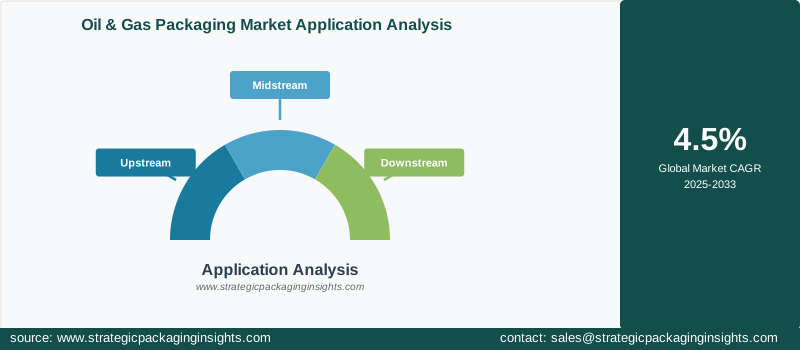
The growing focus on operational efficiency and safety in the oil and gas industry is driving the demand for advanced packaging solutions across all application segments. Companies are investing in innovative packaging technologies that can enhance the safety and reliability of product transportation. The integration of smart technologies in packaging is also gaining traction, enabling real-time monitoring and traceability of products. This trend is expected to drive the demand for advanced packaging solutions in the coming years, as companies seek to optimize their supply chain operations and enhance the safety of their products.
Packaging Type Analysis
The packaging type segment in the Oil & Gas Packaging market includes drums, IBCs, pails, and others. Drums hold a significant share due to their widespread use in the transportation and storage of oil and gas products. They are preferred for their durability and ability to withstand harsh environmental conditions. IBCs (Intermediate Bulk Containers) are also gaining popularity due to their efficiency in handling large volumes of products. They offer advantages such as ease of handling, reduced transportation costs, and enhanced safety, making them suitable for various applications in the oil and gas industry.
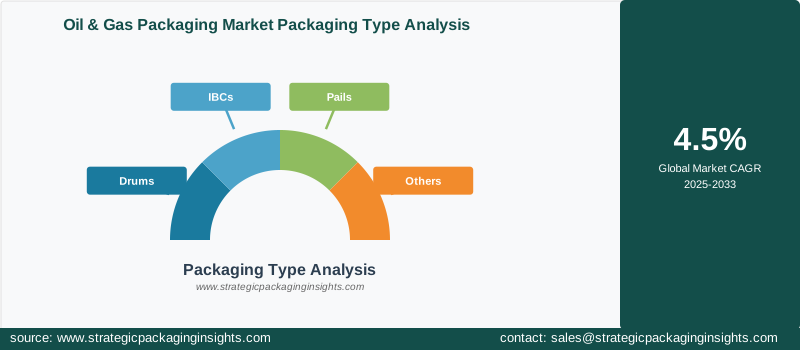
Pails are commonly used for the packaging of smaller volumes of oil and gas products, offering convenience and ease of handling. The demand for other packaging types, such as bags and containers, is also rising due to their versatility and cost-effectiveness. The growing focus on sustainability is driving the demand for eco-friendly packaging solutions across all packaging types. Companies are investing in the development of biodegradable and recyclable packaging materials to meet the evolving needs of the oil and gas industry. This trend is expected to drive the demand for sustainable packaging solutions in the coming years, as companies seek to reduce their environmental impact.
Region Analysis
The Oil & Gas Packaging market is segmented into regions, including North America, Europe, Asia Pacific, Latin America, and the Middle East & Africa. North America holds a significant share due to its well-established oil and gas industry and the presence of major market players. The region is witnessing a growing demand for advanced packaging solutions to ensure the safe transportation of oil and gas products. Europe is also a key market, driven by the presence of major oil and gas companies and a strong focus on sustainability. The region is witnessing significant investments in research and development to develop innovative packaging solutions.
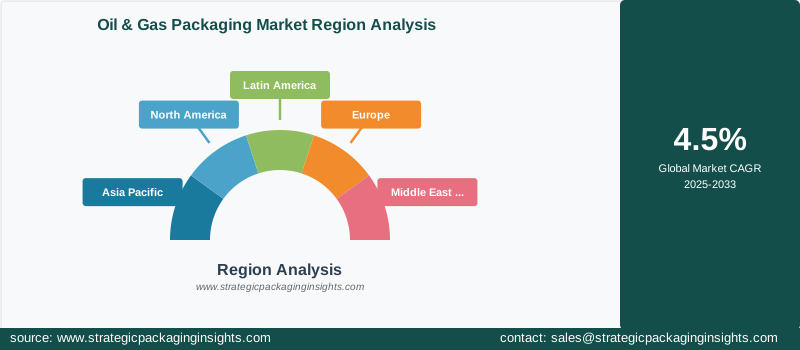
Asia Pacific is emerging as a major market for oil and gas packaging, driven by the rapid growth of the oil and gas industry in countries like China and India. The region is witnessing a growing demand for efficient and cost-effective packaging solutions to cater to the increasing exploration and production activities. Latin America and the Middle East & Africa are also witnessing significant growth, driven by the abundant oil and gas reserves and increasing exploration activities. The growing focus on sustainability and the integration of smart technologies in packaging are driving the demand for advanced packaging solutions in these regions.
Oil & Gas Packaging Market Segments
The Oil & Gas Packaging market has been segmented on the basis ofMaterial
- Plastic
- Metal
- Paper & Paperboard
- Others
Application
- Upstream
- Midstream
- Downstream
Packaging Type
- Drums
- IBCs
- Pails
- Others
Region
- Asia Pacific
- North America
- Latin America
- Europe
- Middle East & Africa




