


Oil And Gas Passive Fire Protection Material Market Outlook
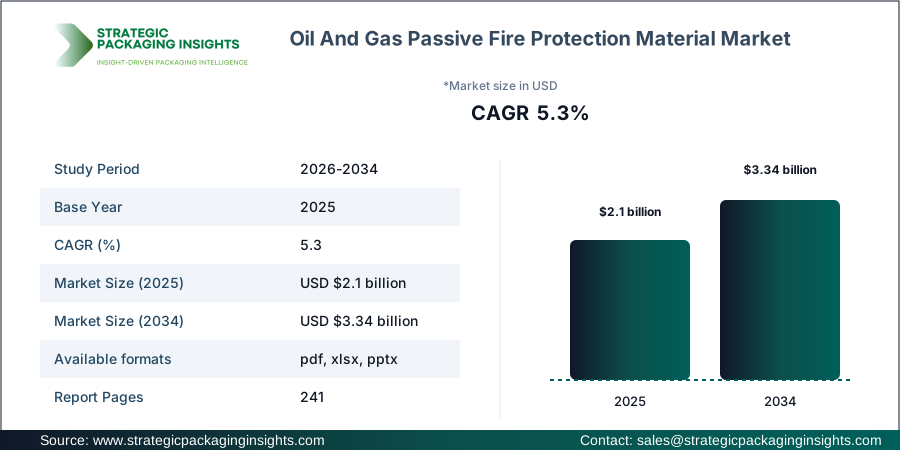
The Oil and Gas Passive Fire Protection Material market was valued at $2.1 billion in 2025 and is projected to reach $3.34 billion by 2034, growing at a CAGR of 5.3% during the forecast period 2026-2034. This market is driven by the increasing demand for safety measures in the oil and gas industry, where fire hazards pose significant risks. The adoption of passive fire protection materials is crucial in mitigating these risks, ensuring the safety of personnel and infrastructure. The market is witnessing a surge in demand due to stringent safety regulations and the need for enhanced fire protection systems in both onshore and offshore facilities. The growth is further fueled by technological advancements in fire protection materials, which offer improved performance and durability.
However, the market faces challenges such as high costs associated with the installation and maintenance of passive fire protection systems. Regulatory compliance and the need for specialized labor also add to the operational costs, potentially restraining market growth. Despite these challenges, the market holds significant growth potential, driven by the increasing investments in oil and gas exploration and production activities. The development of new oil and gas fields, particularly in emerging economies, presents lucrative opportunities for market players. Additionally, the growing focus on sustainable and eco-friendly fire protection solutions is expected to drive innovation and open new avenues for growth in the market.
Report Scope
| Attributes | Details |
| Report Title | Oil And Gas Passive Fire Protection Material Market Size, Future Growth and Forecast 2034 |
| Material Type | Intumescent Coatings, Cementitious Materials, Fireproofing Cladding, Others |
| Application | Offshore Platforms, Onshore Oil and Gas Facilities, Refineries, Others |
| End-User | Upstream, Midstream, Downstream |
| Region | Asia Pacific, North America, Latin America, Europe, Middle East & Africa |
| Base Year | 2025 |
| Historic Period | 2018-2024 |
| Forecast Period | 2026-2034 |
| Number of Pages | 241 |
| Customization Available | Yes* |
Opportunities & Threats
The Oil and Gas Passive Fire Protection Material market presents numerous opportunities, particularly in the realm of technological advancements. Innovations in material science are leading to the development of more efficient and cost-effective fire protection solutions. Companies are investing in research and development to create materials that not only meet stringent safety standards but also offer enhanced durability and performance. This focus on innovation is expected to drive market growth, as end-users seek advanced solutions to protect their assets and personnel from fire hazards. Additionally, the increasing exploration and production activities in emerging economies offer significant growth opportunities for market players. As these regions invest in expanding their oil and gas infrastructure, the demand for passive fire protection materials is expected to rise, providing a lucrative market for manufacturers.
Another opportunity lies in the growing emphasis on sustainability and environmental responsibility. The oil and gas industry is under increasing pressure to reduce its environmental footprint, and this extends to fire protection solutions. Companies that can offer eco-friendly and sustainable fire protection materials are likely to gain a competitive edge in the market. This trend is driving innovation in the development of materials that are not only effective in fire protection but also environmentally friendly. As regulatory bodies continue to tighten environmental regulations, the demand for sustainable fire protection solutions is expected to grow, providing a significant opportunity for market players.
Despite these opportunities, the market faces several threats that could hinder its growth. One of the primary challenges is the high cost associated with the installation and maintenance of passive fire protection systems. These costs can be prohibitive for smaller companies or those operating in regions with limited financial resources. Additionally, the market is subject to stringent regulatory requirements, which can pose a barrier to entry for new players. Compliance with these regulations requires significant investment in testing and certification, which can be a deterrent for companies looking to enter the market. Furthermore, the market is highly competitive, with numerous players vying for market share. This competition can lead to price wars and margin pressures, posing a threat to profitability for market participants.
Drivers & Challenges
The Oil and Gas Passive Fire Protection Material market is driven by several key factors, including the increasing focus on safety and risk management in the oil and gas industry. As the industry continues to expand, the need for effective fire protection solutions becomes more critical. The adoption of passive fire protection materials is essential in ensuring the safety of personnel and infrastructure, particularly in high-risk environments such as offshore platforms and refineries. Additionally, stringent safety regulations imposed by governments and regulatory bodies are driving the demand for advanced fire protection solutions. Companies are required to comply with these regulations, which often necessitate the use of passive fire protection materials to meet safety standards.
Another significant driver of market growth is the increasing investment in oil and gas exploration and production activities. As the demand for energy continues to rise, companies are investing in the development of new oil and gas fields, particularly in emerging economies. This expansion of infrastructure requires effective fire protection solutions to safeguard assets and personnel. The growing focus on sustainability and environmental responsibility is also driving innovation in the market. Companies are developing eco-friendly fire protection materials that not only meet safety standards but also reduce the environmental impact of their operations. This trend is expected to drive market growth as companies seek to enhance their sustainability credentials.
Despite these drivers, the market faces several challenges that could hinder its growth. One of the primary challenges is the high cost associated with the installation and maintenance of passive fire protection systems. These costs can be prohibitive for smaller companies or those operating in regions with limited financial resources. Additionally, the market is subject to stringent regulatory requirements, which can pose a barrier to entry for new players. Compliance with these regulations requires significant investment in testing and certification, which can be a deterrent for companies looking to enter the market. Furthermore, the market is highly competitive, with numerous players vying for market share. This competition can lead to price wars and margin pressures, posing a threat to profitability for market participants.
Market Share Analysis
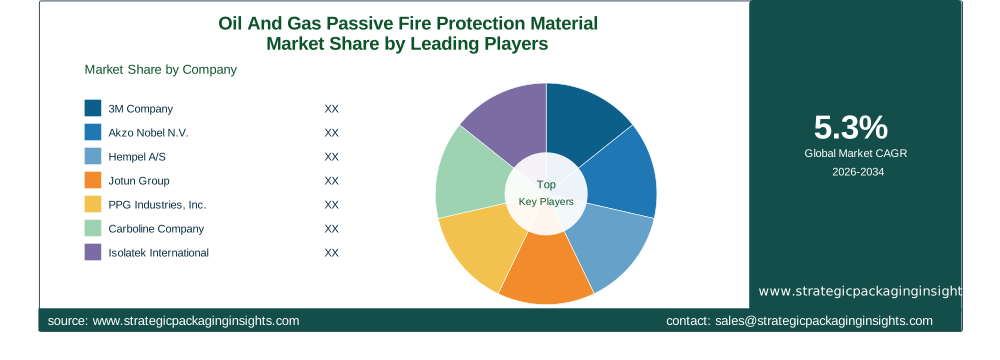
The Oil and Gas Passive Fire Protection Material market is characterized by a highly competitive landscape, with numerous players vying for market share. Key companies in the market include 3M Company, Akzo Nobel N.V., Hempel A/S, Jotun Group, PPG Industries, Inc., Carboline Company, Isolatek International, Promat International N.V., Rolf Kuhn GmbH, W.R. Grace & Co., Contego International Inc., and Albi Manufacturing. These companies are focused on expanding their product portfolios and enhancing their market presence through strategic partnerships, mergers, and acquisitions. The competitive landscape is further intensified by the presence of regional players who offer cost-effective solutions tailored to local market needs.
3M Company is a leading player in the market, known for its innovative fire protection solutions that cater to a wide range of applications in the oil and gas industry. The company has a strong global presence and is committed to research and development to enhance its product offerings. Akzo Nobel N.V. is another major player, offering a comprehensive range of fire protection coatings that are widely used in the oil and gas sector. The company focuses on sustainability and innovation, which has helped it maintain a competitive edge in the market.
Hempel A/S and Jotun Group are also prominent players in the market, known for their high-performance fire protection coatings. These companies have a strong focus on research and development, which enables them to offer advanced solutions that meet the evolving needs of the oil and gas industry. PPG Industries, Inc. is another key player, offering a wide range of fire protection coatings that are designed to provide long-lasting protection in harsh environments. The company has a strong global presence and is committed to sustainability and innovation.
Carboline Company, Isolatek International, and Promat International N.V. are also significant players in the market, offering a range of fire protection solutions that cater to the specific needs of the oil and gas industry. These companies are focused on expanding their product portfolios and enhancing their market presence through strategic partnerships and acquisitions. Rolf Kuhn GmbH, W.R. Grace & Co., Contego International Inc., and Albi Manufacturing are other notable players in the market, known for their innovative fire protection solutions and strong focus on research and development.
Key Highlights
- The market is projected to grow from $2.1 billion in 2025 to $3.34 billion by 2034, at a CAGR of 5.3%.
- Technological advancements in fire protection materials are driving market growth.
- Stringent safety regulations are increasing the demand for passive fire protection solutions.
- Emerging economies present significant growth opportunities for market players.
- The focus on sustainability is driving innovation in eco-friendly fire protection materials.
- High installation and maintenance costs pose a challenge to market growth.
- The market is highly competitive, with numerous players vying for market share.
- Key players are focused on expanding their product portfolios and enhancing their market presence.
- Research and development are critical for maintaining a competitive edge in the market.
- Strategic partnerships and acquisitions are common strategies among market players.
Top Countries Insights
In the Oil and Gas Passive Fire Protection Material market, the United States stands out as a key player, with a market size of approximately $1.2 billion and a CAGR of 6%. The country's robust oil and gas industry, coupled with stringent safety regulations, drives the demand for advanced fire protection solutions. The focus on technological innovation and sustainability further propels market growth, as companies seek to enhance their safety measures while minimizing environmental impact. However, the high cost of installation and maintenance remains a challenge for market participants.
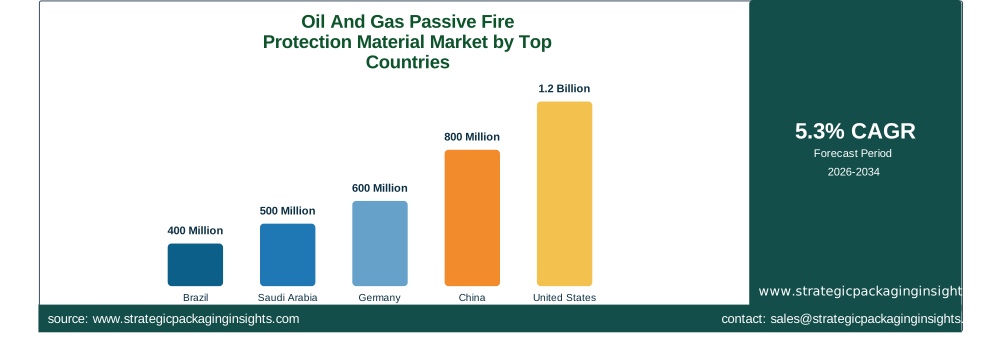
China is another significant market, with a market size of around $800 million and a CAGR of 7%. The country's rapid industrialization and expanding oil and gas infrastructure drive the demand for passive fire protection materials. Government initiatives to enhance safety standards and reduce environmental impact further support market growth. However, the market faces challenges such as regulatory compliance and the need for specialized labor, which can increase operational costs.
In Europe, Germany is a leading market, with a market size of approximately $600 million and a CAGR of 5%. The country's strong focus on safety and sustainability drives the demand for advanced fire protection solutions. The presence of key market players and a well-established oil and gas industry further support market growth. However, the market faces challenges such as high costs and stringent regulatory requirements, which can pose barriers to entry for new players.
The Middle East, particularly Saudi Arabia, is a growing market, with a market size of around $500 million and a CAGR of 6%. The region's significant oil and gas reserves drive the demand for effective fire protection solutions. Government initiatives to enhance safety standards and reduce environmental impact further support market growth. However, the market faces challenges such as geopolitical instability and fluctuating oil prices, which can impact investment in infrastructure development.
In Latin America, Brazil is an emerging market, with a market size of approximately $400 million and a CAGR of 5%. The country's expanding oil and gas industry drives the demand for passive fire protection materials. Government initiatives to enhance safety standards and reduce environmental impact further support market growth. However, the market faces challenges such as regulatory compliance and the need for specialized labor, which can increase operational costs.
Oil And Gas Passive Fire Protection Material Market Segments Insights

Material Type Analysis
The material type segment in the Oil and Gas Passive Fire Protection Material market is dominated by intumescent coatings, which are widely used due to their excellent fire-resistant properties. These coatings expand when exposed to high temperatures, forming an insulating layer that protects the underlying structure from fire damage. The demand for intumescent coatings is driven by their effectiveness in providing long-lasting protection and their ability to meet stringent safety standards. Cementitious materials are also gaining traction in the market, offering a cost-effective solution for fire protection. These materials are easy to apply and provide excellent thermal insulation, making them a popular choice for onshore and offshore applications.
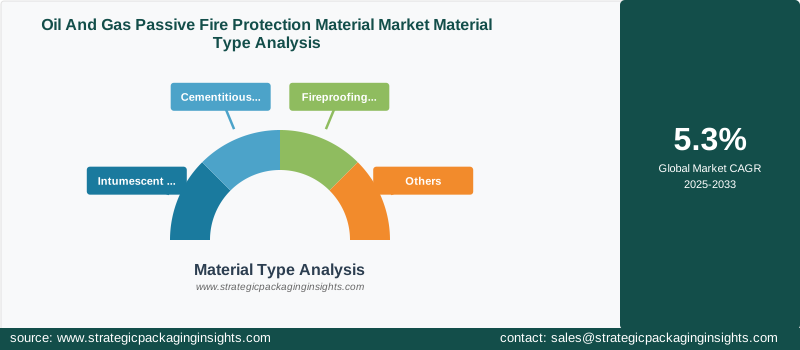
Fireproofing cladding is another important sub-segment, offering a durable and aesthetically pleasing solution for fire protection. These materials are designed to withstand harsh environmental conditions, making them ideal for use in offshore platforms and refineries. The demand for fireproofing cladding is driven by the need for enhanced safety measures and the growing focus on sustainability. Other materials, such as fire-resistant boards and sprays, also play a significant role in the market, offering versatile solutions for various applications. The competition in this segment is intense, with numerous players offering a wide range of products to meet the diverse needs of the oil and gas industry.
Application Analysis
The application segment of the Oil and Gas Passive Fire Protection Material market is primarily driven by the demand from offshore platforms, which require robust fire protection solutions to ensure the safety of personnel and infrastructure. The harsh environmental conditions and high-risk nature of offshore operations necessitate the use of advanced fire protection materials. Onshore oil and gas facilities also contribute significantly to market demand, as these facilities require effective fire protection solutions to safeguard assets and personnel. The growing investment in the development of new oil and gas fields further drives the demand for passive fire protection materials in this segment.
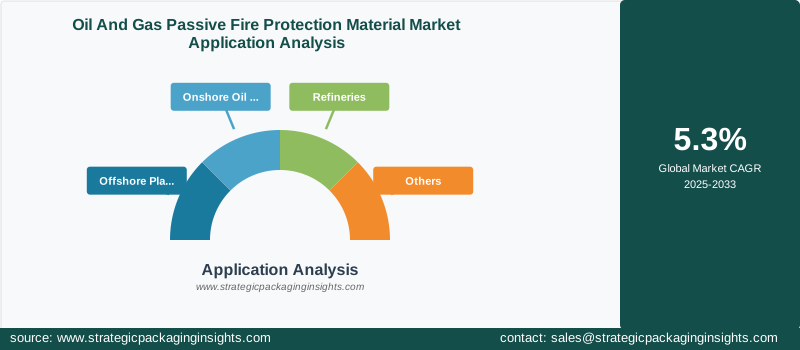
Refineries are another key application area, where the risk of fire is particularly high due to the presence of flammable materials. The demand for passive fire protection materials in refineries is driven by the need to comply with stringent safety regulations and enhance operational safety. Other applications, such as storage tanks and pipelines, also contribute to market demand, as these structures require effective fire protection solutions to prevent catastrophic incidents. The competition in this segment is fierce, with numerous players offering a wide range of products to meet the diverse needs of the oil and gas industry.
End-User Analysis
The end-user segment of the Oil and Gas Passive Fire Protection Material market is dominated by the upstream sector, which includes exploration and production activities. The demand for passive fire protection materials in this sector is driven by the need to ensure the safety of personnel and infrastructure in high-risk environments. The midstream sector, which involves the transportation and storage of oil and gas, also contributes significantly to market demand. The need for effective fire protection solutions in this sector is driven by the risk of fire during the transportation and storage of flammable materials.
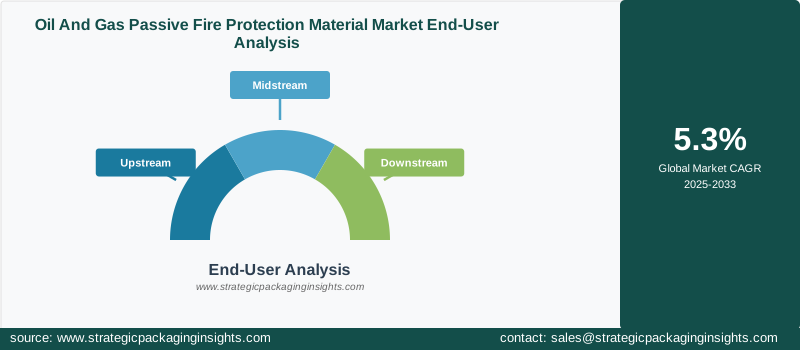
The downstream sector, which includes refining and distribution activities, is another important end-user segment. The demand for passive fire protection materials in this sector is driven by the need to comply with stringent safety regulations and enhance operational safety. The competition in this segment is intense, with numerous players offering a wide range of products to meet the diverse needs of the oil and gas industry. The growing focus on sustainability and environmental responsibility is also driving innovation in this segment, as companies seek to develop eco-friendly fire protection solutions that meet the evolving needs of the industry.
Oil And Gas Passive Fire Protection Material Market Segments
The Oil And Gas Passive Fire Protection Material market has been segmented on the basis ofMaterial Type
- Intumescent Coatings
- Cementitious Materials
- Fireproofing Cladding
- Others
Application
- Offshore Platforms
- Onshore Oil and Gas Facilities
- Refineries
- Others
End-User
- Upstream
- Midstream
- Downstream
Region
- Asia Pacific
- North America
- Latin America
- Europe
- Middle East & Africa




