


Offset Printing for Packaging Market Outlook
The Offset Printing for Packaging market was valued at $8.5 billion in 2024 and is projected to reach $12.3 billion by 2033, growing at a CAGR of 4.2% during the forecast period 2025-2033. This market is experiencing robust growth driven by the increasing demand for high-quality packaging solutions across various industries. Offset printing is favored for its ability to produce sharp and clean images and text, making it ideal for packaging that requires detailed graphics and vibrant colors. The food and beverage sector, in particular, is a significant contributor to the market's expansion, as companies seek to enhance their product appeal through visually appealing packaging. Additionally, advancements in offset printing technology, such as the development of eco-friendly inks and substrates, are further propelling market growth.
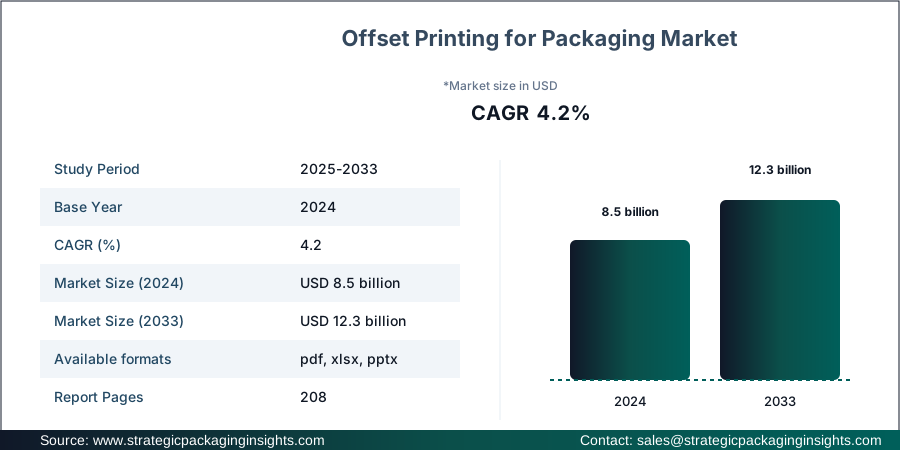
However, the market faces challenges such as the high initial setup costs associated with offset printing equipment and the growing competition from digital printing technologies. Despite these challenges, the offset printing for packaging market holds substantial growth potential, particularly in emerging economies where the demand for packaged goods is on the rise. Regulatory frameworks promoting sustainable packaging solutions are also expected to create new opportunities for market players. As companies continue to innovate and adapt to changing consumer preferences, the offset printing for packaging market is poised for steady growth in the coming years.
Report Scope
| Attributes | Details |
| Report Title | Offset Printing for Packaging Market Size, Future Growth and Forecast 2033 |
| Material | Paper, Plastic, Metal, Others |
| Application | Food & Beverage, Healthcare, Personal Care, Industrial, Others |
| Printing Plate | Lithographic, Flexographic, Digital |
| Region | Asia Pacific, North America, Latin America, Europe, Middle East & Africa |
| Base Year | 2024 |
| Historic Period | 2017-2023 |
| Forecast Period | 2025-2033 |
| Number of Pages | 208 |
| Customization Available | Yes* |
Opportunities & Threats
The offset printing for packaging market presents numerous opportunities, particularly in the realm of sustainable packaging solutions. As environmental concerns continue to rise, there is a growing demand for eco-friendly packaging options. Offset printing, with its ability to use biodegradable inks and recyclable substrates, is well-positioned to meet this demand. Companies that invest in sustainable offset printing technologies can capitalize on this trend and gain a competitive edge in the market. Additionally, the increasing popularity of personalized packaging offers another avenue for growth. With consumers seeking unique and customized packaging experiences, offset printing's capability to produce high-quality, personalized designs can attract a broader customer base.
Another significant opportunity lies in the expansion of the e-commerce sector. As online shopping continues to grow, so does the need for effective packaging solutions that protect products during transit while also providing an attractive unboxing experience. Offset printing can play a crucial role in this by offering durable and visually appealing packaging options. Furthermore, the rise of smart packaging, which incorporates technology such as QR codes and NFC tags, presents an opportunity for offset printing to integrate these features seamlessly into packaging designs, enhancing the overall consumer experience.
Despite these opportunities, the offset printing for packaging market faces certain threats. One of the primary challenges is the increasing competition from digital printing technologies, which offer faster turnaround times and lower costs for short print runs. As digital printing continues to advance, it poses a significant threat to the traditional offset printing market. Additionally, fluctuations in raw material prices, particularly for paper and inks, can impact profit margins for offset printing companies. To mitigate these threats, companies must focus on innovation and efficiency, investing in new technologies and processes that enhance the capabilities of offset printing.
Drivers & Challenges
The offset printing for packaging market is driven by several key factors, including the growing demand for high-quality packaging solutions across various industries. The food and beverage sector, in particular, is a major driver of market growth, as companies seek to differentiate their products through visually appealing packaging. Offset printing's ability to produce sharp and vibrant images makes it an ideal choice for packaging that requires detailed graphics. Additionally, advancements in offset printing technology, such as the development of eco-friendly inks and substrates, are further propelling market growth. These innovations not only enhance the quality of printed materials but also align with the increasing consumer demand for sustainable packaging solutions.
Another significant driver is the expansion of the e-commerce sector, which has led to an increased demand for effective packaging solutions. As online shopping continues to grow, so does the need for packaging that protects products during transit while also providing an attractive unboxing experience. Offset printing can play a crucial role in this by offering durable and visually appealing packaging options. Furthermore, the rise of smart packaging, which incorporates technology such as QR codes and NFC tags, presents an opportunity for offset printing to integrate these features seamlessly into packaging designs, enhancing the overall consumer experience.
However, the market also faces several challenges, including the high initial setup costs associated with offset printing equipment. These costs can be a barrier for small and medium-sized enterprises looking to enter the market. Additionally, the growing competition from digital printing technologies poses a significant challenge. Digital printing offers faster turnaround times and lower costs for short print runs, making it an attractive option for many companies. To remain competitive, offset printing companies must focus on innovation and efficiency, investing in new technologies and processes that enhance the capabilities of offset printing.
Market Share Analysis
The offset printing for packaging market is characterized by a competitive landscape with several key players vying for market share. The market is dominated by a mix of established companies and emerging players, each offering a range of products and services to meet the diverse needs of their customers. The competitive landscape is shaped by factors such as technological advancements, product innovation, and strategic partnerships. Companies that invest in research and development to enhance their product offerings and improve operational efficiency are likely to gain a competitive edge in the market.
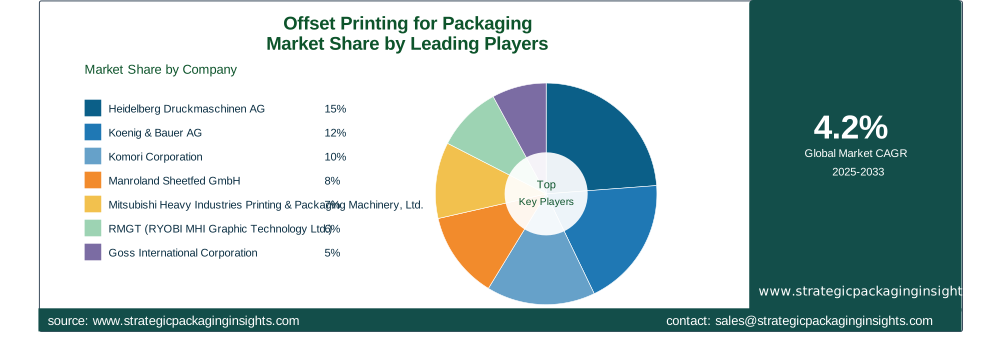
Among the major players in the offset printing for packaging market are Heidelberg Druckmaschinen AG, Koenig & Bauer AG, Komori Corporation, and Manroland Sheetfed GmbH. These companies have established themselves as leaders in the market through their extensive product portfolios, strong distribution networks, and commitment to innovation. Heidelberg Druckmaschinen AG, for example, is known for its advanced offset printing solutions that cater to a wide range of packaging applications. The company's focus on sustainability and digitalization has further strengthened its position in the market.
Koenig & Bauer AG is another prominent player in the market, offering a comprehensive range of offset printing presses for packaging applications. The company's emphasis on innovation and customer-centric solutions has enabled it to maintain a strong market presence. Similarly, Komori Corporation is recognized for its high-quality offset printing presses that deliver exceptional print quality and efficiency. The company's commitment to sustainability and technological advancements has positioned it as a key player in the market.
Manroland Sheetfed GmbH is also a significant player in the offset printing for packaging market, known for its cutting-edge printing technologies and solutions. The company's focus on customer satisfaction and continuous improvement has helped it build a loyal customer base. Other notable players in the market include Mitsubishi Heavy Industries Printing & Packaging Machinery, Ltd., RMGT (RYOBI MHI Graphic Technology Ltd.), and Goss International Corporation. These companies continue to invest in research and development to enhance their product offerings and expand their market reach.
Key Highlights
- The offset printing for packaging market is projected to grow at a CAGR of 4.2% from 2025 to 2033.
- Advancements in eco-friendly inks and substrates are driving market growth.
- The food and beverage sector is a major contributor to market expansion.
- Offset printing offers high-quality, personalized packaging solutions.
- The rise of e-commerce is increasing demand for effective packaging solutions.
- Smart packaging integration presents new opportunities for offset printing.
- High initial setup costs and competition from digital printing are key challenges.
Top Countries Insights
In the offset printing for packaging market, the United States stands out as a leading player, with a market size of $2.1 billion and a CAGR of 5%. The country's strong demand for high-quality packaging solutions, driven by the food and beverage and e-commerce sectors, is a significant growth driver. Additionally, advancements in printing technology and a focus on sustainability are further propelling market growth in the U.S.
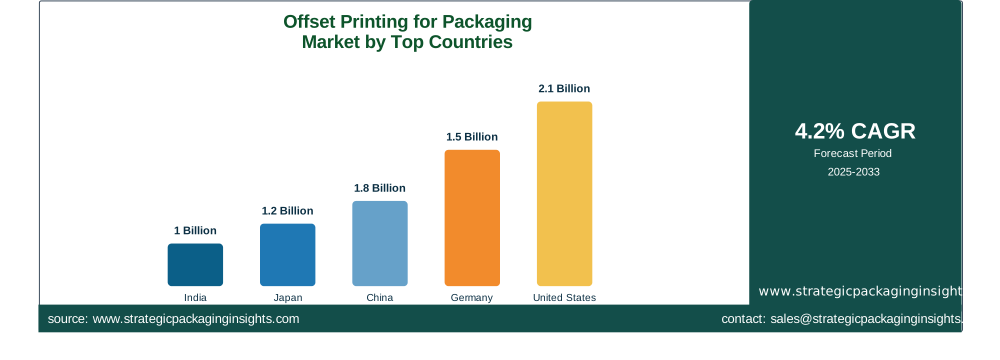
Germany is another key market, with a market size of $1.5 billion and a CAGR of 4%. The country's well-established printing industry and emphasis on innovation and quality make it a prominent player in the offset printing for packaging market. Germany's focus on sustainable packaging solutions and technological advancements are key growth drivers.
China, with a market size of $1.8 billion and a CAGR of 6%, is experiencing rapid growth in the offset printing for packaging market. The country's expanding e-commerce sector and increasing demand for packaged goods are driving market growth. Additionally, government initiatives promoting sustainable packaging solutions are expected to create new opportunities for market players.
Japan, with a market size of $1.2 billion and a CAGR of 3%, is a significant player in the offset printing for packaging market. The country's strong focus on quality and innovation, coupled with a well-established printing industry, are key growth drivers. Japan's emphasis on sustainable packaging solutions and technological advancements further contribute to market growth.
India, with a market size of $1 billion and a CAGR of 7%, is emerging as a key player in the offset printing for packaging market. The country's growing middle class and increasing demand for packaged goods are driving market growth. Additionally, government initiatives promoting sustainable packaging solutions and technological advancements are expected to create new opportunities for market players.
Evolving Market Dynamics (2018-2024) and Strategic Foresight (2025-2033)
| Metric | 2018-2024 | 2025-2033 |
|---|---|---|
| CAGR | 3.5% | 4.2% |
| Market Size Evolution | $7.2 billion to $8.5 billion | $8.5 billion to $12.3 billion |
| Segment Distribution Shifts | Food & Beverage Dominance | Increased E-commerce Influence |
| Regional Contribution Changes | North America & Europe Lead | Asia Pacific Growth Surge |
| Technological Impact Factors | Eco-friendly Inks | Smart Packaging Integration |
| Client Demand Transformations | High-Quality Graphics | Personalized & Sustainable Solutions |
Offset Printing for Packaging Market Segments Insights

Material Analysis
The offset printing for packaging market is segmented by material into paper, plastic, metal, and others. Paper remains the most widely used material due to its recyclability and cost-effectiveness. The demand for paper-based packaging is driven by the increasing focus on sustainability and the growing preference for eco-friendly packaging solutions. Plastic, while facing environmental scrutiny, continues to be used for its durability and versatility. Innovations in biodegradable and recyclable plastics are helping to mitigate environmental concerns. Metal packaging, known for its strength and protective qualities, is favored in sectors such as food and beverage and healthcare. The 'others' category includes materials like glass and composites, which are used for specialized packaging applications.
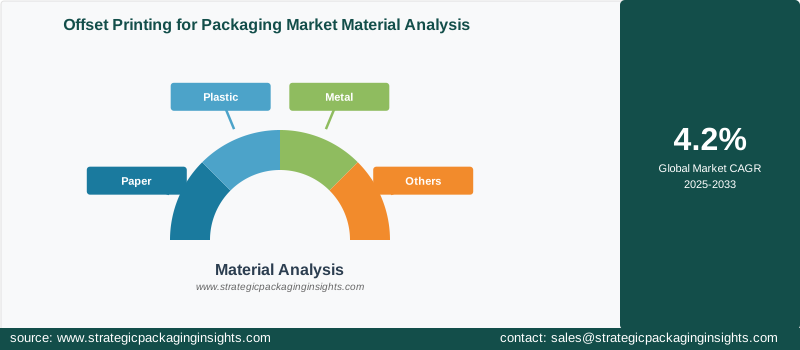
Within the paper segment, advancements in printing technology have enabled the production of high-quality graphics and vibrant colors, enhancing the appeal of paper-based packaging. The plastic segment is witnessing innovations in biodegradable and recyclable materials, addressing environmental concerns and aligning with consumer preferences for sustainable packaging. Metal packaging, with its protective qualities and ability to preserve product integrity, is gaining traction in sectors such as food and beverage and healthcare. The 'others' category, which includes materials like glass and composites, is used for specialized packaging applications that require unique properties.
Application Analysis
The offset printing for packaging market is segmented by application into food & beverage, healthcare, personal care, industrial, and others. The food & beverage sector is the largest application segment, driven by the need for visually appealing packaging that enhances product appeal. Offset printing's ability to produce high-quality graphics and vibrant colors makes it an ideal choice for food and beverage packaging. The healthcare sector is also a significant application area, with offset printing used for packaging that requires precise labeling and detailed information.
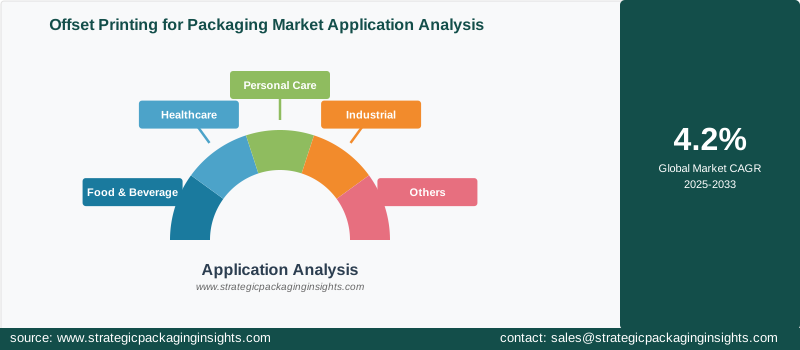
In the personal care sector, offset printing is used to create attractive packaging that stands out on retail shelves. The industrial sector utilizes offset printing for packaging that requires durability and protection. The 'others' category includes applications such as electronics and consumer goods, where offset printing is used for packaging that requires high-quality graphics and branding. The demand for offset printing in these application areas is driven by the need for packaging that not only protects products but also enhances their visual appeal and brand recognition.
Printing Plate Analysis
The offset printing for packaging market is segmented by printing plate into lithographic, flexographic, and digital. Lithographic printing plates are the most commonly used in offset printing, known for their ability to produce high-quality images and text. The demand for lithographic plates is driven by their versatility and cost-effectiveness, making them suitable for a wide range of packaging applications. Flexographic printing plates, known for their ability to print on a variety of substrates, are gaining popularity in the packaging industry. The demand for flexographic plates is driven by their ability to produce high-quality graphics and their suitability for short print runs.
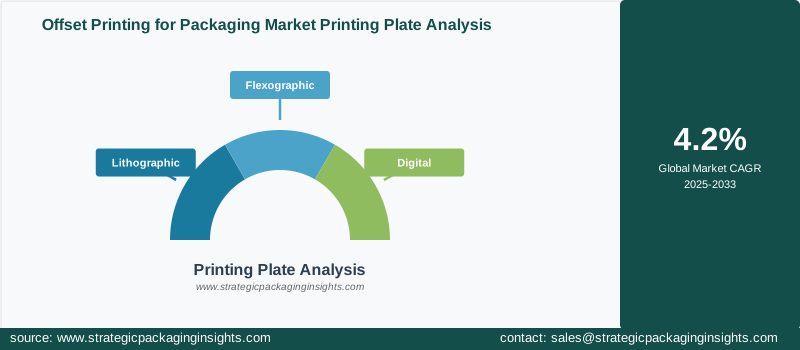
Digital printing plates, while still a relatively small segment, are gaining traction due to their ability to offer quick turnaround times and cost-effective solutions for short print runs. The demand for digital plates is driven by the increasing need for personalized and customized packaging solutions. The choice of printing plate depends on factors such as the type of packaging material, the desired print quality, and the production volume. Companies in the offset printing for packaging market are investing in advanced printing plate technologies to enhance their capabilities and meet the evolving needs of their customers.
Regional Analysis
The offset printing for packaging market is segmented by region into Asia Pacific, North America, Latin America, Europe, and Middle East & Africa. Asia Pacific is the largest and fastest-growing region, driven by the expanding e-commerce sector and increasing demand for packaged goods. The region's growth is also supported by government initiatives promoting sustainable packaging solutions. North America and Europe are mature markets, characterized by a strong focus on innovation and quality. The demand for offset printing in these regions is driven by the need for high-quality packaging solutions that enhance product appeal.
Latin America and Middle East & Africa are emerging markets, with growth driven by the increasing demand for packaged goods and the expansion of the e-commerce sector. The demand for offset printing in these regions is also supported by government initiatives promoting sustainable packaging solutions. Companies in the offset printing for packaging market are focusing on expanding their presence in these regions to capitalize on the growing demand for high-quality packaging solutions. The regional analysis highlights the diverse opportunities and challenges faced by companies operating in the offset printing for packaging market.
Offset Printing for Packaging Market Segments
The Offset Printing for Packaging market has been segmented on the basis ofMaterial
- Paper
- Plastic
- Metal
- Others
Application
- Food & Beverage
- Healthcare
- Personal Care
- Industrial
- Others
Printing Plate
- Lithographic
- Flexographic
- Digital
Region
- Asia Pacific
- North America
- Latin America
- Europe
- Middle East & Africa




