


Nylon Film Market Outlook
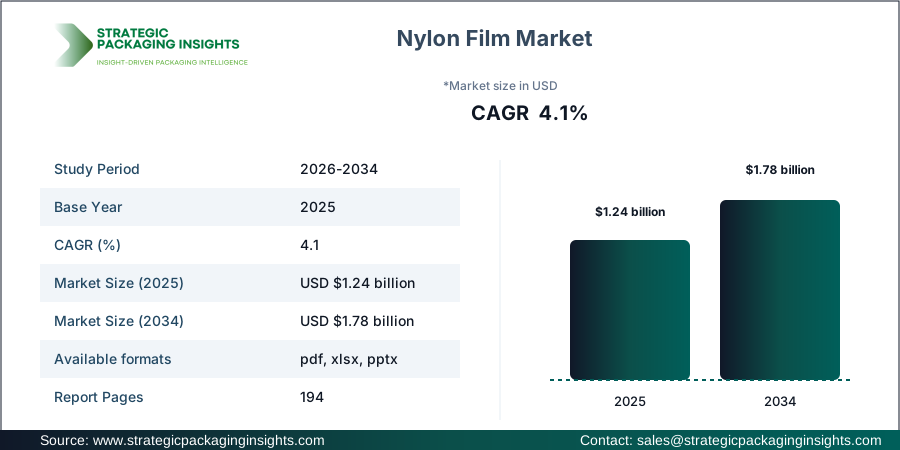
The Nylon Film market was valued at $1.24 billion in 2025 and is projected to reach $1.78 billion by 2034, growing at a CAGR of 4.1% during the forecast period 2026-2034. This growth is driven by the increasing demand for flexible packaging solutions across various industries, including food and pharmaceuticals. The versatility and durability of nylon films make them an attractive choice for manufacturers looking to enhance product shelf life and maintain quality. Additionally, advancements in film technology, such as improved barrier properties and enhanced mechanical strength, are further propelling market growth. The rising trend of sustainable packaging is also contributing to the increased adoption of nylon films, as they offer recyclability and reduced environmental impact compared to traditional packaging materials.
However, the market faces certain restraints, including fluctuating raw material prices and stringent regulatory standards governing packaging materials. These factors can pose challenges to market growth, as manufacturers need to balance cost-effectiveness with compliance. Despite these challenges, the nylon film market holds significant growth potential, particularly in emerging economies where the demand for packaged goods is on the rise. The increasing focus on reducing food waste and enhancing food safety is expected to drive further innovation and adoption of nylon films in the coming years. As the market evolves, companies are likely to invest in research and development to create more advanced and sustainable film solutions, catering to the diverse needs of end-users.
Report Scope
| Attributes | Details |
| Report Title | Nylon Film Market Size, Future Growth and Forecast 2034 |
| By Product Type | Biaxially Oriented Nylon Film, Cast Nylon Film, Barrier Nylon Film |
| By Application | Food Packaging, Pharma Packaging, Industrial Films |
| By Thickness | Thin Film, Medium Film, Heavy Film |
| By End Use | Food Processors, Converters, Healthcare, Industrial |
| Region | Asia Pacific, North America, Latin America, Europe, Middle East & Africa |
| Base Year | 2025 |
| Historic Period | 2018-2024 |
| Forecast Period | 2026-2034 |
| Number of Pages | 194 |
| Customization Available | Yes* |
Opportunities & Threats
The nylon film market presents numerous opportunities, particularly in the realm of sustainable packaging solutions. As environmental concerns continue to rise, there is a growing demand for eco-friendly packaging materials that can reduce carbon footprints and minimize waste. Nylon films, known for their recyclability and durability, are well-positioned to capitalize on this trend. Companies that invest in developing biodegradable and compostable nylon films are likely to gain a competitive edge, as consumers and businesses alike seek greener alternatives. Additionally, the increasing demand for high-performance packaging in the food and pharmaceutical sectors offers significant growth potential. Nylon films' superior barrier properties make them ideal for preserving product freshness and extending shelf life, which is crucial in these industries.
Another opportunity lies in the expansion of the e-commerce sector, which has surged in recent years. With more consumers shopping online, the need for reliable and protective packaging has never been greater. Nylon films, with their excellent tensile strength and puncture resistance, are well-suited for e-commerce packaging applications. Companies that can offer innovative packaging solutions tailored to the unique demands of online retail are likely to see increased demand for their products. Furthermore, the growing trend of convenience foods and ready-to-eat meals is driving the need for efficient packaging solutions, providing additional opportunities for nylon film manufacturers to expand their market presence.
Despite these opportunities, the nylon film market faces certain threats that could impact its growth trajectory. One of the primary challenges is the volatility of raw material prices, which can affect production costs and profit margins. Nylon films are derived from petrochemicals, and fluctuations in oil prices can lead to unpredictable cost structures for manufacturers. Additionally, the market is subject to stringent regulatory standards, particularly in the food and pharmaceutical sectors, where packaging materials must meet specific safety and quality criteria. Compliance with these regulations can be costly and time-consuming, posing a barrier to entry for new players and potentially limiting market expansion.
Drivers & Challenges
The nylon film market is driven by several key factors, including the increasing demand for flexible packaging solutions across various industries. As consumer preferences shift towards convenience and sustainability, manufacturers are seeking packaging materials that offer both functionality and environmental benefits. Nylon films, with their excellent barrier properties and recyclability, are well-suited to meet these demands. Additionally, advancements in film technology, such as improved mechanical strength and enhanced clarity, are driving the adoption of nylon films in high-performance applications. The growing focus on food safety and reducing food waste is also a significant driver, as nylon films help extend product shelf life and maintain quality.
Another major driver is the rapid growth of the e-commerce sector, which has increased the demand for protective and reliable packaging solutions. Nylon films, known for their durability and puncture resistance, are ideal for e-commerce packaging applications, where products must withstand the rigors of shipping and handling. The rise of online retail has created new opportunities for nylon film manufacturers to develop innovative packaging solutions tailored to the unique needs of this market. Furthermore, the expanding middle class in emerging economies is driving demand for packaged goods, providing additional growth opportunities for the nylon film market.
However, the market also faces several challenges that could impact its growth. One of the primary challenges is the volatility of raw material prices, which can affect production costs and profit margins. Nylon films are derived from petrochemicals, and fluctuations in oil prices can lead to unpredictable cost structures for manufacturers. Additionally, the market is subject to stringent regulatory standards, particularly in the food and pharmaceutical sectors, where packaging materials must meet specific safety and quality criteria. Compliance with these regulations can be costly and time-consuming, posing a barrier to entry for new players and potentially limiting market expansion. Companies must navigate these challenges while continuing to innovate and meet the evolving needs of their customers.
Market Share Analysis
The competitive landscape of the nylon film market is characterized by the presence of several key players who are actively engaged in product innovation and strategic partnerships to strengthen their market position. Companies such as Unitika, Toray Industries, and Kolon Industries are leading the market with their extensive product portfolios and strong distribution networks. These companies are focused on expanding their production capacities and enhancing their product offerings to cater to the growing demand for high-performance nylon films. Additionally, they are investing in research and development to create more sustainable and advanced film solutions, aligning with the industry's shift towards eco-friendly packaging.
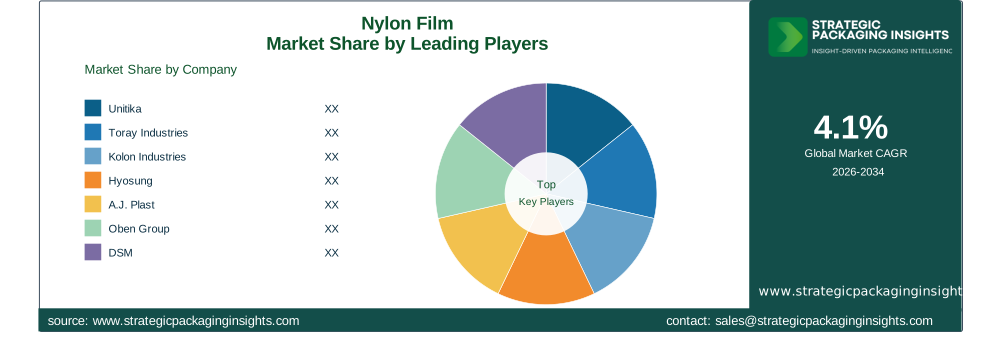
Hyosung and A.J. Plast are also prominent players in the nylon film market, known for their innovative product designs and commitment to quality. These companies have established a strong presence in both domestic and international markets, leveraging their expertise in film technology to deliver superior packaging solutions. Oben Group and DSM are other key players that have made significant contributions to the market through their focus on sustainability and customer-centric approaches. By prioritizing customer needs and investing in cutting-edge technologies, these companies are well-positioned to capture a larger share of the market.
Honeywell and Mitsubishi Chemical are notable for their advanced material science capabilities, which have enabled them to develop high-performance nylon films with enhanced barrier properties. These companies are leveraging their technological expertise to create innovative packaging solutions that meet the stringent requirements of the food and pharmaceutical industries. Toyobo, another major player, is recognized for its commitment to sustainability and environmental responsibility. By developing biodegradable and recyclable nylon films, Toyobo is addressing the growing demand for eco-friendly packaging materials and positioning itself as a leader in the market.
Key Highlights
- The nylon film market is projected to grow from $1.24 billion in 2025 to $1.78 billion by 2034, at a CAGR of 4.1%.
- Increasing demand for flexible and sustainable packaging solutions is driving market growth.
- Advancements in film technology are enhancing the performance and appeal of nylon films.
- The e-commerce boom is creating new opportunities for nylon film manufacturers.
- Volatility in raw material prices poses a challenge to market stability.
- Stringent regulatory standards in the food and pharmaceutical sectors impact market dynamics.
- Key players are focusing on product innovation and strategic partnerships to strengthen their market position.
- Emerging economies present significant growth opportunities due to rising demand for packaged goods.
- Environmental concerns are driving the development of biodegradable and recyclable nylon films.
- The market is characterized by intense competition among leading companies.
Top Countries Insights
In the nylon film market, the United States stands out as a key player, with a market size of approximately $300 million and a CAGR of 3%. The country's robust food and pharmaceutical industries drive the demand for high-performance packaging solutions, with nylon films being a preferred choice due to their superior barrier properties. Additionally, the growing e-commerce sector in the U.S. further fuels the demand for durable and reliable packaging materials. However, regulatory challenges and environmental concerns necessitate continuous innovation and adaptation by manufacturers.
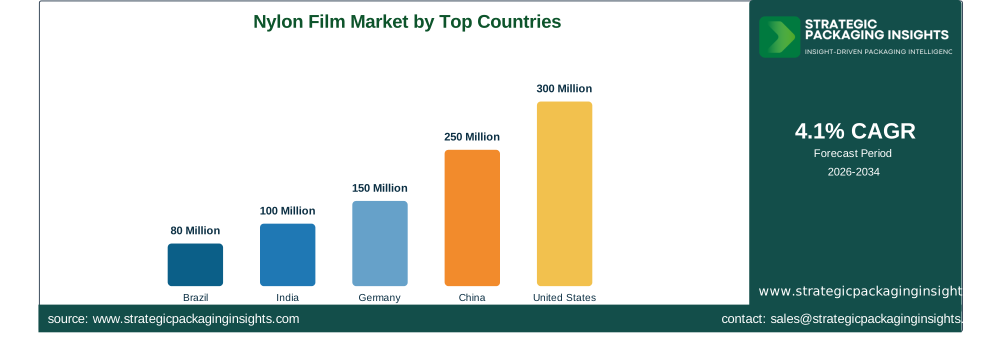
China, with its rapidly expanding economy, represents a significant growth opportunity for the nylon film market. The market size in China is estimated at $250 million, with a CAGR of 6%. The country's booming food processing industry and increasing consumer demand for packaged goods are key drivers of market growth. Moreover, government initiatives promoting sustainable packaging solutions are encouraging the adoption of eco-friendly nylon films. Despite these opportunities, manufacturers must navigate challenges related to raw material availability and fluctuating prices.
Germany, known for its strong industrial base, has a nylon film market size of around $150 million, with a CAGR of 4%. The country's emphasis on quality and innovation in packaging solutions supports the growth of the nylon film market. Germany's stringent environmental regulations also drive the development of sustainable and recyclable packaging materials. However, the market faces challenges related to high production costs and competition from alternative packaging materials.
India, with its growing middle class and increasing urbanization, presents a promising market for nylon films. The market size in India is approximately $100 million, with a CAGR of 7%. The rising demand for packaged foods and pharmaceuticals, coupled with government initiatives to promote sustainable packaging, are key growth drivers. However, the market faces challenges related to infrastructure and supply chain inefficiencies, which can impact the timely delivery of products.
Brazil, as a leading economy in Latin America, has a nylon film market size of about $80 million, with a CAGR of 5%. The country's expanding food and beverage industry, along with increasing consumer awareness of sustainable packaging, drives the demand for nylon films. However, economic volatility and regulatory challenges pose potential obstacles to market growth. Manufacturers must focus on innovation and cost-effective solutions to capture a larger share of the Brazilian market.
Nylon Film Market Segments Insights

By Product Type Analysis
The nylon film market is segmented by product type into biaxially oriented nylon film, cast nylon film, and barrier nylon film. Biaxially oriented nylon films are gaining traction due to their superior mechanical properties and clarity, making them ideal for high-performance packaging applications. These films offer excellent barrier properties against oxygen and moisture, which are crucial for preserving the freshness and quality of packaged goods. The demand for biaxially oriented nylon films is particularly strong in the food and pharmaceutical industries, where product integrity is paramount. Manufacturers are focusing on enhancing the performance characteristics of these films through technological advancements and innovative production techniques.
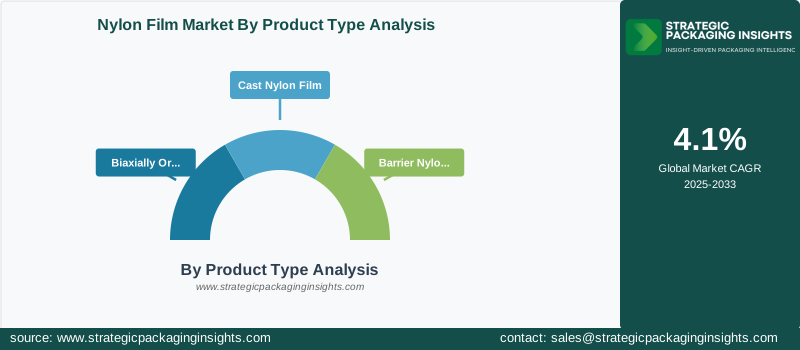
Cast nylon films, on the other hand, are known for their versatility and cost-effectiveness. These films are widely used in applications where flexibility and durability are essential, such as industrial packaging and protective coverings. The growing demand for industrial films in sectors like automotive and electronics is driving the adoption of cast nylon films. Additionally, the increasing focus on sustainable packaging solutions is encouraging manufacturers to develop eco-friendly cast nylon films that offer recyclability and reduced environmental impact. As the market evolves, companies are likely to invest in research and development to create more advanced and sustainable cast nylon film solutions.
Barrier nylon films are a critical component of the packaging industry, offering exceptional protection against external elements. These films are designed to provide a robust barrier against gases, moisture, and contaminants, making them ideal for sensitive products such as pharmaceuticals and perishable foods. The demand for barrier nylon films is driven by the need for extended shelf life and enhanced product safety. Manufacturers are continuously innovating to improve the barrier properties of these films, ensuring they meet the stringent requirements of the food and pharmaceutical sectors. As consumer awareness of food safety and quality continues to rise, the demand for barrier nylon films is expected to grow significantly.
By Application Analysis
The nylon film market is segmented by application into food packaging, pharma packaging, and industrial films. Food packaging is the largest application segment, driven by the increasing demand for convenient and sustainable packaging solutions. Nylon films are favored in the food industry for their excellent barrier properties, which help preserve the freshness and quality of food products. The growing trend of ready-to-eat meals and convenience foods is further boosting the demand for nylon films in food packaging applications. Manufacturers are focusing on developing innovative packaging solutions that cater to the evolving needs of consumers, such as resealable and microwaveable packaging options.
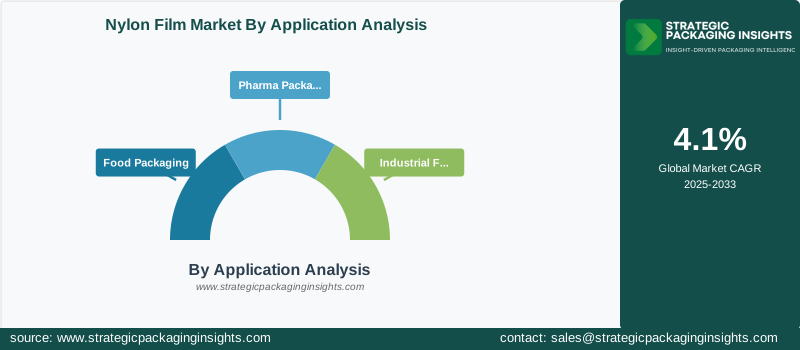
Pharma packaging is another significant application segment, where nylon films are used to ensure the safety and integrity of pharmaceutical products. The stringent regulatory standards governing pharmaceutical packaging require materials that offer superior protection against moisture, oxygen, and contaminants. Nylon films, with their excellent barrier properties, are well-suited to meet these requirements. The increasing demand for high-quality pharmaceutical packaging solutions is driving the adoption of nylon films in this sector. Additionally, the growing focus on patient safety and product traceability is encouraging manufacturers to develop advanced nylon film solutions that incorporate features such as tamper-evidence and anti-counterfeiting measures.
Industrial films represent a growing application segment, driven by the demand for durable and versatile packaging solutions in various industries. Nylon films are used in industrial applications for their strength, flexibility, and resistance to chemicals and abrasion. The automotive, electronics, and construction industries are key consumers of industrial nylon films, where they are used for protective coverings, insulation, and component packaging. The increasing focus on sustainability and environmental responsibility is encouraging manufacturers to develop eco-friendly industrial nylon films that offer recyclability and reduced environmental impact. As industries continue to evolve, the demand for innovative and high-performance industrial nylon films is expected to grow.
By Thickness Analysis
The nylon film market is segmented by thickness into thin film, medium film, and heavy film. Thin films are widely used in applications where flexibility and transparency are essential, such as food packaging and pharmaceutical applications. These films offer excellent barrier properties and are ideal for preserving the freshness and quality of packaged goods. The demand for thin nylon films is driven by the increasing trend of convenience foods and ready-to-eat meals, where lightweight and efficient packaging solutions are required. Manufacturers are focusing on enhancing the performance characteristics of thin films through technological advancements and innovative production techniques.
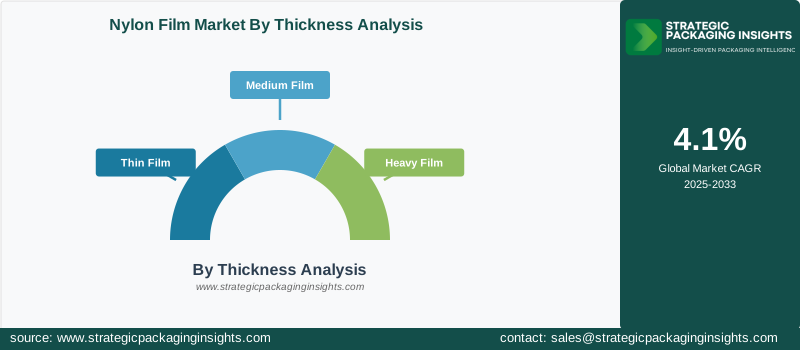
Medium films are known for their versatility and durability, making them suitable for a wide range of applications, including industrial packaging and protective coverings. These films offer a balance between flexibility and strength, providing reliable protection for products during storage and transportation. The growing demand for industrial films in sectors like automotive and electronics is driving the adoption of medium nylon films. Additionally, the increasing focus on sustainable packaging solutions is encouraging manufacturers to develop eco-friendly medium films that offer recyclability and reduced environmental impact. As the market evolves, companies are likely to invest in research and development to create more advanced and sustainable medium film solutions.
Heavy films are designed for applications that require robust protection and resistance to external elements. These films are used in industrial applications where strength and durability are paramount, such as construction and heavy-duty packaging. The demand for heavy nylon films is driven by the need for reliable and long-lasting packaging solutions in challenging environments. Manufacturers are continuously innovating to improve the performance characteristics of heavy films, ensuring they meet the stringent requirements of industrial applications. As industries continue to evolve, the demand for innovative and high-performance heavy nylon films is expected to grow significantly.
By End Use Analysis
The nylon film market is segmented by end use into food processors, converters, healthcare, and industrial. Food processors are the largest end-use segment, driven by the increasing demand for convenient and sustainable packaging solutions. Nylon films are favored in the food industry for their excellent barrier properties, which help preserve the freshness and quality of food products. The growing trend of ready-to-eat meals and convenience foods is further boosting the demand for nylon films in food processing applications. Manufacturers are focusing on developing innovative packaging solutions that cater to the evolving needs of consumers, such as resealable and microwaveable packaging options.
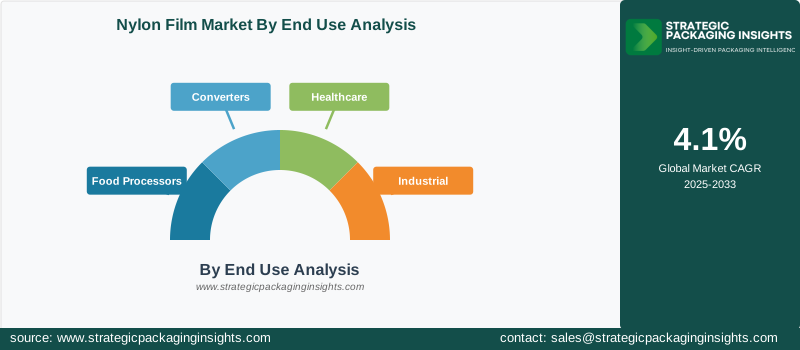
Converters represent a significant end-use segment, where nylon films are used to create customized packaging solutions for various industries. Converters play a crucial role in the packaging supply chain, transforming raw materials into finished products that meet the specific requirements of end-users. The demand for nylon films in the converter segment is driven by the need for high-performance and versatile packaging materials that can be tailored to meet the unique needs of different industries. Manufacturers are collaborating with converters to develop advanced nylon film solutions that offer enhanced performance and sustainability.
Healthcare is another important end-use segment, where nylon films are used to ensure the safety and integrity of medical and pharmaceutical products. The stringent regulatory standards governing healthcare packaging require materials that offer superior protection against moisture, oxygen, and contaminants. Nylon films, with their excellent barrier properties, are well-suited to meet these requirements. The increasing demand for high-quality healthcare packaging solutions is driving the adoption of nylon films in this sector. Additionally, the growing focus on patient safety and product traceability is encouraging manufacturers to develop advanced nylon film solutions that incorporate features such as tamper-evidence and anti-counterfeiting measures.
Nylon Film Market Segments
The Nylon Film market has been segmented on the basis ofBy Product Type
- Biaxially Oriented Nylon Film
- Cast Nylon Film
- Barrier Nylon Film
By Application
- Food Packaging
- Pharma Packaging
- Industrial Films
By Thickness
- Thin Film
- Medium Film
- Heavy Film
By End Use
- Food Processors
- Converters
- Healthcare
- Industrial
Region
- Asia Pacific
- North America
- Latin America
- Europe
- Middle East & Africa




