


Non-Woven Fabric Market Outlook
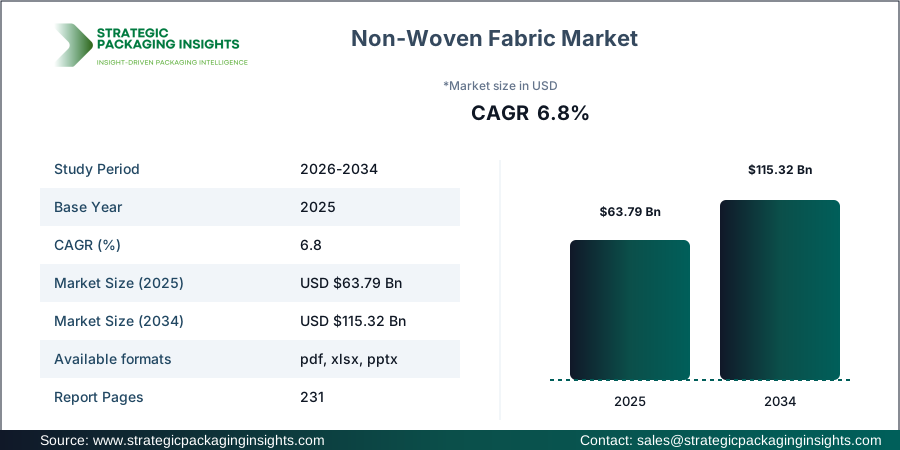
The Non-Woven Fabric market size was valued at USD 63.79 billion in 2025 and is anticipated to reach USD 115.32 billion by 2034, growing at a CAGR of 6.8% during the forecast period according to Strategic Packaging Insights. The market is witnessing robust growth driven by the increasing demand for hygiene products, medical supplies, and packaging solutions. Companies like Berry Global and Freudenberg are leading the charge in innovation and production capacity, ensuring that the market remains competitive and dynamic. The versatility of non-woven fabrics, coupled with their cost-effectiveness and adaptability, makes them a preferred choice across various industries, further propelling market expansion.
One of the most impactful drivers of the Non-Woven Fabric market is the rising awareness and demand for sustainable and eco-friendly materials. Governments and consumers alike are pushing for greener alternatives, which has led to increased investments in biodegradable fibers and recyclable materials. This shift is supported by regulatory frameworks that encourage the reduction of carbon footprints and promote sustainable practices. Companies such as DuPont and Kimberly-Clark are at the forefront of this movement, developing innovative solutions that align with global sustainability goals. This trend not only enhances the market's growth potential but also ensures long-term viability and compliance with environmental standards.
Report Scope
| Attributes | Details |
| Report Title | Non-Woven Fabric Market Size, Future Growth and Forecast 2034 |
| Material Type | Polypropylene, Polyester, Rayon, Biodegradable Fibers |
| Technology | Spunbond, Meltblown, Needle-Punched, Wet-Laid |
| Application | Hygiene, Medical, Packaging, Filtration |
| End Use | Healthcare, Personal Care, Industrial, Consumer Goods |
| Region | Asia Pacific, North America, Latin America, Europe, Middle East & Africa |
| Base Year | 2025 |
| Historic Period | 2018-2024 |
| Forecast Period | 2026-2034 |
| Number of Pages | 231 |
| Customization Available | Yes* |
Sustainability & Circular Economy Analysis
Sustainability initiatives and circular economy practices are significantly influencing the Non-Woven Fabric market. The integration of recyclable materials and the development of reusable packaging solutions are becoming increasingly important as companies strive to meet consumer demand for eco-friendly products. Lightweight packaging and eco-friendly material innovations are at the forefront of this movement, with companies investing heavily in research and development to create sustainable alternatives. These efforts are not only reducing waste but also enhancing the overall environmental impact of the packaging industry.
Extended Producer Responsibility (EPR) and packaging regulations are driving companies to adopt waste reduction strategies and ESG initiatives. By focusing on carbon footprint reduction and sustainable supply chain practices, businesses are aligning their operations with global environmental standards. This shift is influencing packaging design and manufacturing processes, leading to more sustainable investment decisions and supply chain strategies. As a result, companies are better positioned to comply with regulatory requirements and maintain long-term market competitiveness.
Consumer preferences for sustainability are reshaping the Non-Woven Fabric market, prompting companies to innovate and adapt. The demand for eco-friendly products is influencing packaging design and manufacturing, encouraging the use of sustainable materials and processes. This trend is driving investment in new technologies and materials that reduce environmental impact, ensuring that companies remain competitive in a rapidly evolving market. By prioritizing sustainability, businesses can enhance their brand reputation and appeal to environmentally conscious consumers, ultimately driving growth and profitability.
Packaging Value Chain & Supply Chain Analysis
The packaging value chain in the Non-Woven Fabric market is a complex ecosystem involving raw material sourcing, manufacturing, and distribution. Raw material availability is crucial, as it directly impacts production capabilities and supply chain efficiency. Companies like Ahlstrom and Johns Manville are focusing on securing reliable sources of raw materials to ensure consistent production and meet growing demand. Strategic partnerships with suppliers and logistics providers are essential for maintaining a resilient supply chain and optimizing procurement strategies.
Packaging converters and manufacturers play a vital role in transforming raw materials into finished products. The use of advanced packaging machinery and innovative technologies is enhancing production efficiency and product quality. Companies are investing in state-of-the-art facilities and equipment to stay competitive and meet the evolving needs of their customers. By optimizing inventory management and distribution channels, businesses can improve supply chain resilience and ensure timely delivery of products to retailers and end-users.
Global sourcing and localization strategies are influencing the Non-Woven Fabric market, as companies seek to balance cost efficiency with supply chain resilience. By diversifying their sourcing and production locations, businesses can mitigate risks associated with geopolitical tensions and supply chain disruptions. This approach also allows companies to better serve regional markets and adapt to local consumer preferences. As a result, the Non-Woven Fabric market is poised for continued growth and innovation, driven by strategic supply chain management and a focus on sustainability.
Opportunities & Threats
The Non-Woven Fabric market presents numerous opportunities for growth and innovation. The increasing demand for hygiene and medical products is driving the need for high-quality non-woven fabrics, creating opportunities for companies to expand their product offerings and capture new market segments. The rise of e-commerce and online retail is also boosting demand for packaging solutions, providing further growth potential for the market. Companies that can adapt to these trends and develop innovative products will be well-positioned to capitalize on these opportunities and achieve long-term success.
Another significant opportunity lies in the development of sustainable and eco-friendly materials. As consumers and governments push for greener alternatives, companies that invest in biodegradable fibers and recyclable materials will have a competitive advantage. This trend is supported by regulatory frameworks that encourage sustainable practices and reduce environmental impact. By focusing on sustainability, companies can enhance their brand reputation, attract environmentally conscious consumers, and drive growth in the Non-Woven Fabric market.
However, the market also faces several threats that could hinder growth. Fluctuations in raw material prices and supply chain disruptions can impact production costs and profitability. Additionally, stringent regulations and compliance requirements can pose challenges for companies, particularly those operating in multiple regions with varying standards. To mitigate these threats, businesses must adopt proactive strategies, such as diversifying their supply chains, investing in risk management, and staying informed about regulatory changes. By addressing these challenges, companies can maintain their competitive edge and ensure long-term success in the Non-Woven Fabric market.
Drivers & Challenges
The Non-Woven Fabric market is driven by several key factors, including the growing demand for hygiene and medical products. The COVID-19 pandemic has highlighted the importance of non-woven fabrics in the production of personal protective equipment (PPE) and medical supplies, leading to increased demand and investment in the market. Companies like Fitesa and Suominen are expanding their production capacities to meet this demand, ensuring a steady supply of high-quality non-woven fabrics for healthcare applications.
Another significant driver is the increasing focus on sustainability and eco-friendly materials. As consumers and governments push for greener alternatives, companies are investing in biodegradable fibers and recyclable materials to meet these demands. This trend is supported by regulatory frameworks that encourage sustainable practices and reduce environmental impact. By prioritizing sustainability, companies can enhance their brand reputation, attract environmentally conscious consumers, and drive growth in the Non-Woven Fabric market.
Despite these drivers, the market faces several challenges that could hinder growth. Fluctuations in raw material prices and supply chain disruptions can impact production costs and profitability. Additionally, stringent regulations and compliance requirements can pose challenges for companies, particularly those operating in multiple regions with varying standards. To mitigate these challenges, businesses must adopt proactive strategies, such as diversifying their supply chains, investing in risk management, and staying informed about regulatory changes. By addressing these challenges, companies can maintain their competitive edge and ensure long-term success in the Non-Woven Fabric market.
Market Share Analysis
The competitive landscape of the Non-Woven Fabric market is characterized by the presence of several key players, each striving to capture a significant share of the market. Companies like Berry Global, Freudenberg, and Ahlstrom are leading the market with their extensive product portfolios and strong global presence. These companies are investing heavily in research and development to innovate and expand their offerings, ensuring they remain at the forefront of the industry.
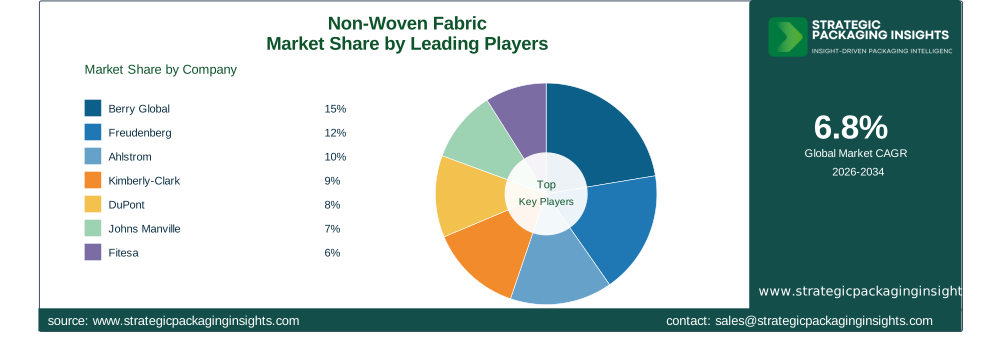
Berry Global, for instance, is known for its wide range of non-woven fabric products, catering to various applications such as hygiene, medical, and industrial. The company's focus on sustainability and innovation has helped it maintain a strong market position. Similarly, Freudenberg is a key player in the market, offering high-quality non-woven fabrics for diverse applications. The company's commitment to sustainability and customer satisfaction has earned it a reputation as a reliable supplier in the industry.
Kimberly-Clark and DuPont are also prominent players in the Non-Woven Fabric market, known for their innovative products and strong brand recognition. These companies are leveraging their extensive research and development capabilities to create advanced non-woven fabrics that meet the evolving needs of consumers and industries. By focusing on sustainability and product innovation, they are well-positioned to capture a significant share of the market and drive growth in the coming years.
Other notable companies in the market include Johns Manville, Fitesa, Suominen, Toray Industries, and Mitsui Chemicals. These companies are investing in new technologies and expanding their production capacities to meet the growing demand for non-woven fabrics. By focusing on quality, innovation, and sustainability, they are enhancing their competitive positions and contributing to the overall growth of the Non-Woven Fabric market.
Key Highlights
- Market Size: The Non-Woven Fabric market was valued at USD 63.79 billion in 2025 and is projected to reach USD 115.32 billion by 2034.
- Growth Rate: The market is expected to grow at a CAGR of 6.8% during the forecast period.
- Leading Companies: Key players include Berry Global, Freudenberg, Ahlstrom, Kimberly-Clark, and DuPont.
- Material Innovation: Increasing focus on biodegradable fibers and recyclable materials.
- Regional Growth: Asia Pacific is expected to witness significant growth due to rising demand in healthcare and hygiene sectors.
- Technology Advancements: Innovations in spunbond and meltblown technologies are driving market growth.
- Sustainability Trends: Growing emphasis on eco-friendly materials and sustainable practices.
Non-Woven Fabric Market Segments Insights

Material Type Analysis
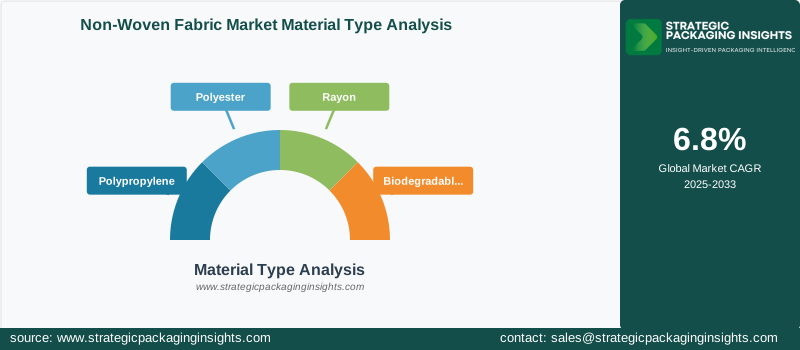
The Non-Woven Fabric market is segmented by material type, including polypropylene, polyester, rayon, and biodegradable fibers. Polypropylene is the most widely used material due to its versatility, cost-effectiveness, and excellent performance characteristics. It is commonly used in hygiene products, medical supplies, and packaging applications. Companies like Berry Global and Freudenberg are leading the market with their extensive polypropylene product offerings, catering to a wide range of industries and applications.
Polyester is another popular material in the Non-Woven Fabric market, known for its durability, strength, and resistance to chemicals and moisture. It is widely used in industrial applications, filtration, and consumer goods. The demand for polyester non-woven fabrics is driven by the growing need for high-performance materials that can withstand harsh environments and provide long-lasting performance. Companies are investing in research and development to enhance the properties of polyester non-woven fabrics and expand their applications.
Technology Analysis
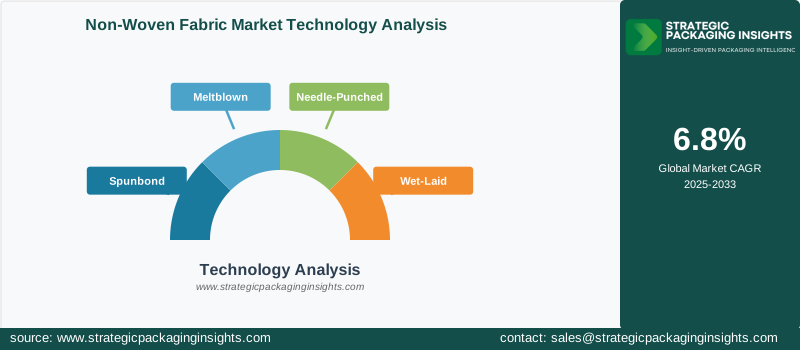
The Non-Woven Fabric market is also segmented by technology, including spunbond, meltblown, needle-punched, and wet-laid. Spunbond technology is the most widely used method for producing non-woven fabrics, offering high production efficiency and cost-effectiveness. It is commonly used in hygiene products, medical supplies, and packaging applications. Companies like Ahlstrom and Johns Manville are investing in advanced spunbond technologies to enhance product quality and meet the growing demand for non-woven fabrics.
Meltblown technology is another important segment in the Non-Woven Fabric market, known for its ability to produce fine fibers with excellent filtration properties. It is widely used in medical and filtration applications, where high-performance materials are required. The demand for meltblown non-woven fabrics is driven by the increasing need for high-quality filtration materials in various industries, including healthcare, automotive, and industrial. Companies are investing in new technologies and expanding their production capacities to meet this demand.
Application Analysis
The Non-Woven Fabric market is segmented by application, including hygiene, medical, packaging, and filtration. Hygiene products, such as diapers, sanitary napkins, and wipes, are the largest application segment, driven by the growing demand for high-quality, cost-effective materials. Companies like Kimberly-Clark and DuPont are leading the market with their extensive product offerings and strong brand recognition in the hygiene sector.
Medical applications are another significant segment in the Non-Woven Fabric market, driven by the increasing demand for personal protective equipment (PPE) and medical supplies. The COVID-19 pandemic has highlighted the importance of non-woven fabrics in the production of PPE, leading to increased demand and investment in the market. Companies are expanding their production capacities and investing in new technologies to meet this demand and ensure a steady supply of high-quality non-woven fabrics for healthcare applications.
End Use Analysis
The Non-Woven Fabric market is segmented by end use, including healthcare, personal care, industrial, and consumer goods. Healthcare is the largest end-use segment, driven by the growing demand for medical supplies and personal protective equipment (PPE). Companies like Fitesa and Suominen are expanding their production capacities to meet this demand and ensure a steady supply of high-quality non-woven fabrics for healthcare applications.
Personal care is another significant end-use segment in the Non-Woven Fabric market, driven by the increasing demand for hygiene products, such as diapers, sanitary napkins, and wipes. The growing awareness of personal hygiene and the rising disposable income of consumers are driving the demand for high-quality, cost-effective non-woven fabrics in the personal care sector. Companies are investing in research and development to enhance the properties of non-woven fabrics and expand their applications in the personal care market.
Non-Woven Fabric Market Segments
The Non-Woven Fabric market has been segmented on the basis ofMaterial Type
- Polypropylene
- Polyester
- Rayon
- Biodegradable Fibers
Technology
- Spunbond
- Meltblown
- Needle-Punched
- Wet-Laid
Application
- Hygiene
- Medical
- Packaging
- Filtration
End Use
- Healthcare
- Personal Care
- Industrial
- Consumer Goods
Region
- Asia Pacific
- North America
- Latin America
- Europe
- Middle East & Africa




