


Non Barrier Bag Market Outlook
The Non Barrier Bag market was valued at $14.43 billion in 2025 and is projected to reach $21.44 billion by 2034, growing at a CAGR of 4.5% during the forecast period 2026-2034. This market is driven by the increasing demand for flexible packaging solutions across various industries, including retail, foodservice, and industrial sectors. The versatility and cost-effectiveness of non-barrier bags make them a preferred choice for packaging applications that do not require high barrier properties. The market is also benefiting from the growing trend towards sustainable packaging, with manufacturers increasingly focusing on developing eco-friendly and recyclable bag options. The rise in e-commerce and the need for efficient packaging solutions to ensure product safety during transit further contribute to the market's growth.
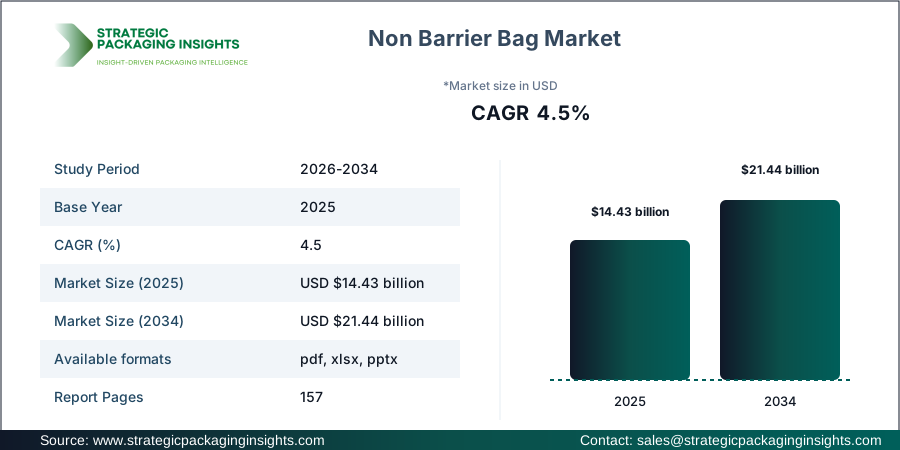
However, the market faces challenges such as stringent environmental regulations and the increasing preference for barrier packaging solutions in certain applications. Despite these challenges, the non-barrier bag market holds significant growth potential, driven by innovations in material technology and the expansion of retail and e-commerce sectors globally. The market is also witnessing a shift towards the use of biodegradable and compostable films, which is expected to create new opportunities for market players. As consumer awareness regarding environmental sustainability continues to rise, the demand for non-barrier bags made from renewable resources is anticipated to grow, further propelling the market forward.
Report Scope
| Attributes | Details |
| Report Title | Non Barrier Bag Market Size, Future Growth and Forecast 2034 |
| By Material Type | PE, PP, Paper, Compostable Films |
| By Bag Type | Flat Bags, Gusseted Bags, T-Shirt Bags, Poly Bags |
| By Application | Retail Packaging, Food Storage, Industrial Packaging, General Packaging |
| By End Use | Retail, Foodservice, Industrial, Household |
| Region | Asia Pacific, North America, Latin America, Europe, Middle East & Africa |
| Base Year | 2025 |
| Historic Period | 2018-2024 |
| Forecast Period | 2026-2034 |
| Number of Pages | 157 |
| Customization Available | Yes* |
Opportunities & Threats
The non-barrier bag market presents numerous opportunities, particularly in the realm of sustainable packaging solutions. As consumers become more environmentally conscious, there is a growing demand for packaging materials that are not only functional but also eco-friendly. This trend is driving manufacturers to innovate and develop non-barrier bags made from biodegradable and compostable materials. Additionally, the expansion of the e-commerce sector is creating a surge in demand for flexible packaging solutions that can protect products during shipping while minimizing environmental impact. This shift towards sustainable packaging is expected to open new avenues for growth in the non-barrier bag market.
Another significant opportunity lies in the increasing adoption of non-barrier bags in emerging markets. As developing countries continue to urbanize and industrialize, the demand for cost-effective and versatile packaging solutions is on the rise. Non-barrier bags, with their affordability and adaptability, are well-positioned to capture a significant share of the packaging market in these regions. Furthermore, advancements in material technology are enabling the production of non-barrier bags with enhanced properties, such as improved strength and durability, which can further drive their adoption across various applications.
Despite the promising opportunities, the non-barrier bag market faces certain threats that could hinder its growth. One of the primary challenges is the increasing competition from barrier packaging solutions, which offer superior protection against moisture, oxygen, and other external factors. This competition is particularly intense in industries where product shelf life and quality are critical, such as food and pharmaceuticals. Additionally, stringent environmental regulations regarding plastic waste and packaging materials pose a threat to the market. Manufacturers are under pressure to comply with these regulations, which can increase production costs and impact profitability. To mitigate these threats, companies in the non-barrier bag market must focus on innovation and sustainability to remain competitive.
Drivers & Challenges
The non-barrier bag market is primarily driven by the growing demand for flexible and cost-effective packaging solutions across various industries. The retail sector, in particular, is a major driver of market growth, as non-barrier bags are widely used for packaging a variety of consumer goods. The rise of e-commerce has further fueled this demand, as online retailers require efficient packaging solutions to ensure the safe delivery of products to consumers. Additionally, the increasing focus on sustainability and environmental responsibility is driving the adoption of non-barrier bags made from recyclable and biodegradable materials. This trend is expected to continue as consumers and businesses alike seek to reduce their environmental footprint.
Another key driver of the non-barrier bag market is the advancement in material technology, which has led to the development of non-barrier bags with enhanced properties. These advancements have enabled manufacturers to produce bags that are not only cost-effective but also offer improved strength, durability, and versatility. As a result, non-barrier bags are increasingly being used in a wide range of applications, from retail packaging to industrial uses. The growing awareness of the benefits of flexible packaging, such as reduced material usage and lower transportation costs, is also contributing to the market's growth.
Despite the positive drivers, the non-barrier bag market faces several challenges that could impact its growth. One of the main challenges is the increasing competition from barrier packaging solutions, which offer superior protection for products that require extended shelf life and protection from external factors. This competition is particularly strong in the food and pharmaceutical industries, where product quality and safety are paramount. Additionally, the market is subject to stringent environmental regulations, which can increase production costs and limit the use of certain materials. To overcome these challenges, companies in the non-barrier bag market must focus on innovation and sustainability, developing new materials and technologies that meet regulatory requirements while offering the desired performance characteristics.
Market Share Analysis
The competitive landscape of the non-barrier bag market is characterized by the presence of several key players who are actively engaged in product innovation and strategic partnerships to strengthen their market position. Companies such as Novolex, Berry Global, and Inteplast Group are leading the market with their extensive product portfolios and strong distribution networks. These companies are focusing on expanding their product offerings to include eco-friendly and sustainable packaging solutions, in response to the growing demand for environmentally responsible packaging materials.
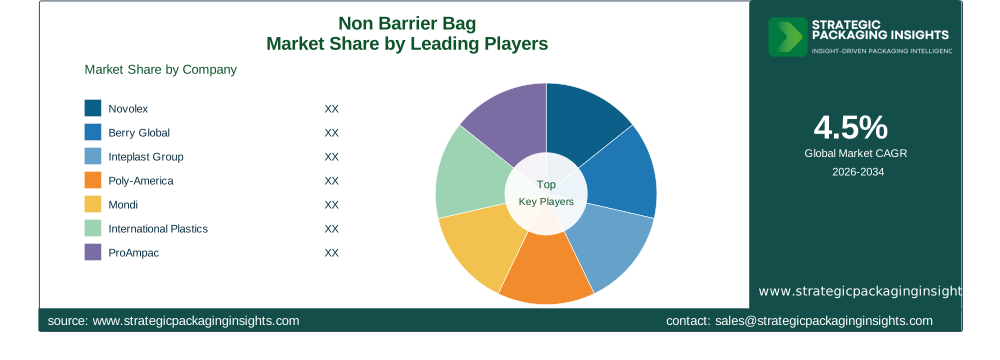
Berry Global, for instance, is a prominent player in the non-barrier bag market, known for its innovative packaging solutions and commitment to sustainability. The company has been investing in research and development to create new products that meet the evolving needs of consumers and businesses. Similarly, Novolex is another major player that has been expanding its product line to include biodegradable and compostable bags, catering to the increasing demand for sustainable packaging options.
Inteplast Group is also a significant player in the market, offering a wide range of non-barrier bags for various applications. The company's focus on quality and customer satisfaction has helped it maintain a strong presence in the market. Other notable companies in the non-barrier bag market include Poly-America, Mondi, and International Plastics, each of which has carved out a niche in the market through strategic initiatives and product innovations.
ProAmpac, Uline, Four Star Plastics, and Universal Plastic are also key players in the market, contributing to the competitive landscape with their diverse product offerings and focus on customer-centric solutions. These companies are leveraging their expertise in packaging to develop new products that address the specific needs of different industries, from retail and foodservice to industrial and household applications. As the market continues to evolve, these companies are expected to play a crucial role in shaping the future of the non-barrier bag industry.
Key Highlights
- The non-barrier bag market is projected to grow from $14.43 billion in 2025 to $21.44 billion by 2034, at a CAGR of 4.5%.
- Increasing demand for sustainable and eco-friendly packaging solutions is driving market growth.
- Advancements in material technology are enabling the production of non-barrier bags with enhanced properties.
- The retail and e-commerce sectors are major drivers of demand for non-barrier bags.
- Stringent environmental regulations pose a challenge to market growth.
- Key players are focusing on product innovation and strategic partnerships to strengthen their market position.
- The market is witnessing a shift towards biodegradable and compostable films.
- Emerging markets offer significant growth opportunities for non-barrier bag manufacturers.
- Competition from barrier packaging solutions is a major challenge for the market.
- Companies are investing in research and development to create new sustainable packaging solutions.
Top Countries Insights
In the non-barrier bag market, the United States stands out as a key player, with a market size of approximately $4.5 billion and a CAGR of 3%. The country's robust retail and e-commerce sectors drive the demand for flexible packaging solutions, including non-barrier bags. Additionally, the increasing focus on sustainability and environmental responsibility is encouraging manufacturers to develop eco-friendly packaging options. However, stringent environmental regulations and competition from barrier packaging solutions pose challenges to market growth in the U.S.
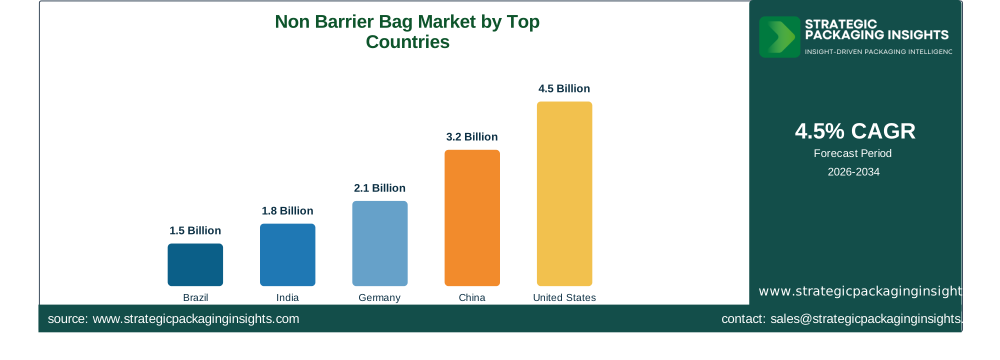
China is another significant market for non-barrier bags, with a market size of around $3.2 billion and a CAGR of 5%. The country's rapid urbanization and industrialization are driving the demand for cost-effective and versatile packaging solutions. The growing e-commerce sector further fuels this demand, as online retailers require efficient packaging to ensure product safety during transit. However, the market faces challenges from environmental regulations and the increasing preference for barrier packaging solutions in certain applications.
Germany, with a market size of approximately $2.1 billion and a CAGR of 4%, is a key player in the European non-barrier bag market. The country's strong focus on sustainability and environmental responsibility drives the demand for eco-friendly packaging solutions. Additionally, the retail and foodservice sectors are major drivers of demand for non-barrier bags. However, stringent environmental regulations and competition from barrier packaging solutions pose challenges to market growth in Germany.
India, with a market size of around $1.8 billion and a CAGR of 6%, is an emerging market for non-barrier bags. The country's growing retail and e-commerce sectors drive the demand for flexible packaging solutions. Additionally, the increasing focus on sustainability and environmental responsibility is encouraging manufacturers to develop eco-friendly packaging options. However, the market faces challenges from environmental regulations and the increasing preference for barrier packaging solutions in certain applications.
Brazil, with a market size of approximately $1.5 billion and a CAGR of 4%, is a key player in the Latin American non-barrier bag market. The country's expanding retail and foodservice sectors drive the demand for flexible packaging solutions. Additionally, the increasing focus on sustainability and environmental responsibility is encouraging manufacturers to develop eco-friendly packaging options. However, stringent environmental regulations and competition from barrier packaging solutions pose challenges to market growth in Brazil.
Non Barrier Bag Market Segments Insights

By Material Type Analysis
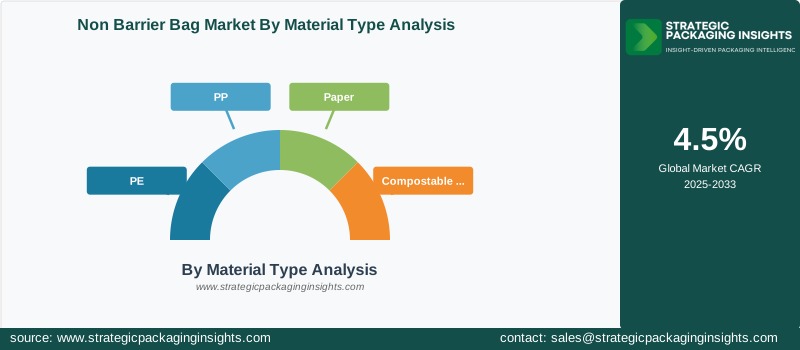
The non-barrier bag market is segmented by material type into PE, PP, Paper, and Compostable Films. PE and PP are the most commonly used materials due to their cost-effectiveness and versatility. These materials are widely used in various applications, including retail packaging and food storage, due to their durability and flexibility. However, the market is witnessing a shift towards more sustainable materials, such as paper and compostable films, driven by the increasing demand for eco-friendly packaging solutions. Paper bags are gaining popularity in the retail sector, as they are biodegradable and recyclable, aligning with the growing consumer preference for sustainable packaging options. Compostable films are also gaining traction, particularly in the foodservice industry, as they offer a sustainable alternative to traditional plastic bags.
The demand for compostable films is expected to grow significantly during the forecast period, as manufacturers focus on developing innovative materials that meet the evolving needs of consumers and businesses. These films offer several advantages, including reduced environmental impact and compliance with stringent environmental regulations. As a result, they are increasingly being used in applications where sustainability is a key consideration. The growing awareness of the environmental impact of plastic waste is also driving the adoption of compostable films, as consumers and businesses alike seek to reduce their environmental footprint.
By Bag Type Analysis
The non-barrier bag market is segmented by bag type into Flat Bags, Gusseted Bags, T-Shirt Bags, and Poly Bags. Flat bags are widely used in retail and foodservice applications due to their simplicity and cost-effectiveness. They are commonly used for packaging a variety of products, from groceries to clothing, and are available in various sizes and materials. Gusseted bags, on the other hand, are designed to expand and accommodate bulkier items, making them ideal for applications such as food storage and industrial packaging. These bags offer increased capacity and flexibility, which are key considerations for businesses looking to optimize their packaging solutions.
T-Shirt bags are another popular type of non-barrier bag, commonly used in retail settings for their convenience and ease of use. These bags are designed with handles, making them easy to carry and ideal for transporting a variety of goods. Poly bags, which are made from polyethylene, are widely used in industrial and general packaging applications due to their strength and durability. These bags are available in various thicknesses and sizes, making them suitable for a wide range of applications. The demand for poly bags is expected to remain strong during the forecast period, driven by their versatility and cost-effectiveness.
By Application Analysis
The non-barrier bag market is segmented by application into Retail Packaging, Food Storage, Industrial Packaging, and General Packaging. Retail packaging is a major application for non-barrier bags, driven by the growing demand for flexible and cost-effective packaging solutions in the retail sector. These bags are widely used for packaging a variety of consumer goods, from clothing to electronics, and are available in various sizes and materials to meet the diverse needs of retailers. The rise of e-commerce has further fueled the demand for retail packaging solutions, as online retailers require efficient packaging to ensure the safe delivery of products to consumers.
Food storage is another key application for non-barrier bags, as these bags offer a convenient and cost-effective solution for storing and transporting food products. The growing demand for packaged and processed foods is driving the adoption of non-barrier bags in the food industry, as these bags offer several advantages, including reduced material usage and lower transportation costs. Industrial packaging is also a significant application for non-barrier bags, as these bags are used to package a wide range of industrial products, from chemicals to machinery parts. The demand for industrial packaging solutions is expected to grow during the forecast period, driven by the expansion of the manufacturing and industrial sectors globally.
By End Use Analysis
The non-barrier bag market is segmented by end use into Retail, Foodservice, Industrial, and Household. The retail sector is a major end user of non-barrier bags, driven by the growing demand for flexible and cost-effective packaging solutions in the retail industry. These bags are widely used for packaging a variety of consumer goods, from clothing to electronics, and are available in various sizes and materials to meet the diverse needs of retailers. The rise of e-commerce has further fueled the demand for retail packaging solutions, as online retailers require efficient packaging to ensure the safe delivery of products to consumers.
The foodservice industry is another key end user of non-barrier bags, as these bags offer a convenient and cost-effective solution for storing and transporting food products. The growing demand for packaged and processed foods is driving the adoption of non-barrier bags in the foodservice industry, as these bags offer several advantages, including reduced material usage and lower transportation costs. The industrial sector is also a significant end user of non-barrier bags, as these bags are used to package a wide range of industrial products, from chemicals to machinery parts. The demand for industrial packaging solutions is expected to grow during the forecast period, driven by the expansion of the manufacturing and industrial sectors globally.
Non Barrier Bag Market Segments
The Non Barrier Bag market has been segmented on the basis ofBy Material Type
- PE
- PP
- Paper
- Compostable Films
By Bag Type
- Flat Bags
- Gusseted Bags
- T-Shirt Bags
- Poly Bags
By Application
- Retail Packaging
- Food Storage
- Industrial Packaging
- General Packaging
By End Use
- Retail
- Foodservice
- Industrial
- Household
Region
- Asia Pacific
- North America
- Latin America
- Europe
- Middle East & Africa




