


NFC-Enabled Smart Packaging Market Outlook
The NFC-Enabled Smart Packaging market size was valued at USD 1.26 Billion in 2025 and is anticipated to reach USD 4.34 Billion by 2034, growing at a CAGR of 14.7% during the forecast period according to Strategic Packaging Insights. This market is witnessing a significant surge in demand due to the increasing adoption of NFC technology across various industries. Companies like Avery Dennison and NXP Semiconductors are at the forefront, driving innovation and expanding the application of NFC-enabled solutions in packaging. The integration of NFC technology in packaging not only enhances product security and authenticity but also offers interactive consumer experiences, which is a major driver for market growth.
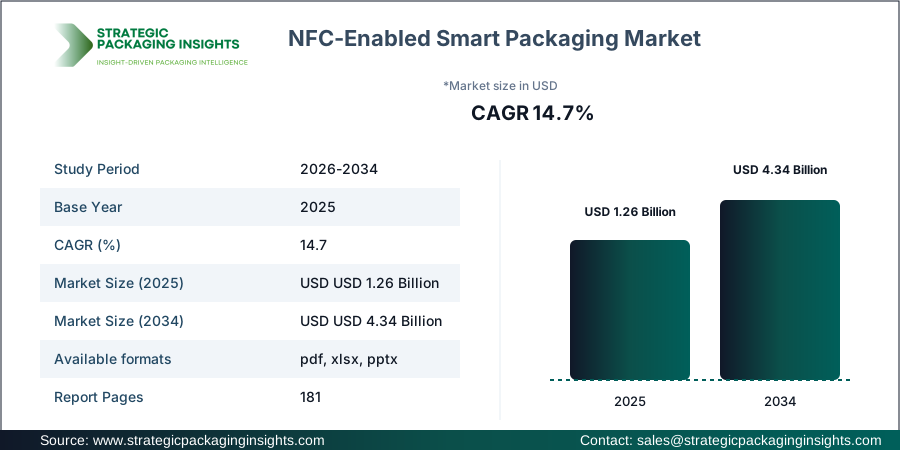
One of the most impactful drivers of the NFC-Enabled Smart Packaging market is the growing consumer demand for connected and interactive packaging solutions. As consumers become more tech-savvy, there is a rising expectation for packaging that offers more than just protection. According to industry reports, the integration of NFC technology in packaging allows for real-time interaction, providing consumers with product information, authenticity verification, and personalized marketing content. This trend is further supported by the increasing penetration of smartphones, which facilitates the use of NFC technology. Companies like STMicroelectronics and Checkpoint Systems are leveraging this trend to develop advanced NFC solutions that cater to the evolving needs of consumers and brands alike.
Report Scope
| Attributes | Details |
| Report Title | NFC-Enabled Smart Packaging Market Size, Future Growth and Forecast 2034 |
| By Component | NFC Tags, NFC Labels, NFC Chips, NFC Readers, Software & Cloud Platforms |
| By Packaging Type | Labels, Flexible Packaging, Rigid Packaging, Bottles, Cartons, Luxury Packaging |
| By Application | Food & Beverage, Pharmaceuticals, Cosmetics & Personal Care, Luxury Goods, Consumer Electronics, Retail |
| By End User | Brand Owners, Packaging Manufacturers, Retailers, Pharmaceutical Companies, Consumer Goods Companies |
| Region | Asia Pacific, North America, Latin America, Europe, Middle East & Africa |
| Base Year | 2025 |
| Historic Period | 2018-2024 |
| Forecast Period | 2026-2034 |
| Number of Pages | 181 |
| Customization Available | Yes* |
Sustainability & Circular Economy Analysis
Sustainability initiatives and circular economy practices are significantly influencing the NFC-Enabled Smart Packaging market. The shift towards eco-friendly materials and recyclable packaging solutions is becoming a priority for manufacturers and brand owners. Companies are increasingly adopting recyclable NFC tags and labels, which align with consumer preferences for sustainable products. This trend is driving innovation in material science, leading to the development of biodegradable and compostable NFC components. The focus on reducing carbon footprints and implementing waste reduction strategies is also encouraging companies to invest in sustainable packaging solutions.
The influence of sustainability trends extends to packaging design and manufacturing processes. Companies are re-evaluating their supply chains to incorporate eco-friendly practices, such as using renewable energy sources and minimizing resource consumption. This shift is not only driven by consumer demand but also by regulatory pressures and extended producer responsibility (EPR) policies. As a result, packaging manufacturers are investing in research and development to create lightweight and durable NFC-enabled packaging that meets sustainability standards. This approach not only enhances brand reputation but also ensures long-term market competitiveness.
Investment decisions in the NFC-Enabled Smart Packaging market are increasingly being guided by sustainability considerations. Companies are prioritizing investments in technologies and processes that support circular economy principles. This includes the development of reusable packaging solutions and the integration of NFC technology to facilitate product tracking and recycling. As sustainability becomes a key differentiator in the market, companies that embrace these trends are likely to gain a competitive edge. The focus on sustainability is also influencing regulatory compliance, with governments around the world implementing stricter packaging regulations to promote environmental responsibility.
Packaging Value Chain & Supply Chain Analysis
The packaging value chain for NFC-Enabled Smart Packaging is complex and involves multiple stakeholders, including raw material suppliers, packaging converters, manufacturers, and logistics providers. Raw material sourcing is a critical component, as the availability and cost of materials like NFC chips and tags directly impact production capabilities. Companies like Avery Dennison and CCL Industries are optimizing their procurement strategies to ensure a steady supply of high-quality materials. This involves establishing strategic partnerships with suppliers and investing in inventory management systems to enhance supply chain resilience.
Supply chain efficiency is a key factor influencing the overall performance of the NFC-Enabled Smart Packaging market. Efficient logistics and distribution channels are essential for timely delivery of products to brand owners and retailers. Companies are leveraging advanced technologies, such as IoT and blockchain, to enhance transparency and traceability in the supply chain. This not only improves operational efficiency but also builds trust with consumers by ensuring product authenticity and safety. The integration of NFC technology in packaging further facilitates supply chain optimization by enabling real-time tracking and monitoring of products.
Global sourcing and localization strategies play a crucial role in the competitiveness of the NFC-Enabled Smart Packaging market. Companies are balancing the need for cost-effective production with the demand for localized solutions that cater to regional market preferences. This involves establishing manufacturing facilities in key regions and collaborating with local partners to enhance market reach. The focus on localization is also driven by regulatory requirements and consumer preferences for locally sourced products. As a result, companies are investing in flexible production capabilities that allow for customization and quick adaptation to changing market dynamics.
Opportunities & Threats
The NFC-Enabled Smart Packaging market presents numerous opportunities for growth and innovation. One of the key opportunities lies in the expanding application of NFC technology across various industries. The food and beverage sector, for instance, is increasingly adopting NFC-enabled packaging to enhance product safety and provide consumers with real-time information about product origin and ingredients. Similarly, the pharmaceuticals industry is leveraging NFC technology to improve supply chain transparency and ensure the authenticity of products. Companies that can effectively tap into these emerging applications are likely to gain a competitive advantage in the market.
Another significant opportunity in the NFC-Enabled Smart Packaging market is the growing demand for personalized and interactive consumer experiences. As consumers seek more engaging and informative packaging solutions, companies have the opportunity to differentiate their products by integrating NFC technology. This trend is particularly evident in the luxury goods and cosmetics sectors, where brands are using NFC-enabled packaging to offer personalized marketing content and enhance brand loyalty. By investing in innovative NFC solutions, companies can create unique value propositions that resonate with tech-savvy consumers and drive market growth.
Despite the promising opportunities, the NFC-Enabled Smart Packaging market also faces certain threats and challenges. One of the primary challenges is the high cost of NFC technology, which can be a barrier to adoption for some companies. Additionally, the market is subject to regulatory scrutiny, with governments implementing stringent packaging regulations to ensure consumer safety and environmental sustainability. Companies must navigate these regulatory challenges while balancing the need for innovation and cost-effectiveness. Furthermore, the market is highly competitive, with numerous players vying for market share, which can lead to pricing pressures and margin erosion.
Drivers & Challenges
The NFC-Enabled Smart Packaging market is driven by several key factors, including the increasing adoption of NFC technology and the growing demand for connected packaging solutions. The rise of the Internet of Things (IoT) and the proliferation of smartphones have created a conducive environment for the adoption of NFC-enabled packaging. Consumers are increasingly seeking packaging that offers interactive and personalized experiences, which is driving companies to invest in NFC technology. Additionally, the need for enhanced product security and authenticity is a major driver, as NFC technology provides a reliable solution for verifying product information and preventing counterfeiting.
Another significant driver of the NFC-Enabled Smart Packaging market is the focus on sustainability and environmental responsibility. As consumers become more environmentally conscious, there is a growing demand for packaging solutions that minimize environmental impact. Companies are responding to this trend by developing eco-friendly NFC components and adopting sustainable packaging practices. This not only aligns with consumer preferences but also helps companies comply with regulatory requirements and enhance their brand reputation. The integration of NFC technology in sustainable packaging solutions is a key driver of market growth, as it offers a unique value proposition that appeals to both consumers and regulators.
Despite the positive drivers, the NFC-Enabled Smart Packaging market faces several challenges that could hinder its growth. One of the primary challenges is the high cost of NFC technology, which can be a barrier to adoption for some companies, particularly small and medium-sized enterprises. Additionally, the market is subject to regulatory scrutiny, with governments implementing stringent packaging regulations to ensure consumer safety and environmental sustainability. Companies must navigate these regulatory challenges while balancing the need for innovation and cost-effectiveness. Furthermore, the market is highly competitive, with numerous players vying for market share, which can lead to pricing pressures and margin erosion.
Market Share Analysis
The NFC-Enabled Smart Packaging market is characterized by a competitive landscape with several key players driving innovation and market growth. Companies like Avery Dennison, Identiv Inc., and NXP Semiconductors hold significant market shares due to their extensive product portfolios and strong R&D capabilities. These companies are at the forefront of developing advanced NFC solutions that cater to the evolving needs of various industries. Their focus on innovation and strategic partnerships has enabled them to maintain a competitive edge in the market.
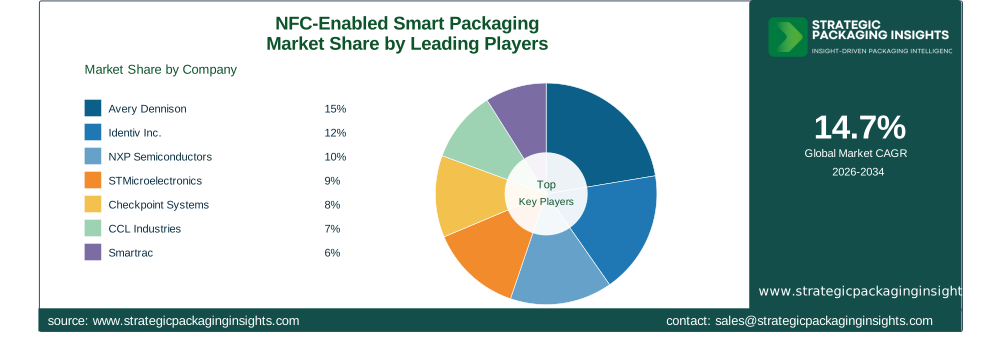
Avery Dennison is a leading player in the NFC-Enabled Smart Packaging market, known for its innovative NFC tags and labels. The company has a strong presence in the market, driven by its focus on sustainability and eco-friendly packaging solutions. Identiv Inc. is another key player, offering a wide range of NFC-enabled products that enhance product security and consumer engagement. The company's emphasis on R&D and strategic collaborations has positioned it as a leader in the market.
NXP Semiconductors is a major player in the NFC-Enabled Smart Packaging market, known for its cutting-edge NFC chips and solutions. The company's strong focus on innovation and technology development has enabled it to capture a significant share of the market. STMicroelectronics is also a prominent player, offering a comprehensive range of NFC products that cater to various applications, including consumer electronics and retail. The company's strategic partnerships and global presence have contributed to its success in the market.
Other notable players in the NFC-Enabled Smart Packaging market include Checkpoint Systems, CCL Industries, and Smartrac (Avery Dennison). These companies are leveraging their expertise in packaging and NFC technology to develop innovative solutions that meet the needs of diverse industries. Their focus on sustainability and consumer engagement has enabled them to maintain a strong position in the market. The competitive landscape is further enriched by the presence of emerging players like Impinj Inc., Tageos, and Securikett, who are driving innovation and expanding the application of NFC technology in packaging.
Key Highlights
- Market Size: The NFC-Enabled Smart Packaging market was valued at USD 1.26 Billion in 2025 and is projected to reach USD 4.34 Billion by 2034.
- Growth Rate: The market is expected to grow at a CAGR of 14.7% during the forecast period.
- Leading Companies: Key players include Avery Dennison, Identiv Inc., NXP Semiconductors, and STMicroelectronics.
- Growing Segments: NFC Tags and NFC Chips are among the fastest-growing components.
- Regional Insights: Asia Pacific is expected to witness significant growth due to increasing adoption of NFC technology.
- Application Expansion: The food & beverage and pharmaceuticals sectors are rapidly adopting NFC-enabled packaging.
- Sustainability Focus: Companies are investing in eco-friendly NFC components and sustainable packaging solutions.
NFC-Enabled Smart Packaging Market Segments Insights

By Component Analysis
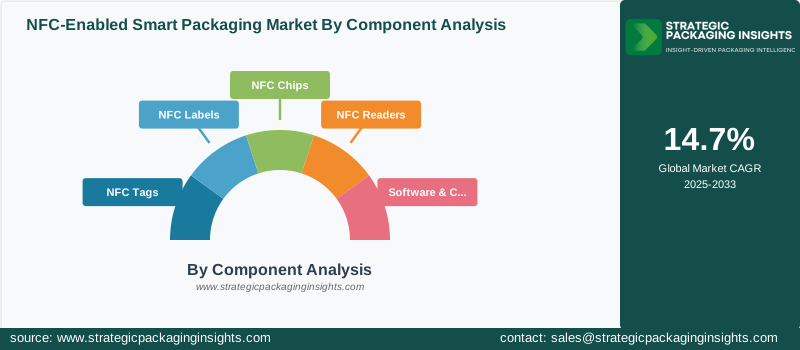
The NFC-Enabled Smart Packaging market is segmented by component into NFC Tags, NFC Labels, NFC Chips, NFC Readers, and Software & Cloud Platforms. NFC Tags and NFC Chips are among the fastest-growing components, driven by their widespread adoption across various industries. Companies like NXP Semiconductors and STMicroelectronics are leading the development of advanced NFC chips that offer enhanced functionality and security. The demand for NFC Readers is also on the rise, as they play a crucial role in enabling seamless interaction between NFC-enabled packaging and consumer devices. Software & Cloud Platforms are gaining traction as they provide the necessary infrastructure for managing and analyzing data generated by NFC-enabled packaging.
The increasing adoption of NFC technology in packaging is driving innovation in component design and functionality. Companies are investing in R&D to develop NFC components that are not only cost-effective but also offer enhanced performance and durability. The focus on miniaturization and integration of additional features, such as sensors and authentication capabilities, is further enhancing the value proposition of NFC components. As a result, the market is witnessing a surge in demand for NFC components that cater to the evolving needs of industries such as food & beverage, pharmaceuticals, and consumer electronics.
By Packaging Type Analysis
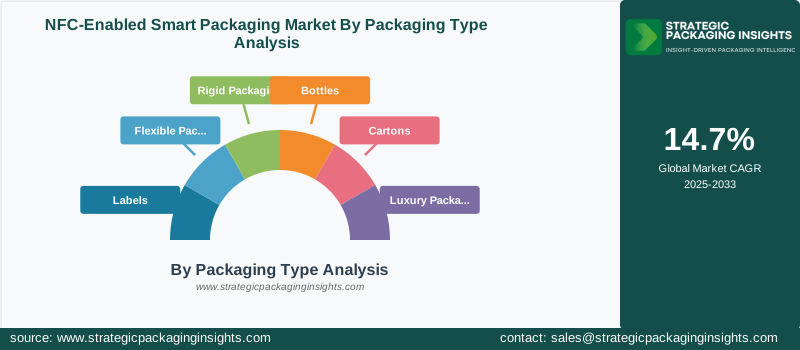
The NFC-Enabled Smart Packaging market is segmented by packaging type into Labels, Flexible Packaging, Rigid Packaging, Bottles, Cartons, and Luxury Packaging. Labels and Flexible Packaging are among the most popular packaging types, driven by their versatility and cost-effectiveness. Companies like Avery Dennison and CCL Industries are leading the development of NFC-enabled labels that offer enhanced product security and consumer engagement. The demand for Rigid Packaging and Bottles is also on the rise, particularly in the food & beverage and pharmaceuticals sectors, where product safety and authenticity are paramount.
The focus on sustainability is influencing the choice of packaging materials and design. Companies are increasingly adopting eco-friendly materials and lightweight packaging solutions that minimize environmental impact. This trend is particularly evident in the luxury packaging segment, where brands are using NFC technology to enhance the consumer experience while maintaining a commitment to sustainability. The integration of NFC technology in packaging is also driving innovation in design and functionality, with companies developing packaging solutions that offer interactive and personalized experiences for consumers.
By Application Analysis
The NFC-Enabled Smart Packaging market is segmented by application into Food & Beverage, Pharmaceuticals, Cosmetics & Personal Care, Luxury Goods, Consumer Electronics, and Retail. The Food & Beverage and Pharmaceuticals sectors are among the largest adopters of NFC-enabled packaging, driven by the need for enhanced product safety and supply chain transparency. Companies like Identiv Inc. and Checkpoint Systems are developing NFC solutions that cater to the specific needs of these industries, offering features such as real-time tracking and authentication.
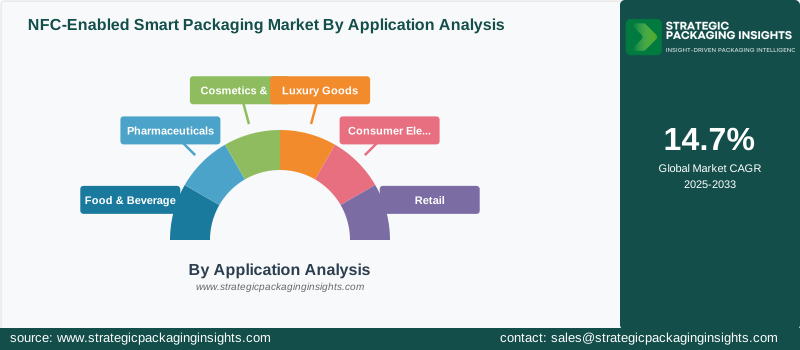
The demand for NFC-enabled packaging is also growing in the Cosmetics & Personal Care and Luxury Goods sectors, where brands are using NFC technology to offer personalized marketing content and enhance brand loyalty. The Consumer Electronics and Retail sectors are leveraging NFC technology to improve consumer engagement and streamline operations. As the adoption of NFC-enabled packaging continues to grow, companies are investing in innovative solutions that cater to the diverse needs of these industries, driving market growth and competitiveness.
By End User Analysis
The NFC-Enabled Smart Packaging market is segmented by end user into Brand Owners, Packaging Manufacturers, Retailers, Pharmaceutical Companies, and Consumer Goods Companies. Brand Owners and Packaging Manufacturers are among the primary end users, driven by the need to enhance product security and consumer engagement. Companies like Avery Dennison and Smartrac are developing NFC solutions that cater to the specific needs of brand owners, offering features such as product authentication and interactive marketing content.
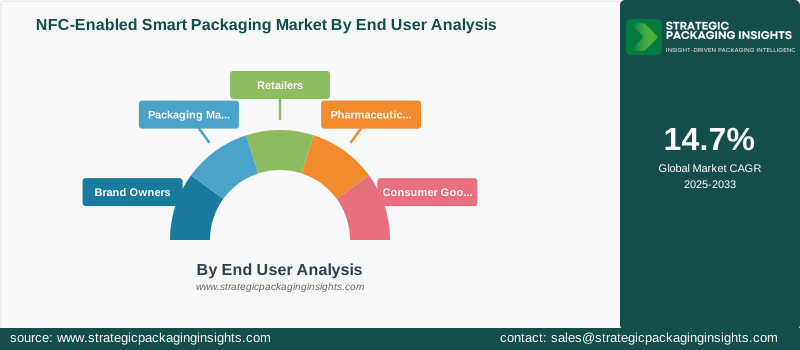
Retailers and Pharmaceutical Companies are also significant end users of NFC-enabled packaging, leveraging the technology to improve supply chain transparency and ensure product authenticity. The focus on consumer engagement and sustainability is driving the adoption of NFC-enabled packaging among Consumer Goods Companies, who are using the technology to offer personalized experiences and reduce environmental impact. As the demand for NFC-enabled packaging continues to grow, companies are investing in innovative solutions that cater to the diverse needs of these end users, driving market growth and competitiveness.
NFC-Enabled Smart Packaging Market Segments
The NFC-Enabled Smart Packaging market has been segmented on the basis ofBy Component
- NFC Tags
- NFC Labels
- NFC Chips
- NFC Readers
- Software & Cloud Platforms
By Packaging Type
- Labels
- Flexible Packaging
- Rigid Packaging
- Bottles
- Cartons
- Luxury Packaging
By Application
- Food & Beverage
- Pharmaceuticals
- Cosmetics & Personal Care
- Luxury Goods
- Consumer Electronics
- Retail
By End User
- Brand Owners
- Packaging Manufacturers
- Retailers
- Pharmaceutical Companies
- Consumer Goods Companies
Region
- Asia Pacific
- North America
- Latin America
- Europe
- Middle East & Africa




