


National Grant-Funded rHDPE Innovation Projects Market Outlook
The National Grant-Funded rHDPE Innovation Projects market was valued at $1.24 billion in 2025 and is projected to reach $2.66 billion by 2034, growing at a CAGR of 8.9% during the forecast period 2026-2034. This market is witnessing significant growth driven by increasing environmental concerns and the push for sustainable packaging solutions. The demand for recycled high-density polyethylene (rHDPE) is surging as industries and governments worldwide seek to reduce plastic waste and promote circular economies. The market's expansion is further fueled by technological advancements in recycling processes, which enhance the quality and applicability of rHDPE in various sectors.
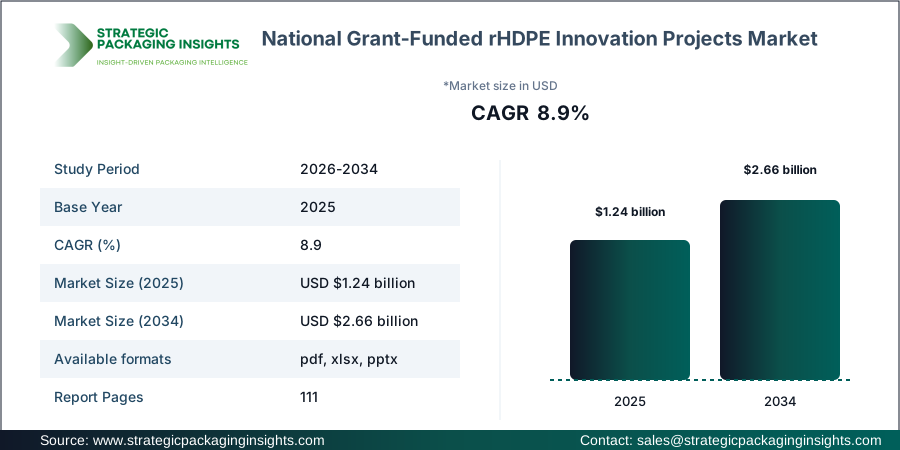
Despite the promising growth trajectory, the market faces challenges such as regulatory hurdles and the high cost of advanced recycling technologies. However, the potential for growth remains substantial, particularly with the increasing availability of government grants and public-private partnerships aimed at fostering innovation in recycling technologies. The market's potential is further bolstered by the rising consumer awareness and demand for eco-friendly products, which is encouraging companies to invest in rHDPE projects. As a result, the market is poised for robust growth, with significant opportunities for stakeholders across the value chain.
Report Scope
| Attributes | Details |
| Report Title | National Grant-Funded rHDPE Innovation Projects Market Size, Future Growth and Forecast 2034 |
| By Funding Type | Government Grants, Public-Private Partnerships, Innovation Funds |
| By Process Type | Sorting, Washing, Decontamination, Advanced Recycling |
| By Application | Food-Contact Packs, FMCG Bottles, Caps, Containers |
| By End Use | Recyclers, Research Institutes, FMCG Companies |
| Region | Asia Pacific, North America, Latin America, Europe, Middle East & Africa |
| Base Year | 2025 |
| Historic Period | 2018-2024 |
| Forecast Period | 2026-2034 |
| Number of Pages | 111 |
| Customization Available | Yes* |
Opportunities & Threats
The National Grant-Funded rHDPE Innovation Projects market presents numerous opportunities, primarily driven by the increasing global emphasis on sustainability and waste reduction. Governments worldwide are implementing stringent regulations to curb plastic waste, creating a favorable environment for rHDPE projects. Additionally, the growing consumer preference for sustainable products is encouraging companies to adopt recycled materials, thereby boosting demand for rHDPE. The availability of government grants and funding for innovation projects further enhances the market's growth prospects, providing financial support for research and development in advanced recycling technologies.
Another significant opportunity lies in the development of new applications for rHDPE. As technology advances, the quality and versatility of recycled materials improve, opening up new markets and applications. For instance, rHDPE is increasingly being used in food-contact packaging, a sector that traditionally relied on virgin plastics. This shift not only reduces environmental impact but also offers cost savings for manufacturers. Furthermore, collaborations between public and private sectors are fostering innovation and accelerating the adoption of rHDPE in various industries, creating a dynamic and competitive market landscape.
However, the market also faces threats, particularly from regulatory and economic challenges. The high cost of advanced recycling technologies can be a barrier to entry for smaller companies, limiting market participation. Additionally, fluctuations in oil prices can impact the competitiveness of recycled plastics compared to virgin materials. Regulatory changes, particularly in regions with less stringent environmental policies, can also pose challenges to market growth. Despite these threats, the overall outlook for the National Grant-Funded rHDPE Innovation Projects market remains positive, with significant opportunities for growth and innovation.
Drivers & Challenges
The primary drivers of the National Grant-Funded rHDPE Innovation Projects market include the increasing demand for sustainable packaging solutions and the growing emphasis on circular economies. As consumers become more environmentally conscious, there is a rising demand for products made from recycled materials, driving the adoption of rHDPE. Additionally, government initiatives and regulations aimed at reducing plastic waste are encouraging companies to invest in recycling technologies and projects. The availability of funding and grants for innovation projects further supports market growth, enabling companies to develop and implement advanced recycling processes.
Technological advancements in recycling processes are also a significant driver of market growth. Innovations in sorting, washing, and decontamination technologies are improving the quality and efficiency of rHDPE production, making it a viable alternative to virgin plastics. These advancements are expanding the range of applications for rHDPE, particularly in sectors such as food-contact packaging and FMCG products. Furthermore, collaborations between industry players and research institutes are fostering innovation and accelerating the development of new recycling technologies, enhancing the market's growth potential.
Despite these drivers, the market faces several challenges, including regulatory and economic barriers. The high cost of advanced recycling technologies can be prohibitive for smaller companies, limiting their ability to compete in the market. Additionally, the lack of standardized regulations across regions can create uncertainty and hinder market growth. Economic factors, such as fluctuations in oil prices, can also impact the competitiveness of recycled plastics compared to virgin materials. However, with continued investment in research and development and the growing emphasis on sustainability, the market is expected to overcome these challenges and continue its growth trajectory.
Market Share Analysis
The competitive landscape of the National Grant-Funded rHDPE Innovation Projects market is characterized by the presence of several key players, each striving to enhance their market position through innovation and strategic partnerships. Companies such as Veolia, Suez, and ALPLA are leading the market, leveraging their extensive experience and resources to develop advanced recycling technologies and expand their rHDPE production capabilities. These companies are actively involved in research and development, focusing on improving the quality and efficiency of rHDPE production to meet the growing demand for sustainable packaging solutions.
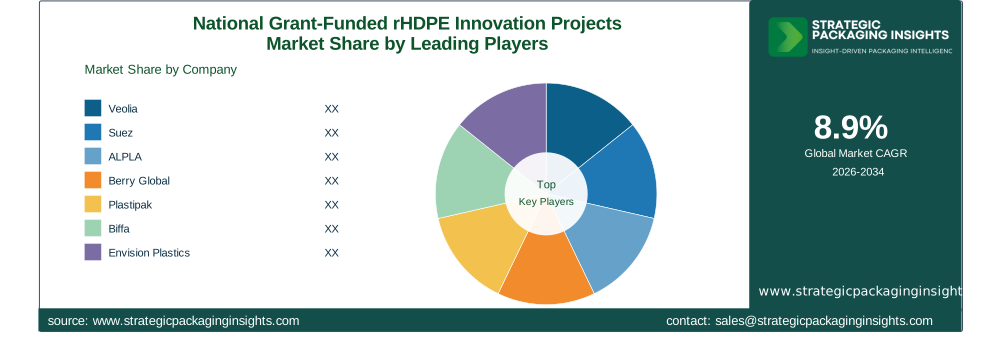
Berry Global and Plastipak are also significant players in the market, known for their innovative approaches to recycling and sustainability. These companies are investing heavily in advanced recycling technologies and collaborating with research institutes and government bodies to drive innovation in the rHDPE sector. Their efforts are aimed at expanding the range of applications for rHDPE and enhancing its competitiveness compared to virgin plastics. Additionally, companies like Biffa and Envision Plastics are focusing on expanding their recycling infrastructure and capabilities, positioning themselves as key players in the market.
Nextek, EREMA, and Starlinger are also notable contributors to the market, known for their technological expertise and commitment to sustainability. These companies are at the forefront of developing new recycling technologies and processes, enhancing the quality and efficiency of rHDPE production. Their efforts are supported by strategic partnerships and collaborations with industry players and research institutes, fostering innovation and driving market growth. Overall, the competitive landscape of the National Grant-Funded rHDPE Innovation Projects market is dynamic and evolving, with companies continuously striving to enhance their market position through innovation and strategic initiatives.
Key Highlights
- Significant growth in demand for rHDPE driven by sustainability initiatives and consumer preferences.
- Government grants and public-private partnerships are key enablers of market growth.
- Technological advancements in recycling processes are enhancing the quality and applicability of rHDPE.
- Increasing use of rHDPE in food-contact packaging and FMCG products.
- Collaborations between industry players and research institutes are fostering innovation.
- Regulatory challenges and high costs of advanced recycling technologies are potential barriers.
- Dynamic competitive landscape with key players investing in innovation and strategic partnerships.
Top Countries Insights
In the National Grant-Funded rHDPE Innovation Projects market, the United States stands out as a leading country, with a market size of approximately $0.5 billion and a CAGR of 9%. The country's strong regulatory framework and government support for recycling initiatives are key growth drivers. Additionally, the presence of major industry players and advanced recycling technologies further bolster the market's growth prospects.
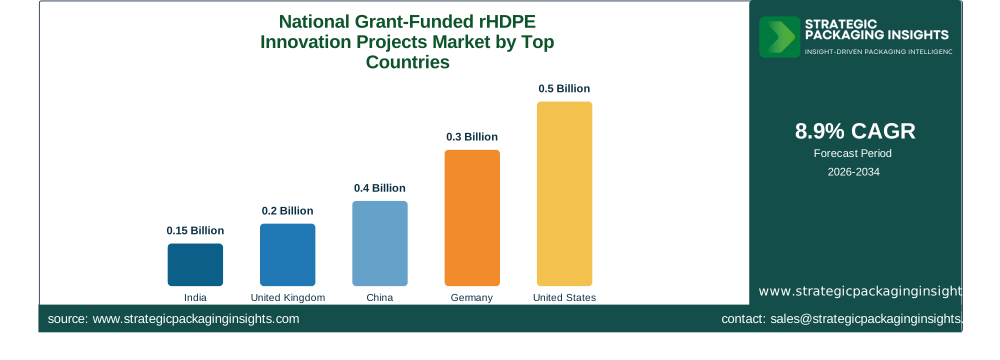
Germany is another significant player in the market, with a market size of around $0.3 billion and a CAGR of 8%. The country's commitment to sustainability and circular economy principles is driving demand for rHDPE. Government policies promoting recycling and the use of recycled materials in packaging are key factors contributing to market growth.
China, with a market size of approximately $0.4 billion and a CAGR of 10%, is experiencing rapid growth in the rHDPE market. The country's large population and increasing consumer awareness of environmental issues are driving demand for sustainable packaging solutions. Government initiatives to reduce plastic waste and promote recycling are also significant growth drivers.
The United Kingdom, with a market size of about $0.2 billion and a CAGR of 7%, is focusing on reducing plastic waste and promoting the use of recycled materials. The country's strong regulatory framework and government support for recycling initiatives are key factors driving market growth.
India, with a market size of approximately $0.15 billion and a CAGR of 11%, is emerging as a key player in the rHDPE market. The country's growing population and increasing demand for sustainable packaging solutions are driving market growth. Government initiatives to promote recycling and reduce plastic waste are also significant growth drivers.
National Grant-Funded rHDPE Innovation Projects Market Segments Insights

Funding Type Analysis
The funding type segment of the National Grant-Funded rHDPE Innovation Projects market is crucial in determining the financial support available for various projects. Government grants play a significant role in this segment, providing essential funding for research and development in recycling technologies. These grants are often aimed at fostering innovation and encouraging companies to invest in sustainable practices. Public-private partnerships are also a key component of this segment, facilitating collaboration between government bodies and private companies to drive innovation and expand recycling capabilities. Innovation funds, on the other hand, are focused on supporting cutting-edge projects and technologies that have the potential to revolutionize the rHDPE market.
Government grants are particularly important in regions with strong regulatory frameworks and a commitment to sustainability. These grants provide the necessary financial support for companies to invest in advanced recycling technologies and expand their rHDPE production capabilities. Public-private partnerships are also gaining traction, as they enable companies to leverage government resources and expertise to drive innovation and enhance their market position. Innovation funds are increasingly being used to support projects that focus on developing new applications for rHDPE and improving the quality and efficiency of recycling processes. Overall, the funding type segment is a critical driver of market growth, providing the financial support necessary for companies to invest in sustainable practices and technologies.
Process Type Analysis
The process type segment of the National Grant-Funded rHDPE Innovation Projects market is focused on the various recycling processes used to produce rHDPE. Sorting, washing, decontamination, and advanced recycling are the key processes in this segment, each playing a crucial role in determining the quality and efficiency of rHDPE production. Sorting is the initial step in the recycling process, involving the separation of different types of plastics to ensure the purity of the final product. Washing and decontamination are essential for removing impurities and contaminants, ensuring that the rHDPE produced is of high quality and suitable for various applications.
Advanced recycling technologies are at the forefront of this segment, offering innovative solutions for improving the efficiency and quality of rHDPE production. These technologies are focused on enhancing the decontamination process and developing new methods for recycling complex plastic materials. The process type segment is a key driver of market growth, as advancements in recycling technologies are expanding the range of applications for rHDPE and improving its competitiveness compared to virgin plastics. Companies are investing heavily in research and development to improve their recycling processes and enhance the quality of their rHDPE products, driving innovation and growth in the market.
Application Analysis
The application segment of the National Grant-Funded rHDPE Innovation Projects market is focused on the various uses of rHDPE in different industries. Food-contact packs, FMCG bottles, caps, and containers are the primary applications in this segment, each offering unique opportunities for growth and innovation. The use of rHDPE in food-contact packaging is particularly significant, as it offers a sustainable alternative to traditional virgin plastics. This application is driven by increasing consumer demand for eco-friendly products and stringent regulations aimed at reducing plastic waste.
FMCG bottles and caps are also key applications for rHDPE, offering significant opportunities for growth as companies seek to reduce their environmental impact and meet consumer demand for sustainable packaging solutions. The use of rHDPE in containers is another important application, offering cost savings and environmental benefits for manufacturers. Overall, the application segment is a critical driver of market growth, as the increasing demand for sustainable packaging solutions is encouraging companies to invest in rHDPE projects and expand their product offerings.
End Use Analysis
The end use segment of the National Grant-Funded rHDPE Innovation Projects market is focused on the various industries and sectors that utilize rHDPE. Recyclers, research institutes, and FMCG companies are the primary end users in this segment, each playing a crucial role in driving market growth and innovation. Recyclers are at the forefront of the market, investing in advanced recycling technologies and expanding their capabilities to meet the growing demand for rHDPE. These companies are focused on improving the quality and efficiency of their recycling processes, enhancing the competitiveness of rHDPE compared to virgin plastics.
Research institutes are also key players in the market, driving innovation and development in recycling technologies. These institutes are focused on developing new methods for recycling complex plastic materials and improving the quality of rHDPE production. FMCG companies are significant end users of rHDPE, utilizing the material in their packaging solutions to reduce their environmental impact and meet consumer demand for sustainable products. Overall, the end use segment is a critical driver of market growth, as the increasing demand for sustainable packaging solutions is encouraging companies to invest in rHDPE projects and expand their product offerings.
National Grant-Funded rHDPE Innovation Projects Market Segments
The National Grant-Funded rHDPE Innovation Projects market has been segmented on the basis ofBy Funding Type
- Government Grants
- Public-Private Partnerships
- Innovation Funds
By Process Type
- Sorting
- Washing
- Decontamination
- Advanced Recycling
By Application
- Food-Contact Packs
- FMCG Bottles
- Caps
- Containers
By End Use
- Recyclers
- Research Institutes
- FMCG Companies
Region
- Asia Pacific
- North America
- Latin America
- Europe
- Middle East & Africa




