


Multi-color Printer Market Outlook
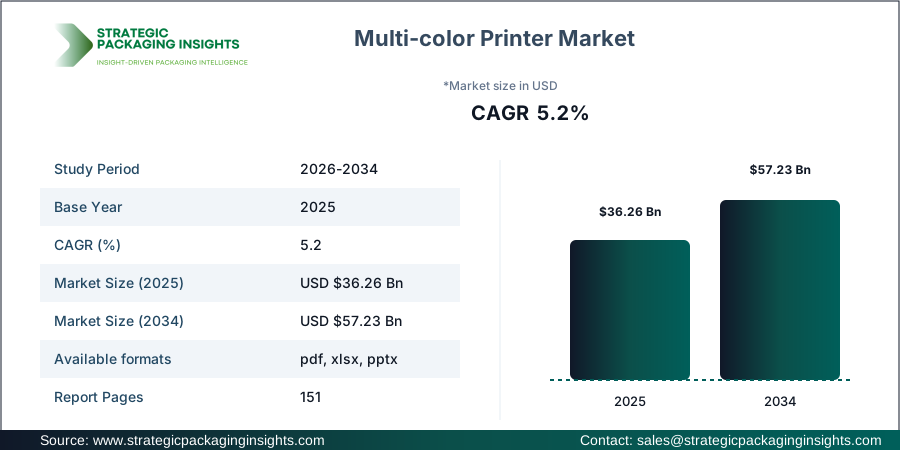
The Multi-color Printer market size was valued at USD 36.26 billion in 2025 and is anticipated to reach USD 57.23 billion by 2034, growing at a CAGR of 5.2% during the forecast period according to Strategic Packaging Insights. The market is witnessing significant growth due to the increasing demand for high-quality printing solutions across various sectors such as packaging, textiles, and commercial printing. Companies like HP and Canon are leading the charge by continuously innovating their product lines to meet the evolving needs of consumers and businesses. The rise in e-commerce and the need for attractive packaging solutions are further propelling the demand for multi-color printers, making them an essential tool for brand differentiation and consumer engagement.
One of the most impactful drivers of the Multi-color Printer market is the technological advancements in printing technologies. According to industry reports, the integration of digital printing technologies, such as UV and solvent-based printing, has revolutionized the market by offering faster, more efficient, and cost-effective printing solutions. This technological shift is supported by the growing trend of customization and personalization in printing, which is highly sought after by consumers and businesses alike. Companies like Epson and Xerox are investing heavily in research and development to enhance their printing technologies, ensuring they remain competitive in this rapidly evolving market landscape.
Report Scope
| Attributes | Details |
| Report Title | Multi-color Printer Market Size, Future Growth and Forecast 2034 |
| Printer Type | Inkjet, Laser, Flexographic, Digital Label Printer |
| Application | Packaging, Labels, Textiles, Commercial Printing |
| End Use | Printing Houses, Packaging Converters, Retail, Advertising |
| Technology | UV, Solvent, Water-Based, Toner-Based |
| Region | Asia Pacific, North America, Latin America, Europe, Middle East & Africa |
| Base Year | 2025 |
| Historic Period | 2018-2024 |
| Forecast Period | 2026-2034 |
| Number of Pages | 151 |
| Customization Available | Yes* |
Sustainability & Circular Economy Analysis
Sustainability initiatives and circular economy practices are increasingly influencing the multi-color printer market. The demand for eco-friendly printing solutions is on the rise, with consumers and businesses alike prioritizing sustainability in their purchasing decisions. This shift is driving innovation in recyclable materials and reusable packaging, as well as the development of lightweight packaging solutions that reduce waste and carbon footprints. Companies are investing in eco-friendly material innovations and waste reduction strategies to align with consumer sustainability preferences and meet stringent packaging regulations.
The influence of sustainability trends extends to packaging design, manufacturing, and investment decisions. Packaging manufacturers are adopting ESG initiatives and extended producer responsibility (EPR) frameworks to ensure compliance with environmental regulations and enhance their long-term market competitiveness. These practices are reshaping supply chain strategies, with a focus on reducing carbon footprints and enhancing the sustainability of packaging solutions. As a result, companies are increasingly prioritizing investments in sustainable packaging technologies and materials to meet the growing demand for eco-friendly solutions.
Moreover, the emphasis on sustainability is driving changes in regulatory compliance and market competitiveness. Companies are required to adhere to stricter packaging regulations and demonstrate their commitment to sustainability through transparent reporting and accountability measures. This shift is influencing investment decisions and supply chain strategies, as companies seek to enhance their sustainability credentials and gain a competitive edge in the market. As a result, sustainability is becoming a key driver of innovation and growth in the multi-color printer market, with companies investing in sustainable technologies and practices to meet the evolving needs of consumers and businesses.
Packaging Value Chain & Supply Chain Analysis
The packaging value chain and supply chain ecosystem for multi-color printers is complex and multifaceted, involving various stakeholders and processes. Raw material sourcing is a critical component of the value chain, with packaging converters and manufacturers relying on a steady supply of high-quality materials to produce multi-color printers. Packaging machinery plays a crucial role in the manufacturing process, enabling efficient production and ensuring the quality and consistency of printed materials. Logistics and distribution channels are also essential, facilitating the timely delivery of products to brand owners, retailers, and end-users.
Supply chain efficiency is a key factor influencing the overall performance and competitiveness of the multi-color printer market. Companies are adopting strategic procurement strategies and inventory management practices to ensure the availability of raw materials and optimize production capabilities. Localization and global sourcing are also important considerations, with companies seeking to balance cost-effectiveness with supply chain resilience. Strategic partnerships and collaborations with suppliers, distributors, and logistics providers are essential for enhancing supply chain efficiency and ensuring the timely delivery of products to market.
Transportation and production capabilities are critical components of the supply chain, influencing the overall market performance and competitiveness of multi-color printers. Companies are investing in advanced packaging machinery and technologies to enhance production capabilities and meet the growing demand for high-quality printing solutions. Strategic partnerships with logistics providers and distributors are also essential for optimizing transportation and ensuring the timely delivery of products to market. As a result, supply chain efficiency and resilience are key drivers of growth and competitiveness in the multi-color printer market.
Opportunities & Threats
The multi-color printer market presents numerous opportunities for growth and innovation. One of the most significant opportunities lies in the increasing demand for customized and personalized printing solutions. As consumers and businesses seek unique and tailored printing options, companies have the opportunity to develop innovative products and services that meet these evolving needs. The rise of e-commerce and online retail is also driving demand for high-quality packaging solutions, creating opportunities for companies to expand their product offerings and capture new market segments.
Another key opportunity in the multi-color printer market is the growing emphasis on sustainability and eco-friendly printing solutions. As consumers and businesses prioritize sustainability in their purchasing decisions, companies have the opportunity to develop and market eco-friendly printing technologies and materials. This shift towards sustainability is driving innovation in recyclable materials, reusable packaging, and lightweight packaging solutions, creating opportunities for companies to differentiate themselves in the market and gain a competitive edge.
However, the multi-color printer market also faces several threats and challenges. One of the most significant threats is the increasing competition from digital printing technologies, which offer faster, more efficient, and cost-effective printing solutions. As digital printing technologies continue to evolve and improve, traditional multi-color printers may face challenges in maintaining their market share and competitiveness. Additionally, the market is subject to regulatory pressures and compliance requirements, which can pose challenges for companies seeking to navigate complex and evolving regulatory landscapes.
Drivers & Challenges
Technological advancements are a major driver of growth in the multi-color printer market. The integration of digital printing technologies, such as UV and solvent-based printing, has revolutionized the market by offering faster, more efficient, and cost-effective printing solutions. This technological shift is supported by the growing trend of customization and personalization in printing, which is highly sought after by consumers and businesses alike. Companies like Epson and Xerox are investing heavily in research and development to enhance their printing technologies, ensuring they remain competitive in this rapidly evolving market landscape.
Another key driver of growth in the multi-color printer market is the increasing demand for high-quality printing solutions across various sectors such as packaging, textiles, and commercial printing. The rise in e-commerce and the need for attractive packaging solutions are further propelling the demand for multi-color printers, making them an essential tool for brand differentiation and consumer engagement. Companies like HP and Canon are leading the charge by continuously innovating their product lines to meet the evolving needs of consumers and businesses.
Despite the numerous drivers of growth, the multi-color printer market also faces several challenges. One of the most significant challenges is the increasing competition from digital printing technologies, which offer faster, more efficient, and cost-effective printing solutions. As digital printing technologies continue to evolve and improve, traditional multi-color printers may face challenges in maintaining their market share and competitiveness. Additionally, the market is subject to regulatory pressures and compliance requirements, which can pose challenges for companies seeking to navigate complex and evolving regulatory landscapes.
Market Share Analysis
The competitive landscape of the multi-color printer market is characterized by the presence of several key players, each vying for market share and dominance. Companies like HP, Canon, and Epson are leading the market with their innovative product offerings and strong brand presence. These companies have established themselves as leaders in the market by continuously investing in research and development to enhance their printing technologies and meet the evolving needs of consumers and businesses. The market is also witnessing the entry of new players, further intensifying competition and driving innovation.
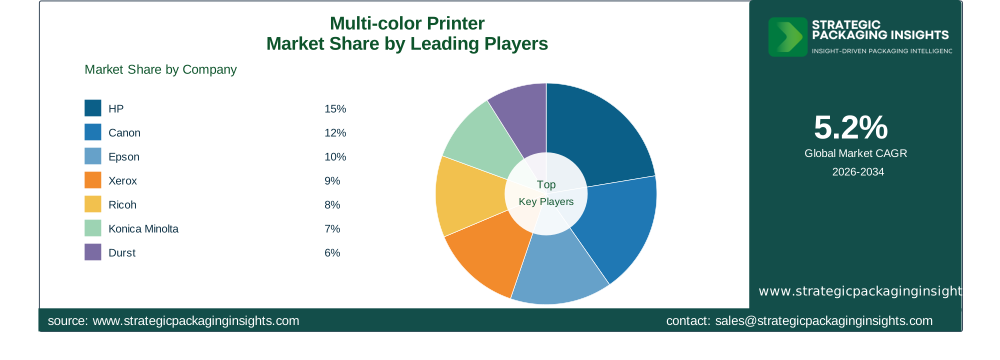
HP is a major player in the multi-color printer market, known for its wide range of high-quality printing solutions. The company has a strong global presence and is committed to innovation and sustainability, investing heavily in research and development to enhance its product offerings. Canon is another leading player in the market, renowned for its advanced printing technologies and commitment to quality and reliability. The company has a strong focus on customer satisfaction and is continuously expanding its product portfolio to meet the diverse needs of its customers.
Epson is a key player in the multi-color printer market, known for its innovative printing technologies and commitment to sustainability. The company has a strong global presence and is dedicated to providing high-quality printing solutions that meet the evolving needs of consumers and businesses. Xerox is another major player in the market, renowned for its advanced printing technologies and commitment to innovation. The company has a strong focus on customer satisfaction and is continuously expanding its product portfolio to meet the diverse needs of its customers.
Ricoh and Konica Minolta are also significant players in the multi-color printer market, known for their advanced printing technologies and commitment to quality and reliability. These companies have a strong global presence and are dedicated to providing high-quality printing solutions that meet the evolving needs of consumers and businesses. Durst, EFI, Mimaki, and Roland DG are also key players in the market, known for their innovative printing technologies and commitment to sustainability. These companies are continuously investing in research and development to enhance their product offerings and meet the diverse needs of their customers.
Key Highlights
- Market Size: The multi-color printer market was valued at USD 36.26 billion in 2025 and is projected to reach USD 57.23 billion by 2034.
- Growth Rate: The market is expected to grow at a CAGR of 5.2% during the forecast period.
- Leading Companies: Key players include HP, Canon, Epson, Xerox, and Ricoh.
- Technological Advancements: Integration of digital printing technologies is driving market growth.
- Sustainability Focus: Increasing demand for eco-friendly printing solutions.
- Customization Trend: Growing emphasis on personalized and customized printing solutions.
- Regional Insights: Asia Pacific is expected to witness significant growth.
Multi-color Printer Market Segments Insights

Printer Type Analysis
The printer type segment in the multi-color printer market is diverse, encompassing various technologies such as inkjet, laser, flexographic, and digital label printers. Inkjet printers are widely used due to their versatility and ability to produce high-quality prints at a relatively low cost. They are particularly popular in the home and small office markets, where affordability and ease of use are key considerations. Laser printers, on the other hand, are favored for their speed and efficiency, making them ideal for high-volume printing applications in commercial and industrial settings.
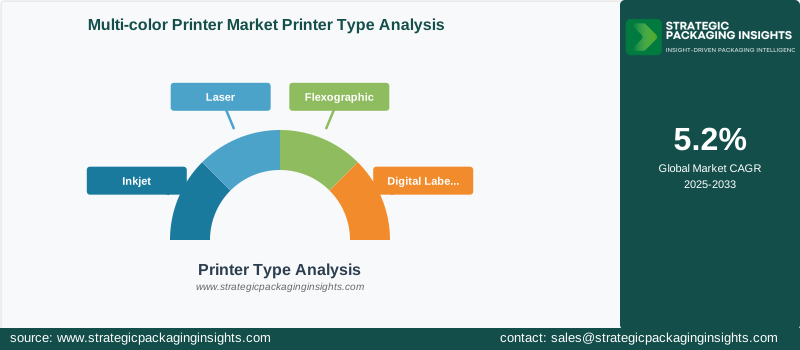
Flexographic printers are commonly used in the packaging industry, where they are valued for their ability to print on a wide range of substrates, including paper, plastic, and metal. These printers are known for their high-speed capabilities and cost-effectiveness, making them a popular choice for large-scale printing operations. Digital label printers are gaining traction in the market due to their ability to produce high-quality, customized labels quickly and efficiently. This technology is particularly appealing to businesses seeking to differentiate their products through unique and personalized packaging solutions.
Application Analysis
The application segment of the multi-color printer market is broad, covering areas such as packaging, labels, textiles, and commercial printing. Packaging is a major application area, driven by the increasing demand for attractive and functional packaging solutions in various industries, including food and beverage, pharmaceuticals, and consumer goods. Multi-color printers play a crucial role in producing high-quality packaging materials that enhance brand visibility and consumer engagement.
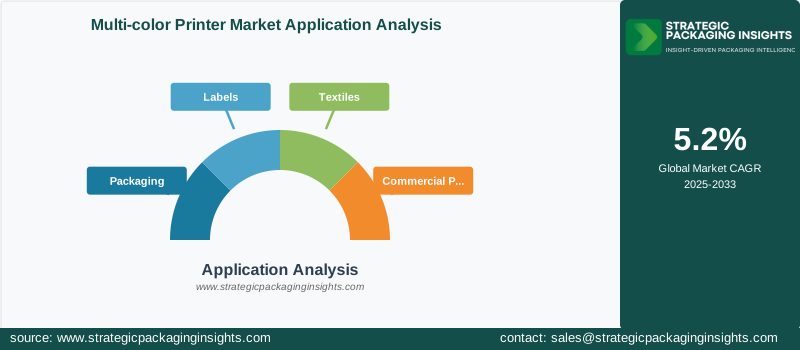
Labels are another significant application area, with businesses seeking to create eye-catching and informative labels that convey important product information and enhance brand recognition. The textiles industry is also a key market for multi-color printers, with the demand for customized and personalized textile products driving growth in this segment. Commercial printing encompasses a wide range of applications, from marketing materials and promotional items to business documents and publications, highlighting the versatility and importance of multi-color printers in this sector.
End Use Analysis
The end-use segment of the multi-color printer market includes printing houses, packaging converters, retail, and advertising. Printing houses are major users of multi-color printers, relying on these technologies to produce high-quality printed materials for a variety of clients and applications. Packaging converters are also significant users, utilizing multi-color printers to create customized and attractive packaging solutions for their customers.
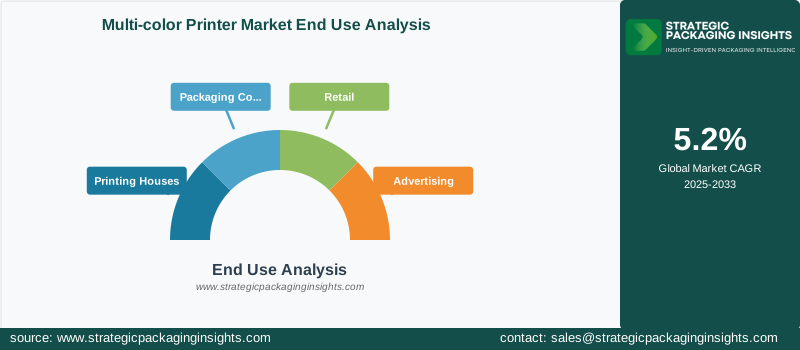
The retail sector is increasingly adopting multi-color printers to enhance their in-store marketing and promotional efforts, creating eye-catching displays and signage that attract and engage consumers. Advertising is another key end-use area, with businesses leveraging multi-color printers to produce high-quality marketing materials that effectively communicate their brand message and capture consumer attention. These diverse end-use applications highlight the versatility and importance of multi-color printers in various industries and sectors.
Technology Analysis
The technology segment of the multi-color printer market includes UV, solvent, water-based, and toner-based technologies. UV printing is gaining popularity due to its ability to produce high-quality prints with vibrant colors and excellent durability. This technology is particularly well-suited for applications requiring long-lasting and weather-resistant prints, such as outdoor signage and vehicle wraps.
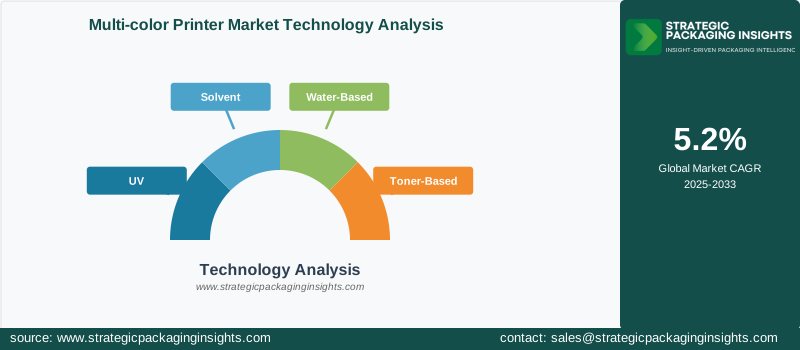
Solvent-based printing is valued for its ability to produce high-quality prints on a wide range of substrates, making it a popular choice for applications such as banners, posters, and vehicle graphics. Water-based printing is favored for its eco-friendly properties, as it uses water-based inks that are less harmful to the environment. This technology is particularly appealing to businesses seeking to reduce their environmental impact and align with sustainability initiatives. Toner-based printing is known for its speed and efficiency, making it ideal for high-volume printing applications in commercial and industrial settings.
Multi-color Printer Market Segments
The Multi-color Printer market has been segmented on the basis ofPrinter Type
- Inkjet
- Laser
- Flexographic
- Digital Label Printer
Application
- Packaging
- Labels
- Textiles
- Commercial Printing
End Use
- Printing Houses
- Packaging Converters
- Retail
- Advertising
Technology
- UV
- Solvent
- Water-Based
- Toner-Based
Region
- Asia Pacific
- North America
- Latin America
- Europe
- Middle East & Africa




