


Molded Pulp Inserts Market Outlook
The Molded Pulp Inserts market size was valued at USD 6.2 billion in 2025 and is anticipated to reach USD 10.7 billion by 2034, growing at a CAGR of 6.30% during the forecast period according to Strategic Packaging Insights. This growth is driven by increasing demand for sustainable packaging solutions across various industries, including food and beverage, electronics, and healthcare. Companies like Huhtamaki Oyj and Brodrene Hartmann A/S are leading the charge in developing innovative molded pulp products that cater to the rising consumer preference for eco-friendly packaging. The market's expansion is further supported by advancements in manufacturing technologies that enhance the quality and versatility of molded pulp inserts.
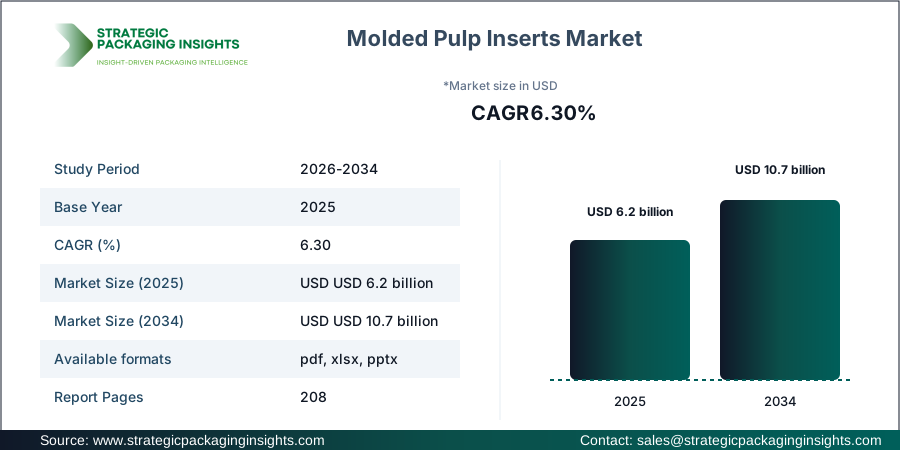
One of the most impactful drivers of the Molded Pulp Inserts market is the growing emphasis on environmental sustainability. Governments worldwide are implementing stringent regulations to reduce plastic waste, which is propelling the demand for biodegradable and recyclable packaging solutions. According to a report by the United Nations, over 170 countries have pledged to significantly reduce plastic usage by 2030, creating a favorable environment for the growth of molded pulp products. Companies like UFP Technologies and Sabert Corporation are investing heavily in research and development to create innovative, sustainable packaging solutions that align with these global initiatives.
Report Scope
| Attributes | Details |
| Report Title | Molded Pulp Inserts Market Size, Future Growth and Forecast 2034 |
| By Source Material | Recycled Paper/Wood Pulp, Virgin Wood Pulp, Non-Wood Pulp (Bagasse, Bamboo, Wheat Straw, Agricultural Residues), Blended Fiber |
| By Molded Type | Thick Wall, Transfer Molded, Thermoformed (Thin Wall), Processed / Dry Molded Fiber |
| By Product Type | Trays, End Caps, Corner & Edge Protectors, Protective Inserts, Clamshells, Cups & Bowls, Egg Cartons, Plates, Others |
| By End Use | Food & Beverage, Foodservice, Electronics, Healthcare & Medical Devices, Personal Care & Cosmetics, Industrial, E-commerce & Logistics, Automotive |
| By Region | North America (U.S., Canada, Mexico), Europe (Germany, UK, France, Italy, Spain, Rest of Europe), Asia Pacific (China, India, Japan, South Korea, Australia, Rest of Asia Pacific), Latin America (Brazil, Argentina, Rest of Latin America), Middle East & Africa (GCC Countries, South Africa, Rest of MEA) |
| Base Year | 2025 |
| Historic Period | 2018-2024 |
| Forecast Period | 2026-2034 |
| Number of Pages | 208 |
| Customization Available | Yes* |
Sustainability & Circular Economy Analysis
Sustainability initiatives and circular economy practices are significantly influencing the packaging market, particularly in the realm of molded pulp inserts. As consumers become more environmentally conscious, there is a growing demand for packaging solutions that minimize environmental impact. This has led to an increased focus on recyclable materials and reusable packaging. Companies are innovating with eco-friendly materials, such as recycled paper and non-wood pulp, to create lightweight and durable packaging solutions. These efforts not only reduce waste but also align with extended producer responsibility (EPR) regulations, which hold manufacturers accountable for the entire lifecycle of their products.
The shift towards sustainability is also driving changes in packaging design and manufacturing processes. Companies are investing in advanced technologies to produce molded pulp inserts that are not only environmentally friendly but also cost-effective. This includes the development of lightweight packaging that reduces transportation costs and carbon footprint. Additionally, ESG initiatives are becoming a key consideration for investors, influencing their decisions and driving companies to adopt more sustainable practices. As a result, businesses that prioritize sustainability are gaining a competitive edge in the market.
Regulatory compliance is another critical factor shaping the molded pulp inserts market. Governments are implementing stricter packaging regulations to promote sustainability and reduce waste. This has led to increased investment in research and development to create innovative packaging solutions that meet these regulatory requirements. Companies are also focusing on waste reduction strategies and carbon footprint reduction to enhance their long-term market competitiveness. As consumer preferences continue to shift towards sustainable products, the demand for molded pulp inserts is expected to grow, providing significant opportunities for packaging manufacturers and brand owners.
Packaging Value Chain & Supply Chain Analysis
The packaging value chain for molded pulp inserts is complex, involving multiple stakeholders from raw material sourcing to end-user delivery. Raw materials, such as recycled paper and non-wood pulp, are sourced from sustainable suppliers to ensure the eco-friendliness of the final product. Packaging converters and manufacturers play a crucial role in transforming these raw materials into molded pulp inserts through advanced machinery and production techniques. Companies like Pactiv Evergreen and CKF Inc. are leading the way in optimizing production capabilities to meet the growing demand for sustainable packaging solutions.
Logistics and distribution channels are critical components of the supply chain, ensuring that molded pulp inserts reach their intended markets efficiently. Strategic partnerships with logistics providers and retailers help streamline the distribution process, reducing lead times and enhancing supply chain resilience. Inventory management and procurement strategies are also essential for maintaining a steady supply of raw materials and finished products. Companies are increasingly focusing on localization and global sourcing to mitigate risks associated with supply chain disruptions and ensure a consistent supply of high-quality molded pulp inserts.
Supply chain efficiency is a key determinant of market performance and business competitiveness. Companies are investing in advanced technologies and strategic partnerships to enhance their supply chain capabilities. This includes the use of data analytics and automation to optimize production processes and improve inventory management. By ensuring the availability of raw materials and efficient transportation, companies can meet the growing demand for molded pulp inserts and maintain their competitive edge in the market. As the industry continues to evolve, supply chain strategies will play a crucial role in determining the success of packaging manufacturers and brand owners.
Opportunities & Threats
The molded pulp inserts market presents numerous opportunities for growth, driven by the increasing demand for sustainable packaging solutions. As consumers become more environmentally conscious, there is a growing preference for biodegradable and recyclable packaging options. This trend is creating opportunities for companies to develop innovative molded pulp products that cater to these preferences. Additionally, advancements in manufacturing technologies are enabling the production of high-quality molded pulp inserts that are both cost-effective and environmentally friendly. Companies that invest in research and development to create innovative packaging solutions are well-positioned to capitalize on these opportunities.
Another significant opportunity in the molded pulp inserts market is the expansion of e-commerce and logistics industries. With the rise of online shopping, there is a growing need for protective packaging solutions that ensure the safe delivery of products. Molded pulp inserts offer an ideal solution, providing cushioning and protection for a wide range of products. As e-commerce continues to grow, the demand for molded pulp inserts is expected to increase, providing significant opportunities for packaging manufacturers and brand owners. Companies that can effectively meet the needs of the e-commerce industry are likely to experience substantial growth in the coming years.
Despite the numerous opportunities, the molded pulp inserts market also faces several threats. One of the primary challenges is the high cost of raw materials, which can impact the profitability of packaging manufacturers. Additionally, the market is highly competitive, with numerous players vying for market share. Companies must continuously innovate and differentiate their products to maintain their competitive edge. Regulatory compliance is another challenge, as companies must adhere to strict packaging regulations to ensure the sustainability of their products. Failure to comply with these regulations can result in significant penalties and damage to a company's reputation.
Drivers & Challenges
The molded pulp inserts market is driven by several key factors, including the growing demand for sustainable packaging solutions. As consumers become more environmentally conscious, there is a rising preference for biodegradable and recyclable packaging options. This trend is driving companies to invest in research and development to create innovative molded pulp products that meet these preferences. Additionally, advancements in manufacturing technologies are enabling the production of high-quality molded pulp inserts that are both cost-effective and environmentally friendly. Companies that prioritize sustainability are well-positioned to capitalize on these drivers and gain a competitive edge in the market.
Another significant driver of the molded pulp inserts market is the expansion of the e-commerce and logistics industries. With the rise of online shopping, there is a growing need for protective packaging solutions that ensure the safe delivery of products. Molded pulp inserts offer an ideal solution, providing cushioning and protection for a wide range of products. As e-commerce continues to grow, the demand for molded pulp inserts is expected to increase, providing significant opportunities for packaging manufacturers and brand owners. Companies that can effectively meet the needs of the e-commerce industry are likely to experience substantial growth in the coming years.
Despite the numerous drivers, the molded pulp inserts market also faces several challenges. One of the primary challenges is the high cost of raw materials, which can impact the profitability of packaging manufacturers. Additionally, the market is highly competitive, with numerous players vying for market share. Companies must continuously innovate and differentiate their products to maintain their competitive edge. Regulatory compliance is another challenge, as companies must adhere to strict packaging regulations to ensure the sustainability of their products. Failure to comply with these regulations can result in significant penalties and damage to a company's reputation.
Market Share Analysis
The competitive landscape of the molded pulp inserts market is characterized by the presence of several key players, each striving to gain a larger share of the market. Companies like Huhtamaki Oyj, Brodrene Hartmann A/S, and UFP Technologies are leading the market with their innovative product offerings and strong focus on sustainability. These companies have established themselves as leaders in the industry by investing in research and development to create high-quality molded pulp products that meet the growing demand for eco-friendly packaging solutions.
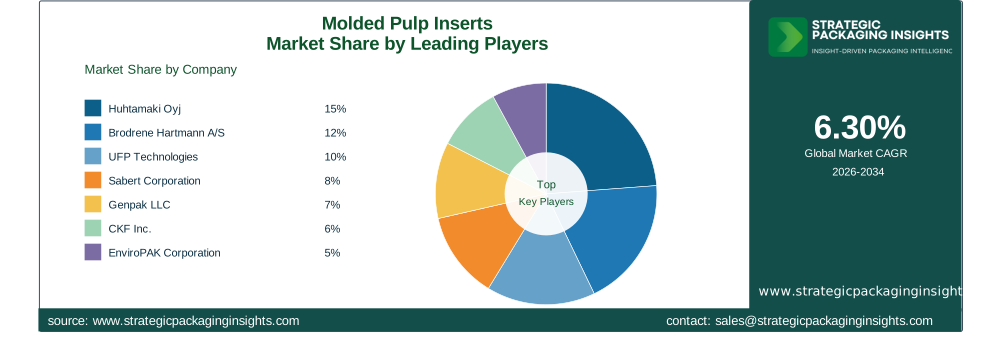
Huhtamaki Oyj, a global leader in sustainable packaging solutions, has a significant market share in the molded pulp inserts market. The company's commitment to sustainability and innovation has enabled it to develop a wide range of molded pulp products that cater to various industries, including food and beverage, electronics, and healthcare. Brodrene Hartmann A/S, another major player in the market, is known for its high-quality molded pulp products and strong focus on environmental sustainability. The company's extensive product portfolio and global presence have helped it maintain a competitive edge in the market.
UFP Technologies is a leading provider of molded pulp inserts, offering a wide range of products that cater to the needs of various industries. The company's focus on innovation and sustainability has enabled it to develop high-quality molded pulp products that meet the growing demand for eco-friendly packaging solutions. Sabert Corporation, another key player in the market, is known for its innovative packaging solutions and strong commitment to sustainability. The company's extensive product portfolio and global presence have helped it maintain a competitive edge in the market.
Other notable players in the molded pulp inserts market include Genpak LLC, CKF Inc., EnviroPAK Corporation, Pactiv Evergreen, PulPac AB, Tanbark, Fabri-Kal, and Vernacare. These companies are investing heavily in research and development to create innovative packaging solutions that meet the growing demand for sustainable packaging. By focusing on sustainability and innovation, these companies are well-positioned to capitalize on the growing demand for molded pulp inserts and gain a larger share of the market.
Key Highlights
- The molded pulp inserts market is projected to grow from USD 6.2 billion in 2025 to USD 10.7 billion by 2034, driven by increasing demand for sustainable packaging solutions.
- Recycled paper/wood pulp and non-wood pulp are the most popular source materials, reflecting the market's focus on eco-friendly options.
- Food & Beverage and Electronics are the leading end-use segments, showcasing the versatility of molded pulp inserts.
- Asia Pacific is expected to witness the highest growth due to rapid industrialization and increasing environmental awareness.
- Huhtamaki Oyj and Brodrene Hartmann A/S are key players driving innovation and sustainability in the market.
- Advancements in manufacturing technologies are enhancing the quality and versatility of molded pulp products.
- Regulatory compliance and sustainability initiatives are shaping the market dynamics and influencing investment decisions.
Molded Pulp Inserts Market Segments Insights

By Source Material Analysis
The source material segment of the molded pulp inserts market is dominated by recycled paper/wood pulp, which is favored for its eco-friendly properties and cost-effectiveness. As environmental concerns continue to rise, companies are increasingly turning to sustainable materials to meet consumer demand for green packaging solutions. Virgin wood pulp, while less popular due to its higher cost, is still used in applications requiring superior strength and durability. Non-wood pulp, derived from sources like bagasse, bamboo, and wheat straw, is gaining traction as an alternative to traditional wood pulp, offering similar benefits with a lower environmental impact. Blended fiber options are also emerging, combining the strengths of various materials to create versatile and sustainable packaging solutions.
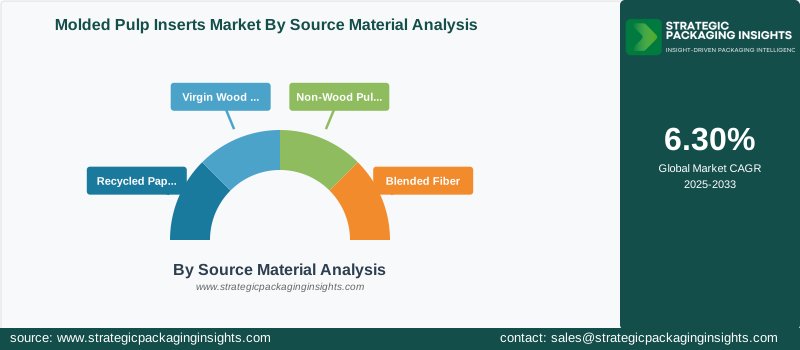
Recycled paper/wood pulp remains the most widely used source material, driven by its availability and alignment with circular economy principles. Companies are investing in advanced recycling technologies to improve the quality and performance of recycled pulp, making it a viable option for a broader range of applications. Non-wood pulp is also gaining popularity, particularly in regions with abundant agricultural residues. This trend is supported by government initiatives promoting the use of renewable resources and reducing reliance on traditional wood pulp. As the market continues to evolve, the demand for sustainable source materials is expected to grow, providing significant opportunities for innovation and development.
By Molded Type Analysis
The molded type segment of the molded pulp inserts market is characterized by a diverse range of products, each catering to specific applications and industries. Thick wall molded pulp inserts are commonly used in heavy-duty packaging applications, providing superior protection and durability. Transfer molded products, known for their smooth surface finish and precision, are ideal for applications requiring high aesthetic appeal. Thermoformed (thin wall) molded pulp inserts offer a lightweight and cost-effective solution for a variety of packaging needs, while processed/dry molded fiber products are gaining popularity for their enhanced strength and versatility.
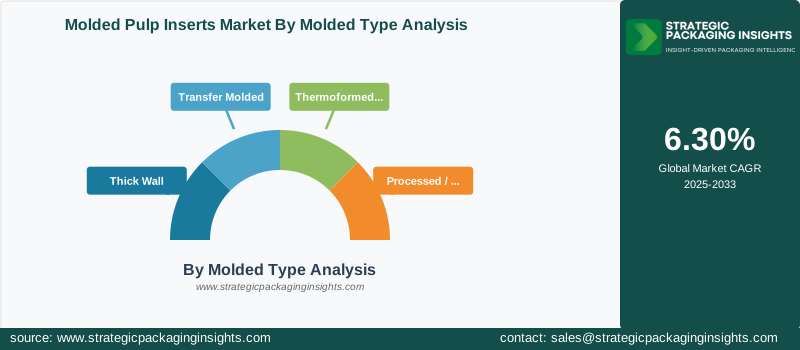
As the demand for sustainable packaging solutions continues to grow, companies are investing in advanced manufacturing technologies to improve the quality and performance of molded pulp products. This includes the development of innovative molding techniques that enhance the strength, durability, and aesthetic appeal of molded pulp inserts. By leveraging these advancements, companies can create high-quality products that meet the diverse needs of various industries, from food and beverage to electronics and healthcare. As the market continues to evolve, the demand for innovative molded pulp products is expected to increase, providing significant opportunities for growth and development.
By Product Type Analysis
The product type segment of the molded pulp inserts market is diverse, encompassing a wide range of products designed to meet the specific needs of various industries. Trays, end caps, and corner & edge protectors are among the most popular products, providing essential protection and support for a variety of applications. Protective inserts and clamshells are also widely used, offering a versatile and cost-effective solution for packaging needs. Cups & bowls, egg cartons, and plates are commonly used in the food and beverage industry, reflecting the growing demand for sustainable packaging solutions in this sector.
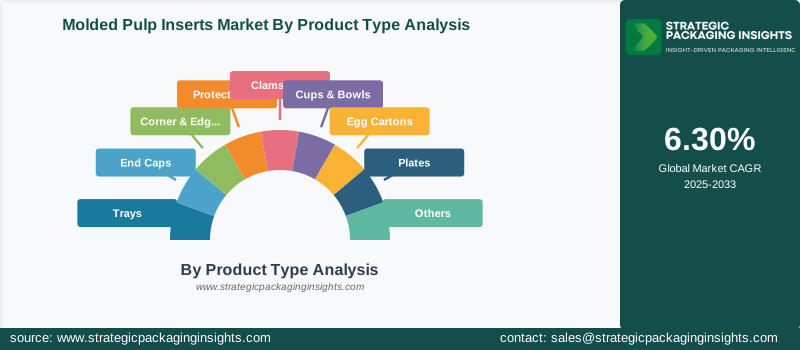
As consumer preferences continue to shift towards eco-friendly products, companies are investing in research and development to create innovative molded pulp products that meet these demands. This includes the development of lightweight and durable packaging solutions that reduce environmental impact and enhance product performance. By focusing on innovation and sustainability, companies can create high-quality products that meet the diverse needs of various industries, from food and beverage to electronics and healthcare. As the market continues to evolve, the demand for innovative molded pulp products is expected to increase, providing significant opportunities for growth and development.
By End Use Analysis
The end-use segment of the molded pulp inserts market is dominated by the food & beverage and electronics industries, reflecting the versatility and adaptability of molded pulp products. In the food & beverage sector, molded pulp inserts are widely used for packaging a variety of products, from fresh produce to ready-to-eat meals. The electronics industry also relies heavily on molded pulp inserts, using them to protect delicate components during transportation and storage. Other key end-use industries include healthcare & medical devices, personal care & cosmetics, industrial, e-commerce & logistics, and automotive.
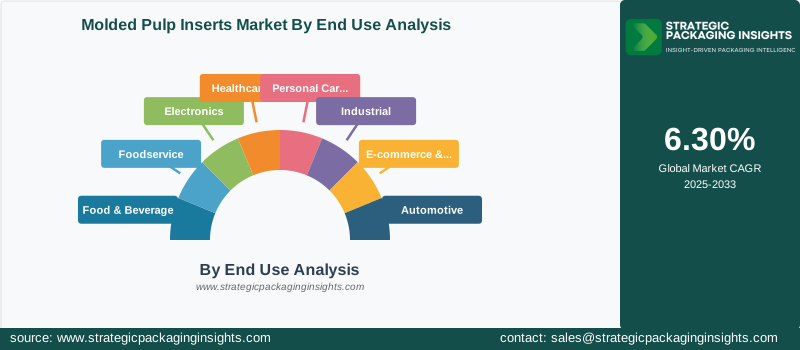
As the demand for sustainable packaging solutions continues to grow, companies are investing in research and development to create innovative molded pulp products that meet the specific needs of various industries. This includes the development of lightweight and durable packaging solutions that reduce environmental impact and enhance product performance. By focusing on innovation and sustainability, companies can create high-quality products that meet the diverse needs of various industries, from food and beverage to electronics and healthcare. As the market continues to evolve, the demand for innovative molded pulp products is expected to increase, providing significant opportunities for growth and development.
Molded Pulp Inserts Market Segments
The Molded Pulp Inserts market has been segmented on the basis ofBy Source Material
- Recycled Paper/Wood Pulp
- Virgin Wood Pulp
- Non-Wood Pulp (Bagasse, Bamboo, Wheat Straw, Agricultural Residues)
- Blended Fiber
By Molded Type
- Thick Wall
- Transfer Molded
- Thermoformed (Thin Wall)
- Processed / Dry Molded Fiber
By Product Type
- Trays
- End Caps
- Corner & Edge Protectors
- Protective Inserts
- Clamshells
- Cups & Bowls
- Egg Cartons
- Plates
- Others
By End Use
- Food & Beverage
- Foodservice
- Electronics
- Healthcare & Medical Devices
- Personal Care & Cosmetics
- Industrial
- E-commerce & Logistics
- Automotive
By Region
- North America (U.S., Canada, Mexico)
- Europe (Germany, UK, France, Italy, Spain, Rest of Europe)
- Asia Pacific (China, India, Japan, South Korea, Australia, Rest of Asia Pacific)
- Latin America (Brazil, Argentina, Rest of Latin America)
- Middle East & Africa (GCC Countries, South Africa, Rest of MEA)




