


Modular Palletizer Cells Market Outlook
The Modular Palletizer Cells market was valued at $2.76 billion in 2025 and is projected to reach $4.92 billion by 2034, growing at a CAGR of 6.6% during the forecast period 2026-2034. This market is witnessing significant growth due to the increasing demand for automation in logistics and manufacturing sectors. The need for efficient and flexible palletizing solutions is driving the adoption of modular palletizer cells across various industries. The integration of advanced technologies such as AI and IoT in palletizing systems is further enhancing their capabilities, making them more adaptable to different operational requirements. As industries strive to improve productivity and reduce labor costs, the demand for modular palletizer cells is expected to rise steadily.
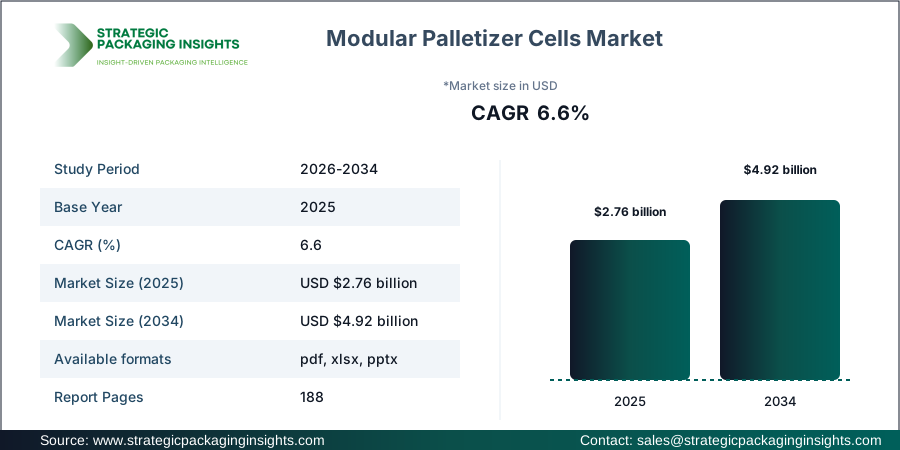
Report Scope
| Attributes | Details |
| Report Title | Modular Palletizer Cells Market Size, Future Growth and Forecast 2034 |
| By System Type | Robotic Palletizer Cells, Layer Palletizers, Collaborative Palletizers |
| By Payload | Light-Duty, Medium-Duty, Heavy-Duty |
| By Application | Food, Beverage, Pharma, E-commerce |
| By End Use | Manufacturing, Logistics, Contract Packers, Warehouses |
| Region | Asia Pacific, North America, Latin America, Europe, Middle East & Africa |
| Base Year | 2025 |
| Historic Period | 2018-2024 |
| Forecast Period | 2026-2034 |
| Number of Pages | 188 |
| Customization Available | Yes* |
Opportunities & Threats
One of the key opportunities in the Modular Palletizer Cells market lies in the growing e-commerce sector. With the surge in online shopping, there is an increasing need for efficient warehousing and logistics solutions. Modular palletizer cells offer the flexibility and efficiency required to handle the diverse range of products and packaging sizes typical in e-commerce operations. Additionally, the trend towards customization and personalization in consumer goods is driving the demand for adaptable palletizing solutions that can handle varied product configurations. This presents a significant growth opportunity for manufacturers of modular palletizer cells.
Another opportunity is the increasing focus on sustainability and energy efficiency in industrial operations. Modular palletizer cells are designed to optimize energy usage and reduce waste, aligning with the sustainability goals of many organizations. The adoption of eco-friendly technologies in palletizing systems is expected to gain traction, providing a competitive edge to companies that prioritize sustainability. Furthermore, the development of collaborative palletizers that can work alongside human operators is opening up new possibilities for enhancing productivity and safety in manufacturing environments.
However, the market faces certain restrainers, such as the high initial investment required for the installation of modular palletizer cells. Small and medium-sized enterprises may find it challenging to afford these systems, which could limit market growth. Additionally, the complexity of integrating modular palletizer cells with existing production lines and systems can pose a challenge for some organizations. The need for skilled personnel to operate and maintain these advanced systems is another factor that could hinder market expansion.
Drivers & Challenges
The primary driver of the Modular Palletizer Cells market is the increasing demand for automation in the manufacturing and logistics sectors. As companies seek to enhance operational efficiency and reduce labor costs, the adoption of automated palletizing solutions is becoming more prevalent. Modular palletizer cells offer the flexibility and scalability needed to meet the diverse requirements of different industries, making them an attractive option for businesses looking to streamline their operations.
Another significant driver is the advancement in technology, particularly in robotics and artificial intelligence. The integration of AI and machine learning algorithms in palletizing systems is enabling more precise and efficient operations. These technologies allow modular palletizer cells to adapt to changing production needs and optimize their performance, leading to increased productivity and reduced downtime. The ability to handle a wide range of products and packaging configurations is also a key factor driving the adoption of these systems.
Despite the positive drivers, the market faces challenges such as the high cost of implementation and maintenance. The initial investment required for modular palletizer cells can be substantial, which may deter some companies from adopting these systems. Additionally, the complexity of integrating these systems with existing production lines can pose a challenge, particularly for organizations with limited technical expertise. The need for ongoing maintenance and updates to keep the systems running efficiently is another factor that could impact market growth.
Market Share Analysis
The competitive landscape of the Modular Palletizer Cells market is characterized by the presence of several key players who are driving innovation and growth in the industry. Companies such as ABB, FANUC, KUKA, and Yaskawa are leading the market with their advanced robotic solutions and extensive industry experience. These companies are continuously investing in research and development to enhance the capabilities of their palletizing systems and maintain their competitive edge.
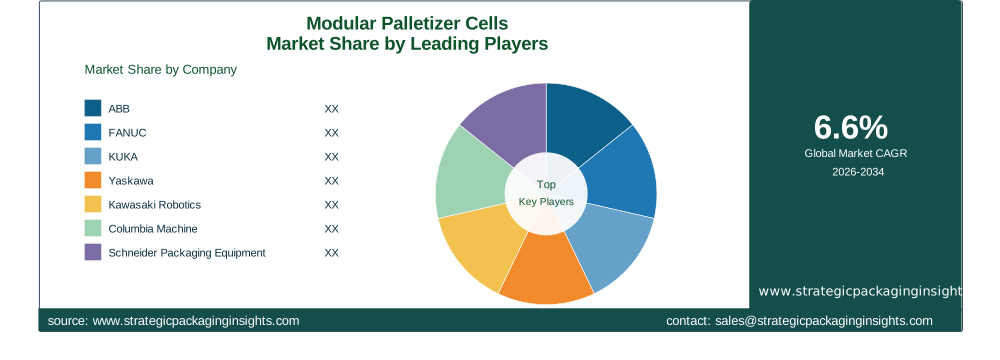
ABB is a prominent player in the market, known for its innovative robotic solutions that cater to a wide range of industries. The company's focus on integrating AI and IoT technologies into its palletizing systems has positioned it as a leader in the market. FANUC, another major player, is renowned for its high-performance robotic systems that offer precision and reliability. The company's extensive product portfolio and strong global presence make it a key competitor in the market.
KUKA is also a significant player in the Modular Palletizer Cells market, offering a range of robotic solutions that are designed to enhance productivity and efficiency. The company's commitment to innovation and customer satisfaction has helped it establish a strong foothold in the market. Yaskawa, known for its advanced motion control technologies, is another key player that is driving growth in the market. The company's focus on developing collaborative robots that can work alongside human operators is opening up new opportunities for growth.
Other notable companies in the market include Kawasaki Robotics, Columbia Machine, Schneider Packaging Equipment, Premier Tech, BW Packaging, and Brenton Engineering. These companies are leveraging their expertise and technological capabilities to offer innovative palletizing solutions that meet the evolving needs of their customers. The competitive landscape is expected to remain dynamic, with companies focusing on strategic partnerships and collaborations to expand their market presence and enhance their product offerings.
Key Highlights
- The Modular Palletizer Cells market is projected to grow at a CAGR of 6.6% from 2026 to 2034.
- Increasing demand for automation in logistics and manufacturing is driving market growth.
- Advancements in AI and IoT technologies are enhancing the capabilities of palletizing systems.
- The e-commerce sector presents significant growth opportunities for modular palletizer cells.
- High initial investment costs and integration challenges are key restrainers for the market.
- Key players in the market include ABB, FANUC, KUKA, and Yaskawa.
- The focus on sustainability and energy efficiency is driving the adoption of eco-friendly palletizing solutions.
Top Countries Insights
In the Modular Palletizer Cells market, the United States is a leading country, with a market size of approximately $1.2 billion and a CAGR of 5%. The country's strong manufacturing sector and focus on automation are key drivers of market growth. Government initiatives to promote advanced manufacturing technologies are also contributing to the market's expansion. However, the high cost of implementation and the need for skilled labor are challenges that could impact growth.
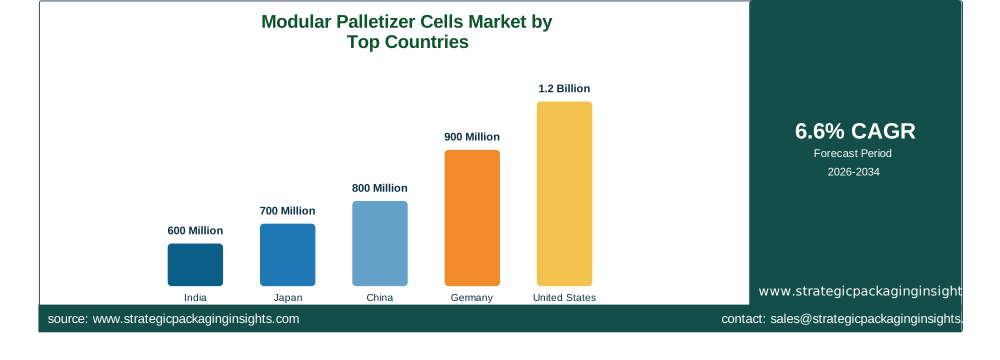
Germany is another significant market, with a market size of around $900 million and a CAGR of 6%. The country's strong industrial base and emphasis on innovation are driving the adoption of modular palletizer cells. The presence of leading robotics companies and a focus on Industry 4.0 initiatives are further supporting market growth. However, regulatory challenges and the need for skilled personnel are potential barriers to market expansion.
China is experiencing rapid growth in the Modular Palletizer Cells market, with a market size of approximately $800 million and a CAGR of 8%. The country's booming e-commerce sector and increasing focus on automation in manufacturing are key growth drivers. Government support for industrial automation and the presence of a large manufacturing base are also contributing to market growth. However, the high cost of advanced technologies and integration challenges are potential obstacles.
Japan is a key player in the market, with a market size of around $700 million and a CAGR of 4%. The country's strong focus on robotics and automation, coupled with its advanced manufacturing capabilities, are driving market growth. The presence of leading robotics companies and a culture of innovation are further supporting the market's expansion. However, demographic challenges and a shrinking workforce could impact future growth.
India is emerging as a promising market, with a market size of approximately $600 million and a CAGR of 7%. The country's growing manufacturing sector and increasing adoption of automation technologies are key drivers of market growth. Government initiatives to promote industrial automation and the presence of a large workforce are also contributing to the market's expansion. However, infrastructure challenges and the need for skilled personnel are potential barriers to growth.
Modular Palletizer Cells Market Segments Insights

System Type Analysis
The system type segment of the Modular Palletizer Cells market is categorized into robotic palletizer cells, layer palletizers, and collaborative palletizers. Robotic palletizer cells are gaining traction due to their flexibility and efficiency in handling various packaging configurations. These systems are particularly popular in industries with high-volume production requirements, such as food and beverage. The integration of advanced robotics and AI technologies is enhancing the capabilities of these systems, making them more adaptable to different operational needs.
Layer palletizers, on the other hand, are preferred for their ability to handle heavy loads and large volumes. These systems are commonly used in industries such as logistics and manufacturing, where the need for efficient and reliable palletizing solutions is paramount. The development of advanced layer palletizers with improved speed and accuracy is driving their adoption in the market. Collaborative palletizers, which are designed to work alongside human operators, are also gaining popularity due to their ability to enhance productivity and safety in manufacturing environments.
Payload Analysis
The payload segment of the Modular Palletizer Cells market is divided into light-duty, medium-duty, and heavy-duty systems. Light-duty palletizers are ideal for handling small and lightweight products, making them suitable for industries such as e-commerce and pharmaceuticals. These systems offer the flexibility and precision needed to handle a wide range of product sizes and configurations, driving their adoption in the market.
Medium-duty palletizers are designed to handle moderate loads and are commonly used in industries such as food and beverage. These systems offer a balance between speed and load capacity, making them suitable for a variety of applications. Heavy-duty palletizers, on the other hand, are built to handle large and heavy loads, making them ideal for industries such as logistics and manufacturing. The development of advanced heavy-duty palletizers with improved load capacity and efficiency is driving their adoption in the market.
Application Analysis
The application segment of the Modular Palletizer Cells market includes food, beverage, pharma, and e-commerce. The food industry is a major driver of market growth, with the increasing demand for efficient and reliable palletizing solutions. The need for automation in food processing and packaging is driving the adoption of modular palletizer cells in this industry. The beverage industry is also a significant contributor to market growth, with the need for efficient handling and packaging solutions driving the demand for palletizing systems.
The pharmaceutical industry is experiencing rapid growth in the adoption of modular palletizer cells, driven by the need for precision and reliability in handling sensitive products. The e-commerce sector is also a key driver of market growth, with the increasing demand for efficient warehousing and logistics solutions. The flexibility and adaptability of modular palletizer cells make them ideal for handling the diverse range of products and packaging sizes typical in e-commerce operations.
End Use Analysis
The end-use segment of the Modular Palletizer Cells market includes manufacturing, logistics, contract packers, and warehouses. The manufacturing sector is a major driver of market growth, with the increasing demand for automation and efficiency in production processes. The need for reliable and efficient palletizing solutions is driving the adoption of modular palletizer cells in this sector.
The logistics industry is also a significant contributor to market growth, with the need for efficient handling and transportation solutions driving the demand for palletizing systems. Contract packers and warehouses are also key end-users of modular palletizer cells, with the need for flexibility and adaptability in handling a wide range of products and packaging configurations. The development of advanced palletizing systems with improved speed and accuracy is driving their adoption in these industries.
Modular Palletizer Cells Market Segments
The Modular Palletizer Cells market has been segmented on the basis ofBy System Type
- Robotic Palletizer Cells
- Layer Palletizers
- Collaborative Palletizers
By Payload
- Light-Duty
- Medium-Duty
- Heavy-Duty
By Application
- Food
- Beverage
- Pharma
- E-commerce
By End Use
- Manufacturing
- Logistics
- Contract Packers
- Warehouses
Region
- Asia Pacific
- North America
- Latin America
- Europe
- Middle East & Africa




