


Mining Product Packaging Market Outlook
The mining product packaging market was valued at $3.5 billion in 2024 and is projected to reach $5.8 billion by 2033, growing at a CAGR of 5.2% during the forecast period 2025-2033. This market is driven by the increasing demand for efficient and sustainable packaging solutions in the mining industry. As mining operations expand globally, the need for robust packaging that can withstand harsh conditions and protect valuable resources becomes paramount. The market is also influenced by the growing emphasis on reducing environmental impact, leading to innovations in eco-friendly packaging materials and designs.
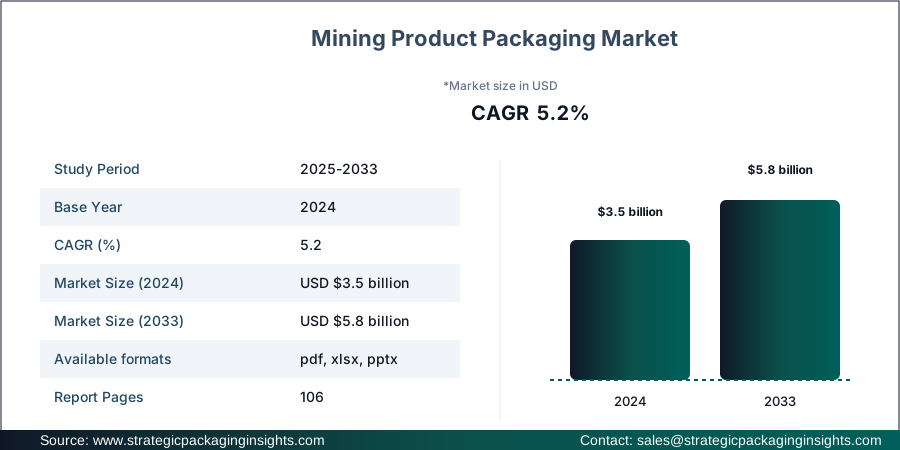
However, the market faces challenges such as stringent regulatory requirements and fluctuating raw material prices, which can impact the cost-effectiveness of packaging solutions. Despite these challenges, the market holds significant growth potential due to advancements in packaging technologies and the increasing adoption of automation in packaging processes. The integration of smart packaging solutions that offer real-time tracking and monitoring capabilities is expected to further drive market growth, providing mining companies with enhanced operational efficiency and safety.
Report Scope
| Attributes | Details |
| Report Title | Mining Product Packaging Market Size, Future Growth and Forecast 2033 |
| Material Type | Plastic, Metal, Paper & Cardboard, Others |
| Application | Minerals, Metals, Coal, Others |
| Packaging Type | Bags, Drums, Containers, Others |
| End-User | Mining Companies, Distributors, Others |
| Base Year | 2024 |
| Historic Period | 2017-2023 |
| Forecast Period | 2025-2033 |
| Number of Pages | 106 |
| Customization Available | Yes* |
Opportunities & Threats
The mining product packaging market presents numerous opportunities, particularly in the development of sustainable and eco-friendly packaging solutions. As environmental concerns continue to rise, there is a growing demand for packaging materials that are biodegradable and recyclable. Companies that invest in research and development to create innovative packaging solutions that meet these criteria are likely to gain a competitive edge. Additionally, the increasing adoption of digital technologies in the mining sector offers opportunities for the integration of smart packaging solutions that enhance supply chain transparency and efficiency.
Another significant opportunity lies in the expansion of mining activities in emerging economies. As countries in regions such as Asia Pacific and Latin America continue to develop their mining sectors, the demand for effective packaging solutions is expected to rise. Companies that can establish a strong presence in these markets and offer tailored packaging solutions that meet local needs and regulations will be well-positioned to capitalize on this growth. Furthermore, partnerships and collaborations with mining companies can provide packaging manufacturers with valuable insights into industry-specific requirements, enabling them to develop more targeted and effective solutions.
Despite these opportunities, the market also faces threats from regulatory challenges and economic uncertainties. Stringent regulations regarding packaging materials and waste management can increase compliance costs for manufacturers, potentially impacting profitability. Additionally, economic fluctuations and geopolitical tensions can affect mining activities and, consequently, the demand for packaging solutions. Companies must navigate these challenges by staying informed about regulatory changes and adopting flexible strategies that allow them to quickly adapt to market shifts.
Drivers & Challenges
One of the primary drivers of the mining product packaging market is the increasing focus on sustainability and environmental responsibility. As mining companies strive to reduce their carbon footprint and minimize environmental impact, there is a growing demand for packaging solutions that are not only durable but also environmentally friendly. This has led to the development of innovative materials and designs that prioritize recyclability and biodegradability, driving market growth. Additionally, the rise of digitalization in the mining sector is driving the adoption of smart packaging solutions that offer enhanced tracking and monitoring capabilities, further boosting market demand.
Another key driver is the expansion of mining activities in developing regions. As countries in Asia Pacific, Africa, and Latin America continue to invest in their mining sectors, the demand for effective packaging solutions is expected to increase. This presents significant growth opportunities for packaging manufacturers that can offer tailored solutions to meet the specific needs of these markets. Furthermore, advancements in packaging technologies, such as the use of automation and robotics, are enhancing the efficiency and cost-effectiveness of packaging processes, making them more attractive to mining companies.
However, the market also faces several challenges, including regulatory hurdles and economic volatility. Stringent regulations regarding packaging materials and waste management can increase compliance costs for manufacturers, potentially impacting profitability. Additionally, fluctuations in raw material prices can affect the cost-effectiveness of packaging solutions, posing a challenge for companies operating in this market. To overcome these challenges, companies must invest in research and development to create innovative and cost-effective packaging solutions that meet regulatory requirements and adapt to changing market conditions.
Market Share Analysis
The competitive landscape of the mining product packaging market is characterized by the presence of several key players that hold significant market shares. These companies are focused on expanding their product portfolios and enhancing their market presence through strategic partnerships and acquisitions. The market is highly competitive, with companies striving to differentiate themselves through innovation and the development of sustainable packaging solutions. As the demand for eco-friendly and efficient packaging solutions continues to rise, companies that can offer innovative and cost-effective products are likely to gain a competitive advantage.
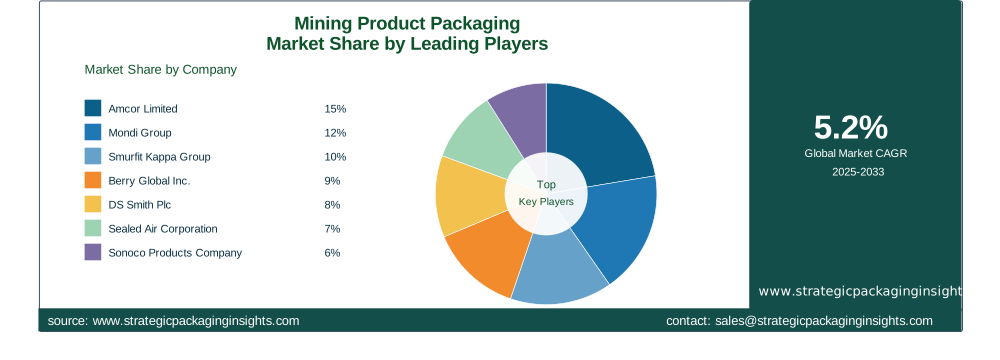
Some of the major companies operating in this market include Amcor Limited, Mondi Group, Smurfit Kappa Group, Berry Global Inc., and DS Smith Plc. Amcor Limited is a leading player in the market, known for its extensive range of packaging solutions and commitment to sustainability. The company has a strong global presence and is focused on expanding its product offerings to meet the evolving needs of the mining industry. Mondi Group is another key player, recognized for its innovative packaging solutions and emphasis on environmental responsibility. The company has a robust R&D program and is actively involved in developing sustainable packaging materials.
Smurfit Kappa Group is a prominent player in the market, offering a wide range of packaging solutions for the mining industry. The company is known for its focus on innovation and sustainability, with a strong commitment to reducing its environmental impact. Berry Global Inc. is another major player, providing a diverse range of packaging products and solutions. The company has a strong focus on customer satisfaction and is dedicated to delivering high-quality and sustainable packaging solutions. DS Smith Plc is also a key player in the market, known for its innovative packaging designs and commitment to sustainability.
Other notable companies in the market include Sealed Air Corporation, Sonoco Products Company, WestRock Company, International Paper Company, and Graphic Packaging International. These companies are focused on expanding their market presence through strategic partnerships and acquisitions, as well as investing in research and development to create innovative and sustainable packaging solutions. As the market continues to evolve, companies that can offer differentiated and cost-effective products are likely to gain a competitive edge.
Key Highlights
- The mining product packaging market is projected to grow at a CAGR of 5.2% from 2025 to 2033.
- Increasing demand for sustainable and eco-friendly packaging solutions is driving market growth.
- Advancements in packaging technologies, such as automation and smart packaging, are enhancing market demand.
- Expansion of mining activities in developing regions presents significant growth opportunities.
- Stringent regulatory requirements and economic volatility pose challenges for market players.
- Key players in the market include Amcor Limited, Mondi Group, Smurfit Kappa Group, Berry Global Inc., and DS Smith Plc.
- Companies are focused on innovation and sustainability to gain a competitive edge.
Top Countries Insights
In the mining product packaging market, the United States holds a significant share, with a market size of $1.2 billion and a CAGR of 4%. The country's well-established mining sector and focus on sustainability drive demand for innovative packaging solutions. Government regulations promoting eco-friendly practices further support market growth. In China, the market is valued at $900 million, with a CAGR of 6%. The rapid expansion of mining activities and increasing environmental awareness are key growth drivers. The government's emphasis on sustainable development and technological advancements in packaging also contribute to market expansion.
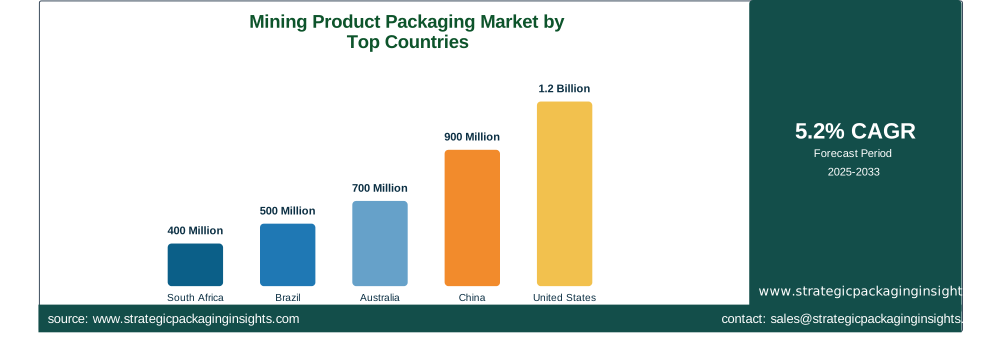
Australia, with a market size of $700 million and a CAGR of 5%, is another key player in the mining product packaging market. The country's robust mining industry and focus on reducing environmental impact drive demand for sustainable packaging solutions. The government's support for innovation and investment in R&D further boosts market growth. In Brazil, the market is valued at $500 million, with a CAGR of 7%. The country's growing mining sector and increasing focus on sustainability are key growth drivers. Government initiatives to promote eco-friendly practices and technological advancements in packaging also contribute to market expansion.
South Africa, with a market size of $400 million and a CAGR of 5%, is a significant player in the mining product packaging market. The country's well-established mining industry and focus on sustainability drive demand for innovative packaging solutions. Government regulations promoting eco-friendly practices further support market growth. The increasing adoption of digital technologies in the mining sector also contributes to market expansion.
Evolving Market Dynamics (2018-2024) and Strategic Foresight (2025-2033)
| Metric | 2018-2024 | 2025-2033 |
|---|---|---|
| CAGR | 4.5% | 5.2% |
| Market Size Evolution | $2.8 billion to $3.5 billion | $3.5 billion to $5.8 billion |
| Segment Distribution Shifts | Increased demand for plastic and metal packaging | Rising demand for eco-friendly materials |
| Regional Contribution Changes | Dominance of North America and Europe | Growth in Asia Pacific and Latin America |
| Technological Impact Factors | Introduction of automation | Integration of smart packaging solutions |
| Client Demand Transformations | Focus on durability and cost-effectiveness | Emphasis on sustainability and innovation |
Mining Product Packaging Market Segments Insights

Material Type Analysis
The material type segment in the mining product packaging market is crucial as it determines the durability and environmental impact of the packaging solutions. Plastic packaging, known for its lightweight and cost-effectiveness, remains a popular choice among mining companies. However, the increasing environmental concerns and regulatory pressures are driving the shift towards more sustainable materials such as paper and cardboard. These materials offer recyclability and biodegradability, aligning with the industry's growing focus on sustainability. Metal packaging, known for its robustness and ability to withstand harsh conditions, is also gaining traction, particularly in regions with extreme climates.
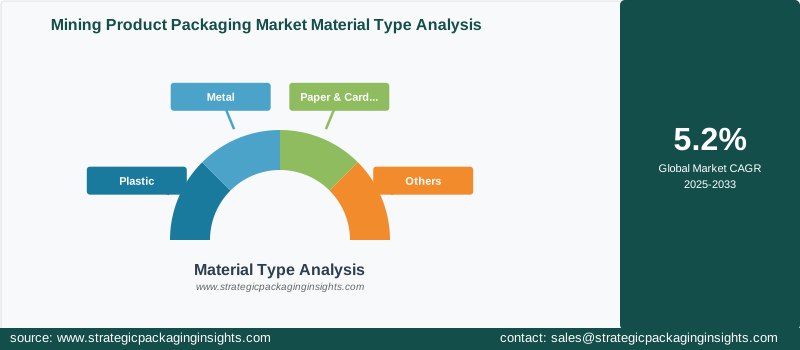
Innovations in material technology are further enhancing the performance and sustainability of packaging solutions. The development of bio-based plastics and advanced composites is providing mining companies with more eco-friendly options without compromising on durability. As the demand for sustainable packaging solutions continues to rise, companies that can offer innovative materials that meet regulatory requirements and environmental standards are likely to gain a competitive edge. The material type segment is expected to witness significant growth, driven by the increasing adoption of sustainable materials and advancements in material technology.
Application Analysis
The application segment of the mining product packaging market is diverse, encompassing various types of mining products such as minerals, metals, and coal. Each application has specific packaging requirements based on the nature of the product and the conditions it will be exposed to during transportation and storage. For instance, packaging for minerals often requires moisture-resistant materials to prevent degradation, while metal packaging needs to be robust enough to withstand heavy loads and harsh environmental conditions. The coal segment, on the other hand, demands packaging solutions that minimize dust generation and ensure safe handling.
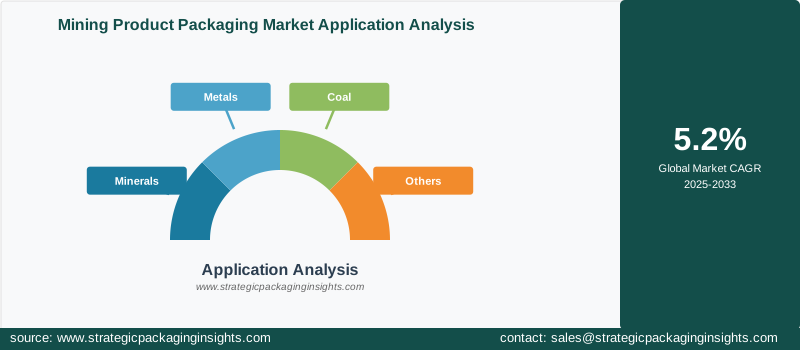
As mining activities expand globally, the demand for tailored packaging solutions that meet the specific needs of different applications is expected to rise. Companies that can offer customized solutions that enhance the safety and efficiency of mining operations are likely to gain a competitive advantage. The application segment is also witnessing innovations in packaging design and materials, driven by the need for more sustainable and efficient solutions. As the industry continues to evolve, the application segment is expected to play a critical role in shaping the future of the mining product packaging market.
Packaging Type Analysis
The packaging type segment in the mining product packaging market includes various forms such as bags, drums, and containers, each serving specific purposes based on the nature of the mining product. Bags are commonly used for smaller quantities and are favored for their flexibility and ease of handling. Drums, known for their durability and ability to protect contents from external elements, are often used for transporting liquids and bulk materials. Containers, offering robust protection and ease of transportation, are widely used for large quantities and long-distance shipping.
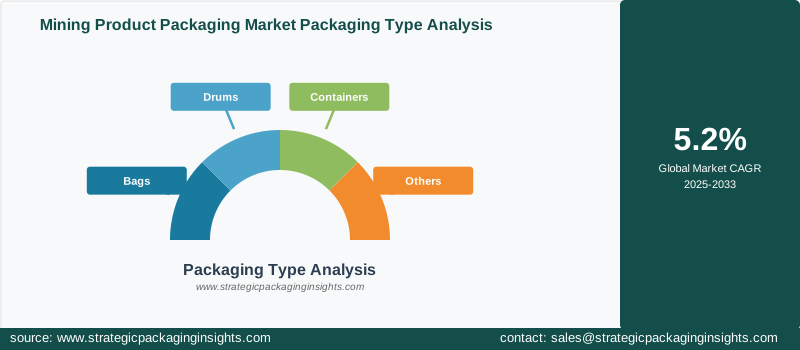
As the demand for efficient and sustainable packaging solutions continues to rise, companies are investing in the development of innovative packaging types that enhance operational efficiency and reduce environmental impact. The integration of smart technologies, such as RFID tags and sensors, is also transforming the packaging type segment, providing mining companies with real-time tracking and monitoring capabilities. As the industry continues to evolve, the packaging type segment is expected to witness significant growth, driven by advancements in packaging technologies and the increasing adoption of smart solutions.
End-User Analysis
The end-user segment of the mining product packaging market is primarily composed of mining companies and distributors, each with specific packaging requirements based on their operational needs. Mining companies, focused on enhancing operational efficiency and reducing environmental impact, are increasingly demanding sustainable and innovative packaging solutions. Distributors, on the other hand, require packaging solutions that ensure the safe and efficient transportation of mining products to various locations.
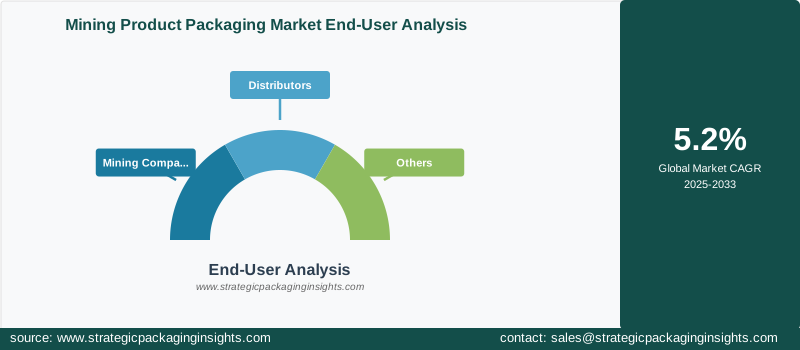
As the mining industry continues to evolve, the end-user segment is witnessing significant changes, driven by the increasing focus on sustainability and efficiency. Companies that can offer tailored solutions that meet the specific needs of different end-users are likely to gain a competitive advantage. The end-user segment is also witnessing the integration of digital technologies, providing mining companies and distributors with enhanced tracking and monitoring capabilities. As the industry continues to evolve, the end-user segment is expected to play a critical role in shaping the future of the mining product packaging market.
Mining Product Packaging Market Segments
The Mining Product Packaging market has been segmented on the basis ofMaterial Type
- Plastic
- Metal
- Paper & Cardboard
- Others
Application
- Minerals
- Metals
- Coal
- Others
Packaging Type
- Bags
- Drums
- Containers
- Others
End-User
- Mining Companies
- Distributors
- Others




