


Milk Powder Packaging Market Outlook
The Milk Powder Packaging market was valued at $2.46 billion in 2025 and is projected to reach $3.39 billion by 2034, growing at a CAGR of 3.6% during the forecast period 2026-2034. This market is witnessing a steady growth trajectory driven by the increasing demand for milk powder products across various applications such as infant formula, dairy powders, and nutritional supplements. The rising global population, coupled with an increasing preference for convenient and long-lasting dairy products, is fueling the demand for effective packaging solutions. Moreover, advancements in packaging technologies that enhance product shelf life and maintain nutritional quality are further propelling market growth. The market is also benefiting from the growing trend of urbanization and the rising disposable incomes in emerging economies, which are leading to increased consumption of packaged food products.
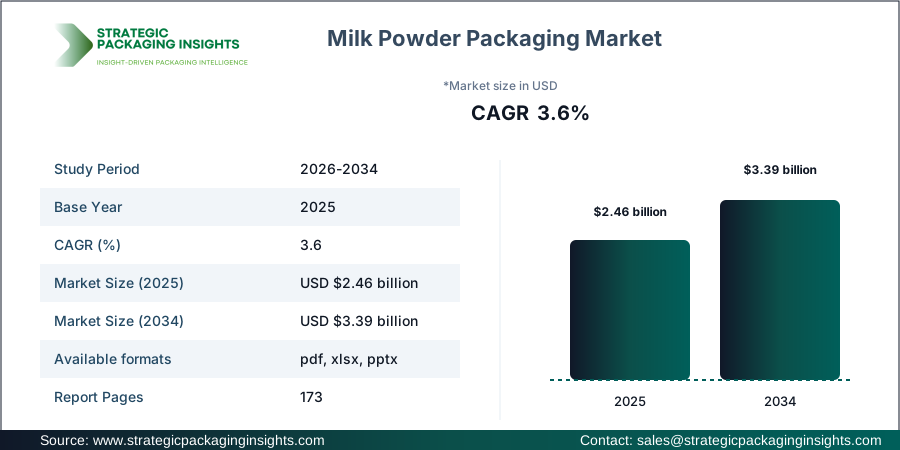
However, the market faces certain challenges that could hinder its growth potential. Regulatory constraints related to packaging materials, especially concerning environmental sustainability, are becoming more stringent, which could impact the market dynamics. Additionally, the fluctuating prices of raw materials used in packaging, such as metals and plastics, pose a significant challenge to manufacturers. Despite these challenges, the market holds substantial growth potential, particularly with the increasing focus on eco-friendly and recyclable packaging solutions. Companies are investing in research and development to innovate sustainable packaging options that comply with environmental regulations while meeting consumer demands for convenience and safety.
Report Scope
| Attributes | Details |
| Report Title | Milk Powder Packaging Market Size, Future Growth and Forecast 2034 |
| By Packaging Type | Cans, Pouches, Sachets, Composite Containers |
| By Material Type | Metal, Plastic Laminates, Paperboard, Aluminum Foil Laminates |
| By Application | Infant Formula, Dairy Powders, Nutritional Powders, Food Ingredients |
| By End Use | Dairy Companies, Infant Nutrition Brands, Food Processors, Retail |
| Region | Asia Pacific, North America, Latin America, Europe, Middle East & Africa |
| Base Year | 2025 |
| Historic Period | 2018-2024 |
| Forecast Period | 2026-2034 |
| Number of Pages | 173 |
| Customization Available | Yes* |
Opportunities & Threats
The Milk Powder Packaging market presents numerous opportunities for growth, primarily driven by the increasing demand for infant formula and nutritional powders. As more parents seek convenient and reliable nutrition options for their infants, the demand for milk powder packaging that ensures product safety and quality is on the rise. This trend is particularly prominent in developing regions where urbanization and changing lifestyles are leading to a higher reliance on packaged food products. Additionally, the growing awareness about the nutritional benefits of milk powders among health-conscious consumers is driving the demand for innovative packaging solutions that preserve the product's nutritional integrity.
Another significant opportunity lies in the development of sustainable packaging solutions. With increasing environmental concerns and regulatory pressures, there is a growing demand for eco-friendly packaging materials that reduce carbon footprints and are easily recyclable. Companies that can innovate and offer sustainable packaging options are likely to gain a competitive edge in the market. Furthermore, advancements in packaging technologies, such as smart packaging that provides real-time information about product quality and shelf life, are opening new avenues for market players to differentiate their offerings and enhance consumer engagement.
Despite these opportunities, the market faces threats from regulatory challenges and fluctuating raw material prices. Stringent regulations regarding the use of certain packaging materials, especially plastics, are compelling manufacturers to seek alternative solutions, which could increase production costs. Additionally, the volatility in the prices of raw materials like metals and plastics can impact profit margins and pose a risk to market stability. Companies need to strategically manage their supply chains and invest in cost-effective materials to mitigate these threats and sustain their market position.
Drivers & Challenges
The primary drivers of the Milk Powder Packaging market include the rising demand for convenient and long-lasting dairy products, particularly in urban areas. The increasing global population and the growing middle-class segment in emerging economies are contributing to higher consumption of milk powder products, thereby driving the demand for effective packaging solutions. Additionally, advancements in packaging technologies that enhance product shelf life and maintain nutritional quality are further propelling market growth. The trend towards urbanization and the rising disposable incomes in emerging economies are also leading to increased consumption of packaged food products, which in turn boosts the demand for milk powder packaging.
Another significant driver is the growing awareness about the nutritional benefits of milk powders among health-conscious consumers. As consumers become more health-conscious, there is a rising demand for nutritional supplements and fortified food products, which is driving the need for innovative packaging solutions that preserve the product's nutritional integrity. Moreover, the increasing focus on eco-friendly and recyclable packaging solutions is creating new growth opportunities for market players. Companies are investing in research and development to innovate sustainable packaging options that comply with environmental regulations while meeting consumer demands for convenience and safety.
However, the market faces challenges such as regulatory constraints related to packaging materials, especially concerning environmental sustainability. These regulations are becoming more stringent, which could impact the market dynamics. Additionally, the fluctuating prices of raw materials used in packaging, such as metals and plastics, pose a significant challenge to manufacturers. Companies need to strategically manage their supply chains and invest in cost-effective materials to mitigate these challenges and sustain their market position. Despite these challenges, the market holds substantial growth potential, particularly with the increasing focus on eco-friendly and recyclable packaging solutions.
Market Share Analysis
The Milk Powder Packaging market is characterized by a competitive landscape with several key players striving to gain a significant market share. Companies such as Amcor, Mondi, Tetra Pak, Sonoco, Huhtamaki, Berry Global, Constantia Flexibles, UFlex, Trivium Packaging, and Silgan Holdings are some of the prominent players in this market. These companies are focusing on strategic initiatives such as mergers and acquisitions, partnerships, and product innovations to strengthen their market position and expand their product portfolios. The competitive landscape is also marked by the presence of several regional players who are catering to the specific needs of local markets.
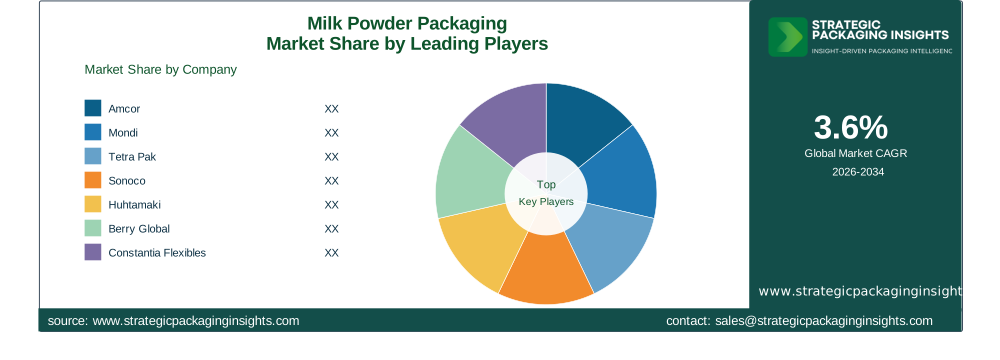
Amcor, a leading player in the packaging industry, holds a significant market share due to its extensive product portfolio and strong global presence. The company is known for its innovative packaging solutions that cater to various industries, including food and beverage, healthcare, and personal care. Mondi, another key player, is recognized for its sustainable packaging solutions and has a strong focus on environmental sustainability. The company is actively investing in research and development to innovate eco-friendly packaging options that meet the evolving consumer demands.
Tetra Pak, a pioneer in the packaging industry, is renowned for its aseptic packaging solutions that ensure product safety and quality. The company has a strong presence in the milk powder packaging market and is continuously expanding its product offerings to cater to the growing demand for convenient and sustainable packaging solutions. Sonoco, with its diverse product portfolio, is another major player in the market. The company is focusing on expanding its presence in emerging markets and enhancing its product offerings to meet the changing consumer preferences.
Huhtamaki, Berry Global, and Constantia Flexibles are also key players in the milk powder packaging market, known for their innovative and sustainable packaging solutions. These companies are investing in advanced technologies and sustainable materials to enhance their product offerings and gain a competitive edge in the market. UFlex, Trivium Packaging, and Silgan Holdings are other notable players that are actively participating in the market through strategic initiatives and product innovations. The competitive landscape of the milk powder packaging market is dynamic, with companies continuously striving to innovate and offer value-added solutions to meet the evolving consumer demands.
Key Highlights
- The Milk Powder Packaging market is projected to grow from $2.46 billion in 2025 to $3.39 billion by 2034, at a CAGR of 3.6%.
- Key drivers include rising demand for convenient dairy products, urbanization, and advancements in packaging technologies.
- Opportunities lie in sustainable packaging solutions and smart packaging technologies.
- Challenges include regulatory constraints and fluctuating raw material prices.
- Amcor, Mondi, and Tetra Pak are leading players in the market.
- Eco-friendly packaging is gaining traction due to environmental concerns.
- Emerging markets offer significant growth potential for market players.
- Companies are focusing on strategic initiatives to strengthen their market position.
- Technological advancements are driving innovation in packaging solutions.
- Consumer demand for nutritional integrity is influencing packaging trends.
Top Countries Insights
In the Milk Powder Packaging market, the United States stands out as a key player with a market size of approximately $XX billion and a CAGR of 4%. The country's robust dairy industry and high consumption of milk powder products drive the demand for innovative packaging solutions. The focus on sustainability and eco-friendly packaging is a significant growth driver, with companies investing in recyclable materials to meet regulatory standards and consumer preferences. However, challenges such as fluctuating raw material prices and stringent regulations pose potential hurdles for market players.
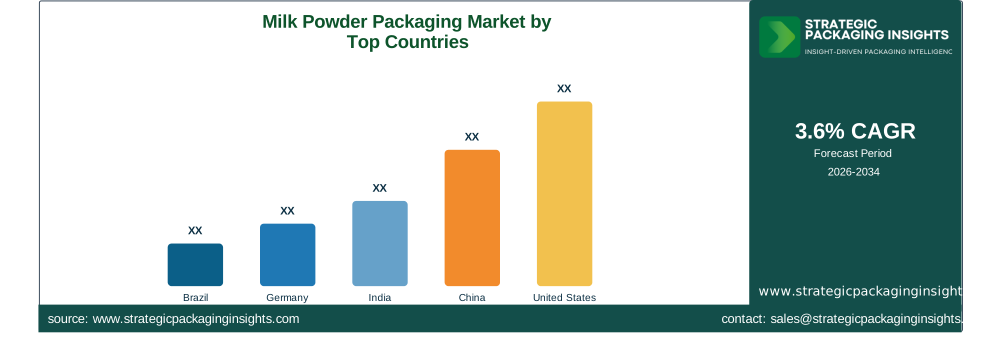
China, with its rapidly growing population and increasing urbanization, presents a lucrative market for milk powder packaging. The market size is estimated at $XX billion, with a CAGR of 5%. The rising demand for infant formula and nutritional supplements is a major growth driver, supported by government initiatives to promote domestic dairy production. However, the market faces challenges related to environmental regulations and the need for sustainable packaging solutions. Companies are focusing on innovation and strategic partnerships to capitalize on the growing demand.
India, with a market size of $XX billion and a CAGR of 6%, is another significant player in the milk powder packaging market. The country's expanding middle class and increasing health consciousness among consumers are driving the demand for packaged dairy products. The government's focus on boosting the dairy sector and promoting sustainable packaging practices is further supporting market growth. However, challenges such as supply chain inefficiencies and regulatory hurdles need to be addressed to fully realize the market's potential.
Germany, with its strong dairy industry and emphasis on quality, is a key market for milk powder packaging in Europe. The market size is approximately $XX billion, with a CAGR of 3%. The demand for high-quality and sustainable packaging solutions is driven by consumer preferences and stringent environmental regulations. Companies are investing in advanced technologies and eco-friendly materials to meet these demands and maintain their competitive edge in the market.
Brazil, with a market size of $XX billion and a CAGR of 4%, is a growing market for milk powder packaging in Latin America. The increasing consumption of dairy products and the rising demand for convenient packaging solutions are key growth drivers. However, challenges such as economic instability and regulatory complexities pose potential risks for market players. Companies are focusing on strategic initiatives and product innovations to navigate these challenges and capitalize on the market's growth potential.
Milk Powder Packaging Market Segments Insights

Packaging Type Analysis
The Milk Powder Packaging market is segmented by packaging type into cans, pouches, sachets, and composite containers. Cans are a traditional packaging solution, offering durability and protection against external factors. They are widely used for infant formula and nutritional powders due to their ability to preserve product quality and extend shelf life. However, the demand for flexible packaging solutions like pouches and sachets is on the rise, driven by consumer preferences for convenience and portability. Pouches and sachets are lightweight, easy to handle, and offer cost-effective packaging solutions, making them popular choices among manufacturers and consumers alike.
Composite containers are gaining traction in the market due to their versatility and ability to provide a barrier against moisture and oxygen. These containers are particularly suitable for dairy powders and food ingredients, where maintaining product integrity is crucial. The growing focus on sustainability is also influencing packaging type preferences, with companies exploring eco-friendly materials and designs to reduce environmental impact. As consumer demand for convenient and sustainable packaging solutions continues to grow, manufacturers are investing in innovative packaging technologies to meet these evolving needs.
Material Type Analysis
The material type segment of the Milk Powder Packaging market includes metal, plastic laminates, paperboard, and aluminum foil laminates. Metal packaging, particularly tin cans, is favored for its strength and ability to protect contents from contamination. However, the environmental impact of metal packaging is a concern, leading to increased interest in alternative materials. Plastic laminates offer flexibility and cost-effectiveness, making them a popular choice for pouches and sachets. Despite concerns about plastic waste, advancements in biodegradable and recyclable plastics are addressing environmental challenges.
Paperboard and aluminum foil laminates are gaining popularity due to their sustainability and ability to provide effective barriers against moisture and light. Paperboard is particularly favored for its recyclability and is used in composite containers and cartons. Aluminum foil laminates offer excellent protection against external factors and are used in high-barrier packaging applications. As sustainability becomes a key focus, companies are investing in research and development to innovate materials that balance performance with environmental responsibility, catering to the growing demand for eco-friendly packaging solutions.
Application Analysis
The Milk Powder Packaging market is segmented by application into infant formula, dairy powders, nutritional powders, and food ingredients. Infant formula is a major application segment, driven by the increasing demand for convenient and safe nutrition options for infants. Packaging solutions for infant formula prioritize safety, hygiene, and product integrity, with cans and composite containers being popular choices. Dairy powders, used in a variety of food and beverage applications, require packaging that ensures freshness and prevents contamination, with pouches and sachets being widely used.
Nutritional powders, including protein supplements and meal replacements, are experiencing growing demand due to rising health consciousness among consumers. Packaging solutions for nutritional powders focus on convenience, portability, and shelf life, with flexible packaging options like pouches gaining popularity. Food ingredients, used in both commercial and household applications, require packaging that maintains product quality and extends shelf life. As consumer preferences evolve, manufacturers are focusing on innovative packaging solutions that cater to the specific needs of each application segment, ensuring product safety and quality.
End Use Analysis
The end-use segment of the Milk Powder Packaging market includes dairy companies, infant nutrition brands, food processors, and retail. Dairy companies are major consumers of milk powder packaging, requiring solutions that ensure product safety and extend shelf life. Infant nutrition brands prioritize packaging that guarantees hygiene and product integrity, with a focus on convenience and ease of use. Food processors, involved in the production of a wide range of food products, require packaging solutions that maintain product quality and prevent contamination.
Retail, as an end-use segment, is driven by consumer demand for convenient and attractive packaging solutions. Retail packaging focuses on shelf appeal and ease of handling, with flexible packaging options like pouches and sachets being popular choices. As consumer preferences shift towards sustainable and convenient packaging solutions, manufacturers are investing in innovative technologies and materials to meet the evolving needs of each end-use segment. The growing focus on sustainability and environmental responsibility is also influencing packaging choices, with companies exploring eco-friendly options to reduce their environmental impact.
Milk Powder Packaging Market Segments
The Milk Powder Packaging market has been segmented on the basis ofBy Packaging Type
- Cans
- Pouches
- Sachets
- Composite Containers
By Material Type
- Metal
- Plastic Laminates
- Paperboard
- Aluminum Foil Laminates
By Application
- Infant Formula
- Dairy Powders
- Nutritional Powders
- Food Ingredients
By End Use
- Dairy Companies
- Infant Nutrition Brands
- Food Processors
- Retail
Region
- Asia Pacific
- North America
- Latin America
- Europe
- Middle East & Africa




