


Milk Carton Market Outlook
The milk carton market was valued at $5.71 billion in 2025 and is projected to reach $8.85 billion by 2034, growing at a CAGR of 5.0% during the forecast period 2026-2034. This growth is driven by increasing consumer demand for sustainable and eco-friendly packaging solutions, as well as the rising consumption of dairy and plant-based milk products globally. The market is also benefiting from technological advancements in packaging materials and designs, which enhance product shelf life and consumer convenience. Additionally, the growing trend of urbanization and the expansion of retail networks are further propelling the demand for milk cartons, as they offer a practical and efficient solution for milk packaging.
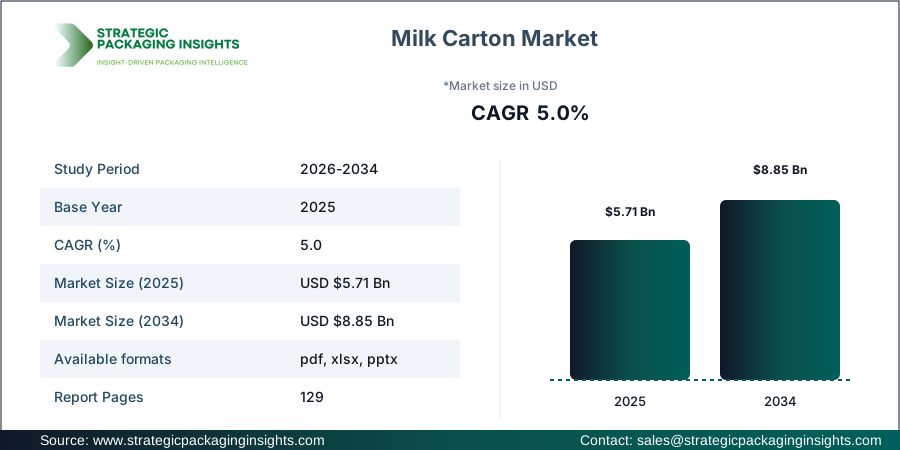
However, the market faces challenges such as stringent environmental regulations and the high cost of raw materials, which could potentially hinder growth. Despite these challenges, the milk carton market holds significant growth potential, particularly in emerging economies where the demand for packaged dairy products is on the rise. The increasing focus on reducing plastic waste and the shift towards renewable resources in packaging are expected to create new opportunities for market players. Furthermore, the development of innovative packaging solutions that cater to the evolving consumer preferences for convenience and sustainability is likely to drive market growth in the coming years.
Report Scope
| Attributes | Details |
| Report Title | Milk Carton Market Size, Future Growth and Forecast 2034 |
| Product Type | Gable Top Cartons, Aseptic Cartons, Brick Cartons |
| Material Type | Paperboard, PE-Coated Board, Aluminum Barrier Board |
| Application | Milk, Flavored Milk, Plant-Based Milk |
| End Use | Dairy Brands, Beverage Companies, Foodservice, Retailers |
| Region | Asia Pacific, North America, Latin America, Europe, Middle East & Africa |
| Base Year | 2025 |
| Historic Period | 2018-2024 |
| Forecast Period | 2026-2034 |
| Number of Pages | 129 |
| Customization Available | Yes* |
Opportunities & Threats
The milk carton market presents numerous opportunities, particularly in the realm of sustainability. As consumers become more environmentally conscious, there is a growing demand for packaging solutions that minimize environmental impact. This trend is driving innovation in the development of biodegradable and recyclable materials for milk cartons. Companies that invest in sustainable packaging technologies are likely to gain a competitive edge, as they align with consumer preferences and regulatory requirements. Additionally, the rise of plant-based milk alternatives is creating new avenues for growth, as these products often require specialized packaging to maintain freshness and quality.
Another significant opportunity lies in the expansion of the e-commerce sector. With more consumers purchasing groceries online, there is an increased need for packaging that can withstand the rigors of shipping while maintaining product integrity. Milk cartons that offer durability and protection during transit are well-positioned to capitalize on this trend. Furthermore, the growing middle-class population in emerging markets is driving demand for packaged dairy products, providing a lucrative opportunity for market expansion.
Despite these opportunities, the milk carton market faces several threats. One of the primary challenges is the volatility in raw material prices, which can impact production costs and profit margins. Additionally, the market is subject to stringent environmental regulations aimed at reducing packaging waste, which can increase compliance costs for manufacturers. The competition from alternative packaging solutions, such as plastic bottles and pouches, also poses a threat to market growth. Companies must continuously innovate and adapt to changing consumer preferences and regulatory landscapes to remain competitive.
Drivers & Challenges
The milk carton market is driven by several key factors, including the increasing demand for convenient and sustainable packaging solutions. As consumers become more health-conscious, there is a growing preference for fresh and natural products, which has led to an increase in the consumption of milk and milk-based beverages. Milk cartons, with their ability to preserve freshness and extend shelf life, are an ideal packaging solution for these products. Additionally, the rise of urbanization and the expansion of modern retail formats are driving the demand for packaged dairy products, further boosting the market for milk cartons.
Technological advancements in packaging materials and designs are also playing a crucial role in driving market growth. Innovations such as aseptic packaging and gable top cartons offer enhanced product protection and convenience, making them popular choices among consumers. The increasing focus on reducing plastic waste and the shift towards renewable resources in packaging are further propelling the demand for milk cartons. Companies that invest in sustainable packaging technologies are likely to gain a competitive edge, as they align with consumer preferences and regulatory requirements.
However, the milk carton market faces several challenges that could hinder its growth. One of the primary challenges is the high cost of raw materials, which can impact production costs and profit margins. Additionally, the market is subject to stringent environmental regulations aimed at reducing packaging waste, which can increase compliance costs for manufacturers. The competition from alternative packaging solutions, such as plastic bottles and pouches, also poses a threat to market growth. Companies must continuously innovate and adapt to changing consumer preferences and regulatory landscapes to remain competitive.
Market Share Analysis
The milk carton market is characterized by a competitive landscape with several key players vying for market share. Tetra Pak is a leading company in the market, known for its innovative packaging solutions and strong global presence. The company holds a significant market share, driven by its extensive product portfolio and focus on sustainability. SIG Group is another major player, offering a range of aseptic carton solutions that cater to the growing demand for long shelf-life products. Elopak, with its focus on renewable and recyclable materials, is also a prominent player in the market, catering to the increasing consumer preference for eco-friendly packaging.
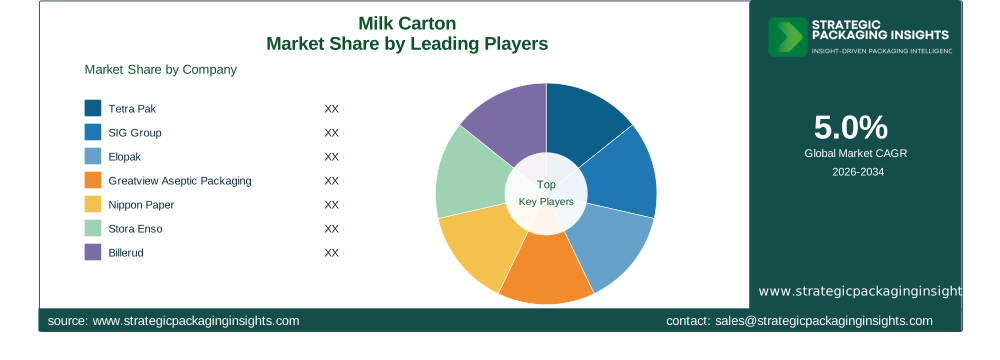
Greatview Aseptic Packaging is a notable competitor, known for its cost-effective and high-quality packaging solutions. The company has a strong presence in the Asia Pacific region, where the demand for packaged dairy products is on the rise. Nippon Paper and Stora Enso are also key players in the market, offering a range of paperboard-based packaging solutions. Billerud, with its focus on sustainable packaging materials, is gaining traction in the market, particularly in Europe and North America.
IPI S.r.l. and Nampak are other significant players in the milk carton market, known for their innovative packaging designs and strong distribution networks. Evergreen Packaging, with its focus on renewable resources and sustainable practices, is also a key player in the market. These companies are continuously investing in research and development to enhance their product offerings and cater to the evolving consumer preferences for convenience and sustainability.
The competitive landscape of the milk carton market is characterized by a focus on innovation and sustainability. Companies are investing in advanced packaging technologies and materials to meet the growing demand for eco-friendly and convenient packaging solutions. The market is also witnessing strategic collaborations and partnerships among key players to expand their product portfolios and strengthen their market presence. As the demand for packaged dairy products continues to rise, the milk carton market is expected to witness significant growth, driven by the increasing focus on sustainability and consumer convenience.
Key Highlights
- The milk carton market is projected to grow at a CAGR of 5.0% from 2026 to 2034.
- Increasing consumer demand for sustainable and eco-friendly packaging solutions is driving market growth.
- Technological advancements in packaging materials and designs are enhancing product shelf life and consumer convenience.
- The rise of urbanization and the expansion of retail networks are propelling the demand for milk cartons.
- Emerging economies present significant growth opportunities for the milk carton market.
- Volatility in raw material prices and stringent environmental regulations pose challenges to market growth.
- Key players in the market include Tetra Pak, SIG Group, Elopak, and Greatview Aseptic Packaging.
- The market is witnessing strategic collaborations and partnerships among key players to expand their product portfolios.
- The increasing focus on reducing plastic waste is driving the demand for renewable resources in packaging.
- The rise of plant-based milk alternatives is creating new avenues for market growth.
Top Countries Insights
In the milk carton market, the United States stands out as a key player, with a market size of approximately $1.2 billion and a CAGR of 4%. The country's robust dairy industry and the increasing consumer preference for sustainable packaging solutions are driving market growth. The presence of major players like Tetra Pak and Evergreen Packaging further strengthens the market. However, the market faces challenges such as stringent environmental regulations and competition from alternative packaging solutions.
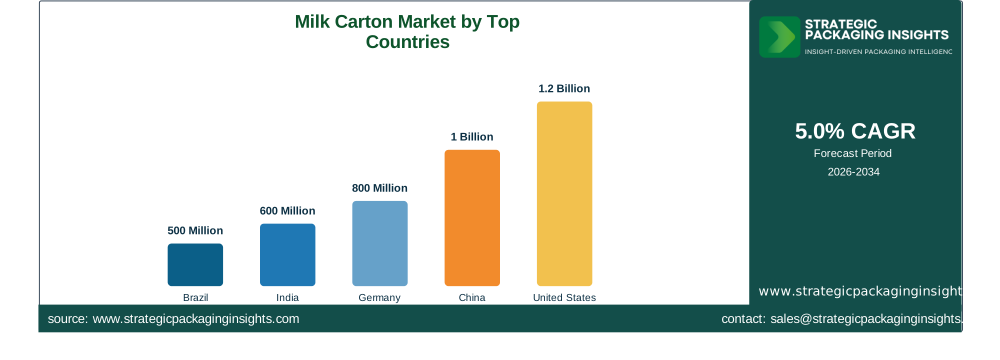
China is another significant market, with a market size of around $1 billion and a CAGR of 6%. The country's growing middle-class population and increasing consumption of packaged dairy products are driving demand for milk cartons. The government's focus on reducing plastic waste and promoting sustainable packaging solutions is also contributing to market growth. However, the market faces challenges such as volatility in raw material prices and competition from local manufacturers.
Germany, with a market size of approximately $800 million and a CAGR of 3%, is a key player in the European milk carton market. The country's strong dairy industry and the increasing consumer preference for eco-friendly packaging solutions are driving market growth. The presence of major players like SIG Group and Elopak further strengthens the market. However, the market faces challenges such as stringent environmental regulations and competition from alternative packaging solutions.
India, with a market size of around $600 million and a CAGR of 7%, is an emerging market for milk cartons. The country's growing middle-class population and increasing consumption of packaged dairy products are driving demand for milk cartons. The government's focus on promoting sustainable packaging solutions is also contributing to market growth. However, the market faces challenges such as volatility in raw material prices and competition from local manufacturers.
Brazil, with a market size of approximately $500 million and a CAGR of 5%, is a key player in the Latin American milk carton market. The country's growing dairy industry and the increasing consumer preference for sustainable packaging solutions are driving market growth. The presence of major players like Tetra Pak and Greatview Aseptic Packaging further strengthens the market. However, the market faces challenges such as stringent environmental regulations and competition from alternative packaging solutions.
Milk Carton Market Segments Insights

Product Type Analysis
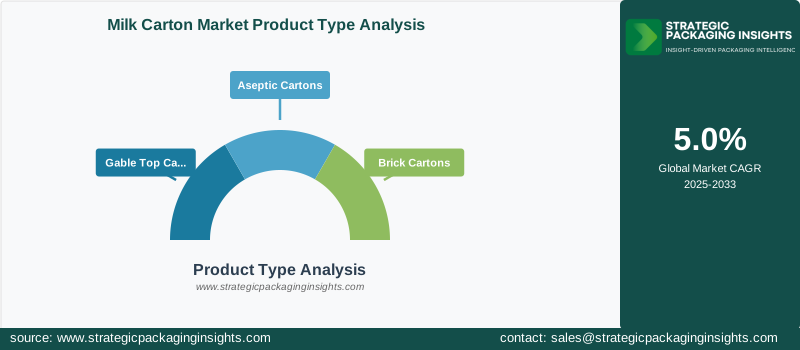
The milk carton market is segmented by product type into gable top cartons, aseptic cartons, and brick cartons. Gable top cartons are widely used due to their convenience and ease of use, making them a popular choice among consumers. These cartons are particularly favored for fresh milk packaging, as they offer excellent protection and extend the product's shelf life. Aseptic cartons, on the other hand, are gaining traction due to their ability to preserve the freshness and quality of milk without the need for refrigeration. This makes them ideal for long shelf-life products and is driving their demand in regions with limited cold chain infrastructure. Brick cartons, known for their compact design and efficient use of space, are also witnessing increased adoption, particularly in urban areas where storage space is limited.
The demand for these product types is influenced by consumer preferences for convenience and sustainability. As consumers become more environmentally conscious, there is a growing preference for packaging solutions that minimize environmental impact. This trend is driving innovation in the development of biodegradable and recyclable materials for milk cartons. Companies that invest in sustainable packaging technologies are likely to gain a competitive edge, as they align with consumer preferences and regulatory requirements. Additionally, the rise of plant-based milk alternatives is creating new avenues for growth, as these products often require specialized packaging to maintain freshness and quality.
Material Type Analysis
The milk carton market is segmented by material type into paperboard, PE-coated board, and aluminum barrier board. Paperboard is the most commonly used material, known for its recyclability and cost-effectiveness. It is widely used in the production of gable top cartons and is favored for its ability to provide excellent protection and extend the product's shelf life. PE-coated board, which offers additional moisture resistance, is gaining popularity for its ability to preserve the freshness and quality of milk. This material is particularly favored for aseptic cartons, as it allows for long shelf-life products without the need for refrigeration.
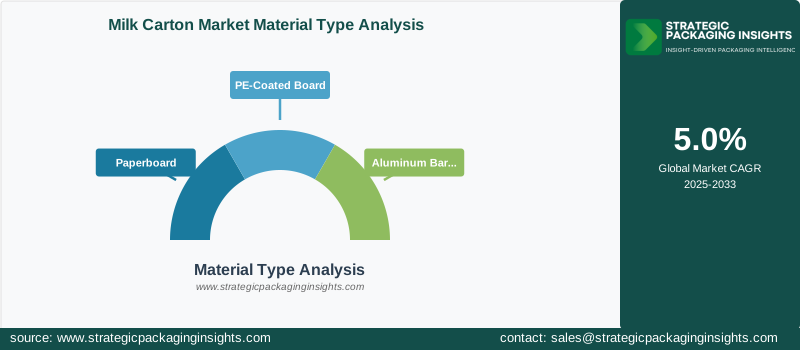
Aluminum barrier board, known for its superior barrier properties, is also witnessing increased adoption in the milk carton market. This material is particularly favored for brick cartons, as it provides excellent protection against light and oxygen, preserving the freshness and quality of milk. The demand for these materials is influenced by consumer preferences for convenience and sustainability. As consumers become more environmentally conscious, there is a growing preference for packaging solutions that minimize environmental impact. This trend is driving innovation in the development of biodegradable and recyclable materials for milk cartons. Companies that invest in sustainable packaging technologies are likely to gain a competitive edge, as they align with consumer preferences and regulatory requirements.
Application Analysis
The milk carton market is segmented by application into milk, flavored milk, and plant-based milk. Milk remains the dominant application, driven by the increasing consumption of dairy products globally. The demand for milk cartons in this segment is influenced by consumer preferences for convenience and sustainability. As consumers become more health-conscious, there is a growing preference for fresh and natural products, which has led to an increase in the consumption of milk and milk-based beverages. Milk cartons, with their ability to preserve freshness and extend shelf life, are an ideal packaging solution for these products.
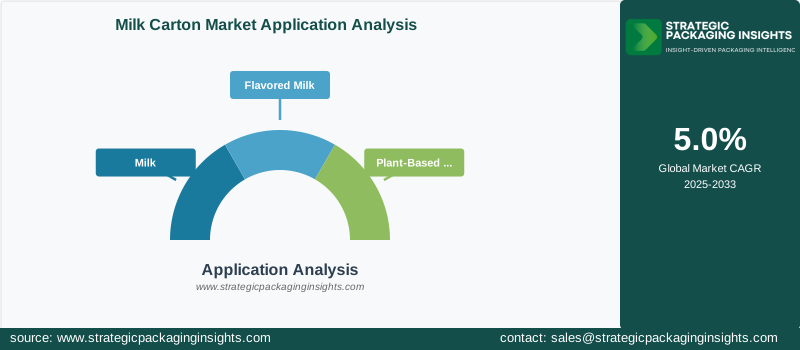
Flavored milk is another significant application, driven by the increasing demand for value-added dairy products. The demand for milk cartons in this segment is influenced by consumer preferences for convenience and sustainability. As consumers become more health-conscious, there is a growing preference for fresh and natural products, which has led to an increase in the consumption of flavored milk. Milk cartons, with their ability to preserve freshness and extend shelf life, are an ideal packaging solution for these products. Plant-based milk, driven by the increasing demand for dairy alternatives, is also witnessing significant growth. The demand for milk cartons in this segment is influenced by consumer preferences for convenience and sustainability. As consumers become more health-conscious, there is a growing preference for fresh and natural products, which has led to an increase in the consumption of plant-based milk. Milk cartons, with their ability to preserve freshness and extend shelf life, are an ideal packaging solution for these products.
End Use Analysis
The milk carton market is segmented by end use into dairy brands, beverage companies, foodservice, and retailers. Dairy brands remain the dominant end use, driven by the increasing consumption of dairy products globally. The demand for milk cartons in this segment is influenced by consumer preferences for convenience and sustainability. As consumers become more health-conscious, there is a growing preference for fresh and natural products, which has led to an increase in the consumption of milk and milk-based beverages. Milk cartons, with their ability to preserve freshness and extend shelf life, are an ideal packaging solution for these products.
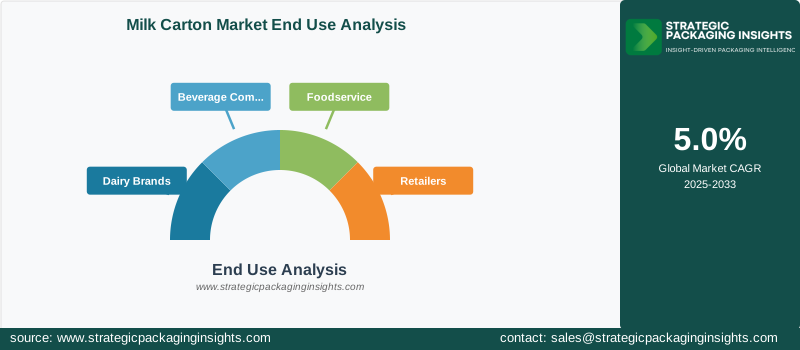
Beverage companies are another significant end use, driven by the increasing demand for value-added dairy products. The demand for milk cartons in this segment is influenced by consumer preferences for convenience and sustainability. As consumers become more health-conscious, there is a growing preference for fresh and natural products, which has led to an increase in the consumption of flavored milk. Milk cartons, with their ability to preserve freshness and extend shelf life, are an ideal packaging solution for these products. Foodservice, driven by the increasing demand for dairy alternatives, is also witnessing significant growth. The demand for milk cartons in this segment is influenced by consumer preferences for convenience and sustainability. As consumers become more health-conscious, there is a growing preference for fresh and natural products, which has led to an increase in the consumption of plant-based milk. Milk cartons, with their ability to preserve freshness and extend shelf life, are an ideal packaging solution for these products.
Milk Carton Market Segments
The Milk Carton market has been segmented on the basis ofProduct Type
- Gable Top Cartons
- Aseptic Cartons
- Brick Cartons
Material Type
- Paperboard
- PE-Coated Board
- Aluminum Barrier Board
Application
- Milk
- Flavored Milk
- Plant-Based Milk
End Use
- Dairy Brands
- Beverage Companies
- Foodservice
- Retailers
Region
- Asia Pacific
- North America
- Latin America
- Europe
- Middle East & Africa




