


Microporous Insulation Material Market Outlook
The microporous insulation material market was valued at $213.59 million in 2025 and is projected to reach $378.06 million by 2034, growing at a CAGR of 6.6% during the forecast period 2026-2034. This market is witnessing significant growth due to the increasing demand for energy-efficient solutions across various industries. The need for high-performance insulation materials in industrial applications, such as furnaces and energy systems, is driving the market forward. Additionally, the aerospace and transportation sectors are increasingly adopting microporous insulation materials to enhance thermal management and reduce energy consumption, further propelling market growth.
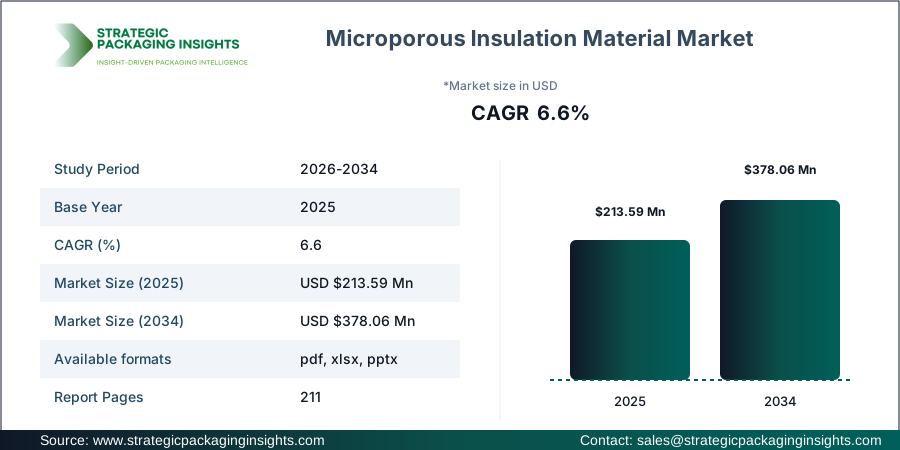
Despite the promising growth prospects, the microporous insulation material market faces certain challenges. Regulatory constraints and environmental concerns regarding the disposal and recycling of insulation materials pose significant hurdles. However, advancements in material science and the development of eco-friendly insulation solutions present lucrative opportunities for market players. The growing emphasis on sustainability and energy conservation is expected to drive innovation and open new avenues for growth in the microporous insulation material market.
Report Scope
| Attributes | Details |
| Report Title | Microporous Insulation Material Market Size, Future Growth and Forecast 2034 |
| By Product Type | Panels, Boards, Flexible Sheets, Molded Shapes |
| By Material Type | Silica-Based, Aerogel-Enhanced, Mineral-Based Composites |
| By Application | Industrial Furnaces, Energy Systems, Appliances, Aerospace |
| By End Use | Industrial Manufacturing, Oil & Gas, Power Generation, Transportation |
| Region | Asia Pacific, North America, Latin America, Europe, Middle East & Africa |
| Base Year | 2025 |
| Historic Period | 2018-2024 |
| Forecast Period | 2026-2034 |
| Number of Pages | 211 |
| Customization Available | Yes* |
Opportunities & Threats
The microporous insulation material market is poised for substantial growth, driven by the increasing demand for energy-efficient solutions across various industries. One of the key opportunities lies in the industrial manufacturing sector, where the need for high-performance insulation materials is paramount. As industries strive to enhance energy efficiency and reduce operational costs, the adoption of microporous insulation materials is expected to rise significantly. Additionally, the growing focus on sustainability and environmental conservation is driving the demand for eco-friendly insulation solutions, presenting a lucrative opportunity for market players to develop innovative products that align with these trends.
Another promising opportunity in the microporous insulation material market is the expanding application in the aerospace and transportation sectors. With the increasing emphasis on lightweight and energy-efficient materials, microporous insulation materials are gaining traction in these industries. The ability of these materials to provide superior thermal management and reduce energy consumption makes them an attractive choice for aerospace and transportation applications. As these sectors continue to prioritize energy efficiency and environmental sustainability, the demand for microporous insulation materials is expected to witness significant growth.
However, the microporous insulation material market is not without its challenges. One of the primary restrainers is the regulatory constraints and environmental concerns associated with the disposal and recycling of insulation materials. The stringent regulations regarding the use of certain materials and the need for sustainable disposal methods pose significant challenges for market players. Additionally, the high cost of raw materials and manufacturing processes can hinder the widespread adoption of microporous insulation materials, particularly in price-sensitive markets. Overcoming these challenges will require continuous innovation and collaboration among industry stakeholders to develop cost-effective and environmentally friendly solutions.
Drivers & Challenges
The microporous insulation material market is driven by several key factors that are contributing to its growth. One of the primary drivers is the increasing demand for energy-efficient solutions across various industries. As industries strive to reduce energy consumption and enhance operational efficiency, the adoption of high-performance insulation materials is becoming increasingly important. Microporous insulation materials, with their superior thermal properties and lightweight nature, are gaining traction as an ideal solution for achieving energy efficiency goals. Additionally, the growing emphasis on sustainability and environmental conservation is driving the demand for eco-friendly insulation solutions, further propelling market growth.
Another significant driver of the microporous insulation material market is the expanding application in the aerospace and transportation sectors. With the increasing focus on lightweight and energy-efficient materials, microporous insulation materials are finding widespread adoption in these industries. The ability of these materials to provide superior thermal management and reduce energy consumption makes them an attractive choice for aerospace and transportation applications. As these sectors continue to prioritize energy efficiency and environmental sustainability, the demand for microporous insulation materials is expected to witness significant growth.
Despite the promising growth prospects, the microporous insulation material market faces certain challenges. One of the primary challenges is the regulatory constraints and environmental concerns associated with the disposal and recycling of insulation materials. The stringent regulations regarding the use of certain materials and the need for sustainable disposal methods pose significant challenges for market players. Additionally, the high cost of raw materials and manufacturing processes can hinder the widespread adoption of microporous insulation materials, particularly in price-sensitive markets. Overcoming these challenges will require continuous innovation and collaboration among industry stakeholders to develop cost-effective and environmentally friendly solutions.
Market Share Analysis
The microporous insulation material market is characterized by a competitive landscape with several key players vying for market share. The market is dominated by a few major companies that hold a significant portion of the market share. These companies are actively engaged in research and development activities to enhance their product offerings and maintain a competitive edge. The competitive landscape is further intensified by the presence of several regional players who are focusing on expanding their market presence through strategic partnerships and collaborations.

Morgan Advanced Materials is one of the leading players in the microporous insulation material market, holding a substantial market share. The company is known for its innovative product offerings and strong focus on research and development. Unifrax is another major player in the market, with a significant market share. The company is actively involved in expanding its product portfolio and strengthening its market position through strategic acquisitions and partnerships. Promat, Johns Manville, and ThermoDyne are also prominent players in the market, each holding a considerable market share and contributing to the overall growth of the market.
Unicorn Insulations, Elmelin, and Isoleika are some of the regional players that are gaining traction in the microporous insulation material market. These companies are focusing on expanding their market presence by offering innovative and cost-effective solutions. NICHIAS Corporation and ZIRCAR Ceramics are also notable players in the market, with a strong focus on product innovation and customer satisfaction. The competitive landscape of the microporous insulation material market is expected to remain dynamic, with companies continuously striving to enhance their product offerings and expand their market reach.
Key Highlights
- The microporous insulation material market is projected to grow at a CAGR of 6.6% from 2026 to 2034.
- Increasing demand for energy-efficient solutions is driving market growth.
- Regulatory constraints and environmental concerns pose significant challenges.
- Expanding application in aerospace and transportation sectors is a key growth driver.
- Major players include Morgan Advanced Materials, Unifrax, and Promat.
- Regional players are focusing on expanding market presence through innovation.
- High cost of raw materials and manufacturing processes is a restraining factor.
Top Countries Insights
In the microporous insulation material market, the United States stands out as a key player, with a market size of approximately $65 million and a CAGR of 5%. The country's strong industrial base and focus on energy efficiency drive the demand for advanced insulation materials. Government policies promoting energy conservation and sustainability further bolster market growth. However, regulatory challenges related to material disposal and recycling remain a concern.

Germany is another significant market, with a market size of around $48 million and a CAGR of 4%. The country's emphasis on industrial innovation and energy-efficient manufacturing processes fuels the demand for microporous insulation materials. The presence of leading automotive and aerospace industries also contributes to market growth. However, stringent environmental regulations pose challenges for market players.
China, with a market size of approximately $30 million and a CAGR of 7%, is a rapidly growing market for microporous insulation materials. The country's expanding industrial sector and increasing focus on energy conservation drive the demand for advanced insulation solutions. Government initiatives promoting sustainable manufacturing practices further support market growth. However, the high cost of raw materials remains a challenge for market players.
Japan, with a market size of around $22 million and a CAGR of 3%, is a key market for microporous insulation materials. The country's strong focus on technological innovation and energy efficiency drives the demand for advanced insulation solutions. The presence of leading electronics and automotive industries also contributes to market growth. However, regulatory challenges related to material disposal and recycling remain a concern.
India, with a market size of approximately $15 million and a CAGR of 6%, is an emerging market for microporous insulation materials. The country's growing industrial sector and increasing focus on energy conservation drive the demand for advanced insulation solutions. Government initiatives promoting sustainable manufacturing practices further support market growth. However, the high cost of raw materials remains a challenge for market players.
Microporous Insulation Material Market Segments Insights

Product Type Analysis
The microporous insulation material market is segmented by product type into panels, boards, flexible sheets, and molded shapes. Panels and boards are the most widely used product types, owing to their versatility and ease of installation. These products are extensively used in industrial applications, such as furnaces and energy systems, where high-performance insulation is required. The demand for flexible sheets is also on the rise, driven by their lightweight nature and ability to conform to complex shapes. Molded shapes, although less common, are gaining traction in niche applications where custom insulation solutions are needed.
The increasing demand for energy-efficient solutions across various industries is driving the growth of the panels and boards segment. These products offer superior thermal insulation properties, making them ideal for use in high-temperature applications. The growing emphasis on sustainability and environmental conservation is also contributing to the demand for eco-friendly insulation solutions, further propelling the growth of this segment. The flexible sheets segment is expected to witness significant growth, driven by the increasing adoption of lightweight and energy-efficient materials in the aerospace and transportation sectors.
Material Type Analysis
The microporous insulation material market is segmented by material type into silica-based, aerogel-enhanced, and mineral-based composites. Silica-based materials are the most widely used, owing to their excellent thermal insulation properties and cost-effectiveness. These materials are extensively used in industrial applications, such as furnaces and energy systems, where high-performance insulation is required. Aerogel-enhanced materials, although more expensive, offer superior thermal insulation properties and are gaining traction in high-end applications, such as aerospace and transportation.
The increasing demand for energy-efficient solutions across various industries is driving the growth of the silica-based materials segment. These materials offer excellent thermal insulation properties, making them ideal for use in high-temperature applications. The growing emphasis on sustainability and environmental conservation is also contributing to the demand for eco-friendly insulation solutions, further propelling the growth of this segment. The aerogel-enhanced materials segment is expected to witness significant growth, driven by the increasing adoption of lightweight and energy-efficient materials in the aerospace and transportation sectors.
Application Analysis
The microporous insulation material market is segmented by application into industrial furnaces, energy systems, appliances, and aerospace. Industrial furnaces and energy systems are the largest application segments, owing to the high demand for high-performance insulation materials in these industries. The growing emphasis on energy efficiency and sustainability is driving the demand for advanced insulation solutions in these applications. The appliances segment is also witnessing significant growth, driven by the increasing demand for energy-efficient household appliances.
The aerospace segment is expected to witness significant growth, driven by the increasing adoption of lightweight and energy-efficient materials in the aerospace industry. The ability of microporous insulation materials to provide superior thermal management and reduce energy consumption makes them an attractive choice for aerospace applications. The growing emphasis on sustainability and environmental conservation is also contributing to the demand for eco-friendly insulation solutions, further propelling the growth of this segment.
End Use Analysis
The microporous insulation material market is segmented by end use into industrial manufacturing, oil & gas, power generation, and transportation. Industrial manufacturing is the largest end-use segment, owing to the high demand for high-performance insulation materials in this industry. The growing emphasis on energy efficiency and sustainability is driving the demand for advanced insulation solutions in industrial manufacturing applications. The oil & gas and power generation segments are also witnessing significant growth, driven by the increasing demand for energy-efficient solutions in these industries.
The transportation segment is expected to witness significant growth, driven by the increasing adoption of lightweight and energy-efficient materials in the transportation industry. The ability of microporous insulation materials to provide superior thermal management and reduce energy consumption makes them an attractive choice for transportation applications. The growing emphasis on sustainability and environmental conservation is also contributing to the demand for eco-friendly insulation solutions, further propelling the growth of this segment.
Microporous Insulation Material Market Segments
The Microporous Insulation Material market has been segmented on the basis ofBy Product Type
- Panels
- Boards
- Flexible Sheets
- Molded Shapes
By Material Type
- Silica-Based
- Aerogel-Enhanced
- Mineral-Based Composites
By Application
- Industrial Furnaces
- Energy Systems
- Appliances
- Aerospace
By End Use
- Industrial Manufacturing
- Oil & Gas
- Power Generation
- Transportation
Region
- Asia Pacific
- North America
- Latin America
- Europe
- Middle East & Africa




