


Micro-Vent Cap Systems Market Outlook
The Micro-Vent Cap Systems market was valued at $1.53 billion in 2025 and is projected to reach $2.75 billion by 2034, growing at a CAGR of 6.7% during the forecast period 2026-2034. This market is witnessing significant growth due to the increasing demand for innovative packaging solutions that ensure product safety and longevity. The rise in consumer awareness regarding product quality and safety, especially in food and beverage sectors, is driving the adoption of micro-vent cap systems. These systems are crucial in maintaining the freshness and quality of products by allowing gases to escape while preventing contaminants from entering. The market is also benefiting from advancements in material technology, which are enhancing the functionality and efficiency of these caps.
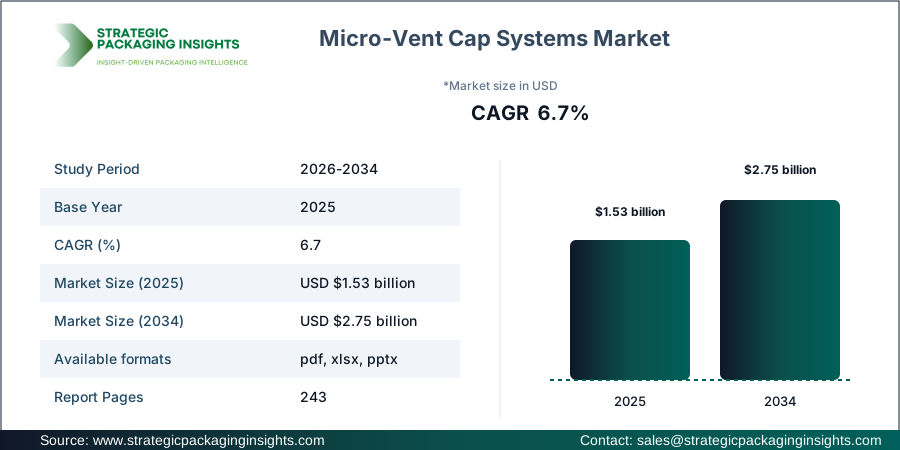
Despite the promising growth trajectory, the Micro-Vent Cap Systems market faces certain challenges. Regulatory constraints and the need for compliance with stringent safety standards can pose hurdles for market players. Additionally, the high cost of advanced materials used in these systems may limit their adoption, particularly among small and medium-sized enterprises. However, the market holds substantial growth potential, driven by the increasing demand for sustainable and eco-friendly packaging solutions. Innovations in biodegradable and recyclable materials are expected to open new avenues for market expansion, catering to the growing consumer preference for environmentally responsible products.
Report Scope
| Attributes | Details |
| Report Title | Micro-Vent Cap Systems Market Size, Future Growth and Forecast 2034 |
| By Cap Type | vented caps, degassing caps, pressure-equalizing caps |
| By Application | coffee, fermented foods, chemicals, agrochemicals |
| By Material Type | PP, HDPE, specialty membranes |
| By End Use | food brands, chemical companies, coffee brands, packaging converters |
| Region | Asia Pacific, North America, Latin America, Europe, Middle East & Africa |
| Base Year | 2025 |
| Historic Period | 2018-2024 |
| Forecast Period | 2026-2034 |
| Number of Pages | 243 |
| Customization Available | Yes* |
Opportunities & Threats
The Micro-Vent Cap Systems market presents numerous opportunities, particularly in the realm of sustainable packaging solutions. As environmental concerns continue to rise, there is a growing demand for packaging that minimizes environmental impact. Micro-vent cap systems, with their ability to enhance product shelf life while reducing waste, are well-positioned to capitalize on this trend. Companies investing in research and development to create biodegradable and recyclable vent caps are likely to gain a competitive edge. Furthermore, the increasing popularity of fermented foods and beverages, which require specialized packaging to manage gas exchange, is expected to drive demand for these systems.
Another significant opportunity lies in the expanding agrochemical sector. As the global population grows, the demand for agricultural products is increasing, necessitating efficient packaging solutions to preserve product efficacy and safety. Micro-vent cap systems are ideal for agrochemicals, as they prevent pressure build-up and leakage, ensuring product integrity. Additionally, the rise of e-commerce and online retailing is boosting the demand for secure and reliable packaging solutions, further propelling the market for micro-vent cap systems.
However, the market is not without its threats. One of the primary restrainers is the high cost associated with advanced micro-vent cap systems. The use of specialty materials and sophisticated manufacturing processes can drive up costs, making these systems less accessible to smaller companies. Moreover, the market faces competition from alternative packaging solutions that offer similar benefits at a lower cost. Companies must navigate these challenges by focusing on cost-effective innovations and strategic partnerships to maintain their market position.
Drivers & Challenges
The Micro-Vent Cap Systems market is driven by several key factors, including the increasing demand for high-quality packaging solutions that ensure product safety and longevity. The food and beverage industry, in particular, is a major driver, as consumers become more conscious of product freshness and quality. Micro-vent cap systems play a crucial role in maintaining these attributes by allowing gases to escape while preventing contaminants from entering. Additionally, the rise in popularity of fermented foods and beverages, which require specialized packaging to manage gas exchange, is further fueling market growth.
Technological advancements in material science are also driving the market forward. Innovations in materials such as specialty membranes and advanced polymers are enhancing the functionality and efficiency of micro-vent cap systems. These advancements are enabling manufacturers to develop more effective and reliable solutions, catering to the diverse needs of various industries. Furthermore, the growing trend towards sustainable and eco-friendly packaging is encouraging companies to invest in research and development, leading to the creation of biodegradable and recyclable vent caps.
Despite these drivers, the market faces several challenges. One of the primary challenges is the high cost associated with advanced micro-vent cap systems. The use of specialty materials and sophisticated manufacturing processes can drive up costs, making these systems less accessible to smaller companies. Additionally, regulatory constraints and the need for compliance with stringent safety standards can pose hurdles for market players. Companies must navigate these challenges by focusing on cost-effective innovations and strategic partnerships to maintain their market position.
Market Share Analysis
The competitive landscape of the Micro-Vent Cap Systems market is characterized by the presence of several key players who are driving innovation and growth. AptarGroup, a leading company in the packaging industry, holds a significant market share due to its extensive product portfolio and strong focus on research and development. Berry Global is another major player, known for its innovative solutions and commitment to sustainability. Silgan Dispensing, with its advanced dispensing technologies, is also a prominent player in the market.

Bericap and Guala Closures are notable for their expertise in closure solutions, offering a wide range of products that cater to various industries. United Caps and Weener Plastics are recognized for their focus on customization and customer-centric solutions, which have helped them establish a strong presence in the market. Closure Systems International and Mold-Rite Plastics are also key players, known for their innovative designs and high-quality products.
Gore, a company renowned for its expertise in material science, is making significant strides in the micro-vent cap systems market. Its advanced materials and innovative solutions are setting new standards in the industry. These companies are leveraging their strengths in technology, innovation, and customer service to maintain their competitive edge. Strategic partnerships, mergers, and acquisitions are common strategies employed by these players to expand their market presence and enhance their product offerings.
Overall, the market is highly competitive, with companies focusing on innovation and sustainability to differentiate themselves. The emphasis on eco-friendly solutions and advanced materials is driving the development of new products that meet the evolving needs of consumers. As the market continues to grow, companies are likely to invest in research and development to stay ahead of the competition and capitalize on emerging opportunities.
Key Highlights
- The Micro-Vent Cap Systems market is projected to grow at a CAGR of 6.7% from 2026 to 2034.
- Increasing demand for sustainable and eco-friendly packaging solutions is driving market growth.
- Technological advancements in material science are enhancing the functionality of micro-vent cap systems.
- The food and beverage industry is a major driver of market demand.
- High costs associated with advanced systems pose a challenge for smaller companies.
- Regulatory constraints and compliance requirements are key challenges for market players.
- Strategic partnerships and mergers are common strategies among key players to expand market presence.
- Innovations in biodegradable and recyclable materials are opening new avenues for market expansion.
- The rise of e-commerce is boosting demand for secure and reliable packaging solutions.
Top Countries Insights
In the Micro-Vent Cap Systems market, the United States stands out as a leading country, with a market size of approximately $500 million and a CAGR of 5%. The country's strong focus on innovation and sustainability, coupled with a robust food and beverage industry, drives demand for advanced packaging solutions. Government regulations promoting eco-friendly packaging further bolster market growth. However, the high cost of advanced materials remains a challenge for smaller companies.
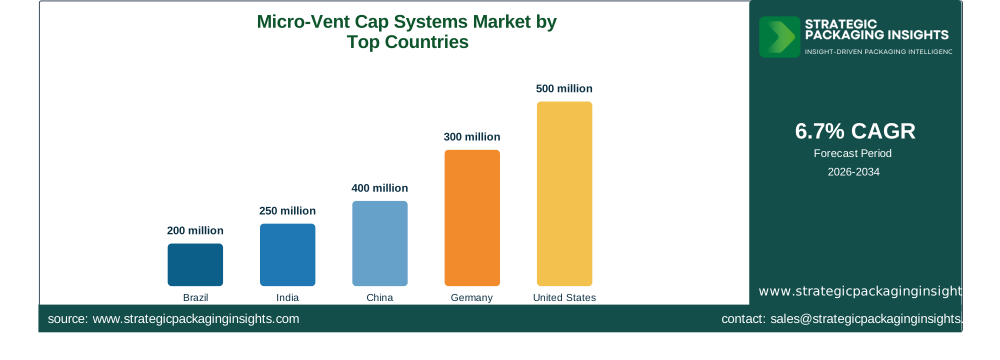
Germany is another key player in the market, with a market size of around $300 million and a CAGR of 4%. The country's emphasis on quality and precision in manufacturing, along with a strong chemical industry, supports the demand for micro-vent cap systems. Innovations in material science and a focus on sustainability are key growth drivers. However, stringent regulatory requirements can pose challenges for market players.
China, with a market size of approximately $400 million and a CAGR of 7%, is experiencing rapid growth in the micro-vent cap systems market. The country's expanding food and beverage industry, along with increasing consumer awareness of product safety, drives demand for advanced packaging solutions. Government initiatives promoting sustainable packaging further support market growth. However, competition from low-cost alternatives can be a challenge.
India, with a market size of about $250 million and a CAGR of 6%, is emerging as a significant market for micro-vent cap systems. The country's growing population and increasing demand for packaged foods and beverages drive market growth. Innovations in packaging technology and a focus on sustainability are key growth drivers. However, the high cost of advanced systems can be a barrier for smaller companies.
Brazil, with a market size of around $200 million and a CAGR of 5%, is also a notable player in the market. The country's strong agricultural sector and increasing demand for agrochemicals drive the need for efficient packaging solutions. Government policies promoting sustainable packaging further support market growth. However, economic instability and regulatory challenges can pose hurdles for market players.
Micro-Vent Cap Systems Market Segments Insights

Cap Type Analysis
The cap type segment in the Micro-Vent Cap Systems market is categorized into vented caps, degassing caps, and pressure-equalizing caps. Vented caps are gaining popularity due to their ability to maintain product integrity by allowing gases to escape while preventing contaminants from entering. This feature is particularly beneficial for the food and beverage industry, where product freshness and quality are paramount. Degassing caps, on the other hand, are widely used in the chemical and agrochemical industries to prevent pressure build-up and ensure product safety. Pressure-equalizing caps are essential in applications where maintaining a consistent internal pressure is crucial, such as in certain food and beverage products.
The demand for these cap types is driven by the increasing need for innovative packaging solutions that enhance product safety and longevity. Technological advancements in material science are enabling manufacturers to develop more effective and reliable cap systems, catering to the diverse needs of various industries. Additionally, the growing trend towards sustainable and eco-friendly packaging is encouraging companies to invest in research and development, leading to the creation of biodegradable and recyclable vent caps. As a result, the cap type segment is expected to witness significant growth during the forecast period.
Application Analysis
The application segment of the Micro-Vent Cap Systems market includes coffee, fermented foods, chemicals, and agrochemicals. The coffee industry is a major driver of demand for micro-vent cap systems, as these caps help maintain the freshness and aroma of coffee by allowing gases to escape while preventing contaminants from entering. Fermented foods, which require specialized packaging to manage gas exchange, are also driving demand for these systems. The chemical and agrochemical industries rely on micro-vent cap systems to prevent pressure build-up and ensure product safety, making them essential components in these sectors.
The increasing popularity of fermented foods and beverages, along with the growing demand for agrochemicals, is expected to drive significant growth in the application segment. Companies are investing in research and development to create innovative solutions that cater to the specific needs of these industries. Additionally, the rise of e-commerce and online retailing is boosting the demand for secure and reliable packaging solutions, further propelling the market for micro-vent cap systems. As a result, the application segment is poised for substantial growth during the forecast period.
Material Type Analysis
The material type segment in the Micro-Vent Cap Systems market is divided into PP, HDPE, and specialty membranes. PP (polypropylene) is widely used due to its excellent chemical resistance and durability, making it ideal for applications in the chemical and agrochemical industries. HDPE (high-density polyethylene) is favored for its strength and versatility, making it suitable for a wide range of applications, including food and beverage packaging. Specialty membranes, which offer advanced gas permeability and barrier properties, are gaining traction in the market due to their ability to enhance product safety and longevity.
The demand for these materials is driven by the increasing need for high-quality packaging solutions that ensure product safety and longevity. Technological advancements in material science are enabling manufacturers to develop more effective and reliable solutions, catering to the diverse needs of various industries. Additionally, the growing trend towards sustainable and eco-friendly packaging is encouraging companies to invest in research and development, leading to the creation of biodegradable and recyclable materials. As a result, the material type segment is expected to witness significant growth during the forecast period.
End Use Analysis
The end use segment of the Micro-Vent Cap Systems market includes food brands, chemical companies, coffee brands, and packaging converters. Food brands are a major driver of demand for micro-vent cap systems, as these caps help maintain product freshness and quality by allowing gases to escape while preventing contaminants from entering. Chemical companies rely on these systems to prevent pressure build-up and ensure product safety, making them essential components in the chemical industry. Coffee brands, which require specialized packaging to maintain the freshness and aroma of their products, are also driving demand for these systems.
The increasing demand for high-quality packaging solutions that ensure product safety and longevity is expected to drive significant growth in the end use segment. Companies are investing in research and development to create innovative solutions that cater to the specific needs of these industries. Additionally, the rise of e-commerce and online retailing is boosting the demand for secure and reliable packaging solutions, further propelling the market for micro-vent cap systems. As a result, the end use segment is poised for substantial growth during the forecast period.
Micro-Vent Cap Systems Market Segments
The Micro-Vent Cap Systems market has been segmented on the basis ofBy Cap Type
- vented caps
- degassing caps
- pressure-equalizing caps
By Application
- coffee
- fermented foods
- chemicals
- agrochemicals
By Material Type
- PP
- HDPE
- specialty membranes
By End Use
- food brands
- chemical companies
- coffee brands
- packaging converters
Region
- Asia Pacific
- North America
- Latin America
- Europe
- Middle East & Africa




