


Micro-perforated Food Packaging Market Outlook
The micro-perforated food packaging market was valued at $1.83 billion in 2025 and is projected to reach $3.55 billion by 2034, growing at a CAGR of 7.6% during the forecast period 2026-2034. This market is driven by the increasing demand for fresh and minimally processed food products, which require packaging solutions that extend shelf life while maintaining product quality. The rise in consumer awareness regarding food safety and hygiene has further propelled the demand for advanced packaging solutions like micro-perforated packaging. Additionally, the growing trend of convenience foods and ready-to-eat meals is boosting the market as these products often require specialized packaging to maintain freshness and quality.
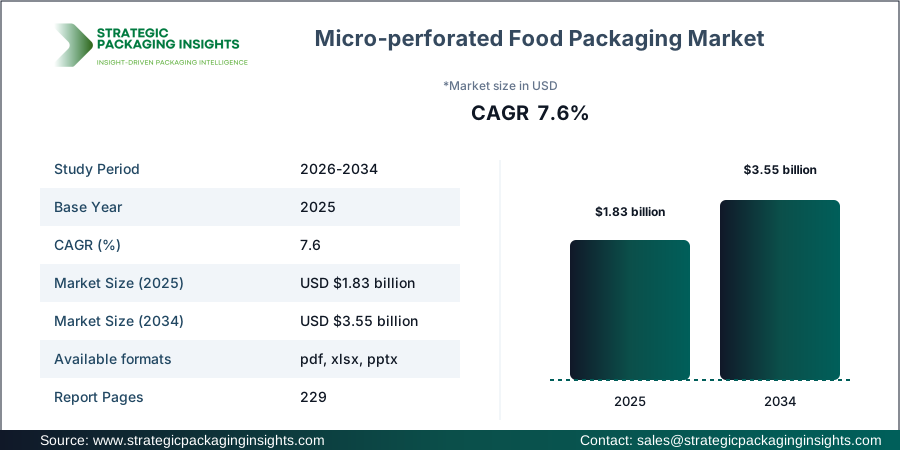
However, the market faces challenges such as stringent regulations regarding packaging materials and environmental concerns related to plastic waste. Despite these challenges, the market holds significant growth potential due to technological advancements in packaging materials and processes. Innovations in biodegradable and recyclable materials are expected to offer lucrative opportunities for market players. Moreover, the increasing adoption of smart packaging solutions, which incorporate features like freshness indicators and temperature control, is anticipated to drive market growth further. The market's potential is also bolstered by the expansion of e-commerce and the growing demand for sustainable packaging solutions.
Report Scope
| Attributes | Details |
| Report Title | Micro-perforated Food Packaging Market Size, Future Growth and Forecast 2034 |
| Material | Plastic, Paper |
| Perforation Type | Micro, Macro |
| Application | Fresh Produce, Meat |
| Form | Bags, Films |
| Region | Asia Pacific, North America, Latin America, Europe, Middle East & Africa |
| Base Year | 2025 |
| Historic Period | 2018-2024 |
| Forecast Period | 2026-2034 |
| Number of Pages | 229 |
| Customization Available | Yes* |
Opportunities & Threats
The micro-perforated food packaging market presents numerous opportunities, particularly in the realm of sustainable packaging solutions. As consumers become more environmentally conscious, there is a growing demand for packaging that minimizes environmental impact. This trend is driving innovation in biodegradable and recyclable materials, offering significant growth opportunities for companies that can develop and market these solutions effectively. Additionally, the rise of e-commerce and online grocery shopping is creating new avenues for growth, as these platforms require efficient and reliable packaging solutions to ensure product quality during transit.
Another opportunity lies in the development of smart packaging technologies. These technologies, which include features like freshness indicators and temperature control, are gaining traction as they offer enhanced product safety and quality assurance. Companies that invest in research and development to create innovative smart packaging solutions are likely to gain a competitive edge in the market. Furthermore, the increasing demand for convenience foods and ready-to-eat meals is expected to drive the need for advanced packaging solutions that can maintain product freshness and extend shelf life.
Despite these opportunities, the market faces several threats, including stringent regulatory requirements and environmental concerns. Governments worldwide are implementing strict regulations regarding packaging materials, particularly plastics, to address environmental issues. These regulations can pose challenges for companies that rely heavily on plastic packaging. Additionally, the high cost of developing and implementing new packaging technologies can be a barrier for smaller companies, limiting their ability to compete with larger, more established players. The market also faces competition from alternative packaging solutions, such as vacuum packaging and modified atmosphere packaging, which offer similar benefits.
Drivers & Challenges
One of the primary drivers of the micro-perforated food packaging market is the increasing demand for fresh and minimally processed food products. Consumers are becoming more health-conscious and prefer products that are free from preservatives and additives. Micro-perforated packaging helps extend the shelf life of fresh produce by allowing the exchange of gases, which helps maintain product freshness and quality. This packaging solution is particularly beneficial for fruits, vegetables, and bakery products, which are prone to spoilage.
Another significant driver is the growing trend of convenience foods and ready-to-eat meals. As lifestyles become busier, consumers are seeking quick and easy meal solutions that do not compromise on quality. Micro-perforated packaging is ideal for these products as it helps maintain freshness and extends shelf life, making it a preferred choice for manufacturers. Additionally, the rise of e-commerce and online grocery shopping is driving the demand for efficient packaging solutions that can ensure product quality during transit.
However, the market faces several challenges, including stringent regulations and environmental concerns. Governments worldwide are implementing strict regulations regarding packaging materials, particularly plastics, to address environmental issues. These regulations can pose challenges for companies that rely heavily on plastic packaging. Additionally, the high cost of developing and implementing new packaging technologies can be a barrier for smaller companies, limiting their ability to compete with larger, more established players. The market also faces competition from alternative packaging solutions, such as vacuum packaging and modified atmosphere packaging, which offer similar benefits.
Market Share Analysis
The competitive landscape of the micro-perforated food packaging market is characterized by the presence of several key players who are actively engaged in product innovation and strategic partnerships to strengthen their market position. Companies like Amcor, Sealed Air, and Huhtamaki are leading the market with their extensive product portfolios and strong distribution networks. These companies are focusing on developing sustainable packaging solutions to meet the growing demand for environmentally friendly products.
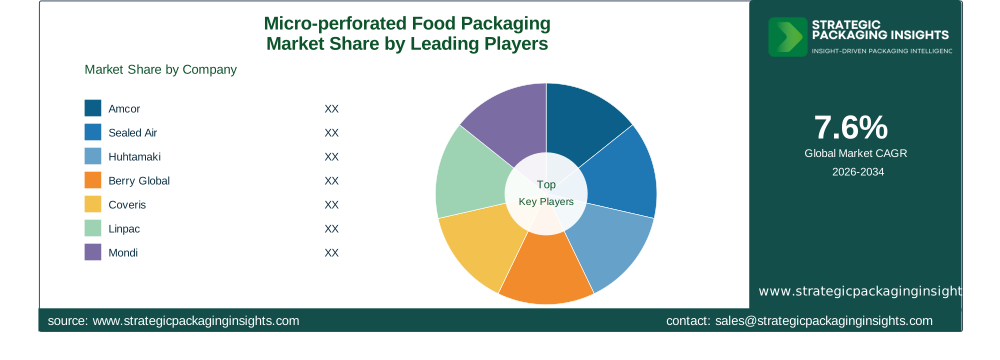
Amcor, a global leader in packaging solutions, holds a significant market share due to its innovative product offerings and commitment to sustainability. The company has been investing in research and development to create advanced packaging solutions that cater to the evolving needs of consumers. Sealed Air, known for its Cryovac brand, is another major player in the market. The company is focused on providing packaging solutions that enhance food safety and extend shelf life, making it a preferred choice for food manufacturers.
Huhtamaki, a leading provider of sustainable packaging solutions, is also a key player in the market. The company has been expanding its product portfolio to include biodegradable and recyclable packaging options, which are gaining popularity among environmentally conscious consumers. Berry Global, Coveris, and Linpac are other notable players in the market, each with a strong focus on innovation and sustainability.
Mondi, Constantia Flexibles, ProAmpac, and Sonoco are also significant contributors to the market. These companies are leveraging their expertise in packaging technology to develop solutions that meet the specific needs of different applications, such as fresh produce and meat packaging. By focusing on product differentiation and customer-centric solutions, these companies are well-positioned to capitalize on the growing demand for micro-perforated food packaging.
Key Highlights
- The micro-perforated food packaging market is projected to grow at a CAGR of 7.6% from 2026 to 2034.
- Increasing demand for fresh and minimally processed food products is a major market driver.
- Technological advancements in biodegradable and recyclable materials offer significant growth opportunities.
- Stringent regulations regarding packaging materials pose challenges for market players.
- The rise of e-commerce and online grocery shopping is driving demand for efficient packaging solutions.
- Smart packaging technologies, such as freshness indicators, are gaining traction.
- Key players include Amcor, Sealed Air, Huhtamaki, and Berry Global.
Top Countries Insights
In the micro-perforated food packaging market, the United States holds a significant share due to its advanced food processing industry and high consumer demand for fresh produce. The market in the U.S. is expected to grow at a CAGR of 6%, driven by innovations in packaging technology and a strong focus on sustainability. Government regulations promoting the use of eco-friendly materials are also contributing to market growth.

Germany is another key market, with a CAGR of 5%. The country's stringent environmental regulations and consumer preference for sustainable packaging solutions are driving demand. The presence of major packaging companies and a well-established food industry further support market growth in Germany.
China is experiencing rapid growth in the micro-perforated food packaging market, with a CAGR of 9%. The country's expanding middle class and increasing demand for convenience foods are key growth drivers. Additionally, government initiatives to promote sustainable packaging solutions are expected to boost market growth.
In India, the market is projected to grow at a CAGR of 8%, driven by the rising demand for fresh produce and ready-to-eat meals. The country's growing population and increasing urbanization are contributing to the demand for advanced packaging solutions. Government policies supporting the use of biodegradable materials are also expected to drive market growth.
Brazil is another important market, with a CAGR of 7%. The country's expanding food processing industry and increasing consumer awareness regarding food safety and quality are driving demand for micro-perforated packaging solutions. The presence of local manufacturers and a growing focus on sustainability are further supporting market growth.
Micro-perforated Food Packaging Market Segments Insights

Material Analysis
The material segment of the micro-perforated food packaging market is primarily divided into plastic and paper. Plastic remains the dominant material due to its versatility, durability, and cost-effectiveness. It is widely used in packaging applications that require moisture resistance and flexibility. However, the environmental impact of plastic waste is driving the demand for alternative materials. As a result, paper-based packaging is gaining traction, particularly among environmentally conscious consumers. Paper offers the advantage of being biodegradable and recyclable, making it an attractive option for sustainable packaging solutions.
Within the plastic segment, advancements in biodegradable and compostable plastics are creating new opportunities for market growth. Companies are investing in research and development to create innovative materials that offer the benefits of traditional plastics while minimizing environmental impact. The increasing adoption of these materials is expected to drive the growth of the plastic segment in the coming years. Additionally, the rise of e-commerce and online grocery shopping is boosting demand for durable and reliable packaging solutions, further supporting the growth of the plastic segment.
Perforation Type Analysis
The perforation type segment is categorized into micro and macro perforations. Micro-perforations are the most widely used due to their ability to regulate gas exchange and maintain product freshness. This type of perforation is particularly beneficial for packaging fresh produce, as it helps extend shelf life by preventing spoilage. The demand for micro-perforated packaging is driven by the increasing consumer preference for fresh and minimally processed food products.
Macro perforations, on the other hand, are used in applications where higher levels of ventilation are required. This type of perforation is suitable for packaging products that require rapid cooling or drying, such as bakery items. While macro perforations are less common than micro-perforations, they play a crucial role in specific applications where ventilation is a priority. The growing demand for convenience foods and ready-to-eat meals is expected to drive the adoption of both micro and macro perforations in the coming years.
Application Analysis
The application segment of the micro-perforated food packaging market includes fresh produce and meat. Fresh produce is the largest application segment, driven by the increasing demand for fruits and vegetables that are free from preservatives and additives. Micro-perforated packaging helps maintain the freshness and quality of fresh produce by allowing the exchange of gases, which prevents spoilage and extends shelf life. This packaging solution is particularly beneficial for products that are prone to spoilage, such as berries and leafy greens.
The meat segment is also experiencing significant growth, driven by the rising demand for packaged meat products. Micro-perforated packaging helps maintain the quality and safety of meat products by regulating gas exchange and preventing the growth of harmful bacteria. The increasing consumer preference for convenience foods and ready-to-eat meals is further driving demand for micro-perforated packaging in the meat segment. As consumers become more health-conscious, the demand for packaging solutions that ensure food safety and quality is expected to continue to grow.
Form Analysis
The form segment of the micro-perforated food packaging market is divided into bags and films. Bags are the most commonly used form of packaging, offering convenience and ease of use for both consumers and manufacturers. They are widely used in applications such as fresh produce and bakery products, where maintaining product freshness is a priority. The demand for bags is driven by the increasing consumer preference for convenience foods and ready-to-eat meals.
Films, on the other hand, are used in applications where flexibility and durability are required. They are commonly used in packaging meat products, where maintaining product quality and safety is crucial. The demand for films is driven by the growing trend of e-commerce and online grocery shopping, which requires packaging solutions that can withstand the rigors of transportation. As the demand for advanced packaging solutions continues to grow, the adoption of both bags and films is expected to increase in the coming years.
Micro-perforated Food Packaging Market Segments
The Micro-perforated Food Packaging market has been segmented on the basis ofMaterial
- Plastic
- Paper
Perforation Type
- Micro
- Macro
Application
- Fresh Produce
- Meat
Form
- Bags
- Films
Region
- Asia Pacific
- North America
- Latin America
- Europe
- Middle East & Africa




