


Medical Devices Secondary Packaging Market Outlook
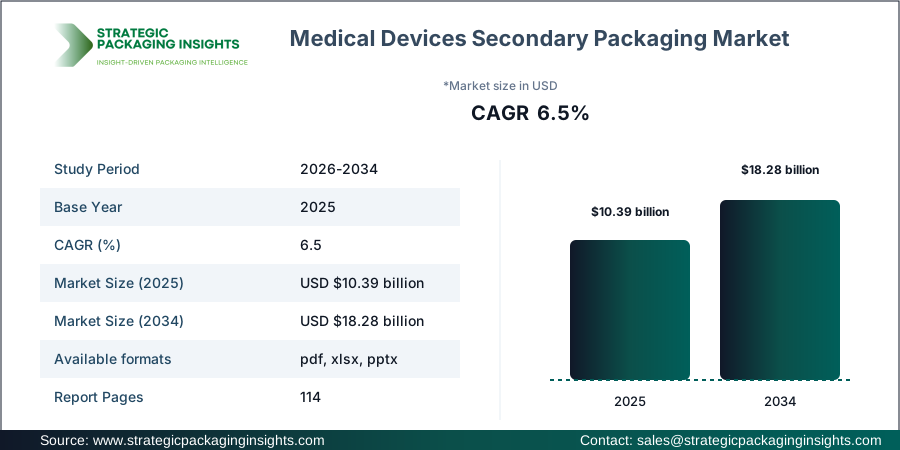
The Medical Devices Secondary Packaging market was valued at $10.39 billion in 2025 and is projected to reach $18.28 billion by 2034, growing at a CAGR of 6.5% during the forecast period 2026-2034. This market is driven by the increasing demand for safe and efficient packaging solutions that ensure the integrity and sterility of medical devices. The rise in healthcare expenditure, coupled with the growing prevalence of chronic diseases, has led to an increased demand for medical devices, thereby boosting the need for secondary packaging solutions. Additionally, advancements in packaging materials and technologies are further propelling market growth, as they offer enhanced protection and compliance with stringent regulatory standards.
However, the market faces certain restraints, such as the high cost of advanced packaging materials and the complex regulatory landscape governing medical device packaging. Despite these challenges, the market holds significant growth potential, driven by the increasing adoption of sustainable and eco-friendly packaging solutions. The shift towards green packaging is gaining momentum, as manufacturers and healthcare providers seek to reduce their environmental footprint. Furthermore, the growing trend of outsourcing packaging services to contract development and manufacturing organizations (CDMOs) is expected to create lucrative opportunities for market players, as it allows them to focus on their core competencies while leveraging the expertise of specialized packaging providers.
Report Scope
| Attributes | Details |
| Report Title | Medical Devices Secondary Packaging Market Size, Future Growth and Forecast 2034 |
| By Packaging Type | Cartons, Labels, Inserts, Pouches |
| By Material Type | Paperboard, Plastic, Tyvek, Medical Paper |
| By Application | Surgical Devices, Diagnostic Kits, Implants, Consumables |
| By End Use | Medical Device Companies, Hospitals, CDMOs, Sterilization Providers |
| Region | Asia Pacific, North America, Latin America, Europe, Middle East & Africa |
| Base Year | 2025 |
| Historic Period | 2018-2024 |
| Forecast Period | 2026-2034 |
| Number of Pages | 114 |
| Customization Available | Yes* |
Opportunities & Threats
The Medical Devices Secondary Packaging market presents numerous opportunities for growth, particularly in the realm of sustainable packaging solutions. As environmental concerns continue to rise, there is a growing demand for eco-friendly packaging materials that minimize waste and reduce carbon emissions. Companies that invest in the development of biodegradable and recyclable packaging options are likely to gain a competitive edge, as they align with the sustainability goals of healthcare providers and regulatory bodies. Additionally, the increasing trend of personalized medicine and the growing demand for customized packaging solutions offer significant opportunities for market expansion. By providing tailored packaging solutions that cater to the specific needs of different medical devices, companies can enhance their value proposition and strengthen their market position.
Another opportunity lies in the expansion of the market in emerging economies, where the healthcare infrastructure is rapidly developing. Countries in Asia Pacific and Latin America are witnessing a surge in healthcare investments, leading to an increased demand for medical devices and, consequently, secondary packaging solutions. Companies that establish a strong presence in these regions can capitalize on the growing market potential and tap into new revenue streams. Furthermore, the integration of smart packaging technologies, such as RFID tags and QR codes, presents an opportunity to enhance the functionality and traceability of medical device packaging, thereby improving supply chain efficiency and patient safety.
Despite the promising opportunities, the market faces certain threats that could hinder its growth. One of the primary challenges is the stringent regulatory environment governing medical device packaging. Compliance with various international standards and regulations, such as ISO 11607 and FDA guidelines, requires significant investment in quality assurance and testing processes. Non-compliance can result in costly recalls and damage to brand reputation. Additionally, the high cost of advanced packaging materials and technologies may pose a barrier to entry for small and medium-sized enterprises, limiting their ability to compete with established players. The market is also susceptible to fluctuations in raw material prices, which can impact profit margins and overall market dynamics.
Drivers & Challenges
The primary drivers of the Medical Devices Secondary Packaging market include the increasing demand for medical devices and the need for effective packaging solutions that ensure product safety and compliance. The growing prevalence of chronic diseases, such as diabetes and cardiovascular disorders, has led to a surge in the demand for medical devices, thereby driving the need for secondary packaging solutions. Additionally, the rise in healthcare expenditure and the expansion of healthcare infrastructure in emerging economies are contributing to market growth. The development of innovative packaging materials and technologies, such as antimicrobial coatings and tamper-evident seals, is further enhancing the appeal of secondary packaging solutions, as they offer improved protection and compliance with regulatory standards.
Another significant driver is the growing focus on sustainability and environmental responsibility. As healthcare providers and regulatory bodies increasingly prioritize eco-friendly practices, there is a rising demand for sustainable packaging solutions that minimize environmental impact. Companies that invest in the development of biodegradable and recyclable packaging materials are likely to gain a competitive advantage, as they align with the sustainability goals of their customers. Furthermore, the trend of outsourcing packaging services to CDMOs is gaining traction, as it allows medical device manufacturers to focus on their core competencies while leveraging the expertise of specialized packaging providers. This trend is expected to drive market growth, as it enables companies to access advanced packaging technologies and streamline their supply chain operations.
Despite the positive drivers, the market faces several challenges that could impede its growth. One of the primary challenges is the complex regulatory landscape governing medical device packaging. Compliance with various international standards and regulations requires significant investment in quality assurance and testing processes, which can be costly and time-consuming. Additionally, the high cost of advanced packaging materials and technologies may pose a barrier to entry for small and medium-sized enterprises, limiting their ability to compete with established players. The market is also susceptible to fluctuations in raw material prices, which can impact profit margins and overall market dynamics. Furthermore, the increasing competition among market players is intensifying pricing pressures, which could affect profitability and market share.
Market Share Analysis
The competitive landscape of the Medical Devices Secondary Packaging market is characterized by the presence of several key players, each vying for market share through strategic initiatives such as mergers and acquisitions, product innovations, and partnerships. Companies like WestRock and Amcor are leading the market with their extensive product portfolios and strong global presence. WestRock, known for its innovative packaging solutions, holds a significant market share due to its focus on sustainability and customer-centric approach. Amcor, on the other hand, is renowned for its advanced packaging technologies and commitment to environmental responsibility, which have helped it maintain a competitive edge in the market.
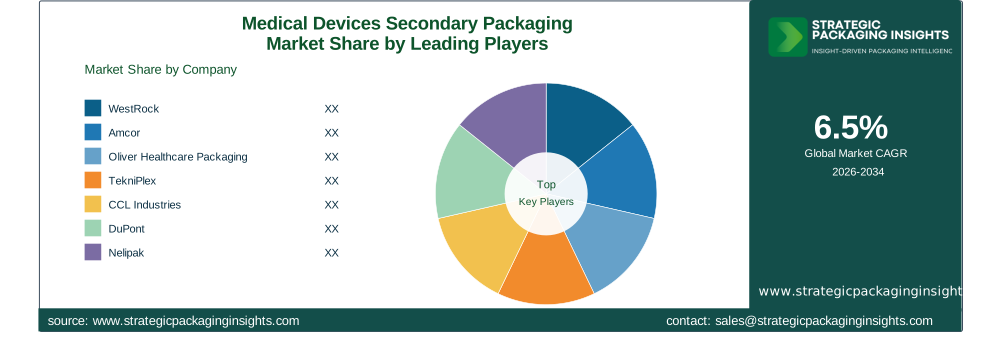
Oliver Healthcare Packaging is another prominent player in the market, offering a wide range of sterile barrier packaging solutions that cater to the specific needs of medical device manufacturers. The company's emphasis on quality and compliance has earned it a strong reputation in the industry, contributing to its substantial market share. TekniPlex, with its focus on innovation and customer collaboration, is also a key player in the market, providing customized packaging solutions that enhance product safety and performance. CCL Industries, known for its expertise in labeling and packaging, has established a strong foothold in the market by offering innovative solutions that meet the evolving needs of the healthcare sector.
DuPont, a leader in material science, is recognized for its high-performance packaging materials that offer superior protection and compliance with regulatory standards. The company's focus on research and development has enabled it to introduce cutting-edge solutions that address the challenges faced by medical device manufacturers. Nelipak, with its expertise in thermoformed packaging, is another key player in the market, offering solutions that ensure product integrity and sterility. Sonoco, known for its sustainable packaging solutions, has gained a competitive advantage by aligning its offerings with the sustainability goals of healthcare providers and regulatory bodies.
SteriPack, a global provider of sterile packaging solutions, is recognized for its commitment to quality and innovation, which has helped it secure a significant market share. UFP Technologies, with its focus on custom-engineered packaging solutions, is also a notable player in the market, offering products that enhance the safety and efficacy of medical devices. The competitive landscape is further intensified by the presence of several regional and local players, each striving to capture a share of the growing market through strategic initiatives and product innovations.
Key Highlights
- The Medical Devices Secondary Packaging market is projected to grow from $10.39 billion in 2025 to $18.28 billion by 2034, at a CAGR of 6.5%.
- Key drivers include the increasing demand for medical devices, advancements in packaging materials, and the growing focus on sustainability.
- Challenges include the complex regulatory landscape, high cost of advanced packaging materials, and fluctuations in raw material prices.
- Opportunities exist in the development of eco-friendly packaging solutions and the expansion of the market in emerging economies.
- Key players include WestRock, Amcor, Oliver Healthcare Packaging, TekniPlex, and CCL Industries.
- The market is characterized by intense competition, with companies focusing on product innovations and strategic partnerships.
- The trend of outsourcing packaging services to CDMOs is gaining traction, driving market growth.
- Smart packaging technologies, such as RFID tags and QR codes, are enhancing the functionality and traceability of medical device packaging.
- The market is witnessing a shift towards personalized medicine and customized packaging solutions.
Top Countries Insights
In the Medical Devices Secondary Packaging market, the United States holds a significant share, driven by its advanced healthcare infrastructure and high demand for medical devices. The market size in the U.S. is substantial, with a CAGR of 5%, supported by favorable government policies and a strong focus on innovation. The presence of key market players and a well-established regulatory framework further contribute to the market's growth. However, challenges such as stringent regulations and high costs of advanced packaging materials persist.
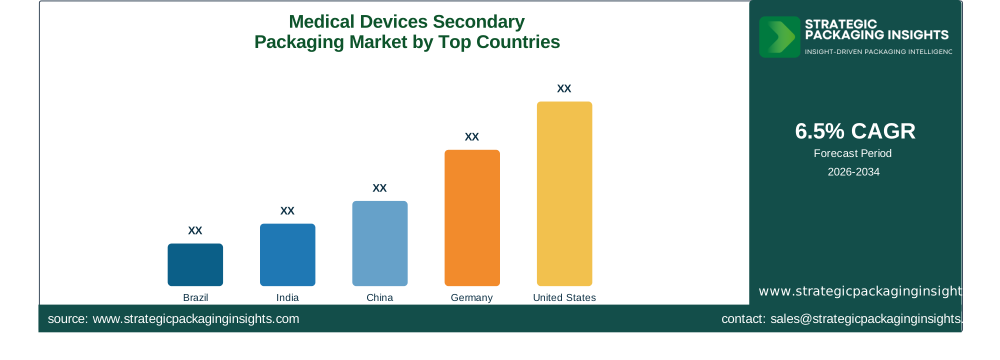
Germany is another key player in the market, with a robust healthcare system and a strong emphasis on quality and compliance. The market in Germany is growing at a CAGR of 4%, driven by the increasing demand for medical devices and the adoption of sustainable packaging solutions. The country's focus on research and development and its commitment to environmental responsibility are key growth drivers. However, the market faces challenges related to regulatory compliance and cost pressures.
China is experiencing rapid growth in the Medical Devices Secondary Packaging market, with a CAGR of 8%. The country's expanding healthcare infrastructure and increasing investments in the medical device sector are driving market growth. The government's focus on improving healthcare access and quality is also contributing to the market's expansion. However, challenges such as regulatory complexities and competition from local players remain.
India is emerging as a significant market for medical devices secondary packaging, with a CAGR of 7%. The country's growing healthcare sector and increasing demand for medical devices are key growth drivers. The government's initiatives to promote healthcare access and affordability are also supporting market growth. However, challenges such as regulatory hurdles and cost constraints persist.
Brazil is witnessing steady growth in the Medical Devices Secondary Packaging market, with a CAGR of 6%. The country's expanding healthcare infrastructure and increasing demand for medical devices are driving market growth. The government's focus on improving healthcare quality and access is also contributing to the market's expansion. However, challenges such as economic instability and regulatory complexities remain.
Medical Devices Secondary Packaging Market Segments Insights

Packaging Type Analysis
The Packaging Type segment in the Medical Devices Secondary Packaging market is diverse, encompassing various options such as cartons, labels, inserts, and pouches. Cartons are widely used due to their ability to provide robust protection and ease of handling. They are particularly favored for bulk packaging of medical devices, offering both structural integrity and ample space for labeling and instructions. Labels, on the other hand, play a crucial role in ensuring compliance with regulatory requirements by providing essential information about the medical device, such as usage instructions, expiration dates, and safety warnings. The demand for labels is driven by the need for clear and accurate communication of product information, which is critical for patient safety and regulatory compliance.
Inserts are another important packaging type, often used to provide detailed information about the medical device, including instructions for use, safety precautions, and warranty details. They are typically included within the primary packaging and are essential for ensuring that healthcare professionals and patients have access to all necessary information. Pouches, known for their flexibility and lightweight nature, are increasingly being used for packaging smaller medical devices and consumables. They offer a cost-effective and space-saving solution, making them ideal for single-use devices and kits. The growing demand for minimally invasive surgical devices and diagnostic kits is driving the adoption of pouches, as they provide a sterile barrier and are easy to handle and dispose of.
Material Type Analysis
The Material Type segment in the Medical Devices Secondary Packaging market includes paperboard, plastic, Tyvek, and medical paper. Paperboard is a popular choice due to its versatility and recyclability, making it an eco-friendly option for secondary packaging. It is commonly used for cartons and inserts, providing a sturdy and protective barrier for medical devices. The demand for paperboard is driven by the increasing focus on sustainability and the need for packaging solutions that align with environmental goals. Plastic, known for its durability and flexibility, is widely used for labels and pouches. It offers excellent protection against moisture and contamination, making it ideal for packaging medical devices that require a sterile environment.
Tyvek, a high-density polyethylene material, is renowned for its strength and breathability, making it a preferred choice for sterile barrier packaging. It is commonly used for pouches and wraps, providing a reliable barrier against microorganisms while allowing for gas sterilization. The demand for Tyvek is driven by its superior performance and compliance with stringent regulatory standards. Medical paper, known for its printability and cost-effectiveness, is often used for inserts and labels. It provides a smooth surface for printing detailed information and is easily recyclable, making it an environmentally friendly option. The growing demand for sustainable packaging solutions is driving the adoption of medical paper, as it offers a balance between performance and environmental responsibility.
Application Analysis
The Application segment in the Medical Devices Secondary Packaging market includes surgical devices, diagnostic kits, implants, and consumables. Surgical devices, which require sterile and secure packaging, are a major driver of the market. The demand for advanced packaging solutions that ensure the integrity and sterility of surgical devices is increasing, driven by the growing prevalence of minimally invasive surgeries and the need for infection control. Diagnostic kits, which are often used in point-of-care settings, require packaging that is both protective and easy to use. The demand for diagnostic kits is driven by the increasing focus on early disease detection and the growing trend of home-based testing.
Implants, which are critical for patient outcomes, require packaging that ensures their safety and efficacy. The demand for implant packaging is driven by the increasing number of orthopedic and cardiovascular procedures, as well as the growing focus on personalized medicine. Consumables, such as syringes and catheters, require packaging that is both cost-effective and compliant with regulatory standards. The demand for consumable packaging is driven by the increasing use of disposable medical devices and the need for efficient supply chain management. The growing focus on patient safety and regulatory compliance is driving the adoption of advanced packaging solutions across all application segments, as they offer enhanced protection and traceability.
End Use Analysis
The End Use segment in the Medical Devices Secondary Packaging market includes medical device companies, hospitals, CDMOs, and sterilization providers. Medical device companies are the primary end users, as they require packaging solutions that ensure the safety and compliance of their products. The demand for secondary packaging solutions is driven by the need for efficient supply chain management and the growing focus on sustainability. Hospitals, which are major consumers of medical devices, require packaging solutions that ensure the sterility and integrity of the products they use. The demand for hospital packaging is driven by the increasing focus on infection control and patient safety.
CDMOs, which provide contract packaging services, are playing an increasingly important role in the market. The demand for CDMO services is driven by the trend of outsourcing packaging operations, as it allows medical device companies to focus on their core competencies while leveraging the expertise of specialized providers. Sterilization providers, which ensure the sterility of medical devices, require packaging solutions that are compatible with various sterilization methods. The demand for sterilization packaging is driven by the increasing use of single-use devices and the need for efficient and reliable sterilization processes. The growing focus on quality and compliance is driving the adoption of advanced packaging solutions across all end-use segments, as they offer enhanced protection and performance.
Medical Devices Secondary Packaging Market Segments
The Medical Devices Secondary Packaging market has been segmented on the basis ofBy Packaging Type
- Cartons
- Labels
- Inserts
- Pouches
By Material Type
- Paperboard
- Plastic
- Tyvek
- Medical Paper
By Application
- Surgical Devices
- Diagnostic Kits
- Implants
- Consumables
By End Use
- Medical Device Companies
- Hospitals
- CDMOs
- Sterilization Providers
Region
- Asia Pacific
- North America
- Latin America
- Europe
- Middle East & Africa




