


Meat Interleaving Paper Market Outlook
The Meat Interleaving Paper market was valued at $254.78 million in 2025 and is projected to reach $449.07 million by 2034, growing at a CAGR of 6.5% during the forecast period 2026-2034. This market is witnessing significant growth due to the increasing demand for hygienic and efficient packaging solutions in the meat industry. The rise in meat consumption globally, coupled with the need for maintaining product quality and shelf life, is driving the demand for meat interleaving paper. The market is also benefiting from advancements in paper technology, which have led to the development of more durable and moisture-resistant interleaving papers. Additionally, the growing trend of sustainable and eco-friendly packaging solutions is further propelling the market growth as manufacturers and consumers alike are becoming more environmentally conscious.
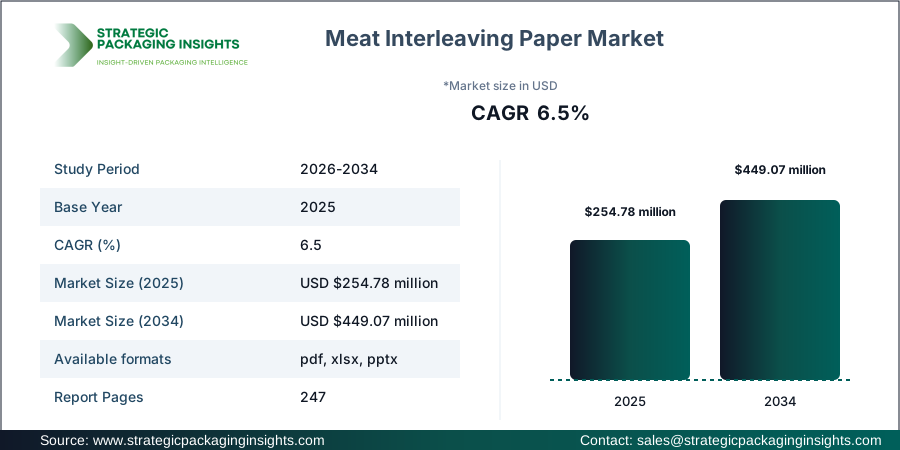
However, the market faces certain challenges that could hinder its growth. The fluctuating prices of raw materials used in the production of interleaving paper, such as pulp and paperboard, pose a significant restraint. Additionally, stringent regulations regarding food safety and packaging materials can impact market dynamics, requiring manufacturers to comply with various standards and certifications. Despite these challenges, the market holds substantial growth potential, particularly in emerging economies where the meat processing industry is expanding rapidly. The increasing adoption of automated packaging solutions in meat processing plants is also expected to create new opportunities for market players, as these systems often require specialized interleaving papers to ensure smooth operations.
Report Scope
| Attributes | Details |
| Report Title | Meat Interleaving Paper Market Size, Future Growth and Forecast 2034 |
| Product Type | Waxed, Uncoated, Treated |
| Application | Meat Processing, Retail Butcher, Foodservice |
| Material Type | Paperboard, Greaseproof Paper, Specialty Paper |
| End Use | Beef, Poultry, Seafood |
| Region | Asia Pacific, North America, Latin America, Europe, Middle East & Africa |
| Base Year | 2025 |
| Historic Period | 2018-2024 |
| Forecast Period | 2026-2034 |
| Number of Pages | 247 |
| Customization Available | Yes* |
Opportunities & Threats
The Meat Interleaving Paper market presents numerous opportunities for growth, particularly in the realm of technological advancements and product innovation. As the demand for more efficient and sustainable packaging solutions increases, companies are investing in research and development to create interleaving papers that are not only more durable but also environmentally friendly. The shift towards biodegradable and compostable materials is a significant opportunity for manufacturers to differentiate their products and capture a larger market share. Additionally, the growing trend of online grocery shopping and home delivery services is driving the demand for effective packaging solutions that can ensure the safe and hygienic transport of meat products, further boosting the market.
Another opportunity lies in the expansion of the meat processing industry in emerging markets. As countries in Asia Pacific and Latin America continue to urbanize and industrialize, the demand for processed meat products is on the rise. This creates a lucrative market for interleaving paper manufacturers who can provide high-quality, cost-effective solutions to meet the needs of these growing industries. Furthermore, partnerships and collaborations with meat processing companies can provide a steady stream of business and foster innovation in product development.
Despite these opportunities, the market is not without its threats. One of the primary threats is the volatility in raw material prices, which can significantly impact production costs and profit margins. Additionally, the market faces competition from alternative packaging solutions, such as plastic films and trays, which may offer certain advantages in terms of cost and convenience. The increasing focus on reducing plastic waste, however, may mitigate this threat to some extent, as consumers and businesses alike seek more sustainable options. Moreover, regulatory challenges related to food safety and packaging standards can pose significant hurdles for market players, requiring continuous investment in compliance and quality assurance.
Drivers & Challenges
The Meat Interleaving Paper market is primarily driven by the increasing demand for hygienic and efficient packaging solutions in the meat industry. As consumers become more health-conscious and aware of food safety, the need for packaging that can prevent contamination and preserve the quality of meat products is paramount. This has led to a surge in demand for interleaving papers that offer superior moisture resistance and durability. Additionally, the rise in global meat consumption, driven by population growth and changing dietary preferences, is further fueling the market. The expansion of the meat processing industry, particularly in emerging economies, is also a significant driver, as these facilities require specialized packaging solutions to ensure efficient operations.
Another key driver is the growing trend towards sustainable and eco-friendly packaging solutions. As environmental concerns continue to rise, both consumers and manufacturers are seeking alternatives to traditional plastic packaging. Meat interleaving paper, being biodegradable and recyclable, offers a viable solution that aligns with these sustainability goals. This shift towards greener packaging options is expected to drive market growth, as companies strive to meet consumer demand for environmentally responsible products. Furthermore, advancements in paper technology, such as the development of greaseproof and specialty papers, are enhancing the performance and appeal of interleaving papers, making them more competitive in the market.
However, the market faces several challenges that could impede its growth. One of the primary challenges is the fluctuating prices of raw materials, such as pulp and paperboard, which can significantly impact production costs and profit margins. Additionally, the market is subject to stringent regulations regarding food safety and packaging materials, requiring manufacturers to comply with various standards and certifications. This can increase operational costs and create barriers to entry for new players. Moreover, the market faces competition from alternative packaging solutions, such as plastic films and trays, which may offer certain advantages in terms of cost and convenience. To overcome these challenges, market players must focus on innovation, cost-efficiency, and compliance with regulatory standards.
Market Share Analysis
The competitive landscape of the Meat Interleaving Paper market is characterized by the presence of several key players who dominate the market with their extensive product portfolios and strong distribution networks. Companies such as Domtar, Novolex, Ahlstrom, Mondi, International Paper, and WestRock are some of the leading players in the market, holding significant market shares due to their established brand reputation and commitment to quality. These companies have a strong presence in both developed and emerging markets, allowing them to capitalize on the growing demand for meat interleaving paper globally.
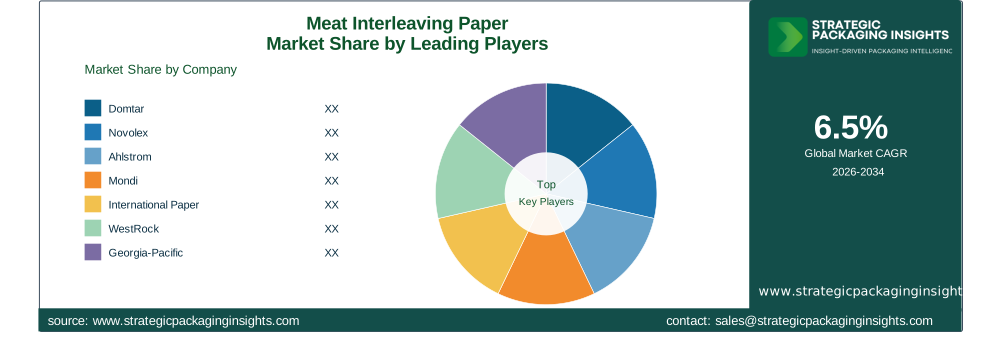
Domtar, for instance, is known for its innovative paper solutions and has a robust product line that caters to various packaging needs. Novolex, on the other hand, focuses on sustainability and offers a range of eco-friendly packaging solutions, including interleaving papers. Ahlstrom is renowned for its specialty papers and has a strong foothold in the market due to its focus on quality and innovation. Mondi, with its extensive global reach and diverse product offerings, is another major player that has been able to capture a significant share of the market.
International Paper and WestRock are two of the largest paper and packaging companies in the world, and their extensive resources and capabilities allow them to maintain a competitive edge in the market. Georgia-Pacific, known for its high-quality paper products, also holds a substantial market share, particularly in North America. Detmold Group, Kruger Inc., and Pactiv Evergreen are other notable players in the market, each with their unique strengths and offerings that contribute to the overall competitive landscape.
These companies are continuously investing in research and development to enhance their product offerings and meet the evolving needs of the market. They are also focusing on strategic partnerships and acquisitions to expand their market presence and strengthen their competitive position. As the demand for meat interleaving paper continues to grow, these key players are well-positioned to capitalize on the opportunities and drive market growth.
Key Highlights
- The Meat Interleaving Paper market is projected to grow at a CAGR of 6.5% from 2026 to 2034.
- Increasing demand for hygienic and efficient packaging solutions is driving market growth.
- Advancements in paper technology are enhancing the durability and moisture resistance of interleaving papers.
- The shift towards sustainable and eco-friendly packaging solutions is a significant market driver.
- Emerging markets in Asia Pacific and Latin America present lucrative growth opportunities.
- Fluctuating raw material prices pose a challenge to market growth.
- Key players in the market include Domtar, Novolex, Ahlstrom, Mondi, and International Paper.
- Stringent regulations regarding food safety and packaging materials impact market dynamics.
- Partnerships and collaborations with meat processing companies are fostering innovation.
- The market faces competition from alternative packaging solutions such as plastic films and trays.
Top Countries Insights
In the Meat Interleaving Paper market, the United States stands out as a leading country with a market size of approximately $XX billion and a CAGR of 5%. The country's robust meat processing industry, coupled with a strong focus on food safety and hygiene, drives the demand for high-quality interleaving papers. Additionally, the growing trend of sustainable packaging solutions is further boosting market growth as consumers and businesses alike seek environmentally friendly options.
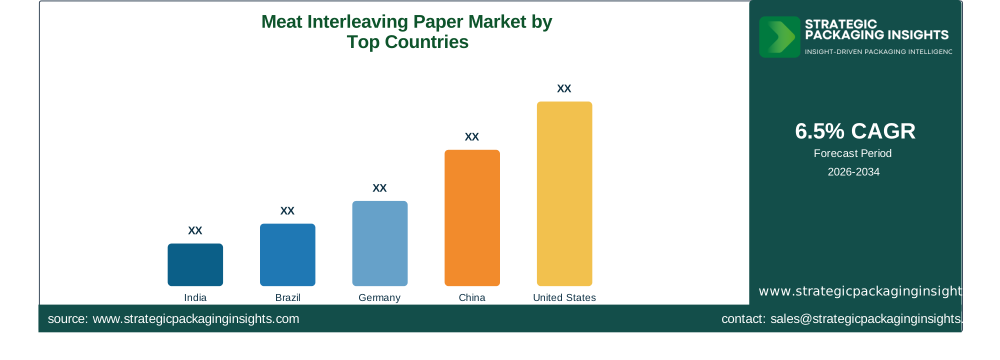
China is another significant player in the market, with a market size of $XX billion and a CAGR of 8%. The rapid urbanization and industrialization in the country have led to an increase in meat consumption, driving the demand for efficient packaging solutions. The government's focus on improving food safety standards and promoting sustainable practices is also contributing to market growth.
Germany, with a market size of $XX billion and a CAGR of 4%, is a key market in Europe. The country's strong meat processing industry and emphasis on quality and sustainability are driving the demand for interleaving papers. Additionally, the increasing adoption of automated packaging solutions in meat processing plants is creating new opportunities for market players.
Brazil, with a market size of $XX billion and a CAGR of 6%, is a major market in Latin America. The country's expanding meat processing industry and growing focus on food safety and hygiene are driving the demand for interleaving papers. The government's initiatives to promote sustainable packaging solutions are also contributing to market growth.
India, with a market size of $XX billion and a CAGR of 7%, is an emerging market with significant growth potential. The country's growing population and increasing meat consumption are driving the demand for efficient packaging solutions. Additionally, the government's focus on improving food safety standards and promoting sustainable practices is expected to boost market growth.
Meat Interleaving Paper Market Segments Insights

Product Type Analysis
The Meat Interleaving Paper market is segmented by product type into waxed, uncoated, and treated papers. Waxed interleaving papers are highly favored for their moisture-resistant properties, making them ideal for packaging fresh and processed meats. The demand for waxed papers is driven by their ability to prevent moisture loss and maintain the freshness of meat products. Uncoated papers, on the other hand, are preferred for their cost-effectiveness and biodegradability, appealing to environmentally conscious consumers and businesses. Treated papers, which offer enhanced durability and grease resistance, are gaining traction in the market as they provide superior protection for meat products during storage and transportation.
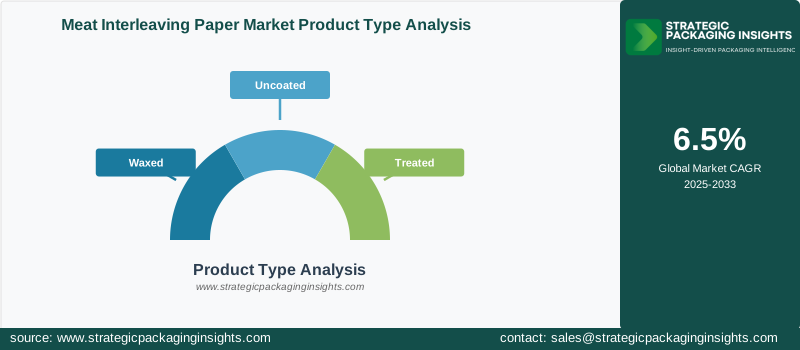
The growing demand for sustainable packaging solutions is influencing the product type segment, with manufacturers focusing on developing eco-friendly interleaving papers. The shift towards biodegradable and compostable materials is expected to drive the growth of uncoated and treated papers, as they align with the sustainability goals of consumers and businesses. Additionally, advancements in paper technology are enhancing the performance of waxed and treated papers, making them more competitive in the market. As the demand for high-quality, efficient packaging solutions continues to rise, the product type segment is expected to witness significant growth during the forecast period.
Application Analysis
The application segment of the Meat Interleaving Paper market includes meat processing, retail butcher, and foodservice. The meat processing industry is the largest application segment, driven by the increasing demand for processed meat products and the need for efficient packaging solutions to ensure product quality and safety. Interleaving papers are essential in meat processing plants, where they are used to separate and protect meat products during processing and packaging. The retail butcher segment is also a significant market, as butchers require interleaving papers to maintain the freshness and hygiene of meat products for their customers.
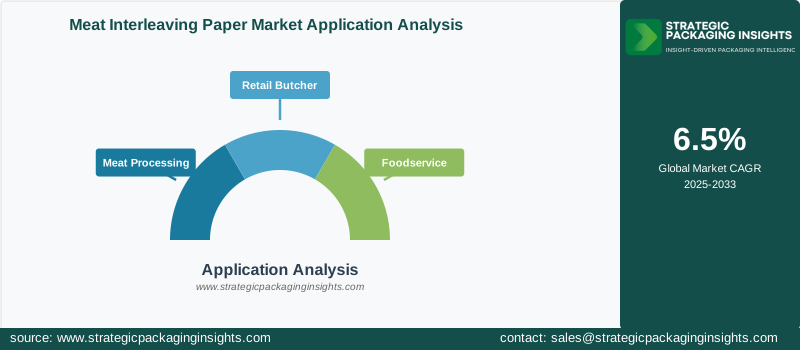
The foodservice segment is experiencing growth due to the rising trend of online grocery shopping and home delivery services. As consumers increasingly opt for convenient and hygienic food options, the demand for effective packaging solutions in the foodservice industry is on the rise. Interleaving papers play a crucial role in ensuring the safe and hygienic transport of meat products, making them an essential component of the foodservice supply chain. The application segment is expected to witness continued growth as the demand for processed meat products and convenient food options increases globally.
Material Type Analysis
The Meat Interleaving Paper market is segmented by material type into paperboard, greaseproof paper, and specialty paper. Paperboard is the most commonly used material due to its strength and durability, making it ideal for packaging heavy and bulky meat products. The demand for paperboard is driven by its ability to provide excellent protection and support for meat products during storage and transportation. Greaseproof paper, known for its moisture and grease-resistant properties, is gaining popularity in the market as it offers superior protection for meat products, preventing contamination and spoilage.
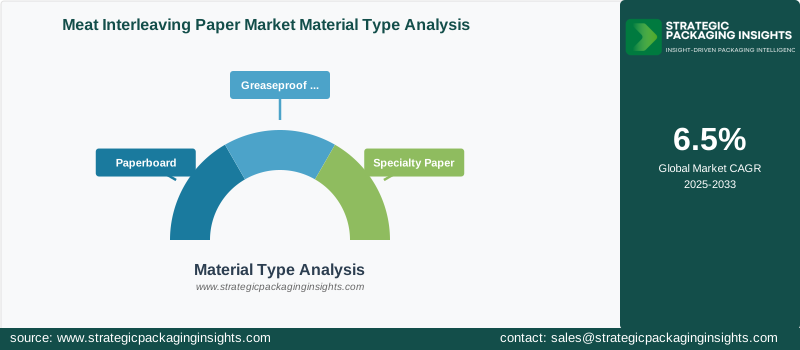
Specialty papers, which include a range of customized and high-performance papers, are also gaining traction in the market. These papers are designed to meet specific packaging needs and offer enhanced features such as moisture resistance, durability, and biodegradability. The growing demand for sustainable and eco-friendly packaging solutions is influencing the material type segment, with manufacturers focusing on developing innovative and environmentally responsible papers. As the demand for high-quality, efficient packaging solutions continues to rise, the material type segment is expected to witness significant growth during the forecast period.
End Use Analysis
The end use segment of the Meat Interleaving Paper market includes beef, poultry, and seafood. The beef segment is the largest end use segment, driven by the high consumption of beef products globally and the need for efficient packaging solutions to ensure product quality and safety. Interleaving papers are essential in the beef industry, where they are used to separate and protect beef products during processing and packaging. The poultry segment is also a significant market, as poultry products require specialized packaging solutions to maintain freshness and hygiene.
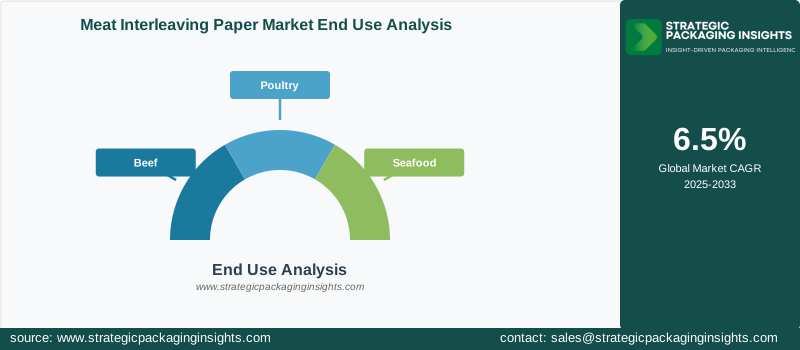
The seafood segment is experiencing growth due to the increasing demand for seafood products and the need for effective packaging solutions to prevent contamination and spoilage. Interleaving papers play a crucial role in ensuring the safe and hygienic transport of seafood products, making them an essential component of the seafood supply chain. The end use segment is expected to witness continued growth as the demand for meat and seafood products increases globally, driven by population growth and changing dietary preferences.
Meat Interleaving Paper Market Segments
The Meat Interleaving Paper market has been segmented on the basis ofProduct Type
- Waxed
- Uncoated
- Treated
Application
- Meat Processing
- Retail Butcher
- Foodservice
Material Type
- Paperboard
- Greaseproof Paper
- Specialty Paper
End Use
- Beef
- Poultry
- Seafood
Region
- Asia Pacific
- North America
- Latin America
- Europe
- Middle East & Africa




