


Man-Made Sausage Casing Market Outlook
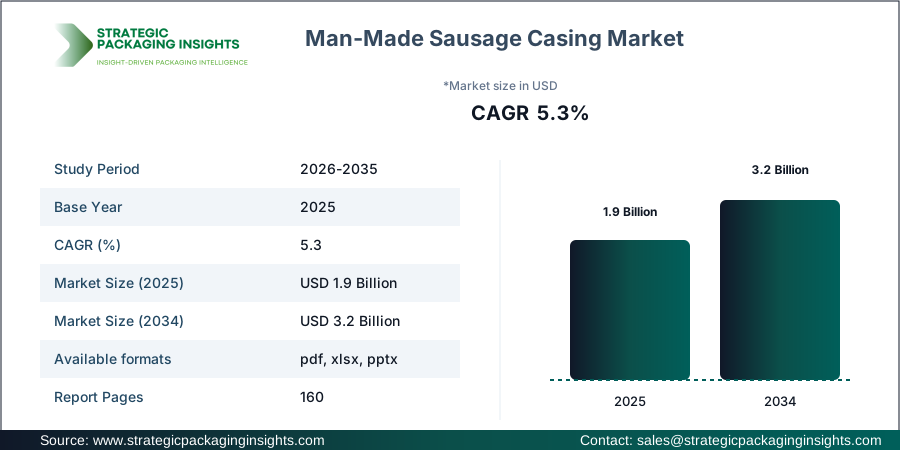
The Man-Made Sausage Casing market size was valued at USD $1.9 Billion in 2025 and is anticipated to reach USD $3.2 Billion by 2035, growing at a CAGR of 5.3% % during the forecast period according to Strategic Packaging Insights. The market is driven by the increasing demand for processed and convenience foods, which has led to a rise in sausage consumption globally. The growing trend of plant-based sausages is also contributing to the market growth, as manufacturers seek innovative casing solutions to cater to this segment.Report Scope
| Attributes | Details |
| Report Title | Man-Made Sausage Casing Market Projected to Scale to 3.2 Billion by 2035, Assesses Strategic Packaging Insights |
| By Casing Type | Collagen Casings, Cellulose Casings, Fibrous Casings, Plastic Casings, Edible Casings, Non-Edible Casings |
| By Material | Collagen, Cellulose, Polyamide (PA), Polyethylene (PE), Polyvinylidene Chloride (PVDC), Other Materials |
| By Diameter | Below 20 mm, 20–30 mm, 31–40 mm, 41–50 mm, Above 50 mm |
| By Sausage Type | Fresh Sausages, Cooked Sausages, Smoked Sausages, Dry and Semi-Dry Sausages, Fermented Sausages, Specialty Sausages |
| By Application | Meat Sausages, Poultry Sausages, Seafood Sausages, Plant-Based Sausages, Cheese and Specialty Products |
| By End Use | Industrial Meat Processors, Sausage Manufacturers, Foodservice, Retail, Small and Specialty Producers |
| By Function | Cooking and Processing, Smoking, Drying and Fermentation, Product Protection, Shape and Size Control, Shelf-Life Extension |
| By Distribution Channel | Direct Sales, Distributors, Specialty Food Packaging Suppliers, Online Sales |
| By Region | North America, Europe, Asia-Pacific, Latin America, Middle East and Africa |
| Base Year | 2025 |
| Historic Period | 2018-2024 |
| Forecast Period | 2026-2035 |
| Number of Pages | 160 |
| Customization Available | Yes* |
Market Trends Analysis
One of the significant trends in the Man-Made Sausage Casing market is the shift towards sustainable and eco-friendly casing materials. With increasing consumer awareness about environmental issues, manufacturers are exploring biodegradable and recyclable casing options. This trend is expected to influence product development and procurement strategies, as companies aim to align with sustainability goals. Additionally, the rise of plant-based sausages is driving demand for casings that can accommodate alternative protein sources, leading to innovations in material science and casing technology.
Another trend is the growing adoption of automation and digital technologies in sausage casing production. Automation enhances operational efficiency and reduces labor costs, while digital technologies enable better quality control and traceability. These advancements are crucial for maintaining competitive positioning in the market. As a result, companies are investing in advanced machinery and software solutions to optimize their production processes and meet the evolving demands of the food industry.
Industry Transformation Analysis
The Man-Made Sausage Casing industry is undergoing significant transformation, driven by technological advancements and changing consumer preferences. The integration of automation and digital technologies is reshaping manufacturing processes, leading to increased efficiency and reduced production costs. Companies are focusing on enhancing their operational capabilities to meet the growing demand for high-quality casings. This transformation is also influenced by the need for sustainable practices, prompting manufacturers to adopt eco-friendly materials and processes.
Furthermore, the industry is witnessing a shift towards localized production to reduce supply chain complexities and enhance responsiveness to regional market demands. This localization strategy is particularly evident in emerging markets, where companies are establishing production facilities to cater to the growing demand for sausages. The focus on sustainability and localization is expected to drive long-term growth and competitiveness in the Man-Made Sausage Casing market.
Trends & Disruptions Impacting Customers' Customers
Downstream customers, such as sausage manufacturers and foodservice providers, are increasingly focusing on product differentiation and innovation to meet changing consumer preferences. The demand for healthier and more sustainable food options is driving these customers to seek innovative casing solutions that align with their product offerings. Additionally, the rise of plant-based and specialty sausages is influencing the types of casings required, as manufacturers look for materials that can accommodate diverse sausage formulations.
These changes in downstream customer requirements are impacting the Man-Made Sausage Casing market by driving demand for customized and versatile casing solutions. Manufacturers are investing in research and development to create casings that offer enhanced functionality, such as improved barrier properties and extended shelf life. This focus on innovation is creating new market opportunities and encouraging collaboration between casing manufacturers and their customers to develop tailored solutions that meet specific needs.
Man-Made Sausage Casing Market Ecosystem
The Man-Made Sausage Casing market ecosystem involves a complex interplay of raw material suppliers, manufacturers, and end users. Raw materials such as collagen and cellulose are sourced from specialized suppliers and processed into casings through advanced manufacturing techniques. The converting stage involves extrusion and forming processes to create casings with specific properties and dimensions. Distribution channels ensure the timely delivery of casings to sausage manufacturers and retailers, facilitating seamless integration into production lines.
Value creation in this ecosystem is driven by the ability to produce high-quality casings that meet the diverse needs of sausage manufacturers. Supply chain dependencies, such as the availability of raw materials and efficient logistics, play a crucial role in maintaining market stability. As demand for innovative and sustainable casing solutions grows, manufacturers are focusing on enhancing their production capabilities and expanding their distribution networks to capture new market opportunities.
Analyst Perspective
Analyst Perspective: The Man-Made Sausage Casing market is poised for significant growth, driven by the increasing demand for processed foods and the rise of plant-based sausages. The shift towards sustainable casing materials presents a unique opportunity for manufacturers to differentiate their products and align with consumer preferences.
Companies should focus on investing in research and development to create innovative casing solutions that offer enhanced functionality and sustainability. The adoption of automation and digital technologies will be crucial for maintaining competitive advantage and optimizing production processes. As the market evolves, collaboration between casing manufacturers and their customers will be key to developing tailored solutions that meet specific needs.
Market participants should monitor regulatory developments and consumer trends to identify emerging opportunities and mitigate potential risks. The focus on sustainability and localization will drive long-term growth and competitiveness in the Man-Made Sausage Casing market.
Opportunities & Threats
The Man-Made Sausage Casing market presents several opportunities for growth, driven by the increasing demand for processed and convenience foods. The rise of plant-based sausages offers a unique opportunity for manufacturers to develop innovative casing solutions that cater to this growing segment. Additionally, the trend towards sustainable and eco-friendly materials presents a significant opportunity for differentiation and market expansion.
Technological advancements in casing production, such as automation and digital technologies, offer opportunities for enhancing operational efficiency and reducing production costs. Companies that invest in these technologies will be well-positioned to capitalize on the growing demand for high-quality casings. Furthermore, the expansion of distribution networks and localization strategies in emerging markets presents opportunities for capturing new market share.
However, the market also faces several threats, including raw material volatility and supply chain disruptions. The availability and cost of key raw materials, such as collagen and cellulose, can impact production costs and profitability. Additionally, regulatory uncertainty and changing consumer preferences pose challenges for manufacturers, requiring them to adapt quickly to evolving market conditions.
Competition from alternative casing materials and technologies also presents a threat to traditional casing manufacturers. Companies must continuously innovate and differentiate their products to maintain market share and competitiveness. The focus on sustainability and regulatory compliance will be crucial for navigating these challenges and ensuring long-term success in the Man-Made Sausage Casing market.
Drivers & Challenges
The primary driver of the Man-Made Sausage Casing market is the increasing demand for processed and convenience foods, which has led to a rise in sausage consumption globally. The growing trend of plant-based sausages is also contributing to market growth, as manufacturers seek innovative casing solutions to cater to this segment. Additionally, the focus on sustainability and eco-friendly materials is driving demand for biodegradable and recyclable casings, aligning with consumer preferences for environmentally responsible products.
Technological advancements in casing production, such as automation and digital technologies, are enhancing operational efficiency and reducing production costs. These advancements are crucial for maintaining competitive positioning in the market. Companies are investing in advanced machinery and software solutions to optimize their production processes and meet the evolving demands of the food industry. The integration of automation and digital technologies is reshaping manufacturing processes, leading to increased efficiency and reduced production costs.
However, the market faces challenges such as raw material volatility and supply chain disruptions. The availability and cost of key raw materials, such as collagen and cellulose, can impact production costs and profitability. Additionally, regulatory uncertainty and changing consumer preferences pose challenges for manufacturers, requiring them to adapt quickly to evolving market conditions. Companies must continuously innovate and differentiate their products to maintain market share and competitiveness.
Packaging Market Economics
The economics of the Man-Made Sausage Casing market are influenced by several factors, including raw material costs, conversion costs, and energy expenses. The pricing of key materials such as collagen and cellulose plays a significant role in determining overall production costs. Conversion costs, including extrusion and forming processes, also impact the economics of casing production. Energy costs are another critical factor, as they affect the operational efficiency and profitability of manufacturing facilities.
Logistics and distribution expenses are important considerations in the market, as they influence the cost-effectiveness of delivering casings to manufacturers and retailers. Companies must optimize their supply chain operations to minimize costs and enhance competitiveness. The focus on sustainability and eco-friendly materials is also impacting the economics of the market, as manufacturers invest in research and development to create innovative casing solutions that align with consumer preferences.
Packaging Value Chain & Cost Analysis
The value chain of the Man-Made Sausage Casing market involves several key stages, including resin synthesis, film extrusion, and converting. Resin synthesis involves the production of base materials such as collagen and cellulose, which are essential for casing production. Film extrusion and converting processes are critical for creating casings with specific properties and dimensions. These stages require advanced machinery and technology to ensure high-quality production.
Downstream activities, such as co-packing and distribution, play a crucial role in delivering casings to manufacturers and retailers. The efficiency of these activities impacts the overall cost-effectiveness and competitiveness of the market. Companies must focus on optimizing their value chain operations to enhance profitability and capture new market opportunities. The focus on sustainability and eco-friendly materials is also influencing the value chain, as manufacturers seek to reduce their environmental impact and align with consumer preferences.
Unit Economics & Substrate Cost Analysis
The unit economics of the Man-Made Sausage Casing market are influenced by several factors, including raw material costs, energy expenses, and conversion costs. The pricing of key materials such as collagen and cellulose plays a significant role in determining overall production costs. Energy expenses impact the operational efficiency and profitability of manufacturing facilities, while conversion costs, including extrusion and forming processes, affect the economics of casing production.
Logistics and distribution expenses are important considerations in the market, as they influence the cost-effectiveness of delivering casings to manufacturers and retailers. Companies must optimize their supply chain operations to minimize costs and enhance competitiveness. The focus on sustainability and eco-friendly materials is also impacting the unit economics of the market, as manufacturers invest in research and development to create innovative casing solutions that align with consumer preferences.
Packaging Regulatory & Sustainability Analysis
The Man-Made Sausage Casing market is subject to various regulatory requirements and sustainability considerations. Packaging regulations, such as food-contact requirements and labeling standards, impact the production and distribution of casings. Companies must ensure compliance with these regulations to maintain market access and competitiveness. Additionally, sustainability considerations, such as the use of biodegradable and recyclable materials, are becoming increasingly important in the market.
Regulatory bodies, such as the European Commission and the U.S. FDA, play a crucial role in shaping the regulatory landscape of the market. Companies must stay informed about regulatory developments and adapt their operations to meet evolving requirements. The focus on sustainability and eco-friendly materials is also influencing the regulatory landscape, as manufacturers seek to reduce their environmental impact and align with consumer preferences.
Strategic Mergers, Acquisitions & Capacity Expansions
Recent strategic developments in the Man-Made Sausage Casing market include mergers, acquisitions, and capacity expansions. Companies are focusing on expanding their production capabilities and enhancing their market presence through strategic partnerships and acquisitions. These developments are driven by the need to meet growing demand for high-quality casings and capture new market opportunities.
For example, leading companies such as Viscofan and Devro have been investing in capacity expansions and technology upgrades to enhance their production capabilities and maintain competitive advantage. These investments are aimed at optimizing production processes and meeting the evolving demands of the food industry. The focus on sustainability and eco-friendly materials is also driving strategic developments in the market, as companies seek to align with consumer preferences and regulatory requirements.
Strategic Action Directives
Brand Packaging Engineers & Sustainability Directors should focus on material selection and mono-material qualification to enhance barrier performance and recyclability. The integration of PCR materials is crucial for meeting sustainability goals and aligning with consumer preferences.
Converter Operations & Extrusion Leads should prioritize line speed optimization and tooling improvements to enhance operational efficiency and reduce scrap. Capacity utilization and PCR variability are important considerations for maintaining competitiveness in the market.
Procurement & Material Sourcing Managers should focus on resin contracts and price indexing to manage cost volatility and ensure supply chain stability. Supplier diversification and EPR exposure are critical factors for mitigating risks and enhancing market resilience.
Investors should monitor capacity expansions and technology investments to identify growth opportunities and assess market concentration. The focus on sustainability and regulatory compliance will drive long-term growth and competitiveness in the Man-Made Sausage Casing market.
Market Share Analysis
The Man-Made Sausage Casing market is characterized by a competitive landscape with several key players, including Viscofan, Viskase Companies, Devro, Kalle GmbH, and Atlantis-Pak. These companies hold significant market shares and are actively involved in product innovation and capacity expansion to maintain their competitive positions. The market is also witnessing the entry of new players, driven by the growing demand for high-quality casings and the rise of plant-based sausages.
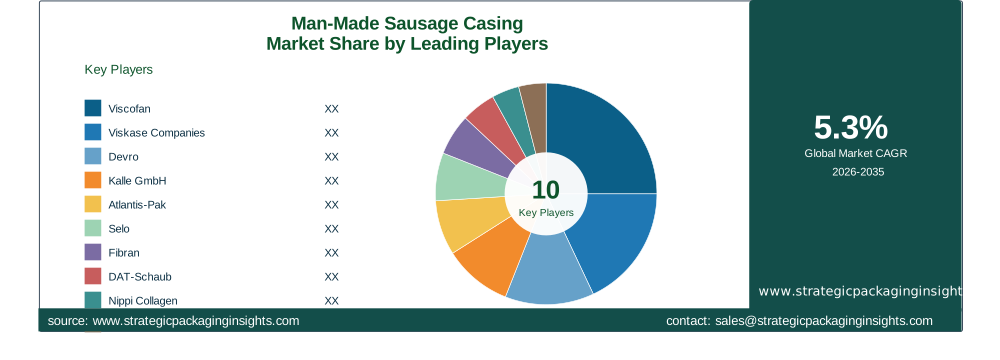
Viscofan is a leading player in the market, known for its extensive product portfolio and global presence. The company has been investing in capacity expansions and technology upgrades to enhance its production capabilities and meet the evolving demands of the food industry. Viskase Companies is another major player, focusing on product innovation and sustainability to differentiate its offerings and capture new market opportunities.
Devro is a key player in the market, known for its expertise in collagen casings and commitment to sustainability. The company has been investing in research and development to create innovative casing solutions that align with consumer preferences and regulatory requirements. Kalle GmbH is also a prominent player, focusing on product diversification and market expansion to enhance its competitive position.
Atlantis-Pak is a leading player in the market, known for its advanced manufacturing capabilities and focus on sustainability. The company has been investing in capacity expansions and technology upgrades to enhance its production capabilities and meet the growing demand for high-quality casings. The competitive landscape of the Man-Made Sausage Casing market is expected to evolve as companies focus on innovation and sustainability to capture new market opportunities.
Key Highlights
- Largest Region: North America
- Fastest-Growing Region: Asia Pacific
- Largest Segment: Collagen Casings
- Fastest-Growing Segment: Plant-Based Sausages
- Base-year market size: USD 1.9 Billion
- Forecast-year market size: USD 3.2 Billion
- CAGR: 5.3%
- Important application: Meat Sausages
- Major end-use industry: Industrial Meat Processors
- Major market driver: Increasing demand for processed foods
Regional Insights
The Man-Made Sausage Casing market is witnessing significant growth across major regions, with North America being the largest market and Asia Pacific emerging as the fastest-growing region. The demand for processed and convenience foods is driving market growth in these regions, supported by the rise of plant-based sausages and the focus on sustainability.
North America
North America is the largest market for Man-Made Sausage Casings, driven by the high consumption of processed foods and the presence of major sausage manufacturers. The region is witnessing a growing demand for innovative casing solutions that align with consumer preferences for healthier and more sustainable food options. The focus on sustainability and eco-friendly materials is also influencing market dynamics, as manufacturers seek to reduce their environmental impact and align with regulatory requirements.
The U.S. is a key contributor to the market, with a strong presence of leading sausage manufacturers and a growing trend of plant-based sausages. The focus on product differentiation and innovation is driving demand for customized and versatile casing solutions, creating new market opportunities for manufacturers.
Europe
Europe is a significant market for Man-Made Sausage Casings, characterized by a strong focus on sustainability and regulatory compliance. The region is witnessing a growing demand for eco-friendly casing materials, driven by consumer preferences for environmentally responsible products. The rise of plant-based sausages is also influencing market dynamics, as manufacturers seek innovative casing solutions to cater to this segment.
Germany and the U.K. are key contributors to the market, with a strong presence of leading sausage manufacturers and a focus on product innovation. The emphasis on sustainability and regulatory compliance is driving demand for biodegradable and recyclable casings, creating new market opportunities for manufacturers.
Asia Pacific
Asia Pacific is the fastest-growing region in the Man-Made Sausage Casing market, driven by the increasing demand for processed foods and the rise of plant-based sausages. The region is witnessing a growing trend of localization, as manufacturers establish production facilities to cater to regional market demands. The focus on sustainability and eco-friendly materials is also influencing market dynamics, as companies seek to align with consumer preferences and regulatory requirements.
China and India are key contributors to the market, with a growing trend of plant-based sausages and a focus on product differentiation. The emphasis on innovation and sustainability is driving demand for customized and versatile casing solutions, creating new market opportunities for manufacturers.
Latin America
Latin America is witnessing significant growth in the Man-Made Sausage Casing market, driven by the increasing demand for processed foods and the rise of plant-based sausages. The region is characterized by a growing focus on sustainability and eco-friendly materials, as manufacturers seek to reduce their environmental impact and align with consumer preferences.
Brazil and Mexico are key contributors to the market, with a strong presence of leading sausage manufacturers and a focus on product innovation. The emphasis on sustainability and regulatory compliance is driving demand for biodegradable and recyclable casings, creating new market opportunities for manufacturers.
Middle East & Africa
The Middle East & Africa region is witnessing steady growth in the Man-Made Sausage Casing market, driven by the increasing demand for processed foods and the rise of plant-based sausages. The region is characterized by a growing focus on sustainability and eco-friendly materials, as manufacturers seek to reduce their environmental impact and align with consumer preferences.
South Africa and the UAE are key contributors to the market, with a strong presence of leading sausage manufacturers and a focus on product innovation. The emphasis on sustainability and regulatory compliance is driving demand for biodegradable and recyclable casings, creating new market opportunities for manufacturers.
Man-Made Sausage Casing Market Segments Insights

By Casing Type Analysis
The Man-Made Sausage Casing market is segmented by casing type, with collagen casings being the largest segment. Collagen casings are widely used in the production of various sausage types due to their versatility and ease of use. The demand for collagen casings is driven by the increasing consumption of processed foods and the rise of plant-based sausages, as manufacturers seek innovative casing solutions to cater to this segment.
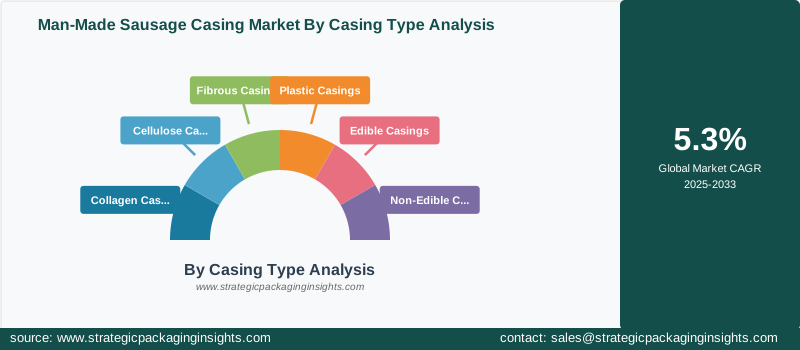
Cellulose casings are also a significant segment, known for their strength and durability. These casings are commonly used in the production of smoked and cooked sausages, offering excellent barrier properties and shelf-life extension. The demand for cellulose casings is influenced by the growing trend of convenience foods and the focus on sustainability, as manufacturers seek eco-friendly casing materials to align with consumer preferences.
By Material Analysis
The Man-Made Sausage Casing market is segmented by material, with collagen being the most widely used material. Collagen casings are favored for their natural appearance and texture, making them ideal for a variety of sausage types. The demand for collagen casings is driven by the increasing consumption of processed foods and the rise of plant-based sausages, as manufacturers seek innovative casing solutions to cater to this segment.
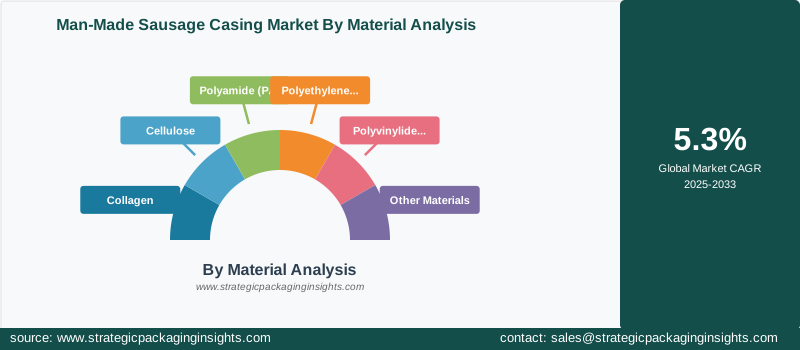
Cellulose and polyamide (PA) are also significant materials in the market, known for their strength and durability. These materials are commonly used in the production of smoked and cooked sausages, offering excellent barrier properties and shelf-life extension. The demand for cellulose and polyamide casings is influenced by the growing trend of convenience foods and the focus on sustainability, as manufacturers seek eco-friendly casing materials to align with consumer preferences.
By Diameter Analysis
The Man-Made Sausage Casing market is segmented by diameter, with the 20-30 mm segment being the largest. This diameter range is commonly used in the production of various sausage types, offering versatility and ease of use. The demand for 20-30 mm casings is driven by the increasing consumption of processed foods and the rise of plant-based sausages, as manufacturers seek innovative casing solutions to cater to this segment.
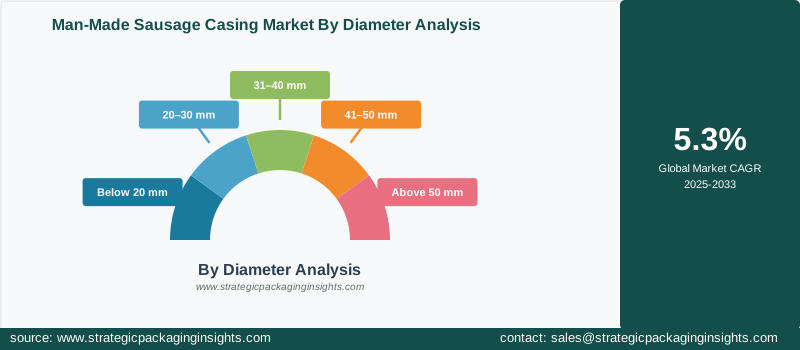
The below 20 mm and 31-40 mm segments are also significant, known for their strength and durability. These diameter ranges are commonly used in the production of smoked and cooked sausages, offering excellent barrier properties and shelf-life extension. The demand for these casings is influenced by the growing trend of convenience foods and the focus on sustainability, as manufacturers seek eco-friendly casing materials to align with consumer preferences.
By Sausage Type Analysis
The Man-Made Sausage Casing market is segmented by sausage type, with fresh sausages being the largest segment. Fresh sausages are widely consumed due to their natural flavor and texture, making them a popular choice among consumers. The demand for fresh sausages is driven by the increasing consumption of processed foods and the rise of plant-based sausages, as manufacturers seek innovative casing solutions to cater to this segment.
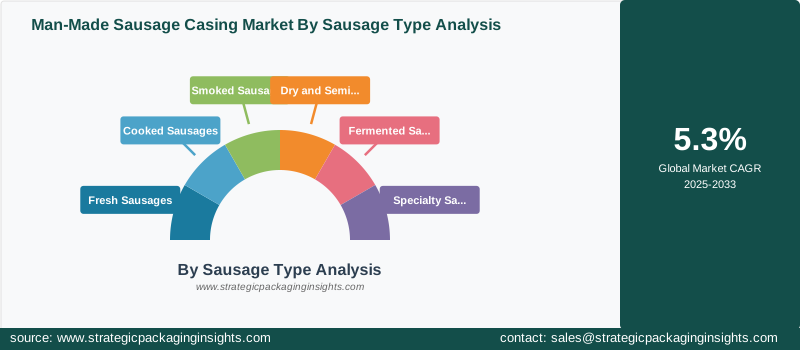
Cooked and smoked sausages are also significant segments, known for their convenience and long shelf life. These sausage types are commonly used in the production of various processed foods, offering excellent barrier properties and shelf-life extension. The demand for cooked and smoked sausages is influenced by the growing trend of convenience foods and the focus on sustainability, as manufacturers seek eco-friendly casing materials to align with consumer preferences.
By Application Analysis
The Man-Made Sausage Casing market is segmented by application, with meat sausages being the largest segment. Meat sausages are widely consumed due to their natural flavor and texture, making them a popular choice among consumers. The demand for meat sausages is driven by the increasing consumption of processed foods and the rise of plant-based sausages, as manufacturers seek innovative casing solutions to cater to this segment.

Poultry and seafood sausages are also significant segments, known for their convenience and long shelf life. These sausage types are commonly used in the production of various processed foods, offering excellent barrier properties and shelf-life extension. The demand for poultry and seafood sausages is influenced by the growing trend of convenience foods and the focus on sustainability, as manufacturers seek eco-friendly casing materials to align with consumer preferences.
By End Use Analysis
The Man-Made Sausage Casing market is segmented by end use, with industrial meat processors being the largest segment. Industrial meat processors are key consumers of sausage casings, using them in the production of various processed foods. The demand for industrial meat processors is driven by the increasing consumption of processed foods and the rise of plant-based sausages, as manufacturers seek innovative casing solutions to cater to this segment.
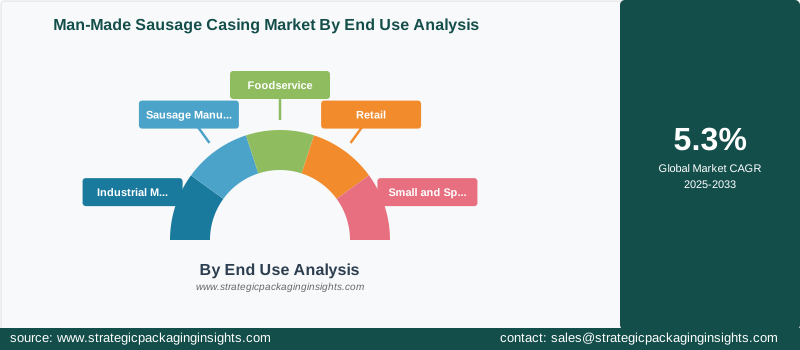
Sausage manufacturers and foodservice providers are also significant segments, known for their focus on product differentiation and innovation. These end users are commonly used in the production of various processed foods, offering excellent barrier properties and shelf-life extension. The demand for sausage manufacturers and foodservice providers is influenced by the growing trend of convenience foods and the focus on sustainability, as manufacturers seek eco-friendly casing materials to align with consumer preferences.
By Function Analysis
The Man-Made Sausage Casing market is segmented by function, with cooking and processing being the largest segment. Cooking and processing are key functions of sausage casings, offering versatility and ease of use. The demand for cooking and processing is driven by the increasing consumption of processed foods and the rise of plant-based sausages, as manufacturers seek innovative casing solutions to cater to this segment.
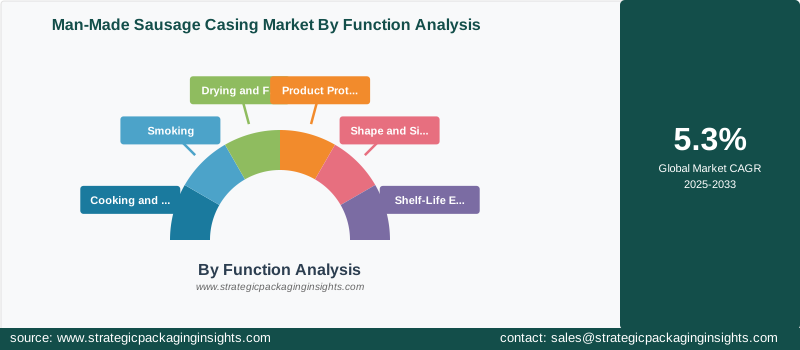
Smoking and drying and fermentation are also significant segments, known for their strength and durability. These functions are commonly used in the production of smoked and cooked sausages, offering excellent barrier properties and shelf-life extension. The demand for smoking and drying and fermentation is influenced by the growing trend of convenience foods and the focus on sustainability, as manufacturers seek eco-friendly casing materials to align with consumer preferences.
By Distribution Channel Analysis
The Man-Made Sausage Casing market is segmented by distribution channel, with direct sales being the largest segment. Direct sales are a key distribution channel for sausage casings, offering convenience and cost-effectiveness. The demand for direct sales is driven by the increasing consumption of processed foods and the rise of plant-based sausages, as manufacturers seek innovative casing solutions to cater to this segment.
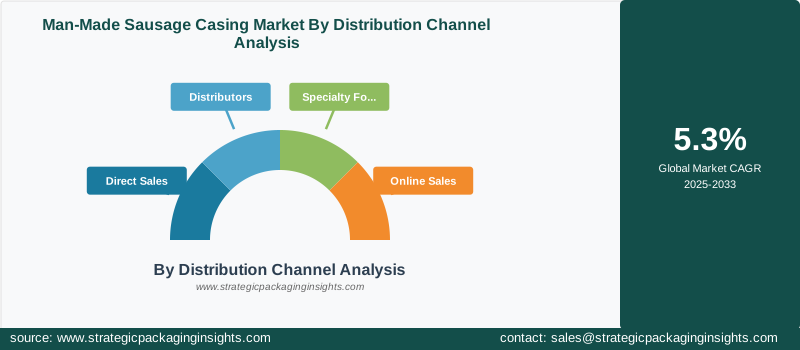
Distributors and specialty food packaging suppliers are also significant segments, known for their focus on product differentiation and innovation. These distribution channels are commonly used in the production of various processed foods, offering excellent barrier properties and shelf-life extension. The demand for distributors and specialty food packaging suppliers is influenced by the growing trend of convenience foods and the focus on sustainability, as manufacturers seek eco-friendly casing materials to align with consumer preferences.
Man-Made Sausage Casing Market Segments
The Man-Made Sausage Casing market has been segmented on the basis ofBy Casing Type
- Collagen Casings
- Cellulose Casings
- Fibrous Casings
- Plastic Casings
- Edible Casings
- Non-Edible Casings
By Material
- Collagen
- Cellulose
- Polyamide (PA)
- Polyethylene (PE)
- Polyvinylidene Chloride (PVDC)
- Other Materials
By Diameter
- Below 20 mm
- 20–30 mm
- 31–40 mm
- 41–50 mm
- Above 50 mm
By Sausage Type
- Fresh Sausages
- Cooked Sausages
- Smoked Sausages
- Dry and Semi-Dry Sausages
- Fermented Sausages
- Specialty Sausages
By Application
- Meat Sausages
- Poultry Sausages
- Seafood Sausages
- Plant-Based Sausages
- Cheese and Specialty Products
By End Use
- Industrial Meat Processors
- Sausage Manufacturers
- Foodservice
- Retail
- Small and Specialty Producers
By Function
- Cooking and Processing
- Smoking
- Drying and Fermentation
- Product Protection
- Shape and Size Control
- Shelf-Life Extension
By Distribution Channel
- Direct Sales
- Distributors
- Specialty Food Packaging Suppliers
- Online Sales
By Region
- North America
- Europe
- Asia-Pacific
- Latin America
- Middle East and Africa




