


Liquid Filling Machine Market Outlook
The Liquid Filling Machine market was valued at $6.74 billion in 2025 and is projected to reach $12.02 billion by 2034, growing at a CAGR of 6.6% during the forecast period 2026-2034. This growth is driven by the increasing demand for automation in packaging processes, particularly in the food and beverage sector. The rise in consumer demand for packaged goods, coupled with advancements in filling technologies, is propelling the market forward. Additionally, the pharmaceutical industry's stringent regulations for packaging are boosting the adoption of advanced liquid filling machines to ensure precision and hygiene.
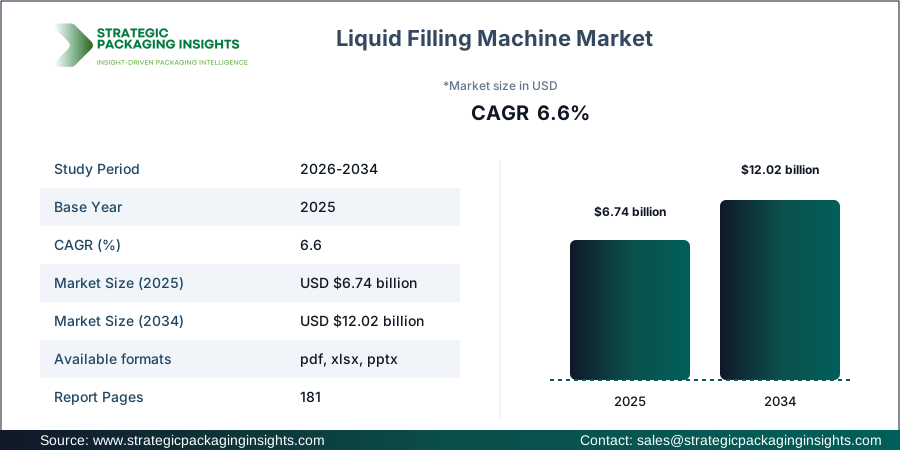
However, the market faces challenges such as high initial investment costs and the need for regular maintenance, which can be a deterrent for small and medium enterprises. Despite these challenges, the market holds significant growth potential due to the increasing trend of customization in packaging and the development of eco-friendly filling solutions. The integration of IoT and AI in liquid filling machines is expected to offer new opportunities for market players, enhancing operational efficiency and reducing downtime.
Report Scope
| Attributes | Details |
| Report Title | Liquid Filling Machine Market Size, Future Growth and Forecast 2034 |
| By Machine Type | Piston Fillers, Gravity Fillers, Overflow Fillers, Rotary Fillers |
| By Automation | Semi-Automatic, Automatic, Fully Integrated |
| By Application | Beverages, Chemicals, Cosmetics, Pharmaceuticals |
| By End Use | Food & Beverage, Personal Care, Pharma, Industrial |
| Region | Asia Pacific, North America, Latin America, Europe, Middle East & Africa |
| Base Year | 2025 |
| Historic Period | 2018-2024 |
| Forecast Period | 2026-2034 |
| Number of Pages | 181 |
| Customization Available | Yes* |
Opportunities & Threats
The liquid filling machine market presents numerous opportunities, particularly with the growing demand for automation across various industries. As companies strive to improve efficiency and reduce labor costs, the adoption of automated filling machines is on the rise. This trend is particularly evident in the food and beverage industry, where precision and speed are crucial. Additionally, the increasing focus on sustainability is driving the demand for machines that can handle eco-friendly packaging materials, offering a significant opportunity for manufacturers to innovate and capture market share.
Another opportunity lies in the pharmaceutical sector, where stringent regulations necessitate the use of advanced filling technologies to ensure product safety and compliance. The rise in global pharmaceutical production, driven by an aging population and increased healthcare spending, is expected to boost the demand for liquid filling machines. Furthermore, the trend towards personalized medicine and small-batch production is creating a need for flexible and adaptable filling solutions, providing a lucrative opportunity for market players.
Despite these opportunities, the market faces threats from the high cost of advanced filling machines, which can be prohibitive for small and medium-sized enterprises. Additionally, the need for regular maintenance and the risk of machine downtime can impact operational efficiency and profitability. The market is also subject to fluctuations in raw material prices, which can affect the cost of production and, ultimately, the pricing of filling machines. These factors pose significant challenges to market growth, particularly for new entrants and smaller players.
Drivers & Challenges
The primary drivers of the liquid filling machine market include the increasing demand for packaged goods and the need for efficient and precise filling solutions. The food and beverage industry, in particular, is a major driver, as companies seek to meet consumer demand for convenience and variety. The rise in e-commerce and online grocery shopping is also contributing to the demand for efficient packaging solutions, further driving the market for liquid filling machines. Additionally, technological advancements in filling technologies, such as the integration of IoT and AI, are enhancing machine capabilities and driving market growth.
Another significant driver is the pharmaceutical industry's stringent regulations, which require precise and hygienic filling solutions. The increasing production of pharmaceuticals, driven by an aging population and rising healthcare spending, is boosting the demand for advanced liquid filling machines. Furthermore, the trend towards personalized medicine and small-batch production is creating a need for flexible and adaptable filling solutions, providing a significant growth driver for the market.
However, the market faces challenges such as high initial investment costs and the need for regular maintenance, which can be a deterrent for small and medium enterprises. The complexity of advanced filling machines requires skilled operators and regular maintenance, which can increase operational costs. Additionally, the market is subject to fluctuations in raw material prices, which can affect the cost of production and, ultimately, the pricing of filling machines. These challenges pose significant barriers to market growth, particularly for new entrants and smaller players.
Market Share Analysis
The competitive landscape of the liquid filling machine market is characterized by the presence of several key players, each vying for market share through innovation and strategic partnerships. Companies such as Krones, Syntegon, Coesia, IMA Group, Tetra Pak, GEA Group, Serac, Ronchi Mario, Accutek Packaging, and ProMach dominate the market, leveraging their extensive product portfolios and global reach to maintain a competitive edge. These companies are continuously investing in research and development to enhance their product offerings and meet the evolving needs of their customers.
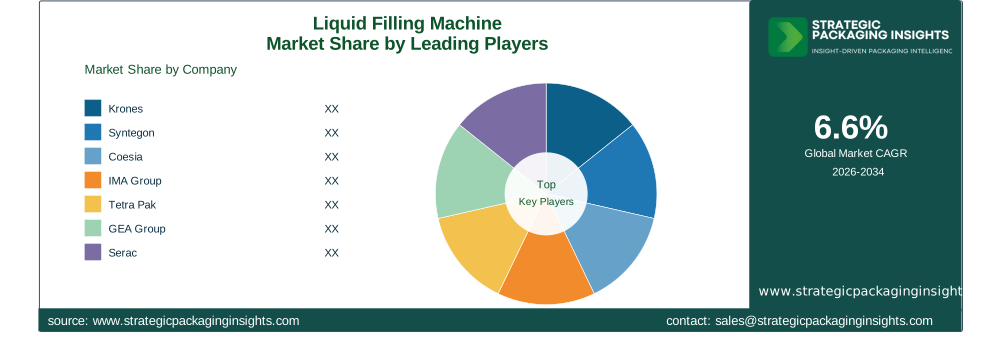
Krones, a leading player in the market, holds a significant share due to its comprehensive range of filling solutions and strong presence in the beverage industry. The company's focus on innovation and sustainability has enabled it to capture a substantial portion of the market. Similarly, Syntegon, formerly known as Bosch Packaging Technology, is a major player, known for its advanced filling technologies and commitment to quality and precision.
Coesia and IMA Group are also prominent players in the market, offering a wide range of filling solutions for various industries. Coesia's focus on automation and digitalization has positioned it as a leader in the market, while IMA Group's expertise in pharmaceutical packaging has enabled it to capture a significant share of the market. Tetra Pak, known for its innovative packaging solutions, is another key player, leveraging its strong brand reputation and global presence to maintain its market position.
Other notable players include GEA Group, Serac, Ronchi Mario, Accutek Packaging, and ProMach, each offering unique solutions to meet the diverse needs of their customers. These companies are focused on expanding their product portfolios and enhancing their technological capabilities to stay competitive in the market. The competitive landscape is expected to remain dynamic, with companies continuously seeking new opportunities for growth and expansion.
Key Highlights
- The liquid filling machine market is projected to grow at a CAGR of 6.6% from 2026 to 2034.
- Key drivers include the increasing demand for automation and precision in packaging processes.
- The food and beverage industry is a major contributor to market growth.
- Technological advancements, such as IoT and AI integration, are enhancing machine capabilities.
- The pharmaceutical industry's stringent regulations are boosting demand for advanced filling solutions.
- High initial investment costs and maintenance requirements pose challenges to market growth.
- Key players include Krones, Syntegon, Coesia, IMA Group, and Tetra Pak.
- The market is characterized by intense competition and continuous innovation.
- Opportunities exist in the development of eco-friendly and customizable filling solutions.
- The market is subject to fluctuations in raw material prices, impacting production costs.
Top Countries Insights
In the liquid filling machine market, the United States stands out as a key player, with a market size of approximately $2.5 billion and a CAGR of 5%. The country's strong manufacturing base and advanced technological infrastructure drive demand for efficient and precise filling solutions. The food and beverage industry, in particular, is a major contributor to market growth, with companies investing in automation to enhance productivity and reduce labor costs. However, the market faces challenges from stringent regulatory requirements and high operational costs.
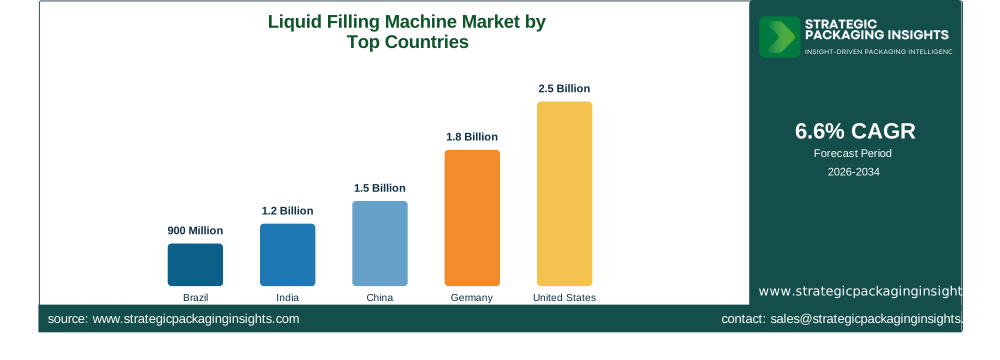
Germany, with a market size of $1.8 billion and a CAGR of 4%, is another significant player in the liquid filling machine market. The country's strong engineering capabilities and focus on innovation have positioned it as a leader in the market. The pharmaceutical industry, in particular, drives demand for advanced filling solutions, with companies investing in precision and hygiene to meet regulatory requirements. However, the market faces challenges from high labor costs and the need for continuous innovation to stay competitive.
China, with a market size of $1.5 billion and a CAGR of 7%, is experiencing rapid growth in the liquid filling machine market. The country's expanding manufacturing sector and increasing demand for packaged goods drive market growth. The food and beverage industry, in particular, is a major contributor, with companies investing in automation to enhance efficiency and meet consumer demand. However, the market faces challenges from intense competition and the need for continuous innovation to stay ahead.
India, with a market size of $1.2 billion and a CAGR of 8%, is another key player in the liquid filling machine market. The country's growing population and increasing demand for packaged goods drive market growth. The pharmaceutical industry, in particular, is a major contributor, with companies investing in advanced filling solutions to meet regulatory requirements. However, the market faces challenges from infrastructure constraints and the need for skilled labor to operate advanced machines.
Brazil, with a market size of $900 million and a CAGR of 6%, is also experiencing growth in the liquid filling machine market. The country's expanding food and beverage industry drives demand for efficient and precise filling solutions. Companies are investing in automation to enhance productivity and reduce labor costs. However, the market faces challenges from economic instability and the need for continuous innovation to stay competitive.
Liquid Filling Machine Market Segments Insights

Machine Type Analysis
The liquid filling machine market is segmented by machine type into piston fillers, gravity fillers, overflow fillers, and rotary fillers. Piston fillers are widely used due to their versatility and ability to handle a wide range of viscosities, making them ideal for industries such as food and beverage, pharmaceuticals, and cosmetics. The demand for piston fillers is driven by their precision and efficiency, which are crucial for maintaining product quality and consistency. Gravity fillers, on the other hand, are preferred for their simplicity and cost-effectiveness, particularly in the beverage industry where high-speed filling is essential.
Overflow fillers are gaining popularity due to their ability to provide consistent fill levels, making them ideal for products with varying viscosities. This type of filler is particularly popular in the cosmetics and personal care industries, where appearance and presentation are critical. Rotary fillers, known for their high-speed capabilities, are widely used in large-scale production environments, such as the food and beverage industry. The demand for rotary fillers is driven by the need for efficiency and speed, as companies strive to meet increasing consumer demand for packaged goods.
Automation Analysis
The automation segment of the liquid filling machine market is categorized into semi-automatic, automatic, and fully integrated systems. Semi-automatic machines are popular among small and medium enterprises due to their affordability and ease of use. These machines offer a balance between manual and automated processes, providing flexibility and control over the filling process. Automatic machines, on the other hand, are widely used in large-scale production environments, where efficiency and speed are crucial. The demand for automatic machines is driven by the need to reduce labor costs and enhance productivity.
Fully integrated systems, which combine filling, capping, and labeling processes, are gaining traction due to their ability to streamline operations and reduce downtime. These systems are particularly popular in the pharmaceutical and food and beverage industries, where precision and efficiency are paramount. The demand for fully integrated systems is driven by the need for seamless operations and the ability to handle a wide range of products and packaging formats. As companies strive to enhance productivity and reduce operational costs, the demand for automated and fully integrated systems is expected to grow.
Application Analysis
The liquid filling machine market is segmented by application into beverages, chemicals, cosmetics, and pharmaceuticals. The beverage industry is a major driver of the market, with companies investing in advanced filling solutions to meet consumer demand for convenience and variety. The demand for precision and speed in the beverage industry is driving the adoption of automated filling machines, which offer efficiency and consistency in the filling process. The chemical industry, on the other hand, requires filling machines that can handle a wide range of viscosities and corrosive materials, driving demand for specialized filling solutions.
The cosmetics industry is also a significant contributor to the market, with companies seeking filling solutions that offer precision and consistency in the filling process. The demand for customized and aesthetically pleasing packaging is driving the adoption of advanced filling technologies in the cosmetics industry. The pharmaceutical industry, with its stringent regulations and need for precision and hygiene, is a major driver of the market. The demand for advanced filling solutions in the pharmaceutical industry is driven by the need to ensure product safety and compliance with regulatory requirements.
End Use Analysis
The liquid filling machine market is segmented by end use into food & beverage, personal care, pharma, and industrial. The food and beverage industry is a major driver of the market, with companies investing in advanced filling solutions to meet consumer demand for convenience and variety. The demand for precision and speed in the food and beverage industry is driving the adoption of automated filling machines, which offer efficiency and consistency in the filling process. The personal care industry, on the other hand, requires filling machines that offer precision and consistency in the filling process, driving demand for advanced filling solutions.
The pharmaceutical industry, with its stringent regulations and need for precision and hygiene, is a major driver of the market. The demand for advanced filling solutions in the pharmaceutical industry is driven by the need to ensure product safety and compliance with regulatory requirements. The industrial sector, which includes chemicals and other industrial products, requires filling machines that can handle a wide range of viscosities and corrosive materials, driving demand for specialized filling solutions. As companies strive to enhance productivity and reduce operational costs, the demand for advanced filling solutions across various end-use industries is expected to grow.
Liquid Filling Machine Market Segments
The Liquid Filling Machine market has been segmented on the basis ofBy Machine Type
- Piston Fillers
- Gravity Fillers
- Overflow Fillers
- Rotary Fillers
By Automation
- Semi-Automatic
- Automatic
- Fully Integrated
By Application
- Beverages
- Chemicals
- Cosmetics
- Pharmaceuticals
By End Use
- Food & Beverage
- Personal Care
- Pharma
- Industrial
Region
- Asia Pacific
- North America
- Latin America
- Europe
- Middle East & Africa




