


Linerless Closures Market Outlook
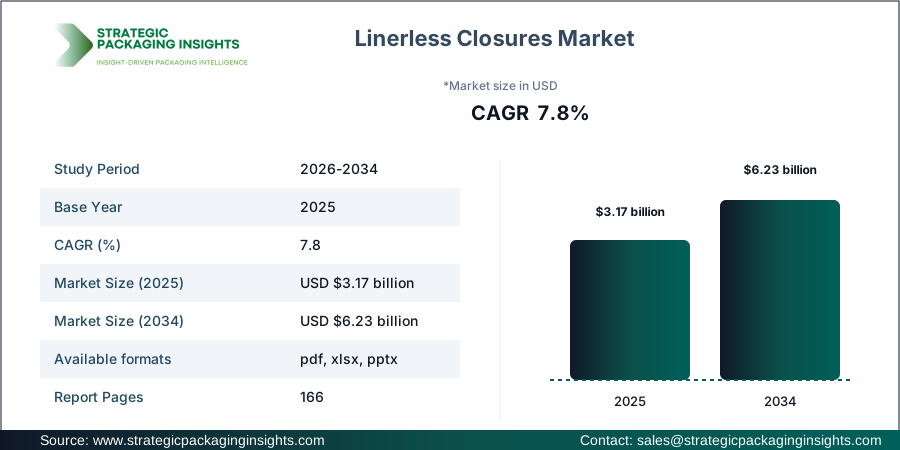
The Linerless Closures market was valued at $3.17 billion in 2025 and is projected to reach $6.23 billion by 2034, growing at a CAGR of 7.8% during the forecast period 2026-2034. This market is witnessing significant growth due to the increasing demand for sustainable and eco-friendly packaging solutions. The shift towards reducing plastic waste and the adoption of recyclable materials are key drivers for the market. Additionally, the growing consumer preference for convenience and ease of use in packaging is further propelling the demand for linerless closures. The market is also benefiting from advancements in material technology, which are enhancing the functionality and appeal of these closures.
However, the market faces certain challenges that could hinder its growth. Regulatory restrictions on plastic usage and the high cost of bio-based materials are potential restraints. Despite these challenges, the market holds substantial growth potential, driven by innovations in closure designs and the increasing adoption of bio-based plastics. The rising awareness about environmental sustainability among consumers and manufacturers alike is expected to create new opportunities for market players. Furthermore, the expansion of the food and beverage industry, particularly in emerging economies, is likely to provide a significant boost to the linerless closures market.
Report Scope
| Attributes | Details |
| Report Title | Linerless Closures Market Size, Future Growth and Forecast 2034 |
| By Product Type | Screw Closures, Flip-Top Closures, Dispensing Closures, Snap Closures |
| By Material Type | PP, HDPE, PET, Bio-Based Plastics |
| By Application | Beverages, Personal Care, Homecare, Food Products |
| By End Use | Food & Beverage, FMCG, Cosmetics, Household Products |
| Region | Asia Pacific, North America, Latin America, Europe, Middle East & Africa |
| Base Year | 2025 |
| Historic Period | 2018-2024 |
| Forecast Period | 2026-2034 |
| Number of Pages | 166 |
| Customization Available | Yes* |
Opportunities & Threats
The linerless closures market presents numerous opportunities, particularly in the realm of sustainability. As environmental concerns continue to rise, there is a growing demand for packaging solutions that minimize waste and reduce carbon footprints. This trend is driving manufacturers to innovate and develop closures that are not only functional but also environmentally friendly. The use of bio-based plastics is gaining traction, offering a viable alternative to traditional materials. Companies that can effectively integrate these sustainable materials into their product lines are likely to gain a competitive edge. Additionally, the increasing focus on circular economy principles is encouraging the development of closures that can be easily recycled or reused, further enhancing their appeal.
Another significant opportunity lies in the customization and personalization of packaging. Consumers are increasingly seeking products that reflect their individual preferences and lifestyles. This trend is pushing manufacturers to offer a wider range of closure designs and functionalities, catering to diverse consumer needs. The ability to provide customized solutions can help companies differentiate themselves in a crowded market. Moreover, the rise of e-commerce and online retailing is creating new avenues for growth, as packaging plays a crucial role in ensuring product safety and enhancing the unboxing experience.
Despite these opportunities, the market is not without its threats. One of the primary challenges is the volatility in raw material prices, particularly for bio-based plastics. Fluctuations in the cost of these materials can impact the overall production costs, affecting profitability. Additionally, stringent regulations regarding plastic usage and waste management pose a significant threat to market growth. Companies need to navigate these regulatory landscapes carefully to avoid potential penalties and maintain compliance. Furthermore, the intense competition among market players can lead to price wars, impacting profit margins and market share.
Drivers & Challenges
The linerless closures market is driven by several key factors, with sustainability being at the forefront. The increasing awareness about environmental issues and the need to reduce plastic waste are compelling manufacturers to adopt eco-friendly packaging solutions. This shift is supported by government regulations and policies aimed at promoting sustainable practices. Additionally, the growing consumer demand for convenience and ease of use in packaging is driving the adoption of linerless closures. These closures offer several advantages, including ease of opening and resealing, which enhance the overall consumer experience. The advancements in material technology are also playing a crucial role in driving market growth, as they enable the development of closures that are both functional and aesthetically appealing.
Another significant driver is the expansion of the food and beverage industry, particularly in emerging economies. As disposable incomes rise and consumer preferences evolve, there is an increasing demand for packaged food and beverages. This trend is boosting the demand for linerless closures, which are widely used in the packaging of these products. The rise of e-commerce and online retailing is also contributing to market growth, as packaging plays a critical role in ensuring product safety during transit. Furthermore, the increasing focus on product differentiation and branding is encouraging manufacturers to invest in innovative closure designs that enhance the visual appeal of their products.
Despite these drivers, the market faces several challenges that could impede its growth. One of the primary challenges is the high cost of bio-based materials, which can impact the overall production costs. Additionally, the volatility in raw material prices poses a significant risk to market stability. Companies need to manage these costs effectively to maintain profitability. The stringent regulations regarding plastic usage and waste management also present a challenge, as companies need to ensure compliance while meeting consumer demands. Furthermore, the intense competition among market players can lead to price wars, impacting profit margins and market share. Companies need to differentiate themselves through innovation and value-added services to stay competitive in this dynamic market.
Market Share Analysis
The linerless closures market is characterized by a highly competitive landscape, with several key players vying for market share. Companies such as AptarGroup, Berry Global, and Silgan Holdings are leading the market, leveraging their extensive product portfolios and strong distribution networks. These companies are focusing on innovation and sustainability to maintain their competitive edge. AptarGroup, for instance, is known for its commitment to developing eco-friendly packaging solutions, while Berry Global is investing in advanced material technologies to enhance the functionality of its closures. Silgan Holdings, on the other hand, is focusing on expanding its product offerings to cater to diverse consumer needs.
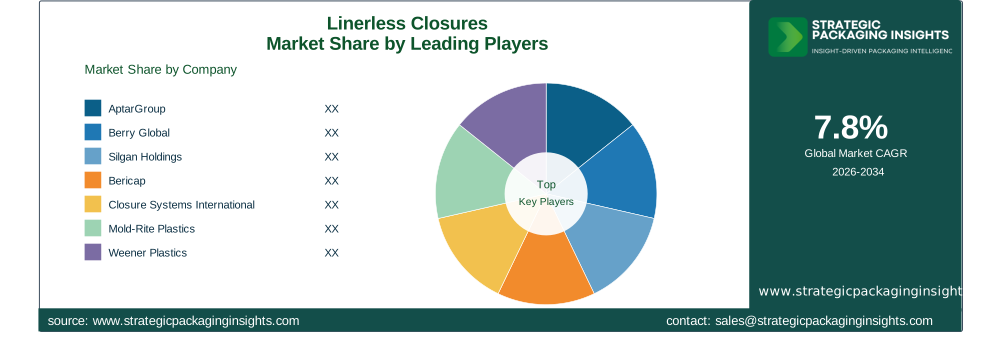
Bericap and Closure Systems International are also prominent players in the market, known for their innovative closure designs and strong customer relationships. Bericap is focusing on expanding its presence in emerging markets, while Closure Systems International is investing in research and development to enhance its product offerings. Mold-Rite Plastics and Weener Plastics are also key players, known for their focus on customization and personalization of packaging solutions. These companies are leveraging their expertise in material technology to develop closures that meet the evolving needs of consumers.
Guala Closures and Albea are also significant players in the market, known for their focus on sustainability and innovation. Guala Closures is investing in bio-based materials to develop eco-friendly closures, while Albea is focusing on enhancing the visual appeal of its products through innovative designs. Amcor, another key player, is known for its commitment to sustainability and its focus on developing packaging solutions that minimize environmental impact. These companies are leveraging their strong market positions and extensive product portfolios to maintain their competitive edge in the market.
Overall, the competitive landscape of the linerless closures market is characterized by a focus on innovation, sustainability, and customer-centric solutions. Companies are investing in research and development to enhance their product offerings and meet the evolving needs of consumers. The market is also witnessing strategic collaborations and partnerships, as companies seek to expand their market presence and enhance their product portfolios. The focus on sustainability and eco-friendly packaging solutions is expected to remain a key trend in the market, driving innovation and growth in the coming years.
Key Highlights
- The linerless closures market is projected to grow at a CAGR of 7.8% from 2026 to 2034.
- Increasing demand for sustainable and eco-friendly packaging solutions is driving market growth.
- Advancements in material technology are enhancing the functionality and appeal of linerless closures.
- The expansion of the food and beverage industry is boosting demand for linerless closures.
- Customization and personalization of packaging are emerging as key trends in the market.
- Volatility in raw material prices poses a significant challenge to market growth.
- Regulatory restrictions on plastic usage are impacting market dynamics.
- Key players are focusing on innovation and sustainability to maintain their competitive edge.
- The rise of e-commerce and online retailing is creating new avenues for market growth.
- Strategic collaborations and partnerships are shaping the competitive landscape of the market.
Top Countries Insights
In the linerless closures market, the United States stands out as a key player, with a market size of approximately $1.2 billion and a CAGR of 6%. The country's strong focus on sustainability and innovation is driving demand for eco-friendly packaging solutions. Government regulations promoting sustainable practices are further supporting market growth. Additionally, the expansion of the food and beverage industry is boosting demand for linerless closures, as these products offer convenience and ease of use.
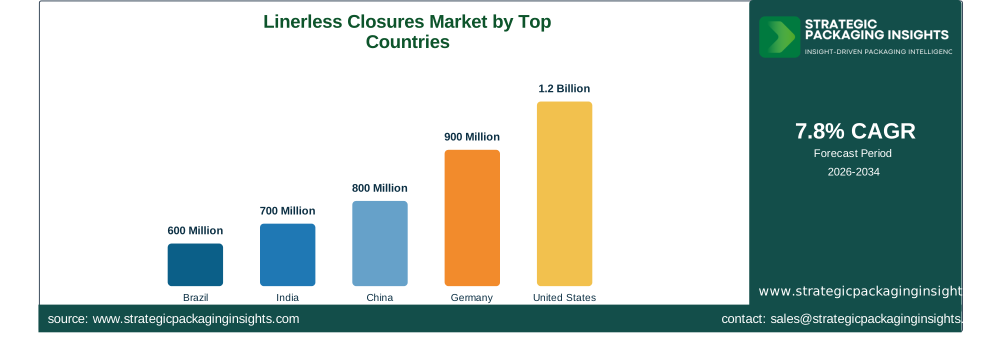
Germany is another significant market, with a market size of around $900 million and a CAGR of 5%. The country's strong manufacturing base and focus on innovation are driving demand for advanced packaging solutions. The increasing awareness about environmental sustainability is encouraging manufacturers to adopt eco-friendly materials, further boosting market growth. Additionally, the rise of e-commerce and online retailing is creating new opportunities for market players.
China is emerging as a key market for linerless closures, with a market size of approximately $800 million and a CAGR of 8%. The country's rapid economic growth and expanding consumer base are driving demand for packaged food and beverages, boosting demand for linerless closures. The government's focus on reducing plastic waste and promoting sustainable practices is further supporting market growth. Additionally, the increasing focus on product differentiation and branding is encouraging manufacturers to invest in innovative closure designs.
India is also witnessing significant growth in the linerless closures market, with a market size of around $700 million and a CAGR of 9%. The country's expanding middle class and rising disposable incomes are driving demand for packaged food and beverages, boosting demand for linerless closures. The government's focus on promoting sustainable practices and reducing plastic waste is further supporting market growth. Additionally, the rise of e-commerce and online retailing is creating new opportunities for market players.
Brazil is another key market, with a market size of approximately $600 million and a CAGR of 7%. The country's strong focus on sustainability and innovation is driving demand for eco-friendly packaging solutions. The expansion of the food and beverage industry is boosting demand for linerless closures, as these products offer convenience and ease of use. Additionally, the increasing awareness about environmental sustainability is encouraging manufacturers to adopt eco-friendly materials, further boosting market growth.
Linerless Closures Market Segments Insights

Product Type Analysis
The linerless closures market is segmented by product type into screw closures, flip-top closures, dispensing closures, and snap closures. Screw closures dominate the market due to their widespread use in various applications, including beverages and personal care products. These closures offer excellent sealing properties and are easy to open and reseal, making them a popular choice among consumers. The demand for flip-top closures is also rising, driven by their convenience and ease of use. These closures are particularly popular in the personal care and homecare segments, where they enhance the user experience by allowing easy access to the product.
Dispensing closures are gaining traction in the market, particularly in the food and beverage industry. These closures offer precise control over the dispensing of the product, reducing waste and enhancing convenience. The demand for snap closures is also increasing, driven by their cost-effectiveness and ease of use. These closures are widely used in the packaging of household products and FMCG items. The market is witnessing a trend towards the development of innovative closure designs that enhance the functionality and appeal of the product. Manufacturers are focusing on customization and personalization to cater to diverse consumer needs, further driving market growth.
Material Type Analysis
The linerless closures market is segmented by material type into PP, HDPE, PET, and bio-based plastics. PP and HDPE are the most commonly used materials, owing to their excellent durability and resistance to chemicals. These materials are widely used in the packaging of food and beverages, personal care products, and household items. The demand for PET is also rising, driven by its lightweight and recyclable properties. PET closures are particularly popular in the beverage industry, where they offer excellent sealing properties and enhance the visual appeal of the product.
Bio-based plastics are gaining traction in the market, driven by the increasing focus on sustainability and environmental conservation. These materials offer a viable alternative to traditional plastics, reducing the carbon footprint and minimizing environmental impact. The demand for bio-based plastics is expected to rise significantly in the coming years, as manufacturers seek to adopt eco-friendly materials in their product lines. The market is witnessing a trend towards the development of closures that are not only functional but also environmentally friendly, further driving growth in this segment.
Application Analysis
The linerless closures market is segmented by application into beverages, personal care, homecare, and food products. The beverage segment dominates the market, driven by the increasing demand for packaged drinks and the need for convenient and easy-to-use closures. The personal care segment is also witnessing significant growth, as consumers seek products that offer convenience and enhance the user experience. The demand for linerless closures in the homecare segment is rising, driven by the increasing focus on product differentiation and branding.
The food products segment is also a key driver of market growth, as consumers seek convenient and easy-to-use packaging solutions. The market is witnessing a trend towards the development of closures that enhance the functionality and appeal of the product, further driving growth in this segment. Manufacturers are focusing on innovation and customization to cater to diverse consumer needs, further boosting demand for linerless closures in these applications.
End Use Analysis
The linerless closures market is segmented by end use into food & beverage, FMCG, cosmetics, and household products. The food & beverage segment dominates the market, driven by the increasing demand for packaged food and drinks. The FMCG segment is also witnessing significant growth, as consumers seek convenient and easy-to-use packaging solutions. The demand for linerless closures in the cosmetics segment is rising, driven by the increasing focus on product differentiation and branding.
The household products segment is also a key driver of market growth, as consumers seek convenient and easy-to-use packaging solutions. The market is witnessing a trend towards the development of closures that enhance the functionality and appeal of the product, further driving growth in this segment. Manufacturers are focusing on innovation and customization to cater to diverse consumer needs, further boosting demand for linerless closures in these end-use applications.
Linerless Closures Market Segments
The Linerless Closures market has been segmented on the basis ofBy Product Type
- Screw Closures
- Flip-Top Closures
- Dispensing Closures
- Snap Closures
By Material Type
- PP
- HDPE
- PET
- Bio-Based Plastics
By Application
- Beverages
- Personal Care
- Homecare
- Food Products
By End Use
- Food & Beverage
- FMCG
- Cosmetics
- Household Products
Region
- Asia Pacific
- North America
- Latin America
- Europe
- Middle East & Africa




