


Limited Edition Packaging Market Outlook
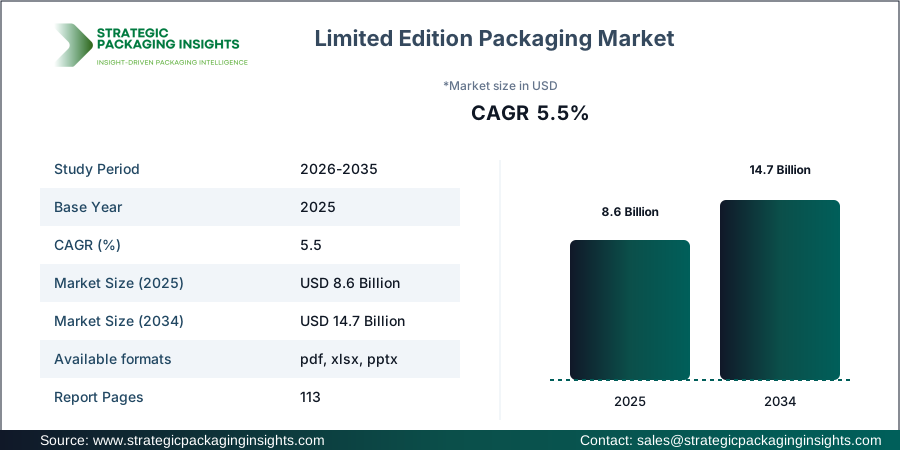
The Limited Edition Packaging market size was valued at USD $8.6 Billion in 2025 and is anticipated to reach USD $14.7 Billion by 2035, growing at a CAGR of 5.5% % during the forecast period according to Strategic Packaging Insights. The market is primarily driven by the increasing consumer demand for unique and personalized packaging solutions, particularly in the food and beverage and beauty and personal care sectors. The rise of e-commerce and digital marketing strategies has further amplified the need for visually appealing packaging that can capture consumer attention and enhance brand differentiation.Report Scope
| Attributes | Details |
| Report Title | Limited Edition Packaging Market Projected to Scale to 14.7 Billion by 2035, Assesses Strategic Packaging Insights |
| By Packaging Type | Limited Edition Boxes, Limited Edition Bottles, Limited Edition Cans, Limited Edition Pouches, Limited Edition Cartons, Limited Edition Jars, Limited Edition Tubes, Limited Edition Wrappers, Other Limited Edition Packaging |
| By Material | Plastic, Glass, Metal, Paper and Paperboard, Aluminum, Flexible Laminates, Other Materials |
| By Printing Technology | Digital Printing, Flexographic Printing, Gravure Printing, Offset Printing, Screen Printing, Specialty Printing |
| By Packaging Feature | Specialty Graphics, Premium Finishes, Embossing and Debossing, Foil Stamping, Holographic Effects, Interactive Packaging, Personalized Packaging, Collectible Packaging |
| By Application | Food and Beverage, Personal Care and Cosmetics, Fashion and Luxury Goods, Consumer Electronics, Household Products, Tobacco Products, Pharmaceuticals, Sports and Entertainment Merchandise |
| By End Use Industry | Food and Beverage, Beauty and Personal Care, Luxury and Fashion, Consumer Goods, Electronics, Entertainment and Media, Retail |
| By Distribution Channel | Supermarkets and Hypermarkets, Specialty Stores, Department Stores, Convenience Stores, Online Retail, Direct-to-Consumer |
| By Production Volume | Small Batch, Medium Batch, Large Batch |
| By Region | North America, Europe, Asia-Pacific, Latin America, Middle East and Africa |
| Base Year | 2025 |
| Historic Period | 2018-2024 |
| Forecast Period | 2026-2035 |
| Number of Pages | 113 |
| Customization Available | Yes* |
Market Trends Analysis
Limited Edition Packaging is witnessing a surge in demand due to the growing trend of personalization and customization in consumer goods. Brands are increasingly leveraging limited edition packaging to create a sense of exclusivity and urgency among consumers, driving higher engagement and sales. The integration of advanced printing technologies, such as digital and specialty printing, is enabling brands to produce intricate designs and high-quality finishes that enhance the visual appeal of packaging. This trend is particularly prominent in the beauty and personal care, and luxury goods sectors, where packaging plays a crucial role in brand perception and consumer experience.
Sustainability is another key trend shaping the Limited Edition Packaging market. Consumers are becoming more environmentally conscious, prompting brands to adopt sustainable packaging materials and practices. The use of recyclable and biodegradable materials, along with eco-friendly printing techniques, is gaining traction as brands aim to reduce their environmental footprint. This shift towards sustainability is influencing procurement strategies and material selection, with a growing emphasis on using materials like paper and paperboard, and flexible laminates that offer both aesthetic appeal and environmental benefits. As a result, companies are investing in research and development to innovate sustainable packaging solutions that align with consumer expectations and regulatory requirements.
Industry Transformation Analysis
The Limited Edition Packaging industry is undergoing significant transformation driven by technological advancements and changing consumer preferences. The adoption of digital printing technologies is revolutionizing the manufacturing process, allowing for greater flexibility and efficiency in producing limited edition designs. This shift is enabling brands to respond quickly to market trends and consumer demands, enhancing their competitive positioning. Additionally, the integration of smart packaging technologies, such as QR codes and NFC tags, is providing brands with new opportunities to engage with consumers and deliver personalized experiences.
The value chain of the Limited Edition Packaging industry is also evolving, with increased collaboration between packaging manufacturers, designers, and brand owners. This collaborative approach is facilitating the development of innovative packaging solutions that meet the diverse needs of consumers and industries. The focus on sustainability is driving changes in material sourcing and production processes, with companies exploring alternative materials and eco-friendly practices to reduce their environmental impact. As the industry continues to evolve, companies are investing in capacity expansion and technological upgrades to enhance their production capabilities and meet the growing demand for limited edition packaging.
Trends & Disruptions Impacting Customers' Customers
Downstream customers, particularly in the food and beverage and beauty and personal care industries, are increasingly prioritizing packaging that enhances brand identity and consumer engagement. The demand for limited edition packaging is driven by the need to differentiate products in a competitive market and create a memorable consumer experience. Brands are leveraging packaging as a marketing tool to convey their values and connect with consumers on an emotional level. This trend is influencing purchasing decisions, with consumers willing to pay a premium for products that offer unique and visually appealing packaging.
The shift towards sustainability is also impacting downstream customers, as they seek packaging solutions that align with their environmental goals and consumer expectations. The demand for recyclable and biodegradable packaging is growing, prompting brands to collaborate with packaging manufacturers to develop sustainable solutions. This focus on sustainability is driving innovation in material selection and production processes, creating new opportunities for packaging manufacturers to differentiate themselves in the market. As consumer preferences continue to evolve, brands are expected to invest in limited edition packaging that combines aesthetic appeal with environmental responsibility, driving future growth in the market.
Limited Edition Packaging Market Ecosystem
The Limited Edition Packaging market ecosystem involves a complex interplay of various stages, from raw material procurement to recycling and end-of-life processing. The procurement of materials such as plastic, glass, metal, and paperboard is critical for packaging production, with suppliers playing a key role in ensuring material availability and quality. Advanced printing and coating technologies are employed to enhance the visual appeal of packaging, with companies investing in digital and specialty printing to create intricate designs and premium finishes.
The converting and forming stage involves transforming raw materials into finished packaging products through processes like forming and filling. This stage is crucial for ensuring the functionality and durability of packaging, with manufacturers focusing on optimizing production efficiency and reducing waste. Distribution and logistics play a vital role in delivering packaging products to end users and retailers, with supply chain management being essential for meeting demand and ensuring timely delivery. The recycling and end-of-life stage involves processes for recycling and disposing of packaging materials to minimize environmental impact, with companies exploring sustainable practices to enhance their environmental credentials.
Analyst Perspective
Analyst Perspective: The Limited Edition Packaging market is poised for significant growth, driven by consumer demand for unique and personalized packaging solutions. The integration of advanced printing technologies and sustainable materials is reshaping the industry landscape.
Companies are increasingly focusing on sustainability and innovation to differentiate themselves in the market. The adoption of digital printing and eco-friendly materials is enabling brands to create visually appealing packaging that aligns with consumer expectations and regulatory requirements. This trend is expected to drive future growth and create new opportunities for packaging manufacturers.
Market participants should closely monitor developments in printing technologies and sustainability initiatives, as these factors will play a crucial role in shaping the competitive landscape. Companies that invest in capacity expansion and technological upgrades will be well-positioned to capitalize on the growing demand for limited edition packaging.
Opportunities & Threats
The Limited Edition Packaging market presents significant opportunities for growth, driven by the increasing demand for personalized and visually appealing packaging solutions. The rise of e-commerce and digital marketing strategies has amplified the need for packaging that can capture consumer attention and enhance brand differentiation. Companies that invest in advanced printing technologies and sustainable materials will be well-positioned to capitalize on these opportunities and gain a competitive edge in the market.
Technological advancements in printing and coating technologies are creating new opportunities for innovation in the Limited Edition Packaging market. The integration of digital printing and specialty coatings is enabling brands to produce intricate designs and high-quality finishes that enhance the visual appeal of packaging. This trend is particularly prominent in the beauty and personal care, and luxury goods sectors, where packaging plays a crucial role in brand perception and consumer experience.
However, the Limited Edition Packaging market also faces several threats, including raw material volatility and regulatory uncertainty. The fluctuating prices of materials like plastic, glass, and metal can impact production costs and profitability, posing a challenge for packaging manufacturers. Additionally, evolving regulatory requirements related to sustainability and environmental impact can create compliance challenges and increase operational costs for companies in the market.
Competition in the Limited Edition Packaging market is intensifying, with companies vying for market share through innovation and differentiation. The entry of new players and the expansion of existing companies can create pricing pressure and impact profitability. Companies must continuously innovate and adapt to changing consumer preferences and market dynamics to maintain their competitive position and drive growth in the market.
Drivers & Challenges
The Limited Edition Packaging market is driven by several key factors, including the increasing demand for unique and personalized packaging solutions. Consumers are seeking packaging that enhances brand identity and creates a memorable experience, driving brands to invest in limited edition packaging. The rise of e-commerce and digital marketing strategies has further amplified the need for visually appealing packaging that can capture consumer attention and enhance brand differentiation. Additionally, the growing focus on sustainability is driving demand for eco-friendly packaging materials and practices, with brands seeking to align their packaging solutions with consumer expectations and regulatory requirements.
Technological advancements in printing and coating technologies are also driving growth in the Limited Edition Packaging market. The integration of digital printing and specialty coatings is enabling brands to produce intricate designs and high-quality finishes that enhance the visual appeal of packaging. This trend is particularly prominent in the beauty and personal care, and luxury goods sectors, where packaging plays a crucial role in brand perception and consumer experience. The adoption of smart packaging technologies, such as QR codes and NFC tags, is providing brands with new opportunities to engage with consumers and deliver personalized experiences.
Despite the growth opportunities, the Limited Edition Packaging market faces several challenges, including raw material volatility and regulatory uncertainty. The fluctuating prices of materials like plastic, glass, and metal can impact production costs and profitability, posing a challenge for packaging manufacturers. Additionally, evolving regulatory requirements related to sustainability and environmental impact can create compliance challenges and increase operational costs for companies in the market. Companies must navigate these challenges while continuing to innovate and adapt to changing consumer preferences and market dynamics to maintain their competitive position and drive growth in the market.
Packaging Market Economics
The economics of the Limited Edition Packaging market are influenced by several factors, including raw material costs, conversion costs, and energy expenses. The prices of materials like plastic, glass, metal, and paperboard play a significant role in determining production costs and profitability for packaging manufacturers. Fluctuations in raw material prices can impact the overall cost structure and necessitate adjustments in pricing strategies to maintain margins.
Conversion costs, including printing, lamination, and tooling, are critical components of the packaging production process. The integration of advanced printing technologies, such as digital and specialty printing, can enhance production efficiency and reduce waste, contributing to cost savings. Energy costs also play a role in the economics of packaging production, with manufacturers seeking to optimize energy consumption and reduce operational expenses.
Packaging Value Chain & Cost Analysis
The value chain of the Limited Edition Packaging market involves several tiers, each contributing to the overall cost structure and value creation. Tier-3 includes resin synthesis, additives, and masterbatch production, which are essential for material formulation and quality. Tier-2 encompasses film extrusion, paperboard mills, and aluminum foil rolling, where raw materials are processed into substrates for packaging production.
Tier-1 involves converting, printing, lamination, and forming, where substrates are transformed into finished packaging products. This stage is critical for ensuring the functionality and aesthetics of packaging, with manufacturers focusing on optimizing production efficiency and reducing waste. Downstream activities include co-packing, CPG brand filling, distribution, collection, sorting, and recycling, which are essential for delivering packaging products to end users and managing end-of-life processes.
Unit Economics & Substrate Cost Analysis
The unit economics of Limited Edition Packaging are influenced by several factors, including raw material costs, energy expenses, and conversion processes. The cost of materials like plastic, glass, metal, and paperboard plays a significant role in determining the overall cost structure and profitability for packaging manufacturers. Energy expenses, including electricity and fuel costs, also impact production costs and necessitate optimization strategies to reduce operational expenses.
Conversion processes, such as extrusion, printing, lamination, and forming, are critical components of the packaging production process. The integration of advanced printing technologies, such as digital and specialty printing, can enhance production efficiency and reduce waste, contributing to cost savings. Manufacturers must carefully manage these factors to optimize unit economics and maintain competitive pricing in the market.
Packaging Regulatory & Sustainability Analysis
The Limited Edition Packaging market is subject to various regulatory requirements and sustainability initiatives that influence material selection and production processes. Regulations related to packaging waste, recyclability, and environmental impact are driving companies to adopt sustainable practices and materials. The European Commission, U.S. EPA, and other regulatory bodies are implementing guidelines to reduce packaging waste and promote recycling, impacting the packaging industry.
Sustainability is a key focus for brands and packaging manufacturers, with increasing emphasis on using recyclable and biodegradable materials. The adoption of eco-friendly printing techniques and sustainable sourcing practices is gaining traction as companies aim to reduce their environmental footprint. Compliance with regulatory requirements and alignment with consumer expectations are critical for companies to maintain their market position and drive growth in the Limited Edition Packaging market.
Strategic Mergers, Acquisitions & Capacity Expansions
Recent strategic developments in the Limited Edition Packaging market include mergers, acquisitions, and capacity expansions aimed at enhancing production capabilities and market reach. Companies are investing in new technologies and facilities to meet the growing demand for limited edition packaging and capitalize on emerging opportunities. For example, Amcor plc has expanded its production capacity to support the increasing demand for sustainable packaging solutions, while Mondelēz International has invested in advanced printing technologies to enhance its packaging offerings.
Partnerships and collaborations are also playing a significant role in driving innovation and growth in the Limited Edition Packaging market. Companies are partnering with technology providers and material suppliers to develop innovative packaging solutions that meet consumer expectations and regulatory requirements. These strategic initiatives are expected to drive future growth and create new opportunities for packaging manufacturers in the market.
Strategic Action Directives
Brand Packaging Engineers & Sustainability Directors: Focus on material selection and recyclability to align with sustainability goals and regulatory requirements. Explore mono-material qualification and PCR integration to enhance environmental credentials.
Converter Operations & Extrusion Leads: Optimize line speed and tooling to improve production efficiency and reduce waste. Manage PCR variability and capacity utilization to meet demand and maintain competitive pricing.
Procurement & Material Sourcing Managers: Diversify supplier base and secure resin contracts to mitigate raw material volatility. Implement price indexing and PCR contracts to manage costs and ensure material availability.
Investors: Monitor capacity expansion and technological advancements to identify growth opportunities and assess market concentration. Evaluate M&A activities and technology investments to understand competitive dynamics and potential returns.
Market Share Analysis
The Limited Edition Packaging market is characterized by a competitive landscape with several key players vying for market share. Companies like Amcor plc, Mondelēz International, The Coca-Cola Company, and PepsiCo are prominent players in the market, leveraging their extensive product portfolios and global presence to maintain a competitive edge. These companies are investing in advanced printing technologies and sustainable materials to enhance their packaging offerings and meet consumer expectations.
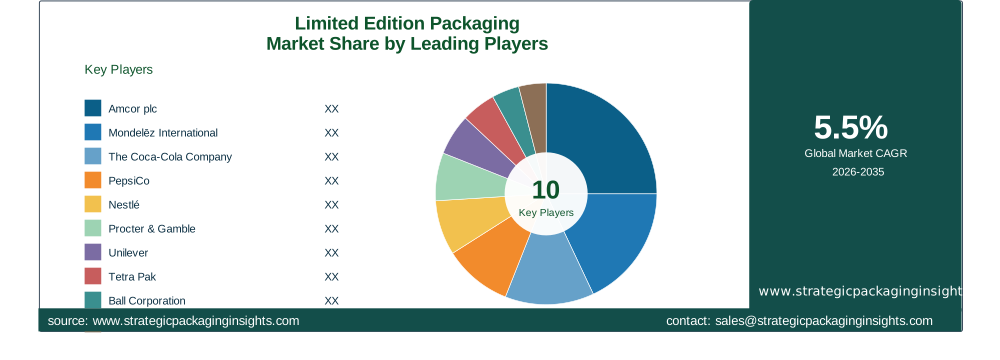
Amcor plc is a leading player in the Limited Edition Packaging market, known for its innovative packaging solutions and commitment to sustainability. The company has a strong presence in the food and beverage, beauty and personal care, and consumer goods sectors, offering a wide range of packaging products that cater to diverse consumer needs. Amcor's focus on sustainability and innovation has enabled it to maintain a competitive position in the market.
Mondelēz International is another key player in the market, known for its extensive product portfolio and global reach. The company has invested in advanced printing technologies and sustainable materials to enhance its packaging offerings and meet consumer expectations. Mondelēz's focus on innovation and sustainability has enabled it to maintain a strong competitive position in the market.
The Coca-Cola Company and PepsiCo are also prominent players in the Limited Edition Packaging market, leveraging their extensive distribution networks and brand recognition to maintain a competitive edge. These companies are investing in sustainable packaging solutions and advanced printing technologies to enhance their product offerings and meet consumer expectations. Their focus on innovation and sustainability has enabled them to maintain a strong competitive position in the market.
Key Highlights
- Largest Region: North America
- Fastest-Growing Region: Asia-Pacific
- Largest Segment: Limited Edition Boxes
- Fastest-Growing Segment: Limited Edition Pouches
- Base-year market size: USD 8.6 Billion
- Forecast-year market size: USD 14.7 Billion
- CAGR: 5.5%
- Important application: Food and Beverage
- Major end-use industry: Beauty and Personal Care
- Major market driver: Increasing demand for personalized packaging solutions
Regional Insights
The Limited Edition Packaging market is witnessing significant growth across major regions, with North America being the largest market and Asia-Pacific emerging as the fastest-growing region. The demand for limited edition packaging is driven by the increasing consumer preference for unique and personalized packaging solutions, particularly in the food and beverage and beauty and personal care industries.
North America
North America is the largest market for Limited Edition Packaging, driven by the strong presence of key players and the high demand for personalized packaging solutions. The region's well-established retail and e-commerce sectors are contributing to the growth of the market, with brands leveraging limited edition packaging to enhance brand differentiation and consumer engagement. The focus on sustainability is also driving demand for eco-friendly packaging materials and practices in the region.
The United States is a major contributor to the growth of the Limited Edition Packaging market in North America, with companies investing in advanced printing technologies and sustainable materials to meet consumer expectations. The demand for limited edition packaging is particularly strong in the food and beverage and beauty and personal care industries, where packaging plays a crucial role in brand perception and consumer experience.
Europe
Europe is a significant market for Limited Edition Packaging, driven by the increasing demand for sustainable packaging solutions and the strong presence of key players in the region. The focus on sustainability and environmental responsibility is influencing material selection and production processes, with companies adopting eco-friendly practices to reduce their environmental footprint. The demand for limited edition packaging is particularly strong in the beauty and personal care and luxury goods sectors, where packaging plays a crucial role in brand perception and consumer experience.
The United Kingdom, Germany, and France are major contributors to the growth of the Limited Edition Packaging market in Europe, with companies investing in advanced printing technologies and sustainable materials to meet consumer expectations. The demand for limited edition packaging is driven by the need for brand differentiation and consumer engagement, with companies leveraging packaging as a marketing tool to convey their values and connect with consumers on an emotional level.
Asia Pacific
Asia-Pacific is the fastest-growing region for Limited Edition Packaging, driven by the increasing consumer demand for unique and personalized packaging solutions. The region's rapidly growing e-commerce and retail sectors are contributing to the growth of the market, with brands leveraging limited edition packaging to enhance brand differentiation and consumer engagement. The focus on sustainability is also driving demand for eco-friendly packaging materials and practices in the region.
China, India, and Japan are major contributors to the growth of the Limited Edition Packaging market in Asia-Pacific, with companies investing in advanced printing technologies and sustainable materials to meet consumer expectations. The demand for limited edition packaging is particularly strong in the food and beverage and beauty and personal care industries, where packaging plays a crucial role in brand perception and consumer experience.
Latin America
Latin America is witnessing significant growth in the Limited Edition Packaging market, driven by the increasing demand for personalized packaging solutions and the strong presence of key players in the region. The focus on sustainability and environmental responsibility is influencing material selection and production processes, with companies adopting eco-friendly practices to reduce their environmental footprint. The demand for limited edition packaging is particularly strong in the food and beverage and beauty and personal care industries, where packaging plays a crucial role in brand perception and consumer experience.
Brazil and Mexico are major contributors to the growth of the Limited Edition Packaging market in Latin America, with companies investing in advanced printing technologies and sustainable materials to meet consumer expectations. The demand for limited edition packaging is driven by the need for brand differentiation and consumer engagement, with companies leveraging packaging as a marketing tool to convey their values and connect with consumers on an emotional level.
Middle East & Africa
The Middle East & Africa region is experiencing growth in the Limited Edition Packaging market, driven by the increasing demand for unique and personalized packaging solutions. The region's growing retail and e-commerce sectors are contributing to the growth of the market, with brands leveraging limited edition packaging to enhance brand differentiation and consumer engagement. The focus on sustainability is also driving demand for eco-friendly packaging materials and practices in the region.
The United Arab Emirates and South Africa are major contributors to the growth of the Limited Edition Packaging market in the Middle East & Africa, with companies investing in advanced printing technologies and sustainable materials to meet consumer expectations. The demand for limited edition packaging is particularly strong in the food and beverage and beauty and personal care industries, where packaging plays a crucial role in brand perception and consumer experience.
Limited Edition Packaging Market Segments Insights

By Packaging Type Analysis
The Limited Edition Packaging market is segmented by packaging type, with limited edition boxes being the largest segment. These boxes are widely used in the food and beverage, beauty and personal care, and luxury goods industries, where packaging plays a crucial role in brand perception and consumer experience. The demand for limited edition boxes is driven by the need for unique and visually appealing packaging solutions that enhance brand differentiation and consumer engagement.
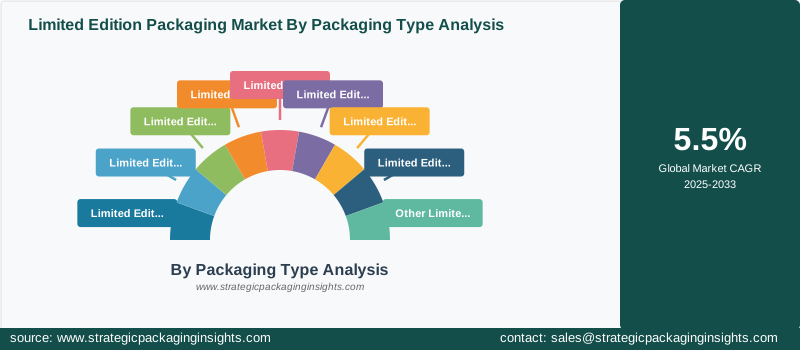
Limited edition pouches are the fastest-growing segment, driven by the increasing demand for flexible and convenient packaging solutions. These pouches are widely used in the food and beverage and personal care industries, where packaging plays a crucial role in product protection and consumer convenience. The demand for limited edition pouches is driven by the need for lightweight and portable packaging solutions that offer both aesthetic appeal and functionality.
By Material Analysis
The Limited Edition Packaging market is segmented by material, with plastic being the most widely used material. Plastic offers versatility and durability, making it a popular choice for packaging solutions in various industries. The demand for plastic packaging is driven by the need for lightweight and cost-effective solutions that offer both aesthetic appeal and functionality.
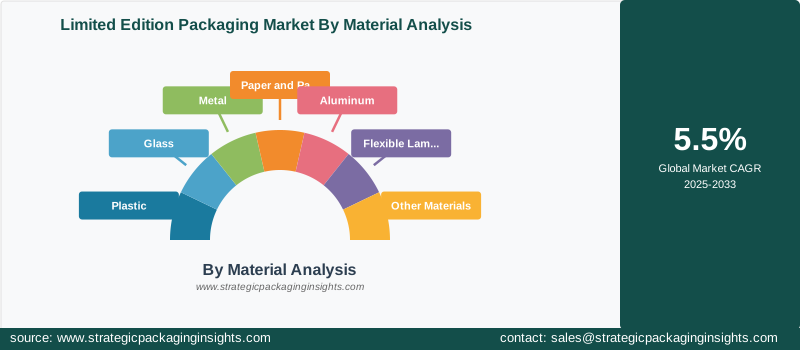
Paper and paperboard are gaining traction as sustainable alternatives to plastic, driven by the increasing focus on sustainability and environmental responsibility. The demand for paper and paperboard packaging is driven by the need for eco-friendly solutions that align with consumer expectations and regulatory requirements. The use of recyclable and biodegradable materials is gaining traction as brands aim to reduce their environmental footprint and enhance their sustainability credentials.
By Printing Technology Analysis
The Limited Edition Packaging market is segmented by printing technology, with digital printing being the most widely used technology. Digital printing offers flexibility and efficiency, enabling brands to produce intricate designs and high-quality finishes that enhance the visual appeal of packaging. The demand for digital printing is driven by the need for personalized and visually appealing packaging solutions that enhance brand differentiation and consumer engagement.
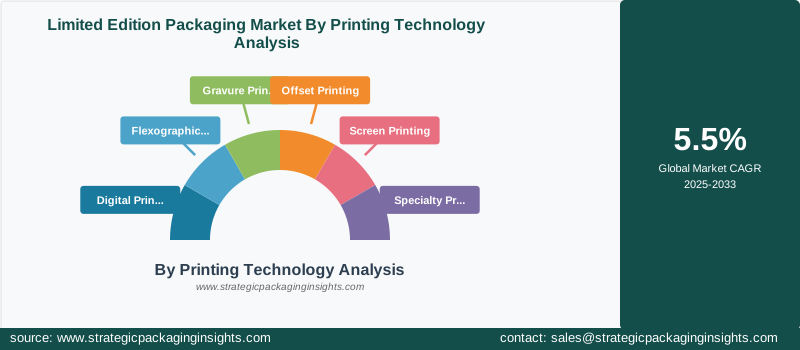
Specialty printing is gaining traction as brands seek to create unique and visually appealing packaging solutions that stand out in a competitive market. The demand for specialty printing is driven by the need for innovative and high-quality finishes that enhance the visual appeal of packaging and create a memorable consumer experience. The integration of advanced printing technologies is enabling brands to produce intricate designs and high-quality finishes that enhance the visual appeal of packaging.
By Packaging Feature Analysis
The Limited Edition Packaging market is segmented by packaging feature, with specialty graphics being the most widely used feature. Specialty graphics offer a unique and visually appealing design that enhances the visual appeal of packaging and creates a memorable consumer experience. The demand for specialty graphics is driven by the need for innovative and high-quality finishes that enhance the visual appeal of packaging and create a memorable consumer experience.
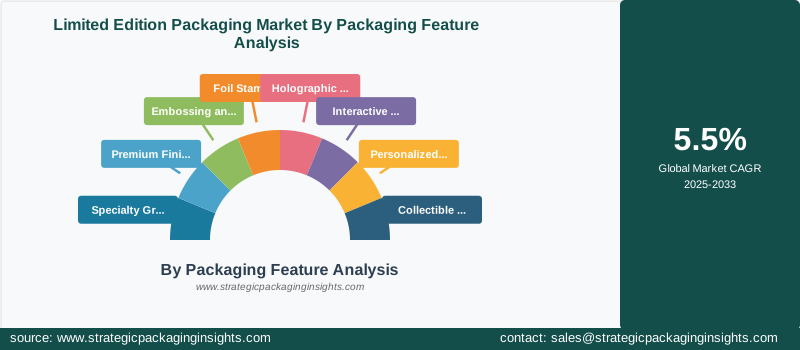
Premium finishes are gaining traction as brands seek to create unique and visually appealing packaging solutions that stand out in a competitive market. The demand for premium finishes is driven by the need for innovative and high-quality finishes that enhance the visual appeal of packaging and create a memorable consumer experience. The integration of advanced printing technologies is enabling brands to produce intricate designs and high-quality finishes that enhance the visual appeal of packaging.
By Application Analysis
The Limited Edition Packaging market is segmented by application, with food and beverage being the largest application segment. The demand for limited edition packaging in the food and beverage industry is driven by the need for unique and visually appealing packaging solutions that enhance brand differentiation and consumer engagement. The rise of e-commerce and digital marketing strategies has further amplified the need for packaging that can capture consumer attention and enhance brand differentiation.
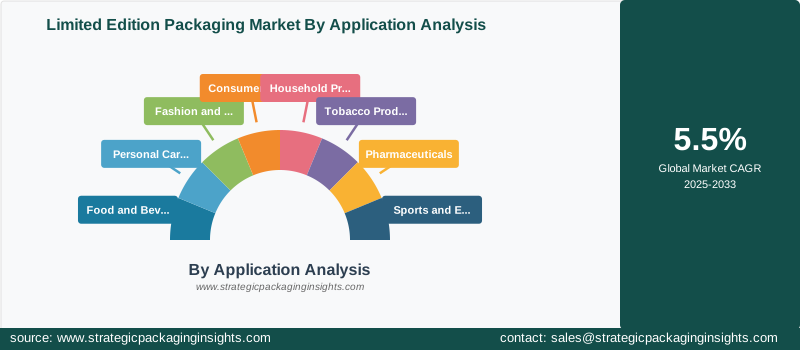
Personal care and cosmetics are gaining traction as brands seek to create unique and visually appealing packaging solutions that stand out in a competitive market. The demand for limited edition packaging in the personal care and cosmetics industry is driven by the need for innovative and high-quality finishes that enhance the visual appeal of packaging and create a memorable consumer experience. The integration of advanced printing technologies is enabling brands to produce intricate designs and high-quality finishes that enhance the visual appeal of packaging.
By End Use Industry Analysis
The Limited Edition Packaging market is segmented by end use industry, with food and beverage being the largest end use industry. The demand for limited edition packaging in the food and beverage industry is driven by the need for unique and visually appealing packaging solutions that enhance brand differentiation and consumer engagement. The rise of e-commerce and digital marketing strategies has further amplified the need for packaging that can capture consumer attention and enhance brand differentiation.
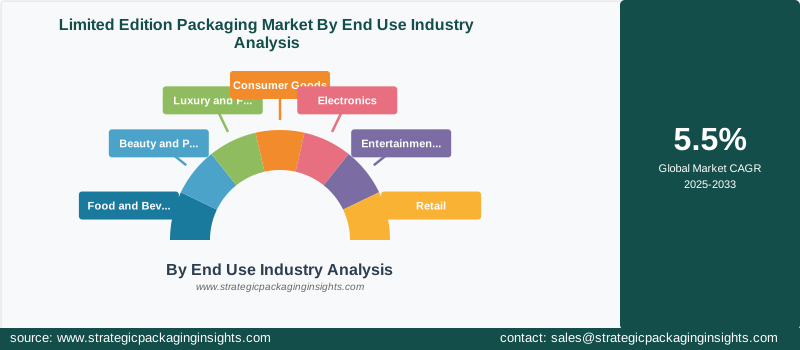
Beauty and personal care are gaining traction as brands seek to create unique and visually appealing packaging solutions that stand out in a competitive market. The demand for limited edition packaging in the beauty and personal care industry is driven by the need for innovative and high-quality finishes that enhance the visual appeal of packaging and create a memorable consumer experience. The integration of advanced printing technologies is enabling brands to produce intricate designs and high-quality finishes that enhance the visual appeal of packaging.
By Distribution Channel Analysis
The Limited Edition Packaging market is segmented by distribution channel, with supermarkets and hypermarkets being the largest distribution channel. The demand for limited edition packaging in supermarkets and hypermarkets is driven by the need for unique and visually appealing packaging solutions that enhance brand differentiation and consumer engagement. The rise of e-commerce and digital marketing strategies has further amplified the need for packaging that can capture consumer attention and enhance brand differentiation.
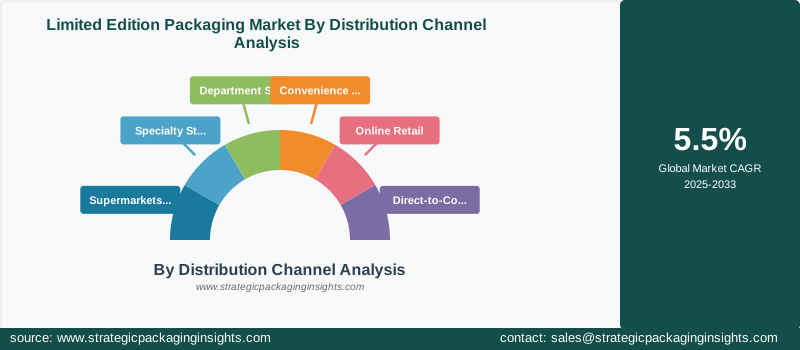
Online retail is gaining traction as brands seek to create unique and visually appealing packaging solutions that stand out in a competitive market. The demand for limited edition packaging in online retail is driven by the need for innovative and high-quality finishes that enhance the visual appeal of packaging and create a memorable consumer experience. The integration of advanced printing technologies is enabling brands to produce intricate designs and high-quality finishes that enhance the visual appeal of packaging.
By Production Volume Analysis
The Limited Edition Packaging market is segmented by production volume, with small batch being the largest production volume segment. The demand for limited edition packaging in small batch production is driven by the need for unique and visually appealing packaging solutions that enhance brand differentiation and consumer engagement. The rise of e-commerce and digital marketing strategies has further amplified the need for packaging that can capture consumer attention and enhance brand differentiation.
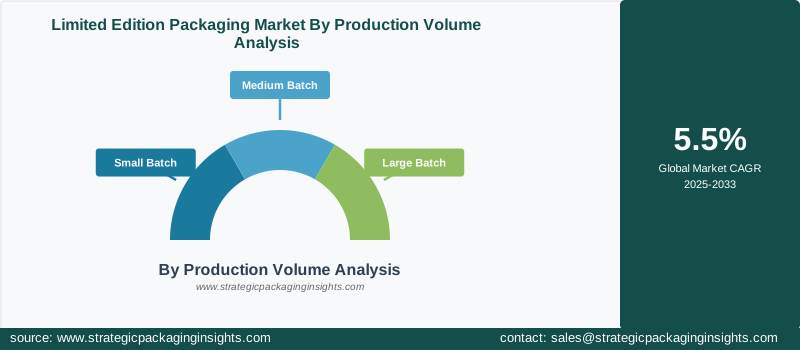
Medium batch production is gaining traction as brands seek to create unique and visually appealing packaging solutions that stand out in a competitive market. The demand for limited edition packaging in medium batch production is driven by the need for innovative and high-quality finishes that enhance the visual appeal of packaging and create a memorable consumer experience. The integration of advanced printing technologies is enabling brands to produce intricate designs and high-quality finishes that enhance the visual appeal of packaging.
Limited Edition Packaging Market Segments
The Limited Edition Packaging market has been segmented on the basis ofBy Packaging Type
- Limited Edition Boxes
- Limited Edition Bottles
- Limited Edition Cans
- Limited Edition Pouches
- Limited Edition Cartons
- Limited Edition Jars
- Limited Edition Tubes
- Limited Edition Wrappers
- Other Limited Edition Packaging
By Material
- Plastic
- Glass
- Metal
- Paper and Paperboard
- Aluminum
- Flexible Laminates
- Other Materials
By Printing Technology
- Digital Printing
- Flexographic Printing
- Gravure Printing
- Offset Printing
- Screen Printing
- Specialty Printing
By Packaging Feature
- Specialty Graphics
- Premium Finishes
- Embossing and Debossing
- Foil Stamping
- Holographic Effects
- Interactive Packaging
- Personalized Packaging
- Collectible Packaging
By Application
- Food and Beverage
- Personal Care and Cosmetics
- Fashion and Luxury Goods
- Consumer Electronics
- Household Products
- Tobacco Products
- Pharmaceuticals
- Sports and Entertainment Merchandise
By End Use Industry
- Food and Beverage
- Beauty and Personal Care
- Luxury and Fashion
- Consumer Goods
- Electronics
- Entertainment and Media
- Retail
By Distribution Channel
- Supermarkets and Hypermarkets
- Specialty Stores
- Department Stores
- Convenience Stores
- Online Retail
- Direct-to-Consumer
By Production Volume
- Small Batch
- Medium Batch
- Large Batch
By Region
- North America
- Europe
- Asia-Pacific
- Latin America
- Middle East and Africa




