


Labelling Machines Market Outlook
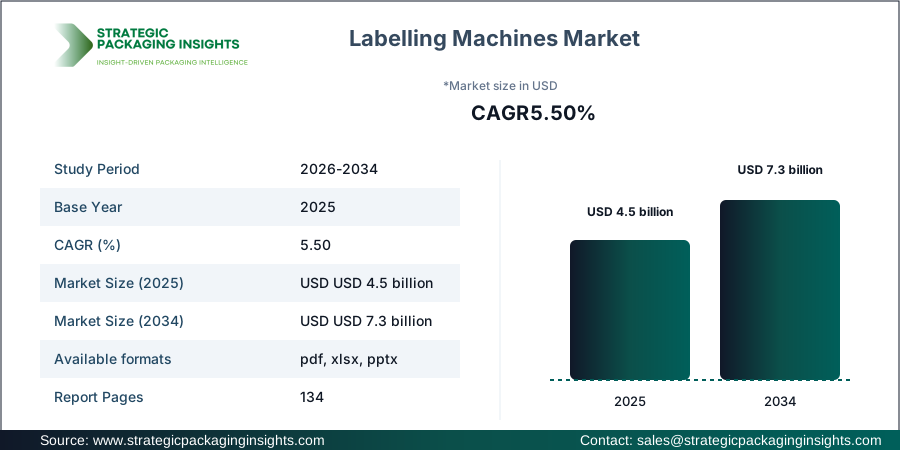
The Labelling Machines market size was valued at USD 4.5 billion in 2025 and is anticipated to reach USD 7.3 billion by 2034, growing at a CAGR of 5.50% during the forecast period according to Strategic Packaging Insights. The market is driven by the increasing demand for efficient and versatile labeling solutions across various industries such as food, beverage, pharmaceuticals, and personal care. Companies like Krones and Sidel are at the forefront, providing innovative labeling technologies that cater to the evolving needs of manufacturers. The rise in automation and the integration of advanced technologies in labeling machines are further propelling market growth, ensuring high precision and speed in labeling processes.
One of the most impactful drivers of the Labelling Machines market is the growing emphasis on product differentiation and branding. As consumers become more discerning, the need for visually appealing and informative labels has surged. This trend is supported by the increasing regulatory requirements for product information transparency, particularly in the food and pharmaceutical sectors. Government initiatives promoting the use of eco-friendly and recyclable materials in packaging are also influencing the market, encouraging manufacturers to adopt sustainable labeling solutions. Companies like KHS and Sacmi are investing in research and development to create environmentally friendly labeling technologies that align with these regulatory standards.
Report Scope
| Attributes | Details |
| Report Title | Labelling Machines Market Size, Future Growth and Forecast 2034 |
| By Technology | Pressure-Sensitive / Self-Adhesive Labelers, Roll-Fed Wraparound (Hot Melt), Sleeve Labelers (Shrink, Stretch), Wet Glue Labelers, Print & Apply Systems |
| By Automation | Semi-Automatic, Fully Automatic Rotary / Inline |
| By Container | Bottles & Jars, Cans, Boxes & Cases, Pouches & Bags, Pallets |
| By End Use | Beverage, Food, Pharmaceuticals, Personal Care, Chemicals, Logistics |
| By Region | North America (U.S., Canada, Mexico), Europe (Germany, UK, France, Italy, Spain, Rest of Europe), Asia Pacific (China, India, Japan, South Korea, Australia, Rest of Asia Pacific), Latin America (Brazil, Argentina, Rest of Latin America), Middle East & Africa (GCC Countries, South Africa, Rest of MEA) |
| Base Year | 2025 |
| Historic Period | 2018-2024 |
| Forecast Period | 2026-2034 |
| Number of Pages | 134 |
| Customization Available | Yes* |
Sustainability & Circular Economy Analysis
Sustainability initiatives and circular economy practices are significantly shaping the packaging market, including the labelling machines sector. The push towards using recyclable materials and reusable packaging is driving innovation in labeling technologies. Companies are increasingly adopting eco-friendly materials and lightweight packaging solutions to reduce their carbon footprint and meet consumer demand for sustainable products. This shift is influencing packaging design and manufacturing processes, as businesses strive to align with environmental, social, and governance (ESG) initiatives.
The integration of waste reduction strategies and extended producer responsibility (EPR) is becoming a focal point for packaging manufacturers. By implementing these practices, companies can enhance their supply chain strategies and regulatory compliance, ensuring long-term market competitiveness. The emphasis on reducing carbon emissions and promoting sustainable practices is also impacting investment decisions, as stakeholders prioritize eco-friendly solutions. This trend is evident in the growing preference for labeling machines that support sustainable packaging, such as those offered by Herma and Quadrel.
Consumer preferences for sustainability are driving changes in packaging regulations, prompting manufacturers to innovate and adapt. The demand for eco-friendly labeling solutions is influencing the entire value chain, from raw material sourcing to recycling networks. As a result, companies are focusing on developing labeling technologies that not only meet regulatory requirements but also appeal to environmentally conscious consumers. This shift towards sustainability is expected to continue shaping the labelling machines market, offering opportunities for growth and innovation.
Packaging Value Chain & Supply Chain Analysis
The packaging value chain and supply chain ecosystem play a crucial role in the performance and competitiveness of the labelling machines market. Raw material sourcing is a critical component, as the availability and cost of materials directly impact production capabilities and pricing strategies. Packaging converters and manufacturers rely on efficient procurement strategies to ensure a steady supply of materials, while also focusing on inventory management to optimize costs and reduce waste.
Logistics and distribution channels are integral to the supply chain, influencing the overall efficiency and responsiveness of the market. Strategic partnerships between packaging machinery providers, brand owners, and retailers are essential for streamlining operations and enhancing supply chain resilience. Companies like ALTech and Fuji Seal are leveraging these partnerships to expand their market reach and improve service delivery, ensuring timely and efficient distribution of labeling machines.
Recycling networks and global sourcing are becoming increasingly important as companies strive to meet sustainability goals and regulatory requirements. By localizing supply chains and investing in recycling infrastructure, businesses can reduce their environmental impact and enhance their market competitiveness. The focus on supply chain efficiency and sustainability is driving innovation in the labelling machines market, with companies like Accraply and Multivac leading the way in developing advanced solutions that support these objectives.
Opportunities & Threats
The labelling machines market presents numerous opportunities for growth, driven by technological advancements and the increasing demand for automation. The rise of smart labeling solutions, which incorporate technologies such as RFID and QR codes, offers significant potential for enhancing product traceability and consumer engagement. Companies that invest in developing these advanced labeling technologies can capitalize on the growing demand for innovative and efficient labeling solutions across various industries.
Another opportunity lies in the expanding e-commerce sector, which is driving the need for efficient and accurate labeling solutions to manage the growing volume of shipments. As online retail continues to grow, the demand for labeling machines that can handle diverse packaging formats and sizes is expected to increase. This trend presents a lucrative opportunity for manufacturers to develop versatile and adaptable labeling solutions that cater to the unique requirements of the e-commerce industry.
However, the market also faces certain threats, including the volatility of raw material prices and the stringent regulatory landscape. Fluctuations in the cost of materials can impact production costs and profit margins, posing a challenge for manufacturers. Additionally, compliance with evolving labeling regulations requires continuous investment in research and development, which can strain resources for smaller companies. To mitigate these threats, businesses must focus on strategic partnerships and innovation to remain competitive in the dynamic labelling machines market.
Drivers & Challenges
The labelling machines market is driven by several key factors, including the increasing demand for product differentiation and branding. As consumers become more discerning, the need for visually appealing and informative labels has surged, prompting manufacturers to invest in advanced labeling technologies. The rise of automation and the integration of smart technologies in labeling machines are also driving market growth, ensuring high precision and speed in labeling processes.
Another significant driver is the growing emphasis on sustainability and eco-friendly packaging solutions. Government initiatives promoting the use of recyclable materials and sustainable practices are encouraging manufacturers to adopt environmentally friendly labeling technologies. This trend is supported by the increasing regulatory requirements for product information transparency, particularly in the food and pharmaceutical sectors, further boosting the demand for innovative labeling solutions.
Despite these drivers, the market faces several challenges, including the volatility of raw material prices and the stringent regulatory landscape. Fluctuations in the cost of materials can impact production costs and profit margins, posing a challenge for manufacturers. Additionally, compliance with evolving labeling regulations requires continuous investment in research and development, which can strain resources for smaller companies. To overcome these challenges, businesses must focus on strategic partnerships and innovation to remain competitive in the dynamic labelling machines market.
Market Share Analysis
The labelling machines market is characterized by a competitive landscape with several key players dominating the industry. Companies like Krones, Sidel, and KHS hold significant market shares, driven by their extensive product portfolios and strong global presence. These companies are known for their innovative labeling technologies and commitment to sustainability, which have helped them maintain a competitive edge in the market.
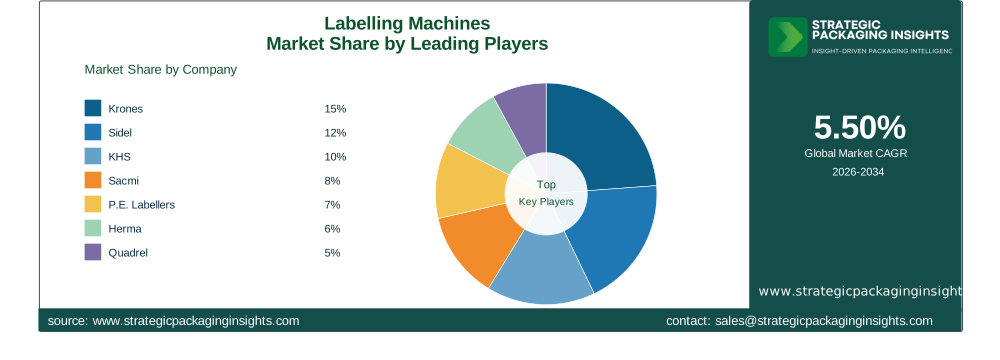
Krones, a leading player in the market, offers a wide range of labeling solutions that cater to various industries, including food, beverage, and pharmaceuticals. The company's focus on research and development has enabled it to introduce advanced labeling technologies that meet the evolving needs of its customers. Similarly, Sidel is renowned for its cutting-edge labeling machines that offer high precision and efficiency, making it a preferred choice for manufacturers worldwide.
Other notable players in the market include Sacmi, P.E. Labellers (ProMach), and Herma, each of which has carved a niche for itself through innovative product offerings and strategic partnerships. Sacmi, for instance, is known for its comprehensive range of labeling solutions that cater to diverse packaging formats and sizes. P.E. Labellers (ProMach) has established itself as a leader in the market by offering customizable labeling solutions that meet the specific requirements of its clients.
Herma, on the other hand, is recognized for its commitment to sustainability and eco-friendly labeling technologies. The company's focus on reducing carbon emissions and promoting sustainable practices has resonated well with environmentally conscious consumers, further strengthening its market position. As the labelling machines market continues to evolve, these companies are expected to play a pivotal role in shaping its future trajectory.
Key Highlights
- Market Size: The labelling machines market was valued at USD 4.5 billion in 2025 and is projected to reach USD 7.3 billion by 2034.
- Growth Rate: The market is expected to grow at a CAGR of 5.50% during the forecast period.
- Technological Advancements: The rise of smart labeling solutions and automation is driving market growth.
- Sustainability Focus: Increasing demand for eco-friendly labeling technologies is influencing market dynamics.
- Key Players: Major companies include Krones, Sidel, KHS, Sacmi, and P.E. Labellers (ProMach).
- Regional Insights: Asia Pacific is expected to witness significant growth due to rising industrialization and demand for labeling solutions.
- End-Use Industries: The food, beverage, and pharmaceutical sectors are major contributors to market demand.
Labelling Machines Market Segments Insights

By Technology Analysis
The labelling machines market is segmented by technology into Pressure-Sensitive / Self-Adhesive Labelers, Roll-Fed Wraparound (Hot Melt), Sleeve Labelers (Shrink, Stretch), Wet Glue Labelers, and Print & Apply Systems. Pressure-sensitive labelers are gaining traction due to their versatility and ease of use, making them ideal for various applications across industries. Roll-fed wraparound labelers, known for their efficiency and cost-effectiveness, are widely used in the beverage industry, where high-speed labeling is crucial. Sleeve labelers, offering 360-degree coverage, are popular in the personal care and food sectors, providing a unique branding opportunity for manufacturers.
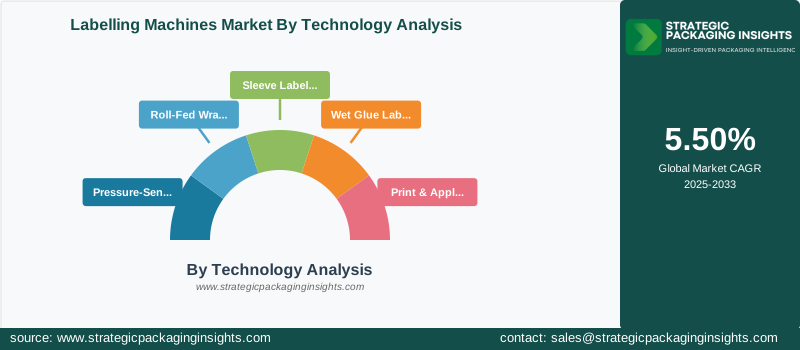
Wet glue labelers, although traditional, continue to hold a significant market share due to their reliability and cost-effectiveness in high-volume production environments. Print & apply systems are increasingly being adopted in logistics and warehousing, where accurate and efficient labeling is essential for inventory management. The demand for these technologies is driven by the need for high-speed, precise, and flexible labeling solutions that cater to the diverse requirements of end-use industries. As companies focus on enhancing their branding and product differentiation strategies, the adoption of advanced labeling technologies is expected to rise, further propelling market growth.
By Automation Analysis
The automation segment of the labelling machines market is divided into Semi-Automatic and Fully Automatic Rotary / Inline systems. Fully automatic labeling machines are witnessing increased adoption due to their ability to deliver high-speed and precise labeling, making them ideal for large-scale production environments. These machines are equipped with advanced features such as touch-screen interfaces, programmable logic controllers (PLCs), and sensors, which enhance their efficiency and ease of operation. As manufacturers seek to improve productivity and reduce labor costs, the demand for fully automatic labeling systems is expected to grow.
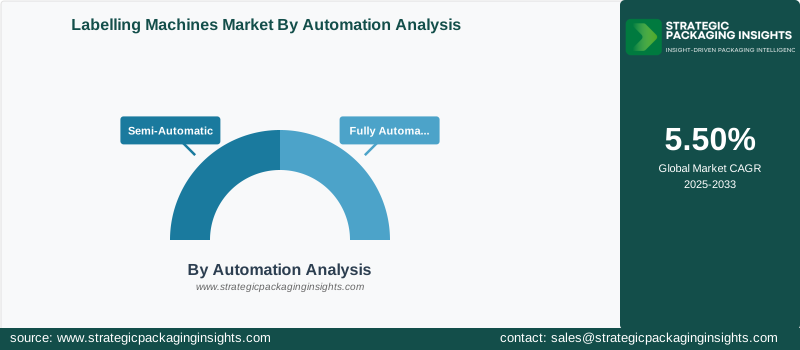
Semi-automatic labeling machines, on the other hand, are preferred by small and medium-sized enterprises (SMEs) due to their cost-effectiveness and flexibility. These machines offer a balance between manual and automated operations, allowing businesses to achieve efficient labeling without significant capital investment. The growing trend of customization and short production runs is also driving the demand for semi-automatic labeling systems, as they offer the flexibility to handle diverse packaging formats and sizes. As the market continues to evolve, the adoption of automation in labeling processes is expected to increase, driven by the need for efficiency, precision, and cost-effectiveness.
By Container Analysis
The labelling machines market is segmented by container type into Bottles & Jars, Cans, Boxes & Cases, Pouches & Bags, and Pallets. Bottles and jars are the most common packaging formats in the beverage and personal care industries, driving the demand for labeling machines that can handle these containers efficiently. The increasing consumption of bottled beverages and personal care products is expected to boost the demand for labeling solutions in this segment. Cans, widely used in the food and beverage industry, require specialized labeling machines that can accommodate their unique shape and size.
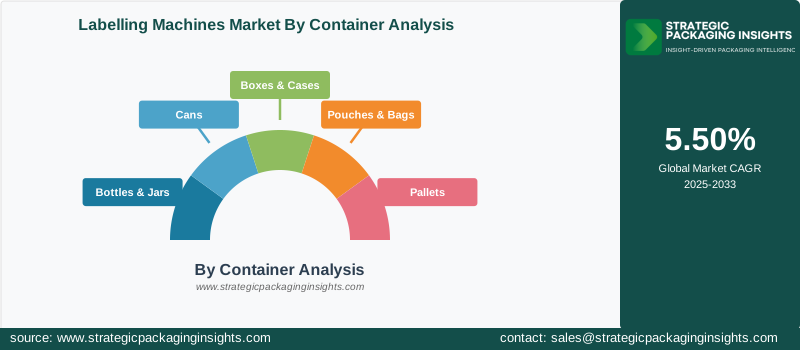
Boxes and cases, commonly used in logistics and warehousing, require labeling solutions that ensure accurate and efficient identification of products. Pouches and bags, gaining popularity in the food and pharmaceutical sectors, present unique labeling challenges due to their flexible nature. As the demand for convenient and portable packaging solutions grows, the need for advanced labeling technologies that can handle diverse container types is expected to rise. Pallets, used for bulk transportation and storage, require labeling solutions that ensure traceability and inventory management, further driving the demand for labeling machines in this segment.
By End Use Analysis
The labelling machines market is segmented by end-use into Beverage, Food, Pharmaceuticals, Personal Care, Chemicals, and Logistics. The beverage industry is a major contributor to market demand, driven by the increasing consumption of bottled and canned beverages. The need for high-speed and precise labeling solutions in this sector is propelling the adoption of advanced labeling technologies. The food industry, with its diverse packaging formats and stringent regulatory requirements, is also a significant driver of market growth, as manufacturers seek efficient labeling solutions that ensure compliance and product differentiation.
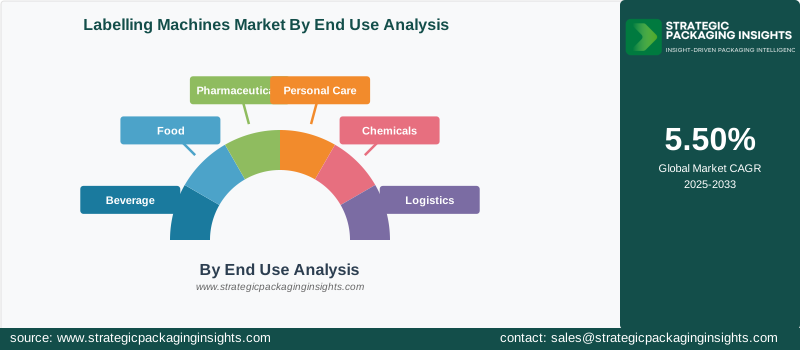
The pharmaceutical sector, with its focus on safety and traceability, requires labeling machines that offer high precision and reliability. The personal care industry, driven by the demand for visually appealing and informative labels, is adopting advanced labeling technologies to enhance branding and consumer engagement. The chemicals and logistics sectors, with their unique labeling requirements, are also contributing to market demand, as businesses seek efficient and accurate labeling solutions that ensure safety and traceability. As these industries continue to grow, the demand for innovative and efficient labeling machines is expected to rise, further driving market growth.
Labelling Machines Market Segments
The Labelling Machines market has been segmented on the basis ofBy Technology
- Pressure-Sensitive / Self-Adhesive Labelers
- Roll-Fed Wraparound (Hot Melt)
- Sleeve Labelers (Shrink, Stretch)
- Wet Glue Labelers
- Print & Apply Systems
By Automation
- Semi-Automatic
- Fully Automatic Rotary / Inline
By Container
- Bottles & Jars
- Cans
- Boxes & Cases
- Pouches & Bags
- Pallets
By End Use
- Beverage
- Food
- Pharmaceuticals
- Personal Care
- Chemicals
- Logistics
By Region
- North America (U.S., Canada, Mexico)
- Europe (Germany, UK, France, Italy, Spain, Rest of Europe)
- Asia Pacific (China, India, Japan, South Korea, Australia, Rest of Asia Pacific)
- Latin America (Brazil, Argentina, Rest of Latin America)
- Middle East & Africa (GCC Countries, South Africa, Rest of MEA)




