


Labeling Equipment Market Outlook
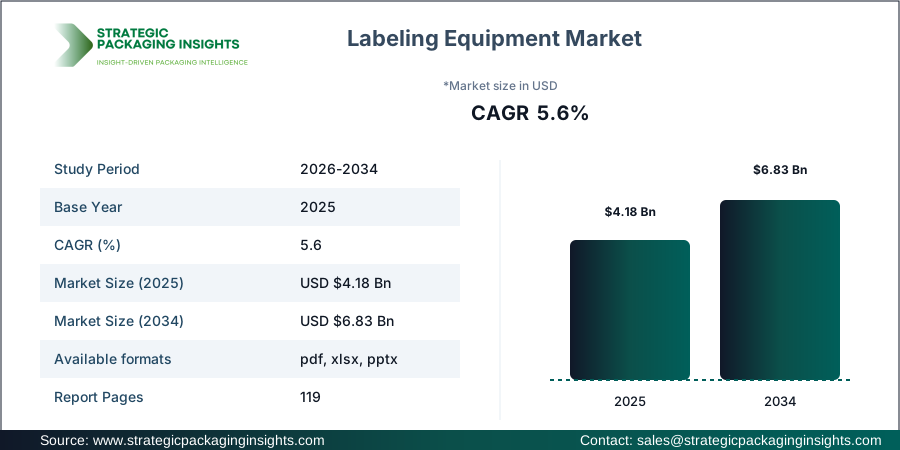
The labeling equipment market was valued at $4.18 billion in 2025 and is projected to reach $6.83 billion by 2034, growing at a CAGR of 5.6% during the forecast period 2026-2034. This growth is driven by the increasing demand for efficient packaging solutions across various industries such as food & beverage, pharmaceuticals, and cosmetics. The rise in consumer awareness regarding product information and safety has further fueled the demand for advanced labeling technologies. Additionally, the integration of automation in labeling processes is expected to enhance productivity and reduce operational costs, thereby boosting market growth.
Report Scope
| Attributes | Details |
| Report Title | Labeling Equipment Market Size, Future Growth and Forecast 2034 |
| Machine Type | Automatic Labelers, Semi-Automatic Labelers, Manual Labelers |
| Label Type | Pressure-Sensitive, Sleeve, Glue-Based, In-Mold |
| Application | Bottles, Cartons, Pouches, Containers |
| End Use | Food & Beverage, Pharmaceuticals, Cosmetics, Chemicals |
| Region | Asia Pacific, North America, Latin America, Europe, Middle East & Africa |
| Base Year | 2025 |
| Historic Period | 2018-2024 |
| Forecast Period | 2026-2034 |
| Number of Pages | 119 |
| Customization Available | Yes* |
Opportunities & Threats
One of the significant opportunities in the labeling equipment market is the growing trend of smart labeling. With the advent of technologies like RFID and QR codes, manufacturers are increasingly adopting smart labels to provide consumers with detailed product information and enhance supply chain transparency. This trend is particularly prominent in the food & beverage and pharmaceutical sectors, where traceability and authenticity are crucial. Moreover, the increasing demand for eco-friendly labeling solutions presents another opportunity for market players to innovate and capture a larger market share. As consumers become more environmentally conscious, the demand for sustainable labeling materials and processes is expected to rise, driving growth in this segment.
Another opportunity lies in the expansion of the e-commerce sector, which has led to a surge in demand for packaging and labeling solutions. As online retail continues to grow, the need for efficient and accurate labeling systems becomes paramount to ensure timely delivery and customer satisfaction. This trend is expected to drive investments in advanced labeling technologies, particularly in regions with high e-commerce penetration such as North America and Asia Pacific. Additionally, the increasing focus on product differentiation and branding is likely to boost the demand for customized labeling solutions, providing further growth opportunities for market players.
However, the labeling equipment market faces certain challenges that could hinder its growth. One of the primary restrainers is the high initial cost associated with advanced labeling systems. Small and medium-sized enterprises (SMEs) may find it challenging to invest in state-of-the-art labeling equipment due to budget constraints, limiting their adoption. Furthermore, the complexity of integrating new technologies with existing production lines can pose a significant barrier for manufacturers. Additionally, stringent regulations regarding labeling standards and compliance can increase operational costs and create challenges for market players, particularly in highly regulated industries such as pharmaceuticals and food & beverage.
Drivers & Challenges
The labeling equipment market is primarily driven by the increasing demand for packaged goods across various industries. As consumer preferences shift towards convenience and ready-to-eat products, the need for efficient and accurate labeling systems becomes crucial. This trend is particularly evident in the food & beverage sector, where labeling plays a vital role in providing consumers with essential product information such as nutritional content and expiration dates. Additionally, the growing emphasis on product safety and traceability in the pharmaceutical industry is driving the adoption of advanced labeling technologies, further propelling market growth.
Another significant driver is the rapid advancement in labeling technologies. The integration of automation and digitalization in labeling processes has revolutionized the industry, enabling manufacturers to achieve higher efficiency and precision. Automated labeling systems reduce manual intervention, minimize errors, and enhance production speed, making them an attractive option for large-scale manufacturers. Moreover, the development of innovative labeling materials and techniques, such as pressure-sensitive and in-mold labels, is expected to drive market growth by offering enhanced durability and aesthetic appeal.
Despite these drivers, the labeling equipment market faces several challenges that could impede its growth. One of the primary challenges is the high cost of advanced labeling systems, which can be a significant barrier for small and medium-sized enterprises (SMEs). Additionally, the complexity of integrating new technologies with existing production lines can pose operational challenges for manufacturers. Furthermore, the market is subject to stringent regulations regarding labeling standards and compliance, particularly in industries such as pharmaceuticals and food & beverage. These regulations can increase operational costs and create challenges for market players, necessitating continuous innovation and adaptation to remain competitive.
Market Share Analysis
The labeling equipment market is characterized by intense competition, with several key players vying for market share. Companies such as Krones, ProMach, Herma, Accraply, and Sidel are among the leading players in the industry, offering a wide range of labeling solutions to cater to diverse customer needs. These companies have established a strong presence in the market through strategic partnerships, mergers and acquisitions, and continuous innovation. Their focus on developing advanced labeling technologies and expanding their product portfolios has enabled them to maintain a competitive edge in the market.
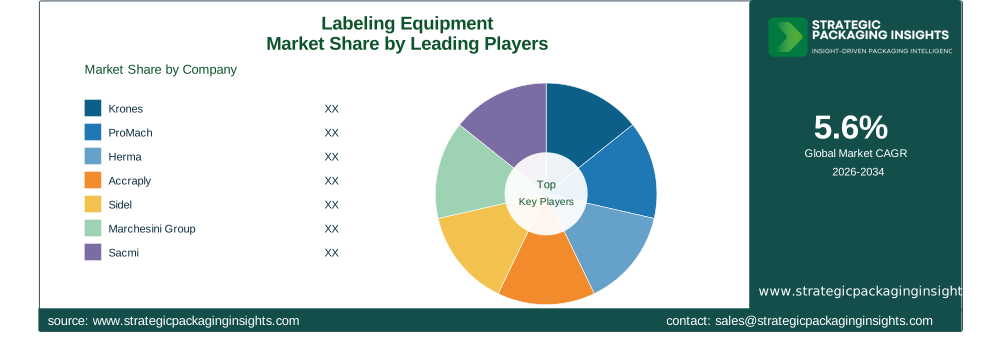
Krones, a leading player in the labeling equipment market, holds a significant market share due to its extensive product offerings and strong global presence. The company is known for its innovative labeling solutions that cater to various industries, including food & beverage, pharmaceuticals, and cosmetics. ProMach, another major player, has gained a competitive advantage through its comprehensive range of labeling systems and strong customer relationships. The company's focus on providing customized solutions and exceptional after-sales service has contributed to its success in the market.
Herma, Accraply, and Sidel are also prominent players in the labeling equipment market, each holding a substantial market share. Herma is renowned for its high-quality labeling machines and innovative technologies, which have earned it a strong reputation in the industry. Accraply, a subsidiary of Barry-Wehmiller, offers a diverse range of labeling solutions and has a strong presence in the North American market. Sidel, a global leader in packaging solutions, has expanded its product portfolio to include advanced labeling systems, further strengthening its position in the market.
Other notable companies in the labeling equipment market include Marchesini Group, Sacmi, Barry-Wehmiller, Coesia, and Fuji Seal. These companies have made significant contributions to the market through their innovative product offerings and strategic initiatives. Marchesini Group is known for its cutting-edge labeling technologies and strong focus on research and development. Sacmi, a leading provider of packaging solutions, has expanded its product portfolio to include advanced labeling systems, catering to the growing demand for efficient and accurate labeling solutions. Barry-Wehmiller, Coesia, and Fuji Seal have also established themselves as key players in the market, offering a wide range of labeling solutions to meet diverse customer needs.
Key Highlights
- The labeling equipment market is projected to grow at a CAGR of 5.6% from 2026 to 2034, reaching a market size of $6.83 billion by 2034.
- Increasing demand for packaged goods and consumer awareness regarding product information are driving market growth.
- Smart labeling technologies, such as RFID and QR codes, are gaining traction in the market.
- The food & beverage and pharmaceutical sectors are the primary drivers of demand for labeling equipment.
- High initial costs and regulatory compliance are significant challenges for market players.
- Key players in the market include Krones, ProMach, Herma, Accraply, and Sidel.
- Technological advancements and automation are revolutionizing the labeling equipment industry.
- The e-commerce sector presents significant growth opportunities for labeling equipment manufacturers.
- Eco-friendly labeling solutions are gaining popularity among environmentally conscious consumers.
Top Countries Insights
In the labeling equipment market, the United States holds a significant share, driven by the robust demand from the food & beverage and pharmaceutical industries. The market size in the U.S. is substantial, with a CAGR of 5% expected over the forecast period. The country's focus on innovation and technological advancements in labeling solutions is a key growth driver. Additionally, stringent regulations regarding product labeling and safety standards further boost the demand for advanced labeling equipment.
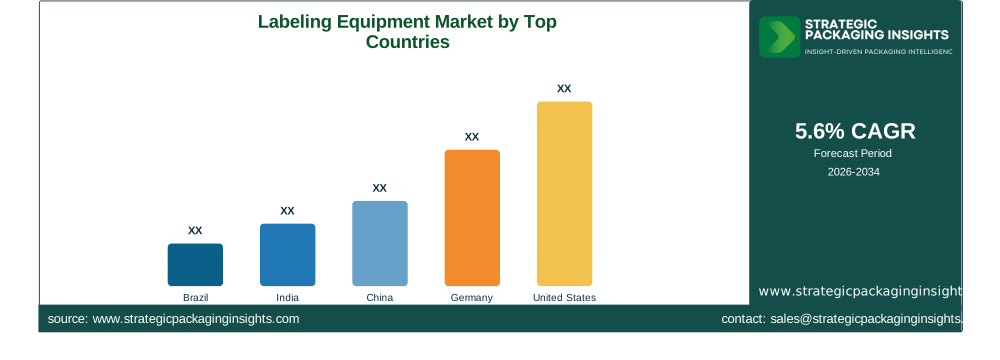
Germany is another prominent player in the labeling equipment market, with a strong emphasis on automation and efficiency. The market in Germany is expected to grow at a CAGR of 4%, driven by the country's well-established manufacturing sector and the increasing demand for high-quality labeling solutions. The presence of leading labeling equipment manufacturers and a strong focus on research and development contribute to the market's growth in this region.
China is witnessing rapid growth in the labeling equipment market, with a CAGR of 7% projected over the forecast period. The country's booming e-commerce sector and the increasing demand for packaged goods are key drivers of market growth. Additionally, the government's focus on improving manufacturing capabilities and adopting advanced technologies further supports the expansion of the labeling equipment market in China.
India is emerging as a significant market for labeling equipment, with a CAGR of 6% expected over the forecast period. The country's growing population and rising consumer awareness regarding product information are driving the demand for efficient labeling solutions. The expansion of the food & beverage and pharmaceutical industries in India also contributes to the market's growth, as these sectors require accurate and reliable labeling systems.
Brazil is experiencing steady growth in the labeling equipment market, with a CAGR of 3% projected over the forecast period. The country's expanding food & beverage industry and the increasing demand for packaged goods are key factors driving market growth. Additionally, the government's initiatives to promote domestic manufacturing and improve labeling standards further support the market's expansion in Brazil.
Labeling Equipment Market Segments Insights

Machine Type Analysis
The labeling equipment market is segmented by machine type into automatic labelers, semi-automatic labelers, and manual labelers. Automatic labelers dominate the market due to their high efficiency and ability to handle large volumes of products with minimal human intervention. These machines are particularly popular in large-scale manufacturing facilities where speed and accuracy are crucial. The integration of advanced technologies such as robotics and artificial intelligence in automatic labelers is further enhancing their capabilities, making them an attractive option for manufacturers looking to optimize their production processes.
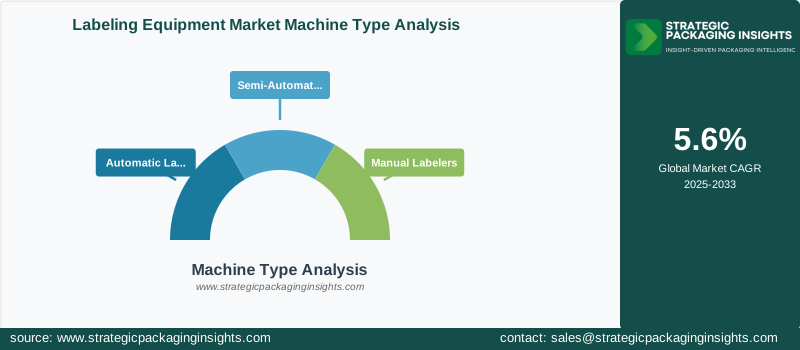
Semi-automatic labelers, while less prevalent than their automatic counterparts, still hold a significant share of the market. These machines offer a balance between cost and efficiency, making them suitable for small to medium-sized enterprises (SMEs) that may not have the budget for fully automated systems. Semi-automatic labelers require some level of human intervention, but they provide greater flexibility and control over the labeling process, which can be advantageous for certain applications.
Manual labelers, although the least advanced in terms of technology, continue to have a presence in the market, particularly in regions with lower labor costs. These machines are typically used in small-scale operations where the volume of products is not high enough to justify the investment in more advanced equipment. Manual labelers offer simplicity and ease of use, making them a viable option for businesses with limited resources or those operating in niche markets.
Label Type Analysis
The labeling equipment market is also segmented by label type, including pressure-sensitive, sleeve, glue-based, and in-mold labels. Pressure-sensitive labels are the most widely used due to their versatility and ease of application. These labels can adhere to a variety of surfaces and are suitable for a wide range of products, making them a popular choice across different industries. The demand for pressure-sensitive labels is driven by their ability to provide high-quality graphics and durability, which are essential for product branding and consumer appeal.
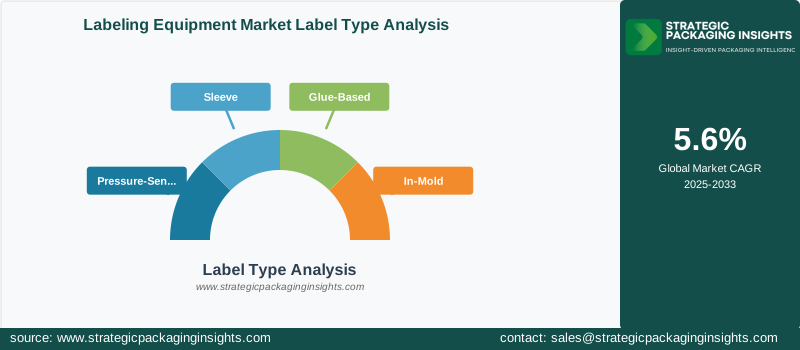
Sleeve labels are gaining popularity in the market due to their ability to provide 360-degree coverage and enhance the visual appeal of products. These labels are particularly favored in the beverage industry, where they are used to create eye-catching designs and differentiate products on store shelves. The growing trend of premium packaging and the increasing focus on product differentiation are driving the demand for sleeve labels in the labeling equipment market.
Glue-based labels, while less common than pressure-sensitive and sleeve labels, still hold a significant share of the market. These labels are typically used in applications where a strong adhesive bond is required, such as in the packaging of heavy or bulky products. In-mold labels, on the other hand, are used in specialized applications where the label is integrated into the product during the molding process. This type of labeling is commonly used in the production of plastic containers and offers advantages such as durability and resistance to moisture and abrasion.
Application Analysis
The labeling equipment market is segmented by application into bottles, cartons, pouches, and containers. Bottles represent the largest application segment, driven by the high demand from the beverage and pharmaceutical industries. The need for accurate and reliable labeling solutions in these sectors is crucial, as labels provide essential information such as product ingredients, usage instructions, and expiration dates. The growing trend of premium packaging and the increasing focus on product differentiation are further driving the demand for labeling equipment in the bottle segment.
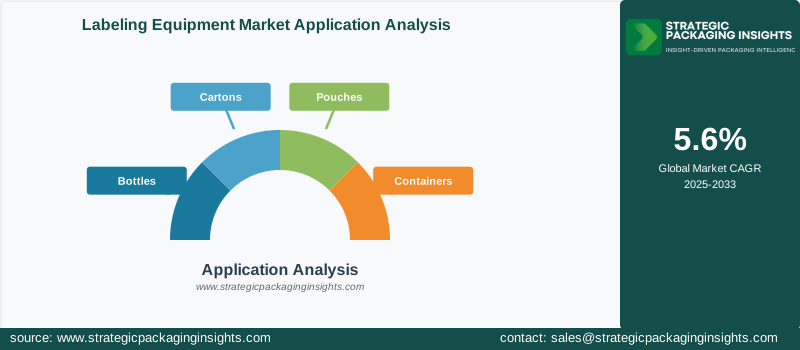
Cartons are another significant application segment in the labeling equipment market, particularly in the food & beverage and cosmetics industries. The demand for carton labeling solutions is driven by the need for efficient and accurate labeling systems that can handle a variety of carton sizes and shapes. The increasing focus on sustainability and eco-friendly packaging is also influencing the demand for carton labeling equipment, as manufacturers seek to reduce waste and improve the recyclability of their packaging materials.
Pouches and containers are also important application segments in the labeling equipment market. The demand for pouch labeling solutions is driven by the growing popularity of flexible packaging, which offers advantages such as convenience, portability, and reduced material usage. Containers, on the other hand, are widely used in the chemical and pharmaceutical industries, where labeling plays a crucial role in ensuring product safety and compliance with regulatory standards. The increasing demand for customized labeling solutions in these segments is driving innovation and growth in the labeling equipment market.
End Use Analysis
The labeling equipment market is segmented by end use into food & beverage, pharmaceuticals, cosmetics, and chemicals. The food & beverage industry is the largest end-use segment, driven by the high demand for packaged goods and the need for accurate and reliable labeling solutions. Labels in this industry provide essential information such as nutritional content, ingredients, and expiration dates, which are crucial for consumer safety and compliance with regulatory standards. The growing trend of premium packaging and the increasing focus on product differentiation are further driving the demand for labeling equipment in the food & beverage sector.
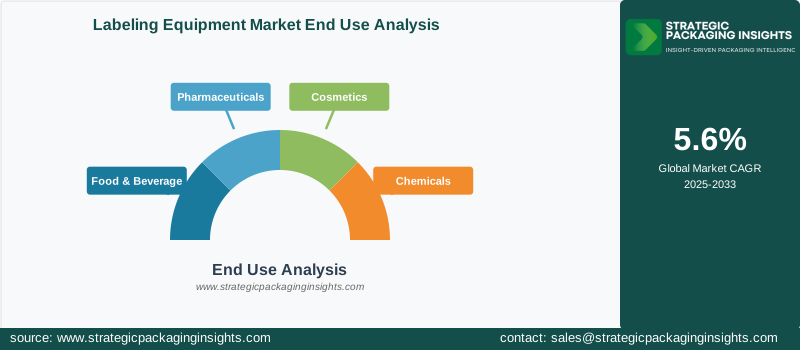
The pharmaceutical industry is another significant end-use segment in the labeling equipment market, driven by the need for precise and compliant labeling solutions. Labels in this industry provide critical information such as dosage instructions, warnings, and expiration dates, which are essential for patient safety and regulatory compliance. The increasing focus on product traceability and anti-counterfeiting measures is also driving the demand for advanced labeling technologies in the pharmaceutical sector.
The cosmetics and chemicals industries are also important end-use segments in the labeling equipment market. The demand for labeling solutions in the cosmetics industry is driven by the need for high-quality graphics and branding, as well as compliance with labeling regulations. In the chemicals industry, labeling plays a crucial role in ensuring product safety and compliance with regulatory standards. The increasing demand for customized labeling solutions in these segments is driving innovation and growth in the labeling equipment market.
Labeling Equipment Market Segments
The Labeling Equipment market has been segmented on the basis ofMachine Type
- Automatic Labelers
- Semi-Automatic Labelers
- Manual Labelers
Label Type
- Pressure-Sensitive
- Sleeve
- Glue-Based
- In-Mold
Application
- Bottles
- Cartons
- Pouches
- Containers
End Use
- Food & Beverage
- Pharmaceuticals
- Cosmetics
- Chemicals
Region
- Asia Pacific
- North America
- Latin America
- Europe
- Middle East & Africa




