


Label Films Market Outlook
The Label Films market size was valued at USD $14.52 Billion in 2025 and is anticipated to reach USD $24.04 Billion by 2035, growing at a CAGR of 5.2% during the forecast period according to Strategic Packaging Insights.
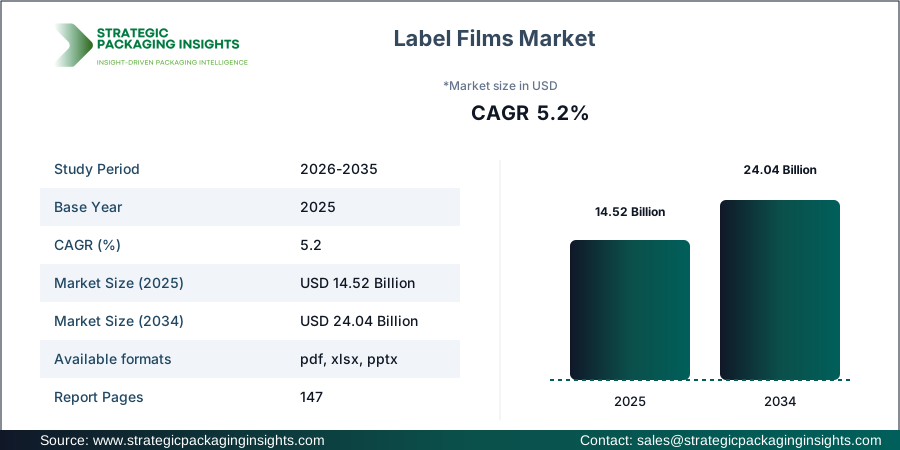
The increasing demand for sustainable and recyclable packaging solutions is a significant driver in the Label Films market. With growing environmental concerns, industries are shifting towards eco-friendly materials, which is supported by regulatory frameworks promoting sustainability. This trend is particularly evident in the food and beverage sector, where consumer preference for sustainable packaging is influencing market dynamics.
Report Scope
| Attributes | Details |
| Report Title | Label Films Market Projected to Scale to 24.04 Billion by 2035, Assesses Strategic Packaging Insights |
| By Material | Polypropylene (PP), Biaxially Oriented Polypropylene (BOPP), Polyethylene (PE), Polyethylene Terephthalate (PET), Polyvinyl Chloride (PVC), Polystyrene (PS), Paper-Based Films, Other Materials |
| By Film Type | Pressure-Sensitive Label Films, Shrink Label Films, Stretch Label Films, In-Mold Label Films, Wrap Around Label Films, Wet-Glue Label Films, Heat Transfer Label Films |
| By Adhesive Type | Acrylic Adhesives, Rubber-Based Adhesives, Hot-Melt Adhesives, Solvent-Based Adhesives, Water-Based Adhesives, Adhesive-Free Films |
| By Surface Finish | Gloss, Matte, Transparent, Metalized, Pearlescent, Holographic |
| By Printing Technology | Flexographic Printing, Digital Printing, Gravure Printing, Offset Printing, Screen Printing |
| By Application | Food and Beverage, Pharmaceuticals, Personal Care and Cosmetics, Household Products, Industrial Products, Automotive, Electronics, Logistics and Transportation |
| By End Use Industry | Food and Beverage, Healthcare and Pharmaceuticals, Personal Care and Cosmetics, Consumer Goods, Industrial, Automotive, Electronics, Retail and E-commerce |
| By Region | North America, Europe, Asia-Pacific, Latin America, Middle East and Africa |
| Base Year | 2025 |
| Historic Period | 2018-2024 |
| Forecast Period | 2026-2035 |
| Number of Pages | 147 |
| Customization Available | Yes* |
Market Trends Analysis
Label Films are witnessing a shift towards more sustainable materials, with a focus on recyclability and reduced environmental impact. The adoption of mono-material films is gaining traction, driven by regulatory pressures and consumer demand for eco-friendly packaging. This trend is expected to influence material selection and procurement strategies, impacting the competitive landscape.
Technological advancements in printing and converting processes are enhancing the functionality and aesthetics of Label Films. Digital printing technologies are enabling customization and shorter production runs, catering to the growing demand for personalized packaging. This trend is likely to drive innovation and investment in printing technologies, offering new opportunities for market players.
Industry Transformation Analysis
The Label Films industry is undergoing significant transformation with advancements in film extrusion and printing technologies. The integration of automation and digitalization in manufacturing processes is enhancing operational efficiency and reducing production costs. This shift is enabling manufacturers to meet the increasing demand for high-quality, customized label films.
Supply chain dynamics are evolving with a focus on sustainability and localization. Companies are investing in local production facilities to reduce carbon footprints and comply with regional regulations. This trend is expected to influence procurement strategies and supplier relationships, impacting the overall industry structure.
Trends & Disruptions Impacting Customers' Customers
Downstream customers, particularly in the food and beverage and pharmaceuticals sectors, are increasingly prioritizing sustainability and regulatory compliance. This shift is driving demand for label films that offer recyclability and reduced environmental impact. Additionally, the rise of e-commerce is influencing packaging requirements, with a focus on durability and branding.
These changes are impacting product demand and innovation in the Label Films market. Suppliers are required to offer solutions that meet stringent sustainability criteria while maintaining performance and cost-effectiveness. This trend is creating opportunities for companies to differentiate through innovation and strategic partnerships, influencing future growth prospects.
Label Films Market Ecosystem
The Label Films market ecosystem involves a complex interplay of raw material suppliers, film producers, converters, and distributors. The value chain is heavily influenced by sustainability initiatives, with a focus on reducing environmental impact through material innovation and recycling efforts. Companies are investing in advanced technologies to enhance production efficiency and meet evolving customer demands.
Supply chain dependencies are critical, with raw material availability and pricing impacting production costs and market dynamics. The shift towards localized production is reducing reliance on global supply chains, offering resilience against geopolitical uncertainties. These changes are shaping procurement strategies and influencing competitive positioning in the market.
Analyst Perspective
Analyst Perspective: The Label Films market is poised for significant growth driven by sustainability and technological advancements.
The most important structural change is the shift towards sustainable materials and processes, which is reshaping the competitive landscape. Companies that invest in eco-friendly solutions and advanced technologies are likely to gain a competitive edge.
Market participants should focus on sustainability initiatives and technological innovation to capitalize on emerging opportunities. Monitoring regulatory developments and consumer preferences will be crucial for strategic decision-making and long-term success.
Opportunities & Threats
The Label Films market presents significant opportunities driven by the increasing demand for sustainable packaging solutions. The shift towards eco-friendly materials and processes is creating new avenues for innovation and product differentiation. Companies that invest in sustainable technologies and materials are likely to gain a competitive advantage in the market.
Technological advancements in printing and converting processes offer opportunities for customization and enhanced product functionality. The adoption of digital printing technologies is enabling shorter production runs and personalized packaging solutions, catering to evolving consumer preferences and market demands.
However, the market faces threats from raw material volatility and regulatory uncertainties. Fluctuations in polymer prices can impact production costs and profitability, while evolving regulations may require significant investments in compliance and sustainability initiatives.
Competition from alternative packaging solutions and materials poses a threat to market growth. Companies must continuously innovate and adapt to changing market dynamics to maintain their competitive position and capitalize on emerging opportunities.
Drivers & Challenges
The Label Films market is driven by the increasing demand for sustainable and recyclable packaging solutions. Regulatory frameworks promoting environmental sustainability are encouraging industries to adopt eco-friendly materials, driving market growth. The food and beverage sector, in particular, is witnessing a surge in demand for sustainable packaging, influencing market dynamics.
Technological advancements in printing and converting processes are enhancing the functionality and aesthetics of label films. The adoption of digital printing technologies is enabling customization and shorter production runs, catering to the growing demand for personalized packaging. This trend is likely to drive innovation and investment in printing technologies, offering new opportunities for market players.
However, the market faces challenges from raw material volatility and regulatory uncertainties. Fluctuations in polymer prices can impact production costs and profitability, while evolving regulations may require significant investments in compliance and sustainability initiatives. Companies must navigate these challenges to maintain their competitive position and capitalize on emerging opportunities.
Packaging Market Economics
The economics of the Label Films market are influenced by raw material costs, conversion processes, and energy expenses. Polymer pricing, particularly for polypropylene and polyethylene, plays a crucial role in determining production costs. Conversion costs, including printing and lamination, are significant factors impacting overall profitability.
Energy costs are a critical component of the production process, affecting operational efficiency and cost management. Companies are investing in energy-efficient technologies to reduce expenses and enhance sustainability. Logistics and distribution costs also play a role in market economics, influencing pricing strategies and competitive positioning.
Packaging Value Chain & Cost Analysis
The Label Films value chain involves multiple tiers, from resin synthesis and film extrusion to converting and distribution. Resin supply and pricing are critical factors influencing production costs and market dynamics. The availability of PCR (post-consumer recycled) materials is becoming increasingly important as companies strive to meet sustainability targets.
Conversion processes, including printing and lamination, are key components of the value chain, impacting product quality and cost efficiency. Logistics and distribution play a crucial role in ensuring timely delivery and market reach. Companies are focusing on optimizing these processes to enhance competitiveness and meet evolving customer demands.
Unit Economics & Substrate Cost Analysis
Unit economics in the Label Films market are driven by raw material costs, energy expenses, and conversion processes. Polymer pricing, particularly for polypropylene and polyethylene, is a significant factor influencing production costs. Energy costs impact operational efficiency and overall profitability.
Conversion processes, including printing and lamination, contribute to unit economics, affecting product quality and cost management. Companies are investing in advanced technologies to optimize these processes and enhance competitiveness. Logistics and distribution costs also play a role in unit economics, influencing pricing strategies and market positioning.
Packaging Regulatory & Sustainability Analysis
The Label Films market is subject to various regulatory frameworks promoting sustainability and environmental responsibility. Regulations such as the European Commission's Packaging and Packaging Waste Directive are driving the adoption of recyclable and eco-friendly materials. Companies must comply with these regulations to maintain market access and competitiveness.
Sustainability initiatives are influencing material selection and product development, with a focus on reducing environmental impact. The availability of PCR materials is becoming increasingly important as companies strive to meet sustainability targets. These trends are shaping the competitive landscape and influencing strategic decision-making.
Strategic Mergers, Acquisitions & Capacity Expansions
Recent strategic developments in the Label Films market include mergers, acquisitions, and capacity expansions aimed at enhancing market presence and technological capabilities. Companies are investing in advanced technologies and sustainable materials to meet evolving customer demands and regulatory requirements.
Partnerships and collaborations are playing a crucial role in driving innovation and expanding market reach. Companies are focusing on strategic alliances to enhance their product offerings and gain a competitive edge. These developments are shaping the competitive landscape and influencing market dynamics.
Strategic Action Directives
Brand Packaging Engineers & Sustainability Directors: Focus on material selection and recyclability to meet sustainability targets and regulatory requirements. Invest in mono-material solutions and PCR integration to enhance product offerings.
Converter Operations & Extrusion Leads: Optimize line speed and tooling to enhance operational efficiency and reduce scrap. Focus on capacity utilization and PCR variability to meet evolving customer demands.
Procurement & Material Sourcing Managers: Diversify supplier base and focus on resin contracts and price indexing to mitigate raw material volatility. Monitor EPR exposure and regulatory developments to ensure compliance and cost management.
Investors: Focus on capacity expansion and technology investments to capitalize on emerging opportunities. Monitor market concentration and competitive dynamics to identify potential investment opportunities.
Market Share Analysis
The Label Films market is characterized by a competitive landscape with several key players holding significant market shares. Companies such as Avery Dennison Corporation, Cosmo Films, and Treofan Group are prominent players, offering a wide range of products and technologies to meet diverse customer needs.
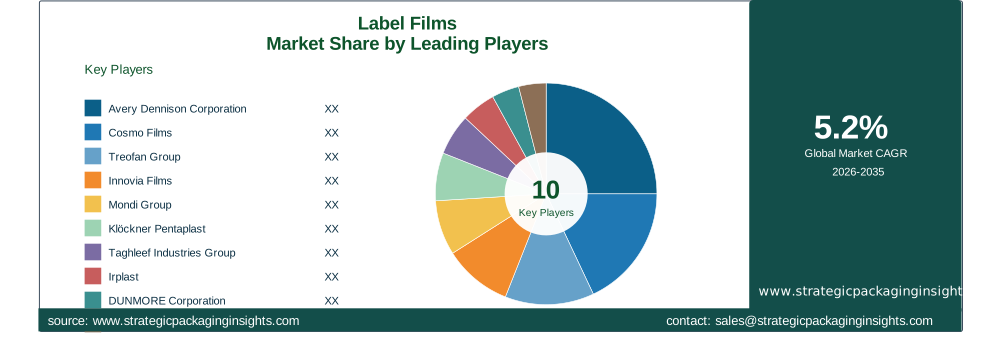
These companies are focusing on innovation and sustainability to enhance their competitive position and meet evolving market demands. The adoption of advanced technologies and sustainable materials is driving product differentiation and market growth. Strategic partnerships and collaborations are playing a crucial role in expanding market reach and enhancing product offerings.
Regional players are also gaining prominence, particularly in emerging markets, where demand for label films is increasing. Companies are investing in local production facilities to reduce carbon footprints and comply with regional regulations. This trend is influencing competitive dynamics and shaping the future of the Label Films market.
Overall, the market is witnessing a shift towards sustainability and technological innovation, with companies focusing on enhancing product functionality and meeting regulatory requirements. The competitive landscape is expected to evolve as companies invest in advanced technologies and sustainable solutions to meet changing customer demands.
Key Highlights
- Largest Region: Asia-Pacific
- Fastest-Growing Region: Asia-Pacific
- Largest Segment: Polypropylene (PP)
- Fastest-Growing Segment: Biaxially Oriented Polypropylene (BOPP)
- Base-year market size: USD 14.52 Billion
- Forecast-year market size: USD 24.04 Billion
- CAGR: 5.2%
- Important application: Food and Beverage
- Major end-use industry: Healthcare and Pharmaceuticals
- Major market driver: Sustainability and eco-friendly packaging solutions
Regional Insights
The Label Films market is witnessing significant growth across major regions, with Asia-Pacific emerging as the largest and fastest-growing market. The region's growth is driven by increasing demand in the food and beverage and pharmaceuticals sectors, coupled with rising consumer awareness of sustainable packaging solutions.
North America
In North America, the Label Films market is characterized by a strong focus on sustainability and regulatory compliance. The demand for eco-friendly packaging solutions is driving market growth, with companies investing in advanced technologies to meet evolving consumer preferences.
The food and beverage sector is a major driver of demand, with increasing emphasis on sustainable packaging solutions. The region's well-established infrastructure and technological advancements are supporting market growth and innovation.
Europe
Europe is witnessing steady growth in the Label Films market, driven by stringent regulatory frameworks promoting sustainability and environmental responsibility. The European Commission's Packaging and Packaging Waste Directive is influencing material selection and product development, driving demand for recyclable and eco-friendly label films.
The region's focus on sustainability is creating opportunities for innovation and product differentiation, with companies investing in advanced technologies to enhance product offerings and meet regulatory requirements.
Asia Pacific
Asia-Pacific is the largest and fastest-growing market for Label Films, driven by increasing demand in the food and beverage and pharmaceuticals sectors. The region's growing population and rising consumer awareness of sustainable packaging solutions are influencing market dynamics.
Companies are investing in local production facilities to reduce carbon footprints and comply with regional regulations. This trend is expected to drive market growth and enhance competitive positioning in the region.
Latin America
In Latin America, the Label Films market is experiencing moderate growth, driven by increasing demand in the food and beverage and consumer goods sectors. The region's focus on sustainability and regulatory compliance is influencing material selection and product development.
Companies are investing in advanced technologies and sustainable materials to meet evolving consumer preferences and regulatory requirements. This trend is expected to drive market growth and enhance competitive positioning in the region.
Middle East & Africa
The Label Films market in the Middle East & Africa is witnessing steady growth, driven by increasing demand in the food and beverage and industrial sectors. The region's focus on sustainability and regulatory compliance is influencing material selection and product development.
Companies are investing in advanced technologies and sustainable materials to meet evolving consumer preferences and regulatory requirements. This trend is expected to drive market growth and enhance competitive positioning in the region.
Label Films Market Segments Insights

By Material Analysis
The Label Films market is segmented by material, with Polypropylene (PP) being the largest segment due to its versatility and cost-effectiveness. Biaxially Oriented Polypropylene (BOPP) is the fastest-growing segment, driven by its superior clarity and printability, making it ideal for high-quality label applications.
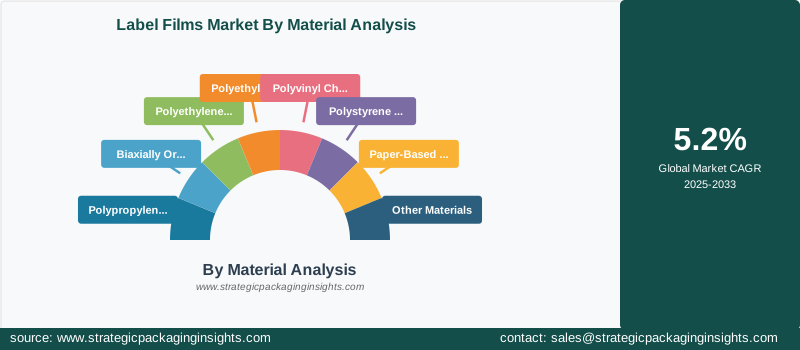
Polyethylene (PE) and Polyethylene Terephthalate (PET) are also significant segments, offering durability and resistance to moisture, making them suitable for various applications. The demand for paper-based films is increasing due to their eco-friendly nature, aligning with the growing trend towards sustainable packaging solutions.
By Film Type Analysis
Pressure-sensitive label films dominate the market due to their ease of application and versatility across various industries. Shrink label films are gaining popularity in the food and beverage sector for their ability to conform to complex shapes and provide 360-degree branding opportunities.
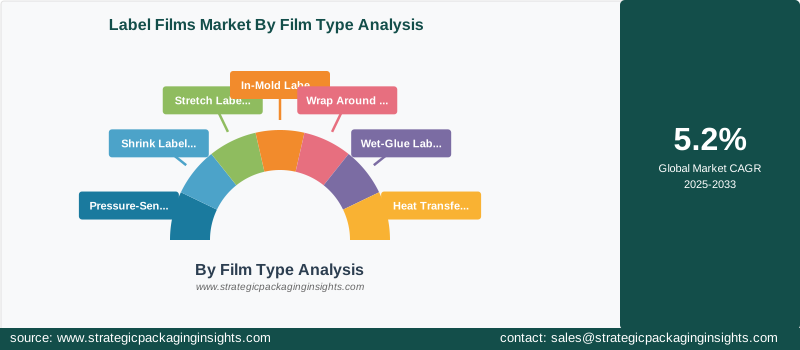
In-mold label films are witnessing growth in the automotive and consumer goods sectors, offering durability and seamless integration with products. The demand for heat transfer label films is increasing in the textile and apparel industry, driven by their ability to provide high-quality, durable prints.
By Adhesive Type Analysis
Acrylic adhesives are the most widely used in the Label Films market due to their strong bonding properties and resistance to environmental factors. Rubber-based adhesives are preferred for applications requiring flexibility and quick adhesion.
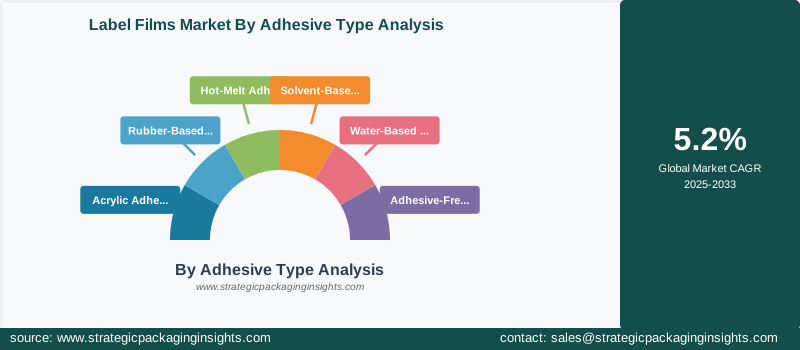
Hot-melt adhesives are gaining traction in the packaging industry for their fast-setting properties and suitability for high-speed production lines. Solvent-based adhesives are used in applications requiring strong chemical resistance, while water-based adhesives are favored for their eco-friendly nature.
By Surface Finish Analysis
Gloss finish label films are popular for their vibrant appearance and ability to enhance product aesthetics. Matte finish films are preferred for applications requiring a subtle, sophisticated look, particularly in the personal care and cosmetics sectors.
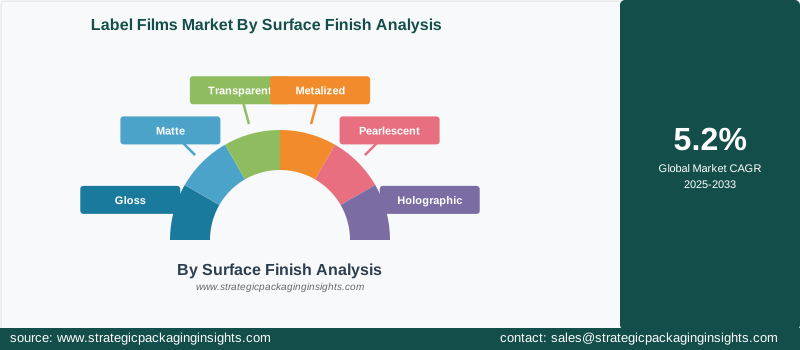
Transparent films are widely used in the food and beverage industry for their ability to showcase product contents, while metalized films are favored for their premium appearance and barrier properties. Holographic and pearlescent films are gaining popularity in the consumer goods sector for their eye-catching effects and ability to enhance brand differentiation.
By Printing Technology Analysis
Flexographic printing is the most widely used technology in the Label Films market due to its cost-effectiveness and ability to produce high-quality prints at high speeds. Digital printing is gaining traction for its ability to offer customization and shorter production runs, catering to the growing demand for personalized packaging.
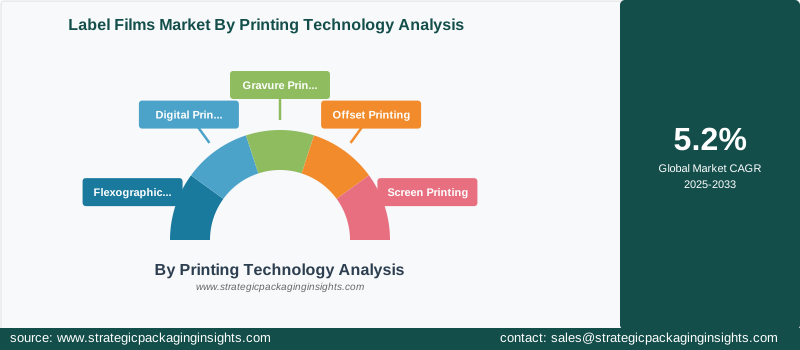
Gravure printing is preferred for applications requiring high-quality, detailed prints, while offset printing is used for its ability to produce consistent, high-quality results. Screen printing is favored for its versatility and ability to print on a wide range of substrates.
By Application Analysis
The food and beverage sector is the largest application segment for Label Films, driven by the need for attractive, durable, and informative packaging. The pharmaceuticals sector is witnessing growth due to the increasing demand for tamper-evident and regulatory-compliant labels.
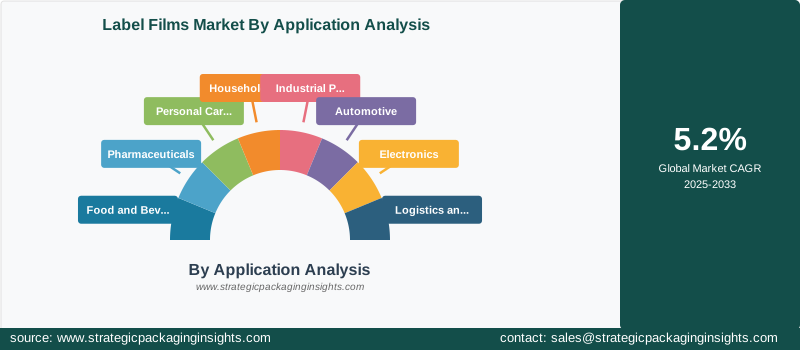
The personal care and cosmetics industry is a significant market for label films, with a focus on aesthetics and brand differentiation. The automotive and electronics sectors are also key application areas, requiring durable and high-performance labels for various components and products.
By End Use Industry Analysis
The food and beverage industry is the largest end-use industry for Label Films, driven by the need for attractive, durable, and informative packaging. The healthcare and pharmaceuticals sector is witnessing growth due to the increasing demand for tamper-evident and regulatory-compliant labels.
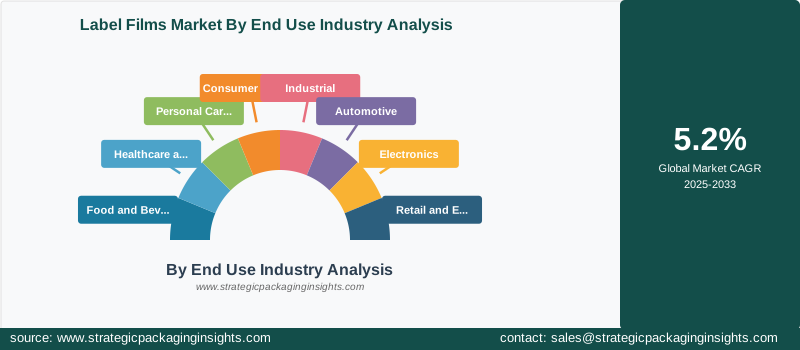
The personal care and cosmetics industry is a significant market for label films, with a focus on aesthetics and brand differentiation. The consumer goods and retail sectors are also key end-use industries, requiring durable and high-performance labels for various products and packaging formats.
Top 10 Companies in the Label Films Market
Avery Dennison Corporation (USA)
Avery Dennison is a leading player in the Label Films market, offering a wide range of pressure-sensitive materials and adhesive solutions. The company focuses on innovation and sustainability, with a strong presence in North America and Europe.
Cosmo Films (India)
Cosmo Films is a prominent manufacturer of BOPP films, serving various industries including food and beverage, personal care, and pharmaceuticals. The company is known for its advanced manufacturing capabilities and global distribution network.
Treofan Group (Germany)
Treofan Group specializes in BOPP films, offering high-quality solutions for packaging and labeling applications. The company focuses on innovation and sustainability, with a strong presence in Europe and North America.
Innovia Films (UK)
Innovia Films is a leading producer of specialty films, including BOPP and cellulose-based films. The company is known for its focus on sustainability and innovation, with a strong presence in Europe and Asia-Pacific.
Mondi Group (Austria)
Mondi Group is a global leader in packaging and paper, offering a wide range of label films and solutions. The company focuses on sustainability and innovation, with a strong presence in Europe and North America.
Klöckner Pentaplast (Germany)
Klöckner Pentaplast is a leading manufacturer of plastic films, serving various industries including food and beverage, pharmaceuticals, and consumer goods. The company is known for its focus on sustainability and innovation.
Taghleef Industries Group (UAE)
Taghleef Industries is a global leader in the production of BOPP films, offering a wide range of solutions for packaging and labeling applications. The company focuses on innovation and sustainability, with a strong presence in Europe and Asia-Pacific.
Irplast (Italy)
Irplast is a leading manufacturer of BOPP films, serving various industries including food and beverage, personal care, and pharmaceuticals. The company is known for its advanced manufacturing capabilities and global distribution network.
DUNMORE Corporation (USA)
DUNMORE Corporation specializes in coated, laminated, and metallized films, serving various industries including aerospace, automotive, and electronics. The company focuses on innovation and sustainability, with a strong presence in North America and Europe.
Manucor (Italy)
Manucor is a leading producer of BOPP films, offering high-quality solutions for packaging and labeling applications. The company focuses on innovation and sustainability, with a strong presence in Europe and North America.
Label Films Market Segments
The Label Films market has been segmented on the basis ofBy Material
- Polypropylene (PP)
- Biaxially Oriented Polypropylene (BOPP)
- Polyethylene (PE)
- Polyethylene Terephthalate (PET)
- Polyvinyl Chloride (PVC)
- Polystyrene (PS)
- Paper-Based Films
- Other Materials
By Film Type
- Pressure-Sensitive Label Films
- Shrink Label Films
- Stretch Label Films
- In-Mold Label Films
- Wrap Around Label Films
- Wet-Glue Label Films
- Heat Transfer Label Films
By Adhesive Type
- Acrylic Adhesives
- Rubber-Based Adhesives
- Hot-Melt Adhesives
- Solvent-Based Adhesives
- Water-Based Adhesives
- Adhesive-Free Films
By Surface Finish
- Gloss
- Matte
- Transparent
- Metalized
- Pearlescent
- Holographic
By Printing Technology
- Flexographic Printing
- Digital Printing
- Gravure Printing
- Offset Printing
- Screen Printing
By Application
- Food and Beverage
- Pharmaceuticals
- Personal Care and Cosmetics
- Household Products
- Industrial Products
- Automotive
- Electronics
- Logistics and Transportation
By End Use Industry
- Food and Beverage
- Healthcare and Pharmaceuticals
- Personal Care and Cosmetics
- Consumer Goods
- Industrial
- Automotive
- Electronics
- Retail and E-commerce
By Region
- North America
- Europe
- Asia-Pacific
- Latin America
- Middle East and Africa




