


Isostatic Pressing Market Outlook
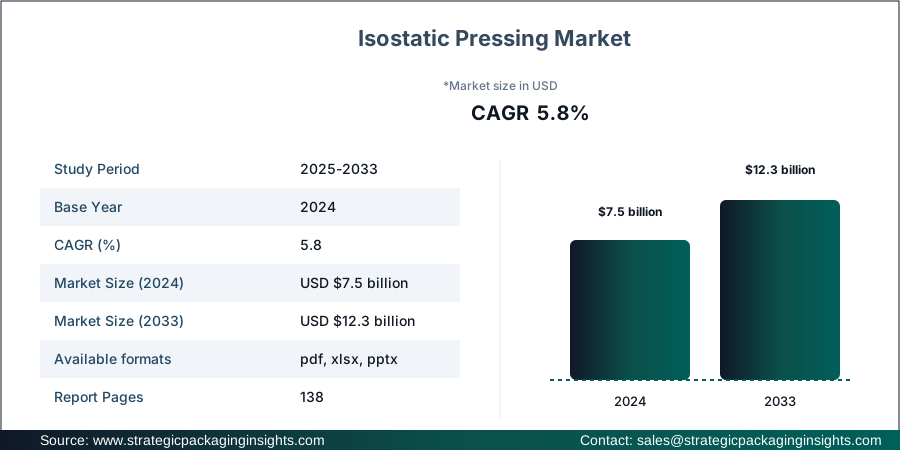
The isostatic pressing market was valued at $7.5 billion in 2024 and is projected to reach $12.3 billion by 2033, growing at a CAGR of 5.8% during the forecast period 2025-2033. This market is driven by the increasing demand for high-performance materials in various industries such as aerospace, automotive, and medical. The need for advanced manufacturing techniques that can produce complex shapes with high precision is also fueling the growth of the isostatic pressing market. Additionally, the growing adoption of additive manufacturing technologies is expected to create new opportunities for isostatic pressing, as it complements these technologies by improving the mechanical properties of 3D-printed parts.
However, the market faces challenges such as high initial investment costs and the need for skilled labor to operate isostatic pressing equipment. Regulatory constraints related to environmental and safety standards also pose a threat to market growth. Despite these challenges, the market holds significant potential for growth, driven by technological advancements and the increasing demand for lightweight and durable materials in various applications.
Report Scope
| Attributes | Details |
| Report Title | Isostatic Pressing Market Size, Future Growth and Forecast 2033 |
| Type | Hot Isostatic Pressing, Cold Isostatic Pressing |
| Application | Automotive, Aerospace, Medical, Energy, Manufacturing, Others |
| Offering | Services, Equipment |
| Region | North America, Europe, Asia Pacific, Latin America, Middle East & Africa |
| Base Year | 2024 |
| Historic Period | 2017-2023 |
| Forecast Period | 2025-2033 |
| Number of Pages | 138 |
| Customization Available | Yes* |
Opportunities & Threats
The isostatic pressing market presents numerous opportunities, particularly in the aerospace and automotive sectors, where the demand for lightweight and high-strength components is on the rise. The ability of isostatic pressing to produce complex geometries with superior mechanical properties makes it an attractive option for manufacturers looking to enhance the performance of their products. Additionally, the growing trend of miniaturization in electronics and medical devices is expected to drive the demand for isostatic pressing, as it enables the production of small, intricate parts with high precision.
Another significant opportunity lies in the energy sector, where isostatic pressing is used to manufacture components for nuclear reactors and other energy systems. The increasing focus on renewable energy sources and the need for efficient energy storage solutions are expected to boost the demand for isostatic pressing in this sector. Furthermore, the development of new materials and alloys that require isostatic pressing for optimal performance is likely to create additional growth opportunities for the market.
Despite these opportunities, the isostatic pressing market faces several threats, including the high cost of equipment and the need for specialized knowledge to operate and maintain these systems. The market is also subject to stringent regulatory requirements related to environmental and safety standards, which can increase operational costs and limit market growth. Additionally, the availability of alternative manufacturing processes, such as traditional machining and casting, poses a threat to the widespread adoption of isostatic pressing.
Market Share Analysis
The isostatic pressing market is characterized by a competitive landscape with several key players dominating the market. Companies such as Bodycote, Kennametal Inc., and Nikkiso Co., Ltd. hold significant market shares due to their extensive product portfolios and strong global presence. These companies are continuously investing in research and development to enhance their product offerings and maintain their competitive edge. The market is also witnessing strategic collaborations and partnerships among key players to expand their market reach and strengthen their position in the industry.
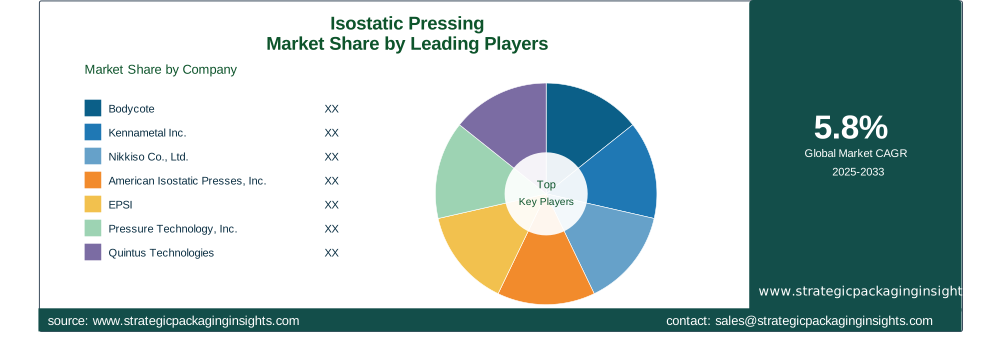
Bodycote, a leading provider of heat treatment and thermal processing services, holds a substantial share in the isostatic pressing market. The company's extensive network of facilities and its focus on innovation have enabled it to maintain a strong market position. Kennametal Inc., known for its advanced materials and cutting tools, is another major player in the market. The company's expertise in material science and its commitment to sustainability have contributed to its success in the isostatic pressing market.
Nikkiso Co., Ltd., a Japanese company specializing in industrial equipment and systems, is also a prominent player in the market. The company's focus on quality and customer satisfaction has helped it establish a strong foothold in the isostatic pressing industry. Other notable companies in the market include American Isostatic Presses, Inc., EPSI, and Pressure Technology, Inc., each of which has carved out a niche in the market through their specialized offerings and customer-centric approach.
In addition to these major players, the market is also home to several smaller companies that are making significant contributions to the industry. These companies are often focused on niche applications and are leveraging their expertise to offer customized solutions to their clients. The competitive landscape of the isostatic pressing market is expected to remain dynamic, with ongoing technological advancements and the entry of new players driving further growth and innovation.
Key Highlights
- The isostatic pressing market is projected to grow at a CAGR of 5.8% from 2025 to 2033.
- Increasing demand for high-performance materials in aerospace and automotive sectors is a key growth driver.
- Technological advancements in additive manufacturing are creating new opportunities for isostatic pressing.
- High initial investment costs and regulatory constraints are major challenges for the market.
- The energy sector presents significant growth opportunities for isostatic pressing applications.
- Key players in the market include Bodycote, Kennametal Inc., and Nikkiso Co., Ltd.
- The market is characterized by a competitive landscape with several major and minor players.
Top Countries Insights
The United States is a leading market for isostatic pressing, with a market size of $2.1 billion and a CAGR of 6%. The country's strong aerospace and automotive industries are key growth drivers, along with advancements in additive manufacturing technologies. Government support for innovation and research in material sciences further boosts the market.
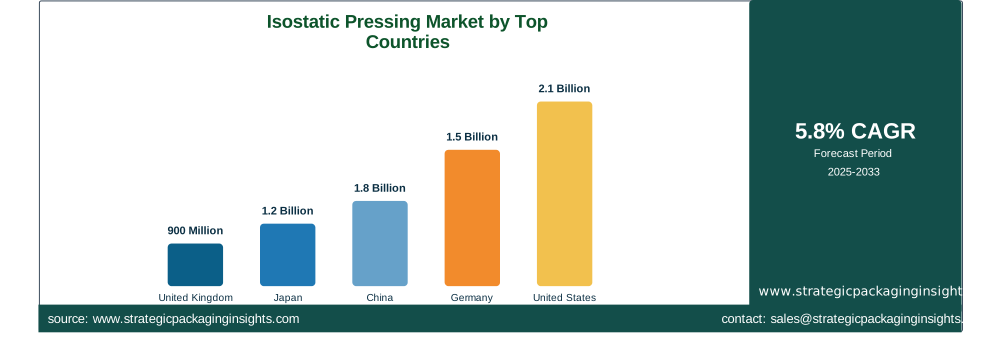
Germany, with a market size of $1.5 billion and a CAGR of 5%, is another significant player in the isostatic pressing market. The country's focus on high-quality manufacturing and its strong automotive sector drive demand for isostatic pressing. Additionally, Germany's commitment to sustainability and energy efficiency supports market growth.
China, with a market size of $1.8 billion and a CAGR of 7%, is experiencing rapid growth in the isostatic pressing market. The country's expanding manufacturing sector and increasing investments in advanced technologies are key growth drivers. Government initiatives to promote innovation and industrial development further enhance market prospects.
Japan, with a market size of $1.2 billion and a CAGR of 4%, is a key market for isostatic pressing. The country's strong focus on technology and innovation, along with its advanced manufacturing capabilities, drive demand for isostatic pressing. Japan's emphasis on quality and precision in manufacturing also supports market growth.
The United Kingdom, with a market size of $900 million and a CAGR of 3%, is an important market for isostatic pressing. The country's strong aerospace and defense sectors, along with its focus on advanced manufacturing technologies, drive demand for isostatic pressing. Government support for research and development in material sciences further boosts the market.
Evolving Market Dynamics (2018-2024) and Strategic Foresight (2025-2033)
| Metric | 2018-2024 | 2025-2033 |
|---|---|---|
| CAGR | 4.5% | 5.8% |
| Market Size Evolution | $5.2 billion to $7.5 billion | $7.5 billion to $12.3 billion |
| Segment Distribution Shifts | Dominance of automotive and aerospace | Increased share of energy and medical |
| Regional Contribution Changes | Strong growth in North America and Europe | Increased growth in Asia Pacific |
| Technological Impact Factors | Emergence of additive manufacturing | Advancements in material sciences |
| Client Demand Transformations | Focus on high-performance materials | Demand for lightweight and durable components |
Isostatic Pressing Market Segments Insights

Type Analysis
The isostatic pressing market is segmented into hot isostatic pressing (HIP) and cold isostatic pressing (CIP). Hot isostatic pressing is widely used in the aerospace and automotive industries due to its ability to enhance the mechanical properties of materials, making them suitable for high-stress applications. The demand for HIP is driven by the need for high-performance components that can withstand extreme conditions. Cold isostatic pressing, on the other hand, is primarily used in the manufacturing of ceramics and powder metallurgy. The growing demand for advanced ceramics in electronics and medical applications is expected to drive the growth of CIP in the coming years.
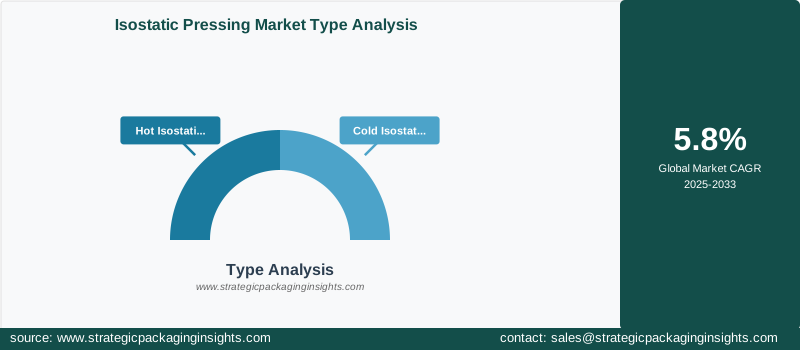
Hot isostatic pressing is gaining traction due to its ability to improve the density and mechanical properties of materials, making it ideal for critical applications in aerospace and defense. The increasing use of HIP in the production of turbine blades, engine components, and structural parts is expected to drive market growth. Cold isostatic pressing is favored for its cost-effectiveness and ability to produce complex shapes with high precision. The growing demand for lightweight and durable materials in various industries is expected to boost the adoption of CIP.
Application Analysis
The isostatic pressing market finds applications in various industries, including automotive, aerospace, medical, energy, and manufacturing. The automotive industry is a major consumer of isostatic pressing, driven by the need for lightweight and high-strength components to improve fuel efficiency and performance. The aerospace industry also relies heavily on isostatic pressing for the production of critical components that require high precision and durability. The medical industry is increasingly adopting isostatic pressing for the production of implants and prosthetics, where biocompatibility and mechanical strength are crucial.
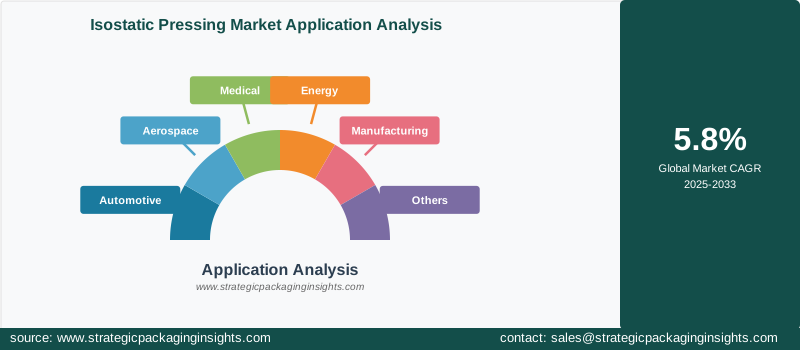
The energy sector presents significant growth opportunities for isostatic pressing, particularly in the production of components for nuclear reactors and other energy systems. The increasing focus on renewable energy sources and the need for efficient energy storage solutions are expected to drive demand for isostatic pressing in this sector. The manufacturing industry is also witnessing increased adoption of isostatic pressing for the production of complex parts with high precision and consistency.
Offering Analysis
The isostatic pressing market is segmented into services and equipment. The equipment segment dominates the market, driven by the increasing demand for advanced isostatic pressing machines that offer high precision and efficiency. Manufacturers are investing in the development of innovative equipment that can cater to the evolving needs of various industries. The services segment is also witnessing growth, driven by the increasing demand for maintenance, repair, and operational services for isostatic pressing equipment.
The equipment segment is expected to continue its dominance, with manufacturers focusing on the development of automated and energy-efficient machines. The growing demand for customized solutions and the need for high-quality components are driving the adoption of advanced isostatic pressing equipment. The services segment is also expected to grow, with companies offering comprehensive solutions that include installation, maintenance, and training services to ensure optimal performance of isostatic pressing systems.
Region Analysis
The isostatic pressing market is segmented into North America, Europe, Asia Pacific, Latin America, and the Middle East & Africa. North America and Europe are the leading regions in the market, driven by the presence of established industries and the increasing demand for high-performance materials. The Asia Pacific region is expected to witness significant growth, driven by the expanding manufacturing sector and increasing investments in advanced technologies. The growing focus on innovation and industrial development in countries like China and India is expected to boost market growth in the region.
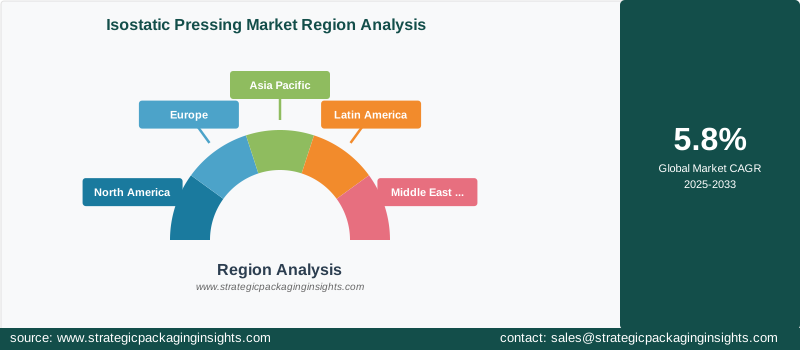
Latin America and the Middle East & Africa are also expected to witness growth, driven by the increasing demand for advanced manufacturing solutions and the growing focus on energy efficiency. The presence of key players and the increasing adoption of isostatic pressing in various industries are expected to drive market growth in these regions. The market is characterized by a dynamic landscape, with ongoing technological advancements and the entry of new players driving further growth and innovation.
Isostatic Pressing Market Segments
The Isostatic Pressing market has been segmented on the basis ofType
- Hot Isostatic Pressing
- Cold Isostatic Pressing
Application
- Automotive
- Aerospace
- Medical
- Energy
- Manufacturing
- Others
Offering
- Services
- Equipment
Region
- North America
- Europe
- Asia Pacific
- Latin America
- Middle East & Africa




