


Intravenous Packaging Insights Market Outlook
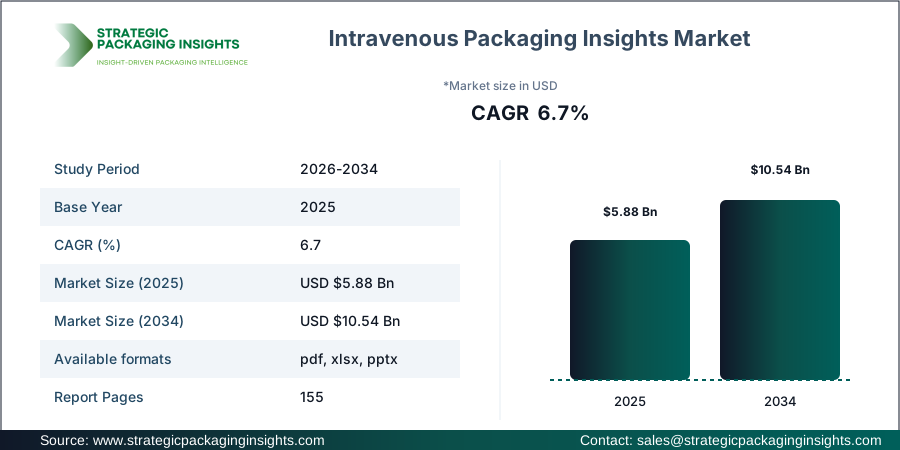
The Intravenous Packaging Insights market size was valued at USD 5.88 billion in 2025 and is anticipated to reach USD 10.54 billion by 2034, growing at a CAGR of 6.7% during the forecast period according to Strategic Packaging Insights. This growth trajectory is driven by the increasing demand for efficient and safe drug delivery systems, particularly in the healthcare sector. Companies like Baxter and Fresenius Kabi are at the forefront, innovating in packaging solutions that ensure sterility and safety, which are critical in intravenous applications. The rising prevalence of chronic diseases and the growing elderly population are further propelling the demand for intravenous packaging solutions, as these demographics require more frequent medical interventions.
One of the most impactful drivers of the Intravenous Packaging Insights market is the stringent regulatory framework governing medical packaging. Governments worldwide are enforcing strict guidelines to ensure patient safety and product efficacy, which in turn is pushing manufacturers to adopt advanced packaging technologies. For instance, the U.S. FDA's regulations on medical packaging are influencing companies like B. Braun and ICU Medical to innovate and comply with these standards, ensuring their products meet the necessary safety and quality benchmarks. This regulatory pressure is not only enhancing product quality but also fostering competition among key players, driving further advancements in the market.
Report Scope
| Attributes | Details |
| Report Title | Intravenous Packaging Insights Market Size, Future Growth and Forecast 2034 |
| By Packaging Type | IV Bags, IV Bottles, Infusion Sets Packaging, Sterile Pouches |
| By Material Type | PVC, Polyolefin, PP, Medical-Grade Films |
| By Application | Saline, Parenteral Nutrition, Injectable Drugs, Blood Products |
| By End Use | Hospitals, Pharma Companies, Clinics, Homecare |
| Region | Asia Pacific, North America, Latin America, Europe, Middle East & Africa |
| Base Year | 2025 |
| Historic Period | 2018-2024 |
| Forecast Period | 2026-2034 |
| Number of Pages | 155 |
| Customization Available | Yes* |
Sustainability & Circular Economy Analysis
Sustainability initiatives are significantly shaping the intravenous packaging market, as companies strive to reduce their environmental impact. The adoption of recyclable materials and reusable packaging solutions is becoming increasingly prevalent. For instance, the use of lightweight packaging and eco-friendly material innovations are helping companies like Amcor and West Pharmaceutical Services to minimize waste and reduce their carbon footprint. These efforts align with consumer preferences for sustainable products and are supported by extended producer responsibility (EPR) regulations, which hold manufacturers accountable for the lifecycle of their products.
These sustainability trends are influencing packaging design and manufacturing processes, prompting companies to invest in eco-friendly technologies and materials. This shift is not only driven by regulatory compliance but also by the need to maintain long-term market competitiveness. As a result, companies are re-evaluating their supply chain strategies to incorporate sustainable practices, which include optimizing logistics and reducing energy consumption. This transition is crucial for maintaining brand reputation and meeting the growing demand for sustainable packaging solutions.
Moreover, the focus on sustainability is encouraging collaboration across the packaging value chain. Manufacturers, converters, and brand owners are working together to develop innovative solutions that meet both regulatory requirements and consumer expectations. This collaborative approach is fostering innovation and driving investment in research and development, ultimately leading to more sustainable and efficient packaging solutions. As the market continues to evolve, sustainability will remain a key factor influencing investment decisions and shaping the competitive landscape.
Packaging Value Chain & Supply Chain Analysis
The packaging value chain for intravenous solutions is complex, involving multiple stakeholders from raw material suppliers to end-users. Raw material sourcing is a critical component, with companies like TekniPlex and Gerresheimer focusing on securing high-quality materials to ensure the safety and efficacy of their packaging solutions. Packaging converters and manufacturers play a pivotal role in transforming these materials into finished products, utilizing advanced machinery and technologies to meet stringent quality standards.
Logistics and distribution channels are equally important in the supply chain, as they ensure the timely delivery of products to healthcare facilities and other end-users. Efficient transportation and inventory management strategies are essential for maintaining supply chain resilience and minimizing disruptions. Companies are increasingly adopting localization strategies to mitigate risks associated with global sourcing and enhance their competitive advantage in the market.
Strategic partnerships and collaborations are also influencing the packaging supply chain, as companies seek to leverage each other's strengths and capabilities. For instance, partnerships between packaging manufacturers and healthcare providers can lead to the development of customized solutions that meet specific needs. These collaborations not only enhance product offerings but also improve overall market performance and business competitiveness. As the market continues to grow, supply chain efficiency and strategic partnerships will remain key drivers of success.
Opportunities & Threats
The intravenous packaging market presents numerous opportunities for growth, driven by technological advancements and increasing healthcare demands. The development of smart packaging solutions, which incorporate sensors and digital technologies, is one such opportunity. These innovations can enhance patient safety by providing real-time monitoring of drug delivery and ensuring the integrity of the packaging. Companies that invest in these technologies can gain a competitive edge and capture a larger market share.
Another significant opportunity lies in the expansion of the homecare segment. As more patients opt for home-based treatments, there is a growing demand for user-friendly and safe intravenous packaging solutions. This trend is particularly evident in the management of chronic diseases, where patients require regular medication administration. Companies that can develop packaging solutions tailored to the homecare market will be well-positioned to capitalize on this growing demand.
However, the market also faces several threats, including the potential for regulatory changes and the risk of supply chain disruptions. Stringent regulations can increase compliance costs and pose challenges for manufacturers, particularly those operating in multiple regions with varying standards. Additionally, supply chain disruptions, such as those caused by geopolitical tensions or natural disasters, can impact the availability of raw materials and delay production. Companies must develop robust risk management strategies to mitigate these threats and ensure business continuity.
Drivers & Challenges
One of the primary drivers of the intravenous packaging market is the increasing prevalence of chronic diseases, which necessitates frequent medical interventions and, consequently, a higher demand for intravenous solutions. The aging population is also contributing to this demand, as older individuals are more likely to require medical treatments. Companies like Baxter and Fresenius Kabi are capitalizing on this trend by developing innovative packaging solutions that enhance patient safety and improve drug delivery efficiency.
Technological advancements are another key driver, with innovations in materials and packaging design leading to more efficient and sustainable solutions. The development of eco-friendly materials and lightweight packaging options is helping companies reduce their environmental impact and meet consumer demand for sustainable products. These advancements are also enabling manufacturers to comply with stringent regulatory requirements, further driving market growth.
Despite these drivers, the market faces several challenges, including the high cost of raw materials and the complexity of regulatory compliance. The need to adhere to strict quality standards and safety regulations can increase production costs and pose barriers to entry for new players. Additionally, the competitive landscape is becoming increasingly crowded, with established companies and new entrants vying for market share. To overcome these challenges, companies must focus on innovation, cost optimization, and strategic partnerships to maintain their competitive edge.
Market Share Analysis
The intravenous packaging market is characterized by a competitive landscape with several key players dominating the industry. Companies like Baxter, Fresenius Kabi, and B. Braun hold significant market shares, driven by their extensive product portfolios and strong global presence. These companies are known for their innovative packaging solutions that meet the stringent safety and quality standards required in the healthcare sector. Their ability to adapt to changing market dynamics and invest in research and development has enabled them to maintain their leadership positions.
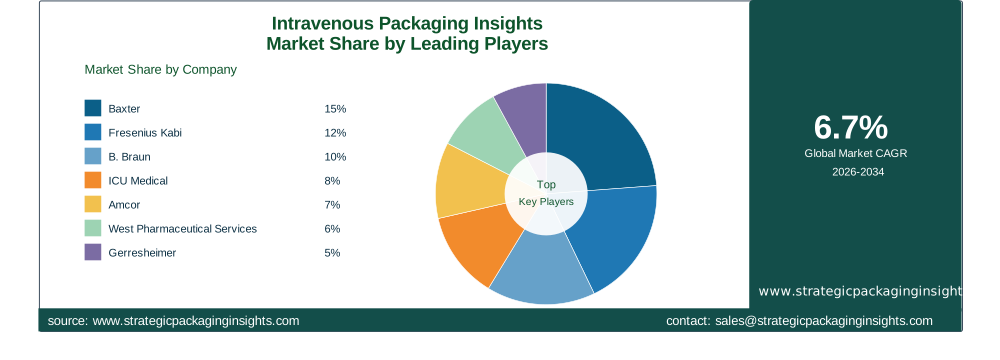
ICU Medical and Amcor are also prominent players in the market, known for their advanced packaging technologies and commitment to sustainability. These companies have established themselves as leaders in the development of eco-friendly packaging solutions, which are increasingly in demand due to growing environmental concerns. Their focus on sustainability and innovation has allowed them to capture a significant share of the market and differentiate themselves from competitors.
West Pharmaceutical Services and Gerresheimer are other notable companies in the market, recognized for their high-quality packaging solutions and strong customer relationships. These companies have built a reputation for reliability and excellence, which has helped them secure long-term contracts with major healthcare providers and pharmaceutical companies. Their strategic partnerships and collaborations have further strengthened their market positions and expanded their reach.
TekniPlex, Oliver Healthcare Packaging, and Sippex are also key players in the market, known for their specialized packaging solutions and focus on customer satisfaction. These companies have carved out a niche in the market by offering customized solutions that meet the specific needs of their clients. Their ability to provide tailored packaging solutions has enabled them to build strong relationships with customers and maintain a competitive edge in the market.
Key Highlights
- Market Size: The intravenous packaging market was valued at USD 5.88 billion in 2025 and is projected to reach USD 10.54 billion by 2034.
- Growth Rate: The market is expected to grow at a CAGR of 6.7% during the forecast period.
- Leading Companies: Key players include Baxter, Fresenius Kabi, B. Braun, and ICU Medical.
- Packaging Type: IV Bags and Infusion Sets Packaging are among the fastest-growing segments.
- Material Innovation: The use of eco-friendly materials like Polyolefin and Medical-Grade Films is on the rise.
- End Use Expansion: The homecare segment is witnessing significant growth due to increasing demand for home-based treatments.
- Regional Insights: Asia Pacific is expected to exhibit the highest growth rate, driven by increasing healthcare investments.
Intravenous Packaging Insights Market Segments Insights

Packaging Type Analysis
The intravenous packaging market is segmented by packaging type, including IV Bags, IV Bottles, Infusion Sets Packaging, and Sterile Pouches. IV Bags are the most widely used packaging type, owing to their convenience and cost-effectiveness. They are particularly popular in hospital settings, where large volumes of intravenous fluids are administered. Companies like Baxter and Fresenius Kabi are leading the market with their innovative IV Bag solutions that ensure sterility and safety. Infusion Sets Packaging is also gaining traction, driven by the increasing demand for precise and controlled drug delivery systems. These packaging solutions are essential for administering medications that require accurate dosing and are often used in homecare settings.
IV Bottles, while less common than IV Bags, are still an important segment of the market. They are typically used for packaging larger volumes of intravenous fluids and are favored for their durability and stability. Sterile Pouches are another key segment, used primarily for packaging medical devices and components that require a sterile environment. The demand for sterile pouches is driven by the need for safe and contamination-free packaging solutions, particularly in surgical and clinical settings. As the market continues to evolve, companies are focusing on developing packaging solutions that meet the specific needs of different healthcare applications, ensuring safety, efficacy, and convenience.
Material Type Analysis
The material type segment of the intravenous packaging market includes PVC, Polyolefin, PP, and Medical-Grade Films. PVC is the most commonly used material, known for its flexibility and durability. However, there is a growing shift towards more sustainable materials like Polyolefin and Medical-Grade Films, driven by environmental concerns and regulatory pressures. Companies like Amcor and TekniPlex are leading the way in developing eco-friendly packaging solutions that minimize environmental impact while maintaining product integrity.
Polyolefin is gaining popularity due to its lightweight and recyclable properties, making it an attractive option for companies looking to reduce their carbon footprint. Medical-Grade Films are also becoming increasingly important, offering superior barrier properties and protection against contamination. These materials are essential for ensuring the safety and efficacy of intravenous packaging solutions, particularly in applications where sterility is critical. As the demand for sustainable packaging solutions continues to grow, companies are investing in research and development to innovate and improve their material offerings.
Application Analysis
The application segment of the intravenous packaging market includes Saline, Parenteral Nutrition, Injectable Drugs, and Blood Products. Saline is the most commonly used application, accounting for a significant share of the market. It is widely used in hospitals and clinics for rehydration and as a vehicle for drug delivery. The demand for saline packaging solutions is driven by the increasing prevalence of chronic diseases and the growing number of surgical procedures.
Parenteral Nutrition and Injectable Drugs are also important applications, with the latter experiencing significant growth due to the rising demand for biologics and specialty drugs. These applications require specialized packaging solutions that ensure the stability and efficacy of the products. Blood Products, while a smaller segment, are critical for transfusions and other medical procedures. The packaging of blood products requires stringent quality standards to ensure safety and prevent contamination. As the market continues to expand, companies are focusing on developing packaging solutions that meet the specific needs of each application, ensuring safety, efficacy, and convenience.
End Use Analysis
The end-use segment of the intravenous packaging market includes Hospitals, Pharma Companies, Clinics, and Homecare. Hospitals are the largest end-user, accounting for the majority of the market share. They require a wide range of packaging solutions for various medical applications, from saline and parenteral nutrition to injectable drugs and blood products. The demand for intravenous packaging solutions in hospitals is driven by the increasing number of patients and the growing prevalence of chronic diseases.
Pharma Companies are also significant end-users, requiring specialized packaging solutions for their products. They are particularly focused on ensuring the safety and efficacy of their products, which is critical for maintaining regulatory compliance and meeting customer expectations. Clinics and Homecare are smaller segments but are experiencing significant growth due to the increasing demand for outpatient and home-based treatments. The homecare segment, in particular, is witnessing rapid growth as more patients opt for home-based care, requiring user-friendly and safe packaging solutions. As the market continues to evolve, companies are focusing on developing packaging solutions that meet the specific needs of each end-use segment, ensuring safety, efficacy, and convenience.
Intravenous Packaging Insights Market Segments
The Intravenous Packaging Insights market has been segmented on the basis ofBy Packaging Type
- IV Bags
- IV Bottles
- Infusion Sets Packaging
- Sterile Pouches
By Material Type
- PVC
- Polyolefin
- PP
- Medical-Grade Films
By Application
- Saline
- Parenteral Nutrition
- Injectable Drugs
- Blood Products
By End Use
- Hospitals
- Pharma Companies
- Clinics
- Homecare
Region
- Asia Pacific
- North America
- Latin America
- Europe
- Middle East & Africa




