


Interleave Paper Market Outlook
The Interleave Paper market was valued at $1.16 billion in 2025 and is projected to reach $1.67 billion by 2034, growing at a CAGR of 4.1% during the forecast period 2026-2034. This market is driven by the increasing demand for protective packaging solutions across various industries such as glass, metals, food processing, and electronics. The versatility of interleave paper in providing a cost-effective and efficient barrier against scratches, contamination, and moisture makes it a preferred choice among manufacturers. Additionally, the rise in e-commerce and the need for safe transportation of goods have further fueled the demand for interleave paper, as it ensures product integrity during transit.
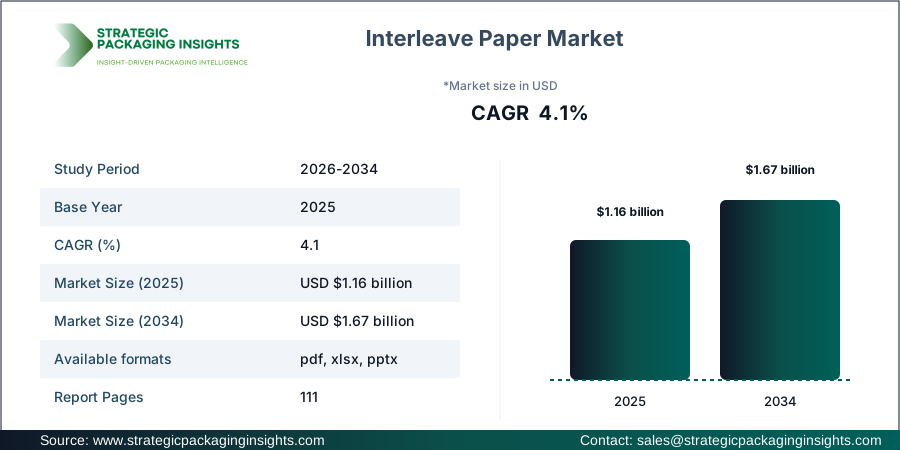
Despite the promising growth prospects, the interleave paper market faces certain challenges. Regulatory constraints related to environmental sustainability and the use of paper products pose a significant restraint. The industry is under pressure to adopt eco-friendly practices and materials, which can increase production costs. However, the market also presents substantial growth potential, particularly with advancements in biodegradable and recyclable paper technologies. Companies investing in sustainable solutions are likely to gain a competitive edge, as consumer preferences shift towards environmentally responsible products. The ongoing innovations in paper coating and treatment processes are expected to open new avenues for market expansion.
Report Scope
| Attributes | Details |
| Report Title | Interleave Paper Market Size, Future Growth and Forecast 2034 |
| By Paper Type | Kraft Interleave Paper, Tissue Interleave Paper, Coated Interleave Paper |
| By Application | Glass Protection, Metal Sheet Protection, Food Separation, Electronics Packaging |
| By End Use | Glass, Metals, Food Processing, Electronics |
| By Distribution Channel | Direct Sales, Distributors, Converters |
| Region | Asia Pacific, North America, Latin America, Europe, Middle East & Africa |
| Base Year | 2025 |
| Historic Period | 2018-2024 |
| Forecast Period | 2026-2034 |
| Number of Pages | 111 |
| Customization Available | Yes* |
Opportunities & Threats
The interleave paper market offers numerous opportunities, primarily driven by the growing demand for sustainable packaging solutions. As consumers and industries become more environmentally conscious, there is a significant push towards using recyclable and biodegradable materials. This trend is particularly evident in the food processing and electronics sectors, where the need for eco-friendly packaging is paramount. Companies that can innovate and offer sustainable interleave paper solutions are likely to capture a larger market share. Additionally, the expansion of e-commerce and the global supply chain presents a lucrative opportunity for interleave paper manufacturers to cater to the increasing demand for protective packaging during shipping and handling.
Another opportunity lies in the technological advancements in paper manufacturing processes. The development of high-strength, lightweight interleave papers that offer superior protection can significantly enhance product appeal. Innovations in coating technologies that improve moisture resistance and durability are also expected to drive market growth. Furthermore, the increasing adoption of automation in manufacturing processes can lead to cost reductions and efficiency improvements, making interleave paper more competitive against alternative packaging materials.
However, the market is not without its threats. One of the primary challenges is the volatility in raw material prices, particularly pulp and paper. Fluctuations in these costs can impact profit margins and pricing strategies. Additionally, the market faces competition from alternative packaging materials such as plastics and foams, which offer similar protective qualities. The regulatory landscape also poses a threat, as stringent environmental regulations may require significant investments in sustainable practices, potentially increasing operational costs. Companies must navigate these challenges carefully to maintain their market position.
Drivers & Challenges
The interleave paper market is primarily driven by the increasing demand for protective packaging solutions across various industries. The glass and metal sectors, in particular, rely heavily on interleave paper to prevent scratches and damage during storage and transportation. The rise in global trade and the expansion of the e-commerce sector have further amplified the need for effective packaging solutions, positioning interleave paper as a critical component in the supply chain. Additionally, the growing awareness of environmental sustainability has led to a shift towards paper-based packaging, as it is perceived as more eco-friendly compared to plastic alternatives.
Another significant driver is the technological advancements in paper manufacturing. Innovations in coating and treatment processes have enhanced the protective qualities of interleave paper, making it more durable and moisture-resistant. These advancements have broadened the application scope of interleave paper, allowing it to cater to diverse industries such as food processing and electronics. The ability to customize interleave paper to meet specific industry requirements also adds to its appeal, driving demand further.
Despite these drivers, the market faces several challenges. One of the primary challenges is the competition from alternative packaging materials. Plastics and foams, for instance, offer similar protective qualities and are often preferred due to their lightweight and cost-effective nature. Additionally, the market is subject to regulatory pressures related to environmental sustainability. Companies are required to comply with stringent regulations, which may necessitate significant investments in sustainable practices and technologies. The volatility in raw material prices, particularly pulp and paper, also poses a challenge, as it can impact production costs and pricing strategies.
Market Share Analysis
The interleave paper market is characterized by a competitive landscape with several key players vying for market share. Companies such as Ahlstrom, Mondi, and Sappi are prominent players in the market, known for their extensive product portfolios and strong distribution networks. These companies have established themselves as leaders by focusing on innovation and sustainability, offering a range of interleave paper products that cater to various industry needs. Their ability to adapt to changing market dynamics and consumer preferences has enabled them to maintain a competitive edge.
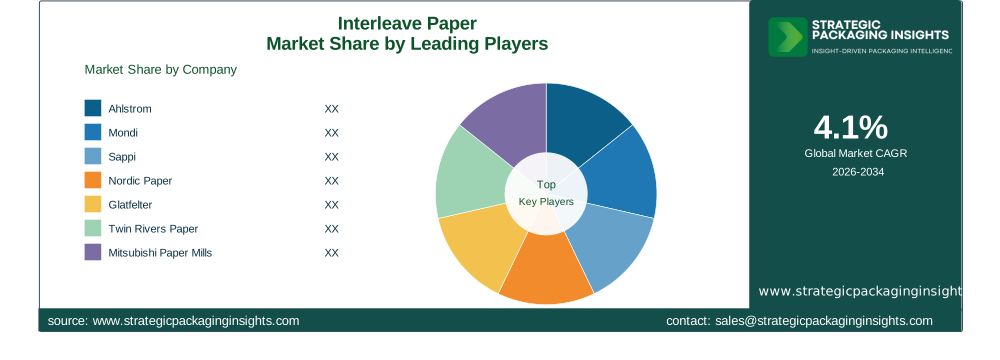
Ahlstrom, for instance, is renowned for its commitment to sustainability and innovation. The company offers a wide range of interleave paper products that are designed to meet the specific needs of different industries. Mondi, on the other hand, has a strong focus on product development and has invested significantly in research and development to enhance the protective qualities of its interleave paper offerings. Sappi is another key player, known for its high-quality paper products and strong customer relationships.
Other notable companies in the market include Nordic Paper, Glatfelter, and Twin Rivers Paper. These companies have carved out a niche for themselves by offering specialized interleave paper solutions that cater to specific industry requirements. Nordic Paper, for example, is known for its high-strength interleave papers that offer superior protection for metal sheets and glass products. Glatfelter has a strong presence in the food processing sector, offering interleave papers that are designed to meet the stringent hygiene standards of the industry.
Mitsubishi Paper Mills, Stora Enso, Krpa Paper, and Delfort are also significant players in the market. These companies have a strong focus on sustainability and have invested in developing eco-friendly interleave paper solutions. Their commitment to environmental responsibility has resonated well with consumers and industries that are increasingly prioritizing sustainability in their purchasing decisions. Overall, the competitive landscape of the interleave paper market is dynamic, with companies continuously striving to innovate and differentiate themselves to capture a larger market share.
Key Highlights
- The interleave paper market is projected to grow at a CAGR of 4.1% from 2026 to 2034.
- Increasing demand for sustainable packaging solutions is a major growth driver.
- Technological advancements in paper manufacturing are enhancing product appeal.
- Regulatory pressures related to environmental sustainability pose a challenge.
- Key players include Ahlstrom, Mondi, Sappi, and Nordic Paper.
- Competition from alternative packaging materials such as plastics and foams.
- Volatility in raw material prices impacts production costs.
- Expansion of e-commerce and global trade boosts demand for protective packaging.
- Customization of interleave paper to meet specific industry needs is a key trend.
- Focus on developing eco-friendly interleave paper solutions.
Top Countries Insights
In the interleave paper market, the United States stands out as a key player, with a market size of approximately $300 million and a CAGR of 3%. The country's robust manufacturing sector, coupled with the growing demand for sustainable packaging solutions, drives the market. The presence of major players and a strong focus on innovation further bolster growth. However, regulatory pressures related to environmental sustainability pose a challenge, necessitating investments in eco-friendly practices.
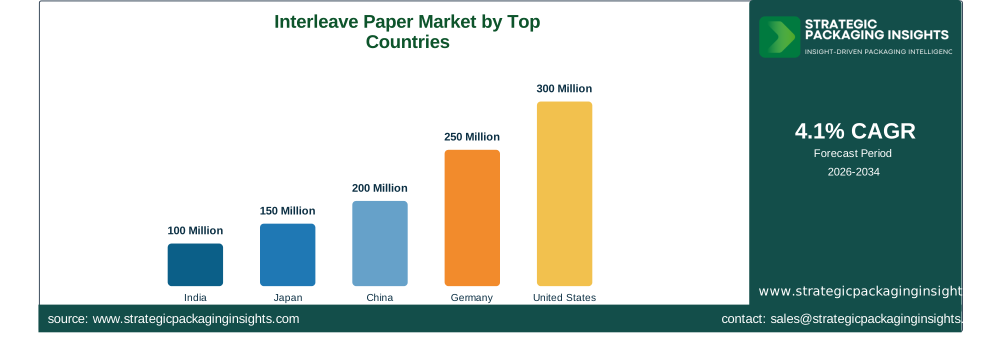
Germany is another significant market, with a market size of around $250 million and a CAGR of 4%. The country's strong industrial base and emphasis on quality and sustainability drive demand for interleave paper. The automotive and electronics sectors, in particular, rely heavily on interleave paper for protective packaging. However, the market faces challenges from alternative packaging materials and regulatory constraints.
China, with a market size of approximately $200 million and a CAGR of 5%, is a rapidly growing market for interleave paper. The country's expanding manufacturing sector and increasing focus on sustainable packaging solutions drive demand. The rise of e-commerce and the need for effective packaging solutions further contribute to market growth. However, competition from low-cost alternatives and regulatory pressures pose challenges.
Japan, with a market size of around $150 million and a CAGR of 2%, is a mature market for interleave paper. The country's strong focus on quality and innovation drives demand, particularly in the electronics and automotive sectors. However, the market faces challenges from alternative packaging materials and regulatory constraints related to environmental sustainability.
India, with a market size of approximately $100 million and a CAGR of 6%, is an emerging market for interleave paper. The country's growing manufacturing sector and increasing demand for sustainable packaging solutions drive market growth. The rise of e-commerce and the need for effective packaging solutions further contribute to demand. However, the market faces challenges from low-cost alternatives and regulatory pressures.
Interleave Paper Market Segments Insights

Paper Type Analysis
The interleave paper market is segmented by paper type into Kraft Interleave Paper, Tissue Interleave Paper, and Coated Interleave Paper. Kraft Interleave Paper is widely used due to its strength and durability, making it ideal for heavy-duty applications such as metal sheet protection. The demand for Kraft Interleave Paper is driven by its cost-effectiveness and recyclability, aligning with the growing trend towards sustainable packaging solutions. Tissue Interleave Paper, on the other hand, is favored for its softness and lightweight properties, making it suitable for delicate applications such as glass protection. The market for Tissue Interleave Paper is expected to grow as industries seek to minimize product damage during handling and transportation.
Coated Interleave Paper is gaining traction due to its enhanced protective qualities, such as moisture resistance and durability. This type of interleave paper is particularly popular in the food processing and electronics sectors, where protection against moisture and contamination is crucial. The development of advanced coating technologies has further expanded the application scope of Coated Interleave Paper, driving demand. Overall, the paper type segment is characterized by a diverse range of products that cater to specific industry needs, with a strong emphasis on sustainability and innovation.
Application Analysis
The application segment of the interleave paper market includes Glass Protection, Metal Sheet Protection, Food Separation, and Electronics Packaging. Glass Protection is a significant application area, driven by the need to prevent scratches and damage during storage and transportation. The increasing demand for high-quality glass products in the construction and automotive industries further fuels this segment. Metal Sheet Protection is another key application, with interleave paper providing a cost-effective solution to prevent corrosion and surface damage. The rise in global trade and the expansion of the manufacturing sector are expected to drive demand for interleave paper in this application.
Food Separation is a growing application area, as the food processing industry seeks to enhance product safety and hygiene. Interleave paper is used to separate food items, preventing contamination and ensuring freshness. The increasing consumer demand for convenience foods and ready-to-eat meals is expected to drive growth in this segment. Electronics Packaging is another important application, with interleave paper providing protection against static electricity and moisture. The rapid growth of the electronics industry and the increasing demand for consumer electronics are expected to boost demand for interleave paper in this application.
End Use Analysis
The end-use segment of the interleave paper market includes Glass, Metals, Food Processing, and Electronics. The Glass industry is a major end-user of interleave paper, driven by the need to protect glass products during storage and transportation. The increasing demand for high-quality glass products in the construction and automotive industries further fuels this segment. The Metals industry is another key end-user, with interleave paper providing a cost-effective solution to prevent corrosion and surface damage. The rise in global trade and the expansion of the manufacturing sector are expected to drive demand for interleave paper in this end-use.
The Food Processing industry is a growing end-user of interleave paper, as it seeks to enhance product safety and hygiene. Interleave paper is used to separate food items, preventing contamination and ensuring freshness. The increasing consumer demand for convenience foods and ready-to-eat meals is expected to drive growth in this segment. The Electronics industry is another important end-user, with interleave paper providing protection against static electricity and moisture. The rapid growth of the electronics industry and the increasing demand for consumer electronics are expected to boost demand for interleave paper in this end-use.
Distribution Channel Analysis
The distribution channel segment of the interleave paper market includes Direct Sales, Distributors, and Converters. Direct Sales is a significant distribution channel, as it allows manufacturers to establish direct relationships with end-users, ensuring better customer service and product customization. This channel is particularly popular among large manufacturers who have the resources to manage direct sales operations. Distributors are another important channel, providing manufacturers with access to a wider customer base and enabling them to reach smaller markets. Distributors play a crucial role in the supply chain, ensuring timely delivery and availability of products.
Converters are a growing distribution channel, as they offer value-added services such as product customization and packaging solutions. Converters work closely with manufacturers to develop tailored interleave paper solutions that meet specific industry needs. The increasing demand for customized packaging solutions is expected to drive growth in this channel. Overall, the distribution channel segment is characterized by a diverse range of players, each offering unique advantages and catering to different customer needs.
Interleave Paper Market Segments
The Interleave Paper market has been segmented on the basis ofBy Paper Type
- Kraft Interleave Paper
- Tissue Interleave Paper
- Coated Interleave Paper
By Application
- Glass Protection
- Metal Sheet Protection
- Food Separation
- Electronics Packaging
By End Use
- Glass
- Metals
- Food Processing
- Electronics
By Distribution Channel
- Direct Sales
- Distributors
- Converters
Region
- Asia Pacific
- North America
- Latin America
- Europe
- Middle East & Africa




