


Inspection and Inventory Labels Market Outlook
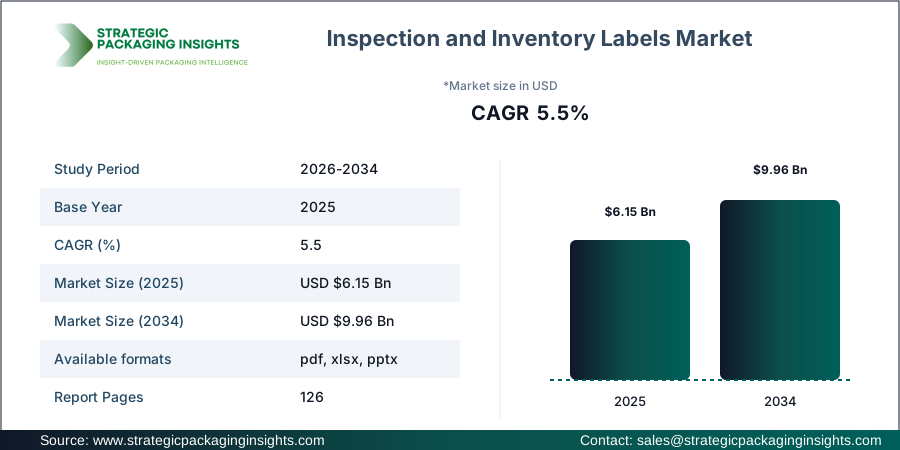
The Inspection and Inventory Labels market size was valued at USD 6.15 billion in 2025 and is anticipated to reach USD 9.96 billion by 2034, growing at a CAGR of 5.5% during the forecast period according to Strategic Packaging Insights. Avery Dennison and Brady Corporation are among the key players driving this growth, leveraging advancements in label technology and increasing demand for efficient inventory management solutions. The market is witnessing a surge in demand due to the growing need for accurate asset tracking and inventory management across various industries, including manufacturing, logistics, and healthcare. The integration of advanced technologies such as RFID and barcode systems is further propelling market expansion, offering enhanced accuracy and efficiency in inventory control processes.
One of the most impactful drivers of the Inspection and Inventory Labels market is the increasing emphasis on regulatory compliance and quality assurance across industries. Governments and regulatory bodies worldwide are implementing stringent regulations to ensure product safety and traceability, which is boosting the demand for reliable labeling solutions. For instance, the healthcare sector requires precise labeling for medical devices and pharmaceuticals to comply with safety standards, thereby driving the adoption of inspection and inventory labels. Additionally, the rise of e-commerce and the need for efficient supply chain management are further fueling market growth, as businesses seek to optimize their inventory processes to meet consumer demands effectively.
Report Scope
| Attributes | Details |
| Report Title | Inspection and Inventory Labels Market Size, Future Growth and Forecast 2034 |
| Label Type | Inspection Labels, Inventory Tags, Barcode Labels, Asset Tracking Labels |
| Material Type | Paper, Polyester, Polypropylene, Vinyl |
| Application | Asset Tracking, Quality Inspection, Warehouse Control, Maintenance |
| End Use | Manufacturing, Logistics, Healthcare, Retail |
| Region | Asia Pacific, North America, Latin America, Europe, Middle East & Africa |
| Base Year | 2025 |
| Historic Period | 2018-2024 |
| Forecast Period | 2026-2034 |
| Number of Pages | 126 |
| Customization Available | Yes* |
Sustainability & Circular Economy Analysis
Sustainability initiatives are significantly influencing the packaging market, with a growing emphasis on eco-friendly materials and waste reduction strategies. The Inspection and Inventory Labels market is no exception, as companies are increasingly adopting recyclable materials and reusable packaging solutions to minimize environmental impact. This shift towards sustainable practices is driven by consumer preferences for environmentally responsible products and the need to comply with stringent packaging regulations. As a result, manufacturers are investing in the development of lightweight and biodegradable label materials, which not only reduce carbon footprints but also enhance the overall sustainability of packaging solutions.
The circular economy model is gaining traction in the packaging industry, encouraging companies to design products with end-of-life considerations in mind. This approach is influencing packaging design and manufacturing processes, as businesses strive to create labels that can be easily recycled or repurposed. Extended Producer Responsibility (EPR) initiatives are also playing a crucial role in promoting sustainable practices, as they hold manufacturers accountable for the environmental impact of their products throughout the lifecycle. By adopting circular economy principles, companies can enhance their market competitiveness and appeal to environmentally conscious consumers.
Investment decisions in the Inspection and Inventory Labels market are increasingly being guided by sustainability trends, as companies seek to align their operations with ESG (Environmental, Social, and Governance) criteria. This focus on sustainability is driving innovation in eco-friendly material development and encouraging collaboration across the supply chain to achieve waste reduction goals. As regulatory compliance becomes more stringent, businesses are prioritizing sustainable packaging solutions to ensure long-term market viability and maintain a positive brand image. By integrating sustainability into their core strategies, companies can not only meet regulatory requirements but also gain a competitive edge in the evolving packaging landscape.
Packaging Value Chain & Supply Chain Analysis
The packaging value chain for Inspection and Inventory Labels encompasses a complex ecosystem involving raw material sourcing, packaging converters, manufacturers, and logistics providers. Efficient supply chain management is crucial for maintaining market competitiveness, as it directly impacts production capabilities and cost-effectiveness. Raw material availability plays a significant role in determining the overall efficiency of the supply chain, as fluctuations in material costs can affect pricing strategies and profit margins. Companies like Avery Dennison and CCL Industries are focusing on strategic partnerships with suppliers to ensure a steady supply of high-quality materials, thereby enhancing their production capabilities and market position.
Packaging converters and manufacturers are pivotal in transforming raw materials into finished products, with a focus on innovation and quality assurance. The integration of advanced packaging machinery and automation technologies is enhancing production efficiency and reducing lead times, enabling companies to meet the growing demand for inspection and inventory labels. Logistics and distribution channels are equally important, as they facilitate the timely delivery of products to end-users. Companies are adopting localization strategies to optimize their supply chains, reducing transportation costs and minimizing the risk of disruptions due to geopolitical factors or natural disasters.
Recycling networks and procurement strategies are integral components of the packaging value chain, as they contribute to sustainability goals and regulatory compliance. Companies are investing in recycling infrastructure to ensure the responsible disposal of packaging materials, aligning with circular economy principles. Inventory management practices are also evolving, with businesses leveraging data analytics and IoT technologies to enhance supply chain resilience and optimize stock levels. By focusing on supply chain efficiency and strategic partnerships, companies can improve their market performance and maintain a competitive edge in the dynamic Inspection and Inventory Labels market.
Opportunities & Threats
The Inspection and Inventory Labels market presents numerous opportunities for growth, driven by technological advancements and the increasing demand for efficient inventory management solutions. The integration of RFID and barcode technologies offers significant potential for enhancing label functionality, enabling real-time tracking and data collection. This technological evolution is opening new avenues for market expansion, as businesses seek to improve their supply chain visibility and operational efficiency. Additionally, the rise of e-commerce and the need for streamlined logistics operations are creating opportunities for label manufacturers to cater to the growing demand for accurate and reliable labeling solutions.
Another opportunity lies in the expanding applications of inspection and inventory labels across various industries. The healthcare sector, for instance, is witnessing a surge in demand for labeling solutions to ensure compliance with regulatory standards and enhance patient safety. Similarly, the manufacturing and logistics industries are increasingly adopting advanced labeling technologies to optimize their inventory processes and improve asset tracking capabilities. By capitalizing on these industry-specific opportunities, companies can diversify their product offerings and tap into new revenue streams, thereby strengthening their market position.
Despite the promising growth prospects, the Inspection and Inventory Labels market faces certain threats that could hinder its expansion. One of the primary challenges is the volatility in raw material prices, which can impact production costs and profit margins. Additionally, the market is subject to stringent regulatory requirements, which necessitate continuous investment in compliance and quality assurance measures. Companies must also navigate the competitive landscape, where the presence of established players like Zebra Technologies and 3M poses a threat to new entrants. To mitigate these challenges, businesses must focus on innovation, strategic partnerships, and cost-effective production strategies to maintain their competitive edge.
Drivers & Challenges
The Inspection and Inventory Labels market is driven by several key factors, including the increasing emphasis on regulatory compliance and quality assurance across industries. Governments and regulatory bodies worldwide are implementing stringent regulations to ensure product safety and traceability, which is boosting the demand for reliable labeling solutions. For instance, the healthcare sector requires precise labeling for medical devices and pharmaceuticals to comply with safety standards, thereby driving the adoption of inspection and inventory labels. Additionally, the rise of e-commerce and the need for efficient supply chain management are further fueling market growth, as businesses seek to optimize their inventory processes to meet consumer demands effectively.
Technological advancements are also playing a crucial role in driving the market, with the integration of RFID and barcode systems offering enhanced accuracy and efficiency in inventory control processes. These technologies enable real-time tracking and data collection, providing businesses with valuable insights into their supply chain operations. As a result, companies are increasingly investing in advanced labeling solutions to improve their operational efficiency and gain a competitive edge. The growing focus on sustainability and eco-friendly packaging solutions is another driver, as businesses strive to align their operations with environmental regulations and consumer preferences.
Despite the positive drivers, the Inspection and Inventory Labels market faces several challenges that could impact its growth trajectory. One of the primary challenges is the volatility in raw material prices, which can affect production costs and profit margins. Additionally, the market is subject to stringent regulatory requirements, which necessitate continuous investment in compliance and quality assurance measures. Companies must also navigate the competitive landscape, where the presence of established players like Zebra Technologies and 3M poses a threat to new entrants. To overcome these challenges, businesses must focus on innovation, strategic partnerships, and cost-effective production strategies to maintain their competitive edge.
Market Share Analysis
The competitive landscape of the Inspection and Inventory Labels market is characterized by the presence of several key players, each striving to enhance their market share through innovation and strategic partnerships. Companies like Avery Dennison, Brady Corporation, and CCL Industries are leading the market, leveraging their extensive product portfolios and global presence to cater to diverse customer needs. These companies are focusing on expanding their product offerings and investing in research and development to introduce advanced labeling solutions that meet the evolving demands of various industries.
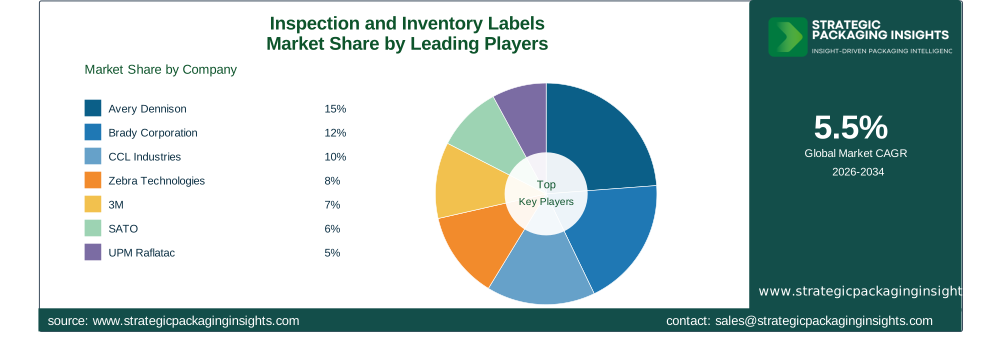
Avery Dennison, for instance, is a prominent player in the market, known for its innovative labeling solutions and commitment to sustainability. The company is actively investing in eco-friendly materials and technologies to reduce its environmental impact and align with consumer preferences. Similarly, Brady Corporation is focusing on enhancing its product portfolio through strategic acquisitions and partnerships, enabling it to offer a comprehensive range of labeling solutions for different applications. CCL Industries, on the other hand, is leveraging its global manufacturing capabilities and extensive distribution network to strengthen its market position and expand its customer base.
Zebra Technologies is another key player in the market, renowned for its advanced barcode and RFID solutions that enhance inventory management and asset tracking capabilities. The company is continuously investing in research and development to introduce cutting-edge technologies that improve operational efficiency and provide real-time insights into supply chain operations. 3M, with its diverse product offerings and strong focus on innovation, is also a significant player in the market, catering to various industries with its high-quality labeling solutions.
Other notable companies in the market include SATO, UPM Raflatac, HERMA, Lintec, and Resource Label Group, each contributing to the market's growth through their unique product offerings and strategic initiatives. These companies are focusing on expanding their market presence through collaborations and partnerships, enabling them to tap into new opportunities and enhance their competitive edge. By leveraging their strengths and capabilities, these key players are well-positioned to capitalize on the growing demand for inspection and inventory labels and drive the market's expansion in the coming years.
Key Highlights
- Market Size: The Inspection and Inventory Labels market was valued at USD 6.15 billion in 2025 and is projected to reach USD 9.96 billion by 2034.
- Growth Rate: The market is expected to grow at a CAGR of 5.5% during the forecast period.
- Key Players: Major companies include Avery Dennison, Brady Corporation, CCL Industries, Zebra Technologies, and 3M.
- Technological Advancements: Integration of RFID and barcode technologies is enhancing label functionality and market growth.
- Sustainability Focus: Increasing adoption of eco-friendly materials and recyclable packaging solutions.
- Regional Insights: Asia Pacific is expected to witness significant growth due to rising industrialization and demand for efficient inventory management solutions.
- Application Expansion: Growing applications in healthcare, manufacturing, and logistics sectors.
Inspection and Inventory Labels Market Segments Insights

Label Type Analysis
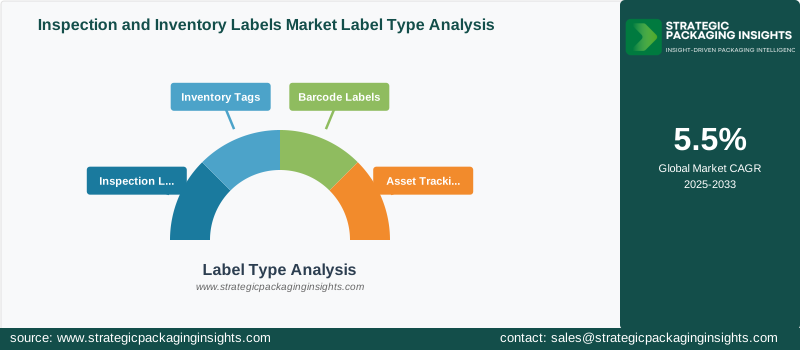
The Inspection and Inventory Labels market is segmented by label type into Inspection Labels, Inventory Tags, Barcode Labels, and Asset Tracking Labels. Each of these segments plays a crucial role in various industries, offering unique benefits and applications. Inspection Labels are primarily used for quality control and compliance purposes, ensuring that products meet regulatory standards and safety requirements. Inventory Tags, on the other hand, are essential for efficient inventory management, enabling businesses to track stock levels and optimize their supply chain operations. Barcode Labels are widely used across industries for their ability to store and retrieve data quickly, enhancing operational efficiency and accuracy.
Asset Tracking Labels are gaining popularity due to their ability to provide real-time insights into asset locations and conditions, reducing the risk of loss or theft. The demand for these labels is driven by the increasing need for efficient asset management solutions in sectors such as manufacturing, logistics, and healthcare. Companies are investing in advanced labeling technologies, such as RFID and QR codes, to enhance the functionality and reliability of these labels. As businesses continue to prioritize inventory accuracy and asset security, the demand for diverse label types is expected to grow, driving market expansion.
Material Type Analysis
The market is also segmented by material type, including Paper, Polyester, Polypropylene, and Vinyl. Each material offers distinct advantages, catering to different industry requirements and environmental conditions. Paper labels are widely used due to their cost-effectiveness and ease of customization, making them ideal for short-term applications and environments with minimal exposure to harsh conditions. Polyester labels, known for their durability and resistance to chemicals and abrasion, are preferred for long-term applications and harsh environments, such as manufacturing and logistics.
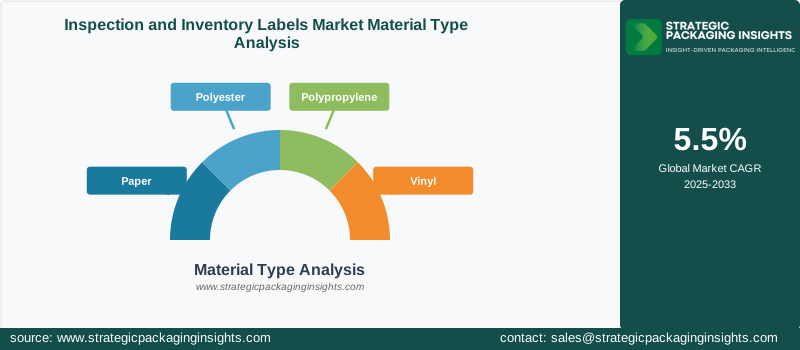
Polypropylene labels offer a balance between cost and durability, providing excellent resistance to moisture and chemicals, making them suitable for various applications, including food and beverage packaging. Vinyl labels are highly durable and flexible, offering superior resistance to weathering and UV exposure, making them ideal for outdoor applications. As industries continue to demand high-performance labeling solutions, manufacturers are focusing on material innovation to enhance label durability and functionality, driving market growth.
Application Analysis
The Inspection and Inventory Labels market is segmented by application into Asset Tracking, Quality Inspection, Warehouse Control, and Maintenance. Asset Tracking is a critical application, enabling businesses to monitor and manage their assets efficiently, reducing the risk of loss or theft. Quality Inspection labels are essential for ensuring compliance with regulatory standards and maintaining product quality, particularly in industries such as healthcare and manufacturing. Warehouse Control labels facilitate efficient inventory management, enabling businesses to optimize their supply chain operations and reduce operational costs.
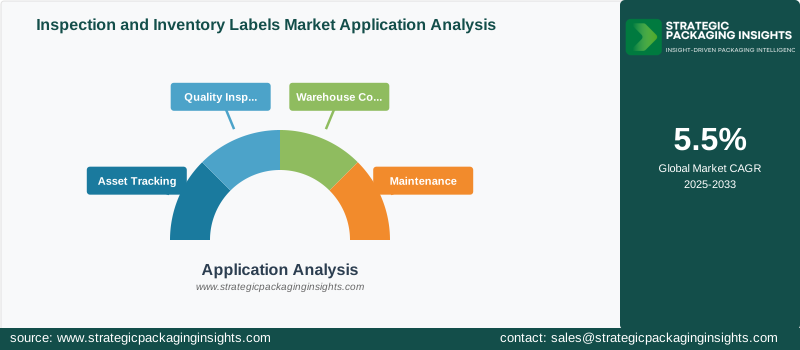
Maintenance labels are used to track equipment maintenance schedules and ensure timely servicing, enhancing operational efficiency and reducing downtime. The demand for these applications is driven by the increasing need for accurate and reliable labeling solutions across industries. As businesses continue to prioritize operational efficiency and regulatory compliance, the demand for diverse labeling applications is expected to grow, driving market expansion.
End Use Analysis
The market is segmented by end use into Manufacturing, Logistics, Healthcare, and Retail. Each of these sectors has unique labeling requirements, driving demand for specialized labeling solutions. The manufacturing sector relies on inspection and inventory labels for quality control and asset management, ensuring compliance with regulatory standards and optimizing production processes. The logistics sector uses labels for efficient inventory management and supply chain visibility, reducing operational costs and enhancing customer satisfaction.
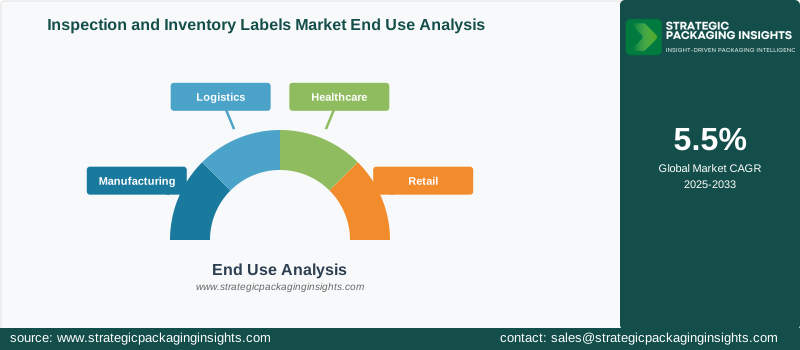
The healthcare sector requires precise labeling solutions to ensure patient safety and regulatory compliance, particularly for medical devices and pharmaceuticals. The retail sector uses labels for product identification and inventory management, enhancing operational efficiency and customer experience. As these industries continue to evolve and demand more sophisticated labeling solutions, the market is expected to witness significant growth, driven by the need for accurate and reliable labeling solutions.
Inspection and Inventory Labels Market Segments
The Inspection and Inventory Labels market has been segmented on the basis ofLabel Type
- Inspection Labels
- Inventory Tags
- Barcode Labels
- Asset Tracking Labels
Material Type
- Paper
- Polyester
- Polypropylene
- Vinyl
Application
- Asset Tracking
- Quality Inspection
- Warehouse Control
- Maintenance
End Use
- Manufacturing
- Logistics
- Healthcare
- Retail
Region
- Asia Pacific
- North America
- Latin America
- Europe
- Middle East & Africa




