


Industrial Packaging Market Outlook
The Industrial Packaging market size was valued at USD $76.1 Billion in 2025 and is anticipated to reach USD $122.6 Billion by 2035, growing at a CAGR of 4.8% during the forecast period according to Strategic Packaging Insights.
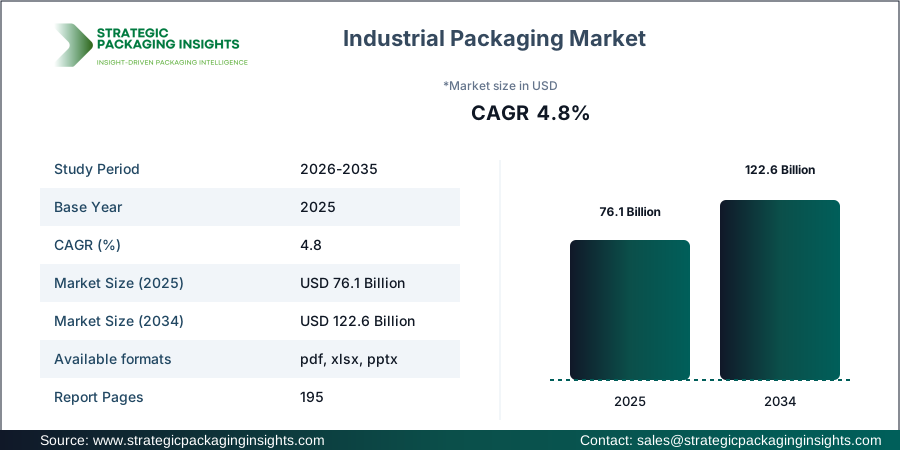
The most impactful driver for the Industrial Packaging market is the increasing demand from the chemicals and petrochemicals industry, which requires robust and reliable packaging solutions for safe transportation and storage. The rise in global trade and the need for efficient logistics solutions further bolster the demand for industrial packaging. Regulatory standards for hazardous material packaging also play a crucial role in shaping the market dynamics.
Report Scope
| Attributes | Details |
| Report Title | Industrial Packaging Market Projected to Scale to 122.6 Billion by 2035, Assesses Strategic Packaging Insights |
| By Product Type | Drums, Intermediate Bulk Containers (IBCs), Sacks and Bags, Pails and Jerrycans, Bulk Boxes, Crates and Pallets, Other Industrial Packaging |
| By Material Type | Plastic, Metal, Paper and Paperboard, Wood, Composite Materials |
| By Packaging Design | Rigid Packaging, Flexible Packaging, Semi-Rigid Packaging, Active Packaging |
| By Capacity | Below 50 Liters, 50–500 Liters, 501–1000 Liters, 1001–2000 Liters, Above 2000 Liters |
| By Application | Storage, Transportation, Handling and Logistics, Bulk Material Packaging, Hazardous Material Packaging, Export Packaging |
| By End Use Industry | Chemicals and Petrochemicals, Food and Beverage, Pharmaceuticals, Agriculture, Building and Construction, Automotive, Electronics, Consumer Goods, Industrial Manufacturing |
| By Reusability | Single-Use Packaging, Reusable Packaging, Returnable Packaging, Reconditioned Packaging |
| By Region | North America, Europe, Asia-Pacific, Latin America, Middle East and Africa |
| Base Year | 2025 |
| Historic Period | 2018-2024 |
| Forecast Period | 2026-2035 |
| Number of Pages | 195 |
| Customization Available | Yes* |
Market Trends Analysis
Industrial packaging is witnessing a shift towards sustainable materials, driven by environmental regulations and consumer demand for eco-friendly solutions. The adoption of recyclable and biodegradable materials is becoming more prevalent, with companies investing in research and development to enhance the sustainability of their packaging solutions. This trend is expected to influence procurement strategies and material selection, impacting the overall cost structure and competitive positioning of market players.
Automation and digital transformation are reshaping the industrial packaging landscape. Companies are increasingly adopting smart packaging solutions that incorporate IoT and AI technologies to improve supply chain efficiency and reduce operational costs. This trend is driving investment in advanced packaging machinery and software, enabling real-time tracking and monitoring of packaged goods. The integration of these technologies is expected to enhance product safety and compliance with regulatory standards.
Industry Transformation Analysis
The industrial packaging industry is undergoing significant transformation with the integration of advanced manufacturing technologies and automation. The shift towards digitalization is enhancing operational efficiency and reducing production costs. Companies are investing in state-of-the-art machinery and equipment to streamline production processes and improve product quality. This transformation is expected to increase the competitiveness of market players and drive innovation in packaging design and functionality.
Value-chain transformation is evident as companies focus on sustainability and circular economy principles. The adoption of closed-loop systems and the use of recycled materials are becoming more common, reducing the environmental impact of packaging waste. This shift is influencing procurement strategies and supplier relationships, with companies seeking partnerships with sustainable material suppliers. The emphasis on sustainability is expected to create new market opportunities and drive long-term growth.
Trends & Disruptions Impacting Customers' Customers
Downstream customers, particularly in the chemicals and petrochemicals, food and beverage, and pharmaceuticals industries, are increasingly prioritizing sustainability and regulatory compliance in their packaging choices. The demand for packaging solutions that ensure product safety and integrity during transportation and storage is rising. Customers are also seeking packaging that aligns with their sustainability goals, driving the adoption of recyclable and reusable packaging solutions.
These changes in downstream customer preferences are influencing product demand and innovation in the industrial packaging market. Companies are focusing on developing packaging solutions that meet the evolving needs of their customers, such as enhanced barrier properties and tamper-evident features. The emphasis on sustainability is also driving the development of new materials and technologies, creating opportunities for market players to differentiate their offerings and capture new market segments.
Industrial Packaging Market Ecosystem
The industrial packaging ecosystem involves a complex interplay of raw material suppliers, manufacturers, converters, and distributors. The procurement of raw materials such as plastics, metals, and paper is critical to the production of industrial packaging products. Resin and substrate production form the backbone of the ecosystem, providing essential materials for converting processes.
Converting processes, including extrusion and molding, transform raw materials into finished packaging products. Printing and lamination add value by enhancing the functionality and aesthetics of packaging. Distribution channels ensure the timely delivery of packaging products to end users, while recycling processes close the loop by recovering materials for reuse. Changes in the ecosystem, such as shifts towards sustainable materials and recycling, are expected to impact supply-chain dynamics and create new opportunities for market players.
Analyst Perspective
Analyst Perspective: The industrial packaging market is poised for significant growth, driven by increasing demand from key industries and the shift towards sustainable packaging solutions.
The most important structural change is the integration of advanced manufacturing technologies and automation, which is enhancing operational efficiency and reducing costs. This shift is expected to drive innovation in packaging design and functionality, creating new opportunities for market players.
Companies, investors, and suppliers should focus on sustainability and digital transformation during the forecast period. These factors are expected to shape the competitive landscape and influence procurement strategies, making them critical for long-term success in the industrial packaging market.
Opportunities & Threats
The industrial packaging market presents significant opportunities for growth, driven by the increasing demand for sustainable packaging solutions. Companies that invest in research and development to enhance the recyclability and biodegradability of their products are likely to gain a competitive edge. The adoption of advanced manufacturing technologies and automation also offers opportunities to improve operational efficiency and reduce production costs.
Emerging markets, particularly in the Asia-Pacific region, present lucrative opportunities for market expansion. The growing industrialization and urbanization in these regions are driving the demand for industrial packaging solutions. Companies that establish a strong presence in these markets and adapt their offerings to local needs are likely to benefit from the increasing demand.
However, the market also faces threats from raw material price volatility and regulatory uncertainty. Fluctuations in the prices of plastics, metals, and other raw materials can impact production costs and profit margins. Regulatory changes, particularly those related to environmental standards and packaging waste, can also pose challenges for market players.
Competition from alternative packaging solutions and the threat of substitution are additional challenges. Companies must continuously innovate and differentiate their offerings to maintain their market position. The emphasis on sustainability and the circular economy is also driving the need for investment in recycling infrastructure and technologies, which can be capital-intensive.
Drivers & Challenges
One of the primary drivers of the industrial packaging market is the increasing demand from the chemicals and petrochemicals industry. These industries require robust and reliable packaging solutions to ensure the safe transportation and storage of hazardous materials. The rise in global trade and the need for efficient logistics solutions further bolster the demand for industrial packaging. Regulatory standards for hazardous material packaging also play a crucial role in shaping the market dynamics.
The food and beverage industry is another significant driver, with the need for packaging solutions that ensure product safety and integrity during transportation and storage. The emphasis on sustainability and the circular economy is driving the adoption of recyclable and reusable packaging solutions. Companies are investing in research and development to enhance the sustainability of their packaging offerings, creating new market opportunities.
Challenges in the industrial packaging market include raw material price volatility and regulatory uncertainty. Fluctuations in the prices of plastics, metals, and other raw materials can impact production costs and profit margins. Regulatory changes, particularly those related to environmental standards and packaging waste, can also pose challenges for market players. Companies must navigate these challenges while maintaining their competitive position and meeting customer demands.
Packaging Market Economics
The economics of the industrial packaging market are influenced by several factors, including raw material costs, conversion costs, and energy expenses. The prices of plastics, metals, and paper are critical components of the overall cost structure, with fluctuations impacting profit margins. Conversion costs, including extrusion and molding, are significant, with companies investing in advanced machinery to improve efficiency and reduce costs.
Energy costs are another important consideration, with companies seeking to optimize energy consumption to enhance profitability. The adoption of sustainable materials and technologies can also impact the cost structure, with investments in research and development required to enhance recyclability and biodegradability. Logistics and distribution costs are critical, with efficient supply chain management essential for maintaining competitiveness in the market.
Packaging Value Chain & Cost Analysis
The industrial packaging value chain involves several tiers, from raw material procurement to end-of-life processing. Tier-3 includes resin synthesis, additives, and masterbatch production, which are essential for creating the base materials used in packaging. Tier-2 involves film extrusion, paperboard mills, and substrate production, where raw materials are transformed into packaging components.
Tier-1 encompasses converting, printing, lamination, and forming, where packaging components are assembled into finished products. Downstream activities include co-packing, CPG brand filling, distribution, collection, sorting, and recycling. Substrate lead times, capacity utilization, and resin supply are critical factors influencing the value chain, with companies seeking to optimize these elements to enhance efficiency and reduce costs.
Unit Economics & Substrate Cost Analysis
Unit economics in the industrial packaging market are driven by raw material costs, energy expenses, and conversion processes. The cost of resins and feedstock is a significant component, with fluctuations impacting overall profitability. Energy costs are also critical, with companies seeking to optimize consumption to reduce expenses.
Extrusion, printing, and lamination processes contribute to the overall cost structure, with investments in advanced machinery and technologies required to enhance efficiency. Tooling and scrap management are important considerations, with companies seeking to minimize waste and optimize production processes. Logistics and labor costs are additional factors influencing unit economics, with efficient supply chain management essential for maintaining competitiveness.
Packaging Regulatory & Sustainability Analysis
The industrial packaging market is subject to various regulatory requirements, including environmental standards and packaging waste regulations. The European Commission and U.S. EPA are key regulatory bodies influencing the market, with mandates related to recyclability, single-use restrictions, and extended producer responsibility (EPR) impacting market dynamics.
Companies must comply with food-contact requirements, PCR requirements, and labeling standards to ensure product safety and regulatory compliance. The emphasis on sustainability is driving the adoption of recyclable and biodegradable materials, with companies investing in research and development to enhance the environmental performance of their packaging solutions. Regulatory changes are expected to shape the competitive landscape and influence procurement strategies.
Strategic Mergers, Acquisitions & Capacity Expansions
Recent strategic developments in the industrial packaging market include mergers, acquisitions, and capacity expansions. Companies are seeking to enhance their market position and expand their product offerings through strategic partnerships and acquisitions. For example, Greif and Mauser Packaging Solutions have been active in expanding their global footprint and product portfolios through acquisitions.
Capacity expansions are also a focus, with companies investing in new manufacturing facilities and technologies to meet increasing demand. The emphasis on sustainability is driving investments in recycling facilities and technologies, with companies seeking to enhance their environmental performance and meet regulatory requirements. These strategic developments are expected to shape the competitive landscape and create new market opportunities.
Strategic Action Directives
Brand Packaging Engineers & Sustainability Directors: Focus on material selection, mono-material qualification, and recyclability to enhance sustainability and meet regulatory requirements.
Converter Operations & Extrusion Leads: Optimize line speed, tooling, and changeover processes to improve efficiency and reduce costs. Address PCR variability and capacity utilization to enhance competitiveness.
Procurement & Material Sourcing Managers: Diversify supplier base and secure resin contracts to mitigate price volatility. Focus on EPR exposure and price indexing to enhance procurement strategies.
Investors: Monitor capacity expansions, margin structure, and M&A activity to identify growth opportunities. Focus on technology investments and market concentration to enhance competitiveness.
Market Share Analysis
The industrial packaging market is characterized by a competitive landscape with several key players, including Greif, Mauser Packaging Solutions, Mondi, and Smurfit Westrock. These companies have established strong market positions through strategic acquisitions, capacity expansions, and product innovations. The market is highly fragmented, with numerous regional and local players competing for market share.
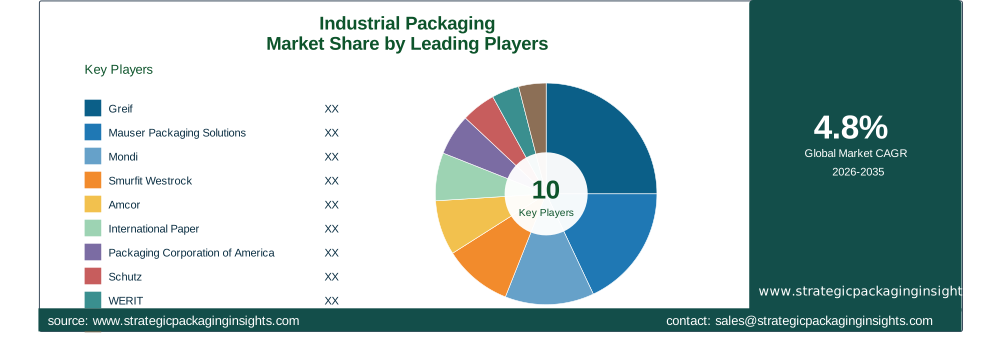
Greif and Mauser Packaging Solutions are among the leading companies, with a strong presence in the global market. They have expanded their product portfolios and geographic reach through strategic acquisitions and partnerships. Mondi and Smurfit Westrock are also key players, focusing on sustainability and innovation to enhance their market positions.
International Paper and Packaging Corporation of America are significant players in the North American market, with a focus on sustainable packaging solutions. Schutz and WERIT are prominent in the European market, offering a range of industrial packaging products. Tank Holding and Visy Industries are key players in the Asia-Pacific region, with a focus on expanding their product offerings and geographic reach.
The competitive landscape is influenced by factors such as product innovation, sustainability, and regulatory compliance. Companies are investing in research and development to enhance the sustainability of their packaging solutions and meet evolving customer demands. The emphasis on sustainability and the circular economy is expected to shape the competitive dynamics and create new market opportunities.
Key Highlights
- Largest Region: North America
- Fastest-Growing Region: Asia-Pacific
- Largest Segment: Drums
- Fastest-Growing Segment: Intermediate Bulk Containers (IBCs)
- Base-year market size: USD 76.1 Billion
- Forecast-year market size: USD 122.6 Billion
- CAGR: 4.8%
- Important application: Hazardous Material Packaging
- Major end-use industry: Chemicals and Petrochemicals
- Major market driver: Increasing demand for sustainable packaging solutions
Regional Insights
The global industrial packaging market is segmented into five major regions: North America, Europe, Asia-Pacific, Latin America, and the Middle East & Africa. North America is the largest market, driven by the demand from the chemicals and petrochemicals industry. The Asia-Pacific region is expected to be the fastest-growing market, with increasing industrialization and urbanization driving demand for industrial packaging solutions.
North America
North America is the largest market for industrial packaging, with a strong presence of key players such as International Paper and Packaging Corporation of America. The demand for sustainable packaging solutions is driving market growth, with companies focusing on innovation and regulatory compliance. The chemicals and petrochemicals industry is a significant driver, with the need for robust packaging solutions for hazardous materials.
The emphasis on sustainability and the circular economy is influencing procurement strategies and material selection, with companies investing in research and development to enhance the recyclability and biodegradability of their packaging solutions. The market is expected to continue growing, driven by the demand for efficient logistics solutions and regulatory standards for packaging waste.
Europe
Europe is a significant market for industrial packaging, with a focus on sustainability and regulatory compliance. The European Commission's mandates on recyclability and packaging waste are driving the adoption of sustainable materials and technologies. Key players such as Schutz and WERIT are prominent in the market, offering a range of industrial packaging products.
The demand for packaging solutions that ensure product safety and integrity during transportation and storage is rising, with the chemicals and petrochemicals industry being a major driver. The emphasis on sustainability is expected to create new market opportunities, with companies investing in recycling infrastructure and technologies to enhance their environmental performance.
Asia Pacific
The Asia-Pacific region is expected to be the fastest-growing market for industrial packaging, driven by increasing industrialization and urbanization. The demand for packaging solutions in the chemicals and petrochemicals, food and beverage, and pharmaceuticals industries is rising, with companies focusing on expanding their product offerings and geographic reach.
Key players such as Tank Holding and Visy Industries are prominent in the region, with a focus on sustainability and innovation. The emphasis on sustainable packaging solutions is expected to drive market growth, with companies investing in research and development to enhance the recyclability and biodegradability of their products.
Latin America
Latin America is a growing market for industrial packaging, with increasing demand from the food and beverage and chemicals and petrochemicals industries. The emphasis on sustainability and regulatory compliance is driving the adoption of recyclable and reusable packaging solutions.
Companies are focusing on expanding their product offerings and geographic reach to capture new market opportunities. The market is expected to continue growing, driven by the demand for efficient logistics solutions and regulatory standards for packaging waste.
Middle East & Africa
The Middle East & Africa region is a developing market for industrial packaging, with increasing demand from the chemicals and petrochemicals and food and beverage industries. The emphasis on sustainability and regulatory compliance is driving the adoption of sustainable packaging solutions.
Companies are focusing on expanding their product offerings and geographic reach to capture new market opportunities. The market is expected to continue growing, driven by the demand for efficient logistics solutions and regulatory standards for packaging waste.
Industrial Packaging Market Segments Insights

Drums Analysis
Drums are a significant segment in the industrial packaging market, driven by their widespread use in the chemicals and petrochemicals industry. The demand for drums is influenced by the need for robust and reliable packaging solutions for hazardous materials. The emphasis on sustainability is driving the adoption of recyclable and reusable drums, with companies investing in research and development to enhance their environmental performance.
The market for drums is expected to continue growing, driven by the demand from key industries and the need for efficient logistics solutions. Companies are focusing on innovation and regulatory compliance to enhance their market position and capture new market opportunities. The emphasis on sustainability and the circular economy is expected to shape the competitive dynamics and create new market opportunities.
Intermediate Bulk Containers (IBCs) Analysis
Intermediate Bulk Containers (IBCs) are the fastest-growing segment in the industrial packaging market, driven by their versatility and efficiency in handling bulk materials. The demand for IBCs is influenced by the need for cost-effective and sustainable packaging solutions, with companies investing in research and development to enhance their functionality and environmental performance.
The market for IBCs is expected to continue growing, driven by the demand from key industries such as chemicals and petrochemicals, food and beverage, and pharmaceuticals. Companies are focusing on innovation and regulatory compliance to enhance their market position and capture new market opportunities. The emphasis on sustainability and the circular economy is expected to shape the competitive dynamics and create new market opportunities.
Sacks and Bags Analysis
Sacks and bags are a significant segment in the industrial packaging market, driven by their widespread use in the food and beverage and agriculture industries. The demand for sacks and bags is influenced by the need for cost-effective and sustainable packaging solutions, with companies investing in research and development to enhance their functionality and environmental performance.
The market for sacks and bags is expected to continue growing, driven by the demand from key industries and the need for efficient logistics solutions. Companies are focusing on innovation and regulatory compliance to enhance their market position and capture new market opportunities. The emphasis on sustainability and the circular economy is expected to shape the competitive dynamics and create new market opportunities.
Pails and Jerrycans Analysis
Pails and jerrycans are a significant segment in the industrial packaging market, driven by their widespread use in the chemicals and petrochemicals and food and beverage industries. The demand for pails and jerrycans is influenced by the need for robust and reliable packaging solutions for hazardous materials. The emphasis on sustainability is driving the adoption of recyclable and reusable pails and jerrycans, with companies investing in research and development to enhance their environmental performance.
The market for pails and jerrycans is expected to continue growing, driven by the demand from key industries and the need for efficient logistics solutions. Companies are focusing on innovation and regulatory compliance to enhance their market position and capture new market opportunities. The emphasis on sustainability and the circular economy is expected to shape the competitive dynamics and create new market opportunities.
Bulk Boxes Analysis
Bulk boxes are a significant segment in the industrial packaging market, driven by their widespread use in the food and beverage and agriculture industries. The demand for bulk boxes is influenced by the need for cost-effective and sustainable packaging solutions, with companies investing in research and development to enhance their functionality and environmental performance.
The market for bulk boxes is expected to continue growing, driven by the demand from key industries and the need for efficient logistics solutions. Companies are focusing on innovation and regulatory compliance to enhance their market position and capture new market opportunities. The emphasis on sustainability and the circular economy is expected to shape the competitive dynamics and create new market opportunities.
Crates and Pallets Analysis
Crates and pallets are a significant segment in the industrial packaging market, driven by their widespread use in the logistics and transportation industries. The demand for crates and pallets is influenced by the need for robust and reliable packaging solutions for handling and storage. The emphasis on sustainability is driving the adoption of recyclable and reusable crates and pallets, with companies investing in research and development to enhance their environmental performance.
The market for crates and pallets is expected to continue growing, driven by the demand from key industries and the need for efficient logistics solutions. Companies are focusing on innovation and regulatory compliance to enhance their market position and capture new market opportunities. The emphasis on sustainability and the circular economy is expected to shape the competitive dynamics and create new market opportunities.
Other Industrial Packaging Analysis
Other industrial packaging solutions, including specialized containers and custom packaging, are a significant segment in the industrial packaging market. The demand for these solutions is influenced by the need for customized and innovative packaging solutions for specific applications. The emphasis on sustainability is driving the adoption of recyclable and reusable packaging solutions, with companies investing in research and development to enhance their environmental performance.
The market for other industrial packaging solutions is expected to continue growing, driven by the demand from key industries and the need for efficient logistics solutions. Companies are focusing on innovation and regulatory compliance to enhance their market position and capture new market opportunities. The emphasis on sustainability and the circular economy is expected to shape the competitive dynamics and create new market opportunities.
Industrial Packaging Market Segments
The Industrial Packaging market has been segmented on the basis ofBy Product Type
- Drums
- Intermediate Bulk Containers (IBCs)
- Sacks and Bags
- Pails and Jerrycans
- Bulk Boxes
- Crates and Pallets
- Other Industrial Packaging
By Material Type
- Plastic
- Metal
- Paper and Paperboard
- Wood
- Composite Materials
By Packaging Design
- Rigid Packaging
- Flexible Packaging
- Semi-Rigid Packaging
- Active Packaging
By Capacity
- Below 50 Liters
- 50–500 Liters
- 501–1000 Liters
- 1001–2000 Liters
- Above 2000 Liters
By Application
- Storage
- Transportation
- Handling and Logistics
- Bulk Material Packaging
- Hazardous Material Packaging
- Export Packaging
By End Use Industry
- Chemicals and Petrochemicals
- Food and Beverage
- Pharmaceuticals
- Agriculture
- Building and Construction
- Automotive
- Electronics
- Consumer Goods
- Industrial Manufacturing
By Reusability
- Single-Use Packaging
- Reusable Packaging
- Returnable Packaging
- Reconditioned Packaging
By Region
- North America
- Europe
- Asia-Pacific
- Latin America
- Middle East and Africa




