


In-Store Theater Packaging Market Outlook
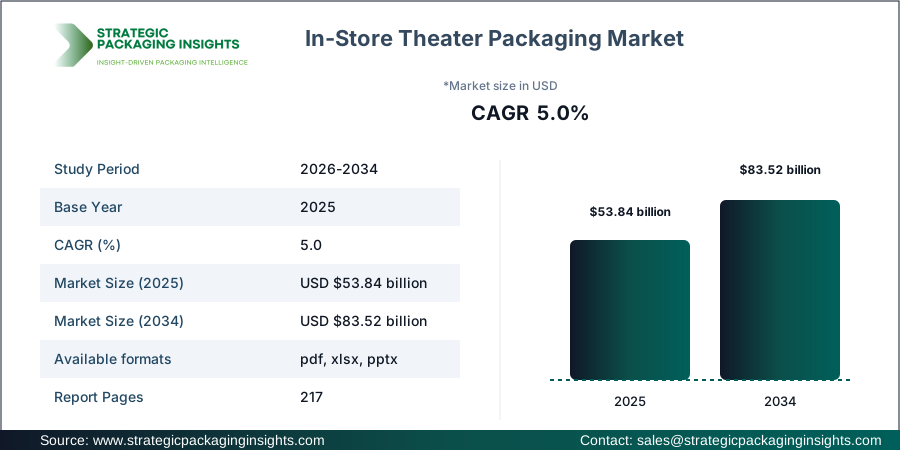
The In-Store Theater Packaging market size was valued at USD $49.9 Billion in 2025 and is anticipated to reach USD $72.4 Billion by 2035, growing at a CAGR of 3.8% % during the forecast period according to Strategic Packaging Insights. The market is driven by the increasing demand for visually appealing packaging solutions that enhance product visibility and consumer engagement in retail environments. The adoption of advanced printing technologies and sustainable materials is further propelling market growth.Report Scope
| Attributes | Details |
| Report Title | In-Store Theater Packaging Market Projected to Scale to 72.4 Billion by 2035, Assesses Strategic Packaging Insights |
| By Material | Paperboard, Corrugated Board, Plastic, Other Materials |
| By Packaging Type | Shelf-Ready Packaging, Display Boxes, Countertop Displays, Floor Displays, Pallet Displays |
| By Printing Technology | Flexographic Printing, Digital Printing, Offset Printing, Other Printing Technologies |
| By Application | Food and Beverages, Personal Care and Cosmetics, Household Products, Healthcare Products, Other Applications |
| By End User | Supermarkets and Hypermarkets, Convenience Stores, Specialty Stores, Other Retail Stores |
| By Region | North America, Europe, Asia-Pacific, Latin America, Middle East and Africa |
| Base Year | 2025 |
| Historic Period | 2018-2024 |
| Forecast Period | 2026-2035 |
| Number of Pages | 141 |
| Customization Available | Yes* |
Market Trends Analysis
In-Store Theater Packaging is witnessing a shift towards sustainable materials, with brands increasingly opting for recyclable and biodegradable substrates. This trend is driven by consumer demand for eco-friendly packaging and regulatory pressures to reduce environmental impact. The integration of digital printing technologies is also gaining traction, enabling brands to offer personalized and interactive packaging experiences that enhance consumer engagement and brand loyalty.
Another significant trend is the rise of shelf-ready packaging solutions, which streamline the supply chain by reducing handling time and improving product visibility on retail shelves. This trend is particularly prominent in the food and beverage sector, where efficient packaging solutions are crucial for maintaining product freshness and shelf life. The growing popularity of e-commerce is also influencing packaging designs, with brands focusing on protective and visually appealing packaging that enhances the unboxing experience.
Industry Transformation Analysis
The In-Store Theater Packaging industry is undergoing a transformation driven by technological advancements and changing consumer preferences. The adoption of automation and digital printing technologies is enhancing operational efficiency and enabling mass customization of packaging designs. This shift is allowing brands to respond quickly to market trends and consumer demands, thereby gaining a competitive edge.
Moreover, the industry is witnessing a consolidation trend, with major players expanding their capabilities through mergers and acquisitions. This consolidation is aimed at enhancing production capacities and expanding geographic reach. The focus on sustainability is also reshaping the industry, with companies investing in eco-friendly materials and processes to meet regulatory requirements and consumer expectations. These transformations are expected to drive long-term growth and innovation in the In-Store Theater Packaging market.
Trends & Disruptions Impacting Customers' Customers
Downstream customers, such as supermarkets and hypermarkets, are increasingly demanding packaging solutions that enhance product visibility and consumer engagement. This demand is driven by the need to differentiate products in a competitive retail environment and to provide a memorable shopping experience. The shift towards sustainable packaging is also influencing purchasing decisions, with retailers prioritizing eco-friendly solutions that align with their sustainability goals.
These changes are impacting the In-Store Theater Packaging market by driving demand for innovative and sustainable packaging solutions. Brands are investing in advanced printing technologies and sustainable materials to meet retailer requirements and consumer expectations. This trend is creating opportunities for packaging manufacturers to develop new products and expand their market presence. The focus on sustainability and innovation is expected to drive future growth and shape the competitive landscape of the In-Store Theater Packaging market.
In-Store Theater Packaging Market Ecosystem
The In-Store Theater Packaging ecosystem involves a complex interplay of raw material suppliers, substrate producers, and packaging converters. The procurement of sustainable materials is crucial for meeting regulatory requirements and consumer expectations. The integration of advanced printing technologies is enhancing value creation by enabling customization and improving visual appeal.
Supply-chain dependencies are significant, with packaging manufacturers relying on a steady supply of raw materials and substrates. Capacity constraints in substrate production can impact the availability of packaging solutions, influencing procurement strategies and pricing. Downstream demand from retailers and brand owners drives innovation and investment in new technologies and materials.
Analyst Perspective
Analyst Perspective: The In-Store Theater Packaging market is poised for significant growth driven by the increasing demand for sustainable and visually appealing packaging solutions.
The most important structural change is the shift towards sustainable materials and digital printing technologies, which are reshaping the competitive landscape and driving innovation. Companies that invest in these areas are likely to gain a competitive advantage and capture market share.
Market participants should closely monitor regulatory developments and consumer preferences to align their strategies with emerging trends. The focus on sustainability and innovation will be crucial for long-term success in the In-Store Theater Packaging market.
Opportunities & Threats
The In-Store Theater Packaging market presents significant opportunities for growth, driven by the increasing demand for sustainable and innovative packaging solutions. The adoption of digital printing technologies offers opportunities for mass customization and enhanced consumer engagement. Brands that invest in eco-friendly materials and processes can capitalize on the growing consumer preference for sustainable packaging.
Emerging markets in Asia-Pacific and Latin America offer significant growth potential, with increasing retail activities and consumer spending driving demand for packaging solutions. The expansion of e-commerce is also creating opportunities for packaging manufacturers to develop protective and visually appealing packaging designs that enhance the unboxing experience.
However, the market faces threats from raw material volatility and regulatory uncertainty. Fluctuations in the prices of paperboard and plastic materials can impact production costs and pricing strategies. Regulatory requirements related to sustainability and recyclability can pose challenges for packaging manufacturers, requiring investments in new materials and technologies.
Competition from alternative packaging solutions and the high capital requirements for advanced printing technologies can also pose threats to market growth. Companies need to continuously innovate and adapt to changing market dynamics to maintain their competitive position and capture market opportunities.
Drivers & Challenges
The primary driver of the In-Store Theater Packaging market is the increasing demand for visually appealing and sustainable packaging solutions. Consumers are becoming more environmentally conscious, driving brands to adopt eco-friendly materials and processes. The rise of digital printing technologies is also driving market growth by enabling customization and enhancing consumer engagement.
Regulatory mandates related to sustainability and recyclability are further driving demand for innovative packaging solutions. Brands are investing in new materials and technologies to meet these requirements and align with consumer preferences. The focus on sustainability is expected to drive long-term growth and innovation in the In-Store Theater Packaging market.
However, the market faces challenges related to raw material volatility and regulatory uncertainty. Fluctuations in the prices of paperboard and plastic materials can impact production costs and pricing strategies. Regulatory requirements related to sustainability and recyclability can pose challenges for packaging manufacturers, requiring investments in new materials and technologies.
Packaging Market Economics
The economics of In-Store Theater Packaging are influenced by raw material costs, conversion costs, and energy expenses. The pricing of paperboard and plastic materials significantly impacts production costs and pricing strategies. Conversion costs, including printing and assembly, are crucial for determining the overall cost structure of packaging solutions.
Energy costs also play a role in the economics of packaging production, with fluctuations impacting operational expenses. The focus on sustainable materials and processes can influence procurement strategies and pricing. Companies that invest in energy-efficient technologies and sustainable materials can achieve cost savings and enhance their competitive position.
Packaging Value Chain & Cost Analysis
The value chain of In-Store Theater Packaging involves multiple tiers, including resin synthesis, substrate production, and converting. Resin synthesis and substrate production are critical for ensuring a steady supply of raw materials and substrates. Converting, printing, and assembly are essential for creating visually appealing and functional packaging solutions.
Downstream activities, such as co-packing and distribution, are crucial for delivering packaging solutions to retailers and brand owners. Capacity utilization and procurement strategies play a significant role in determining the cost structure and pricing of packaging solutions. Companies that optimize their value chain and invest in efficient processes can achieve cost savings and enhance their competitive position.
Unit Economics & Substrate Cost Analysis
The unit economics of In-Store Theater Packaging are influenced by raw material costs, energy expenses, and conversion costs. The pricing of paperboard and plastic materials significantly impacts the overall cost structure of packaging solutions. Energy expenses and conversion costs, including printing and assembly, are crucial for determining the unit economics of packaging solutions.
Companies that invest in energy-efficient technologies and sustainable materials can achieve cost savings and enhance their competitive position. The focus on sustainable materials and processes can influence procurement strategies and pricing. Companies that optimize their unit economics and invest in efficient processes can achieve cost savings and enhance their competitive position.
Packaging Regulatory & Sustainability Analysis
The In-Store Theater Packaging market is subject to various regulatory requirements related to sustainability and recyclability. Regulatory bodies, such as the European Commission and the U.S. EPA, are imposing mandates on packaging materials and processes to reduce environmental impact. These regulations are driving demand for sustainable materials and processes in the packaging industry.
Extended Producer Responsibility (EPR) and Packaging Waste Regulations (PPWR) are influencing packaging design and material selection. Companies are investing in eco-friendly materials and processes to meet regulatory requirements and align with consumer preferences. The focus on sustainability is expected to drive long-term growth and innovation in the In-Store Theater Packaging market.
Strategic Mergers, Acquisitions & Capacity Expansions
Recent strategic developments in the In-Store Theater Packaging market include mergers and acquisitions aimed at enhancing production capacities and expanding geographic reach. Companies are investing in new technologies and materials to meet regulatory requirements and align with consumer preferences. The focus on sustainability is expected to drive long-term growth and innovation in the In-Store Theater Packaging market.
For instance, Smurfit Kappa Group has expanded its capabilities through strategic acquisitions, enhancing its production capacities and expanding its geographic reach. Similarly, DS Smith has invested in new technologies and materials to meet regulatory requirements and align with consumer preferences. These strategic developments are expected to drive long-term growth and innovation in the In-Store Theater Packaging market.
Strategic Action Directives
Brand Packaging Engineers & Sustainability Directors should focus on material selection, mono-material qualification, and recyclability to meet regulatory requirements and align with consumer preferences. The focus on sustainability is expected to drive long-term growth and innovation in the In-Store Theater Packaging market.
Converter Operations & Extrusion Leads should focus on line speed, tooling, and changeover to optimize production processes and achieve cost savings. The focus on sustainability is expected to drive long-term growth and innovation in the In-Store Theater Packaging market.
Procurement & Material Sourcing Managers should focus on resin contracts, price indexing, and supplier diversification to optimize procurement strategies and achieve cost savings. The focus on sustainability is expected to drive long-term growth and innovation in the In-Store Theater Packaging market.
Investors should focus on capacity, margin structure, and M&A to identify growth opportunities and enhance their competitive position. The focus on sustainability is expected to drive long-term growth and innovation in the In-Store Theater Packaging market.
Market Share Analysis
The In-Store Theater Packaging market is characterized by a competitive landscape with several key players, including Smurfit Kappa Group, Cepac Limited, Interprint, DS Smith, WestRock, Mondi Group, International Paper, Georgia-Pacific, Sonoco Products Company, and Stora Enso. These companies are investing in new technologies and materials to meet regulatory requirements and align with consumer preferences.
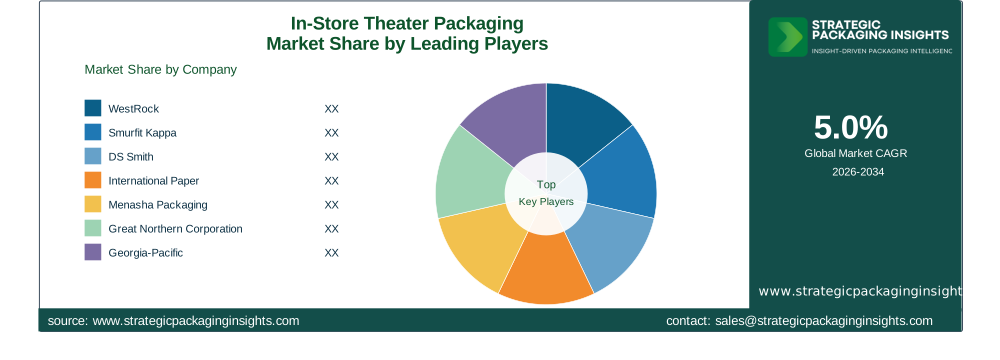
Smurfit Kappa Group is a leading player in the market, with a strong focus on sustainability and innovation. The company has expanded its capabilities through strategic acquisitions, enhancing its production capacities and expanding its geographic reach. Similarly, DS Smith has invested in new technologies and materials to meet regulatory requirements and align with consumer preferences.
WestRock and Mondi Group are also key players in the market, with a focus on sustainability and innovation. These companies are investing in new technologies and materials to meet regulatory requirements and align with consumer preferences. The focus on sustainability is expected to drive long-term growth and innovation in the In-Store Theater Packaging market.
International Paper and Georgia-Pacific are also key players in the market, with a focus on sustainability and innovation. These companies are investing in new technologies and materials to meet regulatory requirements and align with consumer preferences. The focus on sustainability is expected to drive long-term growth and innovation in the In-Store Theater Packaging market.
Key Highlights
- North America is the largest region in the In-Store Theater Packaging market.
- Asia-Pacific is the fastest-growing region in the market.
- The Food and Beverages segment is a major application in the market.
- The market size was USD 49.9 Billion in 2025.
- The market is projected to reach USD 72.4 Billion by 2035.
- The market is expected to grow at a CAGR of 3.8% during the forecast period.
- The adoption of digital printing technologies is a major market driver.
- Supermarkets and Hypermarkets are key end users in the market.
- The focus on sustainability is driving innovation in the market.
- The market is characterized by a competitive landscape with several key players.
Regional Insights
The In-Store Theater Packaging market is characterized by regional variations in demand and growth potential. North America is the largest region in the market, driven by the presence of major retail chains and a strong focus on sustainability. The region is characterized by a competitive landscape with several key players investing in new technologies and materials to meet regulatory requirements and align with consumer preferences.
North America
North America is the largest region in the In-Store Theater Packaging market, driven by the presence of major retail chains and a strong focus on sustainability. The region is characterized by a competitive landscape with several key players investing in new technologies and materials to meet regulatory requirements and align with consumer preferences.
The focus on sustainability is driving demand for eco-friendly packaging solutions, with brands investing in recyclable and biodegradable materials. The adoption of digital printing technologies is also gaining traction, enabling brands to offer personalized and interactive packaging experiences that enhance consumer engagement and brand loyalty.
Europe
Europe is a significant market for In-Store Theater Packaging, driven by stringent regulatory requirements and a strong focus on sustainability. The region is characterized by a competitive landscape with several key players investing in new technologies and materials to meet regulatory requirements and align with consumer preferences.
The focus on sustainability is driving demand for eco-friendly packaging solutions, with brands investing in recyclable and biodegradable materials. The adoption of digital printing technologies is also gaining traction, enabling brands to offer personalized and interactive packaging experiences that enhance consumer engagement and brand loyalty.
Asia Pacific
Asia-Pacific is the fastest-growing region in the In-Store Theater Packaging market, driven by increasing retail activities and consumer spending. The region is characterized by a competitive landscape with several key players investing in new technologies and materials to meet regulatory requirements and align with consumer preferences.
The focus on sustainability is driving demand for eco-friendly packaging solutions, with brands investing in recyclable and biodegradable materials. The adoption of digital printing technologies is also gaining traction, enabling brands to offer personalized and interactive packaging experiences that enhance consumer engagement and brand loyalty.
Latin America
Latin America is a growing market for In-Store Theater Packaging, driven by increasing retail activities and consumer spending. The region is characterized by a competitive landscape with several key players investing in new technologies and materials to meet regulatory requirements and align with consumer preferences.
The focus on sustainability is driving demand for eco-friendly packaging solutions, with brands investing in recyclable and biodegradable materials. The adoption of digital printing technologies is also gaining traction, enabling brands to offer personalized and interactive packaging experiences that enhance consumer engagement and brand loyalty.
Middle East & Africa
The Middle East & Africa is a growing market for In-Store Theater Packaging, driven by increasing retail activities and consumer spending. The region is characterized by a competitive landscape with several key players investing in new technologies and materials to meet regulatory requirements and align with consumer preferences.
The focus on sustainability is driving demand for eco-friendly packaging solutions, with brands investing in recyclable and biodegradable materials. The adoption of digital printing technologies is also gaining traction, enabling brands to offer personalized and interactive packaging experiences that enhance consumer engagement and brand loyalty.
In-Store Theater Packaging Market Segments Insights

By Material Analysis
The In-Store Theater Packaging market is segmented by material into paperboard, corrugated board, plastic, and other materials. Paperboard and corrugated board are the most commonly used materials, driven by their recyclability and cost-effectiveness. The focus on sustainability is driving demand for eco-friendly materials, with brands investing in recyclable and biodegradable substrates.
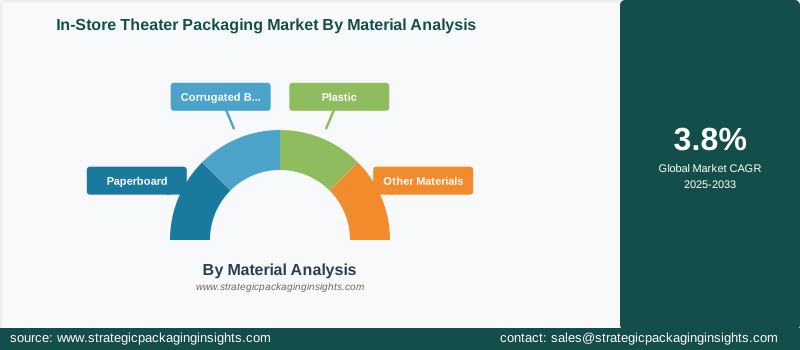
Plastic materials are also used in the market, offering durability and flexibility for packaging designs. However, the focus on sustainability is driving a shift towards alternative materials, with brands investing in eco-friendly solutions to meet regulatory requirements and align with consumer preferences. The adoption of sustainable materials is expected to drive long-term growth and innovation in the In-Store Theater Packaging market.
By Packaging Type Analysis
The In-Store Theater Packaging market is segmented by packaging type into shelf-ready packaging, display boxes, countertop displays, floor displays, and pallet displays. Shelf-ready packaging is gaining popularity, driven by its ability to streamline the supply chain and improve product visibility on retail shelves. This trend is particularly prominent in the food and beverage sector, where efficient packaging solutions are crucial for maintaining product freshness and shelf life.
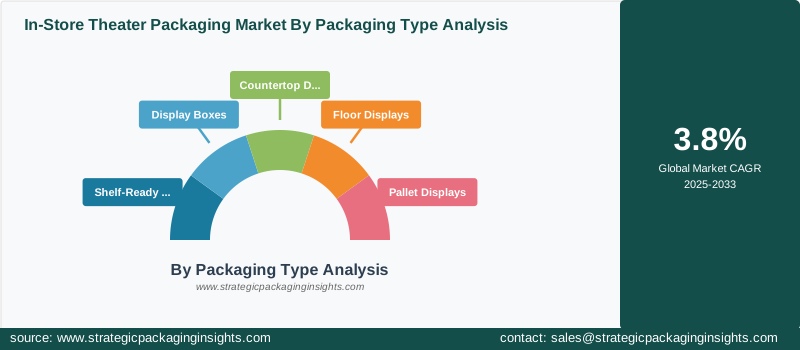
Display boxes and countertop displays are also popular packaging types, offering flexibility and customization for branding and marketing purposes. The focus on sustainability is driving demand for eco-friendly packaging solutions, with brands investing in recyclable and biodegradable materials. The adoption of sustainable materials is expected to drive long-term growth and innovation in the In-Store Theater Packaging market.
By Printing Technology Analysis
The In-Store Theater Packaging market is segmented by printing technology into flexographic printing, digital printing, offset printing, and other printing technologies. Digital printing is gaining traction, driven by its ability to offer mass customization and enhance consumer engagement. The focus on sustainability is driving demand for eco-friendly printing technologies, with brands investing in digital solutions to meet regulatory requirements and align with consumer preferences.
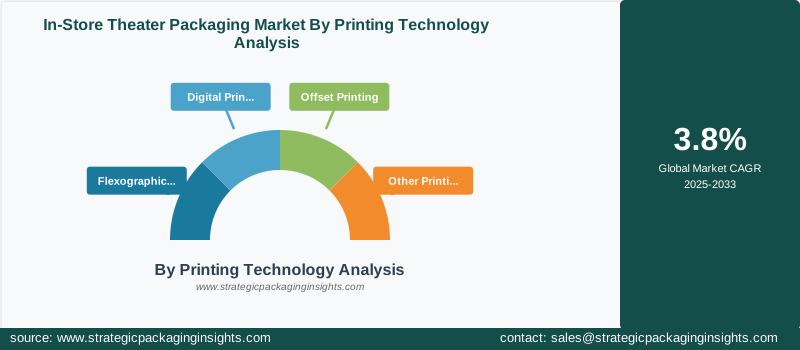
Flexographic printing is also popular in the market, offering cost-effective solutions for large-scale production. Offset printing is used for high-quality printing applications, offering superior color accuracy and detail. The adoption of advanced printing technologies is expected to drive long-term growth and innovation in the In-Store Theater Packaging market.
By Application Analysis
The In-Store Theater Packaging market is segmented by application into food and beverages, personal care and cosmetics, household products, healthcare products, and other applications. The food and beverages segment is a major application, driven by the need for efficient packaging solutions that maintain product freshness and shelf life. The focus on sustainability is driving demand for eco-friendly packaging solutions, with brands investing in recyclable and biodegradable materials.
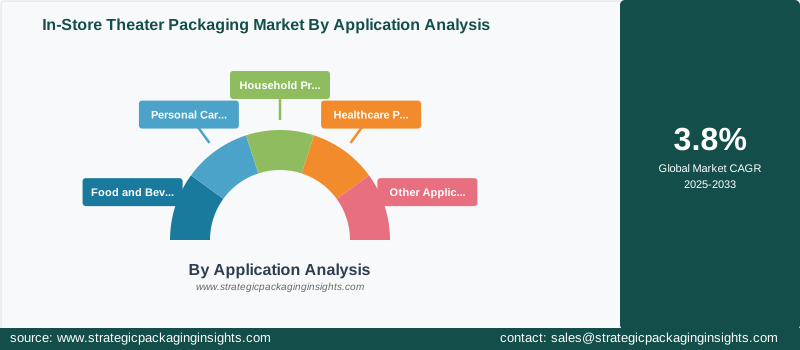
Personal care and cosmetics are also significant applications, with brands investing in visually appealing packaging designs that enhance consumer engagement and brand loyalty. The adoption of sustainable materials is expected to drive long-term growth and innovation in the In-Store Theater Packaging market.
By End User Analysis
The In-Store Theater Packaging market is segmented by end user into supermarkets and hypermarkets, convenience stores, specialty stores, and other retail stores. Supermarkets and hypermarkets are key end users, driven by the need for efficient packaging solutions that enhance product visibility and consumer engagement. The focus on sustainability is driving demand for eco-friendly packaging solutions, with brands investing in recyclable and biodegradable materials.
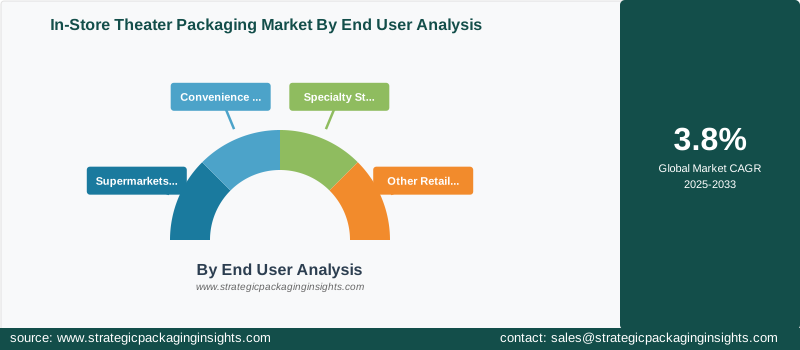
Convenience stores and specialty stores are also significant end users, with brands investing in visually appealing packaging designs that enhance consumer engagement and brand loyalty. The adoption of sustainable materials is expected to drive long-term growth and innovation in the In-Store Theater Packaging market.
In-Store Theater Packaging Market Segments
The In-Store Theater Packaging market has been segmented on the basis ofBy Material
- Paperboard
- Corrugated Board
- Plastic
- Other Materials
By Packaging Type
- Shelf-Ready Packaging
- Display Boxes
- Countertop Displays
- Floor Displays
- Pallet Displays
By Printing Technology
- Flexographic Printing
- Digital Printing
- Offset Printing
- Other Printing Technologies
By Application
- Food and Beverages
- Personal Care and Cosmetics
- Household Products
- Healthcare Products
- Other Applications
By End User
- Supermarkets and Hypermarkets
- Convenience Stores
- Specialty Stores
- Other Retail Stores
By Region
- North America
- Europe
- Asia-Pacific
- Latin America
- Middle East and Africa




