


IBC Liner Market Outlook
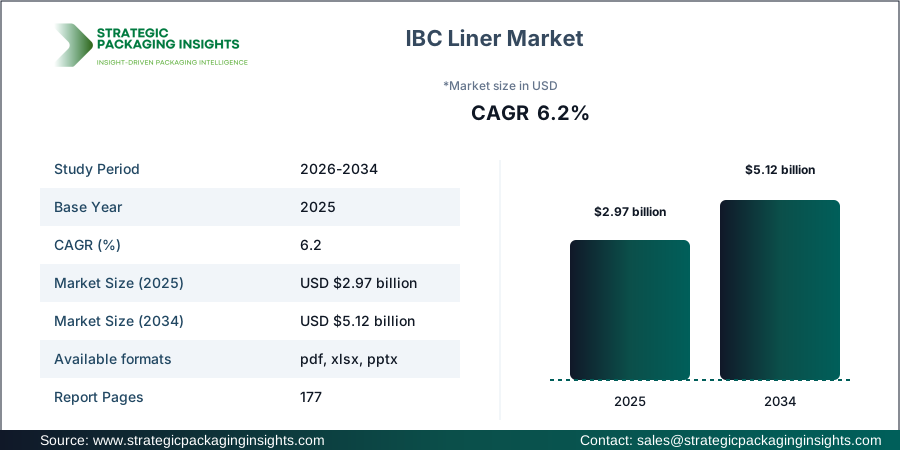
The IBC Liner market was valued at $2.97 billion in 2025 and is projected to reach $5.12 billion by 2034, growing at a CAGR of 6.2% during the forecast period 2026-2034. This market is witnessing significant growth due to the increasing demand for efficient and safe packaging solutions across various industries. The rise in global trade and the need for cost-effective bulk packaging solutions are driving the demand for Intermediate Bulk Container (IBC) liners. These liners are essential for protecting products from contamination and ensuring safe transportation, which is crucial for industries such as food and beverage, chemicals, and pharmaceuticals. The market is also benefiting from technological advancements in liner materials and designs, which enhance their durability and functionality.
However, the market faces certain challenges, including stringent environmental regulations and the need for sustainable packaging solutions. The increasing focus on reducing plastic waste and promoting eco-friendly packaging alternatives is pushing manufacturers to innovate and develop biodegradable and recyclable IBC liners. Despite these challenges, the market holds significant growth potential, driven by the expanding industrial sector and the rising demand for bulk packaging solutions in emerging economies. The adoption of advanced manufacturing technologies and the development of new materials are expected to create lucrative opportunities for market players in the coming years.
Report Scope
| Attributes | Details |
| Report Title | IBC Liner Market Size, Future Growth and Forecast 2034 |
| By Material Type | PE liners, EVOH liners, foil liners |
| By Product Type | form-fit liners, pillow liners, aseptic liners |
| By Application | liquid foods, chemicals, pharma, powders |
| By End Use | industrial packaging, food processors, chemical companies |
| Region | Asia Pacific, North America, Latin America, Europe, Middle East & Africa |
| Base Year | 2025 |
| Historic Period | 2018-2024 |
| Forecast Period | 2026-2034 |
| Number of Pages | 177 |
| Customization Available | Yes* |
Opportunities & Threats
The IBC Liner market presents numerous opportunities for growth, particularly in the development of sustainable and eco-friendly packaging solutions. As environmental concerns continue to rise, there is a growing demand for biodegradable and recyclable liners that can reduce the environmental impact of packaging waste. Companies that invest in research and development to create innovative, sustainable materials are likely to gain a competitive edge in the market. Additionally, the increasing globalization of trade and the expansion of e-commerce are driving the need for efficient and reliable bulk packaging solutions, further boosting the demand for IBC liners.
Another significant opportunity lies in the customization of IBC liners to meet specific industry requirements. As industries such as pharmaceuticals and chemicals have unique packaging needs, the ability to offer tailored solutions can be a key differentiator for companies in the market. The development of advanced liner technologies that enhance product protection, extend shelf life, and improve transportation efficiency can also open new avenues for growth. Furthermore, the rising demand for aseptic packaging solutions in the food and beverage industry presents a lucrative opportunity for manufacturers to expand their product offerings and capture a larger market share.
Despite these opportunities, the IBC Liner market faces certain threats, primarily from stringent regulatory requirements and the volatility of raw material prices. Environmental regulations aimed at reducing plastic waste and promoting sustainable packaging solutions can pose challenges for manufacturers, requiring them to invest in new technologies and materials. Additionally, fluctuations in the prices of raw materials such as polyethylene and aluminum can impact production costs and profit margins. Companies need to adopt strategies to mitigate these risks, such as diversifying their supplier base and investing in cost-effective manufacturing processes.
Drivers & Challenges
The primary drivers of the IBC Liner market include the increasing demand for bulk packaging solutions across various industries and the need for efficient and safe transportation of goods. The growth of the food and beverage, chemical, and pharmaceutical industries is significantly contributing to the demand for IBC liners, as these sectors require reliable packaging solutions to ensure product safety and quality. Additionally, the rise in global trade and the expansion of e-commerce are driving the need for cost-effective and durable packaging solutions, further boosting the demand for IBC liners.
Technological advancements in liner materials and designs are also driving market growth. The development of high-performance materials that offer enhanced durability, chemical resistance, and barrier properties is enabling manufacturers to meet the evolving needs of various industries. Innovations such as multi-layered liners and advanced sealing technologies are enhancing the functionality and reliability of IBC liners, making them an attractive choice for bulk packaging applications. Furthermore, the increasing focus on sustainability and the development of eco-friendly packaging solutions are driving the adoption of biodegradable and recyclable IBC liners.
However, the market faces several challenges, including stringent environmental regulations and the need for sustainable packaging solutions. The increasing focus on reducing plastic waste and promoting eco-friendly packaging alternatives is pushing manufacturers to innovate and develop biodegradable and recyclable IBC liners. Additionally, fluctuations in raw material prices and the volatility of the global economy can impact production costs and profit margins. Companies need to adopt strategies to mitigate these risks, such as diversifying their supplier base and investing in cost-effective manufacturing processes.
Market Share Analysis
The IBC Liner market is characterized by a competitive landscape with several key players vying for market share. Companies such as CDF Corporation, ILC Dover, Liquibox, Scholle IPN, Qbig Packaging, Greif, Amcor, Sealed Air, Berry Global, and Fujimori Kogyo are prominent players in the market, each offering a range of products and solutions to meet the diverse needs of their customers. These companies are focusing on expanding their product portfolios, enhancing their manufacturing capabilities, and investing in research and development to gain a competitive edge in the market.
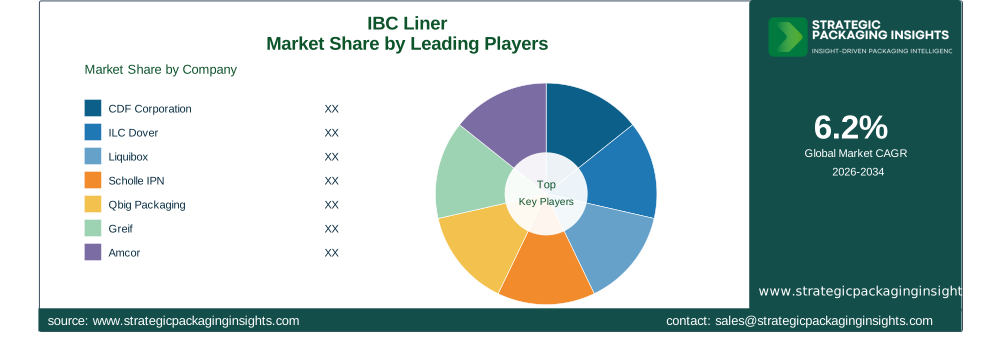
CDF Corporation is a leading player in the IBC Liner market, known for its innovative packaging solutions and commitment to sustainability. The company offers a wide range of liners for various applications, including food and beverage, chemicals, and pharmaceuticals. ILC Dover is another key player, recognized for its advanced liner technologies and focus on quality and reliability. The company has a strong presence in the pharmaceutical and chemical industries, offering customized solutions to meet specific customer requirements.
Liquibox and Scholle IPN are also prominent players in the market, known for their expertise in liquid packaging solutions. These companies offer a range of IBC liners designed to ensure product safety and extend shelf life, making them ideal for applications in the food and beverage industry. Qbig Packaging and Greif are other notable players, offering a variety of liners for industrial and chemical applications. These companies are focusing on expanding their global presence and enhancing their product offerings to capture a larger market share.
Amcor, Sealed Air, Berry Global, and Fujimori Kogyo are also key players in the IBC Liner market, each offering a range of innovative packaging solutions to meet the diverse needs of their customers. These companies are investing in research and development to create advanced liner materials and designs that offer enhanced durability, chemical resistance, and barrier properties. By focusing on sustainability and innovation, these companies are well-positioned to capitalize on the growing demand for eco-friendly packaging solutions in the market.
Key Highlights
- The IBC Liner market is projected to grow at a CAGR of 6.2% from 2026 to 2034.
- Increasing demand for bulk packaging solutions is driving market growth.
- Technological advancements in liner materials and designs are enhancing product functionality.
- Environmental regulations are pushing manufacturers to develop sustainable packaging solutions.
- Customization of IBC liners to meet specific industry requirements is a key trend.
- Fluctuations in raw material prices pose a challenge for manufacturers.
- Key players are focusing on expanding their product portfolios and enhancing manufacturing capabilities.
Top Countries Insights
In the IBC Liner market, the United States is a leading country, with a market size of approximately $1.2 billion and a CAGR of 5%. The country's strong industrial base and the presence of major players in the packaging industry are key growth drivers. Additionally, the increasing demand for efficient and reliable packaging solutions in the food and beverage and chemical industries is boosting market growth. However, stringent environmental regulations and the need for sustainable packaging solutions pose challenges for manufacturers.
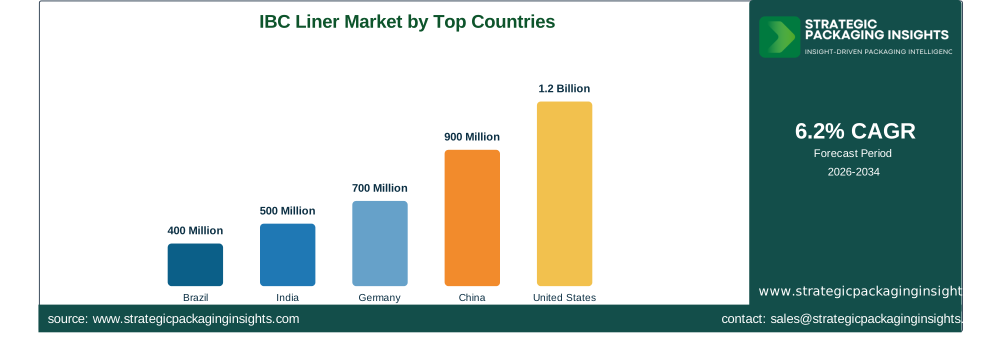
China is another significant market for IBC liners, with a market size of around $900 million and a CAGR of 7%. The country's expanding industrial sector and the rising demand for bulk packaging solutions in the chemical and pharmaceutical industries are driving market growth. Additionally, the government's focus on promoting sustainable packaging solutions and reducing plastic waste is encouraging manufacturers to develop eco-friendly IBC liners.
Germany is a key market in Europe, with a market size of approximately $700 million and a CAGR of 6%. The country's strong manufacturing base and the presence of major players in the packaging industry are key growth drivers. Additionally, the increasing demand for efficient and reliable packaging solutions in the food and beverage and chemical industries is boosting market growth. However, stringent environmental regulations and the need for sustainable packaging solutions pose challenges for manufacturers.
India is an emerging market for IBC liners, with a market size of around $500 million and a CAGR of 8%. The country's expanding industrial sector and the rising demand for bulk packaging solutions in the chemical and pharmaceutical industries are driving market growth. Additionally, the government's focus on promoting sustainable packaging solutions and reducing plastic waste is encouraging manufacturers to develop eco-friendly IBC liners.
Brazil is a growing market for IBC liners, with a market size of approximately $400 million and a CAGR of 6%. The country's expanding industrial sector and the rising demand for bulk packaging solutions in the chemical and pharmaceutical industries are driving market growth. Additionally, the government's focus on promoting sustainable packaging solutions and reducing plastic waste is encouraging manufacturers to develop eco-friendly IBC liners.
IBC Liner Market Segments Insights

Material Type Analysis
The material type segment of the IBC Liner market is categorized into PE liners, EVOH liners, and foil liners. PE liners are the most widely used due to their cost-effectiveness and versatility. They offer excellent chemical resistance and are suitable for a wide range of applications, including food and beverage, chemicals, and pharmaceuticals. The demand for PE liners is driven by their affordability and the increasing need for bulk packaging solutions in various industries. EVOH liners, on the other hand, are gaining popularity due to their superior barrier properties, which make them ideal for applications requiring high levels of protection against oxygen and moisture. The demand for EVOH liners is expected to grow as industries seek advanced packaging solutions to enhance product shelf life and quality. Foil liners are also used in the market, primarily for applications requiring high levels of protection against light, oxygen, and moisture. The demand for foil liners is driven by the need for reliable packaging solutions in the food and beverage and pharmaceutical industries.
Product Type Analysis
The product type segment of the IBC Liner market includes form-fit liners, pillow liners, and aseptic liners. Form-fit liners are designed to fit the shape of the container, providing maximum product protection and minimizing waste. They are widely used in the food and beverage and chemical industries, where product integrity is crucial. The demand for form-fit liners is driven by their ability to reduce product waste and enhance transportation efficiency. Pillow liners, on the other hand, are designed to provide a flexible and cost-effective packaging solution for a wide range of applications. They are commonly used in the chemical and pharmaceutical industries, where flexibility and ease of use are important. The demand for pillow liners is expected to grow as industries seek cost-effective packaging solutions that offer reliable product protection. Aseptic liners are used in applications requiring sterile packaging solutions, such as the food and beverage and pharmaceutical industries. The demand for aseptic liners is driven by the need for packaging solutions that ensure product safety and extend shelf life.
Application Analysis
The application segment of the IBC Liner market includes liquid foods, chemicals, pharma, and powders. The liquid foods segment is the largest, driven by the increasing demand for bulk packaging solutions in the food and beverage industry. IBC liners are widely used for packaging liquid foods such as juices, sauces, and dairy products, where product safety and quality are paramount. The demand for IBC liners in the liquid foods segment is expected to grow as the food and beverage industry continues to expand. The chemicals segment is also significant, driven by the need for reliable packaging solutions that ensure product safety and prevent contamination. IBC liners are used for packaging a wide range of chemicals, including hazardous and non-hazardous substances. The demand for IBC liners in the chemicals segment is expected to grow as the chemical industry continues to expand. The pharma segment is driven by the need for sterile packaging solutions that ensure product safety and extend shelf life. IBC liners are used for packaging a wide range of pharmaceutical products, including liquids, powders, and tablets. The demand for IBC liners in the pharma segment is expected to grow as the pharmaceutical industry continues to expand. The powders segment is driven by the need for packaging solutions that prevent contamination and ensure product safety. IBC liners are used for packaging a wide range of powders, including food ingredients, chemicals, and pharmaceuticals. The demand for IBC liners in the powders segment is expected to grow as industries seek reliable packaging solutions that ensure product safety and quality.
End Use Analysis
The end use segment of the IBC Liner market includes industrial packaging, food processors, and chemical companies. The industrial packaging segment is the largest, driven by the increasing demand for bulk packaging solutions in various industries. IBC liners are widely used for packaging a wide range of industrial products, including chemicals, pharmaceuticals, and food ingredients. The demand for IBC liners in the industrial packaging segment is expected to grow as industries seek cost-effective and reliable packaging solutions. The food processors segment is also significant, driven by the need for packaging solutions that ensure product safety and quality. IBC liners are used for packaging a wide range of food products, including liquid foods, powders, and ingredients. The demand for IBC liners in the food processors segment is expected to grow as the food and beverage industry continues to expand. The chemical companies segment is driven by the need for reliable packaging solutions that ensure product safety and prevent contamination. IBC liners are used for packaging a wide range of chemicals, including hazardous and non-hazardous substances. The demand for IBC liners in the chemical companies segment is expected to grow as the chemical industry continues to expand.
IBC Liner Market Segments
The IBC Liner market has been segmented on the basis ofBy Material Type
- PE liners
- EVOH liners
- foil liners
By Product Type
- form-fit liners
- pillow liners
- aseptic liners
By Application
- liquid foods
- chemicals
- pharma
- powders
By End Use
- industrial packaging
- food processors
- chemical companies
Region
- Asia Pacific
- North America
- Latin America
- Europe
- Middle East & Africa




