


Hygiene Packaging Film Market Outlook
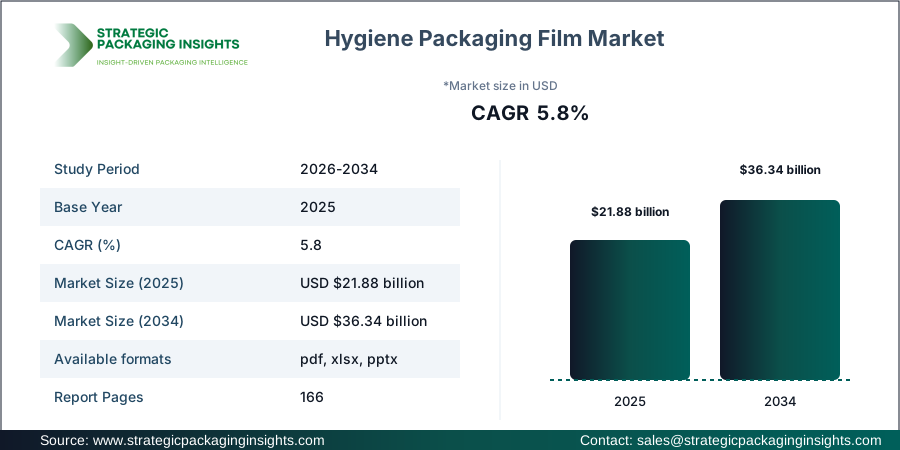
The Hygiene Packaging Film market was valued at $21.88 billion in 2025 and is projected to reach $36.34 billion by 2034, growing at a CAGR of 5.8% during the forecast period 2026-2034. This market is witnessing significant growth due to the increasing demand for hygiene products such as diapers, sanitary napkins, and wipes. The rising awareness about personal hygiene and the growing population are key drivers fueling the demand for hygiene packaging films. Additionally, advancements in film technology, such as the development of breathable and barrier films, are enhancing product functionality and consumer appeal, further propelling market growth.
However, the market faces challenges such as stringent environmental regulations and the need for sustainable packaging solutions. The increasing focus on reducing plastic waste and the shift towards eco-friendly materials are pushing manufacturers to innovate and adopt biodegradable and recyclable materials. Despite these challenges, the market holds immense growth potential, driven by the continuous innovation in packaging materials and the expanding applications in the personal care and medical sectors. The growing e-commerce industry and the rising demand for convenient and safe packaging solutions are also expected to create lucrative opportunities for market players.
Report Scope
| Attributes | Details |
| Report Title | Hygiene Packaging Film Market Size, Future Growth and Forecast 2034 |
| Film Type | Breathable, Barrier, Stretch, Printed |
| Application | Diapers, Sanitary Napkins, Wipes |
| End Use | Personal Care, Hygiene, Medical |
| Material | PE, PP, Nonwoven Laminate |
| Region | Asia Pacific, North America, Latin America, Europe, Middle East & Africa |
| Base Year | 2025 |
| Historic Period | 2018-2024 |
| Forecast Period | 2026-2034 |
| Number of Pages | 166 |
| Customization Available | Yes* |
Opportunities & Threats
The Hygiene Packaging Film market presents numerous opportunities, particularly in the realm of sustainable packaging solutions. As consumers become more environmentally conscious, there is a growing demand for biodegradable and recyclable packaging films. Companies that invest in research and development to create eco-friendly alternatives are likely to gain a competitive edge. Additionally, the expanding e-commerce sector offers significant opportunities for growth. With more consumers shopping online, the demand for secure and efficient packaging solutions is on the rise, providing a fertile ground for innovation and expansion in the hygiene packaging film market.
Another opportunity lies in the increasing demand for personalized and customized packaging solutions. As brands strive to differentiate themselves in a crowded market, the ability to offer unique and tailored packaging options can be a significant advantage. This trend is particularly evident in the personal care and hygiene sectors, where packaging plays a crucial role in brand identity and consumer perception. Companies that can offer innovative and customizable packaging solutions are likely to attract a broader customer base and enhance their market position.
On the flip side, the market faces threats from stringent regulatory frameworks and the rising cost of raw materials. Governments worldwide are implementing strict regulations to curb plastic waste, which poses a challenge for manufacturers relying on traditional plastic materials. Additionally, fluctuations in raw material prices can impact production costs and profit margins. Companies need to navigate these challenges by investing in sustainable materials and optimizing their supply chain operations to remain competitive in the market.
Drivers & Challenges
The primary drivers of the Hygiene Packaging Film market include the increasing awareness of personal hygiene and the growing demand for hygiene products. The rising population, particularly in emerging economies, is leading to a higher consumption of products such as diapers and sanitary napkins, thereby driving the demand for hygiene packaging films. Technological advancements in film manufacturing, such as the development of breathable and barrier films, are also contributing to market growth by enhancing product functionality and consumer appeal.
Another significant driver is the growing e-commerce industry, which is boosting the demand for efficient and secure packaging solutions. As more consumers turn to online shopping, the need for reliable packaging that ensures product safety during transit is becoming increasingly important. This trend is expected to continue, providing a steady stream of demand for hygiene packaging films. Additionally, the increasing focus on sustainable packaging solutions is driving innovation in the market, with companies investing in biodegradable and recyclable materials to meet consumer expectations and regulatory requirements.
Despite these drivers, the market faces several challenges, including stringent environmental regulations and the need for sustainable packaging solutions. The increasing focus on reducing plastic waste and the shift towards eco-friendly materials are pushing manufacturers to innovate and adopt biodegradable and recyclable materials. Additionally, fluctuations in raw material prices can impact production costs and profit margins, posing a challenge for manufacturers. Companies need to navigate these challenges by investing in sustainable materials and optimizing their supply chain operations to remain competitive in the market.
Market Share Analysis
The Hygiene Packaging Film market is characterized by a competitive landscape with several key players vying for market share. Companies such as Amcor, Berry Global, Huhtamaki, Mondi, Clopay, RKW, Toray, Dow, Tredegar, and Uflex are prominent players in this market. These companies are focusing on product innovation, strategic partnerships, and mergers and acquisitions to strengthen their market position and expand their product offerings. The competitive landscape is marked by a high level of innovation, with companies investing in research and development to create advanced packaging solutions that meet the evolving needs of consumers.
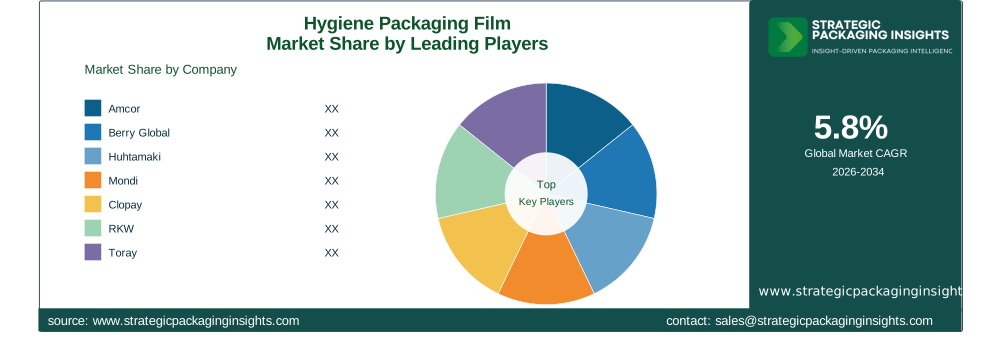
Amcor is a leading player in the hygiene packaging film market, known for its innovative and sustainable packaging solutions. The company has a strong focus on research and development, enabling it to offer a wide range of products that cater to the diverse needs of its customers. Berry Global is another major player, with a comprehensive portfolio of packaging solutions that includes breathable and barrier films. The company's commitment to sustainability and innovation has helped it maintain a strong market position.
Huhtamaki and Mondi are also significant players in the market, known for their high-quality packaging solutions and strong customer relationships. Both companies have a global presence and are focused on expanding their product offerings to meet the growing demand for hygiene packaging films. Clopay and RKW are other notable players, with a strong emphasis on product innovation and customer satisfaction. These companies are investing in advanced manufacturing technologies to enhance their product offerings and gain a competitive edge in the market.
Toray, Dow, Tredegar, and Uflex are also key players in the hygiene packaging film market, each with a unique set of strengths and capabilities. Toray is known for its advanced film technologies, while Dow is a leader in material science, offering a wide range of innovative packaging solutions. Tredegar and Uflex are also prominent players, with a strong focus on sustainability and customer-centric solutions. These companies are continuously investing in research and development to create cutting-edge products that meet the evolving needs of consumers and regulatory requirements.
Key Highlights
- The Hygiene Packaging Film market is projected to grow at a CAGR of 5.8% from 2026 to 2034.
- Increasing demand for hygiene products such as diapers and sanitary napkins is driving market growth.
- Advancements in film technology, such as breathable and barrier films, are enhancing product functionality.
- Stringent environmental regulations are pushing manufacturers towards sustainable packaging solutions.
- The growing e-commerce industry is boosting the demand for efficient and secure packaging solutions.
- Companies are investing in research and development to create eco-friendly packaging alternatives.
- Customization and personalization of packaging solutions are emerging as key trends in the market.
- Fluctuations in raw material prices pose a challenge for manufacturers.
- Strategic partnerships and mergers and acquisitions are common strategies among key players.
- Asia Pacific is expected to be the fastest-growing region in the hygiene packaging film market.
Top Countries Insights
In the Hygiene Packaging Film market, the United States holds a significant share, driven by the high demand for hygiene products and advanced packaging technologies. The market in the U.S. is characterized by a strong focus on innovation and sustainability, with companies investing heavily in research and development to create eco-friendly packaging solutions. The country's robust e-commerce industry also contributes to the demand for efficient and secure packaging solutions, further propelling market growth.
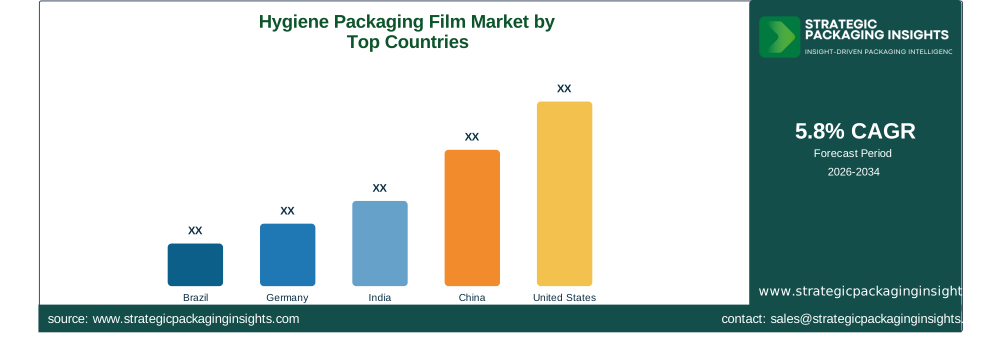
China is another major player in the hygiene packaging film market, with a rapidly growing population and increasing awareness of personal hygiene driving demand. The country's expanding middle class and rising disposable incomes are contributing to the growth of the hygiene products market, thereby boosting the demand for packaging films. Additionally, government initiatives to promote sustainable packaging solutions are encouraging manufacturers to adopt eco-friendly materials, further supporting market growth.
India is experiencing significant growth in the hygiene packaging film market, driven by the increasing demand for hygiene products and the growing e-commerce sector. The country's young population and rising awareness of personal hygiene are key factors contributing to market growth. Additionally, the government's focus on promoting sustainable packaging solutions is encouraging manufacturers to invest in eco-friendly materials and technologies.
Germany is a leading market for hygiene packaging films in Europe, characterized by a strong focus on innovation and sustainability. The country's advanced manufacturing capabilities and commitment to environmental protection are driving the demand for eco-friendly packaging solutions. Additionally, the growing e-commerce industry and increasing demand for hygiene products are contributing to market growth.
Brazil is a key market for hygiene packaging films in Latin America, driven by the increasing demand for hygiene products and the growing e-commerce sector. The country's expanding middle class and rising disposable incomes are contributing to the growth of the hygiene products market, thereby boosting the demand for packaging films. Additionally, government initiatives to promote sustainable packaging solutions are encouraging manufacturers to adopt eco-friendly materials, further supporting market growth.
Hygiene Packaging Film Market Segments Insights

Film Type Analysis
The film type segment in the Hygiene Packaging Film market is categorized into breathable, barrier, stretch, and printed films. Breathable films are gaining popularity due to their ability to allow moisture vapor transmission while maintaining a barrier against liquids. This feature makes them ideal for applications in diapers and sanitary napkins, where comfort and protection are paramount. Barrier films, on the other hand, are designed to provide a high level of protection against moisture, oxygen, and other environmental factors, making them suitable for a wide range of hygiene products.
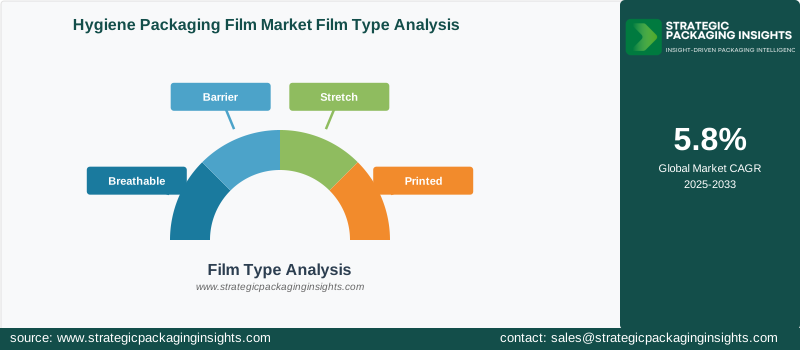
Stretch films are primarily used for wrapping and securing products during transportation and storage. Their ability to stretch and conform to the shape of the product makes them an essential component in the packaging industry. Printed films are used for branding and marketing purposes, allowing companies to differentiate their products and enhance consumer appeal. The demand for printed films is driven by the increasing focus on brand identity and consumer engagement in the hygiene products market.
Application Analysis
The application segment of the Hygiene Packaging Film market includes diapers, sanitary napkins, and wipes. Diapers are the largest application segment, driven by the increasing birth rates and rising awareness of infant hygiene. The demand for high-quality, comfortable, and absorbent diapers is fueling the growth of this segment. Sanitary napkins are another significant application, with the growing awareness of menstrual hygiene and the increasing availability of affordable products driving demand.
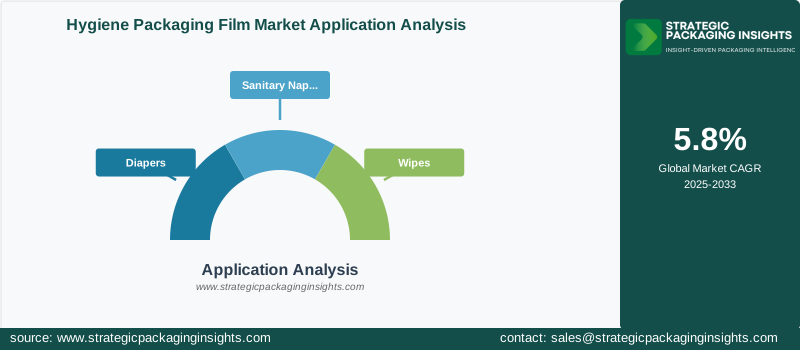
Wipes are gaining popularity due to their convenience and versatility. They are used for a variety of purposes, including personal hygiene, cleaning, and disinfecting. The demand for wipes is driven by the increasing focus on hygiene and cleanliness, particularly in the wake of the COVID-19 pandemic. The growing demand for eco-friendly and biodegradable wipes is also contributing to the growth of this segment, as consumers become more environmentally conscious.
End Use Analysis
The end-use segment of the Hygiene Packaging Film market is divided into personal care, hygiene, and medical applications. Personal care is the largest end-use segment, driven by the increasing demand for hygiene products such as diapers, sanitary napkins, and wipes. The growing awareness of personal hygiene and the rising disposable incomes in emerging economies are contributing to the growth of this segment.
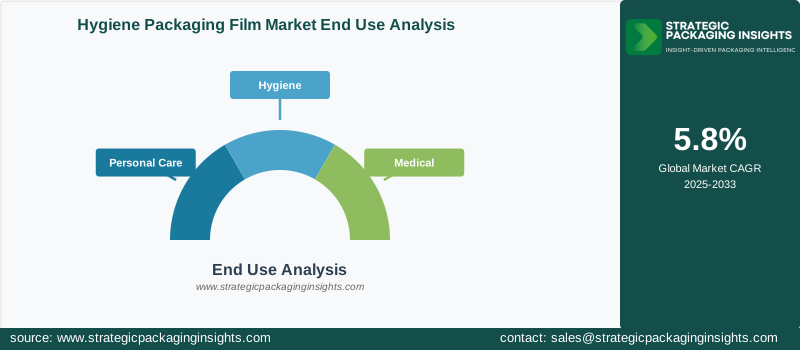
The hygiene segment includes products such as adult diapers and incontinence products, which are gaining popularity due to the aging population and the increasing prevalence of chronic diseases. The medical segment includes products such as surgical drapes and gowns, which require high-quality, sterile packaging solutions. The demand for medical packaging films is driven by the increasing focus on infection control and the growing healthcare industry.
Material Analysis
The material segment of the Hygiene Packaging Film market includes PE, PP, and nonwoven laminate materials. PE (polyethylene) is the most widely used material, known for its flexibility, durability, and cost-effectiveness. It is used in a variety of applications, including diapers, sanitary napkins, and wipes. PP (polypropylene) is another popular material, known for its strength and resistance to moisture and chemicals. It is used in applications where high barrier properties are required.
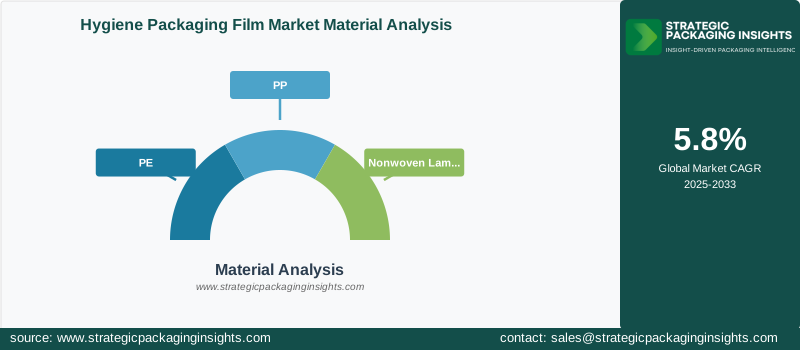
Nonwoven laminate materials are gaining popularity due to their softness, breathability, and absorbency. They are used in applications such as diapers and sanitary napkins, where comfort and protection are essential. The demand for nonwoven laminate materials is driven by the increasing focus on product quality and consumer comfort. Additionally, the growing demand for eco-friendly and biodegradable materials is encouraging manufacturers to invest in sustainable alternatives.
Hygiene Packaging Film Market Segments
The Hygiene Packaging Film market has been segmented on the basis ofFilm Type
- Breathable
- Barrier
- Stretch
- Printed
Application
- Diapers
- Sanitary Napkins
- Wipes
End Use
- Personal Care
- Hygiene
- Medical
Material
- PE
- PP
- Nonwoven Laminate
Region
- Asia Pacific
- North America
- Latin America
- Europe
- Middle East & Africa




