


Hydrogel Market Outlook
The Hydrogel market size was valued at USD 36.52 billion in 2025 and is anticipated to reach USD 74.86 billion by 2034, growing at a CAGR of 8.3% during the forecast period according to Strategic Packaging Insights. The market is witnessing significant growth due to the increasing demand for hydrogels in various applications such as wound care, drug delivery, and hygiene products. Companies like 3M and Johnson & Johnson are leading the charge in innovation and product development, which is further propelling market expansion. The versatility of hydrogels, combined with their biocompatibility and ability to retain large amounts of water, makes them ideal for a wide range of applications, thus driving their demand across multiple sectors.
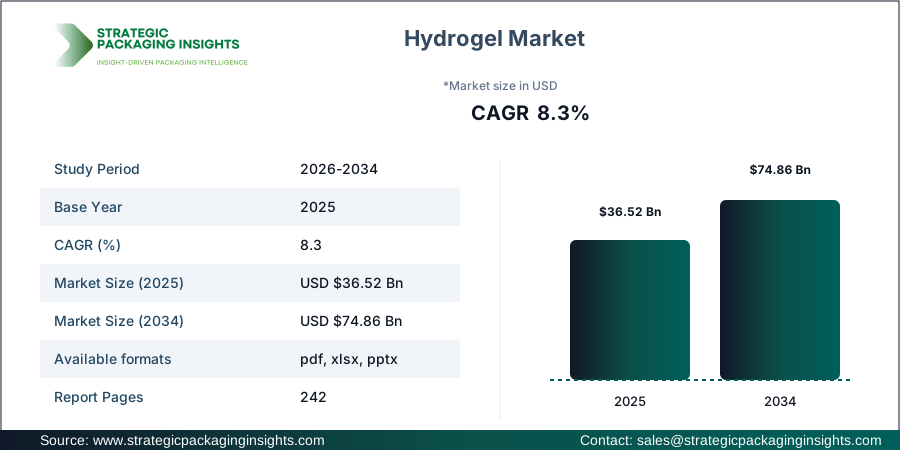
One of the most impactful drivers of the hydrogel market is the rising prevalence of chronic wounds and the growing geriatric population, which necessitates advanced wound care solutions. According to the World Health Organization, the global population aged 60 years and older is expected to double by 2050, reaching 2.1 billion. This demographic shift is increasing the demand for effective wound care products, where hydrogels play a crucial role due to their moisture-retentive properties and ability to promote healing. Additionally, the increasing focus on sustainable and biodegradable materials is encouraging manufacturers to develop eco-friendly hydrogel products, further boosting market growth.
Report Scope
| Attributes | Details |
| Report Title | Hydrogel Market Size, Future Growth and Forecast 2034 |
| By Product Type | Natural Hydrogel, Synthetic Hydrogel, Hybrid Hydrogel |
| By Form | Sheets, Films, Particles, Amorphous Gel |
| By Application | Wound Care, Drug Delivery, Hygiene Products, Contact Lenses |
| By End Use | Healthcare, Personal Care, Pharmaceuticals, Research |
| Region | Asia Pacific, North America, Latin America, Europe, Middle East & Africa |
| Base Year | 2025 |
| Historic Period | 2018-2024 |
| Forecast Period | 2026-2034 |
| Number of Pages | 242 |
| Customization Available | Yes* |
Sustainability & Circular Economy Analysis
Sustainability initiatives and circular economy practices are significantly influencing the hydrogel market, as companies strive to reduce their environmental impact and meet consumer demand for eco-friendly products. The use of recyclable materials and the development of biodegradable hydrogels are becoming increasingly important as manufacturers like Smith & Nephew and ConvaTec focus on reducing waste and minimizing their carbon footprint. These efforts are not only enhancing the sustainability of hydrogel products but also aligning with global packaging regulations and extended producer responsibility (EPR) frameworks.
The shift towards sustainability is also impacting packaging design and manufacturing processes, as companies invest in lightweight and reusable packaging solutions to reduce material usage and transportation costs. This trend is driving innovation in eco-friendly material development, with a focus on creating hydrogels that are both effective and environmentally responsible. As a result, companies are prioritizing research and development to create products that meet consumer sustainability preferences while maintaining high performance standards.
Furthermore, sustainability trends are influencing investment decisions and supply chain strategies, as companies seek to enhance their long-term market competitiveness. By adopting waste reduction strategies and implementing ESG initiatives, hydrogel manufacturers are not only improving their environmental credentials but also gaining a competitive edge in the market. These efforts are crucial for ensuring regulatory compliance and meeting the growing demand for sustainable products, ultimately driving the hydrogel market forward.
Packaging Value Chain & Supply Chain Analysis
The hydrogel market's value chain is complex, involving multiple stakeholders from raw material sourcing to end-user delivery. Raw material availability is a critical factor, as it influences production capabilities and overall market performance. Companies like Ashland and Paul Hartmann are focusing on securing reliable sources of raw materials to ensure consistent supply and maintain product quality. This involves strategic partnerships with suppliers and investment in sustainable sourcing practices to enhance supply chain resilience.
Packaging converters and manufacturers play a vital role in the hydrogel market, as they transform raw materials into finished products ready for distribution. Efficient logistics and distribution channels are essential for ensuring timely delivery and meeting customer demand. Companies are increasingly adopting localization strategies to reduce transportation costs and improve supply chain efficiency. This approach not only enhances market competitiveness but also aligns with sustainability goals by minimizing carbon emissions associated with long-distance transportation.
Recycling networks and procurement strategies are also integral to the hydrogel market's supply chain ecosystem. By implementing effective inventory management practices and leveraging global sourcing opportunities, companies can optimize their operations and reduce costs. This holistic approach to supply chain management is crucial for maintaining business competitiveness and ensuring the long-term success of hydrogel products in the market.
Opportunities & Threats
The hydrogel market presents numerous opportunities for growth, driven by advancements in technology and increasing demand for innovative applications. The healthcare sector, in particular, offers significant potential for expansion, as hydrogels are increasingly used in wound care, drug delivery, and tissue engineering. Companies like Cardinal Health and Medline Industries are investing in research and development to create advanced hydrogel products that meet the evolving needs of healthcare professionals and patients. Additionally, the growing trend towards personalized medicine is opening new avenues for hydrogel applications, as they can be tailored to deliver targeted therapies and improve patient outcomes.
Another opportunity lies in the personal care and hygiene products market, where hydrogels are gaining popularity due to their moisturizing and soothing properties. The increasing consumer preference for natural and organic products is driving demand for hydrogels made from sustainable and biodegradable materials. This trend is encouraging manufacturers to explore new formulations and expand their product portfolios to cater to the diverse needs of consumers. As a result, companies are focusing on innovation and collaboration to develop unique hydrogel solutions that offer both functionality and environmental benefits.
Despite the promising opportunities, the hydrogel market faces several threats that could hinder its growth. One of the primary challenges is the stringent regulatory landscape, which requires manufacturers to comply with various safety and quality standards. This can increase production costs and limit the entry of new players into the market. Additionally, the high cost of raw materials and the complexity of the manufacturing process can pose significant barriers to market entry. Companies must navigate these challenges by investing in efficient production technologies and establishing strong partnerships with suppliers to ensure a steady supply of raw materials.
Drivers & Challenges
The hydrogel market is driven by several key factors, including the increasing prevalence of chronic diseases and the growing demand for advanced wound care solutions. As the global population continues to age, the incidence of conditions such as diabetes and venous ulcers is rising, leading to a greater need for effective treatment options. Hydrogels, with their unique properties of moisture retention and biocompatibility, are well-suited to address these needs, making them a preferred choice for healthcare providers. Companies like Essity and Coloplast are leveraging these drivers to expand their product offerings and capture a larger share of the market.
Another significant driver is the rising awareness of the benefits of hydrogels in drug delivery systems. The ability of hydrogels to encapsulate and release drugs in a controlled manner makes them ideal for targeted therapies, particularly in the treatment of cancer and other chronic conditions. This has led to increased investment in research and development, as companies seek to develop innovative hydrogel-based drug delivery systems that enhance therapeutic efficacy and patient compliance. The growing focus on personalized medicine is further fueling demand for hydrogels, as they can be customized to meet the specific needs of individual patients.
However, the hydrogel market also faces several challenges that could impact its growth trajectory. One of the primary challenges is the high cost of production, which can limit the affordability and accessibility of hydrogel products. Additionally, the complex manufacturing process and the need for specialized equipment can pose significant barriers to entry for new players. Companies must address these challenges by investing in cost-effective production technologies and streamlining their operations to improve efficiency. Furthermore, the market is highly competitive, with numerous players vying for market share, which can lead to pricing pressures and reduced profit margins.
Market Share Analysis
The hydrogel market is characterized by intense competition, with several key players dominating the landscape. Companies like 3M, Smith & Nephew, and ConvaTec hold significant market shares, driven by their strong product portfolios and extensive distribution networks. These companies have established themselves as leaders in the hydrogel market by consistently investing in research and development to create innovative products that meet the evolving needs of consumers. Their focus on quality and performance has enabled them to maintain a competitive edge and capture a substantial share of the market.
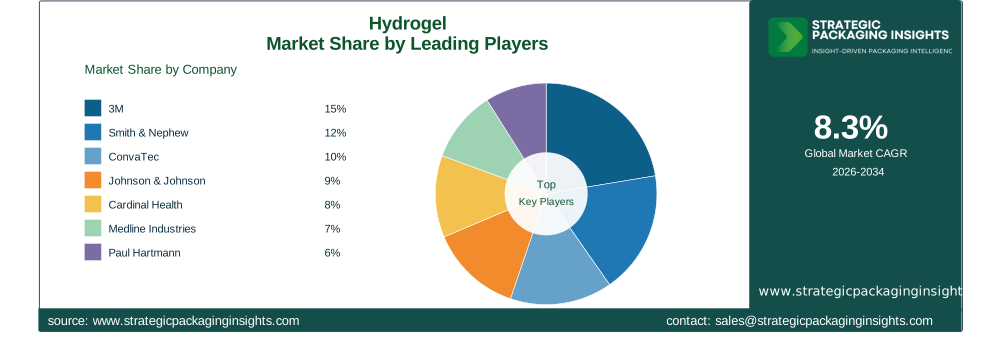
Johnson & Johnson and Cardinal Health are also prominent players in the hydrogel market, leveraging their global presence and strong brand recognition to expand their market reach. These companies have a diverse range of hydrogel products that cater to various applications, from wound care to drug delivery. Their commitment to sustainability and eco-friendly practices has further strengthened their market position, as consumers increasingly prioritize environmentally responsible products.
Medline Industries and Paul Hartmann are other notable players in the hydrogel market, known for their innovative solutions and customer-centric approach. These companies have built strong relationships with healthcare providers and distributors, enabling them to effectively meet the needs of their customers and drive market growth. Their focus on continuous improvement and product innovation has allowed them to stay ahead of the competition and maintain their market leadership.
Essity and Coloplast are also key players in the hydrogel market, with a strong focus on sustainability and environmental responsibility. These companies have made significant investments in research and development to create biodegradable and eco-friendly hydrogel products that align with consumer preferences and regulatory requirements. Their commitment to sustainability has not only enhanced their market reputation but also provided them with a competitive advantage in the increasingly eco-conscious marketplace.
Key Highlights
- The hydrogel market is projected to reach USD 74.86 billion by 2034, growing at a CAGR of 8.3%.
- Natural and synthetic hydrogels are the most popular product types, driven by their versatility and biocompatibility.
- Wound care and drug delivery are the leading application segments, accounting for a significant share of the market.
- The healthcare sector is the largest end-use industry, with increasing demand for advanced wound care solutions.
- Asia Pacific is expected to witness the highest growth rate, driven by rising healthcare expenditure and increasing awareness of hydrogel applications.
- Key players like 3M, Smith & Nephew, and ConvaTec are focusing on innovation and sustainability to maintain their market leadership.
- Regulatory compliance and sustainability initiatives are critical factors influencing market dynamics and competitive strategies.
Hydrogel Market Segments Insights

Product Type Analysis
The hydrogel market is segmented by product type into natural, synthetic, and hybrid hydrogels. Natural hydrogels, derived from biopolymers such as alginate and chitosan, are gaining popularity due to their biodegradability and compatibility with biological systems. These hydrogels are widely used in wound care and drug delivery applications, where their ability to promote healing and deliver therapeutic agents is highly valued. Synthetic hydrogels, on the other hand, offer greater control over physical properties and are often used in applications requiring specific mechanical strength and stability. Companies like Ashland are investing in the development of hybrid hydrogels that combine the benefits of both natural and synthetic materials, offering enhanced performance and versatility.
The demand for natural hydrogels is driven by the increasing focus on sustainability and the growing preference for eco-friendly products. Consumers are becoming more conscious of the environmental impact of their purchases, leading to a shift towards biodegradable and renewable materials. This trend is encouraging manufacturers to explore new sources of natural polymers and develop innovative formulations that meet consumer expectations. Synthetic hydrogels, while facing competition from natural alternatives, continue to hold a significant share of the market due to their superior performance characteristics and wide range of applications.
Form Analysis
Hydrogels are available in various forms, including sheets, films, particles, and amorphous gels, each offering unique advantages for specific applications. Sheets and films are commonly used in wound care and medical dressings, where their ability to conform to the body's contours and provide a protective barrier is highly valued. Particles and amorphous gels, on the other hand, are often used in drug delivery systems and personal care products, where their ability to encapsulate and release active ingredients is crucial. The choice of form is largely determined by the intended application and the desired performance characteristics.
The demand for hydrogel sheets and films is driven by the increasing prevalence of chronic wounds and the growing need for advanced wound care solutions. These forms offer excellent moisture retention and promote healing, making them ideal for use in medical dressings and bandages. Particles and amorphous gels are gaining popularity in the personal care and cosmetics industry, where their ability to deliver active ingredients and provide a soothing effect is highly valued. Companies are investing in research and development to create innovative hydrogel formulations that offer enhanced performance and meet the diverse needs of consumers.
Application Analysis
The hydrogel market is segmented by application into wound care, drug delivery, hygiene products, and contact lenses. Wound care is the largest application segment, driven by the increasing prevalence of chronic wounds and the growing demand for advanced treatment options. Hydrogels are widely used in wound dressings due to their ability to maintain a moist environment, promote healing, and reduce pain. Drug delivery is another significant application, where hydrogels are used to encapsulate and release therapeutic agents in a controlled manner, enhancing the efficacy and safety of treatments.
The demand for hydrogel-based drug delivery systems is driven by the growing focus on personalized medicine and targeted therapies. Hydrogels offer the ability to deliver drugs directly to the site of action, reducing side effects and improving patient compliance. Hygiene products, such as diapers and sanitary pads, also represent a significant application segment, where hydrogels are used for their superior absorbency and comfort. The contact lens industry is another key area of application, where hydrogels are used to create soft and comfortable lenses that provide excellent oxygen permeability and moisture retention.
End Use Analysis
The hydrogel market is segmented by end use into healthcare, personal care, pharmaceuticals, and research. The healthcare sector is the largest end-use industry, driven by the increasing demand for advanced wound care solutions and drug delivery systems. Hydrogels are widely used in medical dressings, bandages, and drug delivery devices, where their unique properties of moisture retention and biocompatibility are highly valued. The personal care industry is another significant end-use segment, where hydrogels are used in products such as moisturizers, face masks, and hair gels, offering superior hydration and soothing effects.
The pharmaceutical industry is also a key end-use segment, where hydrogels are used in drug delivery systems and tissue engineering applications. The ability of hydrogels to encapsulate and release drugs in a controlled manner makes them ideal for use in targeted therapies and personalized medicine. The research sector is another important area of application, where hydrogels are used in various scientific studies and experiments due to their versatility and ability to mimic biological tissues. Companies are investing in research and development to create innovative hydrogel solutions that meet the evolving needs of these diverse end-use industries.
Hydrogel Market Segments
The Hydrogel market has been segmented on the basis ofBy Product Type
- Natural Hydrogel
- Synthetic Hydrogel
- Hybrid Hydrogel
By Form
- Sheets
- Films
- Particles
- Amorphous Gel
By Application
- Wound Care
- Drug Delivery
- Hygiene Products
- Contact Lenses
By End Use
- Healthcare
- Personal Care
- Pharmaceuticals
- Research
Region
- Asia Pacific
- North America
- Latin America
- Europe
- Middle East & Africa




