


Hydrocolloid Tapes Market Outlook
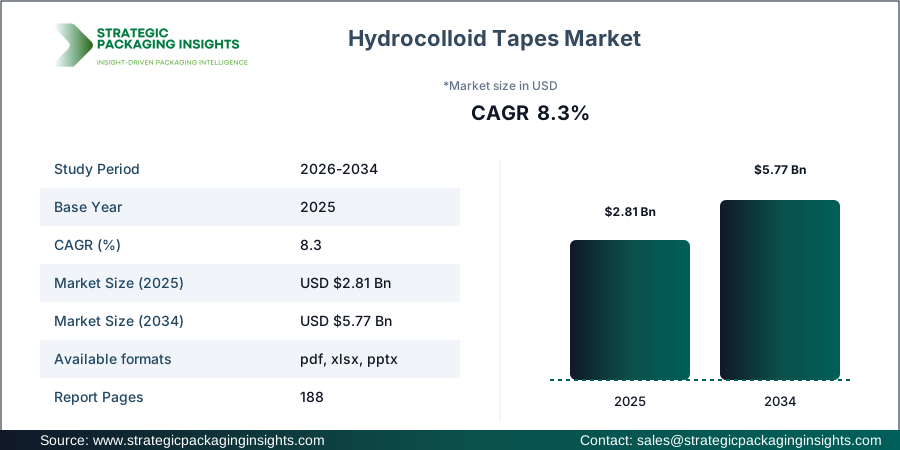
The Hydrocolloid Tapes market was valued at $2.81 billion in 2025 and is projected to reach $5.77 billion by 2034, growing at a CAGR of 8.3% during the forecast period 2026-2034. This market is witnessing significant growth due to the increasing demand for advanced wound care solutions and the rising prevalence of chronic wounds globally. The growing awareness about the benefits of hydrocolloid tapes, such as their ability to maintain a moist wound environment and promote faster healing, is driving their adoption across various healthcare settings. Additionally, the expanding geriatric population, which is more prone to chronic wounds, is further fueling the demand for hydrocolloid tapes. The market is also benefiting from technological advancements in product development, leading to the introduction of innovative and more effective hydrocolloid tapes.
However, the market faces certain challenges that could hinder its growth. The high cost of hydrocolloid tapes compared to traditional wound care products is a significant restraint, particularly in developing regions where healthcare budgets are limited. Additionally, the lack of awareness and understanding of the benefits of hydrocolloid tapes among healthcare professionals and patients in some regions poses a challenge to market growth. Despite these challenges, the market holds immense growth potential, driven by the increasing focus on improving patient outcomes and the growing trend of home healthcare. The rising demand for sports therapy and blister care products also presents lucrative opportunities for market players to expand their product portfolios and capture a larger market share.
Report Scope
| Attributes | Details |
| Report Title | Hydrocolloid Tapes Market Size, Future Growth and Forecast 2034 |
| By Product Type | Wound Care, Blister Care, Sports Therapy |
| By Adhesive Type | Hydrocolloid, Silicone Hybrid |
| By Backing Material | Film, Fabric, Foam |
| By End Use | Hospital, Home Care, Sports Medicine |
| Region | Asia Pacific, North America, Latin America, Europe, Middle East & Africa |
| Base Year | 2025 |
| Historic Period | 2018-2024 |
| Forecast Period | 2026-2034 |
| Number of Pages | 188 |
| Customization Available | Yes* |
Opportunities & Threats
The Hydrocolloid Tapes market presents numerous opportunities for growth, primarily driven by the increasing demand for advanced wound care solutions. As the global population ages, the prevalence of chronic wounds is expected to rise, creating a significant demand for effective wound care products like hydrocolloid tapes. Additionally, the growing trend of home healthcare is driving the demand for easy-to-use and effective wound care solutions that can be administered by patients themselves. This shift towards home healthcare is further supported by the increasing availability of hydrocolloid tapes in retail pharmacies and online platforms, making them more accessible to consumers.
Another opportunity lies in the expanding sports medicine market, where hydrocolloid tapes are increasingly used for blister care and sports therapy. The growing participation in sports and physical activities, coupled with the rising incidence of sports-related injuries, is driving the demand for hydrocolloid tapes in this segment. Furthermore, the ongoing research and development activities aimed at improving the efficacy and comfort of hydrocolloid tapes are expected to lead to the introduction of innovative products, providing additional growth opportunities for market players.
Despite the promising opportunities, the Hydrocolloid Tapes market faces certain threats that could impact its growth. One of the major threats is the high cost of hydrocolloid tapes compared to traditional wound care products, which may limit their adoption in cost-sensitive markets. Additionally, the presence of alternative wound care products, such as foam dressings and alginate dressings, poses a competitive threat to hydrocolloid tapes. The market also faces regulatory challenges, as stringent regulations governing the approval and commercialization of medical devices can delay the introduction of new products and increase the cost of compliance for manufacturers.
Drivers & Challenges
The Hydrocolloid Tapes market is driven by several key factors, including the increasing prevalence of chronic wounds and the growing awareness of advanced wound care solutions. Chronic wounds, such as diabetic foot ulcers, pressure ulcers, and venous leg ulcers, are becoming more common due to the rising incidence of diabetes and obesity. Hydrocolloid tapes are highly effective in managing these wounds, as they provide a moist wound environment that promotes faster healing. Additionally, the growing focus on improving patient outcomes and reducing healthcare costs is driving the adoption of hydrocolloid tapes, as they can help reduce the frequency of dressing changes and minimize the risk of infection.
Technological advancements in product development are also driving the growth of the Hydrocolloid Tapes market. Manufacturers are investing in research and development to introduce innovative products that offer improved adhesion, flexibility, and comfort. These advancements are enhancing the performance of hydrocolloid tapes and expanding their applications in various healthcare settings. Furthermore, the increasing availability of hydrocolloid tapes in retail pharmacies and online platforms is making them more accessible to consumers, further driving market growth.
However, the market faces several challenges that could hinder its growth. One of the primary challenges is the high cost of hydrocolloid tapes compared to traditional wound care products. This cost factor may limit their adoption in cost-sensitive markets, particularly in developing regions where healthcare budgets are constrained. Additionally, the lack of awareness and understanding of the benefits of hydrocolloid tapes among healthcare professionals and patients in some regions poses a challenge to market growth. To overcome these challenges, market players need to focus on educating healthcare professionals and patients about the advantages of hydrocolloid tapes and investing in cost-effective manufacturing processes to reduce product prices.
Market Share Analysis
The Hydrocolloid Tapes market is characterized by intense competition, with several key players vying for market share. The competitive landscape is dominated by established companies with a strong presence in the wound care market. These companies are focusing on expanding their product portfolios, enhancing their distribution networks, and investing in research and development to maintain their competitive edge. The market is also witnessing the entry of new players, which is intensifying the competition further.
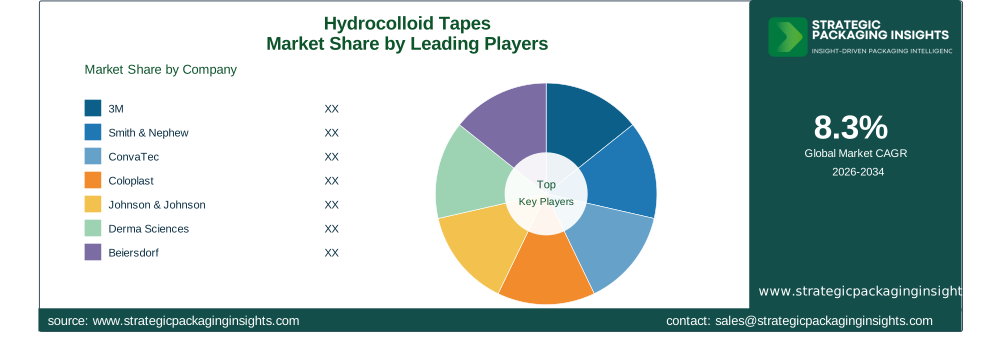
3M is one of the leading players in the Hydrocolloid Tapes market, known for its innovative wound care solutions and strong brand reputation. The company holds a significant market share and is continuously investing in research and development to introduce new and improved products. Smith & Nephew is another major player, offering a wide range of advanced wound care products, including hydrocolloid tapes. The company's strong distribution network and focus on product innovation have helped it maintain a competitive position in the market.
ConvaTec and Coloplast are also prominent players in the Hydrocolloid Tapes market, known for their high-quality wound care products and strong customer base. Both companies are focusing on expanding their product offerings and enhancing their distribution networks to capture a larger market share. Johnson & Johnson, with its extensive experience in the healthcare industry, is also a key player in the market, offering a range of wound care products, including hydrocolloid tapes.
Other notable players in the market include Derma Sciences, Beiersdorf, Mölnlycke, Paul Hartmann, and Nitto Denko. These companies are focusing on strategic partnerships, mergers and acquisitions, and product innovations to strengthen their market position. The competitive landscape of the Hydrocolloid Tapes market is expected to remain dynamic, with companies continuously striving to enhance their product offerings and expand their market presence.
Key Highlights
- The Hydrocolloid Tapes market is projected to grow at a CAGR of 8.3% from 2026 to 2034.
- Increasing prevalence of chronic wounds is driving the demand for hydrocolloid tapes.
- Technological advancements are leading to the introduction of innovative hydrocolloid tapes.
- The market is witnessing a shift towards home healthcare, boosting demand for easy-to-use wound care products.
- High cost of hydrocolloid tapes compared to traditional wound care products is a major restraint.
- Growing participation in sports is driving demand for hydrocolloid tapes in sports therapy.
- Key players are focusing on expanding their product portfolios and distribution networks.
- Regulatory challenges and competition from alternative wound care products pose threats to market growth.
Top Countries Insights
In the Hydrocolloid Tapes market, the United States holds a significant share, driven by the high prevalence of chronic wounds and the presence of major market players. The market in the U.S. is expected to grow at a CAGR of 7%, supported by the increasing adoption of advanced wound care solutions and the growing trend of home healthcare. The favorable reimbursement policies and the presence of a well-established healthcare infrastructure further contribute to market growth.

Germany is another key market for hydrocolloid tapes, with a CAGR of 6%. The country's strong healthcare system and the increasing awareness of advanced wound care products are driving market growth. The presence of leading wound care companies and the growing focus on improving patient outcomes are also contributing to the market's expansion in Germany.
In the Asia Pacific region, China is emerging as a lucrative market for hydrocolloid tapes, with a CAGR of 10%. The rising prevalence of chronic diseases, coupled with the growing geriatric population, is driving the demand for advanced wound care solutions. The increasing healthcare expenditure and the government's focus on improving healthcare infrastructure are further supporting market growth in China.
Japan is another important market in the Asia Pacific region, with a CAGR of 8%. The country's aging population and the high incidence of chronic wounds are driving the demand for hydrocolloid tapes. The presence of advanced healthcare facilities and the increasing adoption of home healthcare solutions are also contributing to market growth in Japan.
In the Middle East & Africa region, the market for hydrocolloid tapes is growing steadily, with a CAGR of 5%. The increasing awareness of advanced wound care solutions and the rising healthcare expenditure are driving market growth. The presence of a large patient pool and the growing focus on improving healthcare infrastructure are also contributing to the market's expansion in this region.
Hydrocolloid Tapes Market Segments Insights

Product Type Analysis
The Hydrocolloid Tapes market is segmented by product type into wound care, blister care, and sports therapy. The wound care segment holds the largest market share, driven by the increasing prevalence of chronic wounds and the growing demand for advanced wound care solutions. Hydrocolloid tapes are highly effective in managing chronic wounds, as they provide a moist wound environment that promotes faster healing. The blister care segment is also witnessing significant growth, supported by the increasing participation in sports and physical activities, which is leading to a higher incidence of blisters and minor injuries.
The sports therapy segment is expected to grow at a rapid pace, driven by the rising demand for effective and easy-to-use products for managing sports-related injuries. Hydrocolloid tapes are increasingly being used in sports therapy for their ability to provide cushioning and protection to injured areas, reducing pain and promoting faster recovery. The growing awareness of the benefits of hydrocolloid tapes in sports therapy is further driving the demand for these products in this segment.
Adhesive Type Analysis
The Hydrocolloid Tapes market is segmented by adhesive type into hydrocolloid and silicone hybrid. The hydrocolloid segment holds the largest market share, driven by the increasing demand for advanced wound care solutions that provide a moist wound environment and promote faster healing. Hydrocolloid tapes are highly effective in managing chronic wounds, as they help maintain a moist wound environment and reduce the risk of infection. The silicone hybrid segment is also witnessing significant growth, supported by the increasing demand for products that offer improved adhesion and comfort.
Silicone hybrid tapes are gaining popularity due to their ability to provide gentle adhesion, making them suitable for use on sensitive skin. These tapes are increasingly being used in pediatric and geriatric care, where skin sensitivity is a major concern. The growing awareness of the benefits of silicone hybrid tapes and the increasing focus on improving patient comfort are driving the demand for these products in the market.
Backing Material Analysis
The Hydrocolloid Tapes market is segmented by backing material into film, fabric, and foam. The film segment holds the largest market share, driven by the increasing demand for products that offer flexibility and conformability. Film-backed hydrocolloid tapes are highly preferred in wound care applications, as they provide a secure fit and prevent the entry of contaminants. The fabric segment is also witnessing significant growth, supported by the increasing demand for products that offer breathability and comfort.
Fabric-backed hydrocolloid tapes are gaining popularity in sports therapy and blister care applications, where breathability and comfort are essential. The foam segment is expected to grow at a rapid pace, driven by the increasing demand for products that offer cushioning and protection. Foam-backed hydrocolloid tapes are highly effective in managing pressure ulcers and other chronic wounds, as they provide cushioning and reduce pressure on the wound site.
End Use Analysis
The Hydrocolloid Tapes market is segmented by end use into hospital, home care, and sports medicine. The hospital segment holds the largest market share, driven by the increasing prevalence of chronic wounds and the growing demand for advanced wound care solutions in healthcare settings. Hydrocolloid tapes are widely used in hospitals for their ability to provide a moist wound environment and promote faster healing. The home care segment is also witnessing significant growth, supported by the increasing trend of home healthcare and the growing availability of hydrocolloid tapes in retail pharmacies and online platforms.
The sports medicine segment is expected to grow at a rapid pace, driven by the rising demand for effective and easy-to-use products for managing sports-related injuries. Hydrocolloid tapes are increasingly being used in sports medicine for their ability to provide cushioning and protection to injured areas, reducing pain and promoting faster recovery. The growing awareness of the benefits of hydrocolloid tapes in sports medicine is further driving the demand for these products in this segment.
Hydrocolloid Tapes Market Segments
The Hydrocolloid Tapes market has been segmented on the basis ofBy Product Type
- Wound Care
- Blister Care
- Sports Therapy
By Adhesive Type
- Hydrocolloid
- Silicone Hybrid
By Backing Material
- Film
- Fabric
- Foam
By End Use
- Hospital
- Home Care
- Sports Medicine
Region
- Asia Pacific
- North America
- Latin America
- Europe
- Middle East & Africa




