


Holographic Transfer Film Market Outlook
The holographic transfer film market was valued at $2.00 billion in 2025 and is projected to reach $3.22 billion by 2034, growing at a CAGR of 5.5% during the forecast period 2026-2034. This market is witnessing significant growth due to the increasing demand for aesthetic packaging solutions across various industries. The rise in counterfeit products has also driven the need for security features in packaging, further propelling the market. The adoption of holographic transfer films in luxury packaging and security applications is expected to continue to grow, driven by advancements in technology and the increasing focus on brand protection.
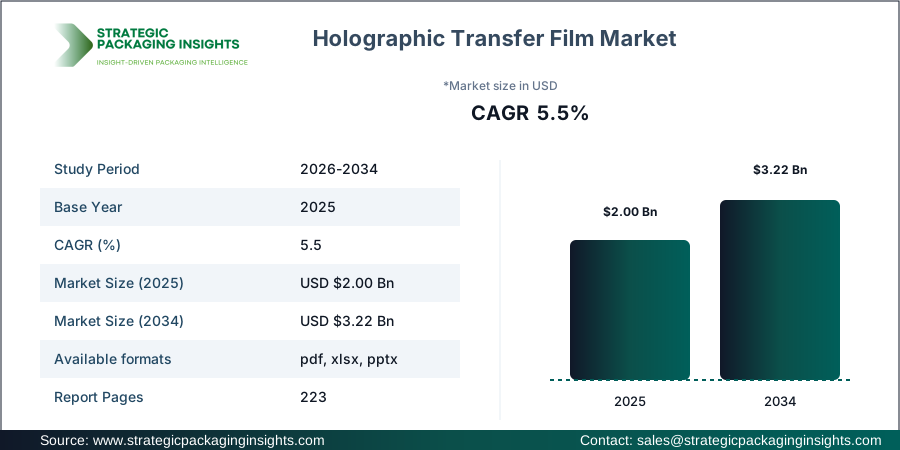
Report Scope
| Attributes | Details |
| Report Title | Holographic Transfer Film Market Size, Future Growth and Forecast 2034 |
| Product Type | Hot Stamping Film, Cold Transfer Film, Security Transfer Film |
| Application | Labels, Cartons, Security Packaging, Luxury Packaging |
| Material Type | PET, BOPP, Metallized Film |
| End Use | FMCG, Pharma, Luxury Goods, Printing |
| Region | Asia Pacific, North America, Latin America, Europe, Middle East & Africa |
| Base Year | 2025 |
| Historic Period | 2018-2024 |
| Forecast Period | 2026-2034 |
| Number of Pages | 223 |
| Customization Available | Yes* |
Opportunities & Threats
The holographic transfer film market presents numerous opportunities, particularly in the luxury packaging sector. As consumer preferences shift towards premium and aesthetically pleasing packaging, brands are increasingly adopting holographic films to enhance product appeal and differentiate themselves in a competitive market. Additionally, the growing e-commerce industry is driving demand for secure and attractive packaging solutions, providing further opportunities for market expansion. The integration of holographic films in anti-counterfeiting measures is another significant opportunity, as brands seek to protect their products and maintain consumer trust.
Another opportunity lies in the technological advancements in holographic film production. Innovations in material science and printing technologies are enabling the development of more sophisticated and cost-effective holographic solutions. This is expected to lower production costs and increase the adoption of holographic films across various industries. Furthermore, the increasing awareness of environmental sustainability is pushing manufacturers to develop eco-friendly holographic films, opening new avenues for growth in the market.
However, the market faces certain threats, including the high cost of holographic film production, which can be a barrier for small and medium-sized enterprises. Additionally, the availability of alternative packaging solutions, such as digital printing and other decorative films, poses a challenge to the growth of the holographic transfer film market. The market also faces regulatory challenges related to environmental concerns, as the production and disposal of holographic films can have environmental impacts. Manufacturers need to address these challenges by investing in sustainable production processes and materials.
Drivers & Challenges
The primary drivers of the holographic transfer film market include the increasing demand for anti-counterfeiting solutions and the growing emphasis on brand differentiation. As counterfeit products continue to pose a significant threat to various industries, companies are investing in advanced packaging solutions like holographic films to protect their products and brand reputation. The ability of holographic films to provide unique visual effects and enhance product appeal is also driving their adoption in the luxury goods sector, where packaging plays a crucial role in consumer purchasing decisions.
Another key driver is the expansion of the e-commerce industry, which is fueling demand for secure and visually appealing packaging solutions. As online shopping becomes more prevalent, brands are focusing on creating memorable unboxing experiences for consumers, leading to increased use of holographic films. Additionally, advancements in holographic technology are enabling the production of more cost-effective and versatile films, further driving market growth. The increasing focus on sustainability is also encouraging manufacturers to develop eco-friendly holographic films, aligning with consumer preferences for environmentally responsible products.
Despite these drivers, the market faces several challenges, including the high production costs associated with holographic films. The complex manufacturing processes and the need for specialized equipment can result in higher costs, which may limit adoption among cost-sensitive industries. Additionally, the market is highly competitive, with numerous players offering a wide range of packaging solutions. This competition can lead to price pressures and impact profit margins for manufacturers. Furthermore, regulatory challenges related to environmental concerns and the disposal of holographic films pose additional hurdles for market growth.
Market Share Analysis
The holographic transfer film market is characterized by a competitive landscape with several key players vying for market share. Companies such as Kurz, UFlex, API Foilmakers, Holostik, and K Laser Technology are prominent players in the market, each offering a diverse range of holographic solutions. These companies are focusing on innovation and expanding their product portfolios to cater to the growing demand for holographic films across various industries. The competitive landscape is further intensified by the presence of regional players who are leveraging their local expertise to capture market share.
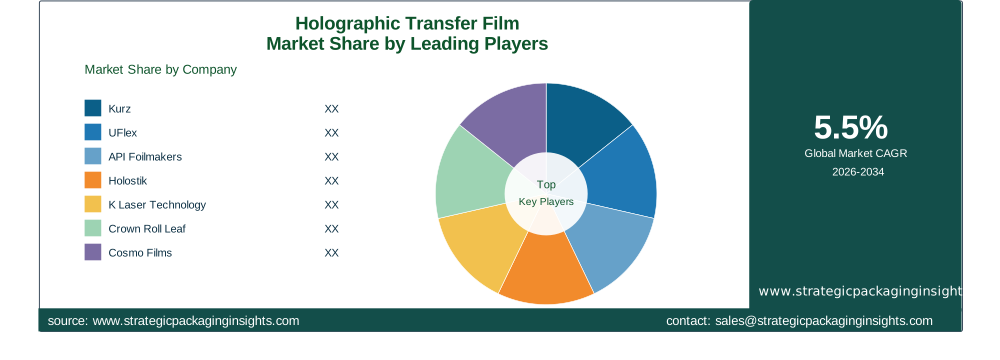
Kurz is a leading player in the holographic transfer film market, known for its innovative solutions and extensive product range. The company has a strong presence in the luxury packaging and security sectors, offering advanced holographic films that cater to the specific needs of these industries. UFlex, another major player, is recognized for its focus on sustainability and eco-friendly packaging solutions. The company is investing in research and development to create biodegradable holographic films, aligning with the growing demand for environmentally responsible packaging.
API Foilmakers and Holostik are also significant players in the market, known for their expertise in security packaging solutions. These companies are leveraging their technological capabilities to develop advanced holographic films that provide enhanced security features, addressing the growing need for anti-counterfeiting measures. K Laser Technology is another key player, offering a wide range of holographic films for various applications, including labels, cartons, and luxury packaging. The company's focus on innovation and quality has helped it maintain a strong position in the market.
Other notable players in the market include Crown Roll Leaf, Cosmo Films, WaveFront Technology, OpSec Security, and ITW Foils. These companies are continuously expanding their product offerings and investing in new technologies to enhance their competitive edge. The market is expected to witness further consolidation as companies seek to strengthen their market positions through strategic partnerships and acquisitions. Overall, the holographic transfer film market is poised for growth, driven by the increasing demand for innovative and secure packaging solutions.
Key Highlights
- The holographic transfer film market is projected to grow at a CAGR of 5.5% from 2026 to 2034.
- Increasing demand for anti-counterfeiting solutions is a major driver of market growth.
- Technological advancements are enabling the development of cost-effective holographic films.
- The luxury packaging sector is a key application area for holographic films.
- Environmental sustainability is driving the development of eco-friendly holographic films.
- The e-commerce industry is fueling demand for secure and visually appealing packaging solutions.
- Regulatory challenges related to environmental concerns pose a threat to market growth.
- Key players in the market include Kurz, UFlex, API Foilmakers, and Holostik.
- The market is characterized by intense competition and price pressures.
- Strategic partnerships and acquisitions are expected to drive market consolidation.
Top Countries Insights
In the holographic transfer film market, the United States is a leading player, with a market size of approximately $500 million and a CAGR of 6%. The country's strong focus on innovation and technology, coupled with the presence of major packaging companies, drives market growth. The demand for secure and attractive packaging solutions in the e-commerce and luxury goods sectors is a significant growth driver. However, regulatory challenges related to environmental sustainability remain a concern for manufacturers.
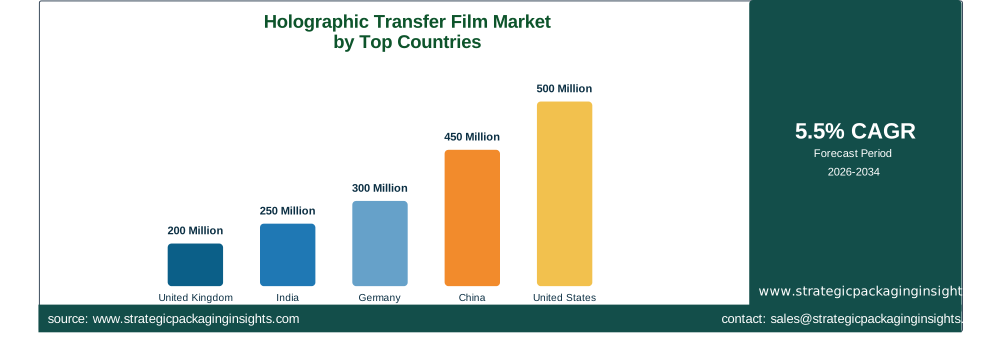
China is another key market, with a market size of around $450 million and a CAGR of 7%. The country's booming e-commerce industry and increasing consumer demand for premium packaging solutions are driving the adoption of holographic films. Additionally, government initiatives to combat counterfeit products are boosting demand for security packaging solutions. However, the market faces challenges related to high production costs and competition from alternative packaging solutions.
Germany is a prominent market in Europe, with a market size of approximately $300 million and a CAGR of 5%. The country's strong manufacturing base and focus on quality and innovation drive demand for holographic films. The luxury packaging sector is a key growth area, with brands seeking to enhance product appeal and differentiate themselves in a competitive market. Environmental regulations and sustainability concerns are key challenges for manufacturers in this region.
India is an emerging market, with a market size of around $250 million and a CAGR of 8%. The country's growing middle class and increasing consumer spending on luxury goods are driving demand for premium packaging solutions. The government's focus on combating counterfeit products is also boosting demand for security packaging. However, the market faces challenges related to high production costs and the availability of alternative packaging solutions.
The United Kingdom is another significant market, with a market size of approximately $200 million and a CAGR of 4%. The country's strong focus on innovation and sustainability drives demand for eco-friendly holographic films. The luxury packaging sector is a key growth area, with brands seeking to enhance product appeal and differentiate themselves in a competitive market. Regulatory challenges related to environmental sustainability remain a concern for manufacturers.
Holographic Transfer Film Market Segments Insights

Product Type Analysis
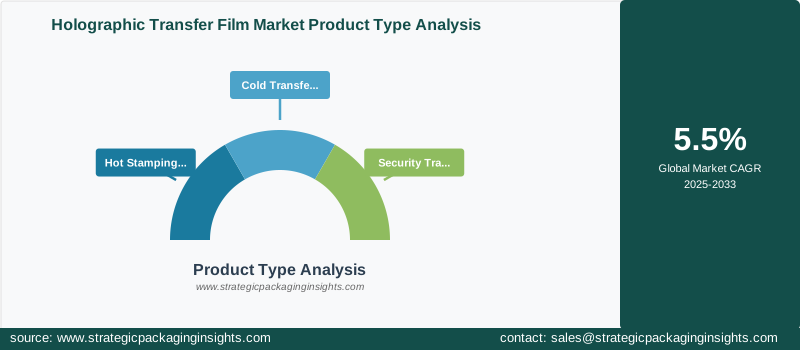
The holographic transfer film market is segmented by product type into hot stamping film, cold transfer film, and security transfer film. Hot stamping films are widely used due to their ability to provide high-quality finishes and durability. They are particularly popular in the luxury packaging sector, where aesthetics and product appeal are crucial. Cold transfer films, on the other hand, are gaining traction due to their cost-effectiveness and ease of application. These films are ideal for large-scale production runs, making them suitable for the FMCG and printing industries. Security transfer films are increasingly being adopted for their anti-counterfeiting properties, providing an added layer of protection for brands.
The demand for security transfer films is driven by the increasing need for brand protection and the growing prevalence of counterfeit products. These films offer advanced security features, such as holographic images and unique identifiers, making them an essential component of security packaging solutions. The market for cold transfer films is expected to grow at a significant rate, driven by advancements in printing technology and the increasing focus on cost-effective packaging solutions. Overall, the product type segment is characterized by a diverse range of offerings, catering to the specific needs of various industries.
Application Analysis
The application segment of the holographic transfer film market includes labels, cartons, security packaging, and luxury packaging. Labels are a major application area, with holographic films being used to enhance product appeal and provide security features. The demand for holographic labels is driven by the need for brand differentiation and the increasing focus on anti-counterfeiting measures. Cartons are another significant application area, with holographic films being used to create visually appealing packaging solutions for a wide range of products.
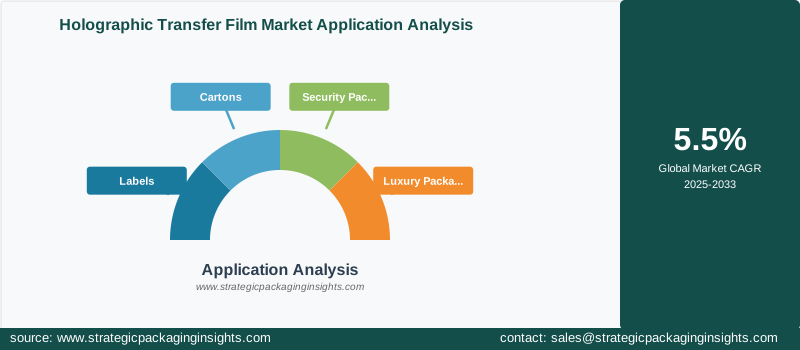
Security packaging is a key growth area, driven by the increasing prevalence of counterfeit products and the need for advanced security features. Holographic films are being used to provide unique visual effects and enhance the security of packaging solutions. Luxury packaging is another important application area, with brands seeking to create premium and aesthetically pleasing packaging solutions. The demand for holographic films in luxury packaging is driven by the need for brand differentiation and the increasing focus on creating memorable consumer experiences.
Material Type Analysis
The holographic transfer film market is segmented by material type into PET, BOPP, and metallized film. PET films are widely used due to their excellent clarity, durability, and versatility. They are ideal for a wide range of applications, including labels, cartons, and security packaging. BOPP films are gaining popularity due to their cost-effectiveness and ease of processing. These films are suitable for large-scale production runs, making them ideal for the FMCG and printing industries.
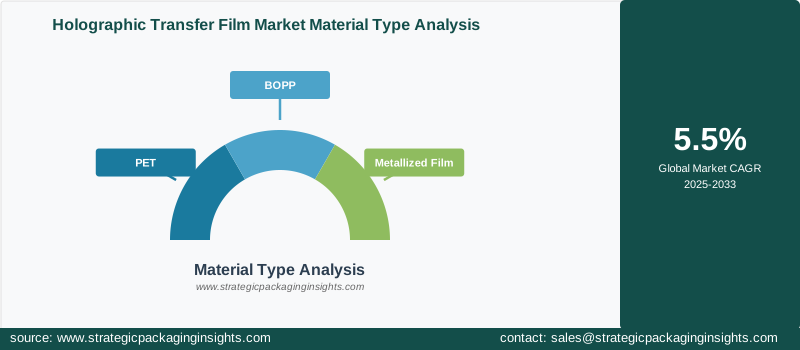
Metallized films are another important material type, offering enhanced visual effects and improved barrier properties. These films are widely used in luxury packaging and security applications, where aesthetics and product protection are crucial. The demand for metallized films is driven by the increasing focus on creating premium packaging solutions and the need for advanced security features. Overall, the material type segment is characterized by a diverse range of offerings, catering to the specific needs of various industries.
End Use Analysis
The end-use segment of the holographic transfer film market includes FMCG, pharma, luxury goods, and printing. The FMCG sector is a major end-user, with holographic films being used to enhance product appeal and provide security features. The demand for holographic films in the FMCG sector is driven by the need for brand differentiation and the increasing focus on anti-counterfeiting measures. The pharma sector is another significant end-user, with holographic films being used to provide advanced security features and enhance the safety of packaging solutions.
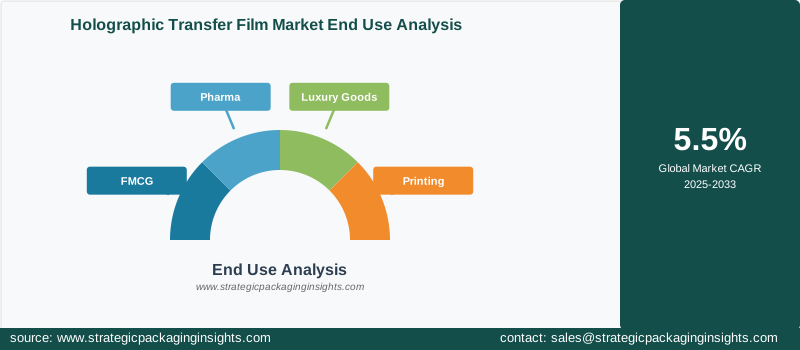
Luxury goods are a key growth area, with brands seeking to create premium and aesthetically pleasing packaging solutions. The demand for holographic films in the luxury goods sector is driven by the need for brand differentiation and the increasing focus on creating memorable consumer experiences. The printing industry is another important end-user, with holographic films being used to create visually appealing and cost-effective packaging solutions. Overall, the end-use segment is characterized by a diverse range of applications, catering to the specific needs of various industries.
Holographic Transfer Film Market Segments
The Holographic Transfer Film market has been segmented on the basis ofProduct Type
- Hot Stamping Film
- Cold Transfer Film
- Security Transfer Film
Application
- Labels
- Cartons
- Security Packaging
- Luxury Packaging
Material Type
- PET
- BOPP
- Metallized Film
End Use
- FMCG
- Pharma
- Luxury Goods
- Printing
Region
- Asia Pacific
- North America
- Latin America
- Europe
- Middle East & Africa




