


Hinged Deli Containers Market Outlook
The Hinged Deli Containers market size was valued at USD 1.3 billion in 2025 and is anticipated to reach USD 2.0 billion by 2034, growing at a CAGR of 4.90% during the forecast period according to Strategic Packaging Insights. The market is driven by the increasing demand for convenient and sustainable packaging solutions in the food service industry. Companies like Inline Plastics and Anchor Packaging are at the forefront, innovating with materials that offer both durability and environmental benefits. The shift towards eco-friendly packaging, coupled with the rising trend of on-the-go food consumption, is propelling the market forward. The demand for hinged deli containers is particularly strong in urban areas where busy lifestyles necessitate quick and easy meal solutions.
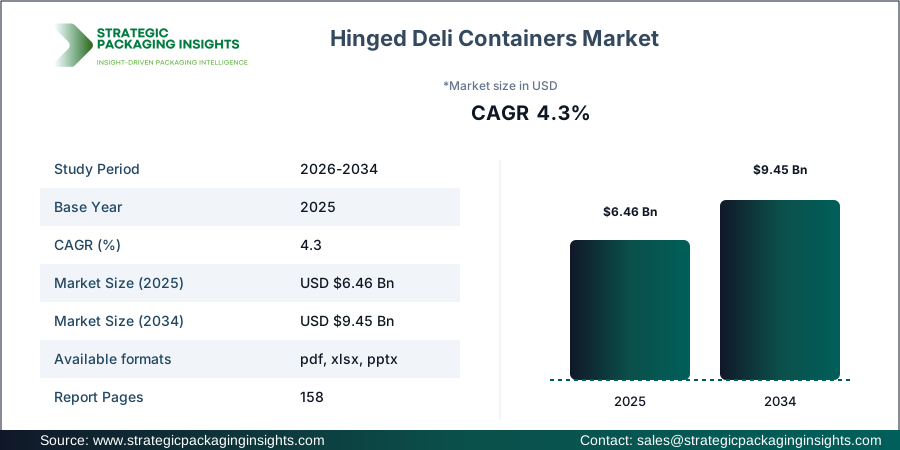
One of the most impactful drivers of the Hinged Deli Containers market is the growing consumer preference for sustainable packaging options. According to recent reports, consumers are increasingly aware of the environmental impact of packaging waste, leading to a surge in demand for recyclable and compostable materials. This trend is supported by government regulations aimed at reducing plastic waste and promoting the use of biodegradable materials. Companies like Placon and Dart Container are responding by developing innovative products that meet these sustainability criteria, thereby enhancing their market position and appeal to environmentally conscious consumers.
Report Scope
| Attributes | Details |
| Report Title | Hinged Deli Containers Market Size, Future Growth and Forecast 2034 |
| By Material | PET / rPET, Polypropylene (PP), OPS, Molded Fiber / Bagasse, PLA Compostable |
| By Shape | Rectangular, Round, Square, Compartment |
| By Capacity | Below 8 oz, 8-16 oz, 16-32 oz, Above 32 oz |
| By End Use | Supermarket Deli & Prepared Foods, Salad Bars & Fresh Cut Produce, Bakeries, Restaurants & Takeaway, Catering |
| By Region | North America (U.S., Canada, Mexico), Europe (Germany, UK, France, Italy, Spain, Rest of Europe), Asia Pacific (China, India, Japan, South Korea, Australia, Rest of Asia Pacific), Latin America (Brazil, Argentina, Rest of Latin America), Middle East & Africa (GCC Countries, South Africa, Rest of MEA) |
| Base Year | 2025 |
| Historic Period | 2018-2024 |
| Forecast Period | 2026-2034 |
| Number of Pages | 197 |
| Customization Available | Yes* |
Sustainability & Circular Economy Analysis
Sustainability initiatives are significantly shaping the Hinged Deli Containers market, with a strong emphasis on recyclable materials and eco-friendly innovations. Companies are increasingly adopting lightweight packaging solutions to reduce material usage and transportation costs, aligning with consumer preferences for sustainable products. The integration of recyclable materials such as PET/rPET and compostable options like PLA is becoming a standard practice, driven by both regulatory pressures and consumer demand for environmentally responsible packaging.
The circular economy model is influencing packaging design and manufacturing processes, encouraging companies to invest in technologies that facilitate the reuse and recycling of materials. This shift is not only reducing the carbon footprint of packaging products but also enhancing the long-term competitiveness of market players. Extended Producer Responsibility (EPR) regulations are further pushing manufacturers to take accountability for the entire lifecycle of their products, prompting innovations in waste reduction strategies and sustainable supply chain practices.
As sustainability becomes a key differentiator in the market, companies are prioritizing ESG initiatives and carbon footprint reduction in their strategic planning. This focus is driving investment decisions and shaping supply chain strategies, as businesses seek to comply with evolving packaging regulations and meet the growing consumer demand for sustainable products. The emphasis on sustainability is also fostering collaborations between packaging manufacturers, brand owners, and retailers to develop solutions that are both environmentally friendly and economically viable.
Packaging Value Chain & Supply Chain Analysis
The packaging value chain for Hinged Deli Containers involves a complex ecosystem of raw material suppliers, converters, manufacturers, and logistics providers. Raw material sourcing is critical, with a focus on sustainable and cost-effective options like PET/rPET and PLA. Packaging converters and manufacturers play a pivotal role in transforming these materials into finished products, utilizing advanced machinery and technologies to ensure quality and efficiency. Strategic partnerships with suppliers and logistics providers are essential for maintaining a resilient and responsive supply chain.
Supply chain efficiency is a key determinant of market performance, influencing production capabilities and business competitiveness. Companies are adopting localization strategies to mitigate risks associated with global sourcing and enhance supply chain resilience. Inventory management and procurement strategies are being optimized to ensure the availability of raw materials and minimize disruptions. The integration of digital technologies is further enhancing supply chain visibility and agility, enabling companies to respond swiftly to market changes and customer demands.
Logistics and distribution channels are crucial components of the packaging supply chain, impacting the timely delivery of products to brand owners and retailers. Efficient transportation and warehousing solutions are vital for maintaining product quality and meeting customer expectations. Recycling networks are also becoming increasingly important, as companies strive to close the loop on packaging waste and comply with sustainability regulations. By fostering collaboration across the value chain, businesses can enhance their market position and drive long-term growth.
Opportunities & Threats
The Hinged Deli Containers market presents numerous opportunities for growth, driven by the increasing demand for sustainable packaging solutions. The shift towards eco-friendly materials such as PLA and molded fiber is opening new avenues for innovation and product development. Companies that invest in research and development to create biodegradable and compostable packaging options are well-positioned to capture a larger market share. Additionally, the growing trend of online food delivery and takeaway services is boosting the demand for convenient and durable packaging solutions, providing further growth opportunities for market players.
Another significant opportunity lies in the expansion of the market in emerging economies, where rising disposable incomes and changing consumer lifestyles are driving the demand for packaged food products. Companies that establish a strong presence in these regions can benefit from the growing consumer base and increasing preference for convenient meal solutions. Strategic partnerships and collaborations with local distributors and retailers can also enhance market penetration and brand visibility, enabling companies to capitalize on the expanding market potential.
However, the market also faces certain threats, primarily related to regulatory challenges and environmental concerns. Stringent packaging regulations aimed at reducing plastic waste and promoting sustainability can pose compliance challenges for manufacturers. Companies must navigate these regulatory landscapes carefully to avoid potential penalties and reputational damage. Additionally, the volatility of raw material prices and supply chain disruptions can impact production costs and profitability, necessitating effective risk management strategies to mitigate these threats.
Drivers & Challenges
The primary drivers of the Hinged Deli Containers market include the increasing demand for convenient and sustainable packaging solutions. The rise of on-the-go food consumption and the growing popularity of takeaway and delivery services are fueling the demand for hinged deli containers. Companies like Sabert and Genpak are capitalizing on this trend by offering innovative packaging solutions that cater to the needs of busy consumers. The emphasis on sustainability is also driving market growth, as consumers and businesses alike seek packaging options that minimize environmental impact.
Technological advancements in packaging materials and manufacturing processes are further driving market growth. Innovations in biodegradable and compostable materials are enabling companies to offer eco-friendly packaging solutions that meet regulatory requirements and consumer preferences. The development of lightweight and durable packaging options is also enhancing product appeal and functionality, contributing to increased market demand. Companies that invest in research and development to stay ahead of these technological trends are likely to gain a competitive edge in the market.
Despite the positive market outlook, the Hinged Deli Containers market faces several challenges. One of the primary challenges is the volatility of raw material prices, which can impact production costs and profitability. Companies must implement effective procurement strategies and cost management practices to mitigate these risks. Additionally, the market is highly competitive, with numerous players vying for market share. Companies must differentiate themselves through product innovation, quality, and customer service to maintain a competitive advantage. Navigating regulatory complexities and ensuring compliance with sustainability standards also pose significant challenges for market participants.
Market Share Analysis
The Hinged Deli Containers market is characterized by a competitive landscape with several key players vying for market share. Companies like Inline Plastics, Anchor Packaging, and Placon are leading the market with their innovative product offerings and strong distribution networks. These companies have established themselves as leaders in the market by focusing on product quality, sustainability, and customer satisfaction. Their ability to adapt to changing market trends and consumer preferences has enabled them to maintain a competitive edge.
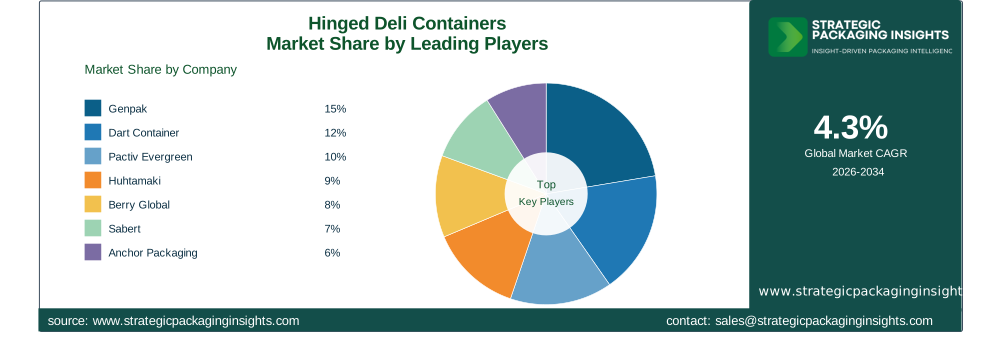
Inline Plastics is a prominent player in the market, known for its innovative packaging solutions that prioritize sustainability and convenience. The company's focus on research and development has resulted in a diverse product portfolio that caters to various end-use applications. Anchor Packaging is another key player, offering a wide range of hinged deli containers that are both durable and environmentally friendly. The company's commitment to sustainability and customer satisfaction has earned it a strong reputation in the market.
Placon is recognized for its high-quality packaging solutions that combine functionality with sustainability. The company's emphasis on eco-friendly materials and innovative designs has positioned it as a leader in the market. Dart Container, known for its extensive product range and strong distribution network, is also a significant player in the market. The company's focus on customer service and product innovation has contributed to its success in the competitive market landscape.
Other notable players in the market include Pactiv Evergreen, Sabert, Genpak, Lindar, Direct Pack Inc., Lacerta Group, and Faerch. These companies are continuously investing in research and development to enhance their product offerings and meet the evolving needs of consumers. Their strategic partnerships and collaborations with retailers and distributors have further strengthened their market position and expanded their reach in the global market.
Key Highlights
- Market Size: The Hinged Deli Containers market was valued at USD 1.3 billion in 2025 and is projected to reach USD 2.0 billion by 2034.
- Growth Rate: The market is expected to grow at a CAGR of 4.90% during the forecast period.
- Leading Companies: Key players include Inline Plastics, Anchor Packaging, and Placon.
- Material Trends: Increasing use of eco-friendly materials like PLA and molded fiber.
- Regional Insights: Asia Pacific is expected to witness significant growth due to rising demand for packaged food.
- End-Use Applications: Supermarket delis and prepared foods are major end-use segments.
- Technological Advancements: Innovations in biodegradable and compostable materials are driving market growth.
Hinged Deli Containers Market Segments Insights

By Material Analysis
The Hinged Deli Containers market is segmented by material, with PET/rPET, Polypropylene (PP), OPS, Molded Fiber/Bagasse, and PLA Compostable being the primary categories. PET/rPET is widely used due to its durability and recyclability, making it a popular choice among manufacturers and consumers alike. The demand for PLA Compostable materials is also on the rise, driven by increasing consumer awareness of environmental issues and the push for sustainable packaging solutions. Companies are investing in research and development to enhance the performance and cost-effectiveness of these materials, ensuring they meet the evolving needs of the market.
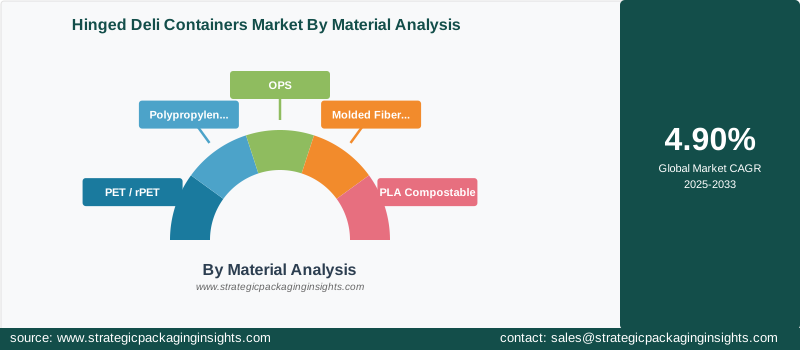
Polypropylene (PP) is another significant material segment, known for its versatility and cost-effectiveness. It is commonly used in the production of hinged deli containers due to its lightweight nature and ability to withstand varying temperatures. Molded Fiber/Bagasse is gaining traction as an eco-friendly alternative, offering compostability and biodegradability. This material is particularly appealing to environmentally conscious consumers and businesses looking to reduce their carbon footprint. The OPS segment, while less prominent, offers clarity and rigidity, making it suitable for specific applications where product visibility is essential.
By Shape Analysis
The market is also segmented by shape, with rectangular, round, square, and compartment containers being the primary categories. Rectangular containers are the most popular due to their versatility and ability to accommodate a wide range of food products. They are commonly used in supermarkets, delis, and restaurants for packaging prepared foods and fresh produce. Round containers are favored for their aesthetic appeal and are often used in bakeries and salad bars. Square containers offer a modern look and are gaining popularity in the catering and takeaway sectors.
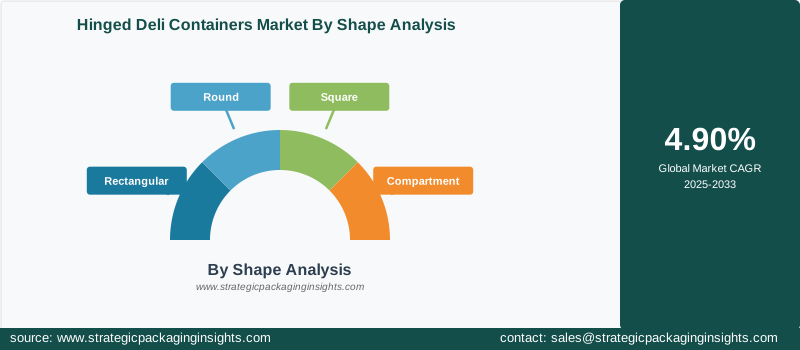
Compartment containers are designed to keep different food items separate, making them ideal for meal prep and takeaway applications. They are particularly popular in the catering industry, where presentation and portion control are important. The demand for compartment containers is expected to grow as consumers seek convenient and organized meal solutions. Companies are focusing on innovative designs and materials to enhance the functionality and appeal of these containers, catering to the diverse needs of consumers and businesses.
By Capacity Analysis
The Hinged Deli Containers market is segmented by capacity, with categories including below 8 oz, 8-16 oz, 16-32 oz, and above 32 oz. Containers with a capacity of 8-16 oz are the most popular, catering to the needs of supermarkets, delis, and restaurants for packaging individual portions and small meals. The demand for containers with a capacity of 16-32 oz is also significant, driven by the growing trend of meal prep and takeaway services. These containers are ideal for packaging larger portions and family-sized meals.
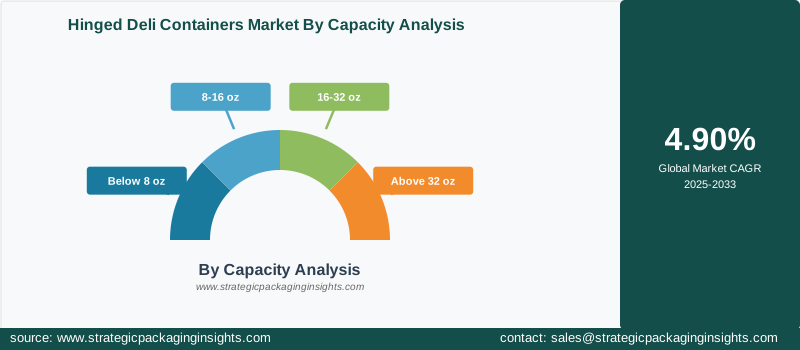
Containers with a capacity of below 8 oz are commonly used for packaging small items such as dips, sauces, and snacks. They are popular in the catering and takeaway sectors, where portion control and convenience are important. Containers with a capacity of above 32 oz are used for packaging bulk items and family-sized meals, catering to the needs of supermarkets and catering services. Companies are focusing on developing containers with varying capacities to meet the diverse needs of consumers and businesses, ensuring they offer both functionality and convenience.
By End Use Analysis
The market is segmented by end use, with categories including supermarket deli & prepared foods, salad bars & fresh cut produce, bakeries, restaurants & takeaway, and catering. Supermarket delis and prepared foods are the largest end-use segment, driven by the increasing demand for convenient and ready-to-eat meal solutions. The growing trend of on-the-go food consumption is also boosting the demand for hinged deli containers in this segment. Salad bars and fresh cut produce are another significant end-use segment, with consumers seeking fresh and healthy meal options.
Bakeries are a key end-use segment, with hinged deli containers used for packaging a wide range of baked goods, from pastries to cakes. The demand for these containers in the bakery sector is driven by the need for attractive and functional packaging solutions that enhance product presentation and shelf life. Restaurants and takeaway services are also significant end-use segments, with the growing popularity of food delivery and takeaway services driving the demand for convenient and durable packaging solutions. The catering sector is another important end-use segment, with hinged deli containers used for packaging and presenting a wide range of food items.
Hinged Deli Containers Market Segments
The Hinged Deli Containers market has been segmented on the basis ofBy Material
- PET / rPET
- Polypropylene (PP)
- OPS
- Molded Fiber / Bagasse
- PLA Compostable
By Shape
- Rectangular
- Round
- Square
- Compartment
By Capacity
- Below 8 oz
- 8-16 oz
- 16-32 oz
- Above 32 oz
By End Use
- Supermarket Deli & Prepared Foods
- Salad Bars & Fresh Cut Produce
- Bakeries
- Restaurants & Takeaway
- Catering
By Region
- North America (U.S., Canada, Mexico)
- Europe (Germany, UK, France, Italy, Spain, Rest of Europe)
- Asia Pacific (China, India, Japan, South Korea, Australia, Rest of Asia Pacific)
- Latin America (Brazil, Argentina, Rest of Latin America)
- Middle East & Africa (GCC Countries, South Africa, Rest of MEA)




