


High Performance Random Packing Market Outlook
The High Performance Random Packing market was valued at $1.10 billion in 2025 and is projected to reach $1.85 billion by 2034, growing at a CAGR of 5.9% during the forecast period 2026-2034. This market is driven by the increasing demand for efficient mass transfer solutions in various industrial applications. The need for high-performance materials that can withstand harsh chemical environments and high temperatures is pushing the adoption of advanced random packing solutions. Industries such as chemicals, oil & gas, and water treatment are increasingly relying on these products to enhance operational efficiency and reduce energy consumption. The market is also benefiting from technological advancements that have led to the development of innovative packing materials with improved performance characteristics.
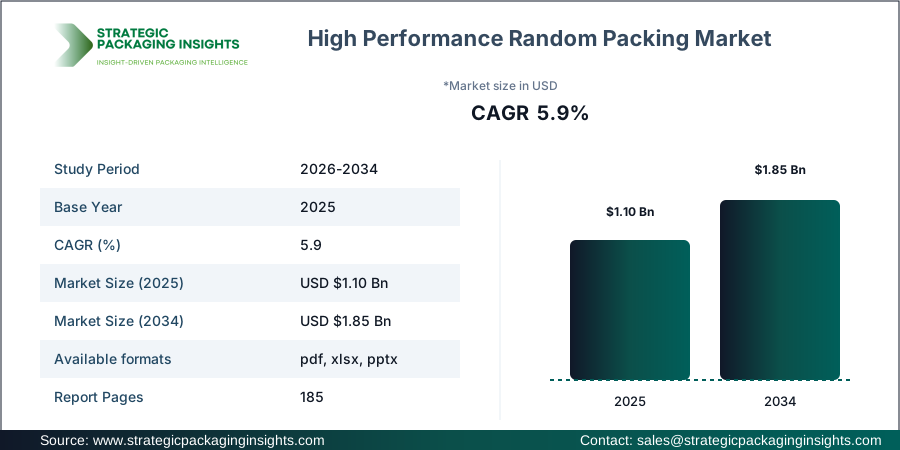
Despite the promising growth prospects, the High Performance Random Packing market faces certain challenges. Regulatory constraints related to environmental protection and safety standards can pose significant hurdles for market players. Additionally, the high cost of advanced materials and the complexity involved in their manufacturing processes may limit market expansion. However, the growing emphasis on sustainability and the development of eco-friendly packing materials present lucrative opportunities for market growth. Companies are investing in research and development to create products that not only meet performance requirements but also adhere to environmental regulations, thereby enhancing their market competitiveness.
Report Scope
| Attributes | Details |
| Report Title | High Performance Random Packing Market Size, Future Growth and Forecast 2034 |
| By Product Type | Metal Random Packing, Plastic Random Packing, Ceramic Random Packing |
| By Application | Distillation, Absorption, Scrubbing, Stripping |
| By End Use | Chemicals, Oil & Gas, Water Treatment, Pharmaceuticals |
| By Material Type | Stainless Steel, PP, Ceramic, PTFE |
| Region | Asia Pacific, North America, Latin America, Europe, Middle East & Africa |
| Base Year | 2025 |
| Historic Period | 2018-2024 |
| Forecast Period | 2026-2034 |
| Number of Pages | 185 |
| Customization Available | Yes* |
Opportunities & Threats
The High Performance Random Packing market is poised for significant opportunities driven by the increasing demand for energy-efficient and cost-effective solutions in industrial processes. As industries strive to optimize their operations, the need for advanced packing materials that offer superior mass transfer efficiency is on the rise. This trend is particularly evident in the chemical and oil & gas sectors, where the adoption of high-performance random packing can lead to substantial cost savings and improved process outcomes. Furthermore, the growing focus on sustainability and environmental compliance is encouraging the development of eco-friendly packing materials, opening new avenues for market growth.
Another opportunity lies in the expanding applications of high-performance random packing across various industries. The water treatment sector, for instance, is witnessing a surge in demand for efficient packing solutions to enhance the performance of treatment processes. Similarly, the pharmaceutical industry is increasingly adopting these materials to improve the efficiency of separation and purification processes. The ongoing advancements in material science and engineering are expected to further broaden the scope of applications for high-performance random packing, thereby driving market growth.
However, the market is not without its threats. One of the primary challenges is the stringent regulatory landscape governing the use of certain materials and chemicals in industrial processes. Compliance with these regulations can be costly and time-consuming, potentially hindering market growth. Additionally, the high cost of advanced packing materials may deter some end-users from adopting these solutions, particularly in price-sensitive markets. The competitive landscape is also intensifying, with numerous players vying for market share, which could lead to pricing pressures and reduced profit margins for manufacturers.
Drivers & Challenges
The High Performance Random Packing market is primarily driven by the increasing demand for efficient and reliable mass transfer solutions in various industrial applications. The chemical industry, in particular, is a major driver of market growth, as companies seek to optimize their processes and reduce operational costs. The adoption of high-performance random packing materials can significantly enhance the efficiency of distillation, absorption, and stripping processes, leading to improved product quality and reduced energy consumption. Additionally, the growing focus on sustainability and environmental compliance is encouraging the development of eco-friendly packing materials, further driving market growth.
Technological advancements in material science and engineering are also playing a crucial role in driving the market. The development of innovative packing materials with enhanced performance characteristics, such as increased surface area and improved chemical resistance, is enabling manufacturers to offer more efficient and durable solutions. These advancements are particularly beneficial in industries such as oil & gas and water treatment, where the demand for high-performance materials is on the rise. Furthermore, the increasing investments in research and development by key market players are expected to lead to the introduction of new and improved products, thereby fueling market growth.
Despite the positive growth drivers, the High Performance Random Packing market faces several challenges. One of the key challenges is the high cost of advanced packing materials, which may limit their adoption in certain markets. Additionally, the complexity involved in the manufacturing processes of these materials can pose significant barriers to entry for new players. The market is also subject to stringent regulatory requirements, which can be both costly and time-consuming to comply with. These challenges, coupled with the intense competition among market players, may hinder market growth to some extent.
Market Share Analysis
The High Performance Random Packing market is characterized by a competitive landscape with several key players vying for market share. Companies such as Sulzer, Koch-Glitsch, and Raschig are among the leading players in the market, known for their extensive product portfolios and strong market presence. These companies have established themselves as leaders in the industry through continuous innovation and a focus on quality and performance. Their ability to offer a wide range of high-performance packing materials tailored to meet the specific needs of various industries has enabled them to maintain a competitive edge.
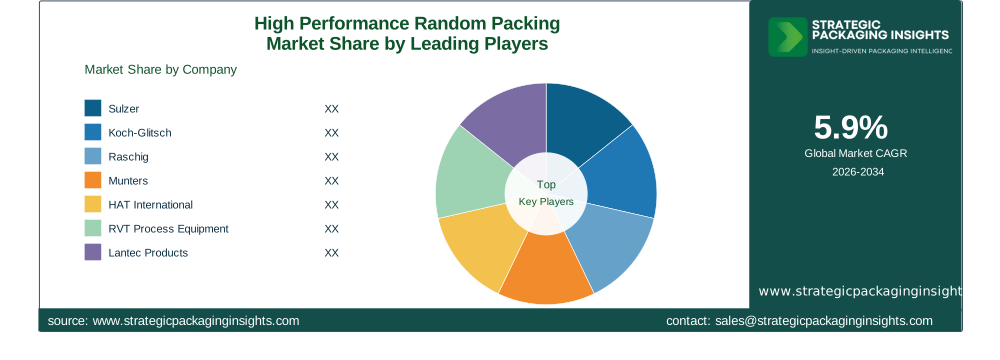
Munters and HAT International are also prominent players in the market, known for their expertise in providing advanced mass transfer solutions. These companies have a strong focus on research and development, which has allowed them to introduce innovative products that cater to the evolving needs of their customers. Their commitment to sustainability and environmental compliance has further strengthened their market position, as industries increasingly seek eco-friendly solutions.
RVT Process Equipment and Lantec Products are other notable players in the High Performance Random Packing market. These companies have carved a niche for themselves by offering specialized solutions for specific applications, such as water treatment and pharmaceuticals. Their ability to provide customized solutions that address the unique challenges faced by their customers has been a key factor in their success. Additionally, their strong distribution networks and strategic partnerships have enabled them to expand their market reach and enhance their competitive position.
Saint-Gobain, MACH Engineering, and Jaeger Products are also key players in the market, known for their high-quality products and customer-centric approach. These companies have a strong focus on innovation and are continuously investing in research and development to enhance their product offerings. Their ability to adapt to changing market dynamics and customer preferences has been instrumental in their growth and success. Overall, the competitive landscape of the High Performance Random Packing market is characterized by a mix of established players and emerging companies, each striving to capture a larger share of the market.
Key Highlights
- The High Performance Random Packing market is projected to grow at a CAGR of 5.9% from 2026 to 2034.
- Key drivers include the increasing demand for efficient mass transfer solutions and the growing focus on sustainability.
- Technological advancements in material science are leading to the development of innovative packing materials.
- Regulatory constraints and high material costs are significant challenges for market players.
- The chemical and oil & gas industries are major end-users of high-performance random packing materials.
- Companies are investing in research and development to create eco-friendly packing solutions.
- The competitive landscape is characterized by a mix of established players and emerging companies.
Top Countries Insights
In the High Performance Random Packing market, the United States stands out as a key player, with a market size of approximately $450 million and a CAGR of 6%. The country's robust chemical and oil & gas industries are major drivers of demand for high-performance random packing materials. Additionally, the focus on sustainability and environmental compliance is encouraging the adoption of eco-friendly packing solutions. However, regulatory constraints and high material costs pose challenges for market players.
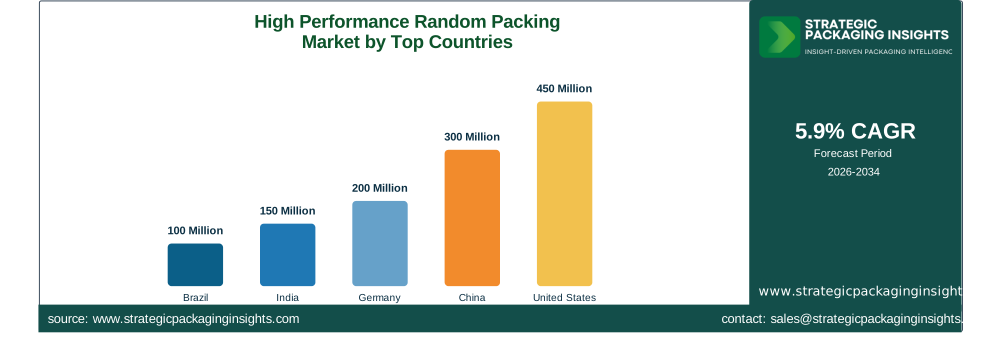
China is another significant market, with a market size of around $300 million and a CAGR of 7%. The country's rapidly growing industrial sector, particularly in chemicals and water treatment, is driving demand for efficient mass transfer solutions. The government's emphasis on environmental protection and energy efficiency is further boosting the market. However, the high cost of advanced materials and intense competition from local players are challenges that need to be addressed.
Germany, with a market size of approximately $200 million and a CAGR of 5%, is a key market in Europe. The country's strong focus on innovation and technological advancements in material science is driving the adoption of high-performance random packing materials. The chemical and pharmaceutical industries are major end-users, seeking efficient solutions to enhance process efficiency and reduce energy consumption. However, stringent regulatory requirements and high production costs are challenges for market players.
India, with a market size of about $150 million and a CAGR of 8%, is an emerging market with significant growth potential. The country's expanding industrial sector, particularly in chemicals and water treatment, is driving demand for high-performance random packing materials. The government's initiatives to promote sustainable industrial practices and reduce environmental impact are further supporting market growth. However, the high cost of advanced materials and limited awareness among end-users are challenges that need to be addressed.
Brazil, with a market size of approximately $100 million and a CAGR of 6%, is a key market in Latin America. The country's growing oil & gas industry is a major driver of demand for high-performance random packing materials. Additionally, the focus on improving process efficiency and reducing operational costs is encouraging the adoption of advanced packing solutions. However, economic uncertainties and regulatory constraints pose challenges for market players.
High Performance Random Packing Market Segments Insights

Product Type Analysis
The High Performance Random Packing market is segmented by product type into metal random packing, plastic random packing, and ceramic random packing. Metal random packing is highly favored in industries requiring robust and durable solutions, such as oil & gas and chemicals. Its ability to withstand high temperatures and corrosive environments makes it a preferred choice for demanding applications. The plastic random packing segment is gaining traction due to its cost-effectiveness and versatility. It is widely used in applications where chemical resistance and lightweight properties are essential, such as in water treatment and scrubbing processes. Ceramic random packing, known for its excellent thermal stability and chemical resistance, is predominantly used in high-temperature applications, particularly in the chemical and pharmaceutical industries.
The demand for metal random packing is driven by its superior mechanical strength and durability, making it suitable for harsh industrial environments. The ongoing advancements in material science are leading to the development of innovative metal alloys with enhanced performance characteristics, further boosting the segment's growth. Plastic random packing is witnessing increased adoption due to its lightweight nature and ease of installation, which contribute to reduced operational costs. The segment is also benefiting from the growing emphasis on sustainability, as manufacturers are developing eco-friendly plastic materials that meet environmental regulations. Ceramic random packing, although niche, is experiencing steady growth due to its unique properties that cater to specific high-temperature applications.
Application Analysis
The application segment of the High Performance Random Packing market includes distillation, absorption, scrubbing, and stripping. Distillation is a major application area, driven by the need for efficient separation processes in the chemical and oil & gas industries. The adoption of high-performance random packing materials in distillation columns enhances mass transfer efficiency, leading to improved product quality and reduced energy consumption. Absorption processes, commonly used in gas treatment and purification, are also significant contributors to market growth. The demand for advanced packing materials that offer high surface area and chemical resistance is driving the adoption of high-performance random packing in absorption applications.
Scrubbing and stripping processes are witnessing increased adoption of high-performance random packing materials due to their ability to enhance mass transfer efficiency and reduce operational costs. The growing focus on environmental compliance and the need to reduce emissions are key drivers for the adoption of advanced packing solutions in these applications. The ongoing advancements in material science and engineering are leading to the development of innovative packing materials with improved performance characteristics, further boosting the growth of the application segment. The increasing investments in research and development by key market players are expected to lead to the introduction of new and improved products, thereby fueling market growth.
End Use Analysis
The end-use segment of the High Performance Random Packing market includes chemicals, oil & gas, water treatment, and pharmaceuticals. The chemical industry is a major end-user, driven by the need for efficient separation and purification processes. The adoption of high-performance random packing materials in chemical processes enhances mass transfer efficiency, leading to improved product quality and reduced energy consumption. The oil & gas industry is another significant end-user, with the demand for advanced packing materials driven by the need for efficient separation and purification processes in refining and gas treatment applications.
The water treatment sector is witnessing a surge in demand for high-performance random packing materials, driven by the need for efficient treatment processes and environmental compliance. The adoption of advanced packing solutions in water treatment applications enhances process efficiency and reduces operational costs. The pharmaceutical industry is also a key end-user, with the demand for high-performance random packing materials driven by the need for efficient separation and purification processes in drug manufacturing. The ongoing advancements in material science and engineering are leading to the development of innovative packing materials with improved performance characteristics, further boosting the growth of the end-use segment.
Material Type Analysis
The material type segment of the High Performance Random Packing market includes stainless steel, PP, ceramic, and PTFE. Stainless steel is a preferred material for high-performance random packing due to its excellent mechanical strength and corrosion resistance. It is widely used in industries requiring robust and durable solutions, such as oil & gas and chemicals. The demand for stainless steel packing materials is driven by their ability to withstand high temperatures and corrosive environments, making them suitable for demanding applications.
PP (polypropylene) is gaining traction as a material for high-performance random packing due to its cost-effectiveness and versatility. It is widely used in applications where chemical resistance and lightweight properties are essential, such as in water treatment and scrubbing processes. Ceramic materials, known for their excellent thermal stability and chemical resistance, are predominantly used in high-temperature applications, particularly in the chemical and pharmaceutical industries. PTFE (polytetrafluoroethylene) is another material gaining popularity due to its exceptional chemical resistance and non-stick properties, making it suitable for applications involving aggressive chemicals and high temperatures.
High Performance Random Packing Market Segments
The High Performance Random Packing market has been segmented on the basis ofBy Product Type
- Metal Random Packing
- Plastic Random Packing
- Ceramic Random Packing
By Application
- Distillation
- Absorption
- Scrubbing
- Stripping
By End Use
- Chemicals
- Oil & Gas
- Water Treatment
- Pharmaceuticals
By Material Type
- Stainless Steel
- PP
- Ceramic
- PTFE
Region
- Asia Pacific
- North America
- Latin America
- Europe
- Middle East & Africa




