


High-Density Polyethylene Bottle Market Outlook
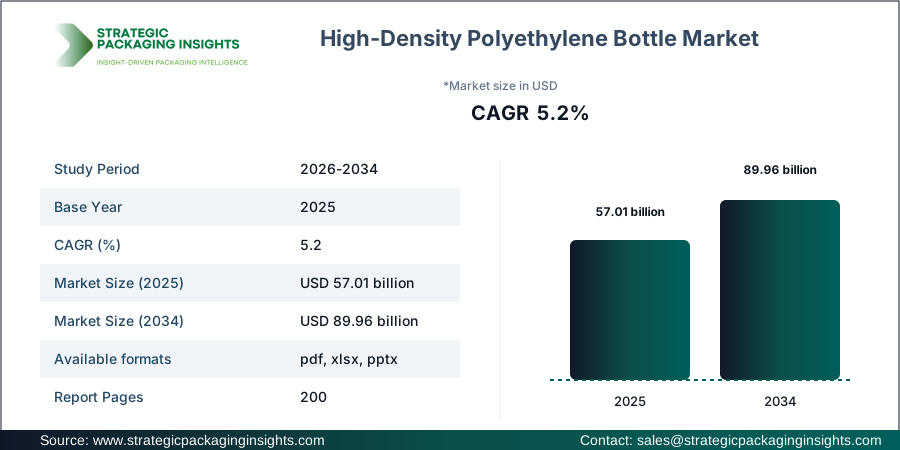
The High-Density Polyethylene (HDPE) Bottle market size was valued at USD 57.01 billion in 2025 and is anticipated to reach USD 89.96 billion by 2034, growing at a CAGR of 5.2% during the forecast period according to Strategic Packaging Insights. This growth is driven by the increasing demand for durable and lightweight packaging solutions across various industries, including pharmaceuticals, personal care, and food and beverages. Companies like Berry Global and Amcor are at the forefront, leveraging advanced manufacturing technologies to produce high-quality HDPE bottles that meet stringent industry standards. The market's expansion is further supported by the rising consumer preference for sustainable packaging options, which HDPE bottles fulfill due to their recyclability and lower environmental impact compared to other plastic materials.
One of the most impactful drivers of the HDPE bottle market is the growing emphasis on sustainability and eco-friendly packaging solutions. Governments and environmental organizations worldwide are advocating for reduced plastic waste, prompting manufacturers to innovate and produce more sustainable packaging options. According to recent environmental reports, the push for a circular economy is encouraging companies to adopt recyclable materials like HDPE, which can be reused and repurposed, thus reducing the overall carbon footprint. This trend is not only influencing consumer purchasing decisions but also shaping the strategic directions of major players like Alpla and Plastipak, who are investing heavily in research and development to enhance the recyclability and performance of their HDPE bottle offerings.
Report Scope
| Attributes | Details |
| Report Title | High-Density Polyethylene Bottle Market Size, Future Growth and Forecast 2034 |
| By Product Type | Pharma Bottles, Personal Care Bottles, Chemical Bottles, Food Bottles |
| By Capacity | Below 100 ml, 100–500 ml, Above 500 ml |
| By Application | Pharmaceuticals, Household Chemicals, Dairy, Personal Care |
| By End Use | Healthcare, FMCG, Chemicals, Food & Beverage |
| Region | Asia Pacific, North America, Latin America, Europe, Middle East & Africa |
| Base Year | 2025 |
| Historic Period | 2018-2024 |
| Forecast Period | 2026-2034 |
| Number of Pages | 200 |
| Customization Available | Yes* |
Sustainability & Circular Economy Analysis
Sustainability initiatives and circular economy practices are significantly influencing the HDPE bottle market, as companies strive to meet consumer demand for eco-friendly packaging. The use of recyclable materials is becoming a standard practice, with HDPE bottles being a prime example due to their high recyclability rate. This shift towards sustainability is driving innovation in packaging design, with manufacturers focusing on creating lightweight bottles that reduce material usage without compromising durability. Additionally, the integration of eco-friendly material innovations is helping companies like Silgan Holdings and Alpha Packaging to enhance their product offerings and align with environmental goals.
Extended Producer Responsibility (EPR) regulations are also playing a crucial role in shaping the HDPE bottle market. These regulations require manufacturers to take responsibility for the entire lifecycle of their products, including end-of-life disposal. As a result, companies are investing in waste reduction strategies and developing packaging solutions that minimize environmental impact. This regulatory landscape is prompting brand owners and converters to adopt more sustainable supply chain strategies, ensuring compliance while maintaining competitiveness in the market.
Consumer preferences for sustainable packaging are further driving the adoption of HDPE bottles. As awareness of environmental issues grows, consumers are increasingly choosing products with eco-friendly packaging. This trend is influencing investment decisions, with companies prioritizing the development of sustainable packaging solutions to meet consumer expectations. The focus on reducing carbon footprints and enhancing ESG initiatives is also encouraging manufacturers to explore new materials and technologies that support a circular economy, ensuring long-term market competitiveness and regulatory compliance.
Packaging Value Chain & Supply Chain Analysis
The packaging value chain for HDPE bottles involves several key components, including raw material sourcing, manufacturing, and distribution. Raw material availability is critical, as it directly impacts production capabilities and supply chain efficiency. Companies like Graham Packaging and Pretium Packaging are focusing on securing reliable sources of high-quality HDPE resin to ensure consistent production and meet growing demand. Strategic partnerships with suppliers and logistics providers are essential for maintaining a resilient supply chain, enabling manufacturers to optimize procurement strategies and inventory management.
Packaging converters and manufacturers play a vital role in the HDPE bottle market, transforming raw materials into finished products that meet specific industry requirements. The use of advanced packaging machinery and technologies is enhancing production efficiency, allowing companies to produce high-quality bottles at scale. Logistics and distribution channels are also crucial, as they ensure timely delivery of products to brand owners and retailers. Companies are investing in supply chain resilience and localization strategies to mitigate risks associated with global sourcing and transportation challenges.
Recycling networks are an integral part of the HDPE bottle supply chain, supporting the circular economy by facilitating the collection and processing of used bottles. This aspect of the value chain is becoming increasingly important as companies strive to meet sustainability goals and regulatory requirements. By integrating recycling initiatives into their operations, manufacturers can reduce waste and enhance their environmental credentials. Overall, the efficiency of the packaging value chain and supply chain ecosystem is a key determinant of market performance and business competitiveness, influencing the strategic decisions of industry players.
Opportunities & Threats
The HDPE bottle market presents numerous opportunities for growth, driven by the increasing demand for sustainable packaging solutions. As consumers become more environmentally conscious, there is a growing preference for products packaged in recyclable materials like HDPE. This trend is encouraging manufacturers to innovate and develop new product offerings that meet consumer expectations. Additionally, the expansion of the e-commerce sector is creating new opportunities for HDPE bottle manufacturers, as online retailers require durable and lightweight packaging solutions to ensure safe product delivery.
Another significant opportunity lies in the healthcare and pharmaceutical sectors, where the demand for HDPE bottles is rising due to their durability and chemical resistance. The growing need for safe and reliable packaging solutions in these industries is driving manufacturers to invest in research and development to enhance the performance and functionality of their products. Companies that can successfully capitalize on these opportunities by offering innovative and sustainable packaging solutions are likely to gain a competitive edge in the market.
However, the HDPE bottle market also faces several threats, including regulatory challenges and competition from alternative packaging materials. Stringent environmental regulations and policies aimed at reducing plastic waste are putting pressure on manufacturers to adopt more sustainable practices. Additionally, the availability of alternative packaging materials, such as biodegradable plastics and glass, poses a threat to the market, as consumers and businesses explore different options to meet sustainability goals. Companies must navigate these challenges by investing in sustainable technologies and adapting to changing market dynamics to maintain their competitive position.
Drivers & Challenges
One of the primary drivers of the HDPE bottle market is the increasing demand for lightweight and durable packaging solutions across various industries. HDPE bottles offer several advantages, including high strength-to-weight ratio, chemical resistance, and recyclability, making them an ideal choice for packaging applications in pharmaceuticals, personal care, and food and beverages. The growing emphasis on sustainability and eco-friendly packaging is further driving the adoption of HDPE bottles, as they align with consumer preferences for recyclable and environmentally friendly products.
Technological advancements in manufacturing processes are also driving market growth, enabling companies to produce high-quality HDPE bottles with enhanced performance characteristics. Innovations in material science and packaging design are allowing manufacturers to create bottles that are not only lightweight and durable but also aesthetically appealing. These advancements are helping companies like Berlin Packaging and Comar to differentiate their products and meet the evolving needs of consumers and businesses.
Despite the positive market drivers, the HDPE bottle market faces several challenges, including fluctuating raw material prices and supply chain disruptions. The availability and cost of HDPE resin, a key raw material, can significantly impact production costs and profitability. Additionally, supply chain disruptions caused by geopolitical tensions, natural disasters, or pandemics can affect the timely delivery of raw materials and finished products. Companies must implement robust risk management strategies and develop resilient supply chains to mitigate these challenges and ensure business continuity.
Market Share Analysis
The competitive landscape of the HDPE bottle market is characterized by the presence of several key players, each striving to enhance their market share through strategic initiatives and product innovations. Companies like Berry Global and Amcor are leading the market, leveraging their extensive product portfolios and global presence to meet the diverse needs of customers across various industries. These companies are focusing on expanding their production capacities and investing in research and development to introduce new and innovative HDPE bottle solutions.
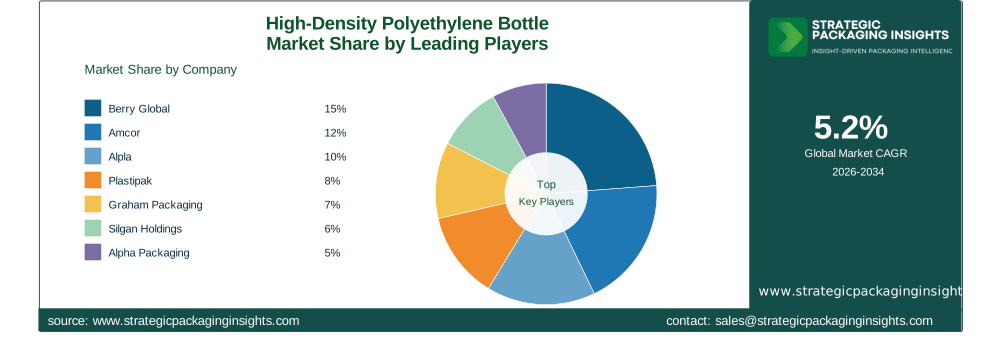
Alpla and Plastipak are also prominent players in the market, known for their commitment to sustainability and eco-friendly packaging solutions. These companies are actively investing in advanced manufacturing technologies and sustainable materials to enhance the recyclability and performance of their HDPE bottles. By aligning their product offerings with consumer preferences for sustainable packaging, Alpla and Plastipak are strengthening their competitive position in the market.
Graham Packaging and Silgan Holdings are other notable players in the HDPE bottle market, recognized for their focus on quality and customer satisfaction. These companies are continuously exploring new opportunities to expand their product offerings and cater to the evolving needs of customers in the healthcare, personal care, and food and beverage sectors. By adopting a customer-centric approach and leveraging their expertise in packaging design and manufacturing, Graham Packaging and Silgan Holdings are maintaining their competitive edge in the market.
Alpha Packaging, Pretium Packaging, and Comar are also key contributors to the HDPE bottle market, known for their innovative product designs and commitment to sustainability. These companies are investing in research and development to enhance the functionality and performance of their HDPE bottles, ensuring they meet the stringent requirements of various industries. By focusing on innovation and sustainability, Alpha Packaging, Pretium Packaging, and Comar are positioning themselves as leaders in the HDPE bottle market.
Key Highlights
- Market Size: USD 57.01 billion in 2025, projected to reach USD 89.96 billion by 2034.
- Growth Rate: Anticipated CAGR of 5.2% during the forecast period.
- Leading Companies: Berry Global, Amcor, Alpla, Plastipak, Graham Packaging.
- Key Segments: Pharma Bottles, Personal Care Bottles, Chemical Bottles, Food Bottles.
- Regional Growth: Asia Pacific expected to witness significant growth.
- Sustainability Focus: Increasing demand for recyclable and eco-friendly packaging.
- Technological Advancements: Innovations in manufacturing processes driving market growth.
High-Density Polyethylene Bottle Market Segments Insights

Product Type Analysis
The product type segment of the HDPE bottle market is diverse, encompassing pharma bottles, personal care bottles, chemical bottles, and food bottles. Pharma bottles are witnessing significant demand due to the growing pharmaceutical industry and the need for safe and reliable packaging solutions. Companies like Berry Global and Amcor are focusing on developing specialized pharma bottles that meet stringent regulatory requirements and ensure product integrity. Personal care bottles are also gaining traction, driven by the increasing demand for cosmetic and personal care products. Manufacturers are innovating to create aesthetically appealing and functional bottles that cater to consumer preferences.
Chemical bottles are another important segment, with demand driven by the need for durable and chemical-resistant packaging solutions. The chemical industry requires packaging that can withstand harsh conditions and prevent leakage, making HDPE bottles an ideal choice. Food bottles are also experiencing growth, supported by the rising demand for packaged food and beverages. Companies are focusing on developing food-grade HDPE bottles that ensure product safety and extend shelf life. Overall, the product type segment is characterized by innovation and customization, with manufacturers striving to meet the specific needs of different industries.
Capacity Analysis
The capacity segment of the HDPE bottle market is categorized into below 100 ml, 100-500 ml, and above 500 ml. Bottles with a capacity below 100 ml are primarily used in the pharmaceutical and personal care industries, where small packaging sizes are required for convenience and portability. The 100-500 ml segment is witnessing significant demand, driven by the need for medium-sized packaging solutions in the household chemicals and personal care sectors. Companies are focusing on developing versatile bottles that cater to a wide range of applications and offer ease of use for consumers.
Bottles with a capacity above 500 ml are predominantly used in the food and beverage industry, where larger packaging sizes are required for bulk products. The demand for these bottles is supported by the growing trend of purchasing products in larger quantities to reduce packaging waste and enhance convenience. Manufacturers are investing in advanced manufacturing technologies to produce high-quality bottles that meet the specific requirements of different industries. The capacity segment is characterized by a focus on versatility and functionality, with companies striving to offer a wide range of packaging solutions to meet diverse customer needs.
Application Analysis
The application segment of the HDPE bottle market includes pharmaceuticals, household chemicals, dairy, and personal care. The pharmaceutical industry is a major driver of demand for HDPE bottles, as they offer excellent chemical resistance and ensure product safety. Companies are focusing on developing specialized bottles that meet the stringent requirements of the pharmaceutical industry and provide reliable packaging solutions. The household chemicals segment is also experiencing growth, driven by the need for durable and chemical-resistant packaging solutions that ensure product integrity.
The dairy industry is another important application area, with demand for HDPE bottles supported by the need for safe and hygienic packaging solutions. Companies are focusing on developing food-grade bottles that ensure product safety and extend shelf life. The personal care segment is witnessing significant demand, driven by the increasing popularity of cosmetic and personal care products. Manufacturers are innovating to create aesthetically appealing and functional bottles that cater to consumer preferences. Overall, the application segment is characterized by a focus on safety and functionality, with companies striving to meet the specific needs of different industries.
End Use Analysis
The end-use segment of the HDPE bottle market includes healthcare, FMCG, chemicals, and food and beverage. The healthcare industry is a major driver of demand for HDPE bottles, as they offer excellent chemical resistance and ensure product safety. Companies are focusing on developing specialized bottles that meet the stringent requirements of the healthcare industry and provide reliable packaging solutions. The FMCG sector is also experiencing growth, driven by the need for durable and lightweight packaging solutions that enhance product appeal and convenience.
The chemicals industry is another important end-use area, with demand for HDPE bottles supported by the need for durable and chemical-resistant packaging solutions. Companies are focusing on developing specialized bottles that meet the specific requirements of the chemicals industry and ensure product integrity. The food and beverage industry is witnessing significant demand, driven by the need for safe and hygienic packaging solutions that ensure product safety and extend shelf life. Overall, the end-use segment is characterized by a focus on safety and functionality, with companies striving to meet the specific needs of different industries.
High-Density Polyethylene Bottle Market Segments
The High-Density Polyethylene Bottle market has been segmented on the basis ofBy Product Type
- Pharma Bottles
- Personal Care Bottles
- Chemical Bottles
- Food Bottles
By Capacity
- Below 100 ml
- 100–500 ml
- Above 500 ml
By Application
- Pharmaceuticals
- Household Chemicals
- Dairy
- Personal Care
By End Use
- Healthcare
- FMCG
- Chemicals
- Food & Beverage
Region
- Asia Pacific
- North America
- Latin America
- Europe
- Middle East & Africa




